PRESENTED BY:
Dr ANAND AJEY
MDS 2ND YEAR
DEPT. OF PERIODONTOLOGY
AND ORAL IMPLANTOLOGY
GUIDED BY:
COL.DR . MSM BIIR (PROF & HOD)
Dr PARUL ANEJA
Dr ROHINI GABA
 INTRODUCTION
 FACTORS DETERMINING
BONE MORPHOLOGY
 CAUSES OF BONE
DESTRUCTION
 RADIUS OF ACTION
 RATE OF BONE LOSS
 PERIOD OF DESTRUCTION
 MECHANISM OF BONE
DESTRUCTION
 BONE FORMATION IN PD
 BONE DESTRUCTION
CAUSED BY TRAUMA FROM
OCCLUSION .
 BONE DESTRUCTION
CAUSED BY SYSTEMIC
DISORDERS
 NORMAL VARIATION IN
ALVEOLAR BONE
 BONE DESTRUCTION
PATTERN IN PD.
 CONCLUSION.
 REFERENCES
 Alveolar bone loss is most important and obvious feature of
periodontal disease.
 Height and density of the alveolar bone are maintained by an
equilibrium by local and systemic factors between bone
formation and bone resorption .
 Immune and inflammatory responses are critical to the
pathogenesis of periodontitis and are shaped by a number of
host-related factors, both intrinsic (e.g., genetics) and induced
(e.g., pollutants).(Page RC, Kornman KS 1997)
 Initial response to bacterial infection is a local inflammatory
reaction that activates the innate immune system .(Graves DT,
Cochran D)
 Initial localized response results in the release of an array
of cytokines and other mediators and propagation of
inflammation through the gingival tissues. (Graves DT,
Cochran D)
 The inflammatory process then drives the destruction
of connective tissue and alveolar bone.
 Periodontitis involves an inflammatory component as
well as altered bone metabolism
 Normal variation in alveolar bone:
 Thickness
 Width
 Crestal angulation
 Thickness of interdental septa
 Alignment of teeth
 Root and root trunk anatomy.
 Exostosis
 Trauma from occlusion
 Buttressing bone formation
 Food impaction
 Aggressive periodontitis.
 Extension of Gingival inflammation
 Trauma from Occlusion
 Systemic disorders
 Extension of inflammation from marginal
gingiva into the supporting periodontal tissues.
 Transition from Gingivitis to Periodontitis is
associated with changes in composition of
bacterial plaque.
 In advanced stages of disease the number of
motile organisms and spirochetes increases,
whereas number of coccoid rods and straight
rods decreases.(Lindhe J ,Liljenberg B
,Listgarten M A 1980)
 Cellular composition of infiltrated connective
tissue changes with increased severity of lesion.
 Fibroblasts and lymphocytes predominate in
stage-I gingivitis and whereas number of plasma
cells and blast cells increases gradually.
 Seymour et al 1978:
Contained gingivitis - preponderant T-lymphocyte are seen
in gingivitis once B –lymphcyte comes it becomes
progressively distructive.
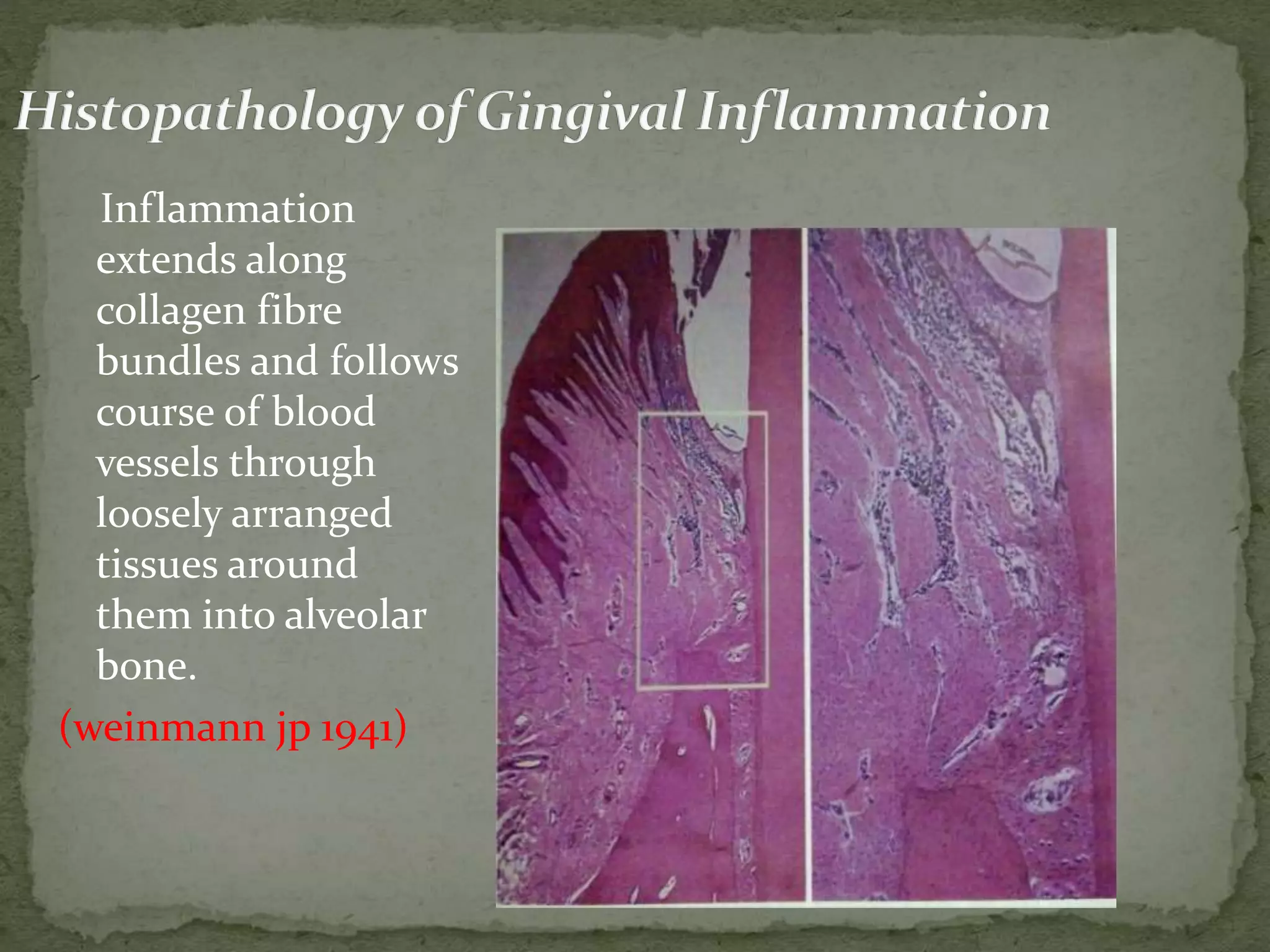
Inflammation
extends along
collagen fibre
bundles and follows
course of blood
vessels through
loosely arranged
tissues around
them into alveolar
bone.
(weinmann jp 1941)
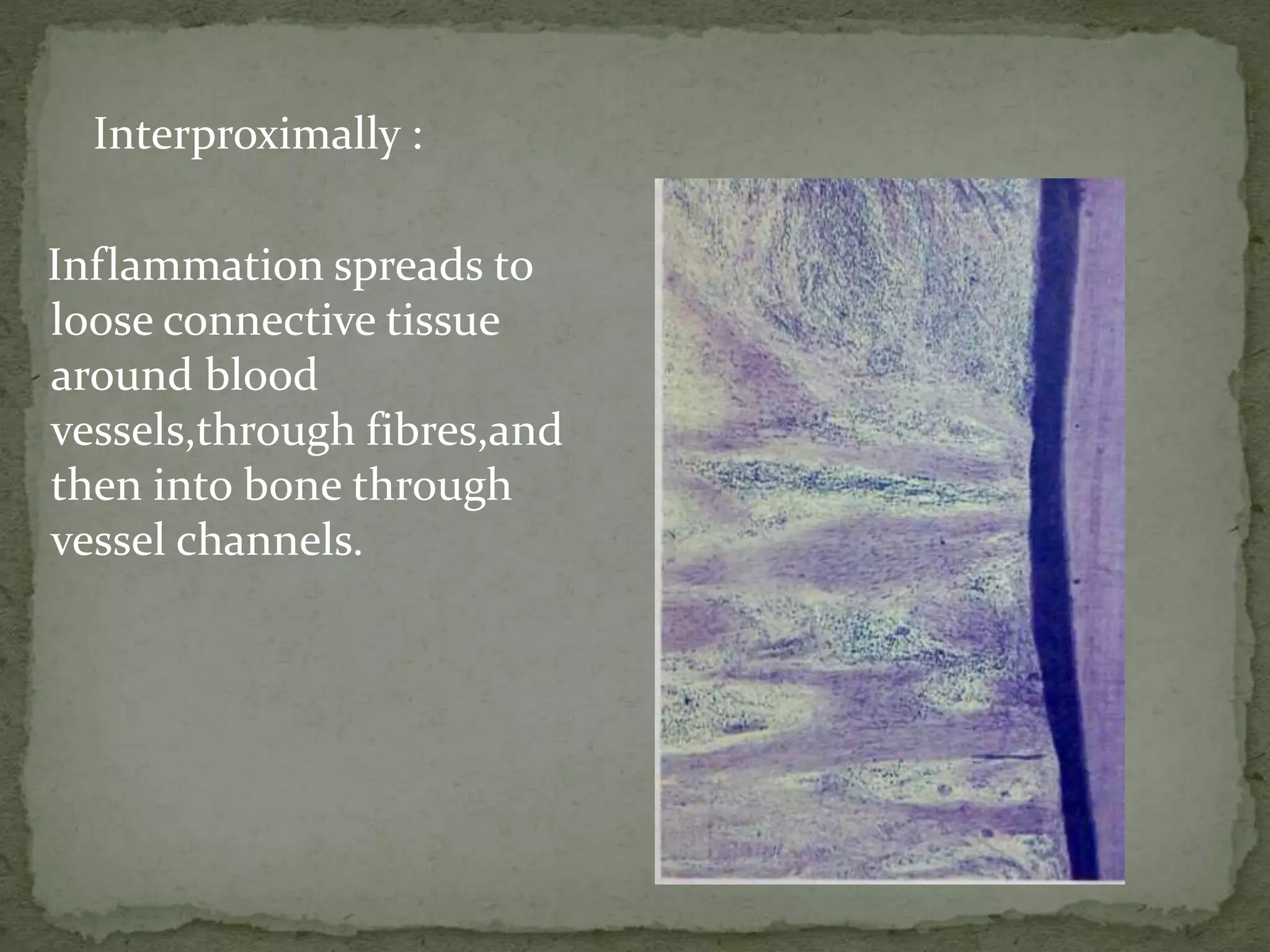
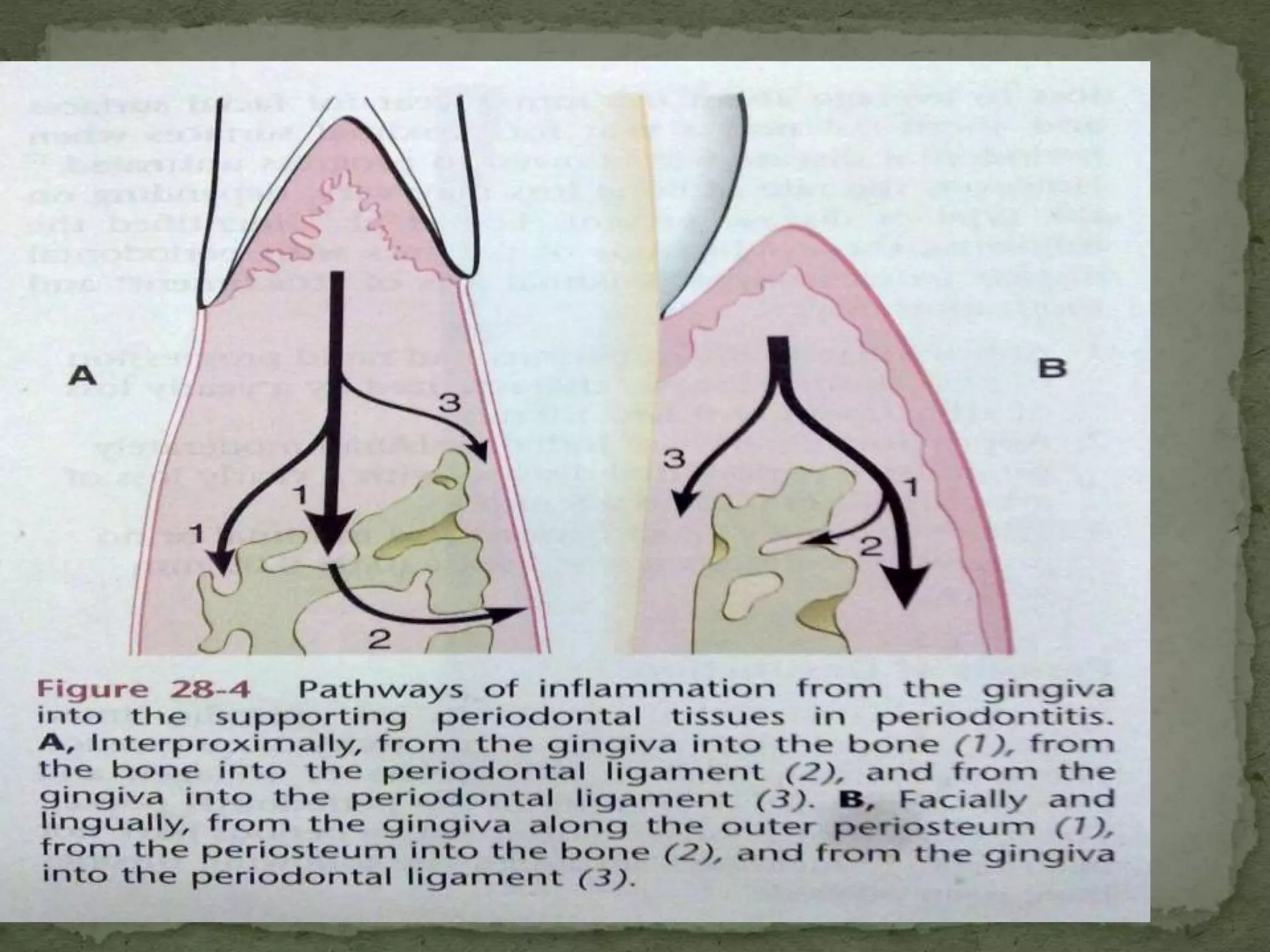
Interproximally :
Inflammation spreads to
loose connective tissue
around blood
vessels,through fibres,and
then into bone through
vessel channels.
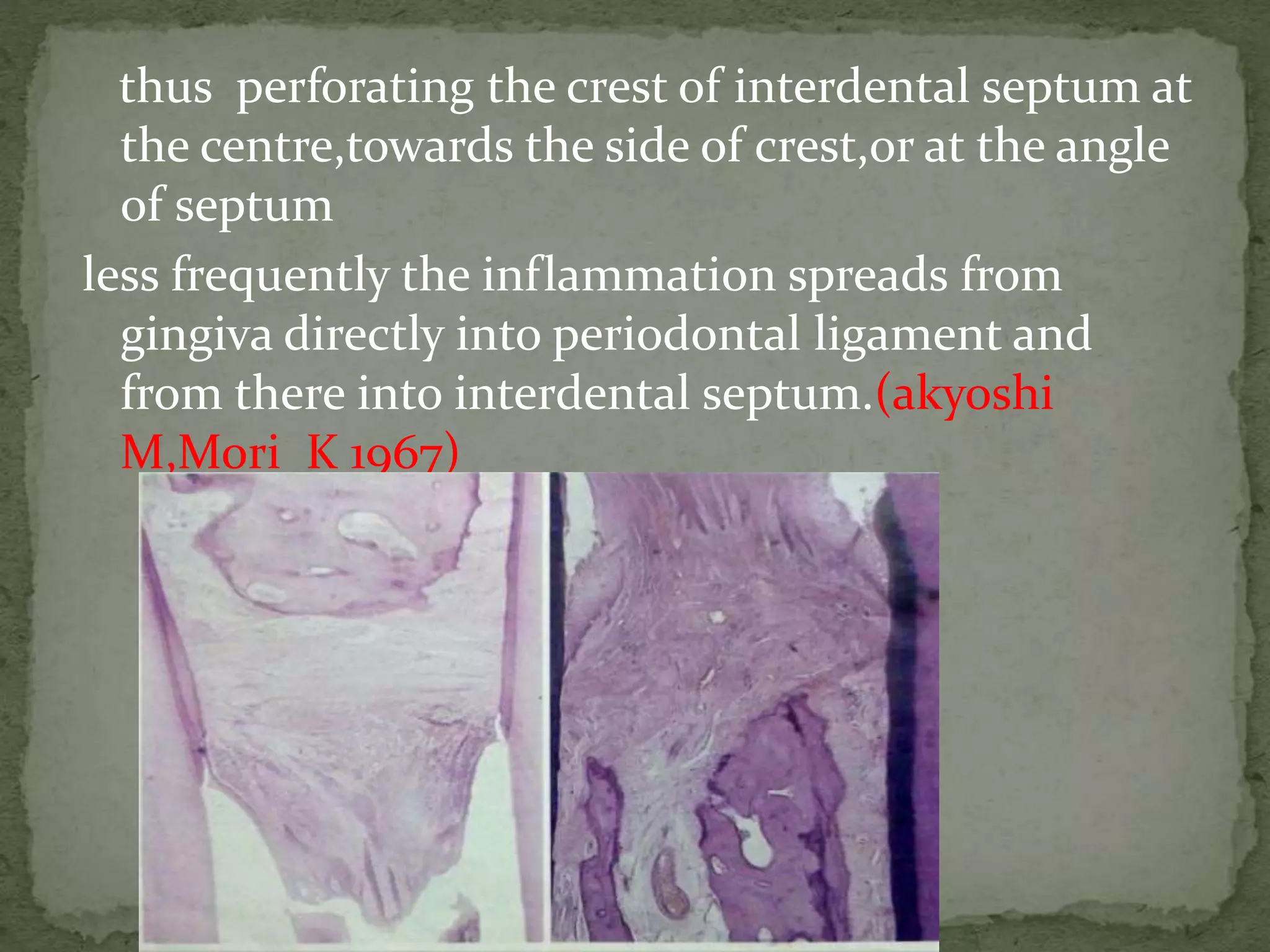
thus perforating the crest of interdental septum at
the centre,towards the side of crest,or at the angle
of septum
less frequently the inflammation spreads from
gingiva directly into periodontal ligament and
from there into interdental septum.(akyoshi
M,Mori K 1967)
 As inflammation reaches bone:-
 Spreads into marrow spaces.
Replaces marrow with a leucocytic & fluid
exudate,new blood vessels & proliferating fibroblasts.
Multinuclear osteoclasts & mononuclear phagocytes
increase in number.
Bone surfaces appear,lined with Howship lacunae.
In marrow spaces,resorption proceeds from within
causing thinning of surrounding bony trabeculae &
enlargement of marrow spaces.
Leads to destruction of bone & reduction in bone
height.
Fatty bone marrow is replaced by the fibrous type of
Radius of action:
 It was suggested that locally produced bone
resorption factors may need to be present in
proximity of bone surface to exert their action.(
Garant & Cho 1979)
 Range of effectiveness about 1.5mm to 2.5mm within
which bacterial plaque can induce loss of bone.( Page
& Schroeder 1982)
 On the basis of the waerhaug’s ,measurement
made on the human autopsy specimen postulated
the range Page & Schroeder .
Rate of bone loss:
 In a study persons with no oral hygiene & no
dental care, Loe et al (1978) found the rate of bone
loss to average about 0.2 mm a year for facial
surfaces and 0.3 mm for proximal surfaces when
periodontal disease was allowed to progress
untreated.
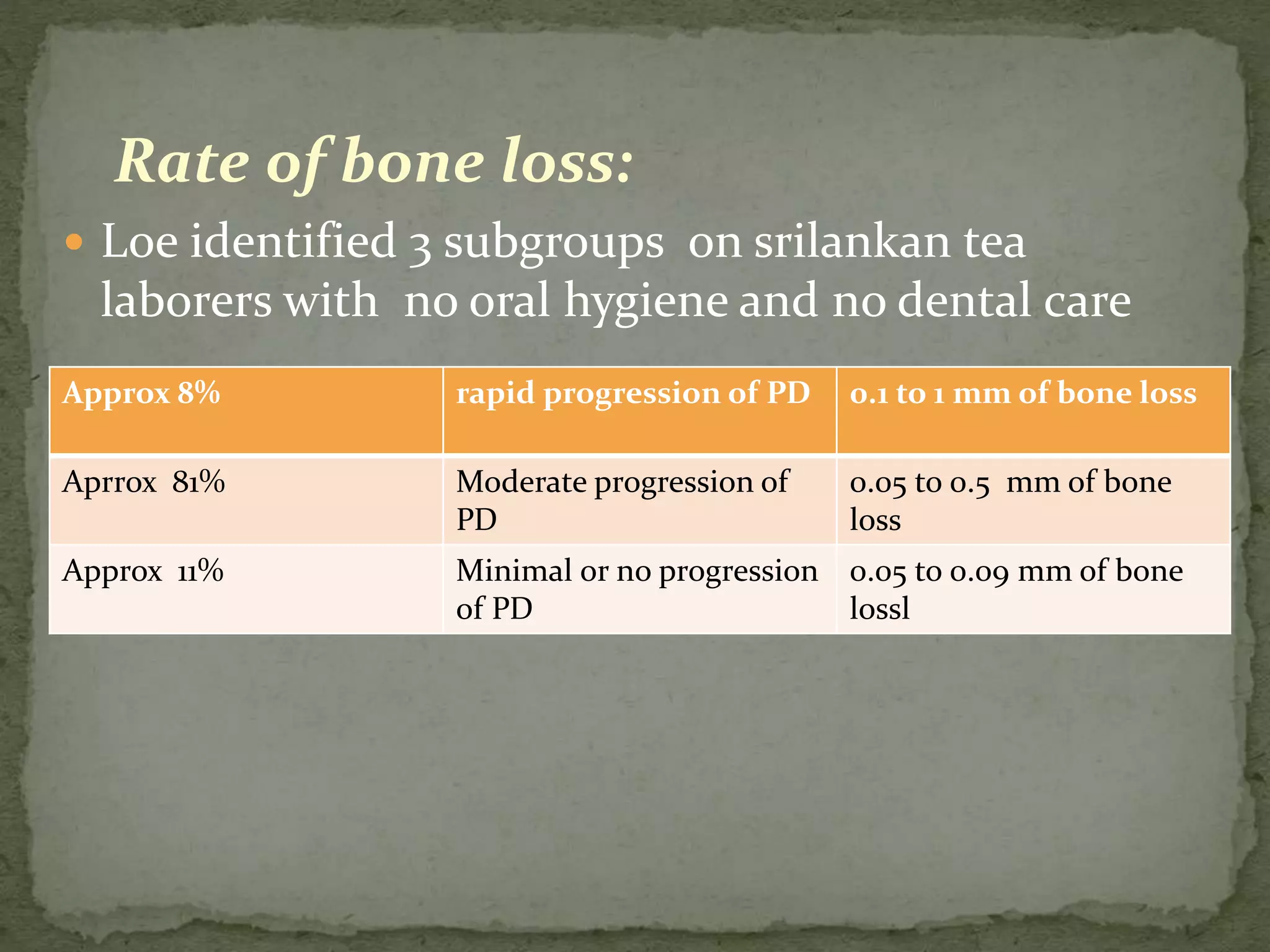
Rate of bone loss:
 Loe identified 3 subgroups on srilankan tea
laborers with no oral hygiene and no dental care
Approx 8% rapid progression of PD 0.1 to 1 mm of bone loss
Aprrox 81% Moderate progression of
PD
0.05 to 0.5 mm of bone
loss
Approx 11% Minimal or no progression
of PD
0.05 to 0.09 mm of bone
lossl
Periods of Destruction:
 It occurs in an episodic intermittent manner. The
destructive periods result in loss of collagen &
alveolar bone with deepening of periodontal pocket.
 Following theories have been offered in this context:
 Bursts of destructive activity are associated with
sub gingival ulceration, and an acute
inflammatory reaction, resulting in bone loss.
 (page rc et al 1982)
 Bursts of destructive activity coincide with
conversion of predominantly T-lymphocyte lesion
to one with predominantly B-lymphocyte plasma
cell infiltrate.(seymour GJ 1979)
 Periods of exacerbation associated with increase
of loose, unattached, motile, gram-ve, anaerobic
pocket flora and periods of remission coincide
with formation of dense, unattached, nonmotile,
gram+ve flora with tendency to mineralize.
(newman MG 1979)
 Tissue invasion by one or several bacterial species
followed by advanced local host defense.
 (saglie RF 1987)
Mechanisms of Bone destruction:
Factors involved in bone destruction are :
1) Bacterial- Bacterial plaque products induce
differentiation of bone progenitor cells into
osteoclasts & stimulate gingival cells to release
mediators.
2) Host mediated-
 prostaglandins & their precursors,
 interleukin-1α ( IL-1α) and IL-β,
 tumor necrosis factor alpha(TNF-α)
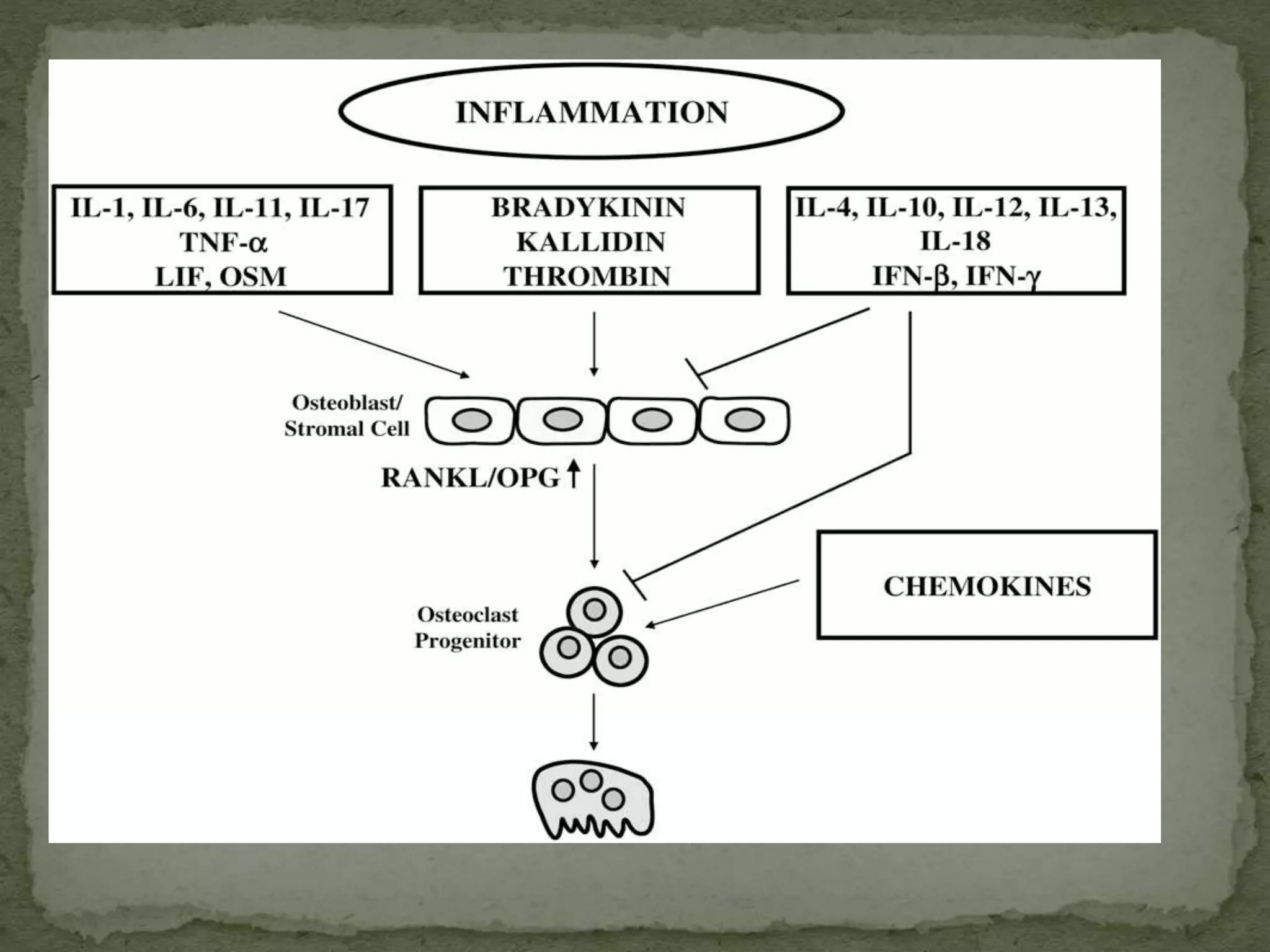
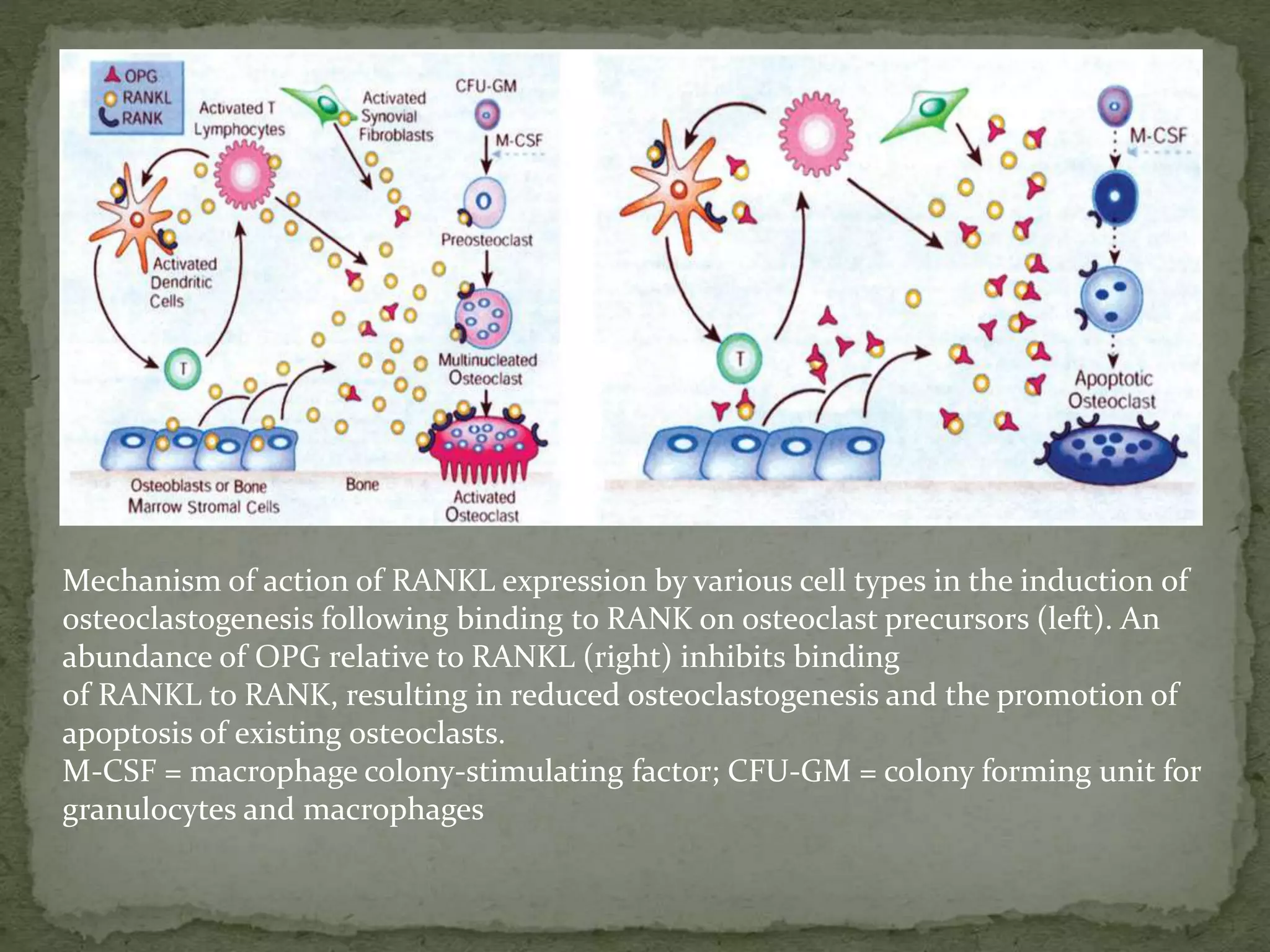
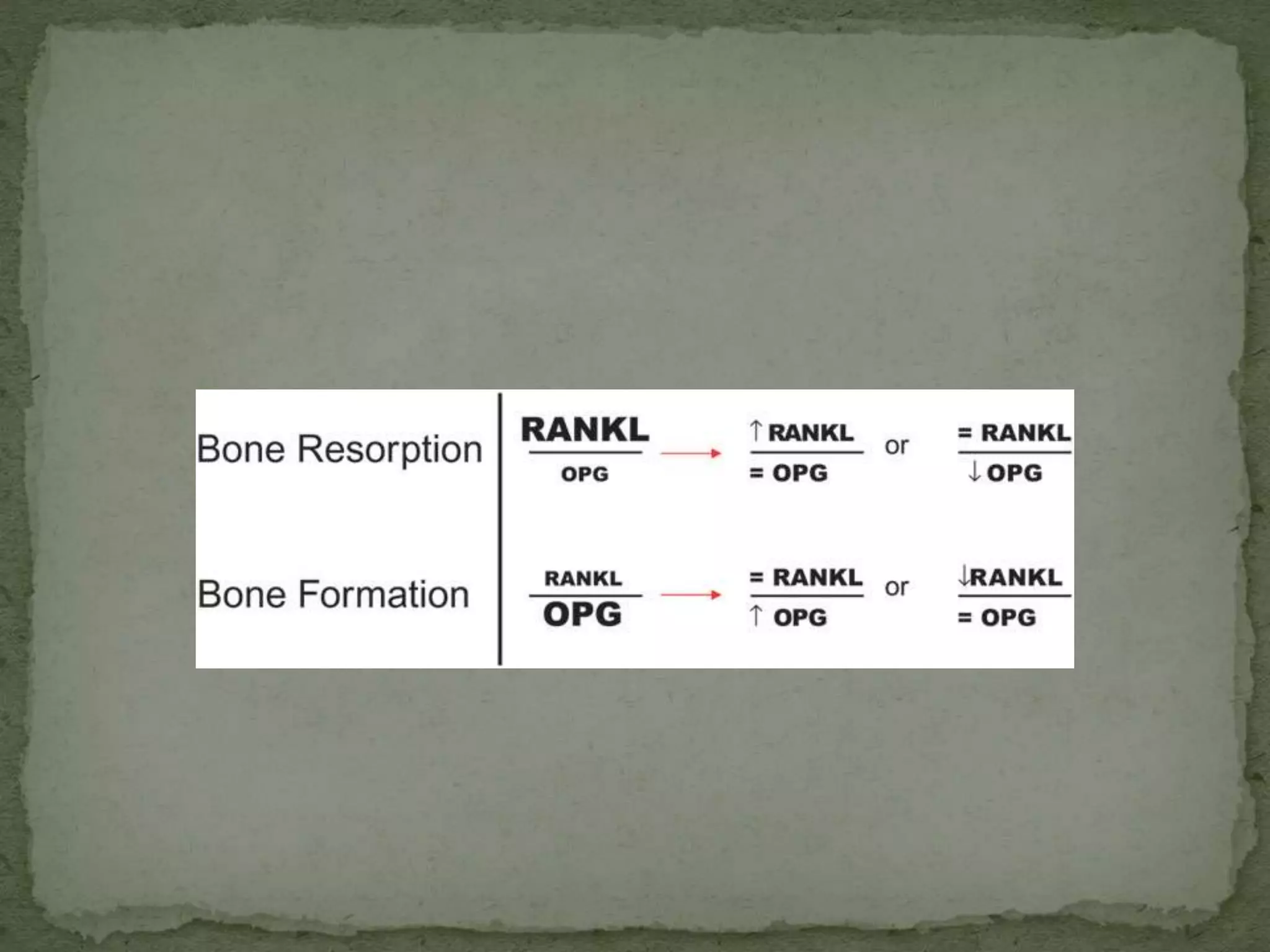
Mechanism of action of RANKL expression by various cell types in the induction of
osteoclastogenesis following binding to RANK on osteoclast precursors (left). An
abundance of OPG relative to RANKL (right) inhibits binding
of RANKL to RANK, resulting in reduced osteoclastogenesis and the promotion of
apoptosis of existing osteoclasts.
M-CSF = macrophage colony-stimulating factor; CFU-GM = colony forming unit for
granulocytes and macrophages
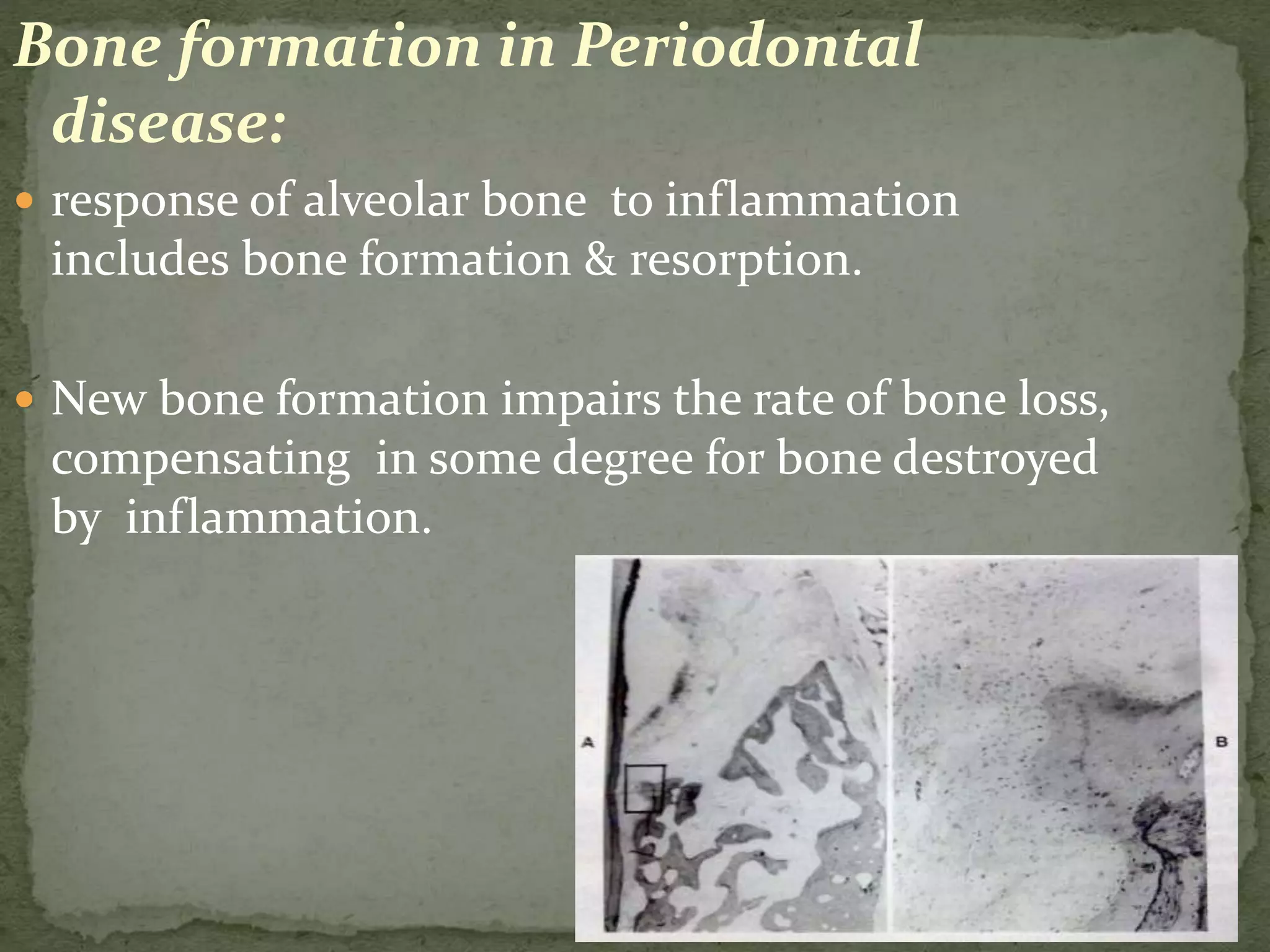
Bone formation in Periodontal
disease:
 response of alveolar bone to inflammation
includes bone formation & resorption.
 New bone formation impairs the rate of bone loss,
compensating in some degree for bone destroyed
by inflammation.
 Caused by increased compression and tension of
periodontal ligament.
 Leads to increased osteoclasts of alveolar bone to
necrosis of periodontal ligament & bone.
 Leads to resorption of bone and tooth structure.
 Persistent trauma results in funnel shaped
widening of the crestal portion of periodontal
ligament.
 Resorption of adjacent bone.
 Weakens tooth support & hence mobility.
Glickman 1950: Bone factor concept
Effect of systemic component on all cases of PD
Some systemic disorders also leads to periodontitis
such as:
 Osteoporosis
 Osteopenia
 Hyperparathyroidism
 Leukemia
 Langerhans cell histiocytosis
1968 Goren et al reported relationship between
osteopenia and periodontal disease(PD
 Normal variation in alveolar bone
 Exostoses
 Trauma from occlusion
 Buttressing bone formation (Lipping)
 Food impaction
 Aggressive periodontitis
Normal variation in alveolar bone-
Features substantially affect bone destructive
pattern in PDL disease :
 Thickness,width & crestal angulation of
interdental septa.
 Thickness of facial & lingual alveolar plates.
 Presence of fenestrations & dehiscences.
 Alignment of teeth.
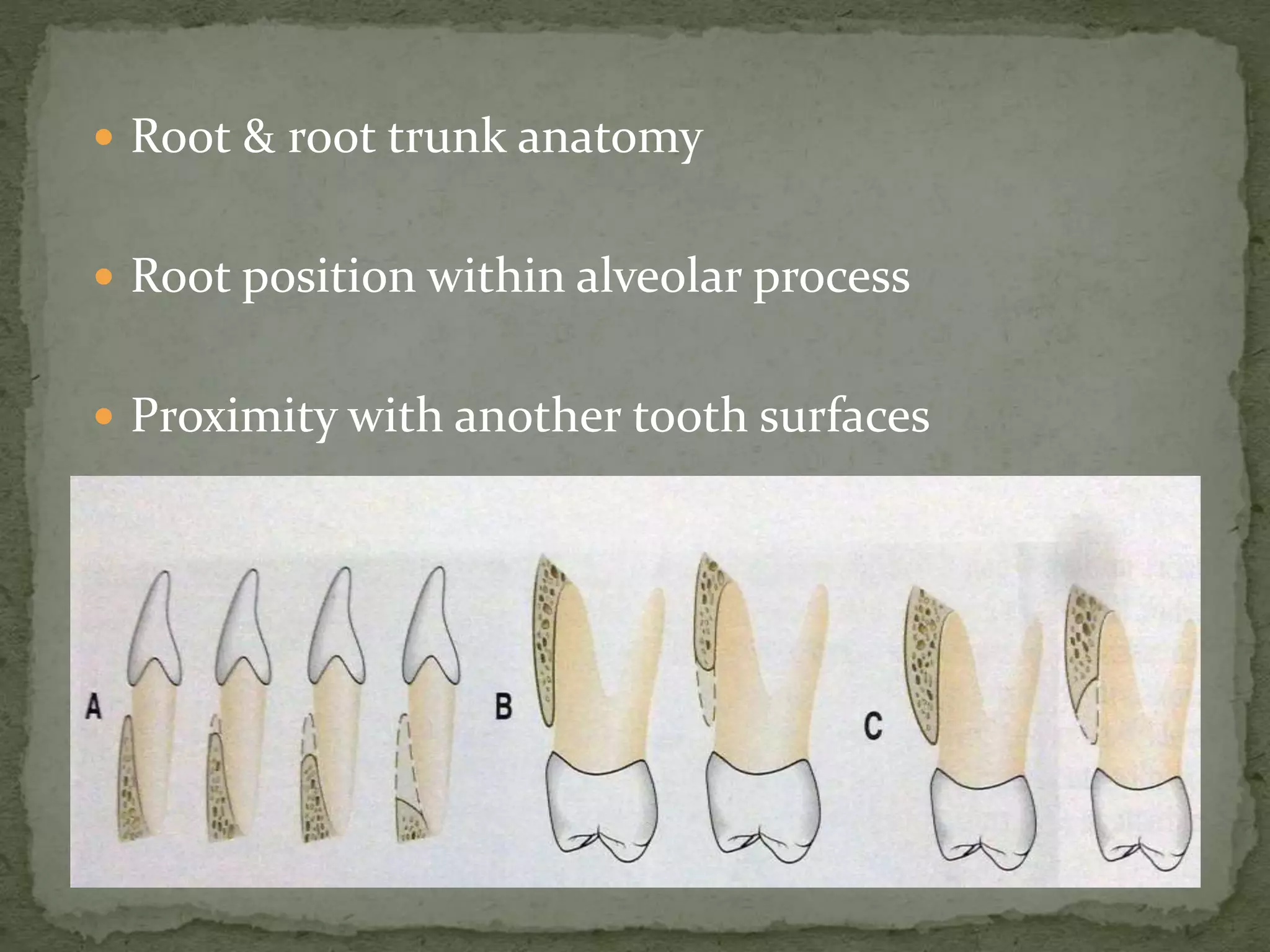
 Root & root trunk anatomy
 Root position within alveolar process
 Proximity with another tooth surfaces
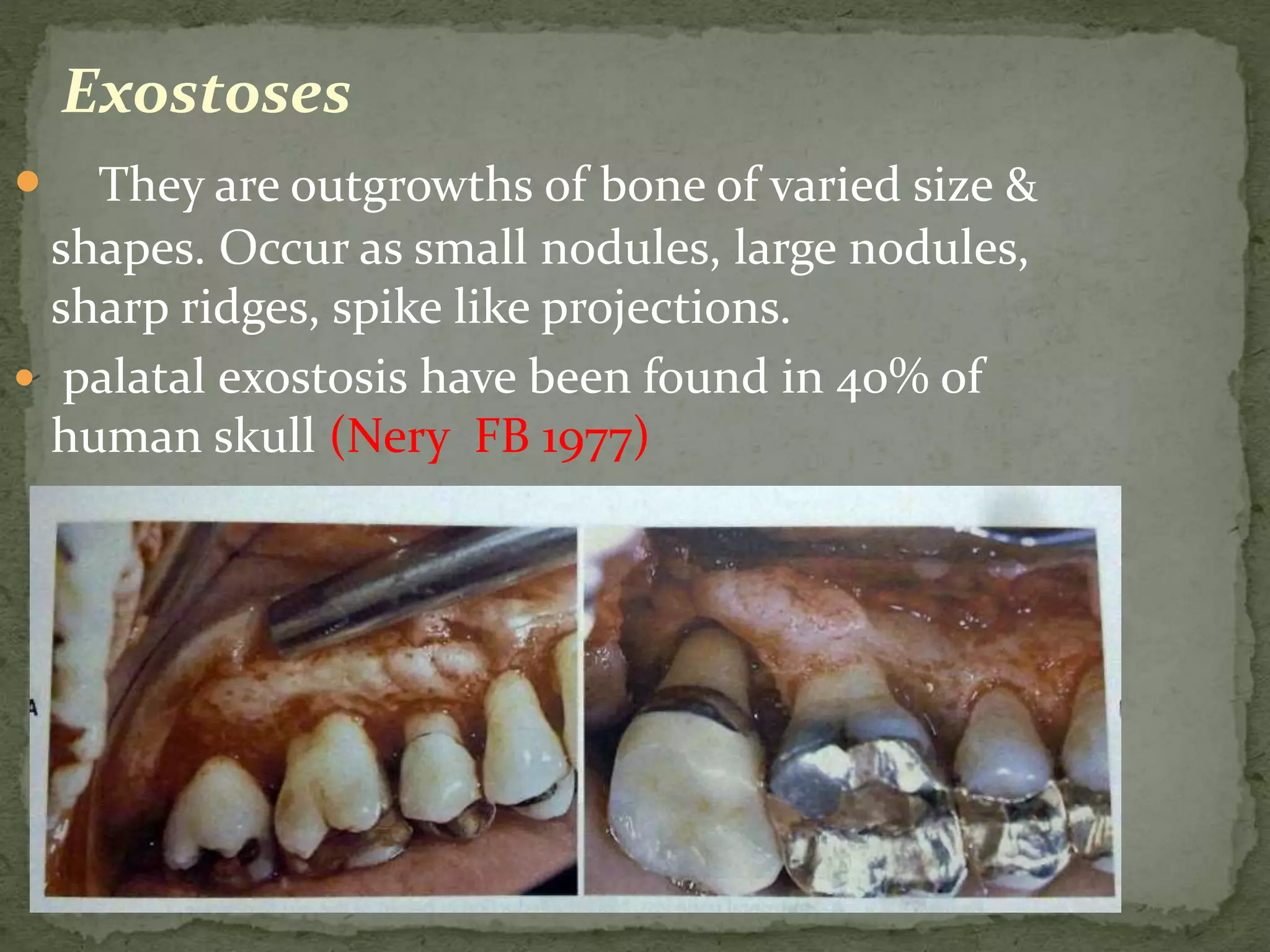
Exostoses
 They are outgrowths of bone of varied size &
shapes. Occur as small nodules, large nodules,
sharp ridges, spike like projections.
 palatal exostosis have been found in 40% of
human skull (Nery FB 1977)
Trauma from occlusion
 It may be a factor in determining the dimension
& shape of bone deformities.
 It may cause thickening of cervical margin of
alveolar bone or change in morphology of
bone(e.g, angular defects,buttressing bone).
Buttressing bone formation
(Lipping)
 Bone formation sometimes occurs
in attempt to buttress bony trabeculae weakened
by resorption.
 When it occurs on external surface referred as
Peripheral Buttresing bone formation.
 (Glickman I and Sumlow J 1965)
 Latter may cause bulging of bone contour ,
termed lipping .
Food impaction:
 Pressure & irritation from food impaction
contribute to inverted bone architecture.
 In some cases poor proximal relationship result
from shift in tooth position because of extensive
bone destruction preceding food impaction.
Aggressive periodontitis:
 Vertical or angular pattern of alveolar bone
destruction is found around first molars in
aggressive periodontitis.
 Horizontal bone loss
 Bone deformities (osseous Defects)
 Vertical or angular defects
 Osseous craters
 Bulbous bone contours
 Reversed architecture
 Ledges
 Furcation involvement
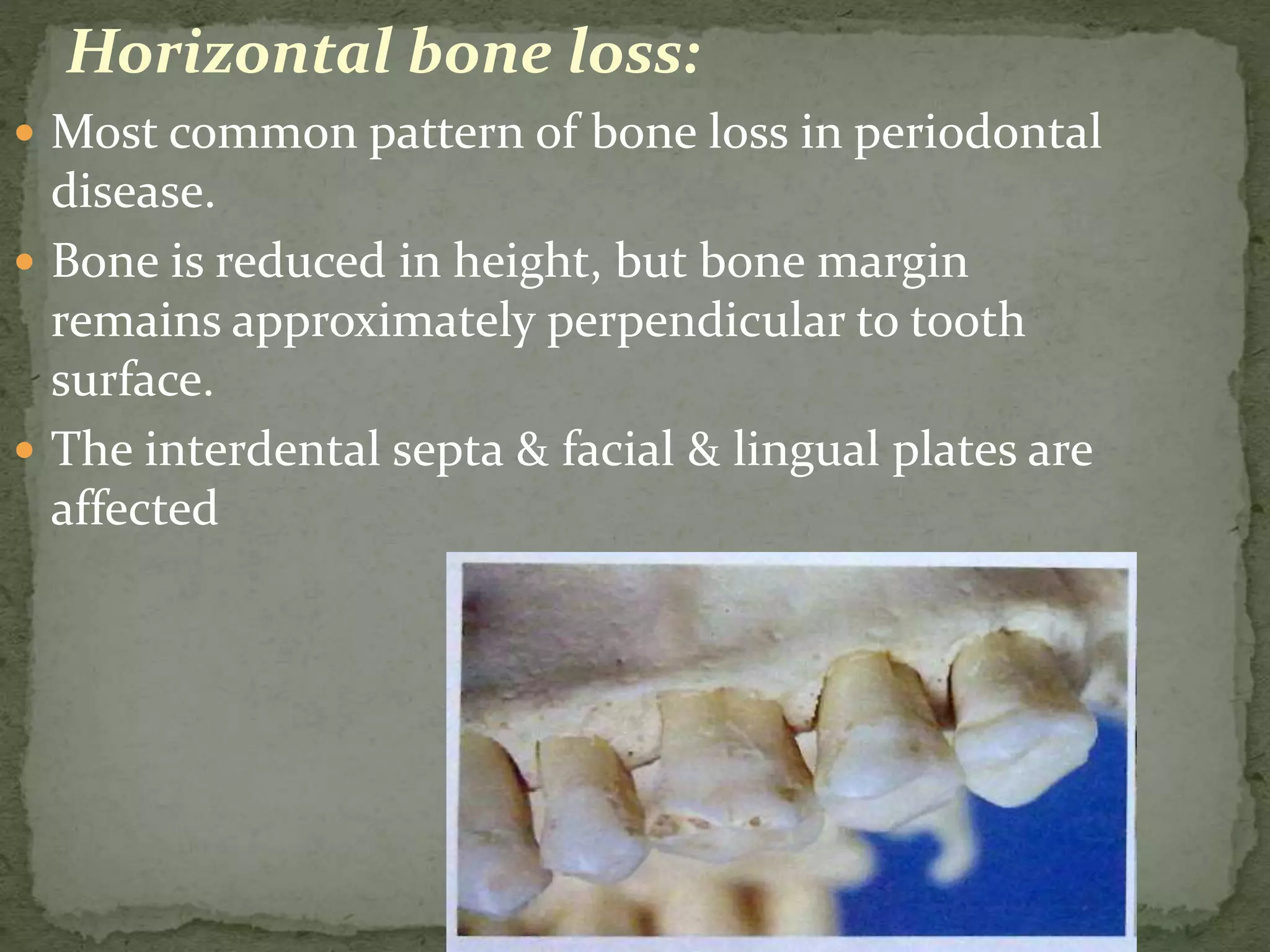
Horizontal bone loss:
 Most common pattern of bone loss in periodontal
disease.
 Bone is reduced in height, but bone margin
remains approximately perpendicular to tooth
surface.
 The interdental septa & facial & lingual plates are
affected
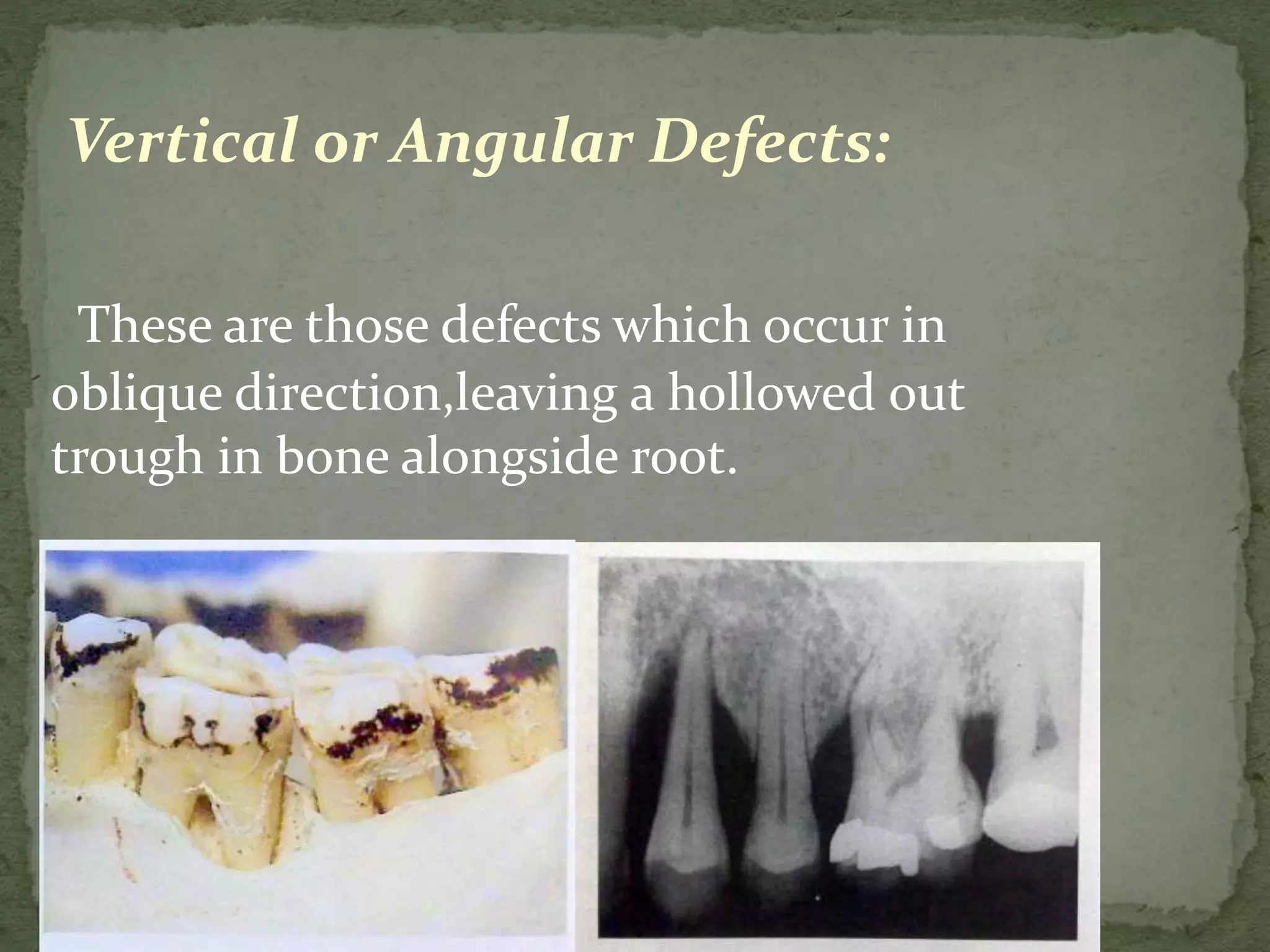
Vertical or Angular Defects:
These are those defects which occur in
oblique direction,leaving a hollowed out
trough in bone alongside root.
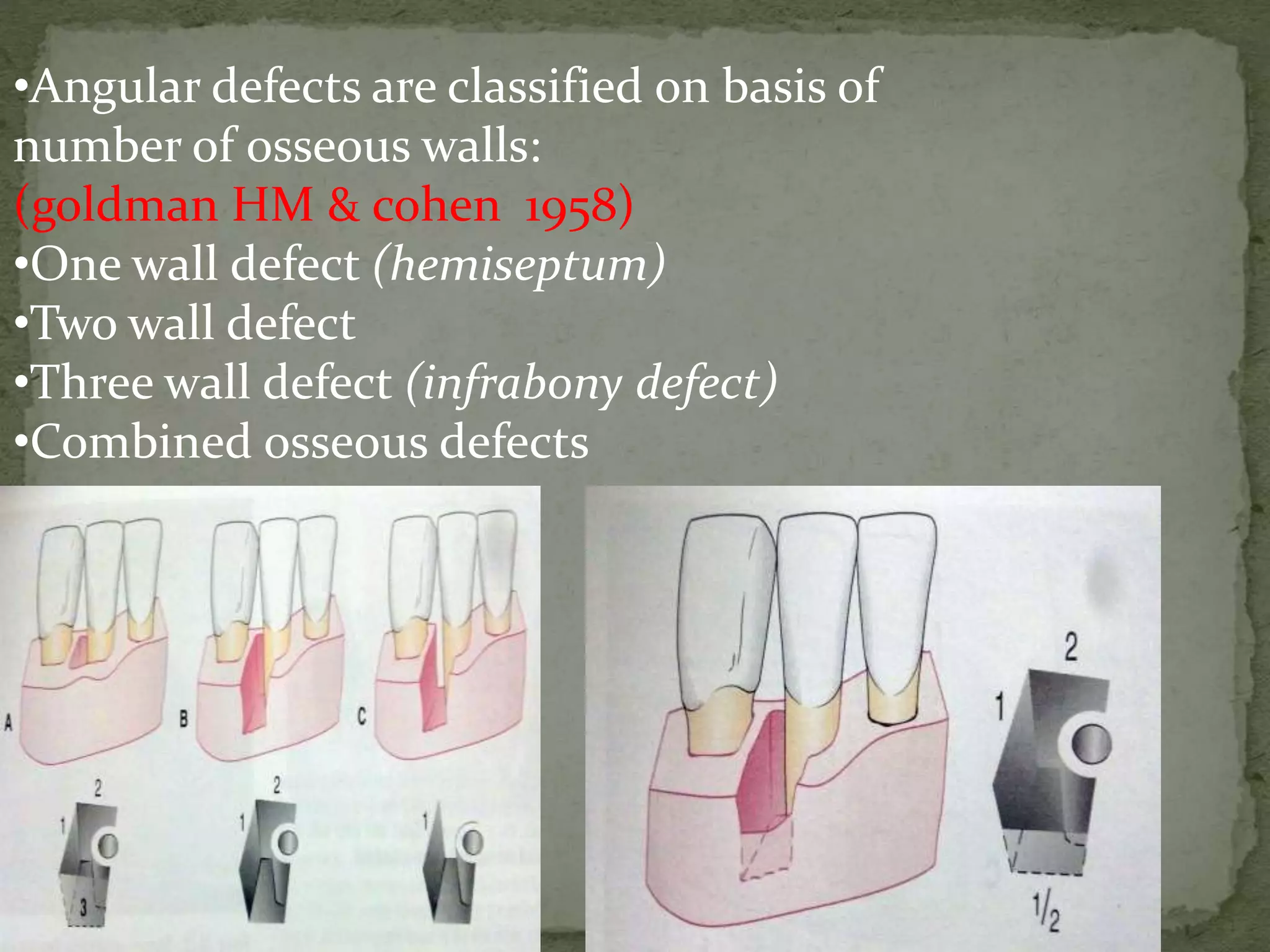
•Angular defects are classified on basis of
number of osseous walls:
(goldman HM & cohen 1958)
•One wall defect (hemiseptum)
•Two wall defect
•Three wall defect (infrabony defect)
•Combined osseous defects
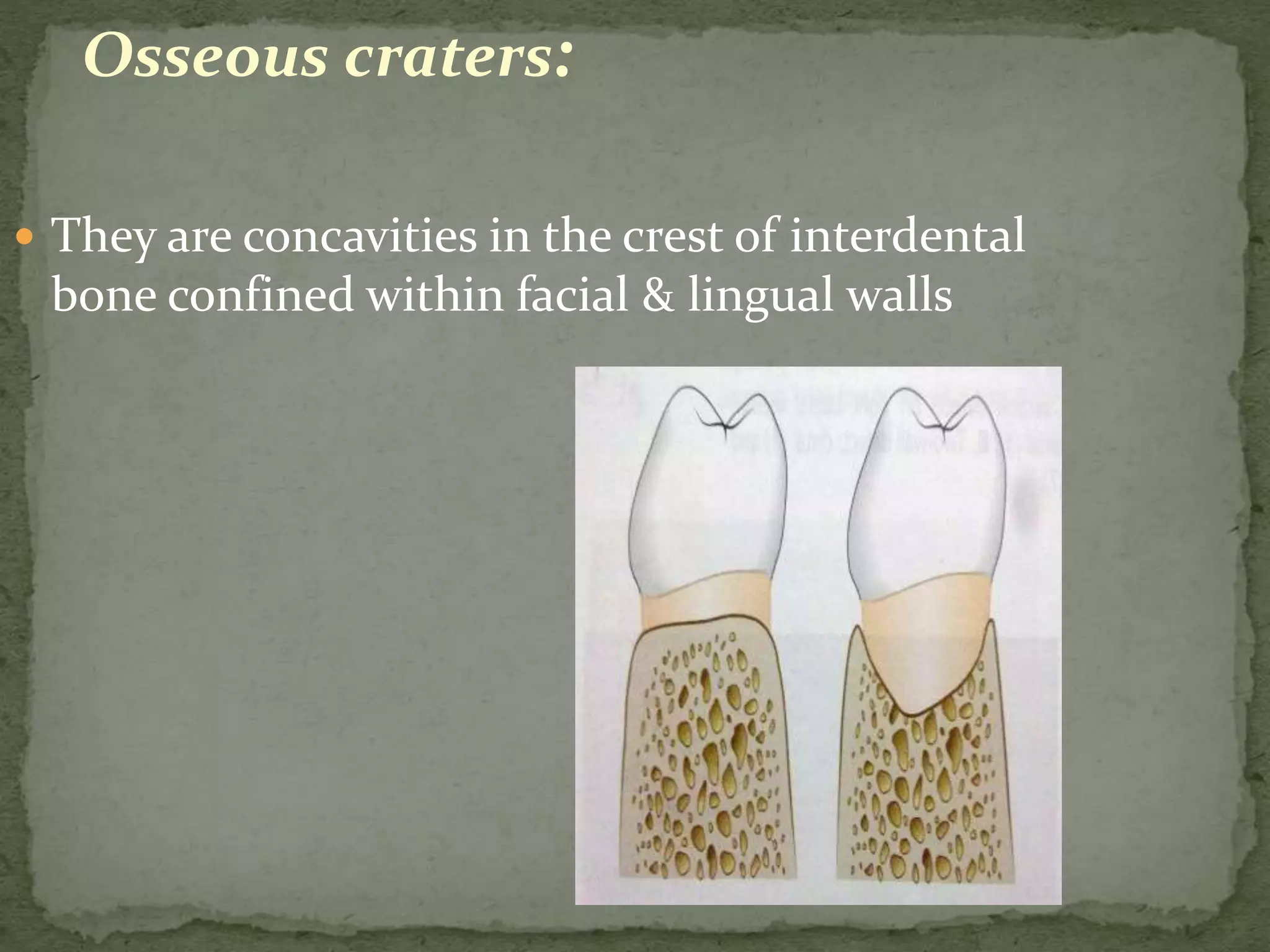
Osseous craters:
 They are concavities in the crest of interdental
bone confined within facial & lingual walls
Reasons
1) Interdental area collects plaque & difficult to
clean.
2) Normal flat or even concave faciolingual shape
of interdental septum in lower molars may favor
crater formation.
3) Vascular patterns from gingiva to center of
crest may provide pathway for inflammation.
(Sari JT et al 1968 )
Bulbous bone contours:
 They are bony enlargements caused by exostoses,
adaptation to function or buttressing bone
formation.
 Maxilla > mandible.
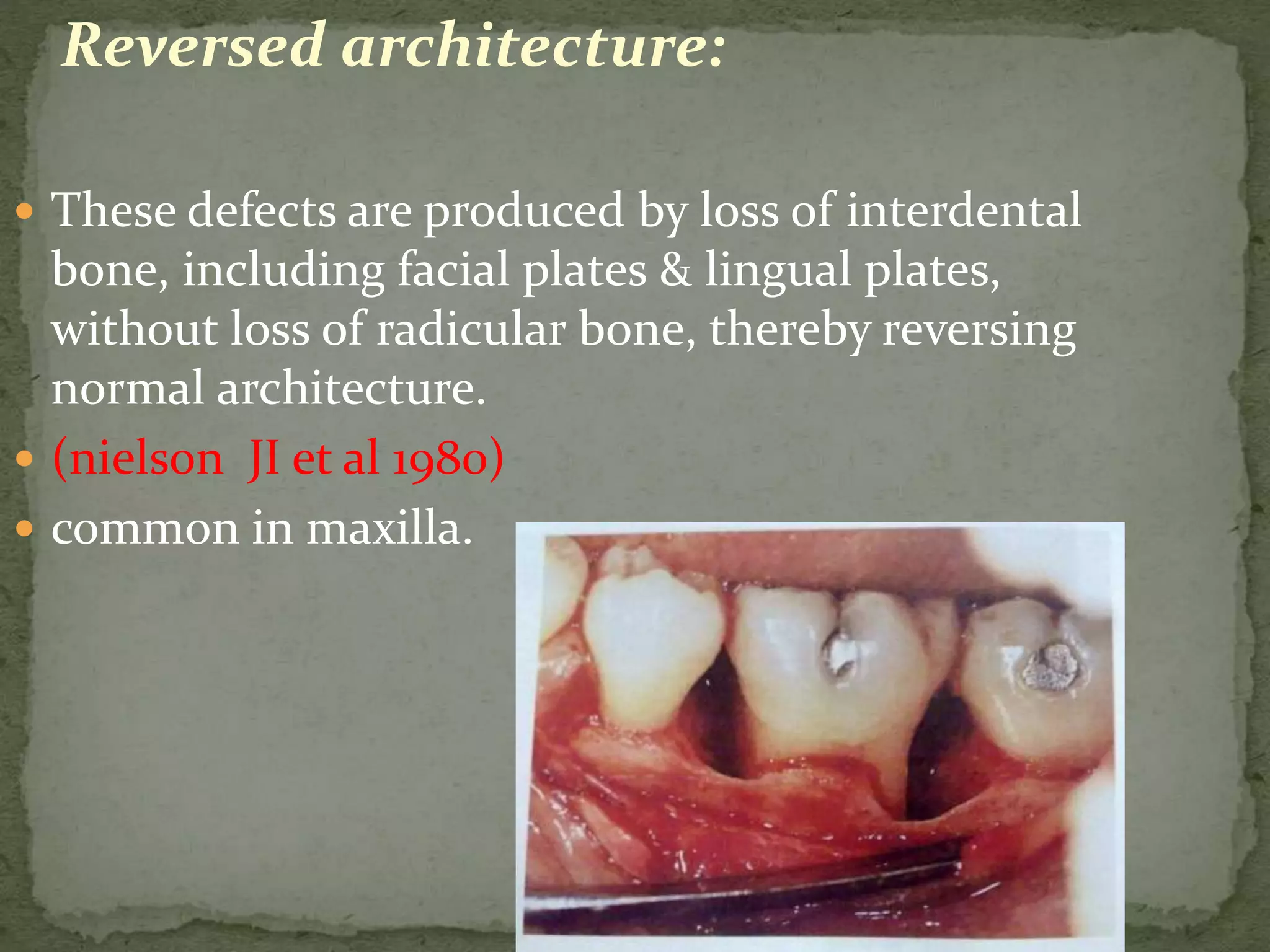
Reversed architecture:
 These defects are produced by loss of interdental
bone, including facial plates & lingual plates,
without loss of radicular bone, thereby reversing
normal architecture.
 (nielson JI et al 1980)
 common in maxilla.
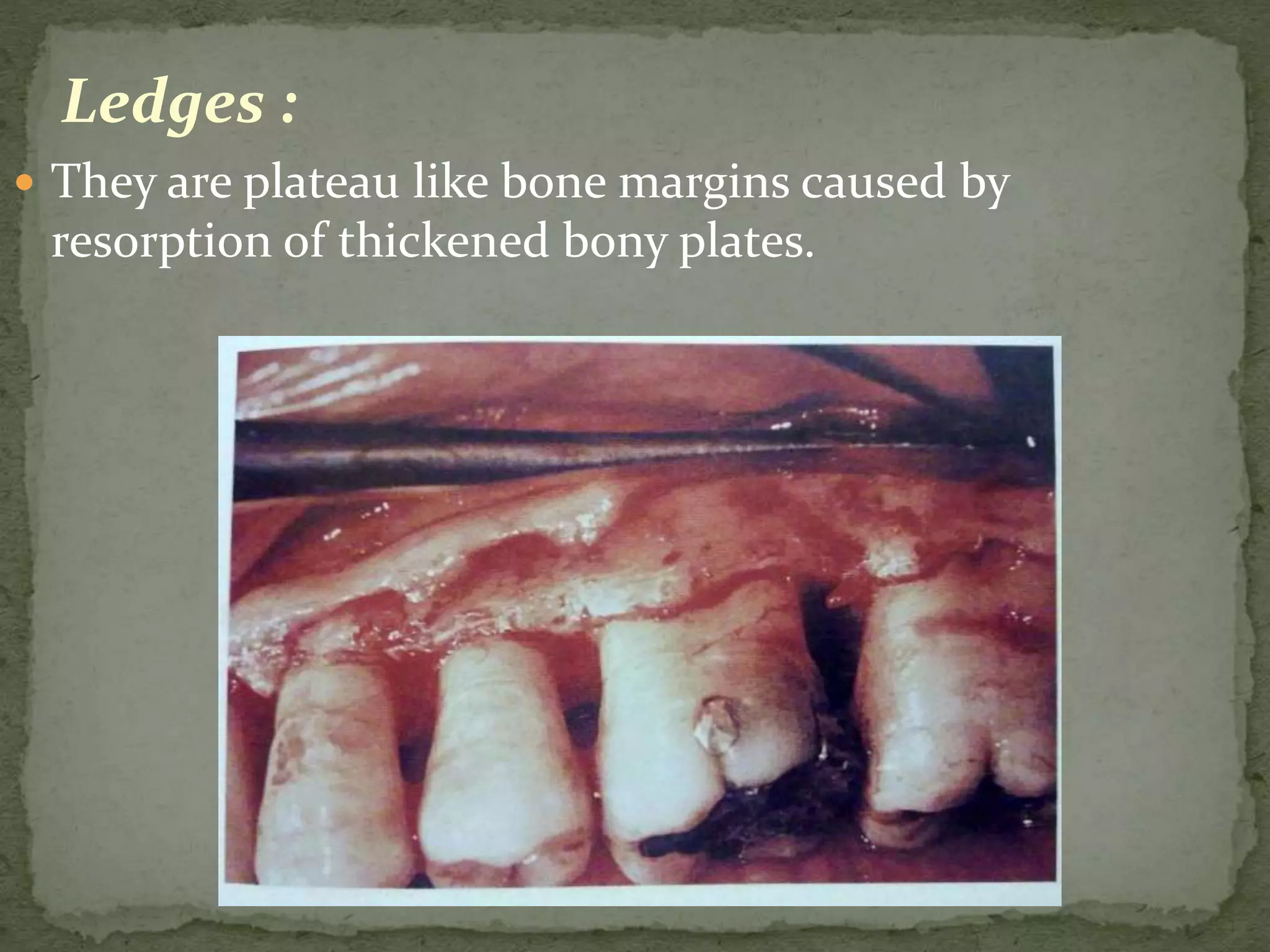
Ledges :
 They are plateau like bone margins caused by
resorption of thickened bony plates.
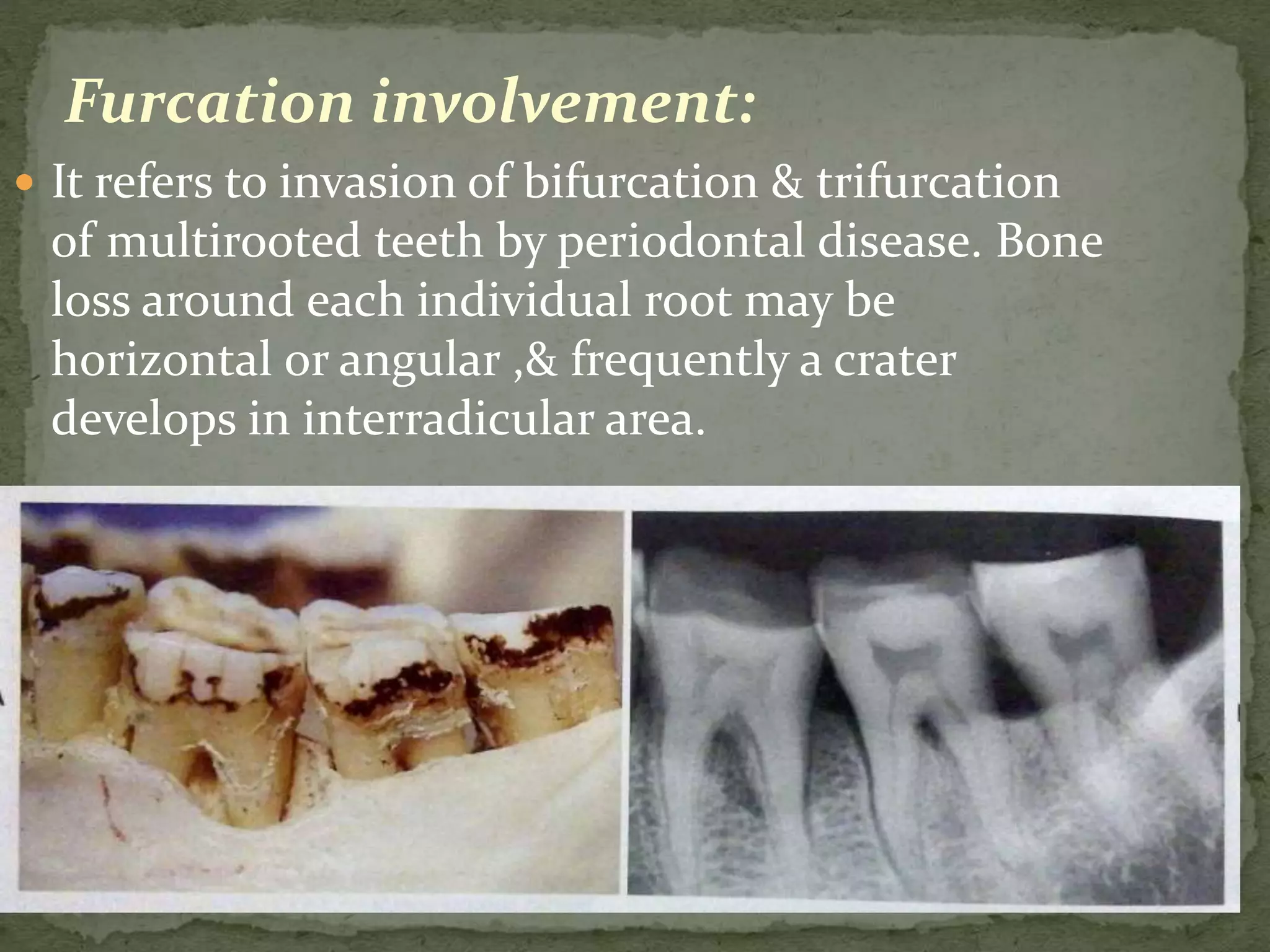
Furcation involvement:
 It refers to invasion of bifurcation & trifurcation
of multirooted teeth by periodontal disease. Bone
loss around each individual root may be
horizontal or angular ,& frequently a crater
develops in interradicular area.
Etiologic factors in furcation
involvement are :
 Uncontrolled plaque in furcation areas.
 Trauma from occlusion.
 Inflammation & oedema caused by plaque in
furcation area extrude the tooth.
 Presence of enamel projections in furcation
area.
 Presence of accessory pulpal canals in
furcation area.
 Inflammation and bone loss are hallmarks of
periodontal disease (PD).
 Amplification and propagation of the inflammatory
response through gingival tissue is critical to the
pathogenesis of periodontitis.
 RANKL–RANK–OPG axis may have a protective effect
on PD bone loss & this basis will form the rational
drug therapy in PD in the future.
 Cranza 9th edition
 Jane lindhe
 Page RC, Kornman KS. The pathogenesis of human
periodontitis: An introduction. Periodontol 2000 1997;
14:9-11.
Bone loss and patterns of bone destruction

Bone loss and patterns of bone destruction

  • 2.
    PRESENTED BY: Dr ANANDAJEY MDS 2ND YEAR DEPT. OF PERIODONTOLOGY AND ORAL IMPLANTOLOGY GUIDED BY: COL.DR . MSM BIIR (PROF & HOD) Dr PARUL ANEJA Dr ROHINI GABA
  • 3.
     INTRODUCTION  FACTORSDETERMINING BONE MORPHOLOGY  CAUSES OF BONE DESTRUCTION  RADIUS OF ACTION  RATE OF BONE LOSS  PERIOD OF DESTRUCTION  MECHANISM OF BONE DESTRUCTION  BONE FORMATION IN PD  BONE DESTRUCTION CAUSED BY TRAUMA FROM OCCLUSION .  BONE DESTRUCTION CAUSED BY SYSTEMIC DISORDERS  NORMAL VARIATION IN ALVEOLAR BONE  BONE DESTRUCTION PATTERN IN PD.  CONCLUSION.  REFERENCES
  • 4.
     Alveolar boneloss is most important and obvious feature of periodontal disease.  Height and density of the alveolar bone are maintained by an equilibrium by local and systemic factors between bone formation and bone resorption .  Immune and inflammatory responses are critical to the pathogenesis of periodontitis and are shaped by a number of host-related factors, both intrinsic (e.g., genetics) and induced (e.g., pollutants).(Page RC, Kornman KS 1997)  Initial response to bacterial infection is a local inflammatory reaction that activates the innate immune system .(Graves DT, Cochran D)
  • 5.
     Initial localizedresponse results in the release of an array of cytokines and other mediators and propagation of inflammation through the gingival tissues. (Graves DT, Cochran D)  The inflammatory process then drives the destruction of connective tissue and alveolar bone.  Periodontitis involves an inflammatory component as well as altered bone metabolism
  • 6.
     Normal variationin alveolar bone:  Thickness  Width  Crestal angulation  Thickness of interdental septa  Alignment of teeth  Root and root trunk anatomy.  Exostosis  Trauma from occlusion  Buttressing bone formation  Food impaction  Aggressive periodontitis.
  • 7.
     Extension ofGingival inflammation  Trauma from Occlusion  Systemic disorders
  • 8.
     Extension ofinflammation from marginal gingiva into the supporting periodontal tissues.  Transition from Gingivitis to Periodontitis is associated with changes in composition of bacterial plaque.  In advanced stages of disease the number of motile organisms and spirochetes increases, whereas number of coccoid rods and straight rods decreases.(Lindhe J ,Liljenberg B ,Listgarten M A 1980)
  • 9.
     Cellular compositionof infiltrated connective tissue changes with increased severity of lesion.  Fibroblasts and lymphocytes predominate in stage-I gingivitis and whereas number of plasma cells and blast cells increases gradually.  Seymour et al 1978: Contained gingivitis - preponderant T-lymphocyte are seen in gingivitis once B –lymphcyte comes it becomes progressively distructive.
  • 10.
    Inflammation extends along collagen fibre bundlesand follows course of blood vessels through loosely arranged tissues around them into alveolar bone. (weinmann jp 1941)
  • 11.
    Interproximally : Inflammation spreadsto loose connective tissue around blood vessels,through fibres,and then into bone through vessel channels.
  • 12.
    thus perforating thecrest of interdental septum at the centre,towards the side of crest,or at the angle of septum less frequently the inflammation spreads from gingiva directly into periodontal ligament and from there into interdental septum.(akyoshi M,Mori K 1967)
  • 14.
     As inflammationreaches bone:-  Spreads into marrow spaces. Replaces marrow with a leucocytic & fluid exudate,new blood vessels & proliferating fibroblasts. Multinuclear osteoclasts & mononuclear phagocytes increase in number. Bone surfaces appear,lined with Howship lacunae. In marrow spaces,resorption proceeds from within causing thinning of surrounding bony trabeculae & enlargement of marrow spaces. Leads to destruction of bone & reduction in bone height. Fatty bone marrow is replaced by the fibrous type of
  • 15.
    Radius of action: It was suggested that locally produced bone resorption factors may need to be present in proximity of bone surface to exert their action.( Garant & Cho 1979)  Range of effectiveness about 1.5mm to 2.5mm within which bacterial plaque can induce loss of bone.( Page & Schroeder 1982)  On the basis of the waerhaug’s ,measurement made on the human autopsy specimen postulated the range Page & Schroeder .
  • 16.
    Rate of boneloss:  In a study persons with no oral hygiene & no dental care, Loe et al (1978) found the rate of bone loss to average about 0.2 mm a year for facial surfaces and 0.3 mm for proximal surfaces when periodontal disease was allowed to progress untreated.
  • 17.
    Rate of boneloss:  Loe identified 3 subgroups on srilankan tea laborers with no oral hygiene and no dental care Approx 8% rapid progression of PD 0.1 to 1 mm of bone loss Aprrox 81% Moderate progression of PD 0.05 to 0.5 mm of bone loss Approx 11% Minimal or no progression of PD 0.05 to 0.09 mm of bone lossl
  • 18.
    Periods of Destruction: It occurs in an episodic intermittent manner. The destructive periods result in loss of collagen & alveolar bone with deepening of periodontal pocket.  Following theories have been offered in this context:
  • 19.
     Bursts ofdestructive activity are associated with sub gingival ulceration, and an acute inflammatory reaction, resulting in bone loss.  (page rc et al 1982)  Bursts of destructive activity coincide with conversion of predominantly T-lymphocyte lesion to one with predominantly B-lymphocyte plasma cell infiltrate.(seymour GJ 1979)
  • 20.
     Periods ofexacerbation associated with increase of loose, unattached, motile, gram-ve, anaerobic pocket flora and periods of remission coincide with formation of dense, unattached, nonmotile, gram+ve flora with tendency to mineralize. (newman MG 1979)  Tissue invasion by one or several bacterial species followed by advanced local host defense.  (saglie RF 1987)
  • 21.
    Mechanisms of Bonedestruction: Factors involved in bone destruction are : 1) Bacterial- Bacterial plaque products induce differentiation of bone progenitor cells into osteoclasts & stimulate gingival cells to release mediators. 2) Host mediated-  prostaglandins & their precursors,  interleukin-1α ( IL-1α) and IL-β,  tumor necrosis factor alpha(TNF-α)
  • 23.
    Mechanism of actionof RANKL expression by various cell types in the induction of osteoclastogenesis following binding to RANK on osteoclast precursors (left). An abundance of OPG relative to RANKL (right) inhibits binding of RANKL to RANK, resulting in reduced osteoclastogenesis and the promotion of apoptosis of existing osteoclasts. M-CSF = macrophage colony-stimulating factor; CFU-GM = colony forming unit for granulocytes and macrophages
  • 25.
    Bone formation inPeriodontal disease:  response of alveolar bone to inflammation includes bone formation & resorption.  New bone formation impairs the rate of bone loss, compensating in some degree for bone destroyed by inflammation.
  • 26.
     Caused byincreased compression and tension of periodontal ligament.  Leads to increased osteoclasts of alveolar bone to necrosis of periodontal ligament & bone.  Leads to resorption of bone and tooth structure.  Persistent trauma results in funnel shaped widening of the crestal portion of periodontal ligament.  Resorption of adjacent bone.  Weakens tooth support & hence mobility.
  • 27.
    Glickman 1950: Bonefactor concept Effect of systemic component on all cases of PD Some systemic disorders also leads to periodontitis such as:  Osteoporosis  Osteopenia  Hyperparathyroidism  Leukemia  Langerhans cell histiocytosis 1968 Goren et al reported relationship between osteopenia and periodontal disease(PD
  • 28.
     Normal variationin alveolar bone  Exostoses  Trauma from occlusion  Buttressing bone formation (Lipping)  Food impaction  Aggressive periodontitis
  • 29.
    Normal variation inalveolar bone- Features substantially affect bone destructive pattern in PDL disease :  Thickness,width & crestal angulation of interdental septa.  Thickness of facial & lingual alveolar plates.  Presence of fenestrations & dehiscences.  Alignment of teeth.
  • 30.
     Root &root trunk anatomy  Root position within alveolar process  Proximity with another tooth surfaces
  • 31.
    Exostoses  They areoutgrowths of bone of varied size & shapes. Occur as small nodules, large nodules, sharp ridges, spike like projections.  palatal exostosis have been found in 40% of human skull (Nery FB 1977)
  • 32.
    Trauma from occlusion It may be a factor in determining the dimension & shape of bone deformities.  It may cause thickening of cervical margin of alveolar bone or change in morphology of bone(e.g, angular defects,buttressing bone).
  • 33.
    Buttressing bone formation (Lipping) Bone formation sometimes occurs in attempt to buttress bony trabeculae weakened by resorption.  When it occurs on external surface referred as Peripheral Buttresing bone formation.  (Glickman I and Sumlow J 1965)  Latter may cause bulging of bone contour , termed lipping .
  • 34.
    Food impaction:  Pressure& irritation from food impaction contribute to inverted bone architecture.  In some cases poor proximal relationship result from shift in tooth position because of extensive bone destruction preceding food impaction.
  • 35.
    Aggressive periodontitis:  Verticalor angular pattern of alveolar bone destruction is found around first molars in aggressive periodontitis.
  • 36.
     Horizontal boneloss  Bone deformities (osseous Defects)  Vertical or angular defects  Osseous craters  Bulbous bone contours  Reversed architecture  Ledges  Furcation involvement
  • 37.
    Horizontal bone loss: Most common pattern of bone loss in periodontal disease.  Bone is reduced in height, but bone margin remains approximately perpendicular to tooth surface.  The interdental septa & facial & lingual plates are affected
  • 38.
    Vertical or AngularDefects: These are those defects which occur in oblique direction,leaving a hollowed out trough in bone alongside root.
  • 39.
    •Angular defects areclassified on basis of number of osseous walls: (goldman HM & cohen 1958) •One wall defect (hemiseptum) •Two wall defect •Three wall defect (infrabony defect) •Combined osseous defects
  • 40.
    Osseous craters:  Theyare concavities in the crest of interdental bone confined within facial & lingual walls
  • 41.
    Reasons 1) Interdental areacollects plaque & difficult to clean. 2) Normal flat or even concave faciolingual shape of interdental septum in lower molars may favor crater formation. 3) Vascular patterns from gingiva to center of crest may provide pathway for inflammation. (Sari JT et al 1968 )
  • 42.
    Bulbous bone contours: They are bony enlargements caused by exostoses, adaptation to function or buttressing bone formation.  Maxilla > mandible.
  • 43.
    Reversed architecture:  Thesedefects are produced by loss of interdental bone, including facial plates & lingual plates, without loss of radicular bone, thereby reversing normal architecture.  (nielson JI et al 1980)  common in maxilla.
  • 44.
    Ledges :  Theyare plateau like bone margins caused by resorption of thickened bony plates.
  • 45.
    Furcation involvement:  Itrefers to invasion of bifurcation & trifurcation of multirooted teeth by periodontal disease. Bone loss around each individual root may be horizontal or angular ,& frequently a crater develops in interradicular area.
  • 46.
    Etiologic factors infurcation involvement are :  Uncontrolled plaque in furcation areas.  Trauma from occlusion.  Inflammation & oedema caused by plaque in furcation area extrude the tooth.  Presence of enamel projections in furcation area.  Presence of accessory pulpal canals in furcation area.
  • 47.
     Inflammation andbone loss are hallmarks of periodontal disease (PD).  Amplification and propagation of the inflammatory response through gingival tissue is critical to the pathogenesis of periodontitis.  RANKL–RANK–OPG axis may have a protective effect on PD bone loss & this basis will form the rational drug therapy in PD in the future.
  • 48.
     Cranza 9thedition  Jane lindhe  Page RC, Kornman KS. The pathogenesis of human periodontitis: An introduction. Periodontol 2000 1997; 14:9-11.