P. Anudeep et al Int. Journal of Engineering Research and Application
ISSN : 2248-9622, Vol. 3, Issue 6, Nov-Dec 2013, pp.382-385

RESEARCH ARTICLE

www.ijera.com

OPEN ACCESS

Design and Implementation of 2mbps Data and Voice Frame
Structure
P. Anudeep1, N. Vasudeva Reddy2
1, 2

M.Tech, Mlrit

Abstract
Most digital data are not stored in the most compact form. Rather, they are stored in whatever way makes them
easiest to use, such as: ASCII text from word processors, binary code that can be executed on a computer,
individual samples from a data acquisition system. The soft core allows the manipulation of E1(2Mbps)
2048KHz 32-channel carrier information. It inserts/removes data into/from E1 frame and multiframe structures.
The main use of the developed soft core in the implementation of data communication equipment is to allow
multiple users to share a common 2Mbps carrier with a flexible scheme for bandwidth allocation. The hardware
module that increases performance of the data communications.
KEYWORDS –2Mbps carrier frame, Drop_insert

I.

INTRODUCTION

Data compression is the general term for the
various algorithms and programs developed to
address this problem. A compression program is used
to convert data from an easy-to-use format to one
optimized
for
compactness.
Likewise,
an
uncompression program returns the information to its
original form.
A series of digital multiplexes graded
according to capability so that multiplexing at one
level combines a defined number of digital signals,
each having the digit rate prescribed for the next
lower order, into a digital signal having a prescribed
digit rate which is then available for further
combination with other digital signals of the same
rate in a digital multiplex of the next higher order.
The design implements the 2Mbps carrier
frame for adding and dropping for the scope of
individual enterprise users research & development.
The IP core is a complex, pre-designed and preverified hardware module that can be used in the
composition of large circuits, typically custom VLSI
integrated circuits or large programmable devices,
such as multimillion-gate FPGAs. The developed
software code in the form of hardware description
language file will support some applications & may
not support some functions due to synchronization at
the final implementation.
The developed design used for a telecom
applications in the form of E1 carrier transmission

www.ijera.com

protocol. The design operates dropping and adding
information from/to an E1 carrier frame, or simply
E1 frame. This hardware design respects the ITU-T
Standards G.703.
G.704 AND G.706 [1][2][3].The developed
module posed challenges in the synchronization of
data and control information. A dedicated IC to
mount an E1 frame and perform multiframe
alignment detection, Cyclic Redundancy Check
(CRC) computation and time slot detection. To
execute the add-drop function the usual solution is to
add a micro-controller. The hardware module used to
cascade several add-drop modules in a single
equipment. The next section describes the 2Mbps
frame structure . section 3 gives the hardware
implementation of the design for 2Mbps frame
structure. Section 4 gives the output waveforms of
each module. Section 5 presents a set of conclusions.

II.

Design and implementation of E1
Carrier Frame Structure

2.1 E1 multi Frame Structure
E1 is the lowest level of the Plesiochronous
Digital Hierarchy (PDH). It is among the most
common ways of transmitting voice and data over
telephone and data networks. The signal transported
in an E1 carrier allows the transmission of up to 31
voice or data channels plus 1channel dedicated to
carry low level control information

382 | P a g e
P. Anudeep et al Int. Journal of Engineering Research and Application
ISSN : 2248-9622, Vol. 3, Issue 6, Nov-Dec 2013, pp.382-385
Time slot 1
SMF

N

Time slot 2

Time slot 3

www.ijera.com

Time slot 31

1 2 3 4 5 6 7 8 1 2 3 4 5 6 7 8 1 2 3 4 5 6 7 8 …… 1 2 3 4 5 6 7 8
0 C1 0 0 1 1 0 1 1
1 0 1 A S4 S5 S6 S7 S8
2 C2 0 0 1 1 0 1 1

I

3 0

A S4 S5 S6 S7 S8

4 C3 0 0 1 1 0 1 1
5 1 1 A S4 S5 S6 S7 S8
MULTIFRAME

6 C4 0 0 1 1 0 1 1
7 0 1 A S4 S5 S6 S7 S8
8 C1 0 0 1 1 0 1 1
9 1 1 A S4 S5 S6 S7 S8
10 C2 0 0 1 1 0 1 1
II

11 1 1 A S4 S5 S6 S7 S8
12 C3 0 0 1 1 0 1 1
13 E

1 A S4 S5 S6 S7 S8

14 C4 0 0 1 1 0 1 1
15 E

1 A S4 S5 S6 S7 S8

C1, C2,C3,C4 : SMF CRC code ,computed during transmission and inserted in the SMF that follows it
E: CRC – 4 error ,indicates if the computed CRC is equal or not to the received CRC in each SMF
A: remote alarm indication , bit 3 of all odd frames indicates the event of a remote alarm
S4, S5,S6,S7,S8 : service channel or synchronization status messages
Fig 1 Basic E1 MF Structure ,highlighting the control information structure in time slot 0
Each channel in a frame has 8 bits and is
called a time slot. Thus, a frame contains a total of
256 bits. Time slots in a frame are numbered from 0
to 31. Each time slot corresponds to a 64Kbps
channel carrying 8 bits of either data or an 8KHz
digitized voice sample. Bits in a time slot are
numbered from 1 to 8. Time slots are combined using
Timing Division Multiplexing (TDM) at 2,048MHz.
Thus, a frame is transmitted each 125μs . Multiple
frames are grouped to transport alignment, error
detection and service information. Eight consecutive
frames constitute an E1 submultiframe (SMF)
structure. Two consecutive E1 submultiframes form
an E1 multiframe (MF). E1 carrier equipment
transmits and/or receives an MF each 2ms. Frames in
an MF are numbered from 0 to 15. The basic E1
frame and multiframe structure is depicted in
Figure1.
The first time slot of each frame, named
time slot 0 contains MF basic control information.
Two kinds of alignment are employed, frame and
MF alignment. Frame alignment provides frame
synchronism information, where every even frame
contains a “0011011” pattern from bit 2 to bit 8,
and all odd frames have a ‘1’ in bit 2. MF alignment
provides MF synchronism, where every odd frame
from 1 to 11 has in bit 1 a value that generates a
“001011” pattern along an MF. The other time slots
(1 to 31) are responsible for carrying voice and/or
data. As the frame repetition rate is 8KHz, the basic
frequency of the frame is 2048KHz. Time slot 16 can
be used by higher level protocols to carry control
information such as signaling start and end of a
phone call.

www.ijera.com

III.

DROP_INSERT DESIGN

The Drop_Insert circuit main function is
threefold. It receives E1 frames coded either in
HDB3 or AMI formats and a binary data stream to
insert in the incoming frame, of ASCII text from
word processor of the external source. Then, it
replaces a contiguous set of time slots in the
incoming E1 frame with the data in the binary
stream. Finally, the new E1 frame and the dropped
set of time slots are sent to the external world. These
functions are executed continuously, in real-time.
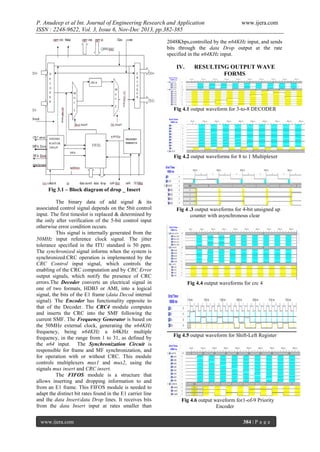
Figure 3.2 shows the block diagram for the
Drop_Insert IP soft core. The communication with
the external world can be roughly divided into four
interfaces:
(i) E1(2Mbps) input-output; (ii) binary data stream;
(iii) service channel;
(iv) control
The E1 input/output interface comprises two
pairs of differential signals, (DI+ , DI- ) and (DO+
and DO -), being the signal code responsible for
selecting between HDB3 or AMI formats. The signal
f2m is the synchronizing clock for reception and
transmission of E1 frames.

383 | P a g e
P. Anudeep et al Int. Journal of Engineering Research and Application
ISSN : 2248-9622, Vol. 3, Issue 6, Nov-Dec 2013, pp.382-385

www.ijera.com

2048Kbps,controlled by the n64KHz input, and sends
bits through the data Drop output at the rate
specified in the n64KHz input.

IV.

RESULTING OUTPUT WAVE
FORMS

Fig 4.1 output waveform for 3-to-8 DECODER

Fig 4.2 output waveforms for 8 to 1 Multiplexer

Fig 3.1 – Block diagram of drop _ Insert
The binary data of add signal & its
associated control signal depends on the 5bit control
input. The first timeslot is replaced & determined by
the only after verification of the 5-bit control input
otherwise error condition occurs.
This signal is internally generated from the
50MHz input reference clock signal. The jitter
tolerance specified in the ITU standard is 50 ppm.
The synchronized signal informs when the system is
synchronized.CRC operation is implemented by the
CRC Control input signal, which controls the
enabling of the CRC computation and by CRC Error
output signals, which notify the presence of CRC
errors.The Decoder converts an electrical signal in
one of two formats, HDB3 or AMI, into a logical
signal, the bits of the E1 frame (data Decod internal
signal). The Encoder has functionality opposite to
that of the Decoder. The CRC4 module computes
and inserts the CRC into the SMF following the
current SMF. The Frequency Generator is based on
the 50MHz external clock, generating the n64KHz
frequency, being n64KHz a 64KHz multiple
frequency, in the range from 1 to 31, as defined by
the n64 input. The Synchronization Circuit is
responsible for frame and MF synchronization, and
for operation with or without CRC. This module
controls multiplexers mux1 and mux2, using the
signals mux insert and CRC insert.
The FIFOS module is a structure that
allows inserting and dropping information to and
from an E1 frame. This FIFOS module is needed to
adapt the distinct bit rates found in the E1 carrier line
and the data Insert/data Drop lines. It receives bits
from the data Insert input at rates smaller than
www.ijera.com

Fig 4 .3 output waveforms for 4-bit unsigned up
counter with asynchronous clear

Fig 4.4 output waveforms for crc 4

Fig 4.5 output waveform for Shift-Left Register

Fig 4.6 output waveform for1-of-9 Priority
Encoder
384 | P a g e
P. Anudeep et al Int. Journal of Engineering Research and Application
ISSN : 2248-9622, Vol. 3, Issue 6, Nov-Dec 2013, pp.382-385

www.ijera.com

Fig 4.7 output waveform for Synchronization
circuit

V.

CONCLUSION

The hardware module designed for the adddrop functions of 2Mbps carriers. For better solution
than in the current availability in the VLSI design.
The timing constraints in the implementation were
not critical in the design. The only timing restriction
that posed some problem to be fulfilled was the n64
frequencies generation with the jitter tolerance
specified in the ITU standard, namely 50 ppm.

REFERENCES
[1]

[2]

[3]

[4]

[5]

[6]

[7]

[8]

BERGAMASCHI, R. A.; LEE, W. R.
Designing systerns-on--chip using cores.
37th Design
Automation
Conference, 2000, pp. 420-425
SEMICONDUCTOR
INDUSTRY
ASSOCIATION – SIA: 'International
Technology Roadmap for Semiconductors
2002
Update'.
http://public.itrs.net/Files/2002Update/Home
.pdf
XILINX, INC: ‘Investor Factsheet - Third
Quarter
Fiscal
Year
2003’.
http://www.xilinx.com
VAHID, F.; GIVARGIS, T.: 'Platform
tuning for embedded systems design'. IEEE
Computer, 2001, 34 (3) pp. 112-114
ITU-T: 'Physical/electrical characteristics of
hierarchical
digital
interfaces'.
Recommendation G.703, 1998
ITU-T: 'Synchronous frame structures used
at 1544, 6312, 2048, 8448 and 44736 kbit/s
hierarchical
levels'.
Recommendation
G.704, 1998
ITU-T: 'Frame alignment and cyclic
redundancy check (CRC) procedures
relating to basic frame structures defined in
Recommendation G.704'. Recommendation
G.706, 1991
DALLAS SEMICONDUCTOR. 'DS21354
and DS21554 E1 Single Chip Transceivers'.
Data Sheet. 2003. http://www.dalsemi.com

www.ijera.com

385 | P a g e

Bm36382385

  • 1.
    P. Anudeep etal Int. Journal of Engineering Research and Application ISSN : 2248-9622, Vol. 3, Issue 6, Nov-Dec 2013, pp.382-385 RESEARCH ARTICLE www.ijera.com OPEN ACCESS Design and Implementation of 2mbps Data and Voice Frame Structure P. Anudeep1, N. Vasudeva Reddy2 1, 2 M.Tech, Mlrit Abstract Most digital data are not stored in the most compact form. Rather, they are stored in whatever way makes them easiest to use, such as: ASCII text from word processors, binary code that can be executed on a computer, individual samples from a data acquisition system. The soft core allows the manipulation of E1(2Mbps) 2048KHz 32-channel carrier information. It inserts/removes data into/from E1 frame and multiframe structures. The main use of the developed soft core in the implementation of data communication equipment is to allow multiple users to share a common 2Mbps carrier with a flexible scheme for bandwidth allocation. The hardware module that increases performance of the data communications. KEYWORDS –2Mbps carrier frame, Drop_insert I. INTRODUCTION Data compression is the general term for the various algorithms and programs developed to address this problem. A compression program is used to convert data from an easy-to-use format to one optimized for compactness. Likewise, an uncompression program returns the information to its original form. A series of digital multiplexes graded according to capability so that multiplexing at one level combines a defined number of digital signals, each having the digit rate prescribed for the next lower order, into a digital signal having a prescribed digit rate which is then available for further combination with other digital signals of the same rate in a digital multiplex of the next higher order. The design implements the 2Mbps carrier frame for adding and dropping for the scope of individual enterprise users research & development. The IP core is a complex, pre-designed and preverified hardware module that can be used in the composition of large circuits, typically custom VLSI integrated circuits or large programmable devices, such as multimillion-gate FPGAs. The developed software code in the form of hardware description language file will support some applications & may not support some functions due to synchronization at the final implementation. The developed design used for a telecom applications in the form of E1 carrier transmission www.ijera.com protocol. The design operates dropping and adding information from/to an E1 carrier frame, or simply E1 frame. This hardware design respects the ITU-T Standards G.703. G.704 AND G.706 [1][2][3].The developed module posed challenges in the synchronization of data and control information. A dedicated IC to mount an E1 frame and perform multiframe alignment detection, Cyclic Redundancy Check (CRC) computation and time slot detection. To execute the add-drop function the usual solution is to add a micro-controller. The hardware module used to cascade several add-drop modules in a single equipment. The next section describes the 2Mbps frame structure . section 3 gives the hardware implementation of the design for 2Mbps frame structure. Section 4 gives the output waveforms of each module. Section 5 presents a set of conclusions. II. Design and implementation of E1 Carrier Frame Structure 2.1 E1 multi Frame Structure E1 is the lowest level of the Plesiochronous Digital Hierarchy (PDH). It is among the most common ways of transmitting voice and data over telephone and data networks. The signal transported in an E1 carrier allows the transmission of up to 31 voice or data channels plus 1channel dedicated to carry low level control information 382 | P a g e
  • 2.
    P. Anudeep etal Int. Journal of Engineering Research and Application ISSN : 2248-9622, Vol. 3, Issue 6, Nov-Dec 2013, pp.382-385 Time slot 1 SMF N Time slot 2 Time slot 3 www.ijera.com Time slot 31 1 2 3 4 5 6 7 8 1 2 3 4 5 6 7 8 1 2 3 4 5 6 7 8 …… 1 2 3 4 5 6 7 8 0 C1 0 0 1 1 0 1 1 1 0 1 A S4 S5 S6 S7 S8 2 C2 0 0 1 1 0 1 1 I 3 0 A S4 S5 S6 S7 S8 4 C3 0 0 1 1 0 1 1 5 1 1 A S4 S5 S6 S7 S8 MULTIFRAME 6 C4 0 0 1 1 0 1 1 7 0 1 A S4 S5 S6 S7 S8 8 C1 0 0 1 1 0 1 1 9 1 1 A S4 S5 S6 S7 S8 10 C2 0 0 1 1 0 1 1 II 11 1 1 A S4 S5 S6 S7 S8 12 C3 0 0 1 1 0 1 1 13 E 1 A S4 S5 S6 S7 S8 14 C4 0 0 1 1 0 1 1 15 E 1 A S4 S5 S6 S7 S8 C1, C2,C3,C4 : SMF CRC code ,computed during transmission and inserted in the SMF that follows it E: CRC – 4 error ,indicates if the computed CRC is equal or not to the received CRC in each SMF A: remote alarm indication , bit 3 of all odd frames indicates the event of a remote alarm S4, S5,S6,S7,S8 : service channel or synchronization status messages Fig 1 Basic E1 MF Structure ,highlighting the control information structure in time slot 0 Each channel in a frame has 8 bits and is called a time slot. Thus, a frame contains a total of 256 bits. Time slots in a frame are numbered from 0 to 31. Each time slot corresponds to a 64Kbps channel carrying 8 bits of either data or an 8KHz digitized voice sample. Bits in a time slot are numbered from 1 to 8. Time slots are combined using Timing Division Multiplexing (TDM) at 2,048MHz. Thus, a frame is transmitted each 125μs . Multiple frames are grouped to transport alignment, error detection and service information. Eight consecutive frames constitute an E1 submultiframe (SMF) structure. Two consecutive E1 submultiframes form an E1 multiframe (MF). E1 carrier equipment transmits and/or receives an MF each 2ms. Frames in an MF are numbered from 0 to 15. The basic E1 frame and multiframe structure is depicted in Figure1. The first time slot of each frame, named time slot 0 contains MF basic control information. Two kinds of alignment are employed, frame and MF alignment. Frame alignment provides frame synchronism information, where every even frame contains a “0011011” pattern from bit 2 to bit 8, and all odd frames have a ‘1’ in bit 2. MF alignment provides MF synchronism, where every odd frame from 1 to 11 has in bit 1 a value that generates a “001011” pattern along an MF. The other time slots (1 to 31) are responsible for carrying voice and/or data. As the frame repetition rate is 8KHz, the basic frequency of the frame is 2048KHz. Time slot 16 can be used by higher level protocols to carry control information such as signaling start and end of a phone call. www.ijera.com III. DROP_INSERT DESIGN The Drop_Insert circuit main function is threefold. It receives E1 frames coded either in HDB3 or AMI formats and a binary data stream to insert in the incoming frame, of ASCII text from word processor of the external source. Then, it replaces a contiguous set of time slots in the incoming E1 frame with the data in the binary stream. Finally, the new E1 frame and the dropped set of time slots are sent to the external world. These functions are executed continuously, in real-time. Figure 3.2 shows the block diagram for the Drop_Insert IP soft core. The communication with the external world can be roughly divided into four interfaces: (i) E1(2Mbps) input-output; (ii) binary data stream; (iii) service channel; (iv) control The E1 input/output interface comprises two pairs of differential signals, (DI+ , DI- ) and (DO+ and DO -), being the signal code responsible for selecting between HDB3 or AMI formats. The signal f2m is the synchronizing clock for reception and transmission of E1 frames. 383 | P a g e
  • 3.
    P. Anudeep etal Int. Journal of Engineering Research and Application ISSN : 2248-9622, Vol. 3, Issue 6, Nov-Dec 2013, pp.382-385 www.ijera.com 2048Kbps,controlled by the n64KHz input, and sends bits through the data Drop output at the rate specified in the n64KHz input. IV. RESULTING OUTPUT WAVE FORMS Fig 4.1 output waveform for 3-to-8 DECODER Fig 4.2 output waveforms for 8 to 1 Multiplexer Fig 3.1 – Block diagram of drop _ Insert The binary data of add signal & its associated control signal depends on the 5bit control input. The first timeslot is replaced & determined by the only after verification of the 5-bit control input otherwise error condition occurs. This signal is internally generated from the 50MHz input reference clock signal. The jitter tolerance specified in the ITU standard is 50 ppm. The synchronized signal informs when the system is synchronized.CRC operation is implemented by the CRC Control input signal, which controls the enabling of the CRC computation and by CRC Error output signals, which notify the presence of CRC errors.The Decoder converts an electrical signal in one of two formats, HDB3 or AMI, into a logical signal, the bits of the E1 frame (data Decod internal signal). The Encoder has functionality opposite to that of the Decoder. The CRC4 module computes and inserts the CRC into the SMF following the current SMF. The Frequency Generator is based on the 50MHz external clock, generating the n64KHz frequency, being n64KHz a 64KHz multiple frequency, in the range from 1 to 31, as defined by the n64 input. The Synchronization Circuit is responsible for frame and MF synchronization, and for operation with or without CRC. This module controls multiplexers mux1 and mux2, using the signals mux insert and CRC insert. The FIFOS module is a structure that allows inserting and dropping information to and from an E1 frame. This FIFOS module is needed to adapt the distinct bit rates found in the E1 carrier line and the data Insert/data Drop lines. It receives bits from the data Insert input at rates smaller than www.ijera.com Fig 4 .3 output waveforms for 4-bit unsigned up counter with asynchronous clear Fig 4.4 output waveforms for crc 4 Fig 4.5 output waveform for Shift-Left Register Fig 4.6 output waveform for1-of-9 Priority Encoder 384 | P a g e
  • 4.
    P. Anudeep etal Int. Journal of Engineering Research and Application ISSN : 2248-9622, Vol. 3, Issue 6, Nov-Dec 2013, pp.382-385 www.ijera.com Fig 4.7 output waveform for Synchronization circuit V. CONCLUSION The hardware module designed for the adddrop functions of 2Mbps carriers. For better solution than in the current availability in the VLSI design. The timing constraints in the implementation were not critical in the design. The only timing restriction that posed some problem to be fulfilled was the n64 frequencies generation with the jitter tolerance specified in the ITU standard, namely 50 ppm. REFERENCES [1] [2] [3] [4] [5] [6] [7] [8] BERGAMASCHI, R. A.; LEE, W. R. Designing systerns-on--chip using cores. 37th Design Automation Conference, 2000, pp. 420-425 SEMICONDUCTOR INDUSTRY ASSOCIATION – SIA: 'International Technology Roadmap for Semiconductors 2002 Update'. http://public.itrs.net/Files/2002Update/Home .pdf XILINX, INC: ‘Investor Factsheet - Third Quarter Fiscal Year 2003’. http://www.xilinx.com VAHID, F.; GIVARGIS, T.: 'Platform tuning for embedded systems design'. IEEE Computer, 2001, 34 (3) pp. 112-114 ITU-T: 'Physical/electrical characteristics of hierarchical digital interfaces'. Recommendation G.703, 1998 ITU-T: 'Synchronous frame structures used at 1544, 6312, 2048, 8448 and 44736 kbit/s hierarchical levels'. Recommendation G.704, 1998 ITU-T: 'Frame alignment and cyclic redundancy check (CRC) procedures relating to basic frame structures defined in Recommendation G.704'. Recommendation G.706, 1991 DALLAS SEMICONDUCTOR. 'DS21354 and DS21554 E1 Single Chip Transceivers'. Data Sheet. 2003. http://www.dalsemi.com www.ijera.com 385 | P a g e