BLS AND ACLS MEGACODE
Overview
• BLS
• ACLS
• DRUGS
• Cases
Goals of BLS
• Main players are early CPR + early
defibrillation
• support or restore effective oxygenation
ventilation, and circulation until ROSC or until
ALS interventions can be initiated.
• NO advanced airway techniques
• NO drug administration
Components of BLS
DR’S ABCD
• D- danger
• R – responsiveness
• S – shout
• A – airway
• B – breathing
• C – circulation
• D – defibrillation
• 1…2….3…….4…….
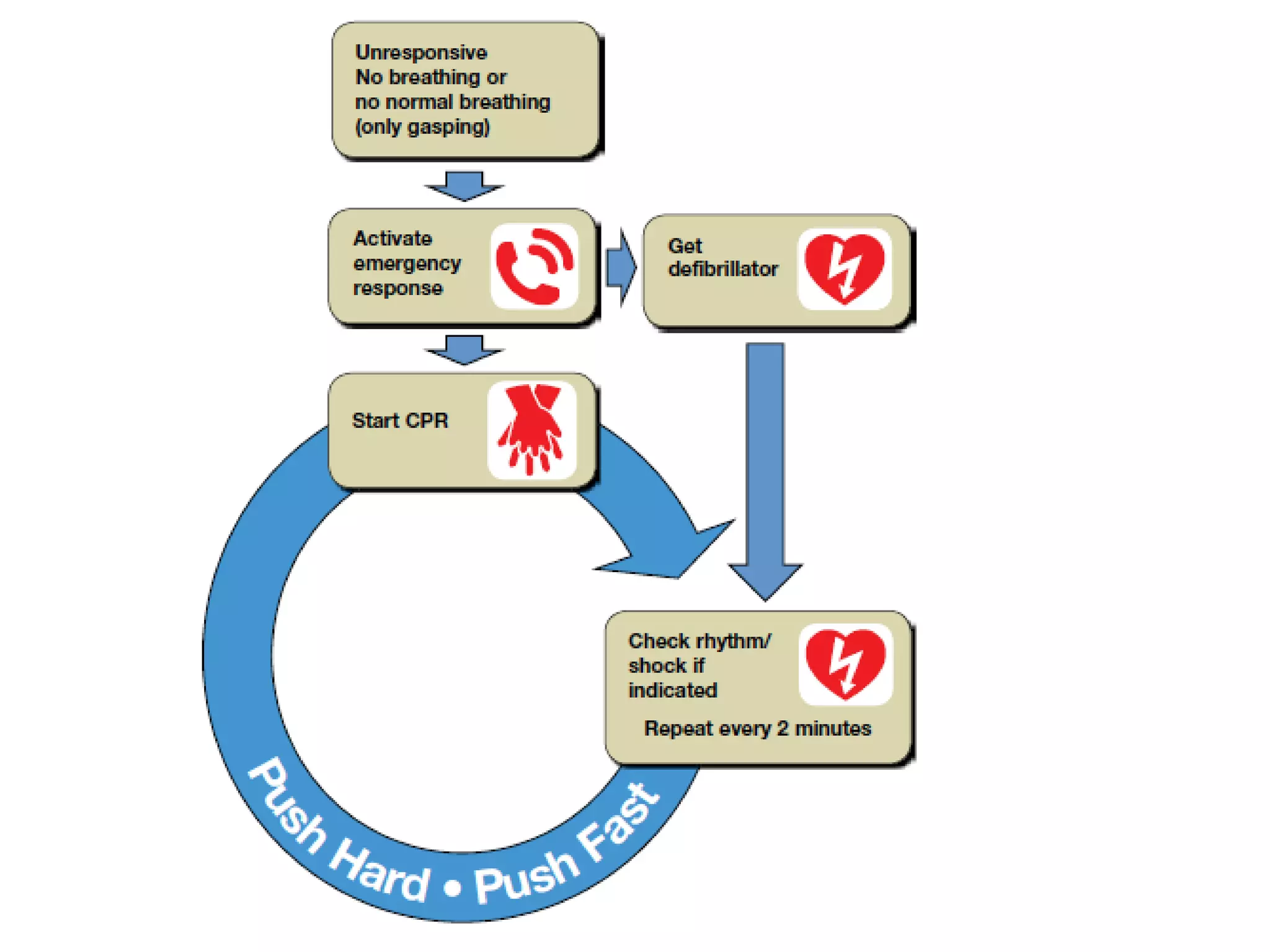
• check responsiveness  activate emergency
response  circulation  defibrillation
DANGER
• Is the scene dangerous?
• Are there blood spills, sharps, electric wires?
• Wear PPE (gloves, apron, mask)
RESPONSE
• Is the patient responsive?
• Tap shoulders and Say ‘Hello!
• Hello! Are you OK?’
SHOUT
• Emergency! Emergency!
• Call ambulance 999 or bring emergency
• trolley & defibrillator if available
AIRWAY & BREATHING
LOOK …… LISTEN…… FEEL
CIRCULATION
• Shockable wave?
DEFIBRILLATION
• Pulse
• CPR
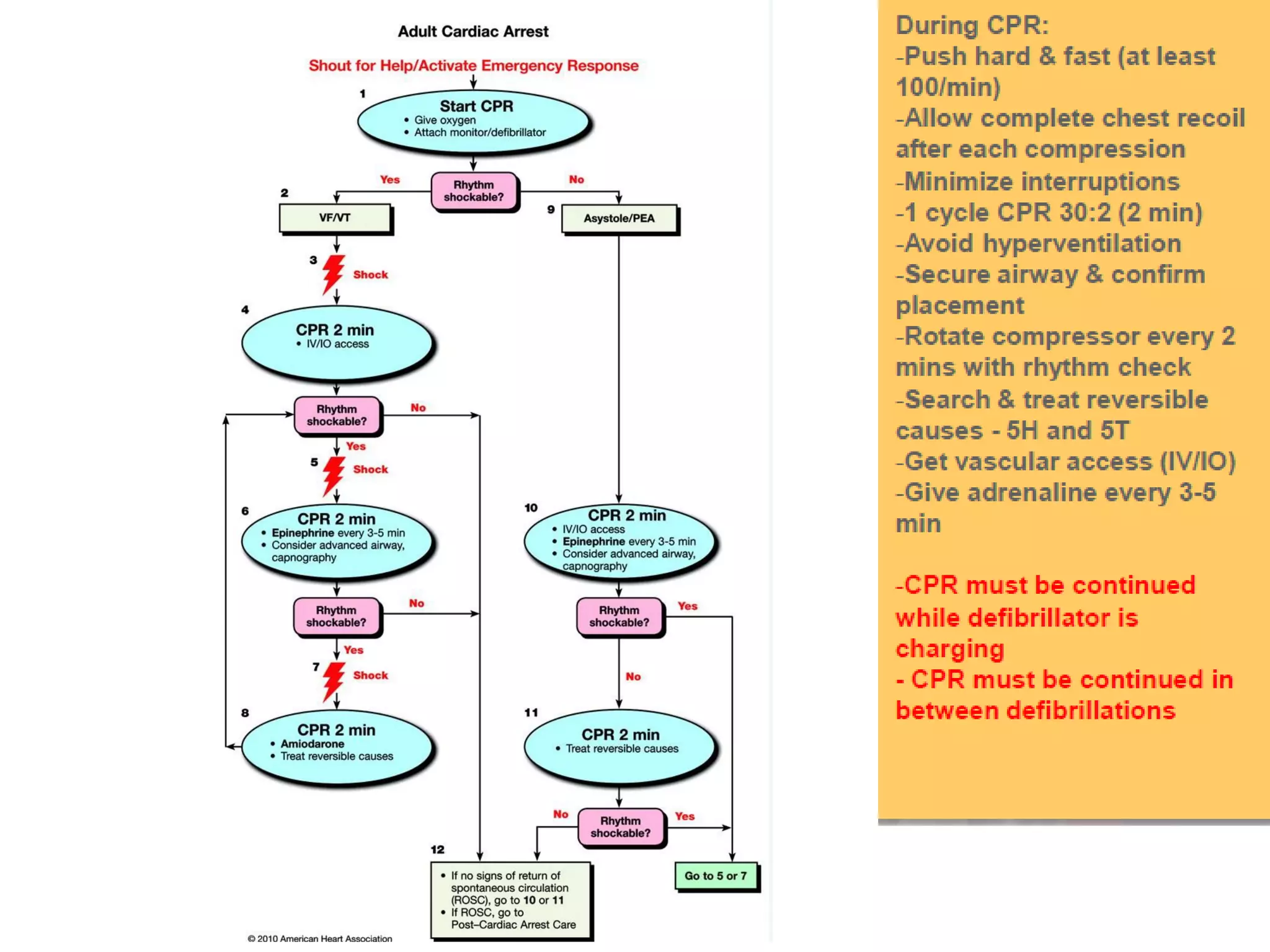
ACLS
• Conducted after the BLS Primary Survey when
more advanced management techniques are
needed.
• Must minimize interruptions of chest
compression
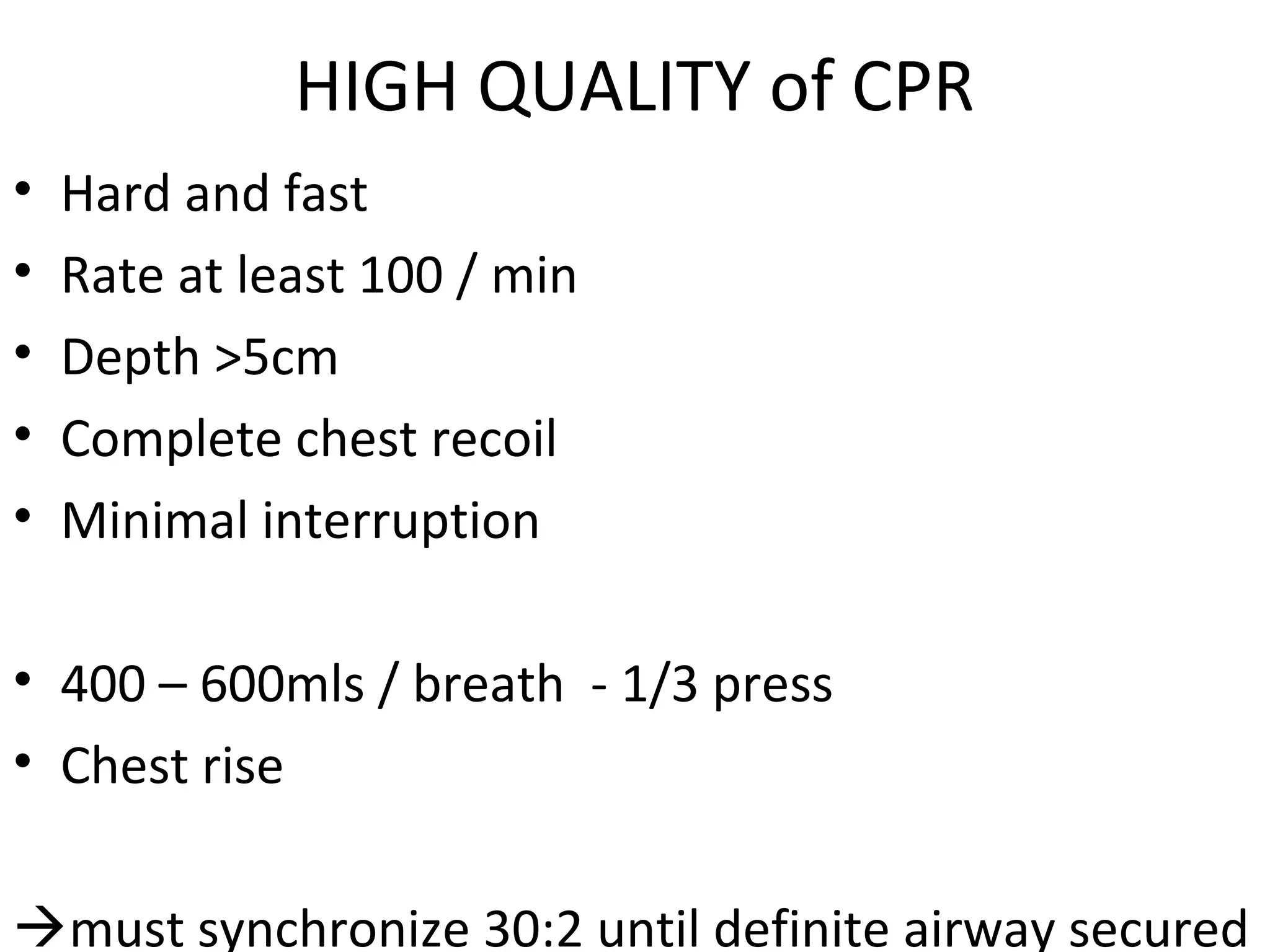
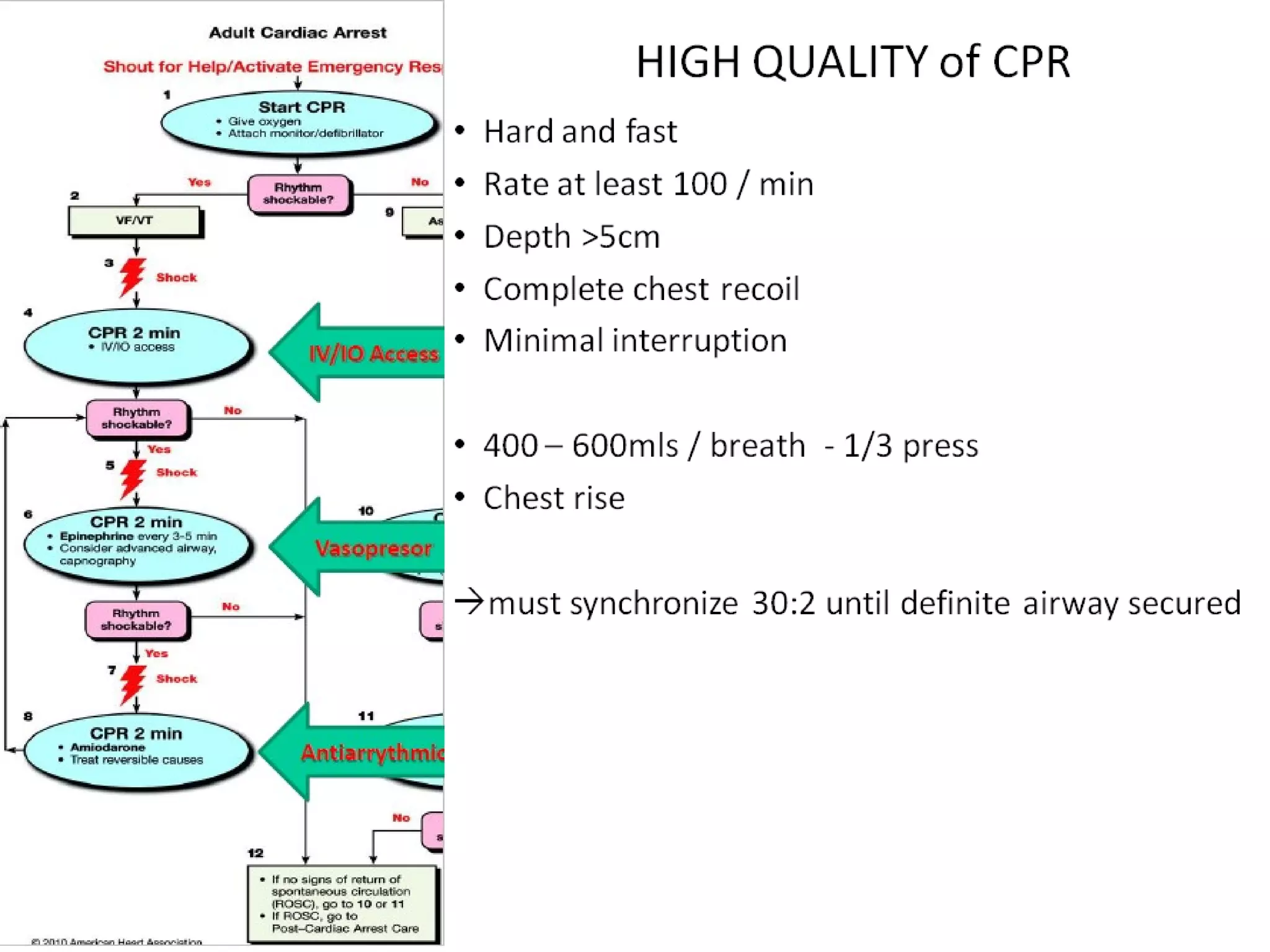
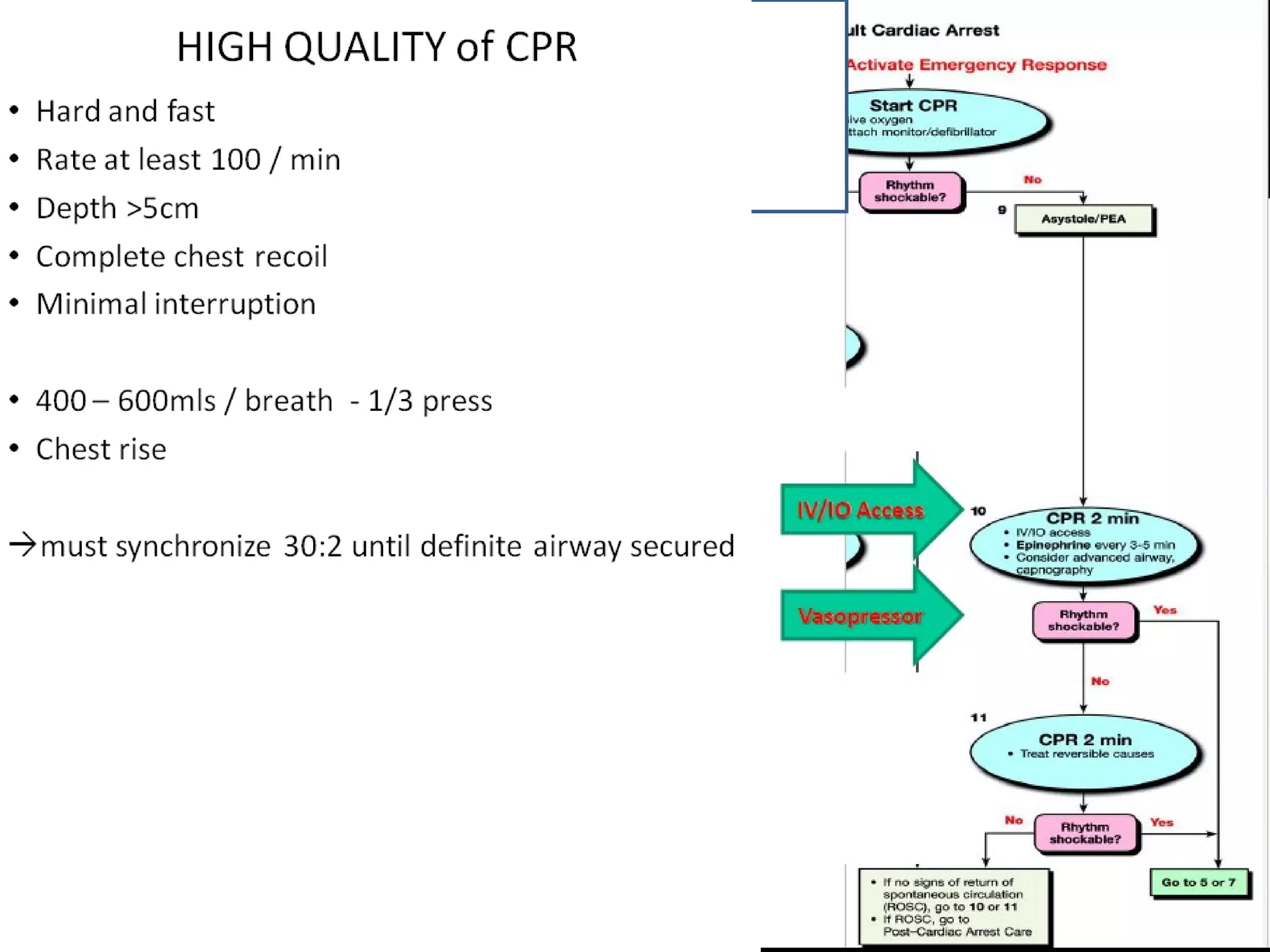
HIGH QUALITY of CPR
• Hard and fast
• Rate at least 100 / min
• Depth >5cm
• Complete chest recoil
• Minimal interruption
• 400 – 600mls / breath - 1/3 press
• Chest rise
must synchronize 30:2 until definite airway secured
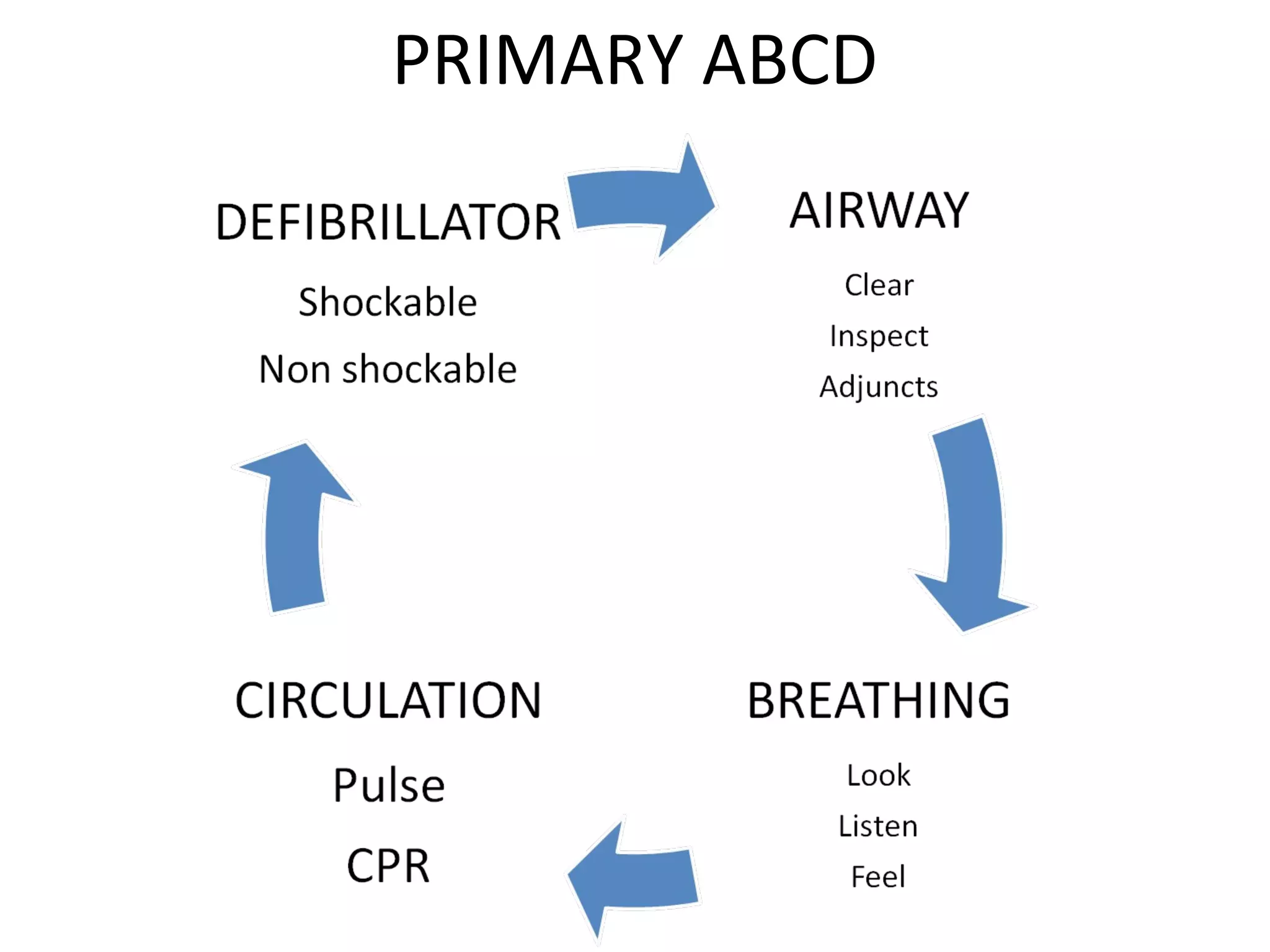
PRIMARY ABCD
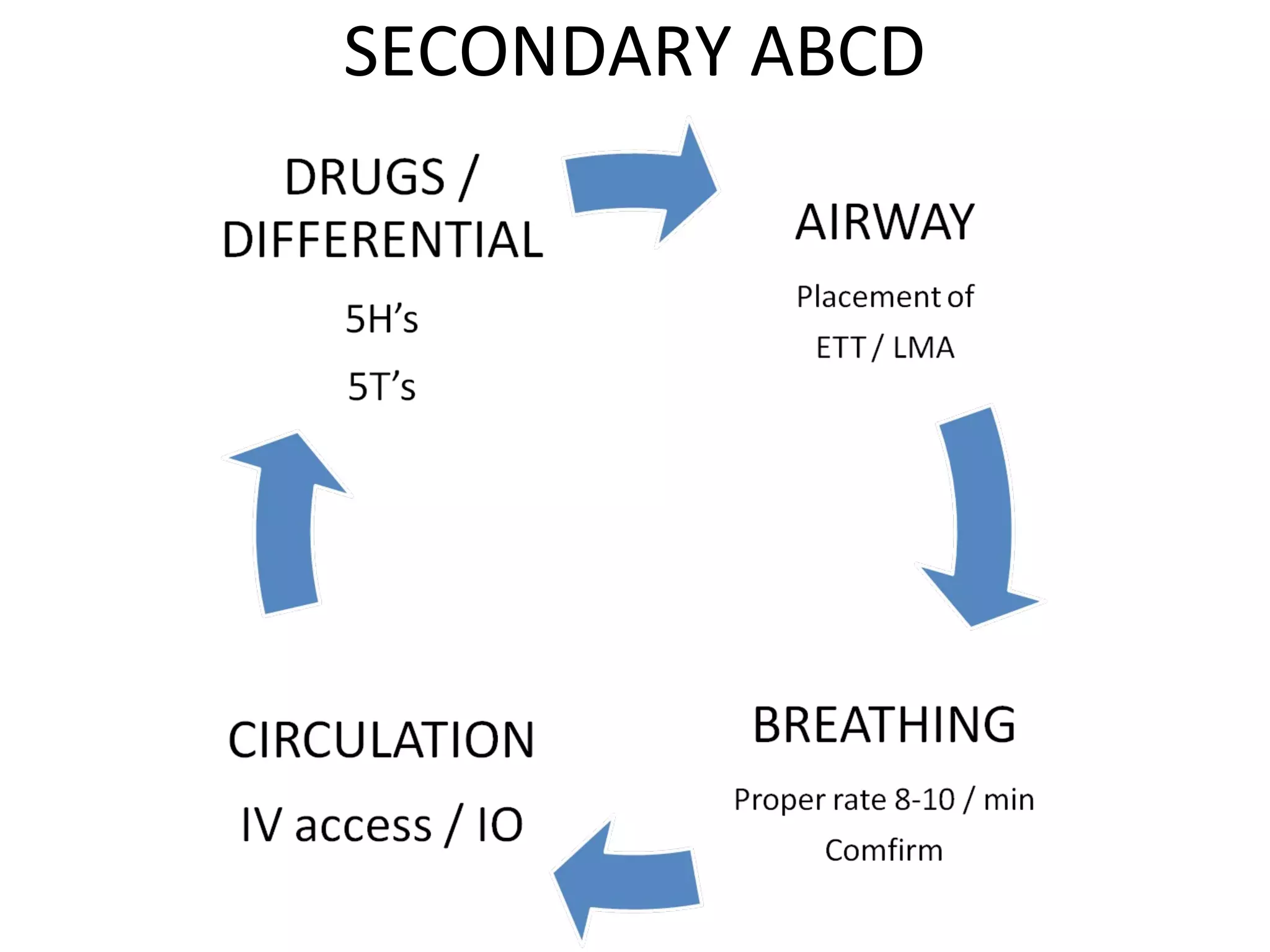
SECONDARY ABCD
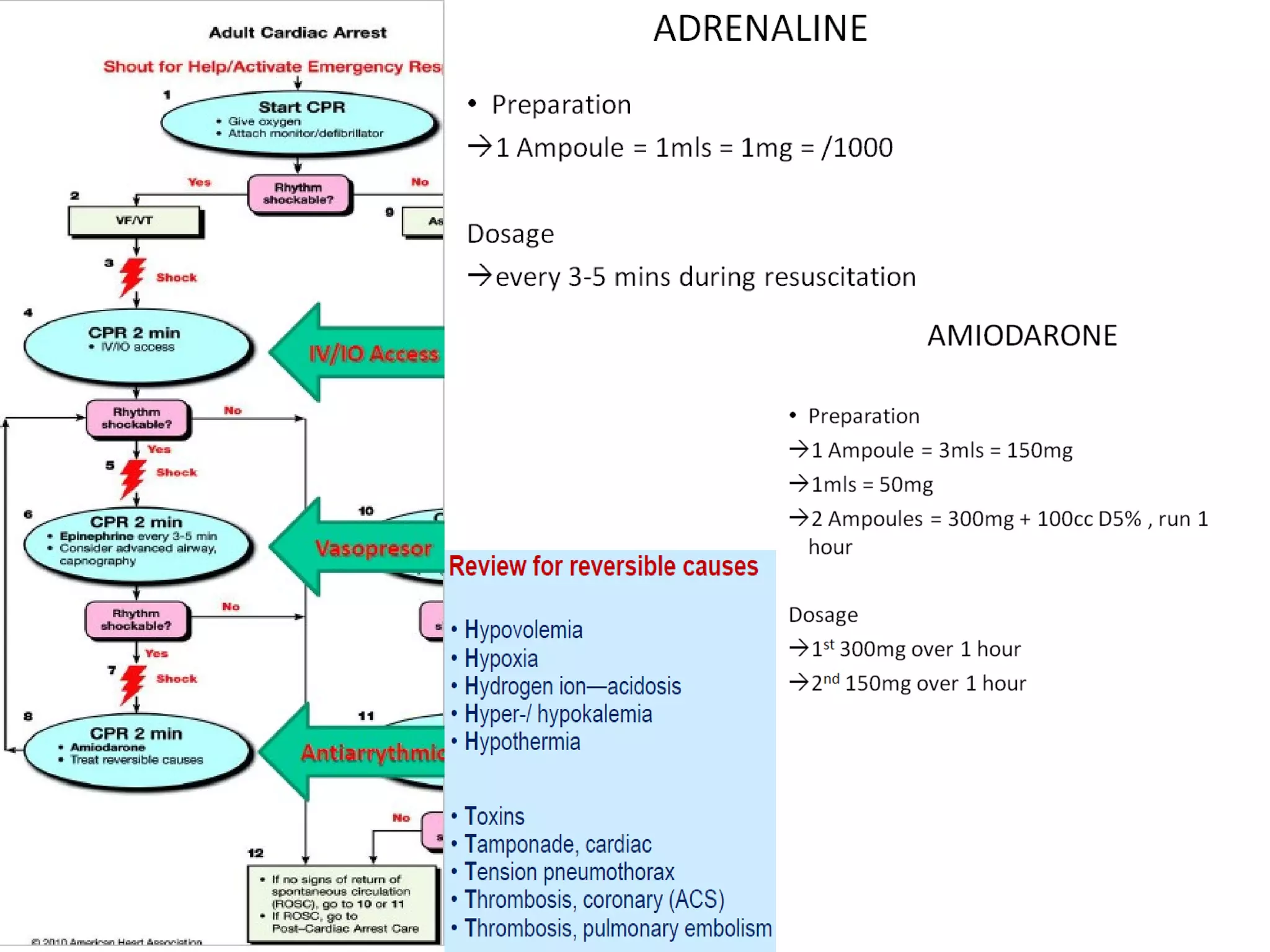
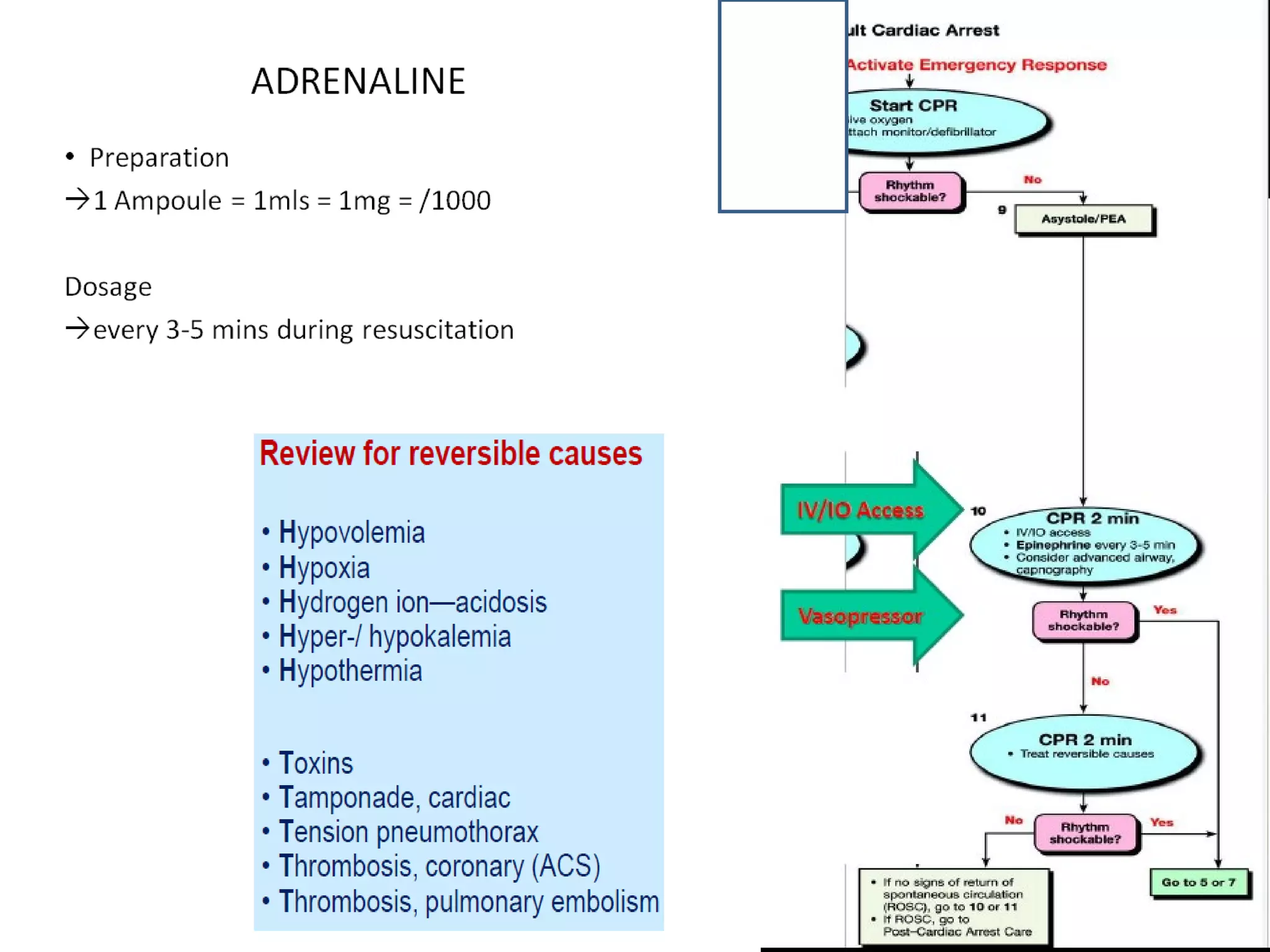
5H’s & 5T’s
• Hypovolaemia
• Hypoxia
• Hydrogen ion
• Hyper / hypo –
kalaemia
• Hypothermia
• Tablets
• Tamponade
• Tension pneumothorax
• Thrombosis –ACS
• Thrombosis – pulmonary
embolism
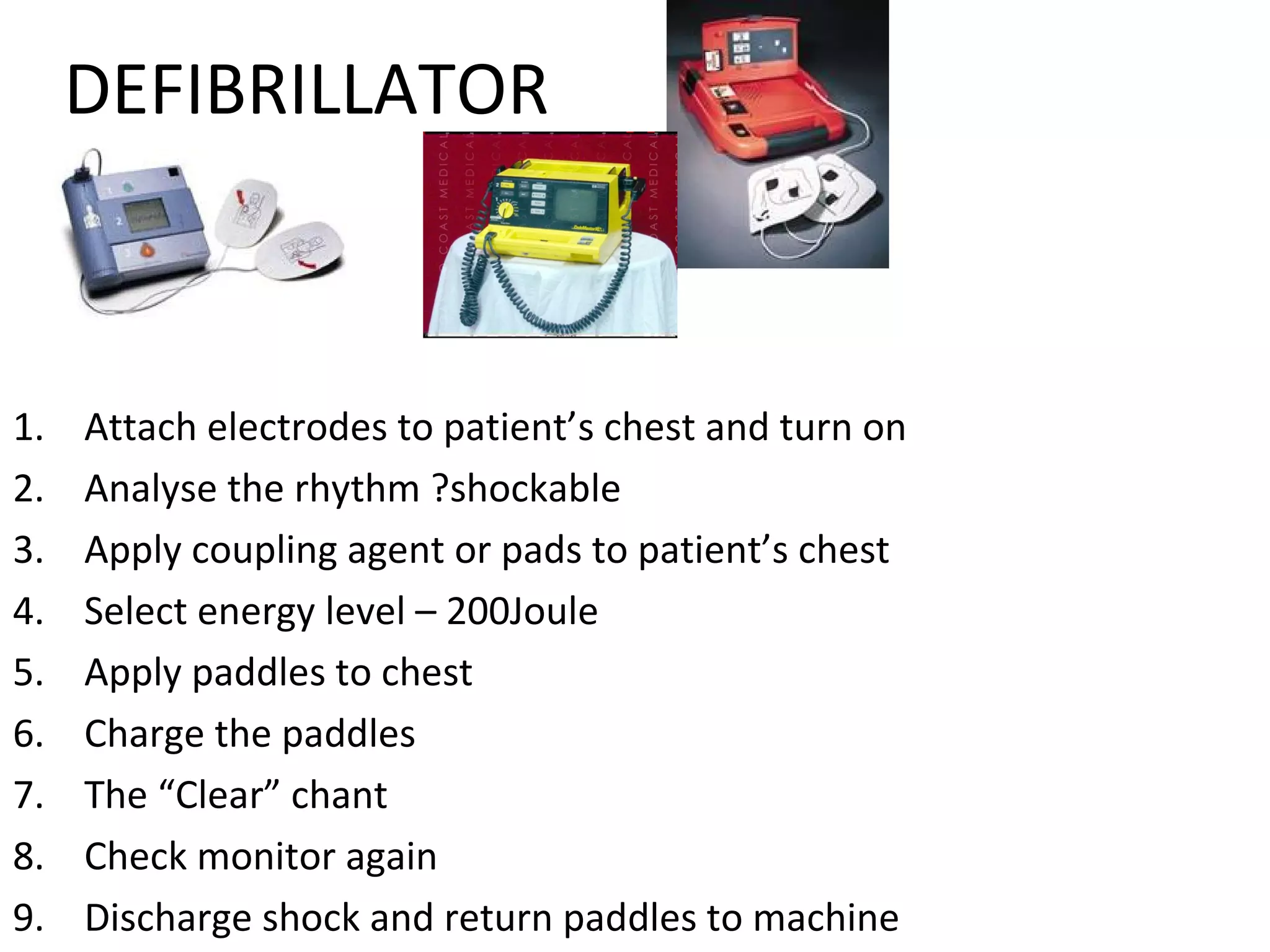
DEFIBRILLATOR
1. Attach electrodes to patient’s chest and turn on
2. Analyse the rhythm ?shockable
3. Apply coupling agent or pads to patient’s chest
4. Select energy level – 200Joule
5. Apply paddles to chest
6. Charge the paddles
7. The “Clear” chant
8. Check monitor again
9. Discharge shock and return paddles to machine
DRUGS
• ADENOSINE
• AMIODARONE
• DOPAMINE
• ADRENALINE
• ATROPINE
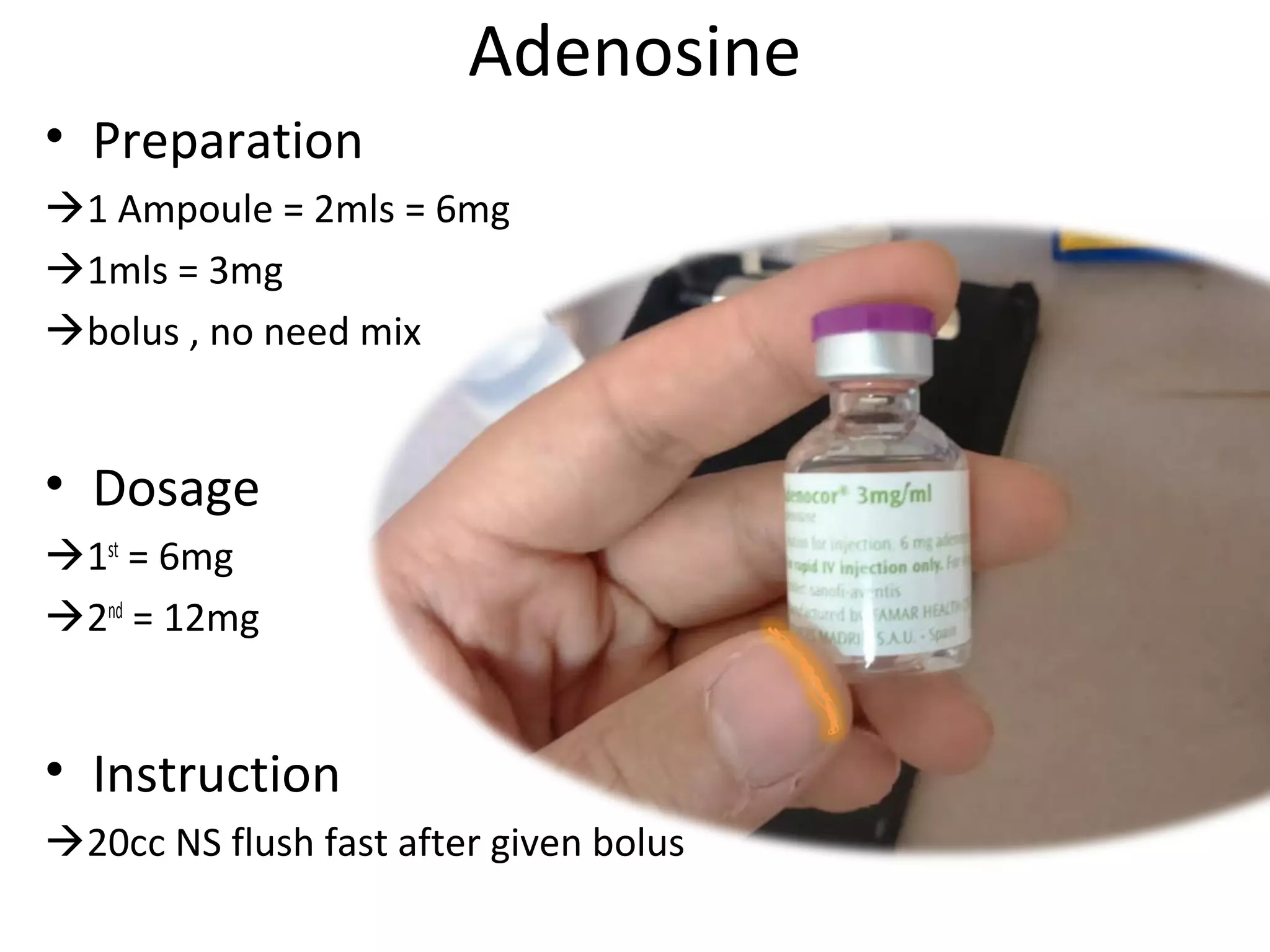
Adenosine
• Preparation
1 Ampoule = 2mls = 6mg
1mls = 3mg
bolus , no need mix
• Dosage
1st
= 6mg
2nd
= 12mg
• Instruction
20cc NS flush fast after given bolus
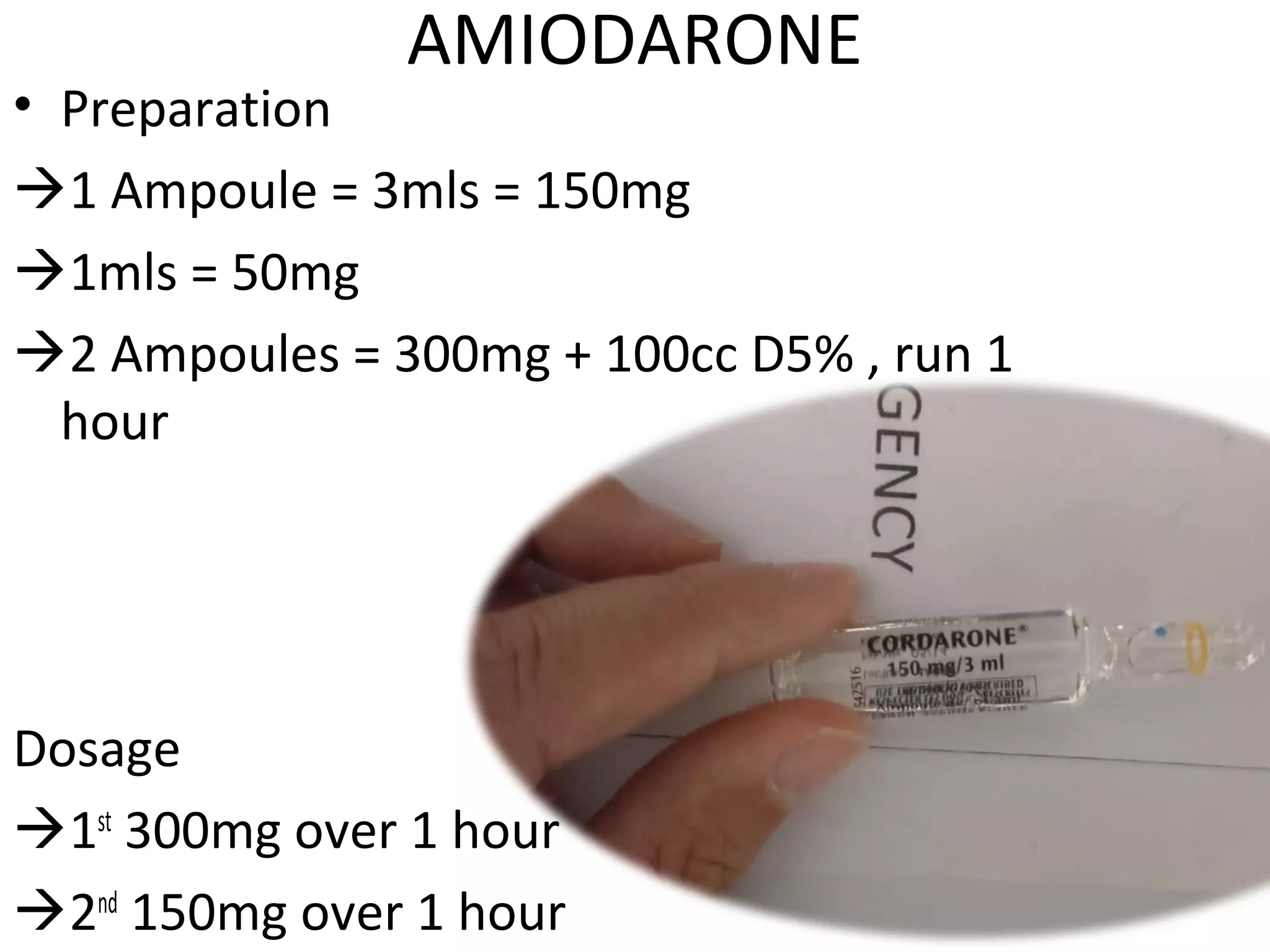
AMIODARONE
• Preparation
1 Ampoule = 3mls = 150mg
1mls = 50mg
2 Ampoules = 300mg + 100cc D5% , run 1
hour
Dosage
1st
300mg over 1 hour
2nd
150mg over 1 hour
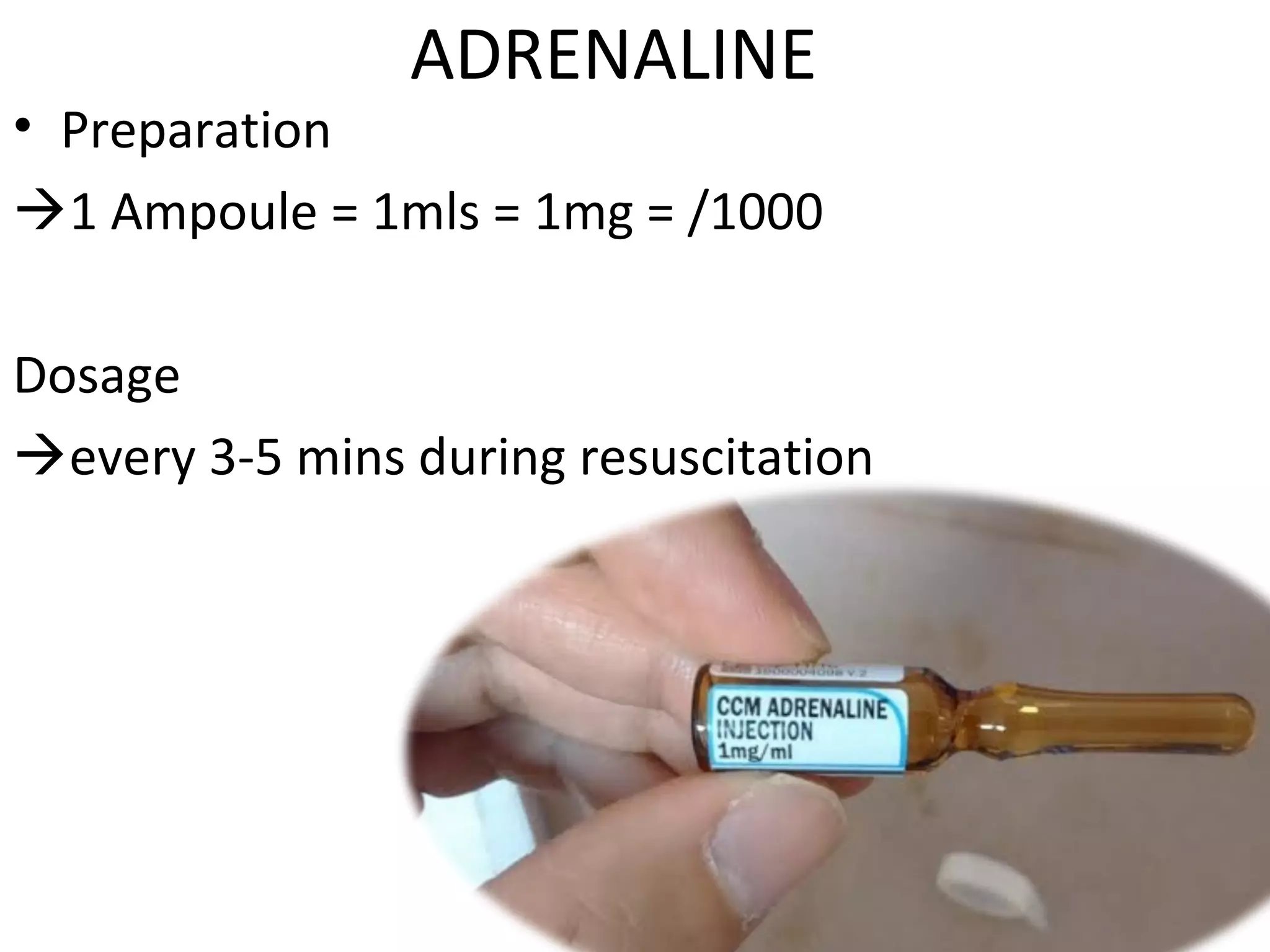
ADRENALINE
• Preparation
1 Ampoule = 1mls = 1mg = /1000
Dosage
every 3-5 mins during resuscitation
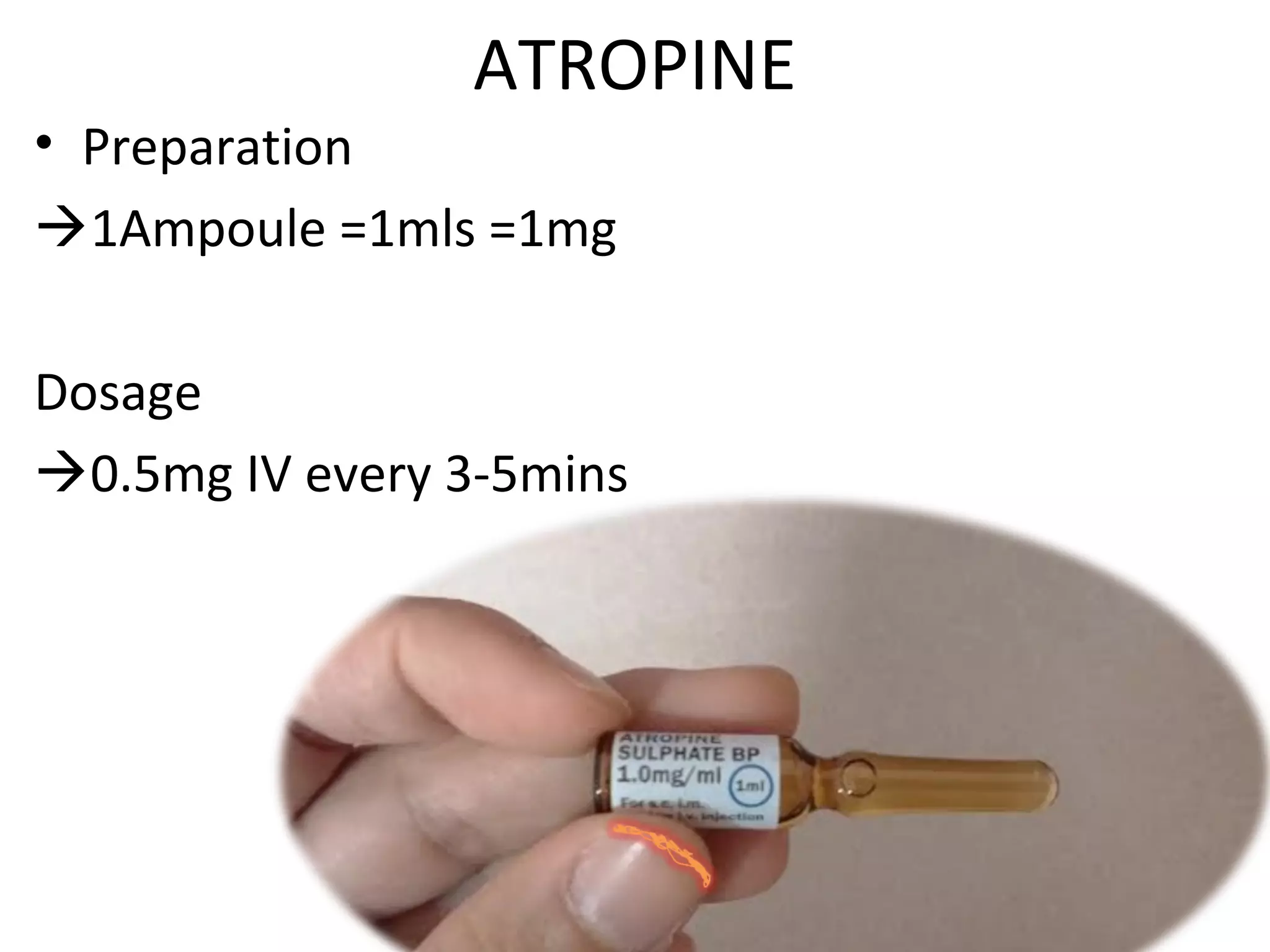
ATROPINE
• Preparation
1Ampoule =1mls =1mg
Dosage
0.5mg IV every 3-5mins
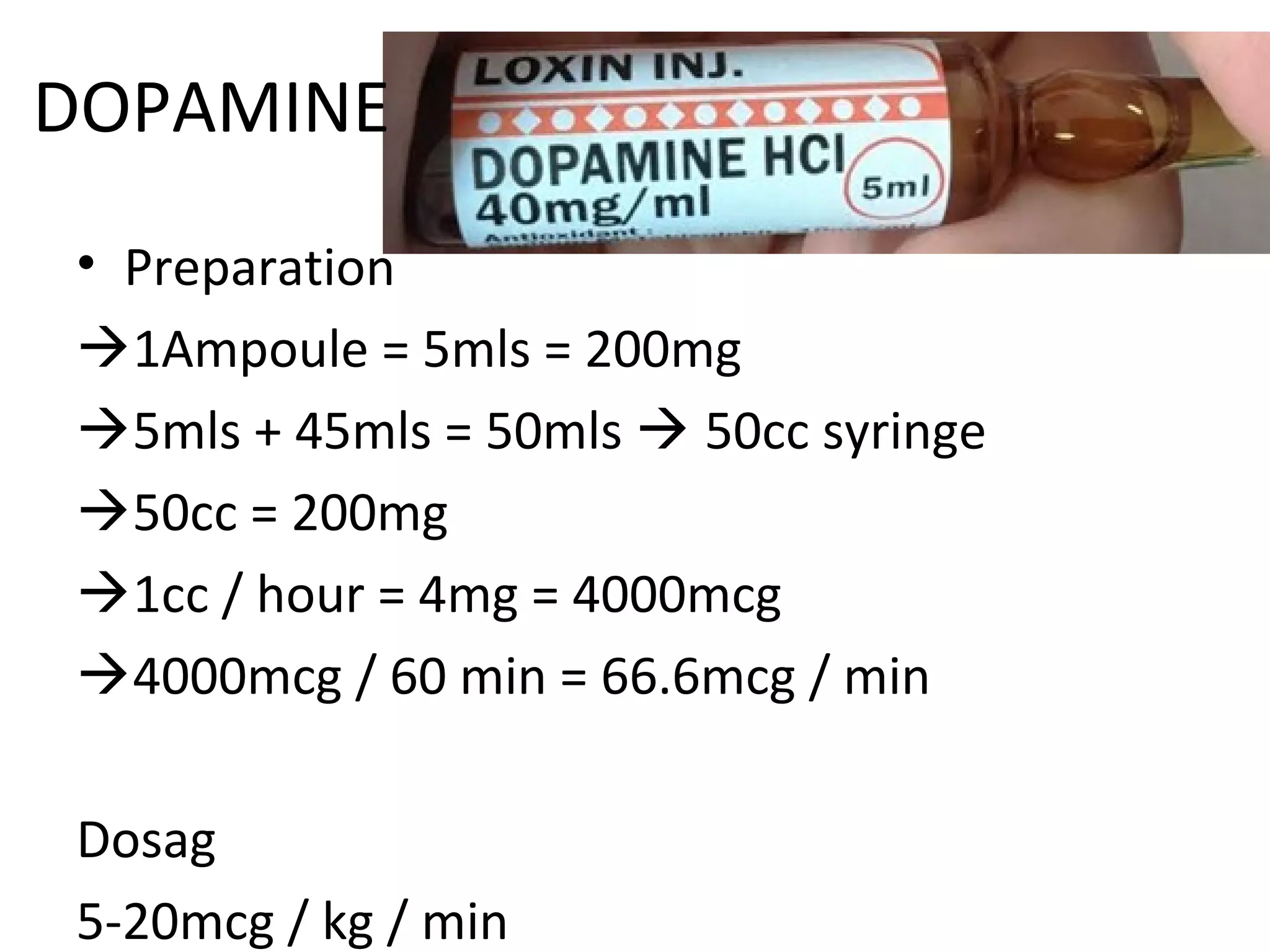
DOPAMINE
• Preparation
1Ampoule = 5mls = 200mg
5mls + 45mls = 50mls  50cc syringe
50cc = 200mg
1cc / hour = 4mg = 4000mcg
4000mcg / 60 min = 66.6mcg / min
Dosag
5-20mcg / kg / min
CASES
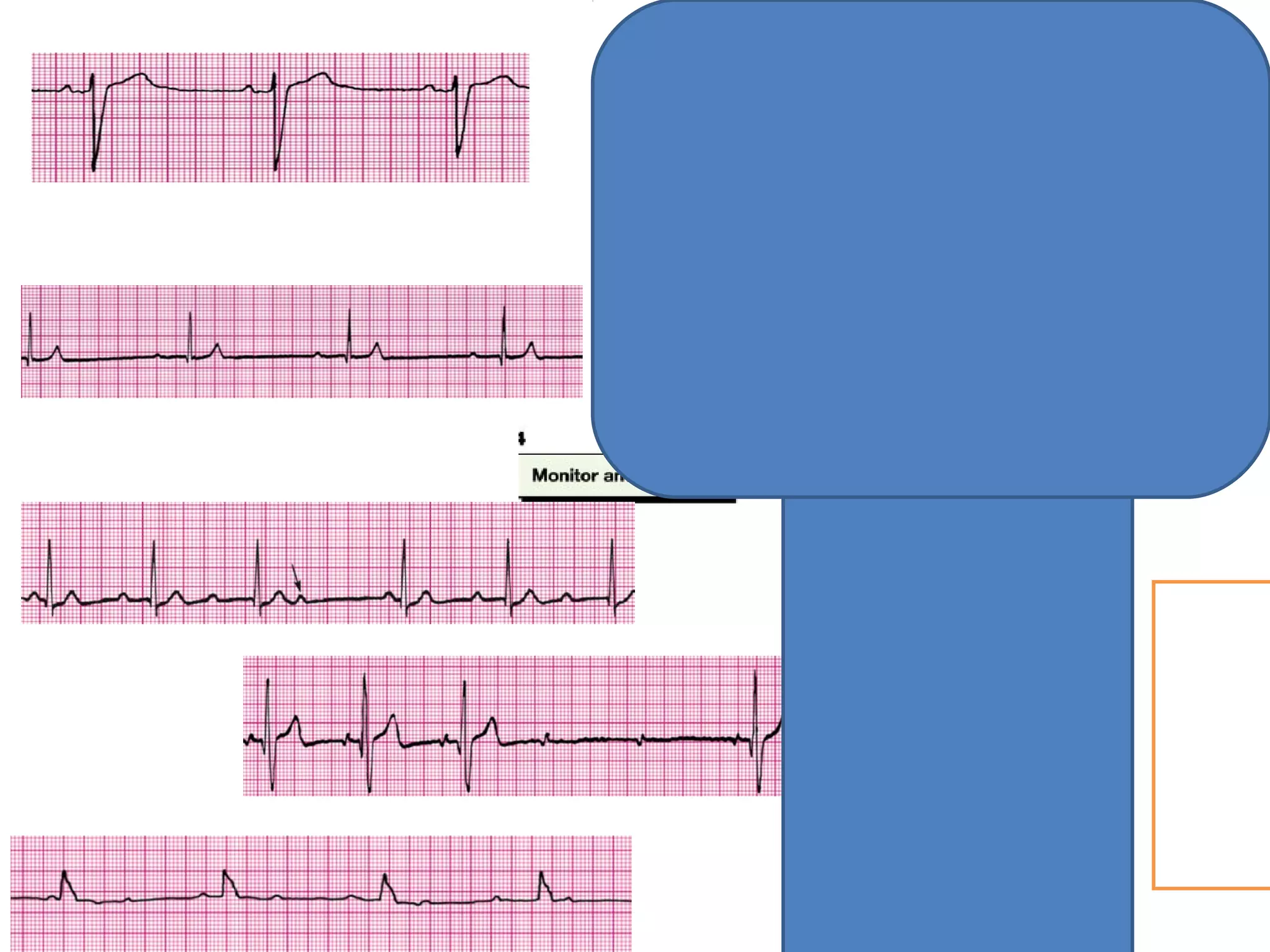
• BRADYSRHYTHMIAS
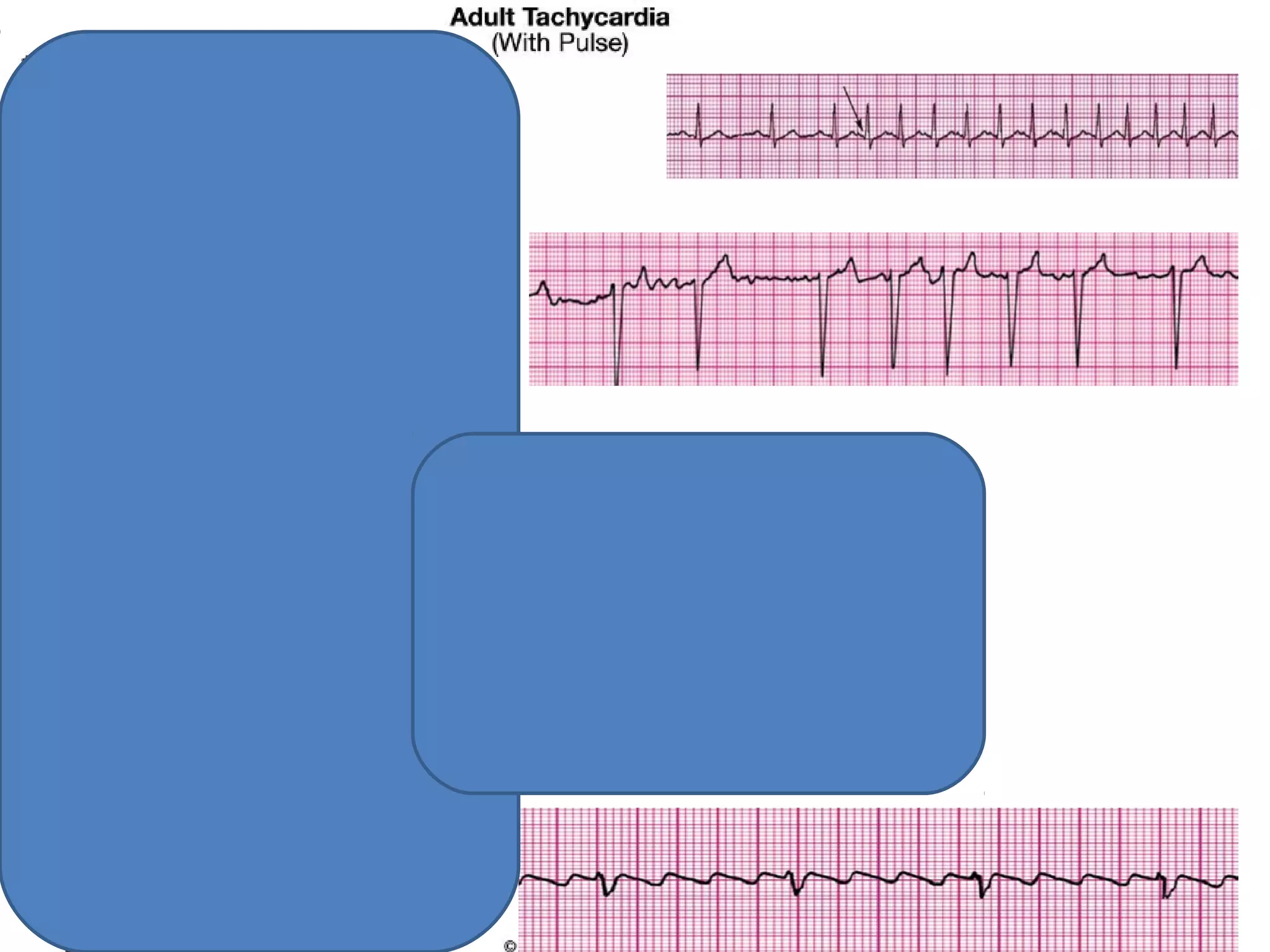
• TACHYARRHYTHMIAS
• CARDIAC ARREST
Bls and acls megacode --hui

Bls and acls megacode --hui

  • 1.
    BLS AND ACLSMEGACODE
  • 2.
  • 3.
    Goals of BLS •Main players are early CPR + early defibrillation • support or restore effective oxygenation ventilation, and circulation until ROSC or until ALS interventions can be initiated. • NO advanced airway techniques • NO drug administration
  • 4.
    Components of BLS DR’SABCD • D- danger • R – responsiveness • S – shout • A – airway • B – breathing • C – circulation • D – defibrillation • 1…2….3…….4……. • check responsiveness  activate emergency response  circulation  defibrillation
  • 5.
    DANGER • Is thescene dangerous? • Are there blood spills, sharps, electric wires? • Wear PPE (gloves, apron, mask) RESPONSE • Is the patient responsive? • Tap shoulders and Say ‘Hello! • Hello! Are you OK?’
  • 6.
    SHOUT • Emergency! Emergency! •Call ambulance 999 or bring emergency • trolley & defibrillator if available AIRWAY & BREATHING LOOK …… LISTEN…… FEEL
  • 7.
  • 9.
    ACLS • Conducted afterthe BLS Primary Survey when more advanced management techniques are needed. • Must minimize interruptions of chest compression
  • 10.
    HIGH QUALITY ofCPR • Hard and fast • Rate at least 100 / min • Depth >5cm • Complete chest recoil • Minimal interruption • 400 – 600mls / breath - 1/3 press • Chest rise must synchronize 30:2 until definite airway secured
  • 11.
  • 12.
  • 13.
    5H’s & 5T’s •Hypovolaemia • Hypoxia • Hydrogen ion • Hyper / hypo – kalaemia • Hypothermia • Tablets • Tamponade • Tension pneumothorax • Thrombosis –ACS • Thrombosis – pulmonary embolism
  • 14.
    DEFIBRILLATOR 1. Attach electrodesto patient’s chest and turn on 2. Analyse the rhythm ?shockable 3. Apply coupling agent or pads to patient’s chest 4. Select energy level – 200Joule 5. Apply paddles to chest 6. Charge the paddles 7. The “Clear” chant 8. Check monitor again 9. Discharge shock and return paddles to machine
  • 15.
    DRUGS • ADENOSINE • AMIODARONE •DOPAMINE • ADRENALINE • ATROPINE
  • 16.
    Adenosine • Preparation 1 Ampoule= 2mls = 6mg 1mls = 3mg bolus , no need mix • Dosage 1st = 6mg 2nd = 12mg • Instruction 20cc NS flush fast after given bolus
  • 17.
    AMIODARONE • Preparation 1 Ampoule= 3mls = 150mg 1mls = 50mg 2 Ampoules = 300mg + 100cc D5% , run 1 hour Dosage 1st 300mg over 1 hour 2nd 150mg over 1 hour
  • 18.
    ADRENALINE • Preparation 1 Ampoule= 1mls = 1mg = /1000 Dosage every 3-5 mins during resuscitation
  • 19.
    ATROPINE • Preparation 1Ampoule =1mls=1mg Dosage 0.5mg IV every 3-5mins
  • 20.
    DOPAMINE • Preparation 1Ampoule =5mls = 200mg 5mls + 45mls = 50mls  50cc syringe 50cc = 200mg 1cc / hour = 4mg = 4000mcg 4000mcg / 60 min = 66.6mcg / min Dosag 5-20mcg / kg / min
  • 21.