Presented to: Mrs. Sameeksha Patial
(Assistant Professor, ACN)
Presented by: Ms. Yoshita Sood
BS22MHNS022
Presented on: May 20, 2023
CARDIOPULMONARY
RESUSCITATION
4/19/2023
1
HISTORY
 1732- First medical BLS by William Tossach
 1780- First attempt of newborn resuscitation by blowing
 1858- method of restoring natural breathing by Dr. H.R. Silvester
 1992- First attempt of external chest compression
 1949- First report of mouth to mouth ventilation to cardiac arrest
victim by James
 1991- Chain of survival by AHA
 2000- First International CPR Guidelines by ILCOR
4/19/2023
2
DEFINITION
 It is an emergency life saving procedure performed when the heart
stops breathing.
 CPR can be initiated anytime an individual cannot adequately
oxygenate or perfuse vital organs- not only following cardiac or
respiratory arrest.
 CPR is an emergency procedure that combines chest compressions
with artificial ventilation in an effort to manually intact brain function
until further measures to restore spontaneous blood circulation and
breathing in a person who is in cardiac arrest.
4/19/2023
3
PURPOSES
 To maintain a clear and open airway.
 To maintain breathing by external ventilation.
 To maintain blood circulation by external cardiac massage.
 To save life of the patient.
 To provide basic life support till advanced and medical life
support arrives.
 To reverse the initiating patho-physiological event.
4/19/2023
4
WHEN TO GIVE? WHEN NOT TO GIVE?
 Unconscious
 Person not breathing
 Has an abnormal pulse
rate
 Heart abruptly stopped
beating
 Neither scene nor
victim and rescuer is
safe
 Patient has developed
rigor mortis
 Normal pulse and
breathing
4/19/2023
5
INDICATIONS
 Acute Myocardial Infarction
 Cardiomyopathy
 Congestive heart failure
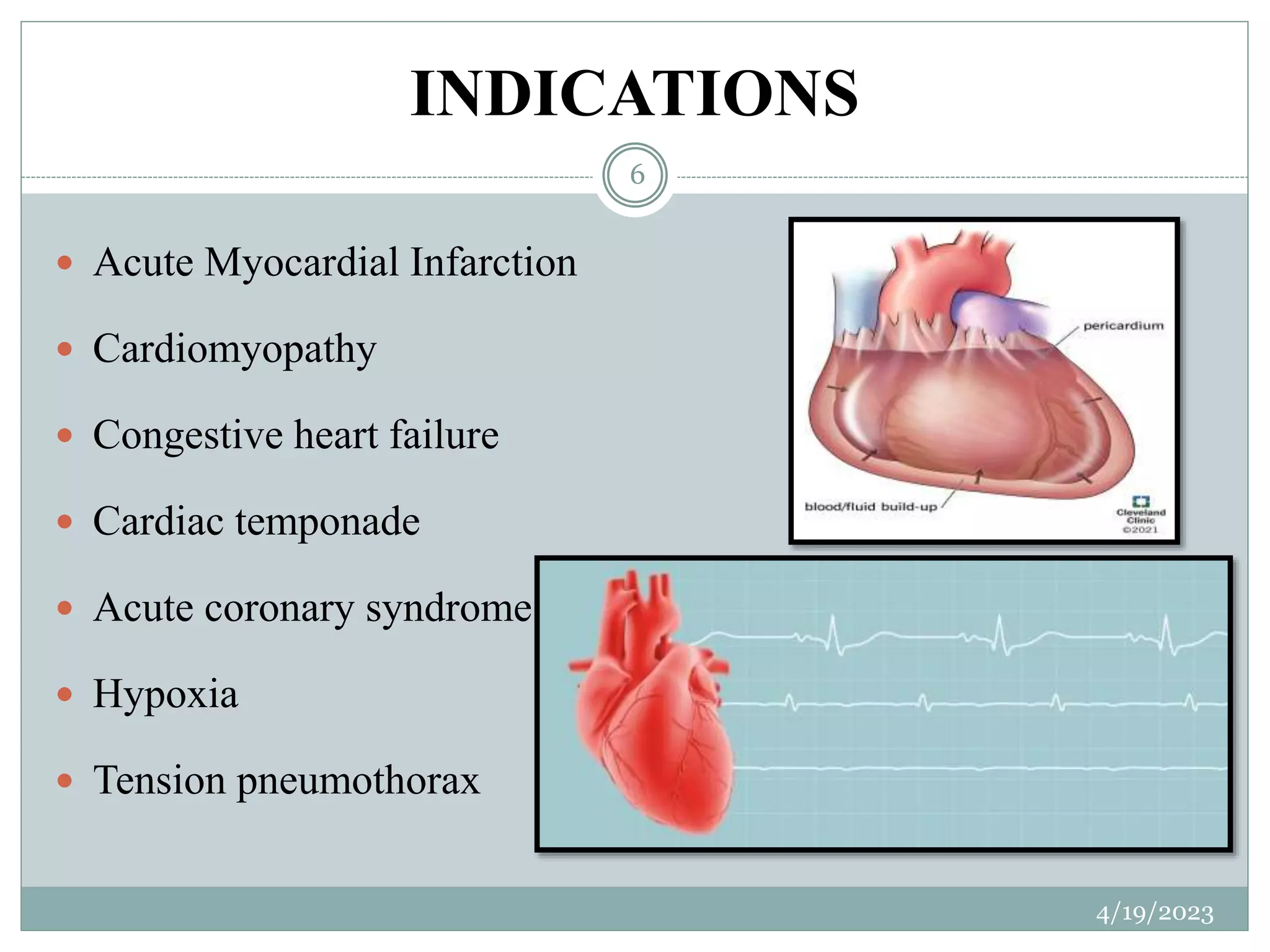
 Cardiac temponade
 Acute coronary syndrome
 Hypoxia
 Tension pneumothorax
4/19/2023
6
GOLDEN RULES TO BE KEPT IN
MIND
 Optimise chest compressions rate : 100-125 compression per
minute.
 Optimise compression depth : 50mm
 Minimise interruptions
 Promote full chest recoil
 Control breathing and ventilation
4/19/2023
7
TYPES
4/19/2023
8
BLS ( BASIC LIFE SUPPORT)
 BLS is the foundation of saving lives after cardiac arrest.
 A level of medical care which is used for victims of life
threatening illnesses or injuries until they can be given full
medical care at the hospital.
 Provided by a trained health professional.
 Includes psychomotor skills to perform high quality CPR , using
an AED and relieve an obstructed airway.
4/19/2023
9
OBJECTIVES OF BLS
 It is primary medical aid provided in an emergency medical
situation.
 Objective here is not to “treat” the person but to buy some
valuable time until the emergency team arrives.
 BLS is performed by anyone who knows how to do it, anywhere,
immediately without any other equipment.
 To reverse the initiating patho-physiological condition.
 To “save hearts too good to die” while preventing irreversible
cerebral damage from anoxia.
4/19/2023
10
SEQUENCE
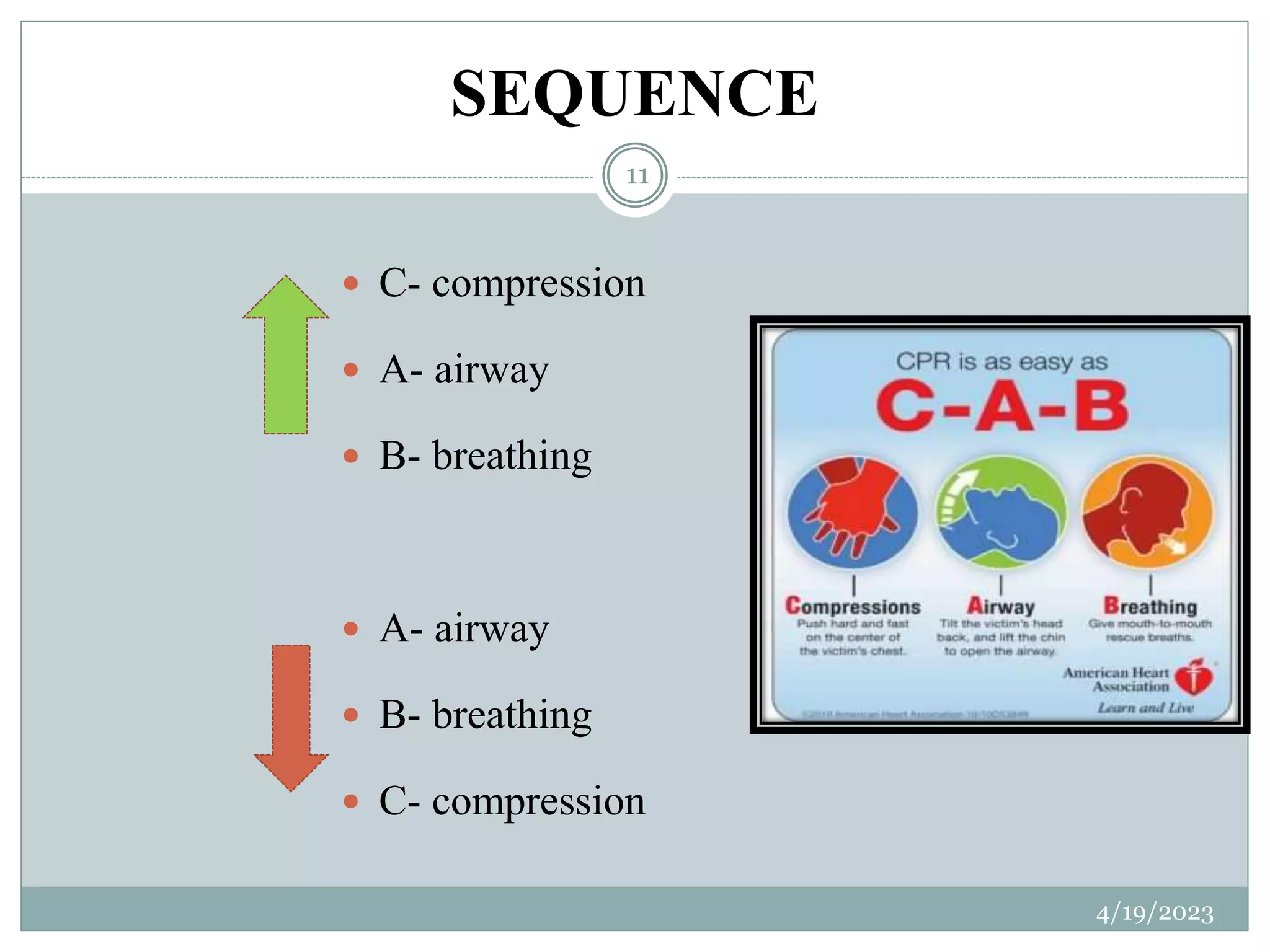
 C- compression
 A- airway
 B- breathing
 A- airway
 B- breathing
 C- compression
4/19/2023
11
WHY C-A-B??
 To emphasize the simplest but the most important step.
 To increase survival rate in sudden cardiac arrest.
 Patient’s blood stays oxygenated for 4-6 minutes after last breath
but circulation should be restarted at the earliest.
 Rescue breathing almost always delays chest compressions.
4/19/2023
12
4/19/2023
13
COMPONENTS
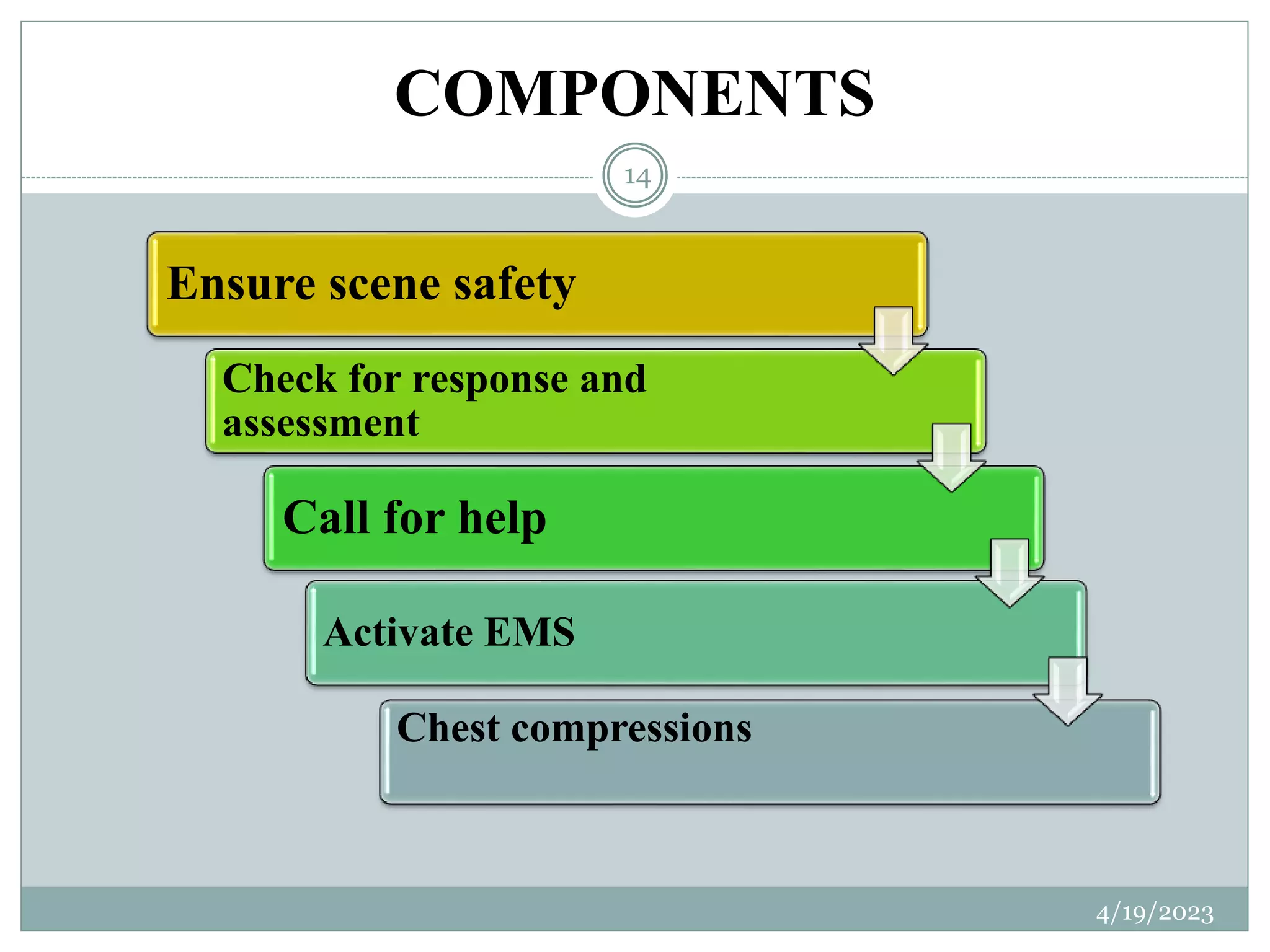
Ensure scene safety
Check for response and
assessment
Call for help
Activate EMS
Chest compressions
4/19/2023
14
INITIAL STEPS
Level of consciousness:
 Tap person gently on the shoulder
 Shout “ Are you okay?”
Circulation and breathing:
 Check for carotid pulsation for not more than 10 seconds but 5 seconds
 Check for respiration, if there is at all any sign of it
 Agonal breaths
4/19/2023
15
CONTD.
Call for help:
 Seek help from bystanders, other providers or from any trained individual.
Activate EMS:
 Dial up 102/108 for EMS.
 Activate CODE BLUE for in-patients.
 Kolkata Accident Response and Medical Assistance(KARMA)
4/19/2023
16
CONTD.
Outcome
assessment
Normal
breathing,
pulse felt
monitor
No normal
breathing,
pulse felt
No normal
breathing,
pulse absent
Start CPR
immediately
4/19/2023
17
CHEST COMPRESSIONS
 It is foundation of CPR.
 Continued emphasis on providing high quality CPR.
 Push hard, push fast.
 Hands-only CPR.
 Rescuer should be at victim’s side.
 Patient should be supine on flat, firm surface.
 Chest is exposed adequately.
4/19/2023
18
CONTD.
 Heel of the hand is placed in the centre of the chest on the lower
half of sternum.
 Other hand is placed on top.
 Fingers are interlaced.
 Arms are kept as straight as possible. Shoulder directly over the
hands. Elbows are locked.
 Movement of the rescuer should be from the hip joint.
4/19/2023
19
4/19/2023
20
HIGH QUALITY CPR(ADULT)
 Push hard (at least 2 inches) and fast (100-120/min)
 Allow complete chest recoil.
 Minimize interruptions in compressions.
 Avoid excessive ventilation.
 Change compressor every 2 minutes, or sooner if fatigued.
 If no advanced airway, 30:2 compression-ventilation ratio.
4/19/2023
21
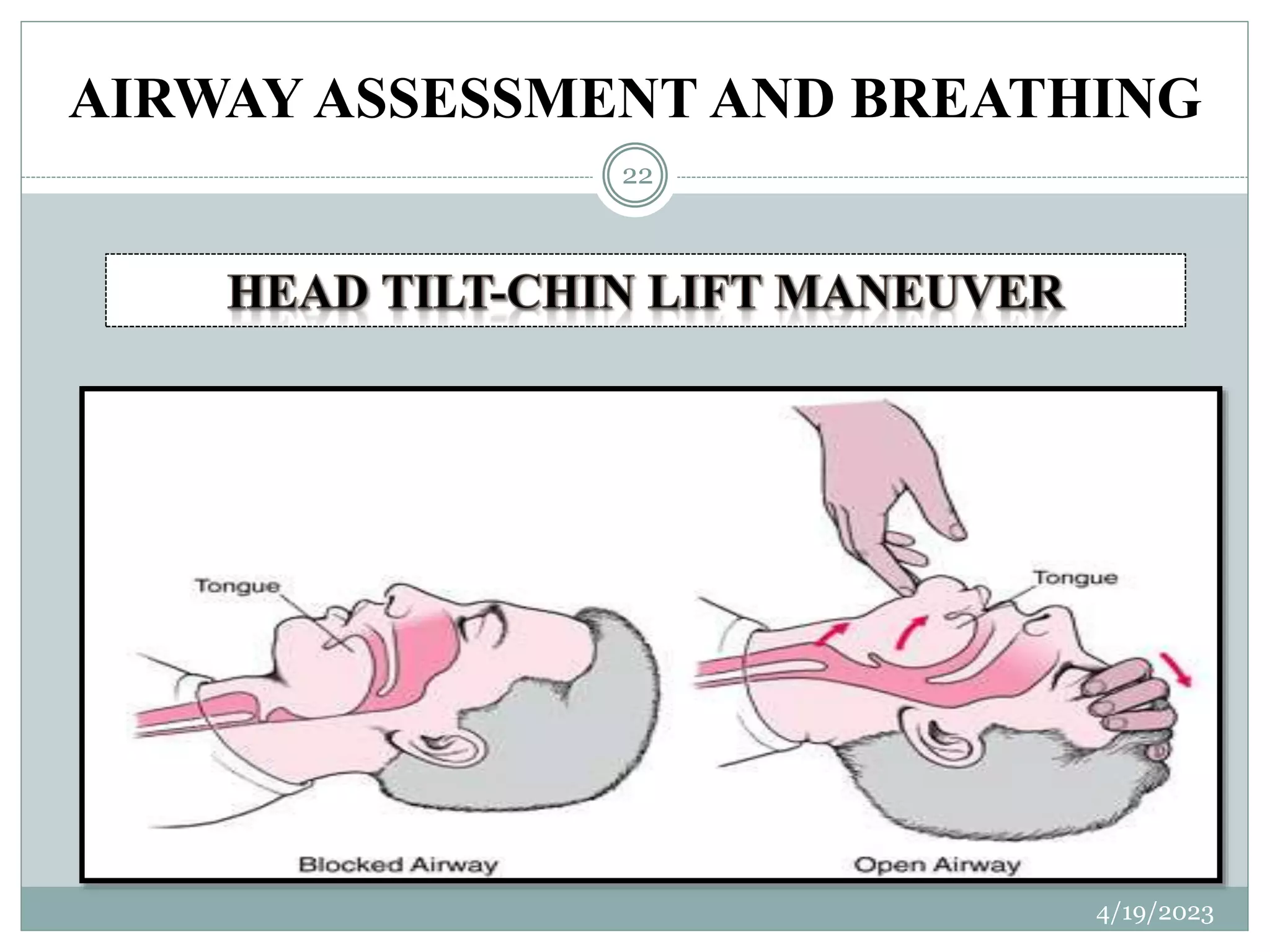
AIRWAY ASSESSMENT AND BREATHING
4/19/2023
22
4/19/2023
23
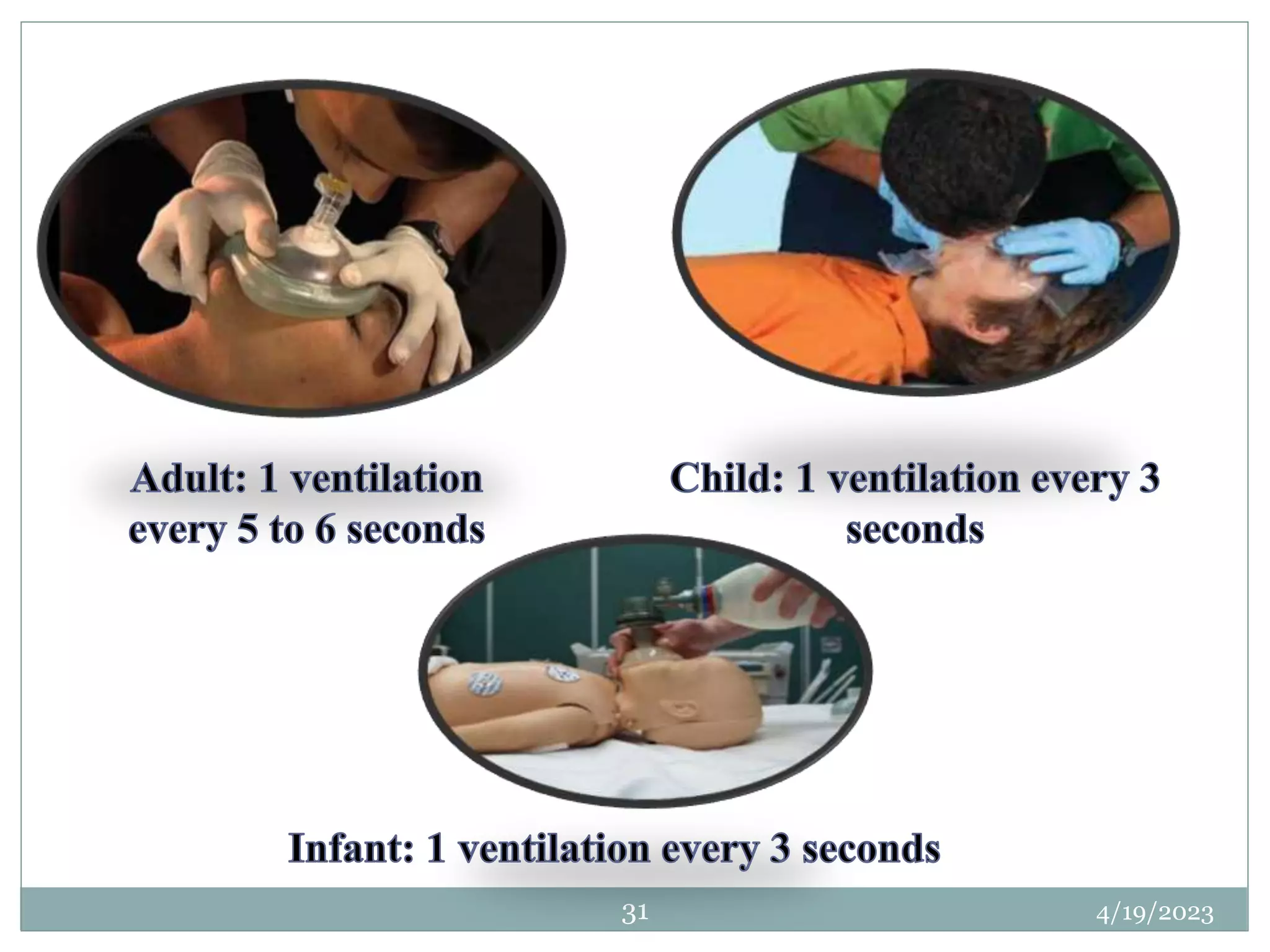
RESCUE BREATH
Mouth to mouth:
 Open airway- Pinch the nose seal mouth to mouth contact- Blow
4/19/2023
24
CONTD.
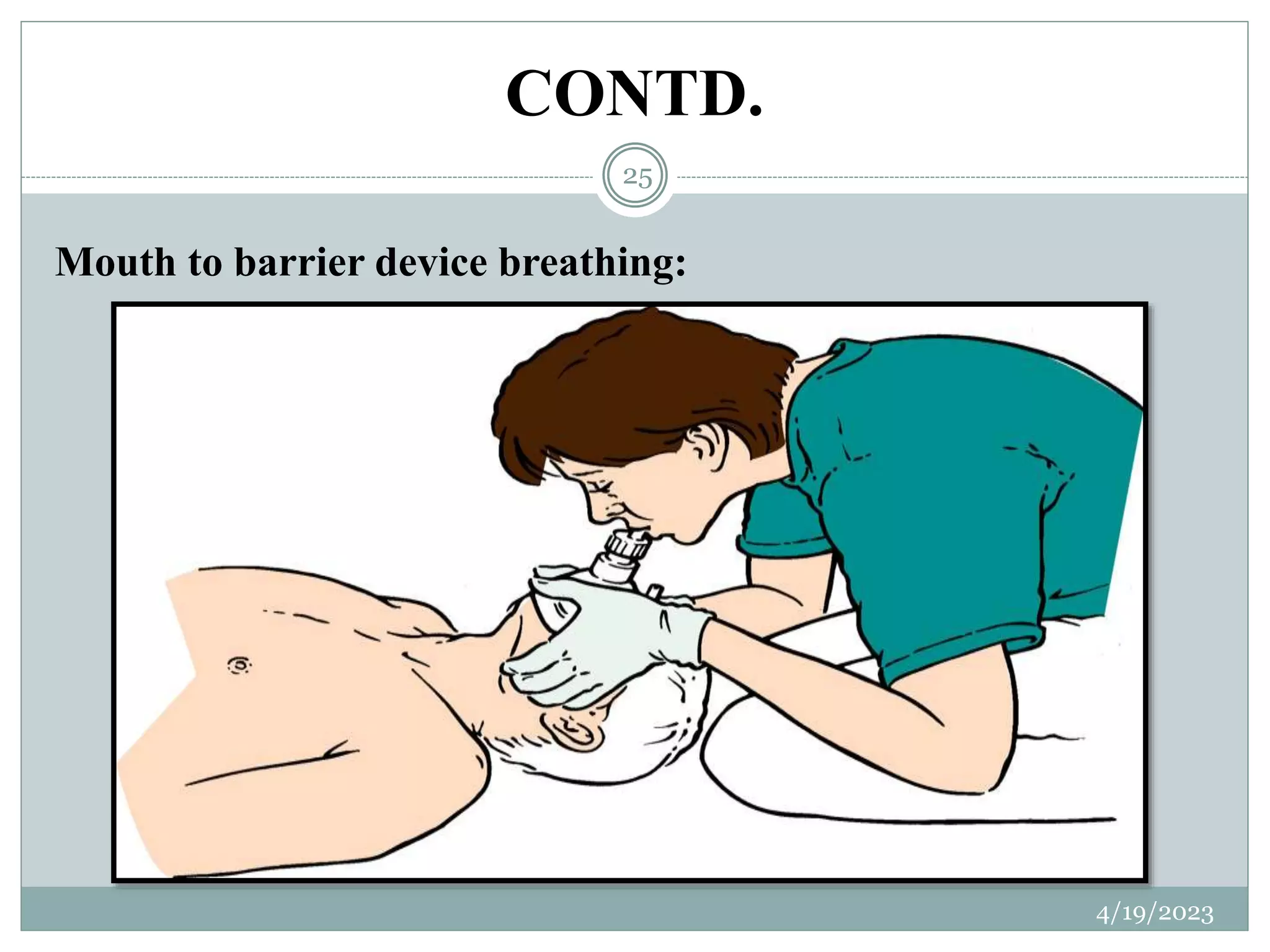
Mouth to barrier device breathing:
4/19/2023
25
THE KISS
OF LIFE
Award winning 1967
photo was taken by Rocco
Morabito . Champion
Randall (hanging down
after a cardiac arrest
following electrocuted)
and JD Thompson (giving
mouth to mouth
ventilation). CPR was
given when Champion
was brought down and
survived and died of heart
failure in 2002 at the age
of 64.
This photograph won
Pulitzer Prize in 1968.
26
4/19/2023
4/19/2023
27
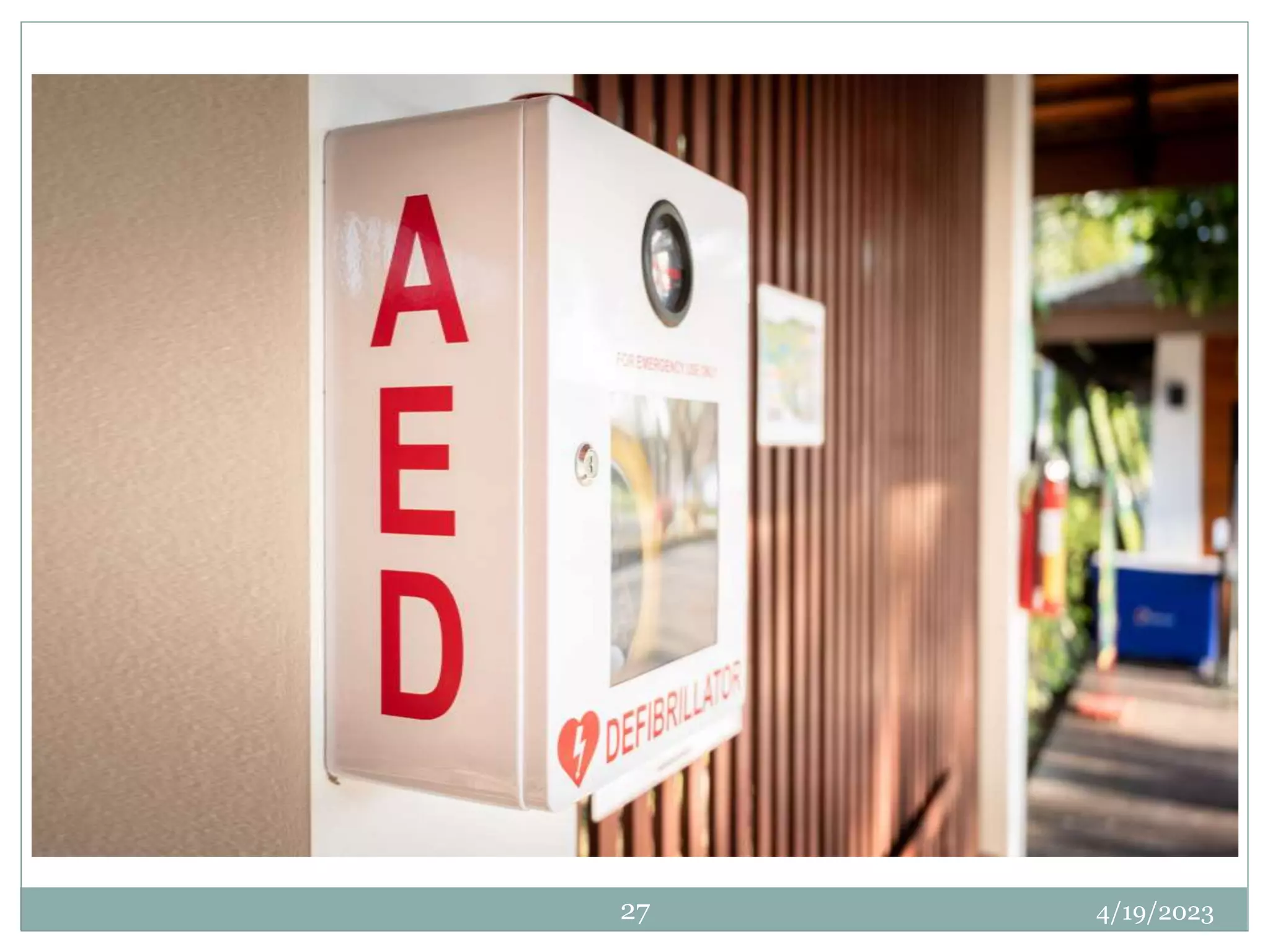
AUTOMATED EXTERNAL DEFIBRILLATOR
4/19/2023
28
 AED is a portable electronic device that automatically analyses the
patient’s rhythm and can provide defibrillation, an electric shock that
may help the heart re-establish a perfusing rhythm.
 AED is an integral part of BLS protocol.
 Early defibrillation has been re-emphasized in all updates.
 AED’s deliver defibrillations to specific two shockable dysrhythmias:
1. Ventricular fibrillation
2. Ventricular tachycardia
4/19/2023
29
4/19/2023
30
4/19/2023
31
4/19/2023
32
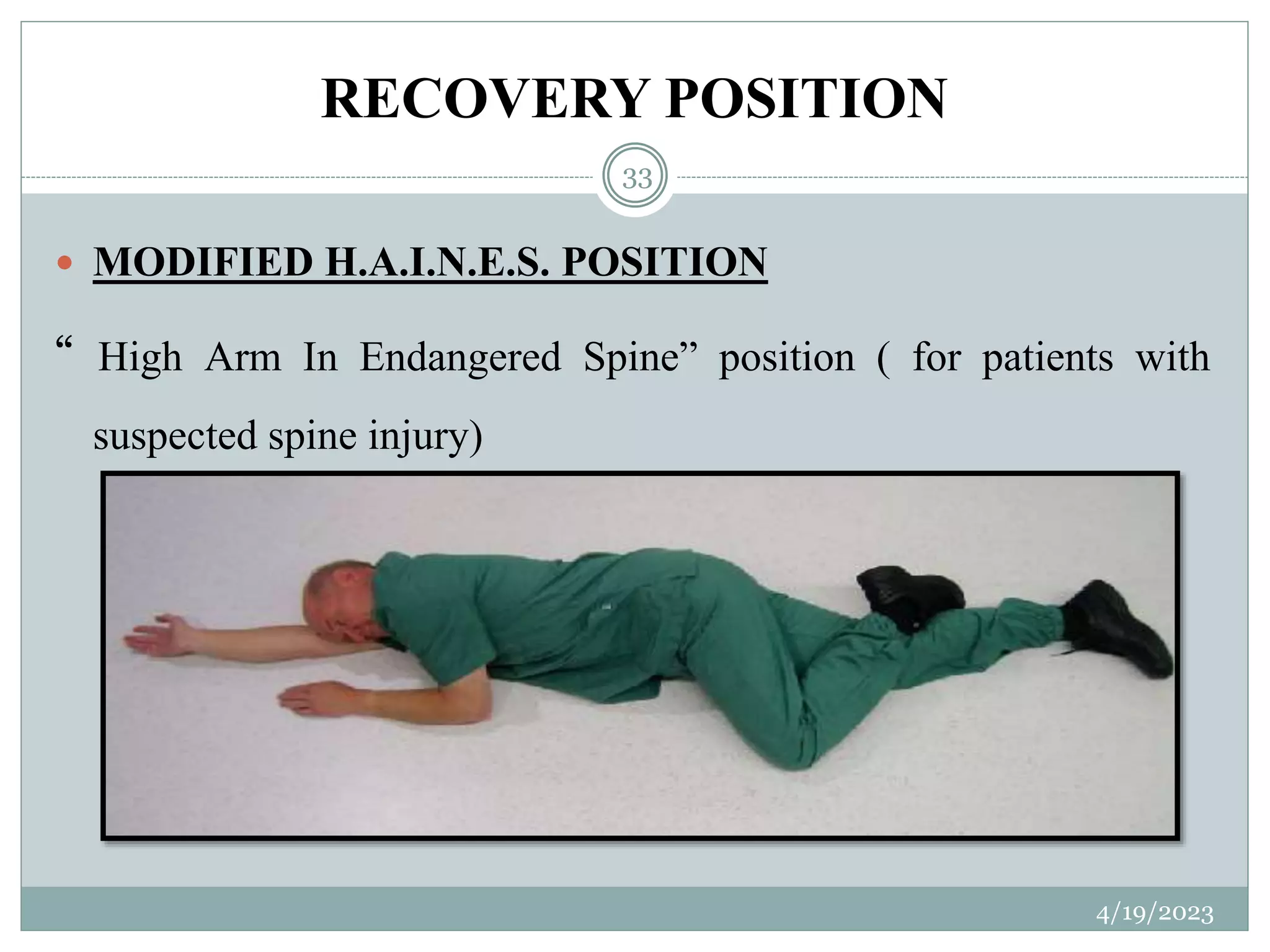
RECOVERY POSITION
4/19/2023
33
 MODIFIED H.A.I.N.E.S. POSITION
“ High Arm In Endangered Spine” position ( for patients with
suspected spine injury)
4/19/2023
34
ACLS
4/19/2023
35
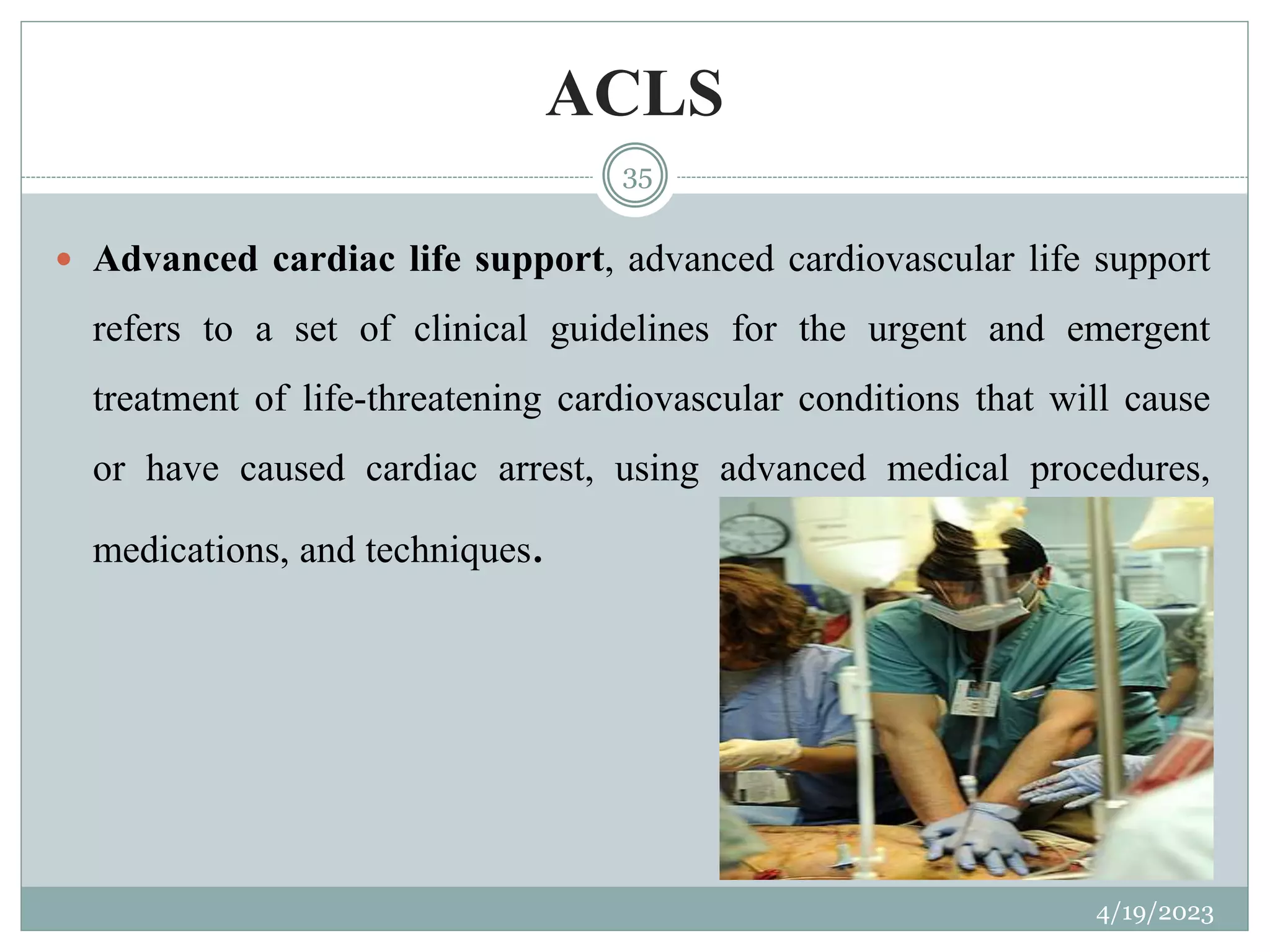
 Advanced cardiac life support, advanced cardiovascular life support
refers to a set of clinical guidelines for the urgent and emergent
treatment of life-threatening cardiovascular conditions that will cause
or have caused cardiac arrest, using advanced medical procedures,
medications, and techniques.
4/19/2023
36
ADENOSINE
4/19/2023
37
 Uses: Supra ventricular Tachycardia (SVT)
 Dosage : 1st dose- 6mg rapid IV push followed by saline bolus,
2nd dose- 12mg rapid IV push in 1-2 minutes
 Side effects: Headache, dizziness, metallic taste, dyspnea,
hypotension , bradycardia, nausea, flushing, sweating
EPINEPHRINE
4/19/2023
38
 Uses: cardiac arrest, anaphylaxis, symptomatic bradycardia after
atropine
 Dosage: Cardiac arrest- 1mg IV
 Side effects: tremors, dizziness, SVT, VT, Palpitations, chest pain
, nausea, vomiting, hyperglycemia, vasoconstriction
AMIODARONE
4/19/2023
39
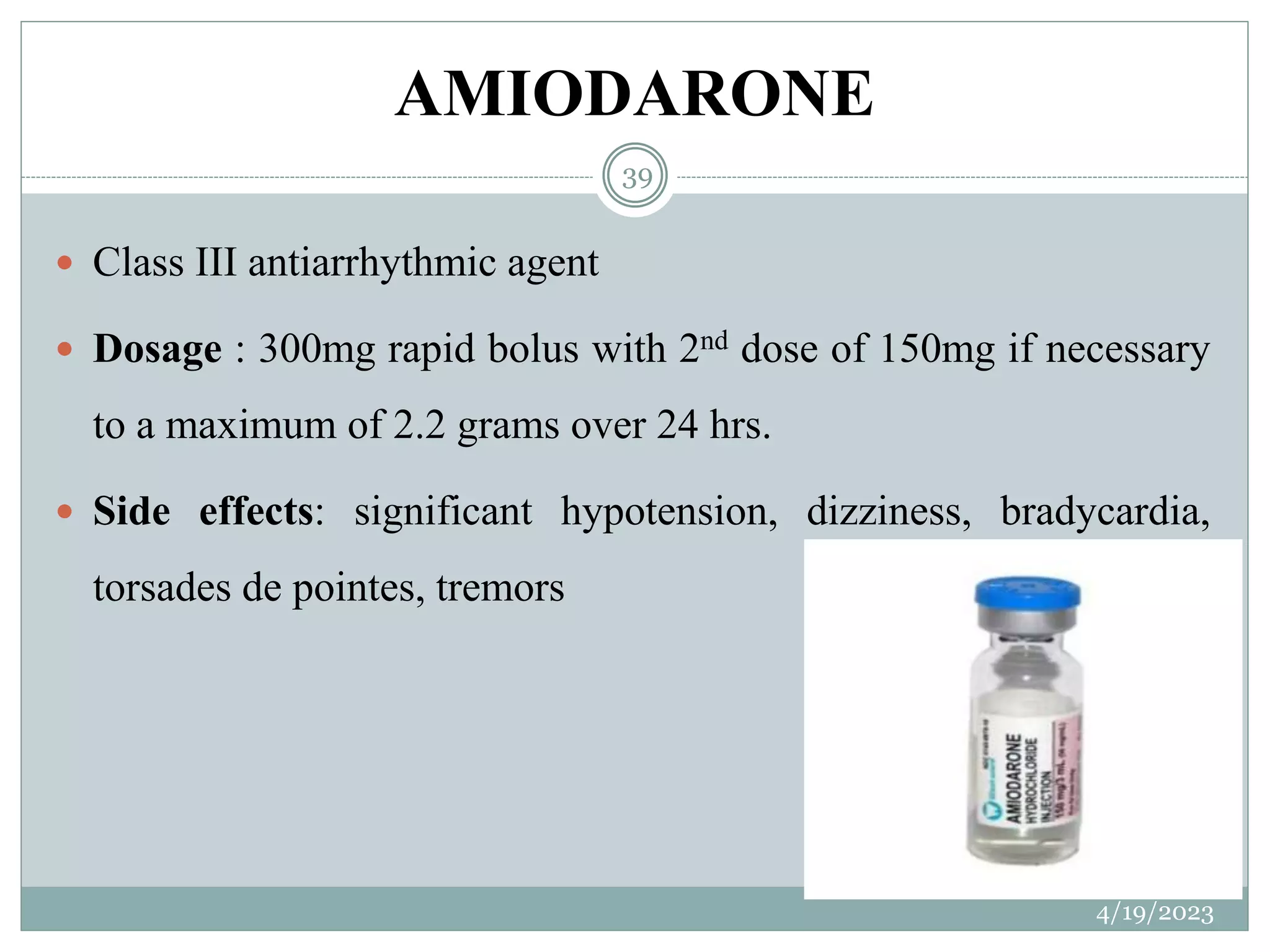
 Class III antiarrhythmic agent
 Dosage : 300mg rapid bolus with 2nd dose of 150mg if necessary
to a maximum of 2.2 grams over 24 hrs.
 Side effects: significant hypotension, dizziness, bradycardia,
torsades de pointes, tremors
LIDOCAINE HCL 2%
4/19/2023
40
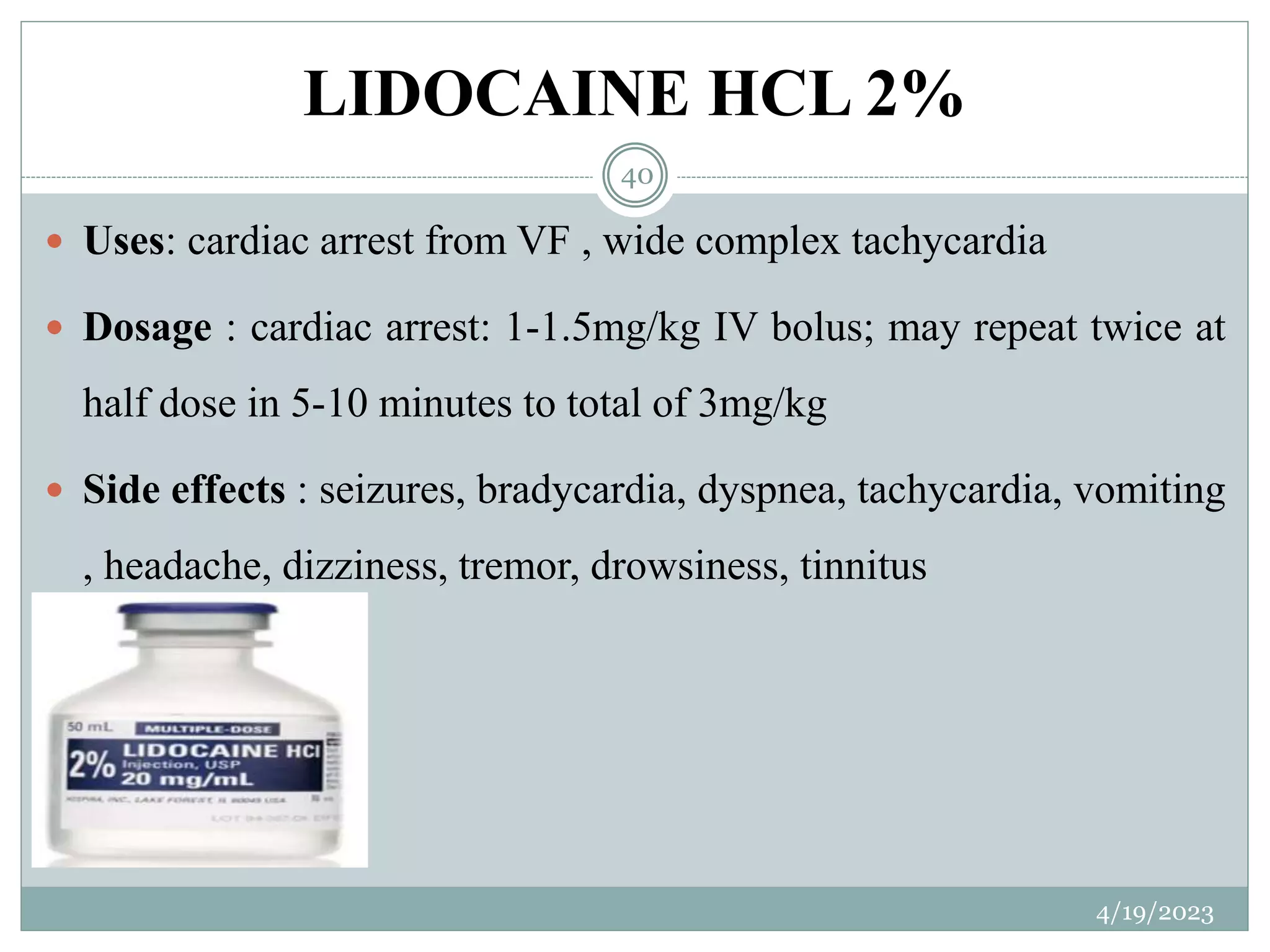
 Uses: cardiac arrest from VF , wide complex tachycardia
 Dosage : cardiac arrest: 1-1.5mg/kg IV bolus; may repeat twice at
half dose in 5-10 minutes to total of 3mg/kg
 Side effects : seizures, bradycardia, dyspnea, tachycardia, vomiting
, headache, dizziness, tremor, drowsiness, tinnitus
MAGNESIUM SULFATE
4/19/2023
41
 Uses: Torsades de pointes; hypo-magnesemia; digitalis toxicity
 Dosage: cardiac arrest due to hypomagnesemia: 1-2 gm IV bolus
 Torsades with pulse: 1-2 gm IV over 5-60 minutes followed by
infusion at 0.5-1 gm per hr IV
 Side effects: confusion, sedation, weakness, respiratory
depression, hypotension
RESEARCH ARTICLE
4/19/2023
42
 The impact of cardiopulmonary resuscitation (CPR) training on
schoolchildren and their CPR knowledge, attitudes toward CPR, and
willingness to help others and to perform CPR: mixed methods
research design.
 RESULT: Significant progress in cardiopulmonary resuscitation
knowledge was noted after training implementation, with the greatest
progress seen in the youngest age group (mean age 12.5). The greatest
increase after training was seen for the variables Attitude toward
helping others (p = 0.001) and Self-confidence (p = 0.001).
CONTD.
4/19/2023
43
 The efficacy of an ACLS training program for resuscitation from cardiac
arrest in a rural community.
 Study objective: To determine whether an advanced cardiac life support
(ACLS) course in a rural hospital will improve resuscitation success from
cardiac arrest.
 Result: Overall, seven of 35 patients (20%) were resuscitated successfully in
the post-ACLS period, with two patients surviving to hospital discharge. This
was not significantly different than the two of 29 patients (7%) resuscitated in
the pre-ACLS period, with one patient surviving to discharge.
4/19/2023
44
ANY QUERIES?
4/19/2023
45
4/19/2023
46

CPR

  • 1.
    Presented to: Mrs.Sameeksha Patial (Assistant Professor, ACN) Presented by: Ms. Yoshita Sood BS22MHNS022 Presented on: May 20, 2023 CARDIOPULMONARY RESUSCITATION 4/19/2023 1
  • 2.
    HISTORY  1732- Firstmedical BLS by William Tossach  1780- First attempt of newborn resuscitation by blowing  1858- method of restoring natural breathing by Dr. H.R. Silvester  1992- First attempt of external chest compression  1949- First report of mouth to mouth ventilation to cardiac arrest victim by James  1991- Chain of survival by AHA  2000- First International CPR Guidelines by ILCOR 4/19/2023 2
  • 3.
    DEFINITION  It isan emergency life saving procedure performed when the heart stops breathing.  CPR can be initiated anytime an individual cannot adequately oxygenate or perfuse vital organs- not only following cardiac or respiratory arrest.  CPR is an emergency procedure that combines chest compressions with artificial ventilation in an effort to manually intact brain function until further measures to restore spontaneous blood circulation and breathing in a person who is in cardiac arrest. 4/19/2023 3
  • 4.
    PURPOSES  To maintaina clear and open airway.  To maintain breathing by external ventilation.  To maintain blood circulation by external cardiac massage.  To save life of the patient.  To provide basic life support till advanced and medical life support arrives.  To reverse the initiating patho-physiological event. 4/19/2023 4
  • 5.
    WHEN TO GIVE?WHEN NOT TO GIVE?  Unconscious  Person not breathing  Has an abnormal pulse rate  Heart abruptly stopped beating  Neither scene nor victim and rescuer is safe  Patient has developed rigor mortis  Normal pulse and breathing 4/19/2023 5
  • 6.
    INDICATIONS  Acute MyocardialInfarction  Cardiomyopathy  Congestive heart failure  Cardiac temponade  Acute coronary syndrome  Hypoxia  Tension pneumothorax 4/19/2023 6
  • 7.
    GOLDEN RULES TOBE KEPT IN MIND  Optimise chest compressions rate : 100-125 compression per minute.  Optimise compression depth : 50mm  Minimise interruptions  Promote full chest recoil  Control breathing and ventilation 4/19/2023 7
  • 8.
  • 9.
    BLS ( BASICLIFE SUPPORT)  BLS is the foundation of saving lives after cardiac arrest.  A level of medical care which is used for victims of life threatening illnesses or injuries until they can be given full medical care at the hospital.  Provided by a trained health professional.  Includes psychomotor skills to perform high quality CPR , using an AED and relieve an obstructed airway. 4/19/2023 9
  • 10.
    OBJECTIVES OF BLS It is primary medical aid provided in an emergency medical situation.  Objective here is not to “treat” the person but to buy some valuable time until the emergency team arrives.  BLS is performed by anyone who knows how to do it, anywhere, immediately without any other equipment.  To reverse the initiating patho-physiological condition.  To “save hearts too good to die” while preventing irreversible cerebral damage from anoxia. 4/19/2023 10
  • 11.
    SEQUENCE  C- compression A- airway  B- breathing  A- airway  B- breathing  C- compression 4/19/2023 11
  • 12.
    WHY C-A-B??  Toemphasize the simplest but the most important step.  To increase survival rate in sudden cardiac arrest.  Patient’s blood stays oxygenated for 4-6 minutes after last breath but circulation should be restarted at the earliest.  Rescue breathing almost always delays chest compressions. 4/19/2023 12
  • 13.
  • 14.
    COMPONENTS Ensure scene safety Checkfor response and assessment Call for help Activate EMS Chest compressions 4/19/2023 14
  • 15.
    INITIAL STEPS Level ofconsciousness:  Tap person gently on the shoulder  Shout “ Are you okay?” Circulation and breathing:  Check for carotid pulsation for not more than 10 seconds but 5 seconds  Check for respiration, if there is at all any sign of it  Agonal breaths 4/19/2023 15
  • 16.
    CONTD. Call for help: Seek help from bystanders, other providers or from any trained individual. Activate EMS:  Dial up 102/108 for EMS.  Activate CODE BLUE for in-patients.  Kolkata Accident Response and Medical Assistance(KARMA) 4/19/2023 16
  • 17.
    CONTD. Outcome assessment Normal breathing, pulse felt monitor No normal breathing, pulsefelt No normal breathing, pulse absent Start CPR immediately 4/19/2023 17
  • 18.
    CHEST COMPRESSIONS  Itis foundation of CPR.  Continued emphasis on providing high quality CPR.  Push hard, push fast.  Hands-only CPR.  Rescuer should be at victim’s side.  Patient should be supine on flat, firm surface.  Chest is exposed adequately. 4/19/2023 18
  • 19.
    CONTD.  Heel ofthe hand is placed in the centre of the chest on the lower half of sternum.  Other hand is placed on top.  Fingers are interlaced.  Arms are kept as straight as possible. Shoulder directly over the hands. Elbows are locked.  Movement of the rescuer should be from the hip joint. 4/19/2023 19
  • 20.
  • 21.
    HIGH QUALITY CPR(ADULT) Push hard (at least 2 inches) and fast (100-120/min)  Allow complete chest recoil.  Minimize interruptions in compressions.  Avoid excessive ventilation.  Change compressor every 2 minutes, or sooner if fatigued.  If no advanced airway, 30:2 compression-ventilation ratio. 4/19/2023 21
  • 22.
    AIRWAY ASSESSMENT ANDBREATHING 4/19/2023 22
  • 23.
  • 24.
    RESCUE BREATH Mouth tomouth:  Open airway- Pinch the nose seal mouth to mouth contact- Blow 4/19/2023 24
  • 25.
    CONTD. Mouth to barrierdevice breathing: 4/19/2023 25
  • 26.
    THE KISS OF LIFE Awardwinning 1967 photo was taken by Rocco Morabito . Champion Randall (hanging down after a cardiac arrest following electrocuted) and JD Thompson (giving mouth to mouth ventilation). CPR was given when Champion was brought down and survived and died of heart failure in 2002 at the age of 64. This photograph won Pulitzer Prize in 1968. 26 4/19/2023
  • 27.
  • 28.
    AUTOMATED EXTERNAL DEFIBRILLATOR 4/19/2023 28 AED is a portable electronic device that automatically analyses the patient’s rhythm and can provide defibrillation, an electric shock that may help the heart re-establish a perfusing rhythm.  AED is an integral part of BLS protocol.  Early defibrillation has been re-emphasized in all updates.  AED’s deliver defibrillations to specific two shockable dysrhythmias: 1. Ventricular fibrillation 2. Ventricular tachycardia
  • 29.
  • 30.
  • 31.
  • 32.
  • 33.
    RECOVERY POSITION 4/19/2023 33  MODIFIEDH.A.I.N.E.S. POSITION “ High Arm In Endangered Spine” position ( for patients with suspected spine injury)
  • 34.
  • 35.
    ACLS 4/19/2023 35  Advanced cardiaclife support, advanced cardiovascular life support refers to a set of clinical guidelines for the urgent and emergent treatment of life-threatening cardiovascular conditions that will cause or have caused cardiac arrest, using advanced medical procedures, medications, and techniques.
  • 36.
  • 37.
    ADENOSINE 4/19/2023 37  Uses: Supraventricular Tachycardia (SVT)  Dosage : 1st dose- 6mg rapid IV push followed by saline bolus, 2nd dose- 12mg rapid IV push in 1-2 minutes  Side effects: Headache, dizziness, metallic taste, dyspnea, hypotension , bradycardia, nausea, flushing, sweating
  • 38.
    EPINEPHRINE 4/19/2023 38  Uses: cardiacarrest, anaphylaxis, symptomatic bradycardia after atropine  Dosage: Cardiac arrest- 1mg IV  Side effects: tremors, dizziness, SVT, VT, Palpitations, chest pain , nausea, vomiting, hyperglycemia, vasoconstriction
  • 39.
    AMIODARONE 4/19/2023 39  Class IIIantiarrhythmic agent  Dosage : 300mg rapid bolus with 2nd dose of 150mg if necessary to a maximum of 2.2 grams over 24 hrs.  Side effects: significant hypotension, dizziness, bradycardia, torsades de pointes, tremors
  • 40.
    LIDOCAINE HCL 2% 4/19/2023 40 Uses: cardiac arrest from VF , wide complex tachycardia  Dosage : cardiac arrest: 1-1.5mg/kg IV bolus; may repeat twice at half dose in 5-10 minutes to total of 3mg/kg  Side effects : seizures, bradycardia, dyspnea, tachycardia, vomiting , headache, dizziness, tremor, drowsiness, tinnitus
  • 41.
    MAGNESIUM SULFATE 4/19/2023 41  Uses:Torsades de pointes; hypo-magnesemia; digitalis toxicity  Dosage: cardiac arrest due to hypomagnesemia: 1-2 gm IV bolus  Torsades with pulse: 1-2 gm IV over 5-60 minutes followed by infusion at 0.5-1 gm per hr IV  Side effects: confusion, sedation, weakness, respiratory depression, hypotension
  • 42.
    RESEARCH ARTICLE 4/19/2023 42  Theimpact of cardiopulmonary resuscitation (CPR) training on schoolchildren and their CPR knowledge, attitudes toward CPR, and willingness to help others and to perform CPR: mixed methods research design.  RESULT: Significant progress in cardiopulmonary resuscitation knowledge was noted after training implementation, with the greatest progress seen in the youngest age group (mean age 12.5). The greatest increase after training was seen for the variables Attitude toward helping others (p = 0.001) and Self-confidence (p = 0.001).
  • 43.
    CONTD. 4/19/2023 43  The efficacyof an ACLS training program for resuscitation from cardiac arrest in a rural community.  Study objective: To determine whether an advanced cardiac life support (ACLS) course in a rural hospital will improve resuscitation success from cardiac arrest.  Result: Overall, seven of 35 patients (20%) were resuscitated successfully in the post-ACLS period, with two patients surviving to hospital discharge. This was not significantly different than the two of 29 patients (7%) resuscitated in the pre-ACLS period, with one patient surviving to discharge.
  • 44.
  • 45.
  • 46.