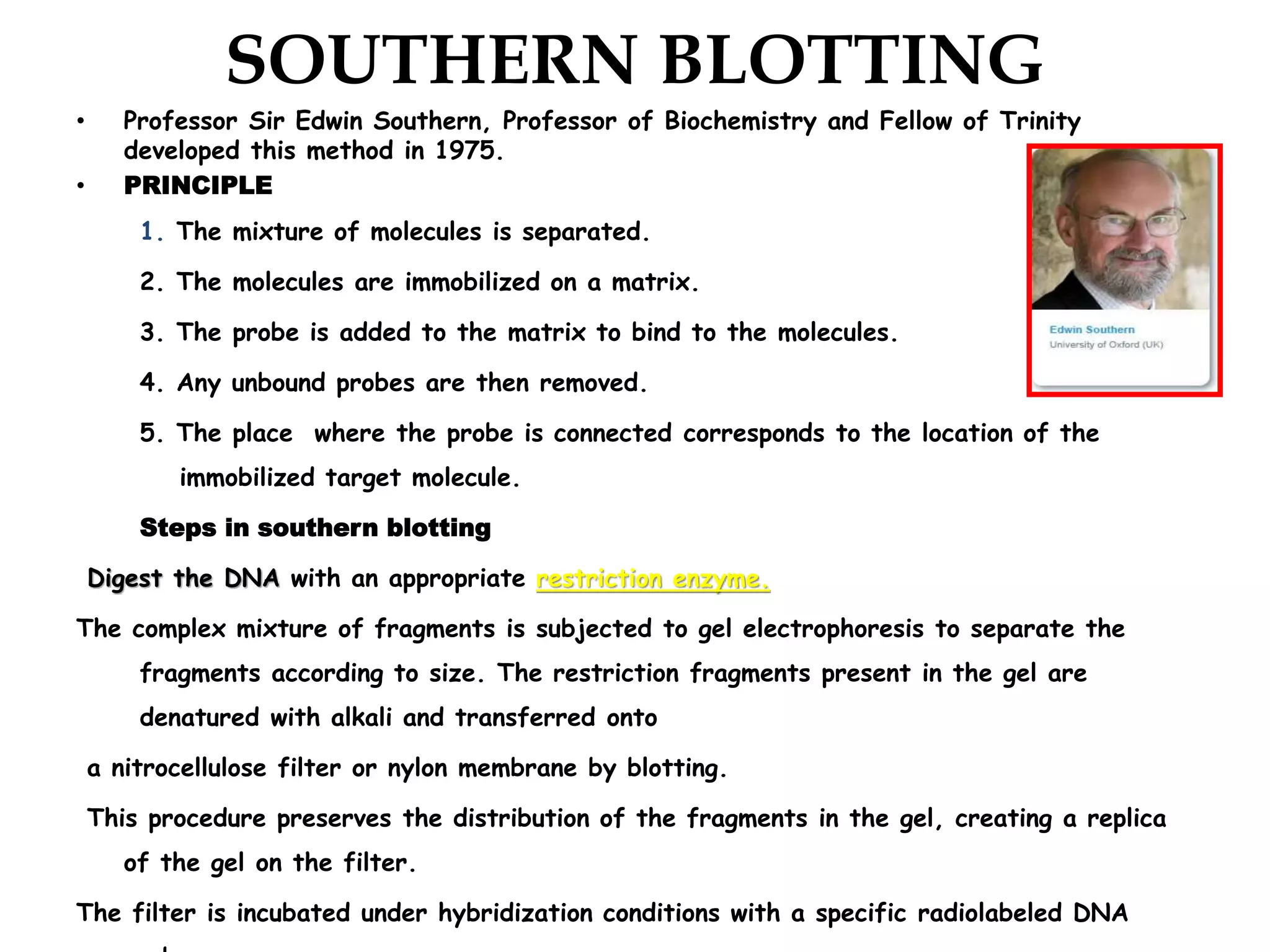
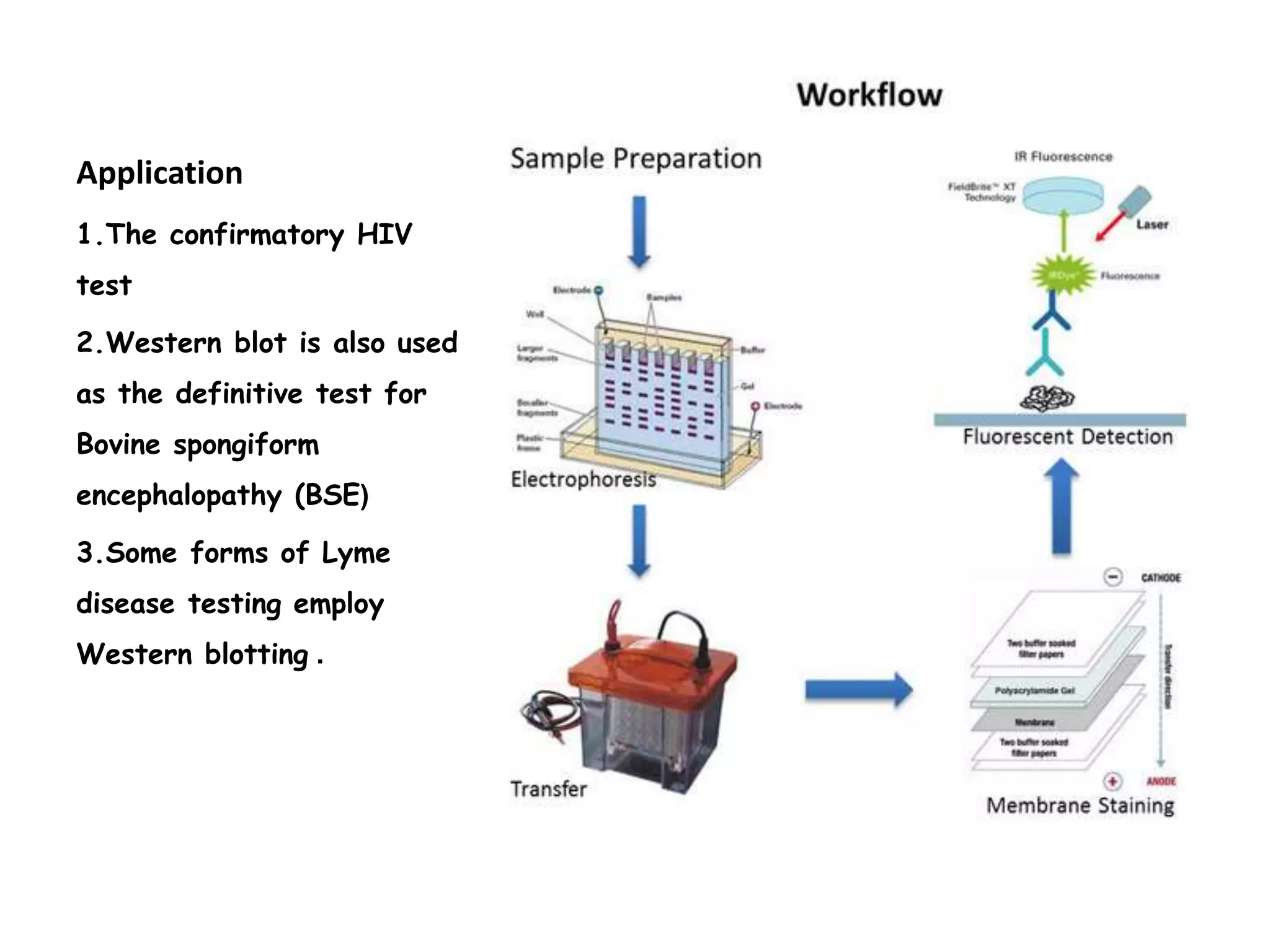
Southern blotting is a technique developed by Professor Edwin Southern in 1975 to detect specific DNA sequences. It involves separating DNA fragments by size, transferring them to a membrane, then using a probe to detect the bound fragment. It is used for gene mapping, evolution studies, and DNA fingerprinting. Northern blotting detects specific RNA sequences and was developed in 1979. RNA is separated by size and transferred to a membrane, then a probe detects bound RNA fragments. Western blotting detects specific proteins and was developed in 1981. Proteins are separated by gel electrophoresis, transferred to a membrane, and a primary antibody binds the target protein, which is then detected by a secondary antibody.