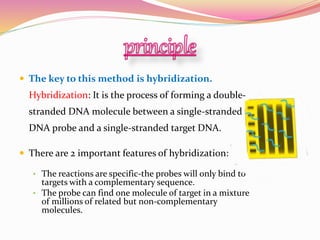
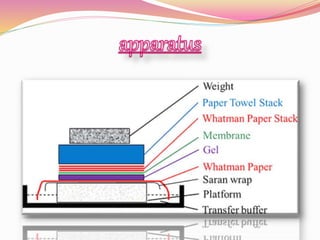
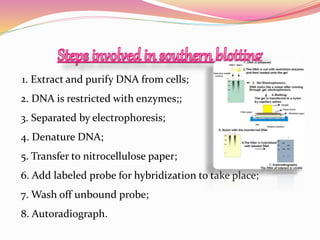
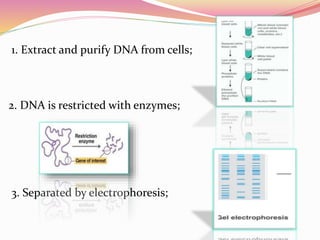
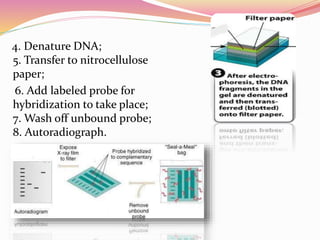
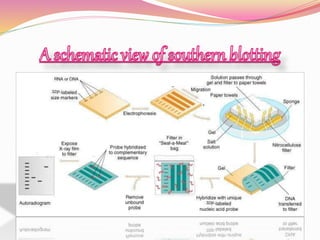
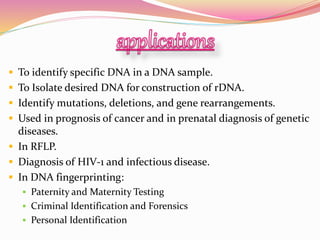
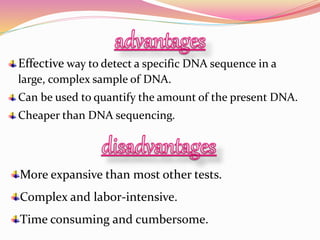
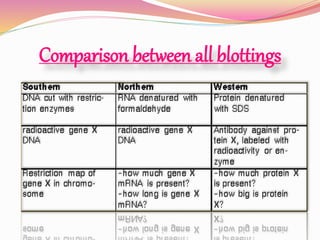
Southern blotting is a technique used to detect specific DNA sequences. It involves extracting DNA from cells, cutting the DNA with restriction enzymes, separating fragments via electrophoresis, transferring DNA to a membrane, then using a labeled probe to hybridize and identify the target sequence via autoradiography. Southern blotting allows identification of mutations, deletions and rearrangements, and is used for cancer prognosis, genetic disease diagnosis, DNA fingerprinting and more. It is an effective detection method but is also complex, labor-intensive, and time-consuming.