PRESENTED BY: JEANETTE YECYEC

1
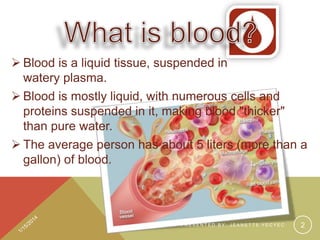
 Blood is a liquid tissue, suspended in
watery plasma.
 Blood is mostly liquid, with numerous cells and
proteins suspended in it, making blood "thicker"
than pure water.
 The average person has about 5 liters (more than a
gallon) of blood.

PRESENTED BY: JEANETTE YECYEC

2
It delivers nutrients to the cells.
• Eg. Glucose, oxygen etc.
It transports metabolic waste away from
the cells

• Eg. Ammonia, CO2
It preserves body temperature, & manages the
body’s pH
• Normal pH: 7; Temperature: 37 C

PRESENTED BY: JEANETTE YECYEC

3
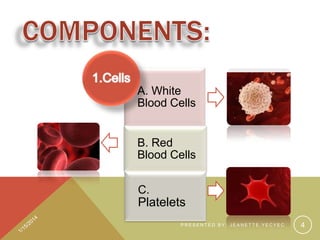
A. White
Blood Cells

B. Red
Blood Cells
C.

Platelets
PRESENTED BY: JEANETTE YECYEC

4
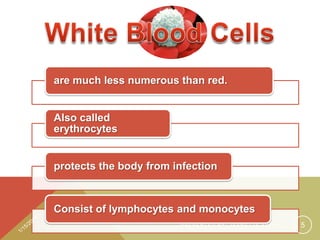
are much less numerous than red.

Also called
erythrocytes

protects the body from infection

Consist of lymphocytes and monocytes
PRESENTED BY: JEANETTE YECYEC

5
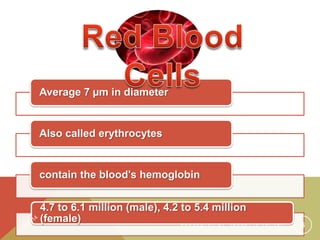
Average 7 µm in diameter

Also called erythrocytes

contain the blood's hemoglobin
4.7 to 6.1 million (male), 4.2 to 5.4 million
(female)
PRESENTED BY: JEANETTE YECYEC

6
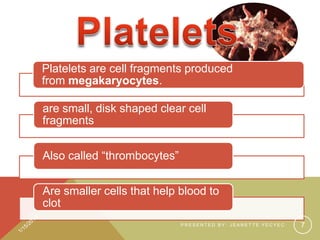
Platelets are cell fragments produced
from megakaryocytes.
are small, disk shaped clear cell
fragments
Also called “thrombocytes”
Are smaller cells that help blood to
clot
PRESENTED BY: JEANETTE YECYEC

7
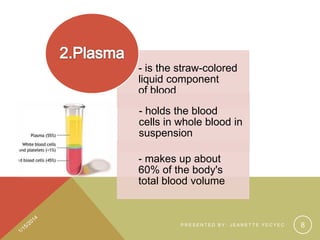
- is the straw-colored
liquid component
of blood
- holds the blood
cells in whole blood in
suspension
- makes up about
60% of the body's
total blood volume

PRESENTED BY: JEANETTE YECYEC

8
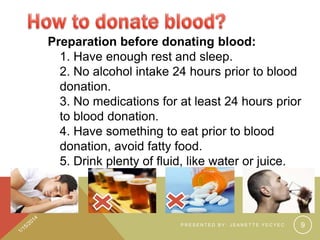
Preparation before donating blood:
1. Have enough rest and sleep.
2. No alcohol intake 24 hours prior to blood
donation.
3. No medications for at least 24 hours prior
to blood donation.
4. Have something to eat prior to blood
donation, avoid fatty food.
5. Drink plenty of fluid, like water or juice.

PRESENTED BY: JEANETTE YECYEC

9
You can donate blood if you…
- Are in good health
- Are between 16 to 65 years old (16 and 17 years
old need parents consent);
- Weigh at least 110 pounds;
- Have a blood pressure between: Systolic: 90-160
mmHg, Diastolic: 60-100 mmHg; and
- Pass the physical and health history
assessments.

PRESENTED BY: JEANETTE YECYEC

10
Sources:
http://anthro.palomar.edu/blood/blood_components.htm
http://en.wikipedia.org/wiki/Blood
http://www.redcross.org.ph/giveblood
http://www.webmd.com/heart/anatomy-picture-of-blood

PRESENTED BY: JEANETTE YECYEC

11

Blood (Definition, Functions and its Components)

  • 1.
  • 2.
     Blood isa liquid tissue, suspended in watery plasma.  Blood is mostly liquid, with numerous cells and proteins suspended in it, making blood "thicker" than pure water.  The average person has about 5 liters (more than a gallon) of blood. PRESENTED BY: JEANETTE YECYEC 2
  • 3.
    It delivers nutrientsto the cells. • Eg. Glucose, oxygen etc. It transports metabolic waste away from the cells • Eg. Ammonia, CO2 It preserves body temperature, & manages the body’s pH • Normal pH: 7; Temperature: 37 C PRESENTED BY: JEANETTE YECYEC 3
  • 4.
    A. White Blood Cells B.Red Blood Cells C. Platelets PRESENTED BY: JEANETTE YECYEC 4
  • 5.
    are much lessnumerous than red. Also called erythrocytes protects the body from infection Consist of lymphocytes and monocytes PRESENTED BY: JEANETTE YECYEC 5
  • 6.
    Average 7 µmin diameter Also called erythrocytes contain the blood's hemoglobin 4.7 to 6.1 million (male), 4.2 to 5.4 million (female) PRESENTED BY: JEANETTE YECYEC 6
  • 7.
    Platelets are cellfragments produced from megakaryocytes. are small, disk shaped clear cell fragments Also called “thrombocytes” Are smaller cells that help blood to clot PRESENTED BY: JEANETTE YECYEC 7
  • 8.
    - is thestraw-colored liquid component of blood - holds the blood cells in whole blood in suspension - makes up about 60% of the body's total blood volume PRESENTED BY: JEANETTE YECYEC 8
  • 9.
    Preparation before donatingblood: 1. Have enough rest and sleep. 2. No alcohol intake 24 hours prior to blood donation. 3. No medications for at least 24 hours prior to blood donation. 4. Have something to eat prior to blood donation, avoid fatty food. 5. Drink plenty of fluid, like water or juice. PRESENTED BY: JEANETTE YECYEC 9
  • 10.
    You can donateblood if you… - Are in good health - Are between 16 to 65 years old (16 and 17 years old need parents consent); - Weigh at least 110 pounds; - Have a blood pressure between: Systolic: 90-160 mmHg, Diastolic: 60-100 mmHg; and - Pass the physical and health history assessments. PRESENTED BY: JEANETTE YECYEC 10
  • 11.