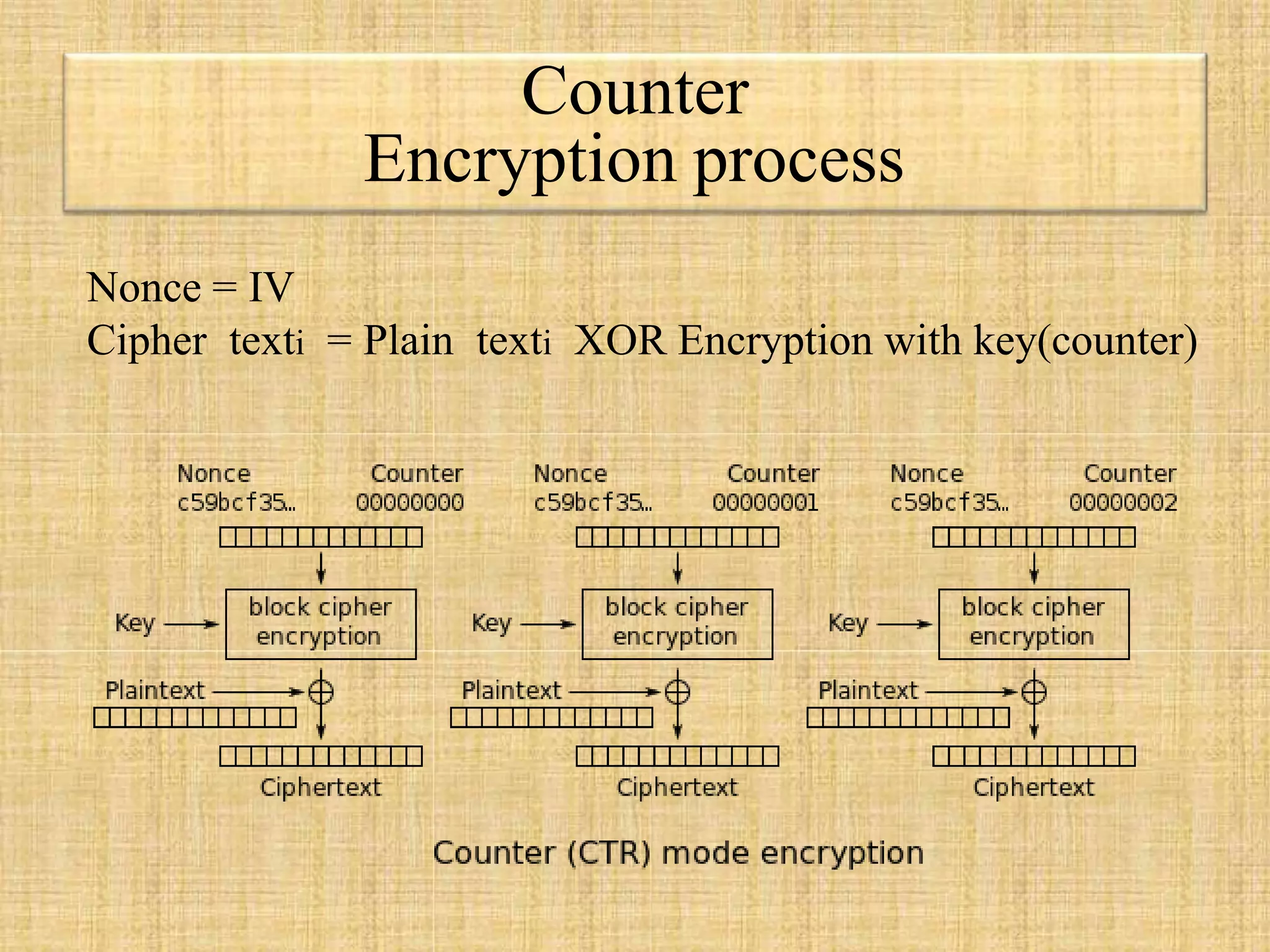
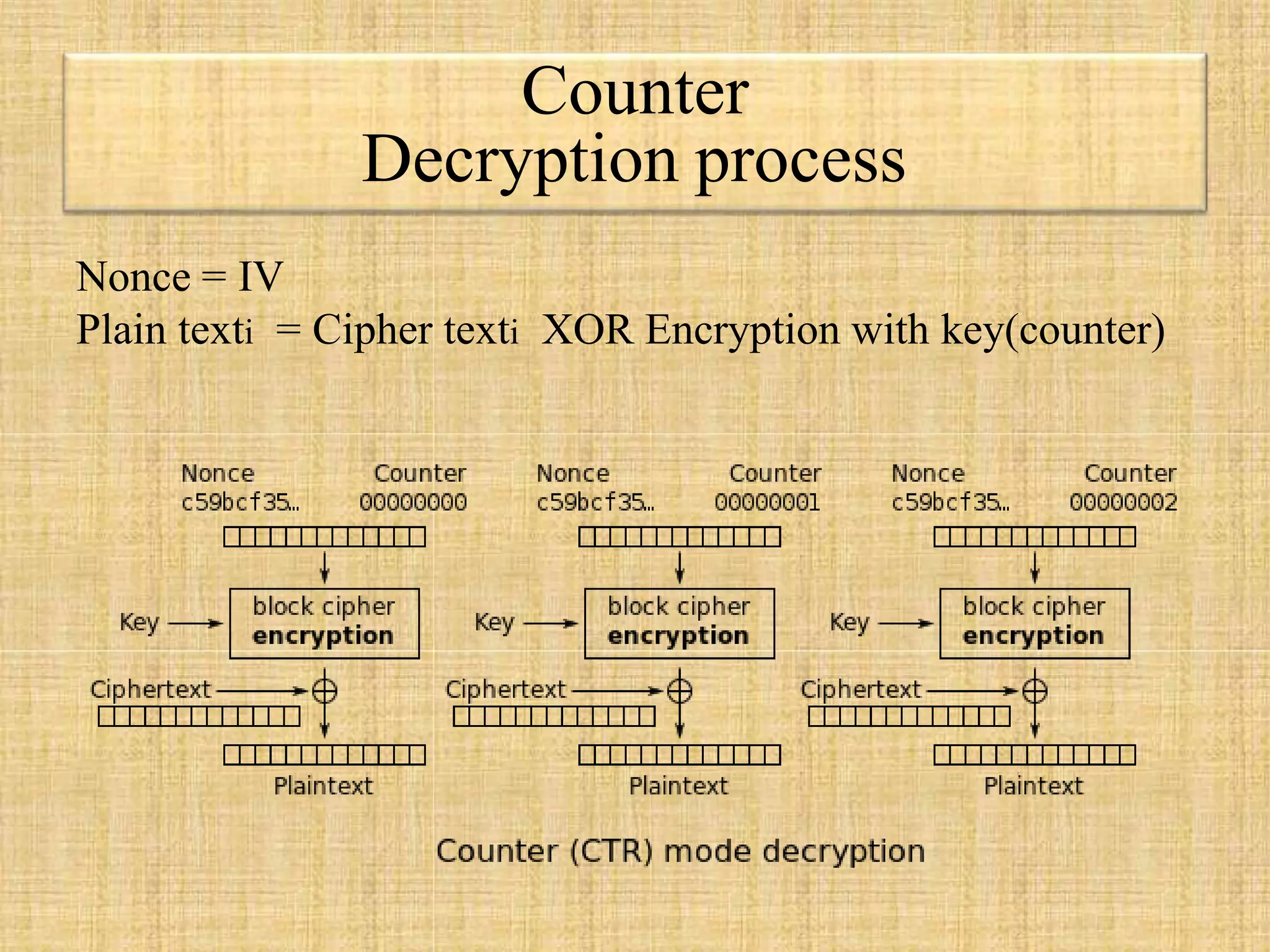
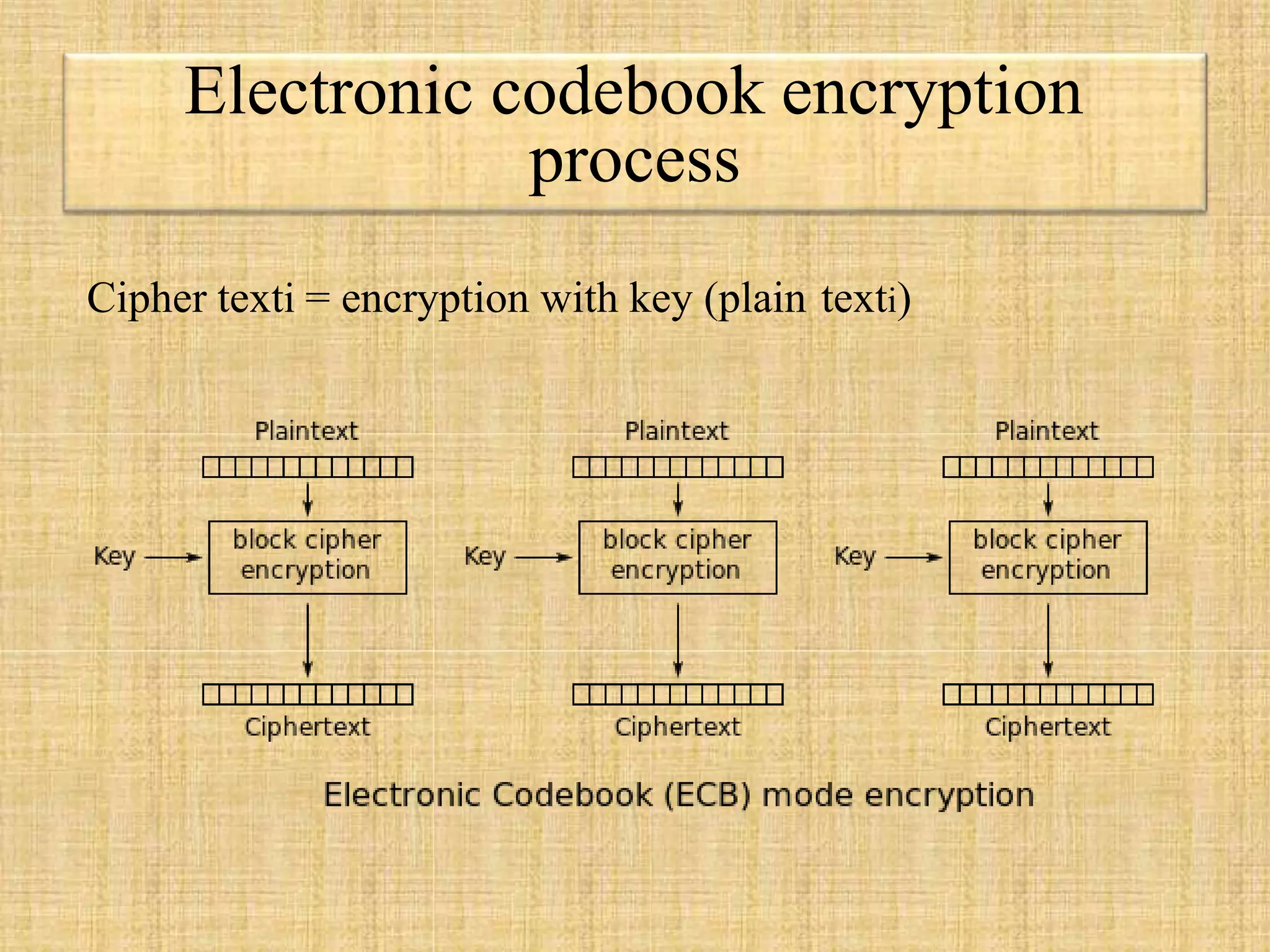
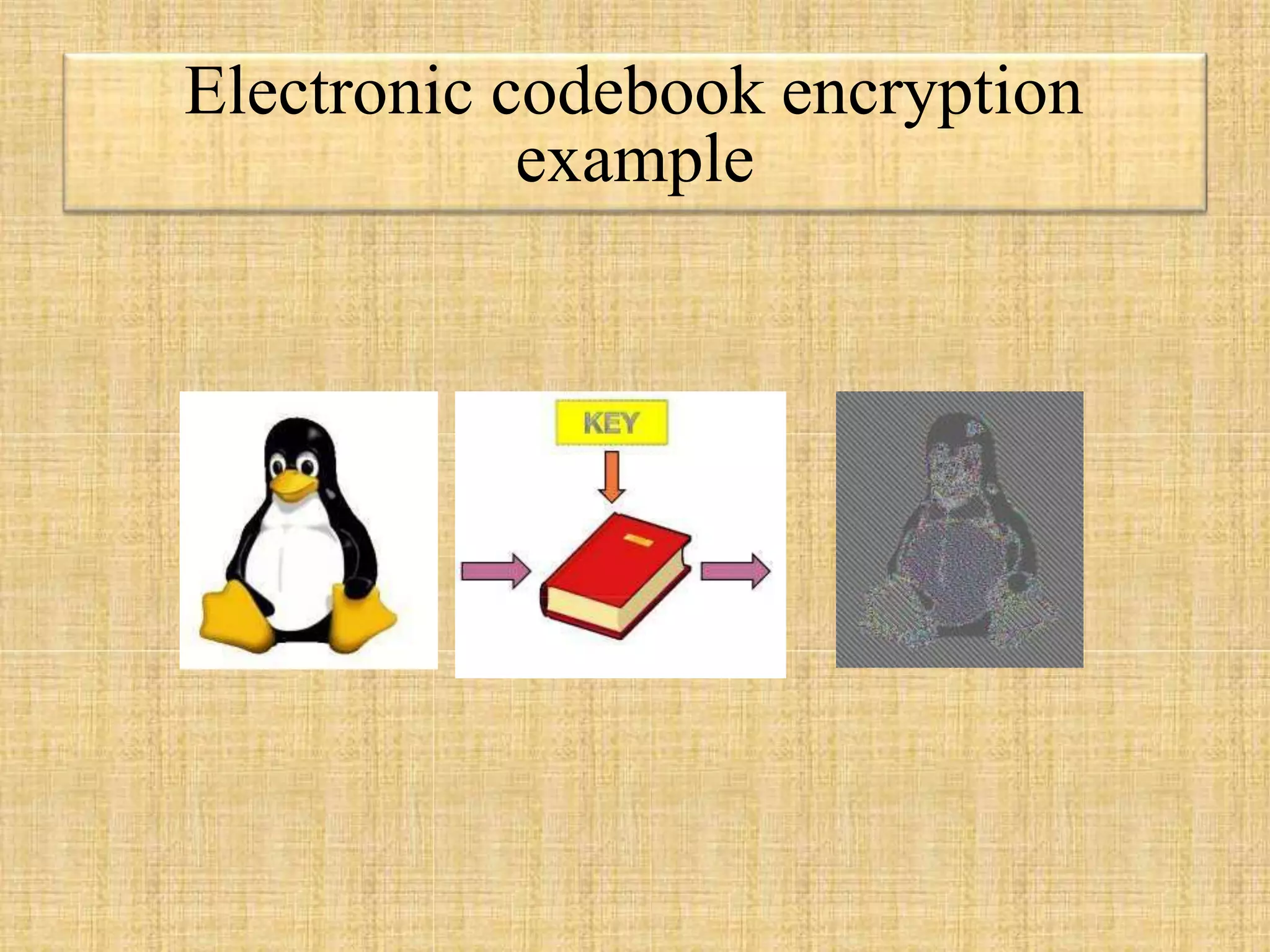
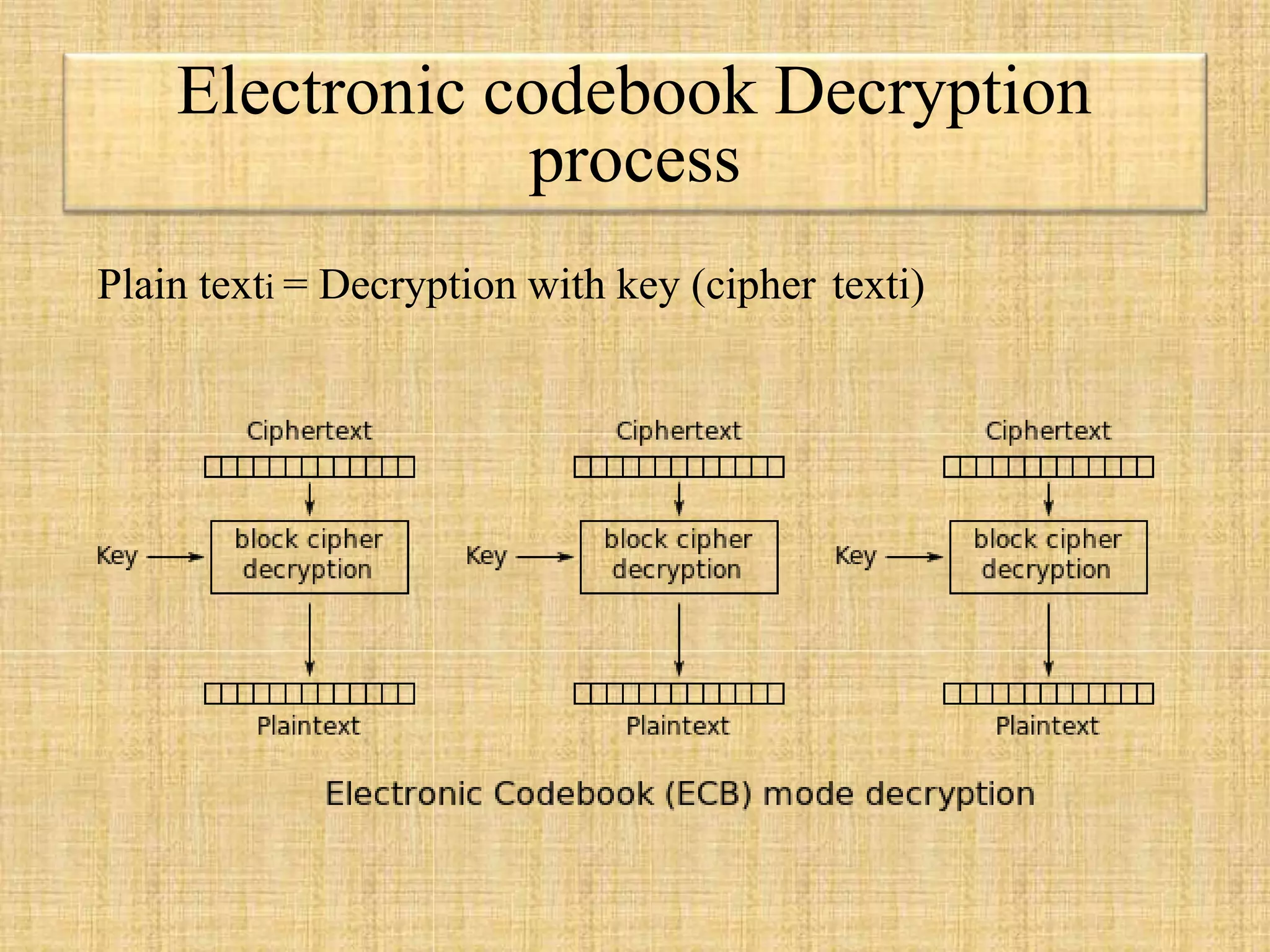
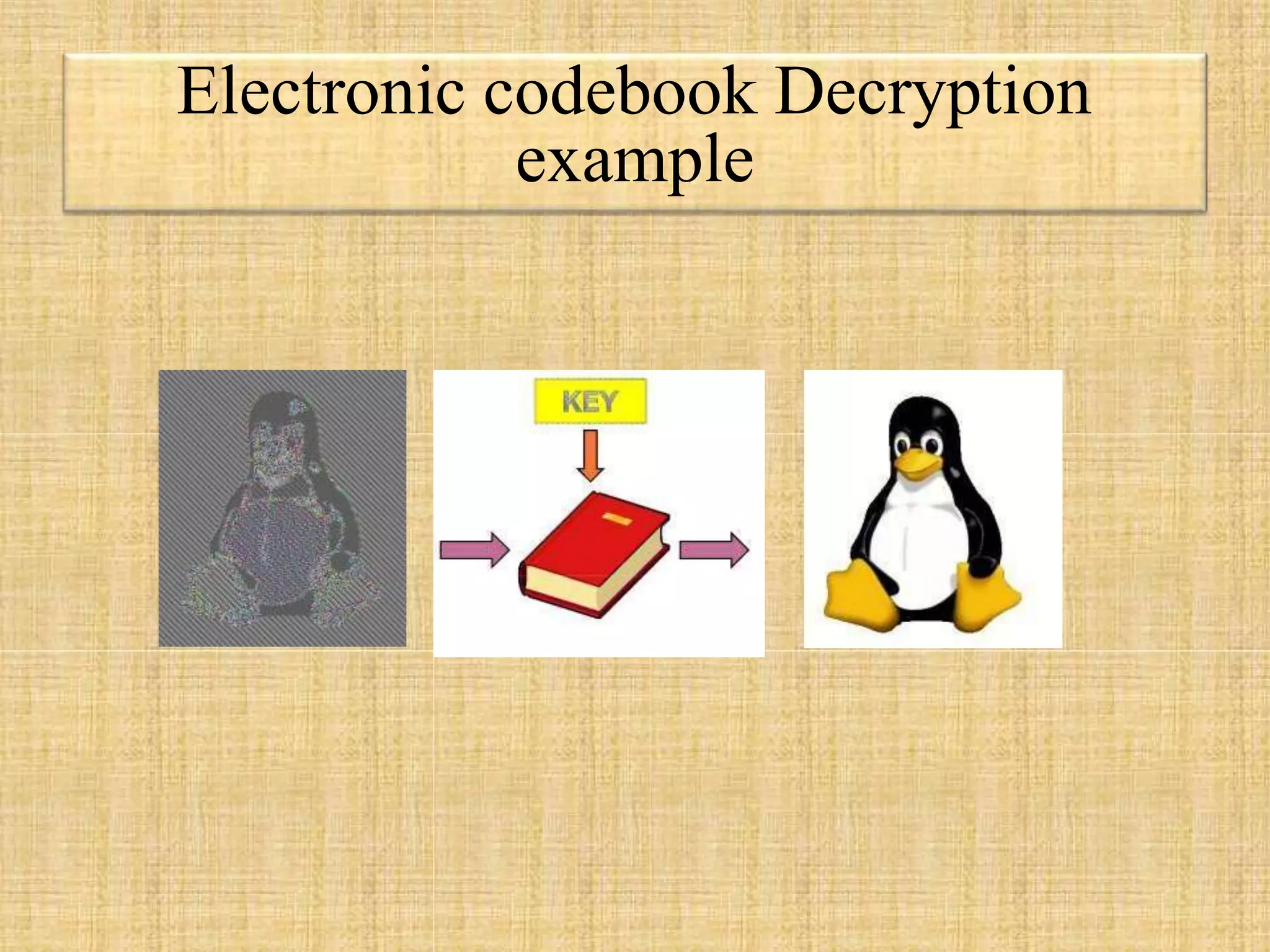
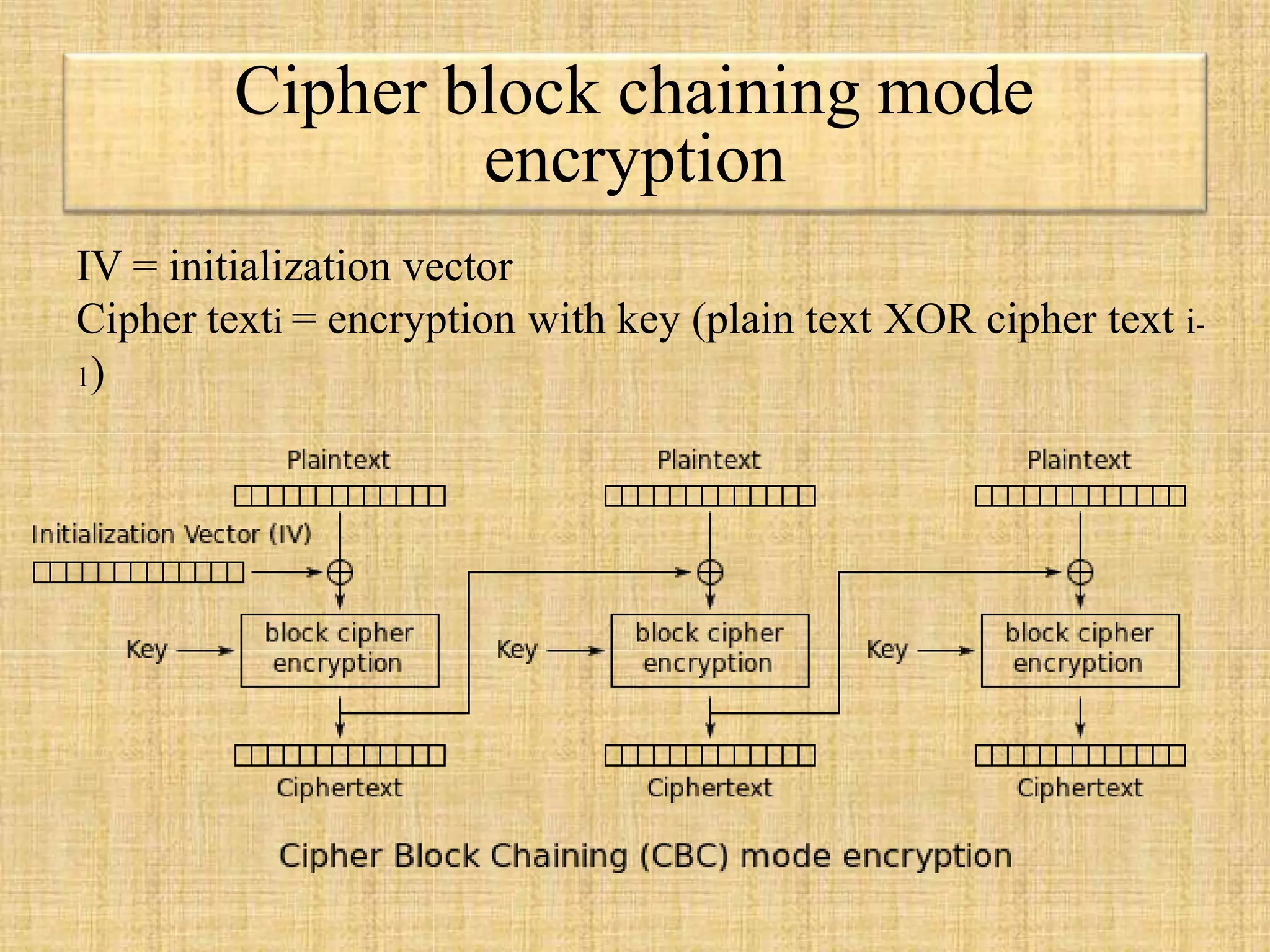
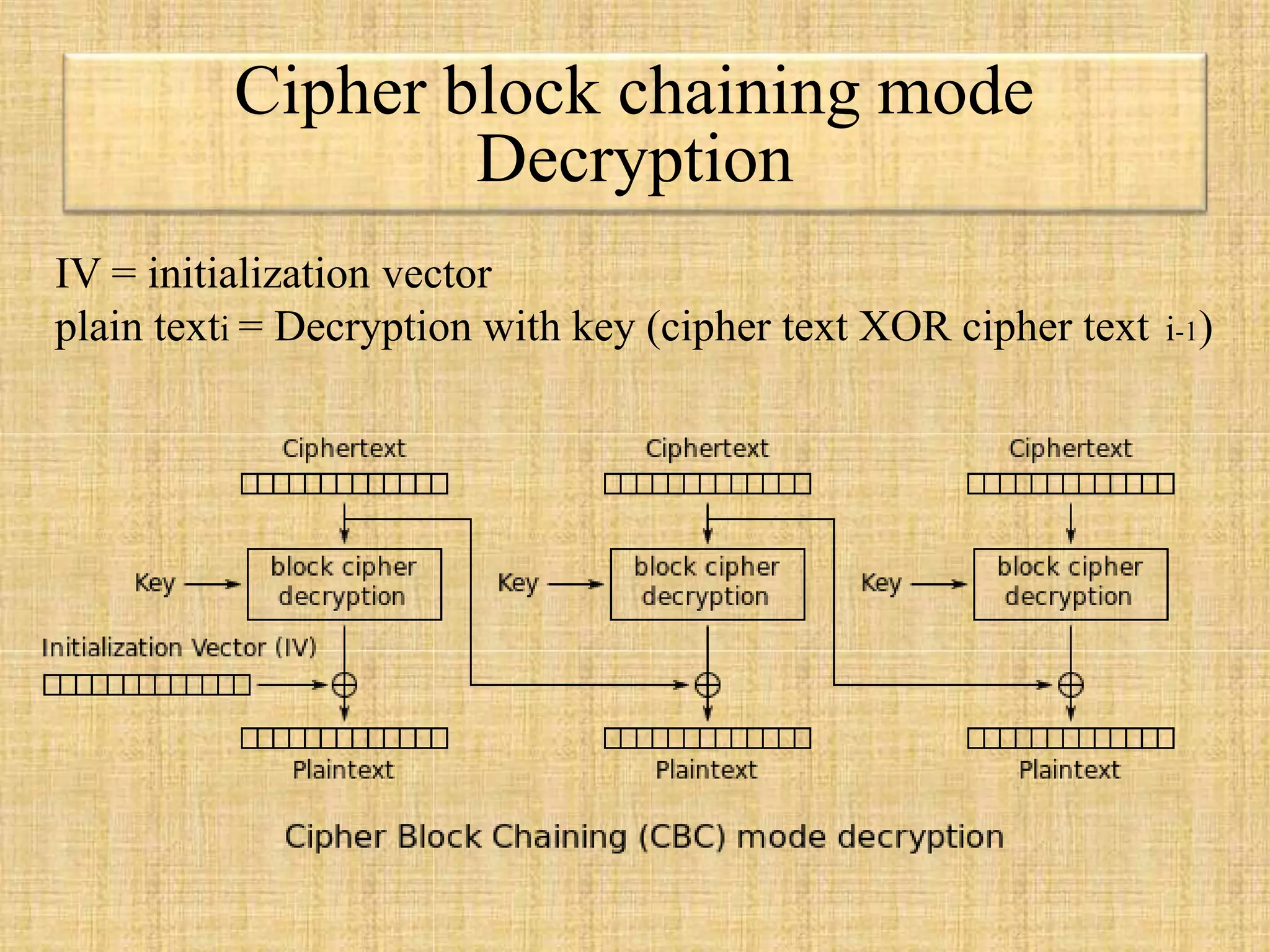
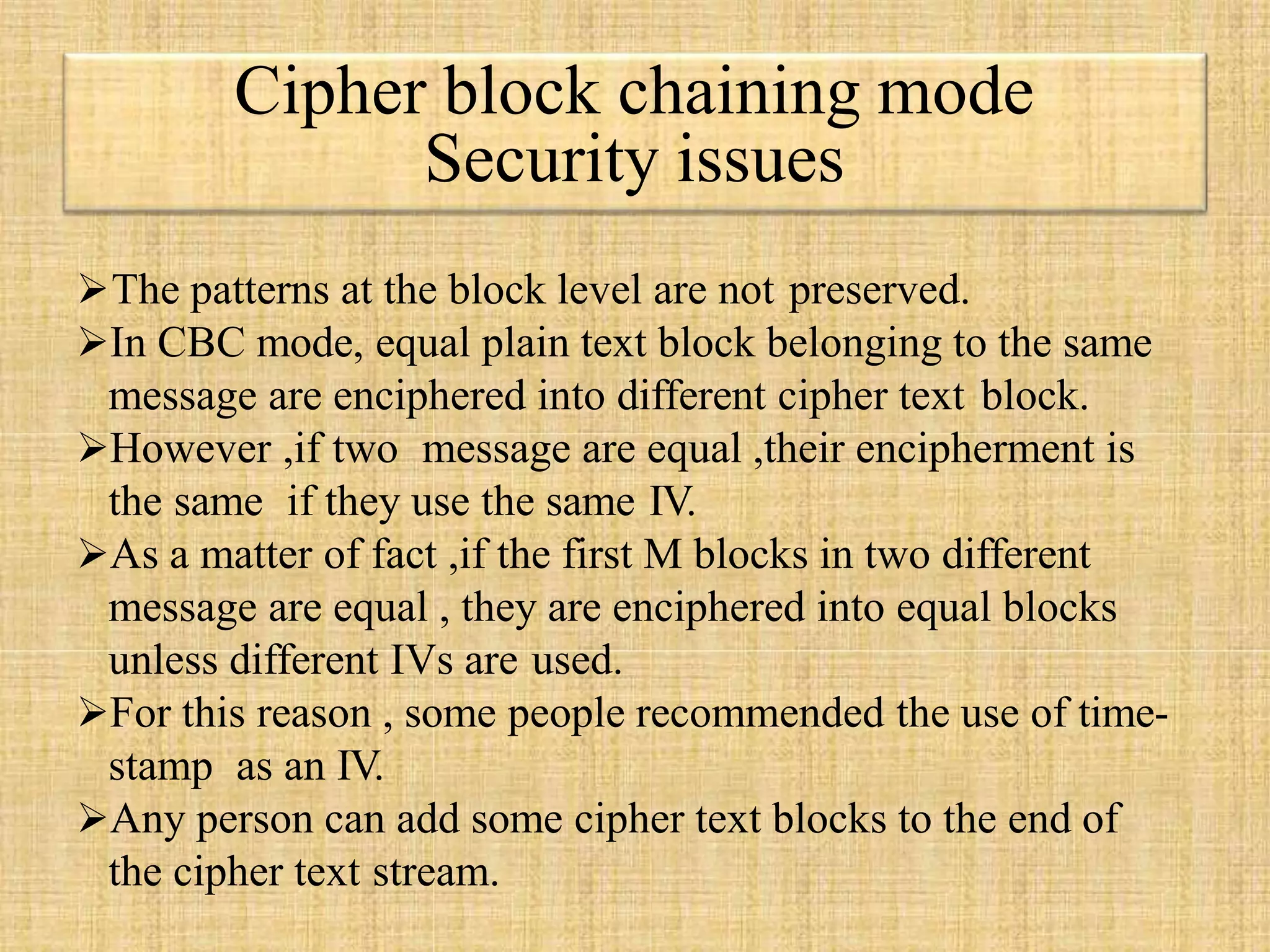
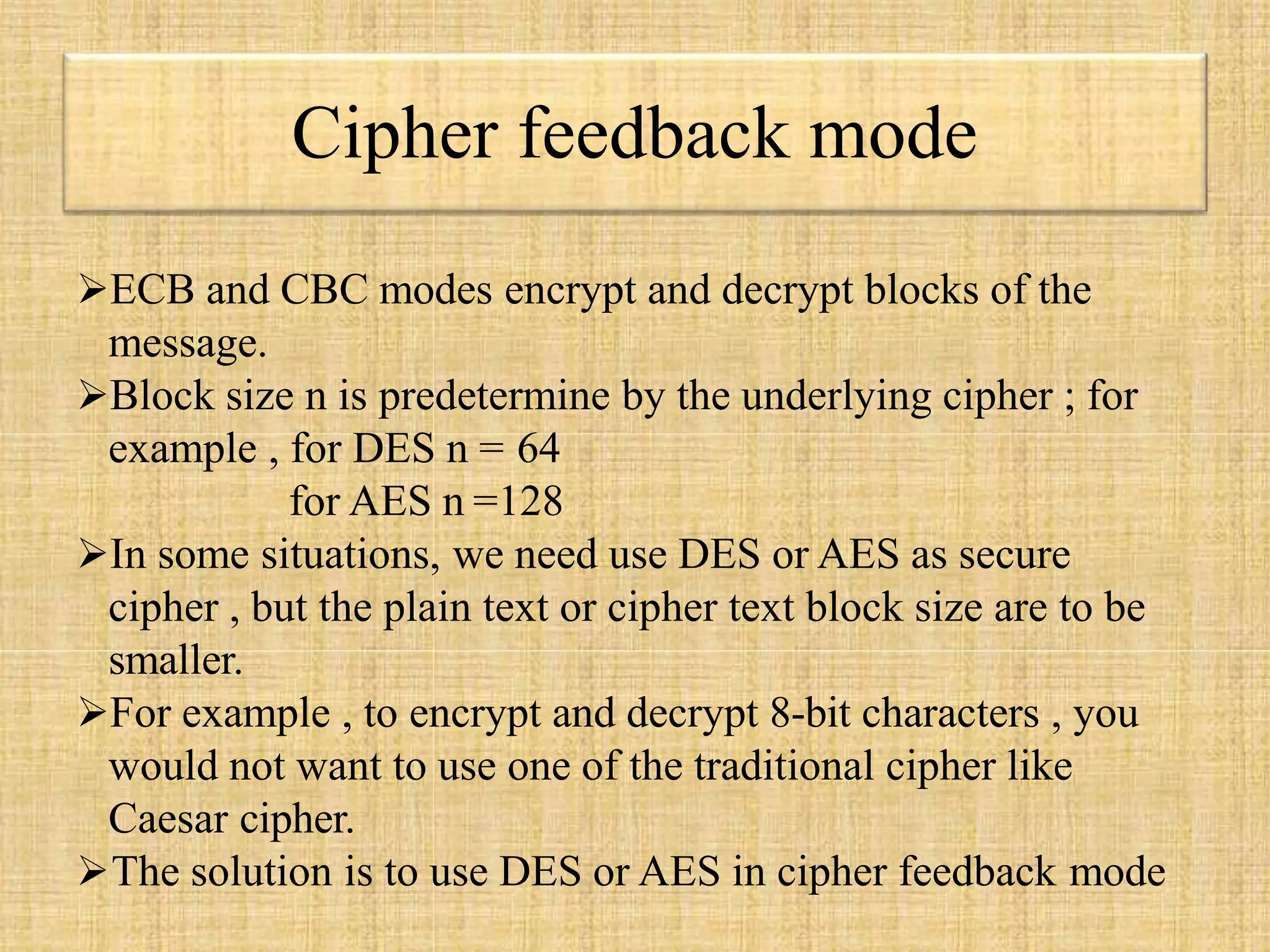
Block ciphers encrypt fixed-length blocks of plaintext into ciphertext using symmetric keys. There are five modes of operation that allow block ciphers to encrypt messages longer than the block size: electronic codebook (ECB), cipher block chaining (CBC), cipher feedback (CFB), output feedback (OFB), and counter mode. These modes address issues like encrypting non-block-sized messages and adding randomness to prevent patterns in the ciphertext. ECB encrypts each block independently while the others use chaining or a counter to make each ciphertext block dependent on previous blocks. Initialization vectors are used to randomize encryption of identical plaintexts.

![Cipher output feedback mode
encryption
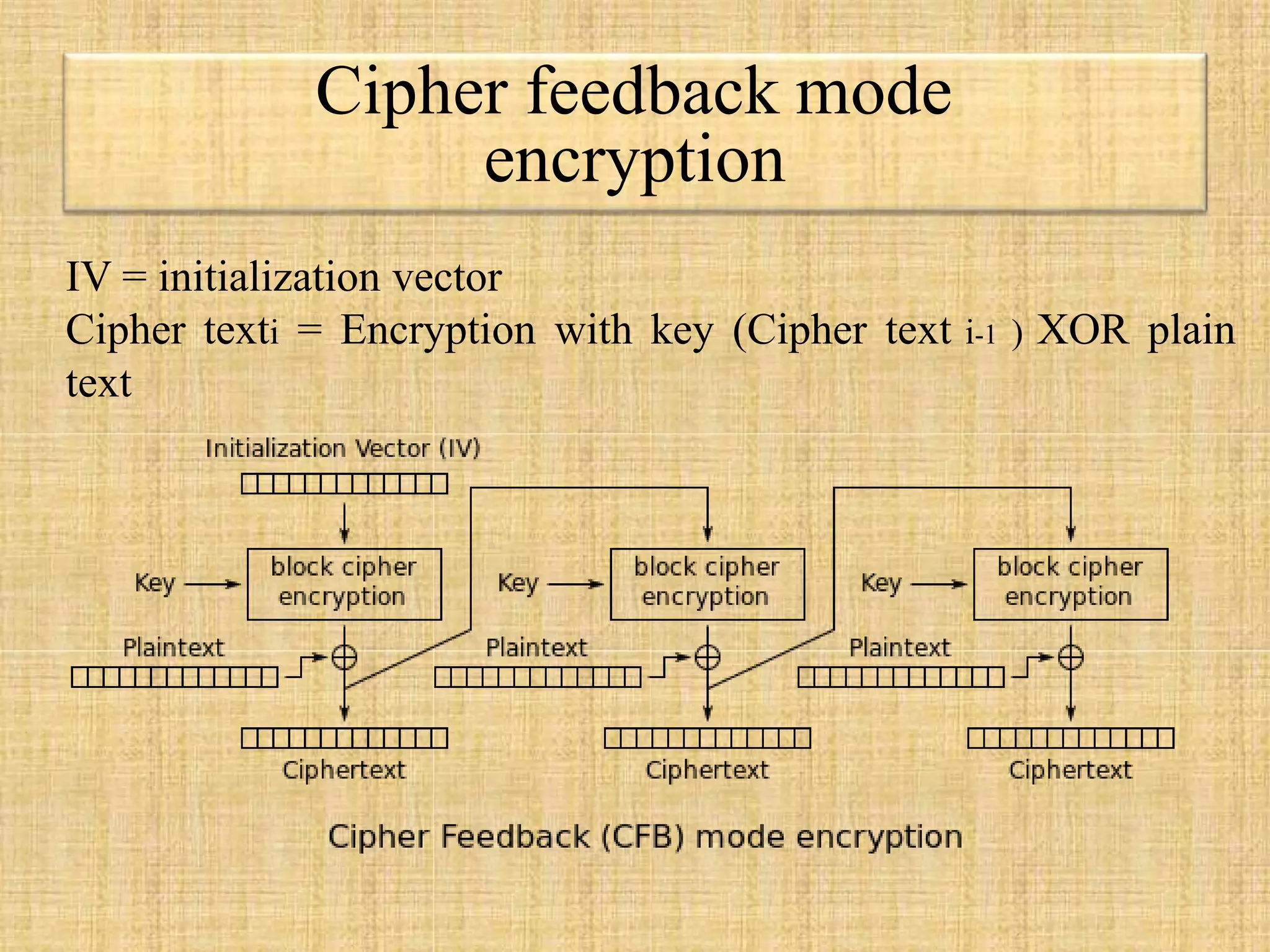
IV = initialization vector
cipher texti =
plain texti XOR Encryption
(k , [cipher text i-1 XOR plain text i-1] )](https://image.slidesharecdn.com/blockciphermodesofoperation-230516044755-19cc35ed/75/block-ciphermodes-of-operation-pptx-22-2048.jpg)
![Cipher output feedback mode
Decryption
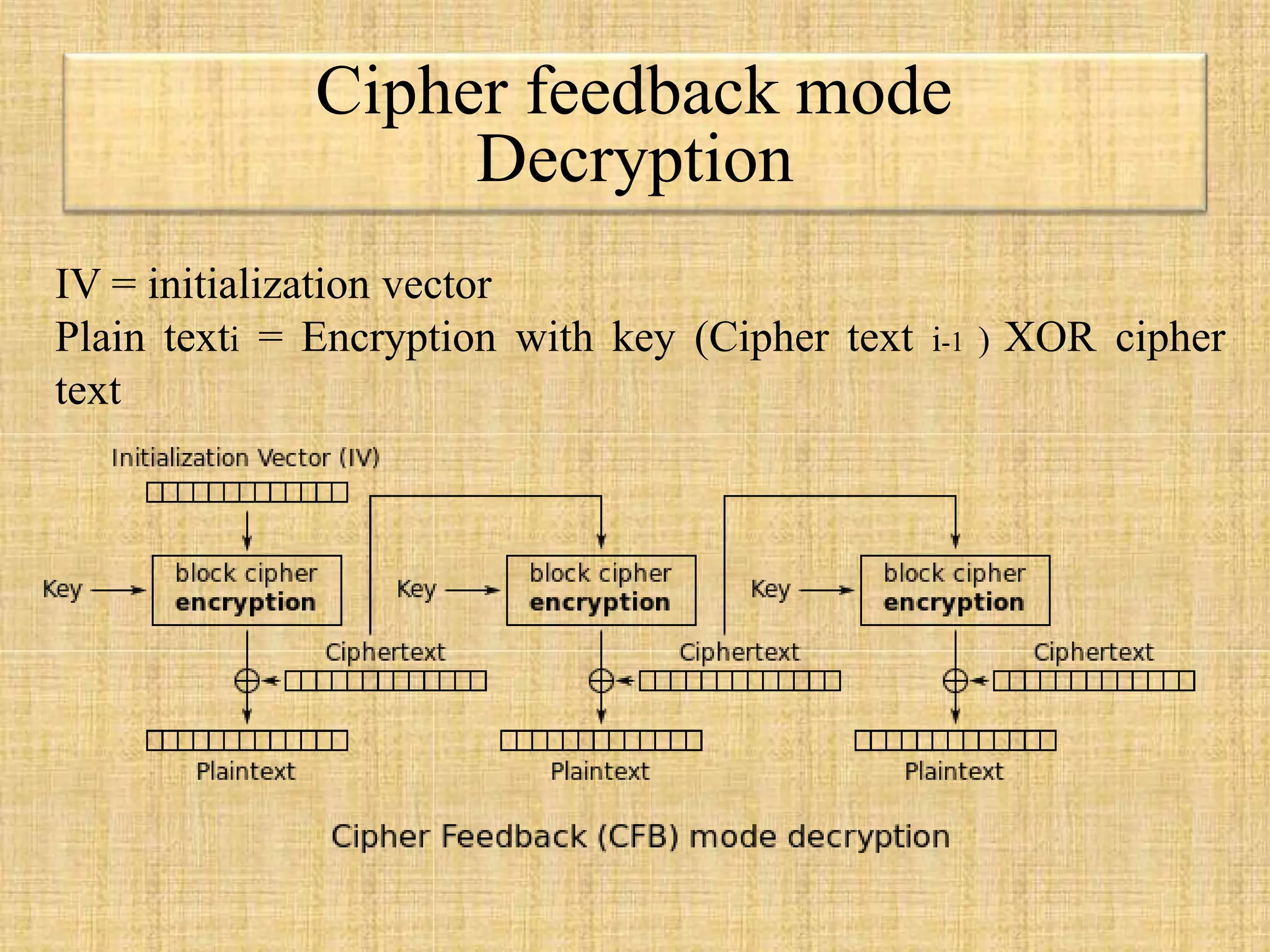
IV = initialization vector
Plain texti =
cipher texti XOR Encryption
(k , [cipher text i-1 XOR plain text i-1] )](https://image.slidesharecdn.com/blockciphermodesofoperation-230516044755-19cc35ed/75/block-ciphermodes-of-operation-pptx-23-2048.jpg)