BLOCK CIPHER MODES
NETWORK AND INFORMATION SECURITY
Narayan Furmalkar (19)
Rohit Kulkarni (33)
Rutuja More (37)
Akash Sirsat (51)
Tukaram Shinde (49)
Index
 Introduction
 Stream cipher vs block cipher
 Block cipher modes
 Conclusion
 References
Introduction
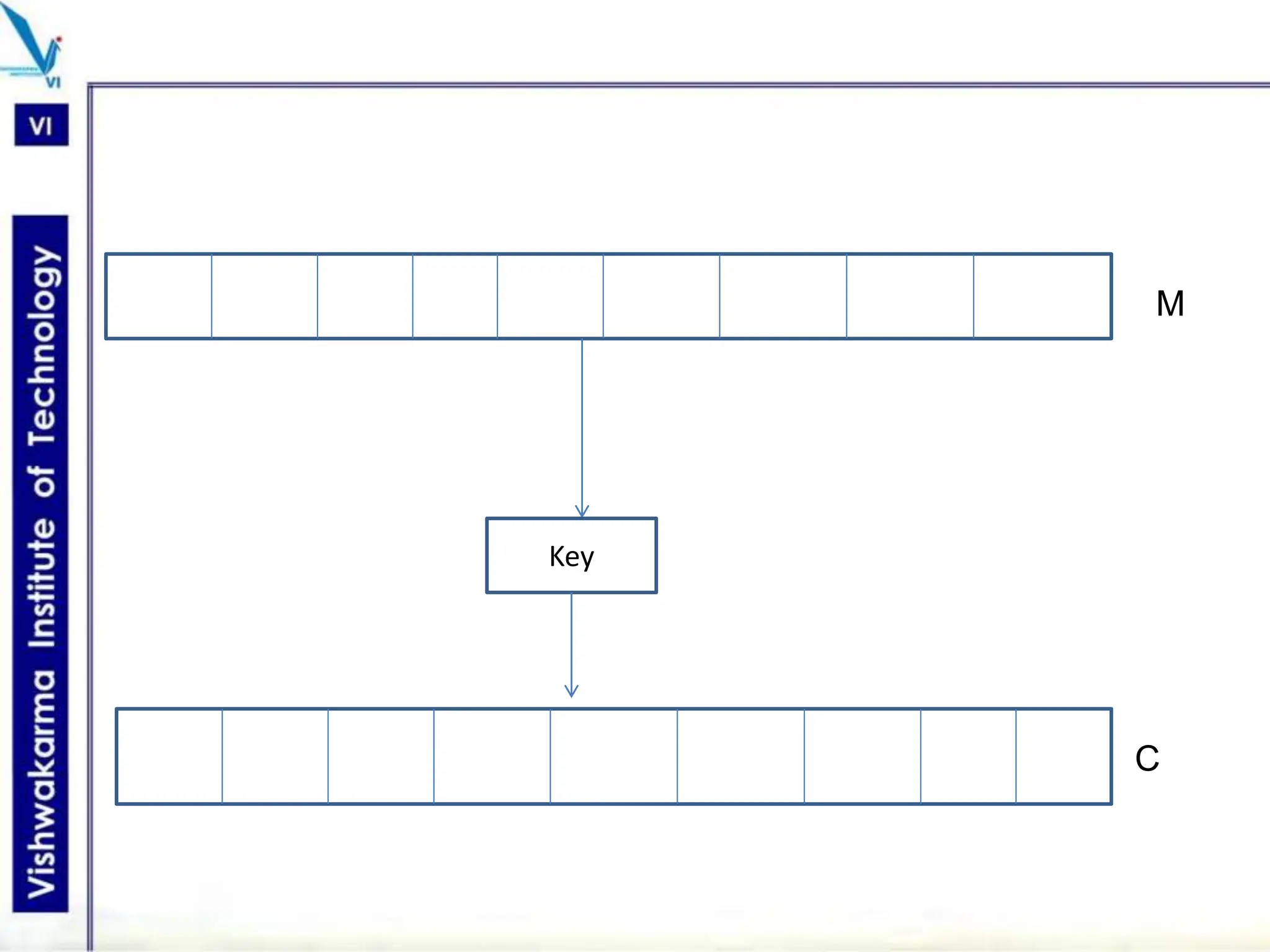
 Block cipher is basically a data encryption method.
 A block cipher encrypts data which is divided in number of blocks of
definite size using a symmetric key.
 The cipher text which is outcome of block cipher encryption method is
also generated in forms of cipher text blocks
 The key in case of block cipher can take any of the size from given
range of sizes i.e. 40,56,64,128,256 bits
 Block cipher uses same key to encrypt each block of the same plain
text or message.
 During encryption, it uses the shared key to transform its plaintext
input into a cipher text (encrypted text).
 During decryption, it uses the same key to transform the cipher text
back to the original plaintext.
 The length of the output is the same as the input.
M
Key
C
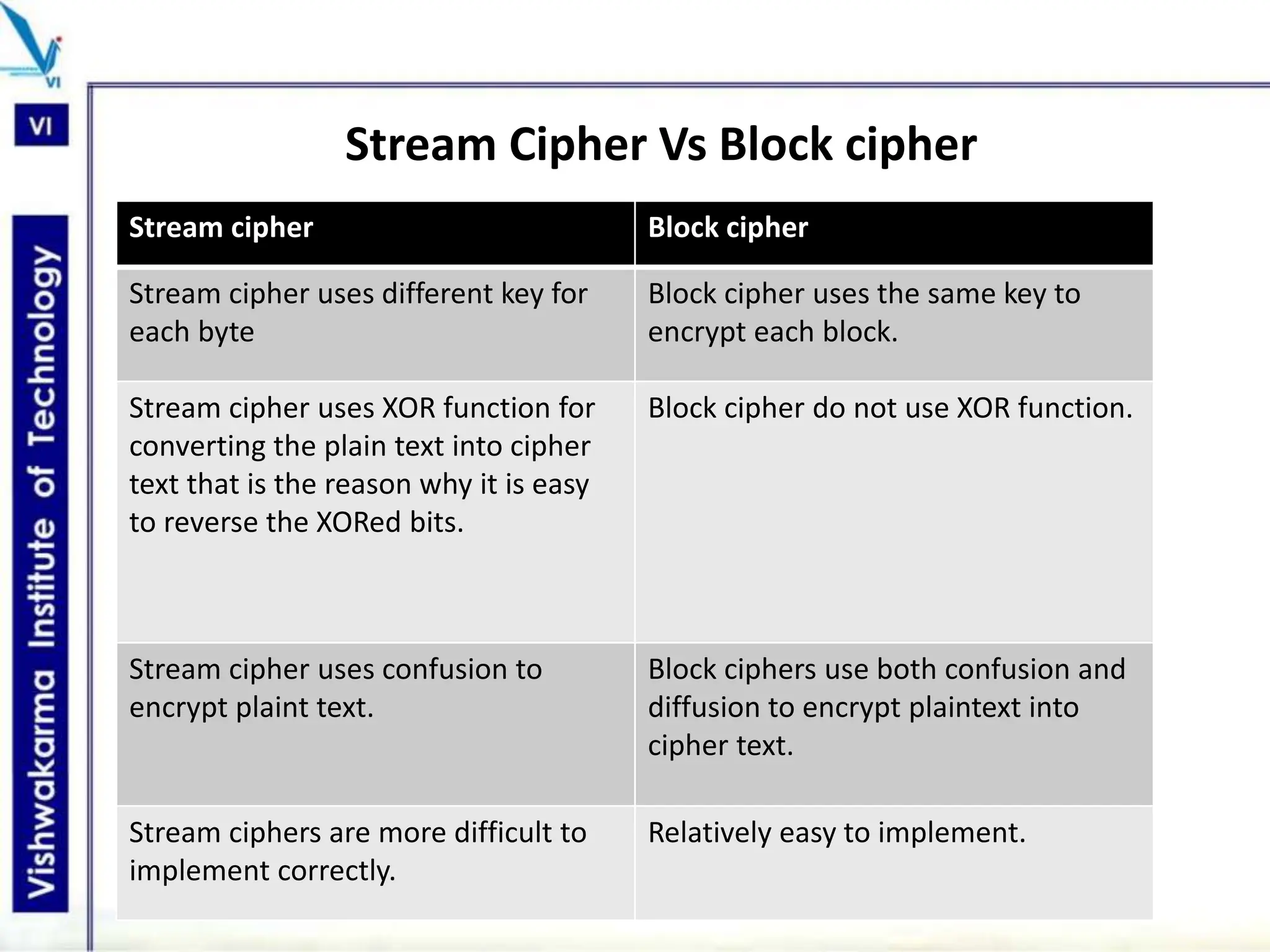
Stream Cipher Vs Block cipher
Stream cipher Block cipher
Stream cipher uses different key for
each byte
Block cipher uses the same key to
encrypt each block.
Stream cipher uses XOR function for
converting the plain text into cipher
text that is the reason why it is easy
to reverse the XORed bits.
Block cipher do not use XOR function.
Stream cipher uses confusion to
encrypt plaint text.
Block ciphers use both confusion and
diffusion to encrypt plaintext into
cipher text.
Stream ciphers are more difficult to
implement correctly.
Relatively easy to implement.
Stream Cipher Vs Block cipher
Stream cipher Block cipher
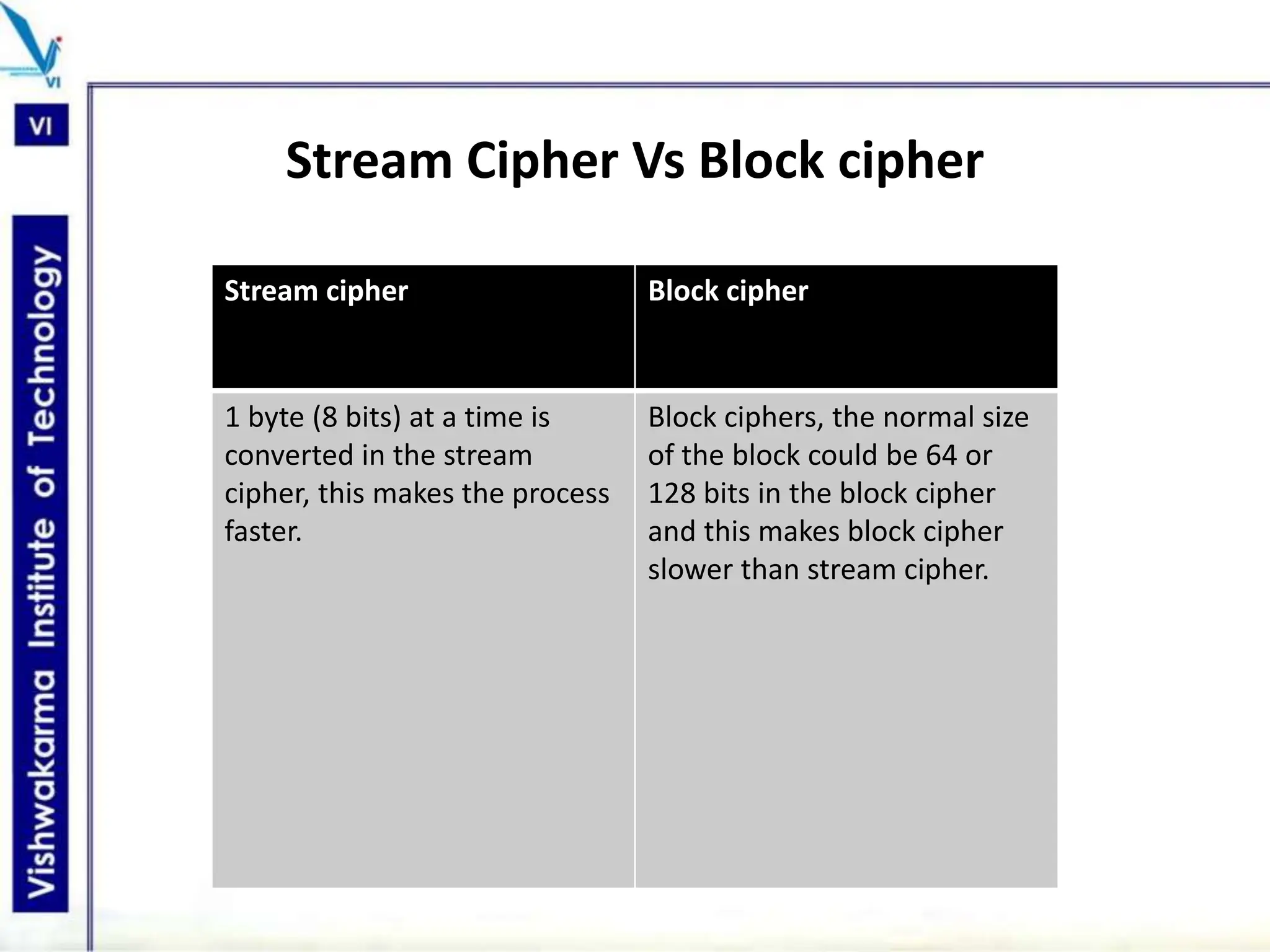
1 byte (8 bits) at a time is
converted in the stream
cipher, this makes the process
faster.
Block ciphers, the normal size
of the block could be 64 or
128 bits in the block cipher
and this makes block cipher
slower than stream cipher.
Block Cipher Modes
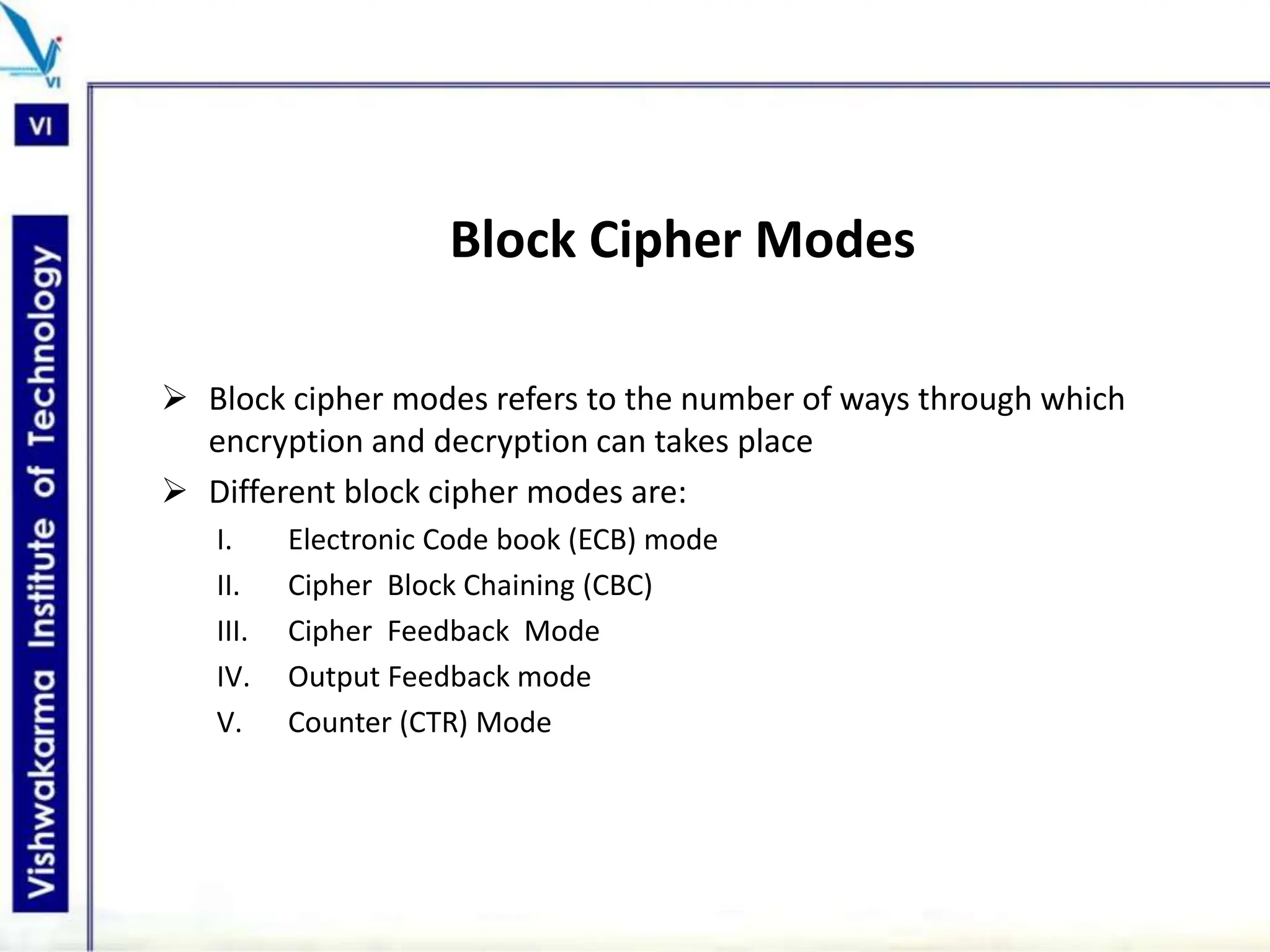
 Block cipher modes refers to the number of ways through which
encryption and decryption can takes place
 Different block cipher modes are:
I. Electronic Code book (ECB) mode
II. Cipher Block Chaining (CBC)
III. Cipher Feedback Mode
IV. Output Feedback mode
V. Counter (CTR) Mode
Block Cipher Modes
I. Electronic Code Book (ECB) mode
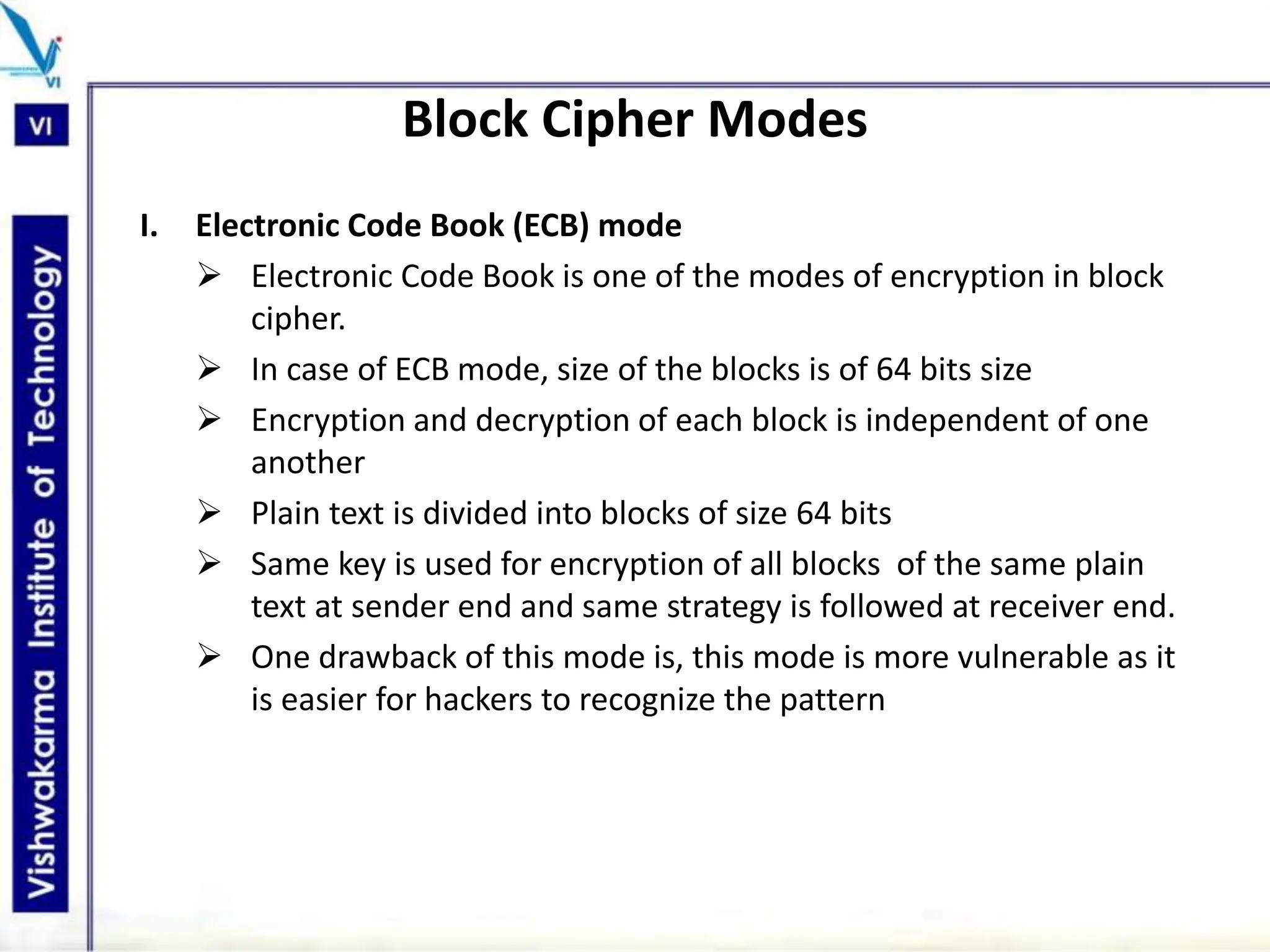
 Electronic Code Book is one of the modes of encryption in block
cipher.
 In case of ECB mode, size of the blocks is of 64 bits size
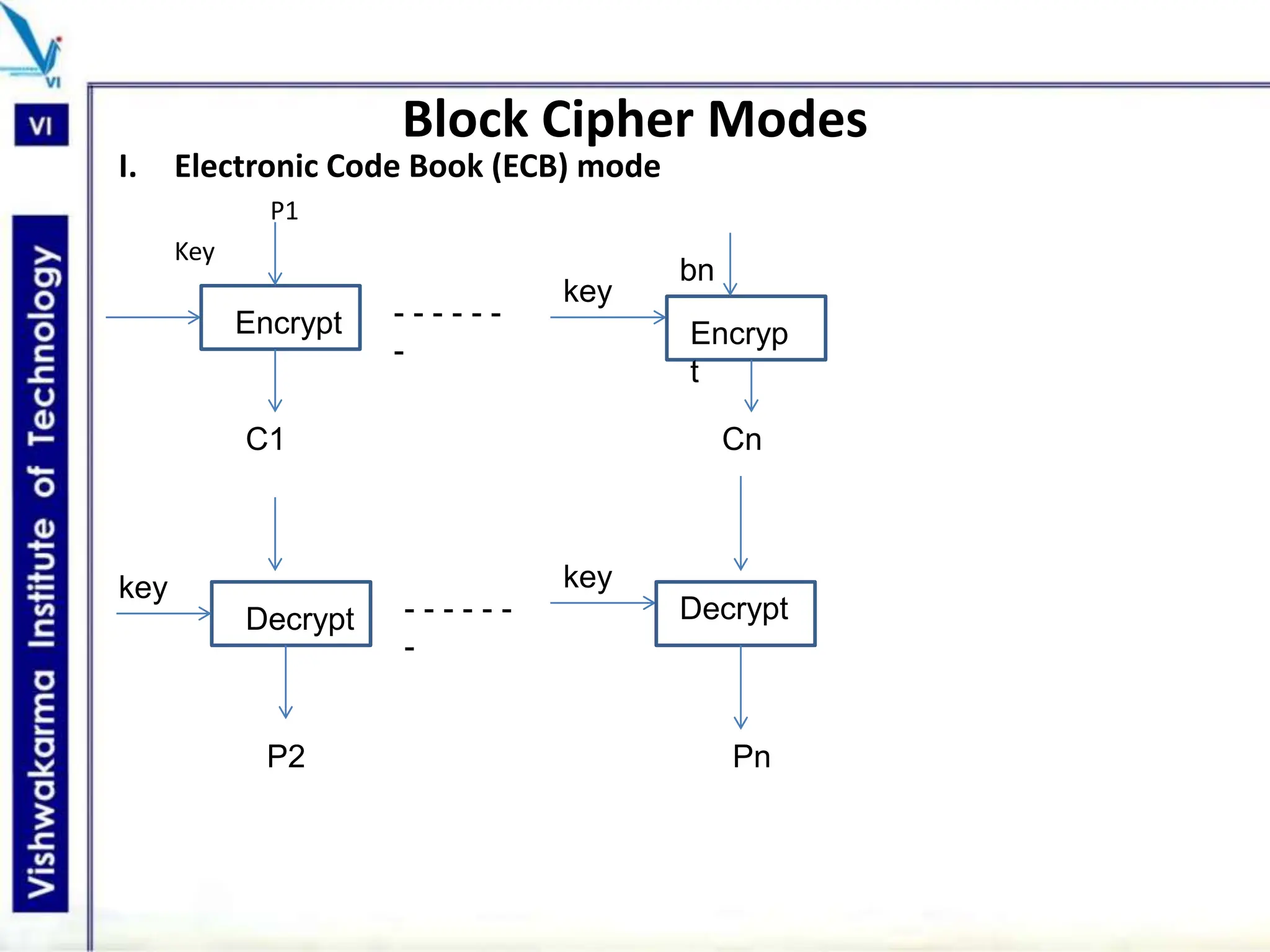
 Encryption and decryption of each block is independent of one
another
 Plain text is divided into blocks of size 64 bits
 Same key is used for encryption of all blocks of the same plain
text at sender end and same strategy is followed at receiver end.
 One drawback of this mode is, this mode is more vulnerable as it
is easier for hackers to recognize the pattern
Block Cipher Modes
I. Electronic Code Book (ECB) mode
P1
Key
E
Encrypt
C1
- - - - - -
-
key
Encryp
t
bn
Cn
Decrypt
key
- - - - - -
-
key
Decrypt
P2 Pn
Block Cipher Modes
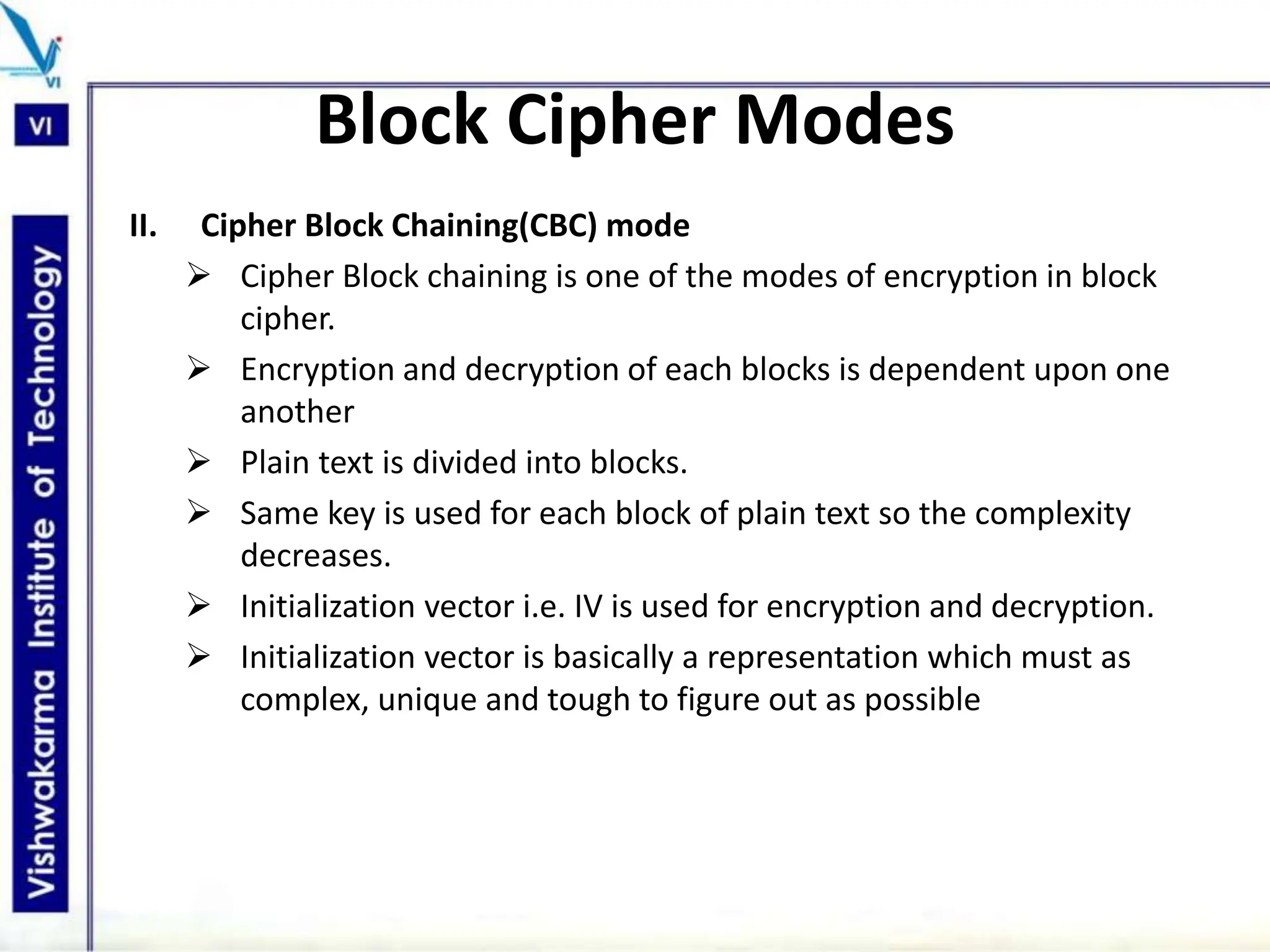
II. Cipher Block Chaining(CBC) mode
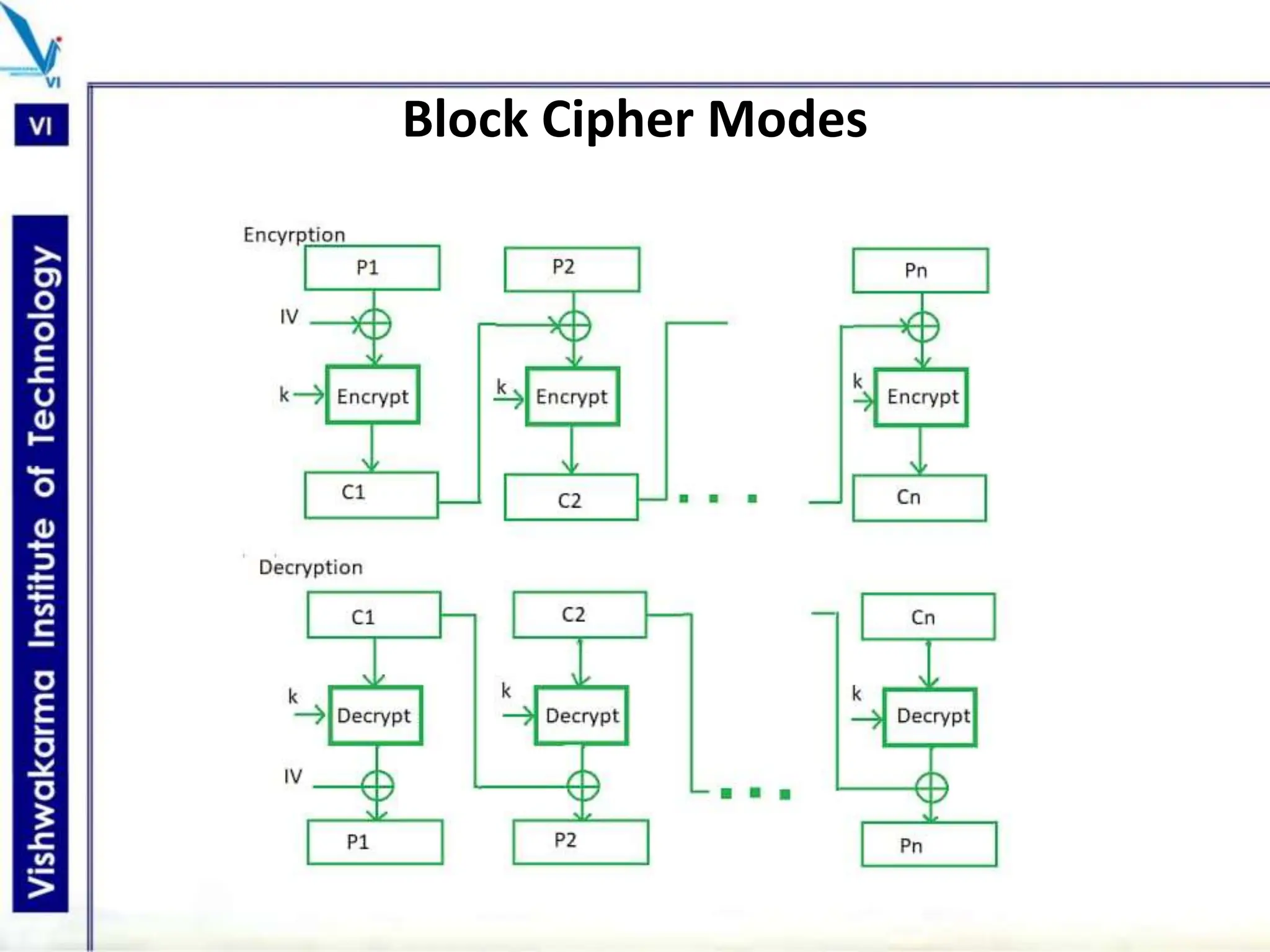
 Cipher Block chaining is one of the modes of encryption in block
cipher.
 Encryption and decryption of each blocks is dependent upon one
another
 Plain text is divided into blocks.
 Same key is used for each block of plain text so the complexity
decreases.
 Initialization vector i.e. IV is used for encryption and decryption.
 Initialization vector is basically a representation which must as
complex, unique and tough to figure out as possible
Block Cipher Modes
Block Cipher Modes
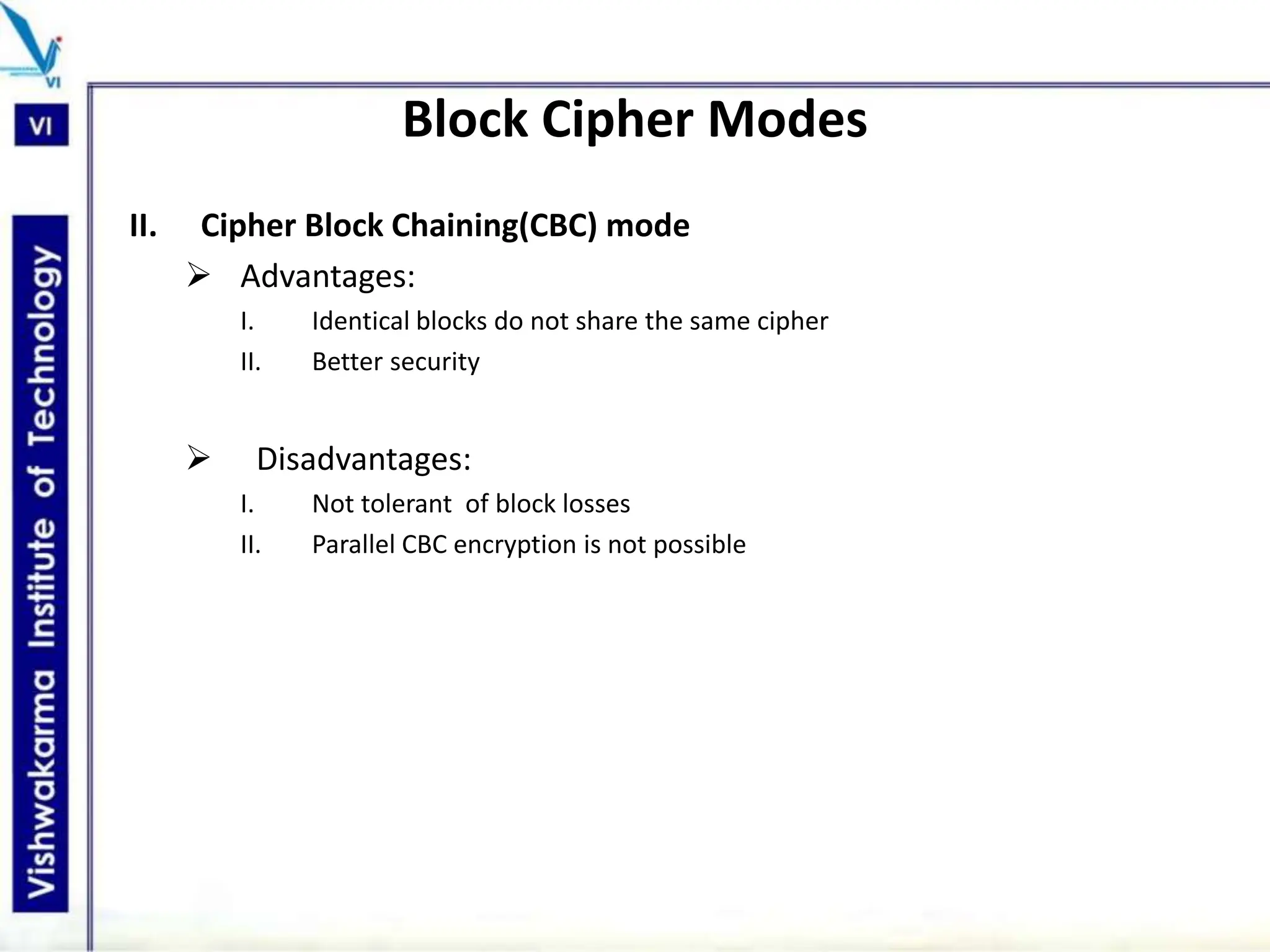
II. Cipher Block Chaining(CBC) mode
 Advantages:
I. Identical blocks do not share the same cipher
II. Better security
 Disadvantages:
I. Not tolerant of block losses
II. Parallel CBC encryption is not possible
Block Cipher Modes
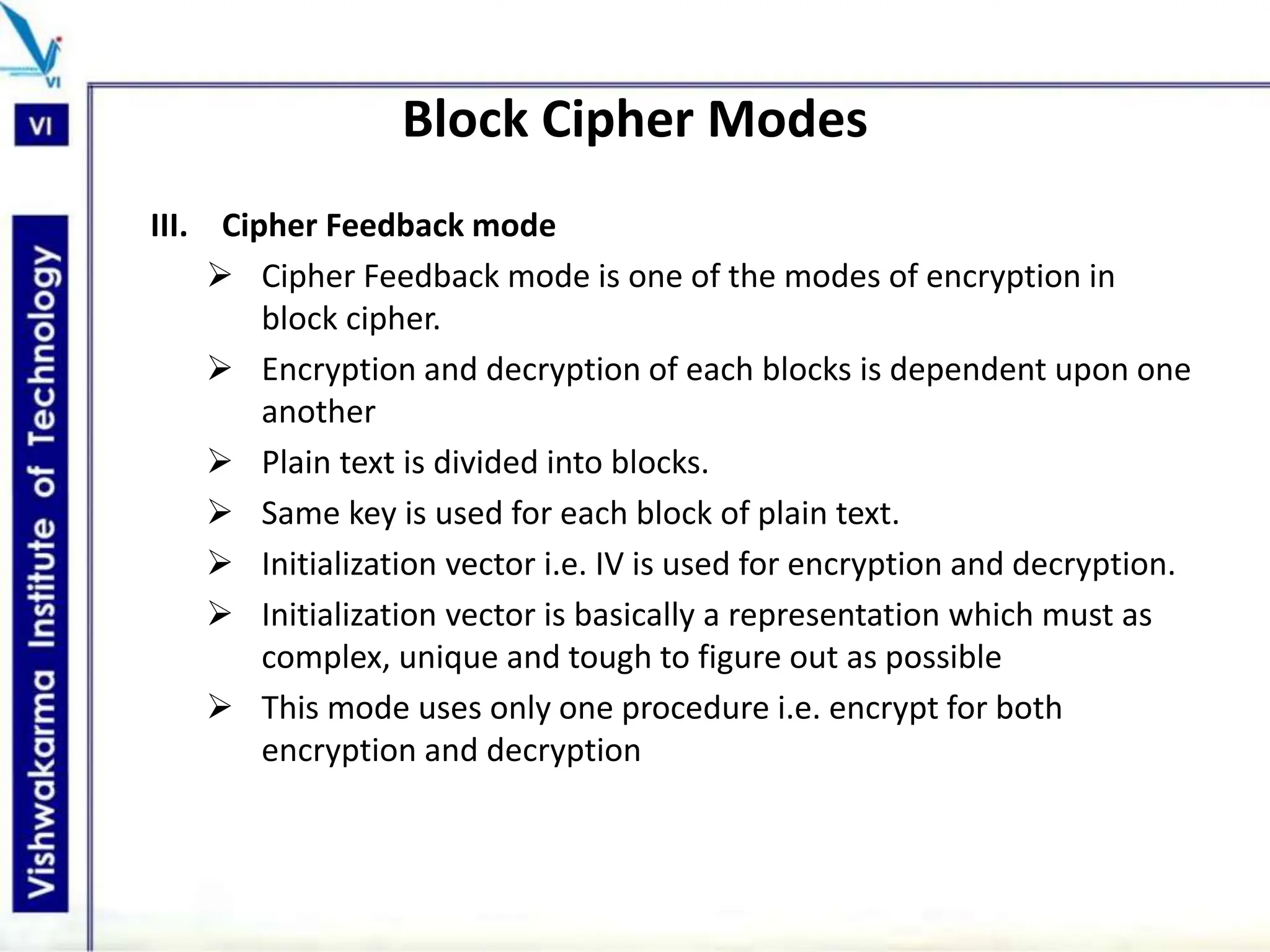
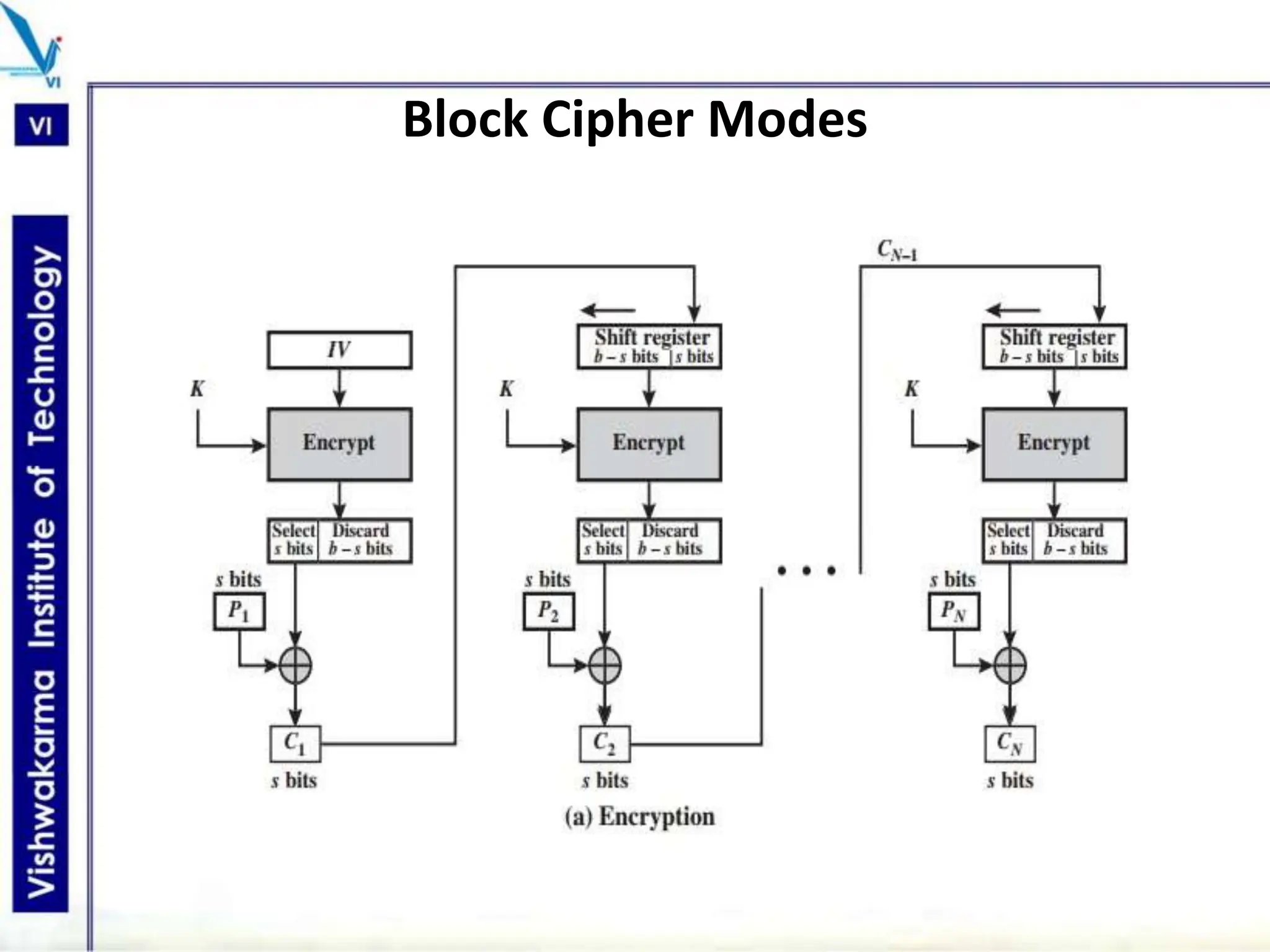
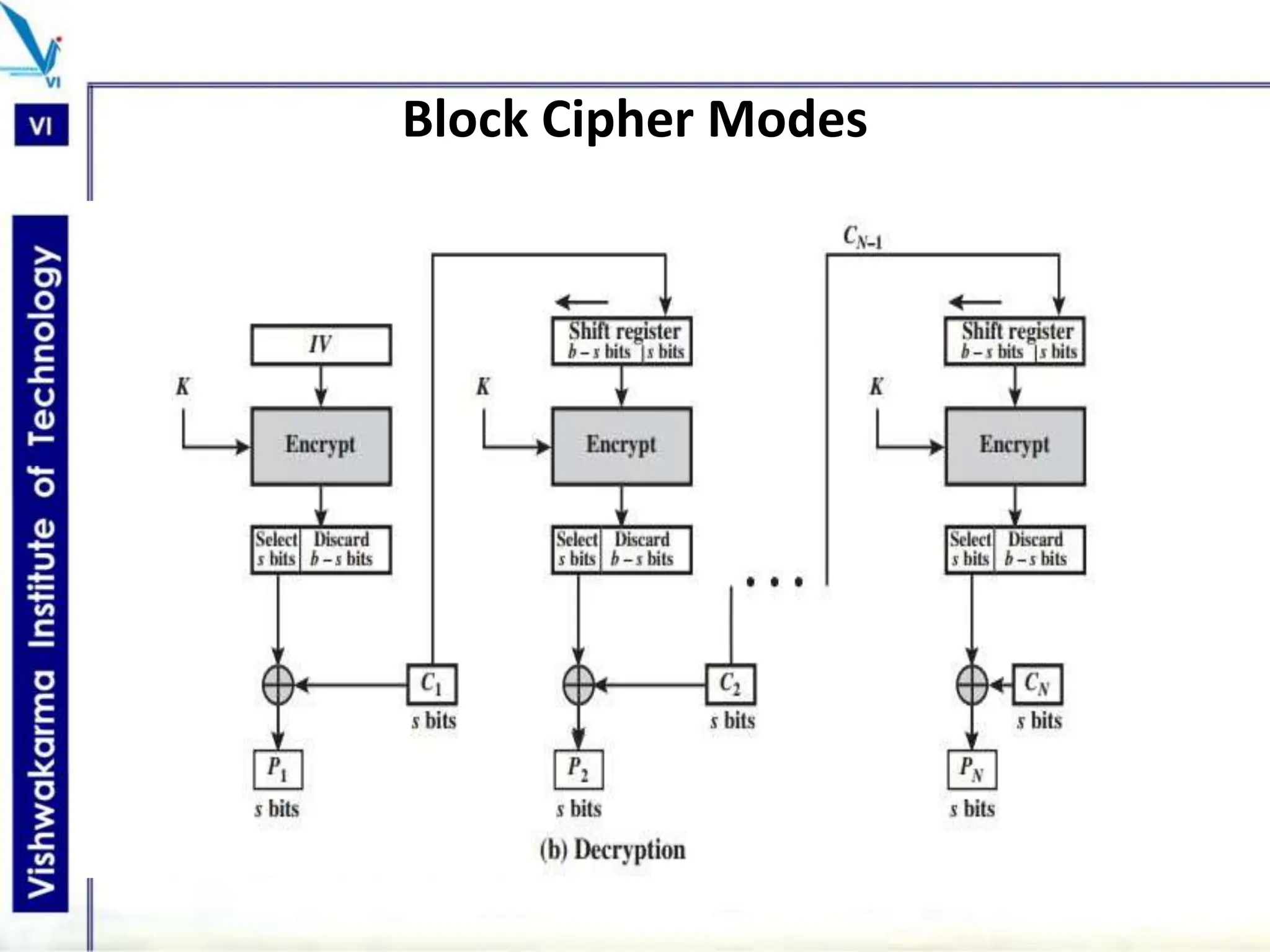
III. Cipher Feedback mode
 Cipher Feedback mode is one of the modes of encryption in
block cipher.
 Encryption and decryption of each blocks is dependent upon one
another
 Plain text is divided into blocks.
 Same key is used for each block of plain text.
 Initialization vector i.e. IV is used for encryption and decryption.
 Initialization vector is basically a representation which must as
complex, unique and tough to figure out as possible
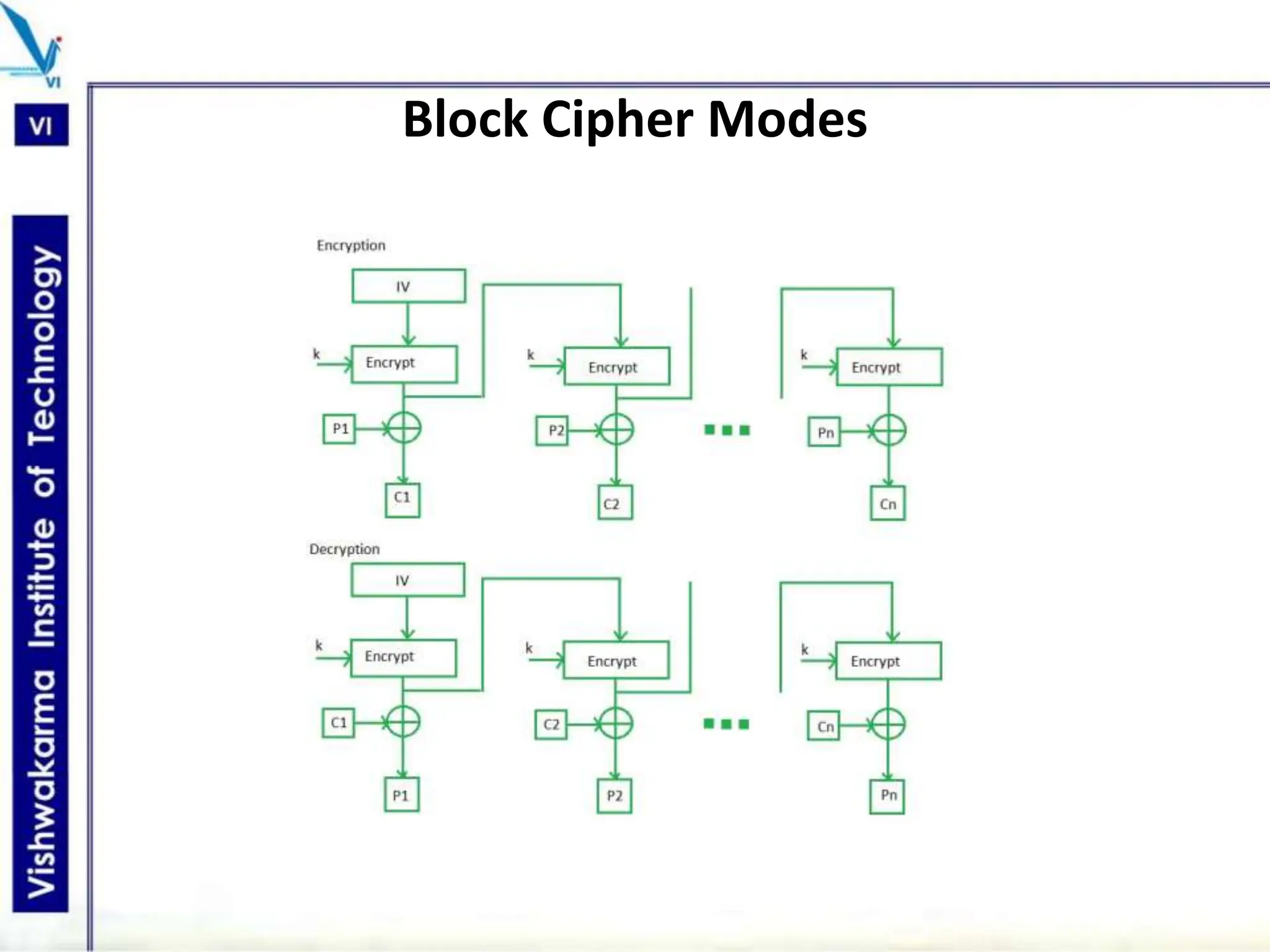
 This mode uses only one procedure i.e. encrypt for both
encryption and decryption
Block Cipher Modes
Block Cipher Modes
Block Cipher Modes
III. Cipher Feedback mode
 CFB mode differs significantly from ECB mode, the cipher text
corresponding to a given plaintext block depends not just on that
plaintext block and the key, but also on the previous cipher text
block.
 Apparently CFB mode is used to convert block cipher into stream
cipher
Block Cipher Modes
IV. Output Feedback mode
 Output Feedback mode is one of the modes of encryption in
block cipher.
 It is completely same as the previous mode i.e. Cipher Feedback
Mode but the only difference is that instead of cipher text,
encrypted o/p is sent as feedback to top register.
 It decreases the dependency or relationship of the cipher text on
plain text
Block Cipher Modes
Block Cipher Modes
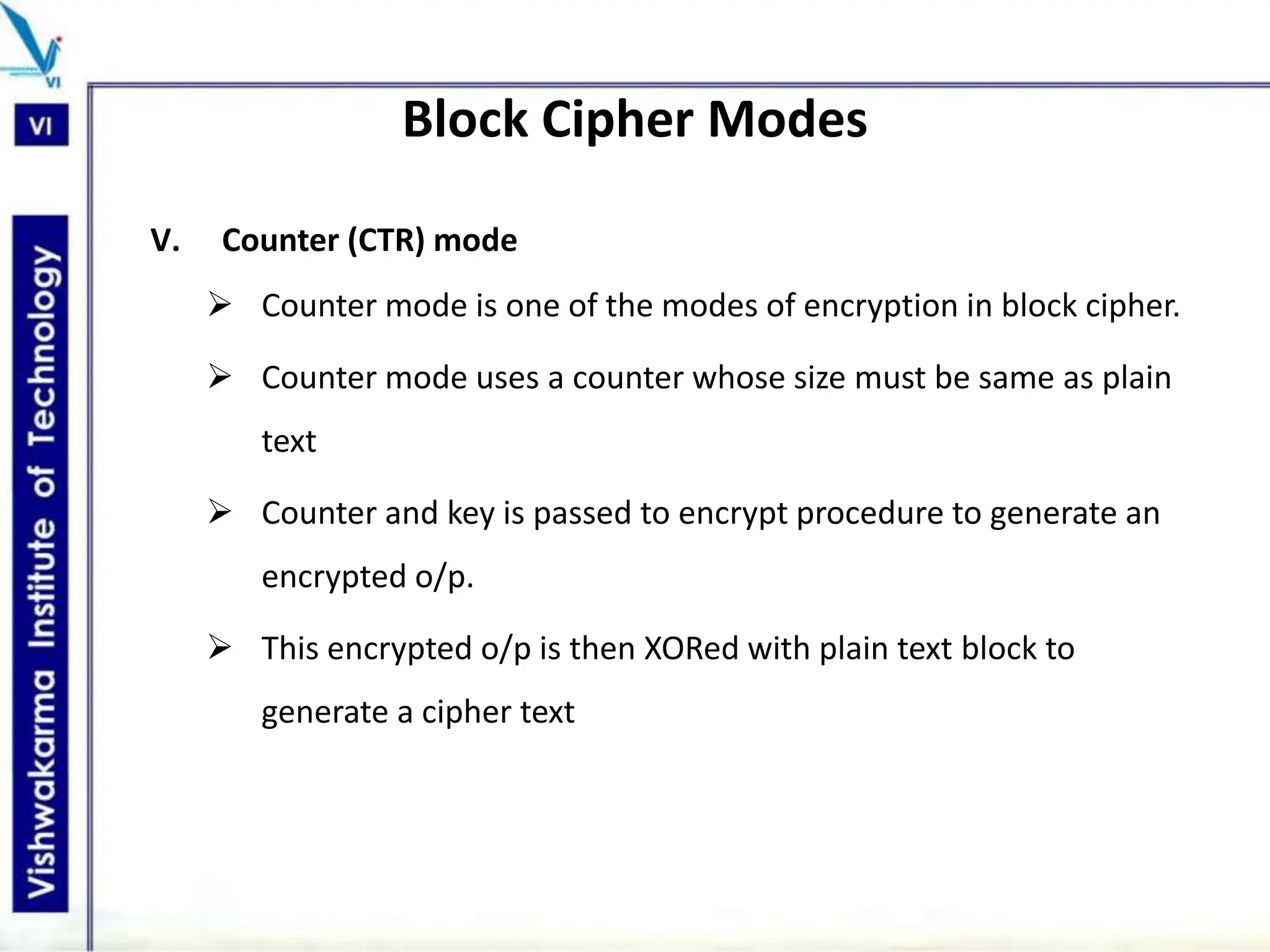
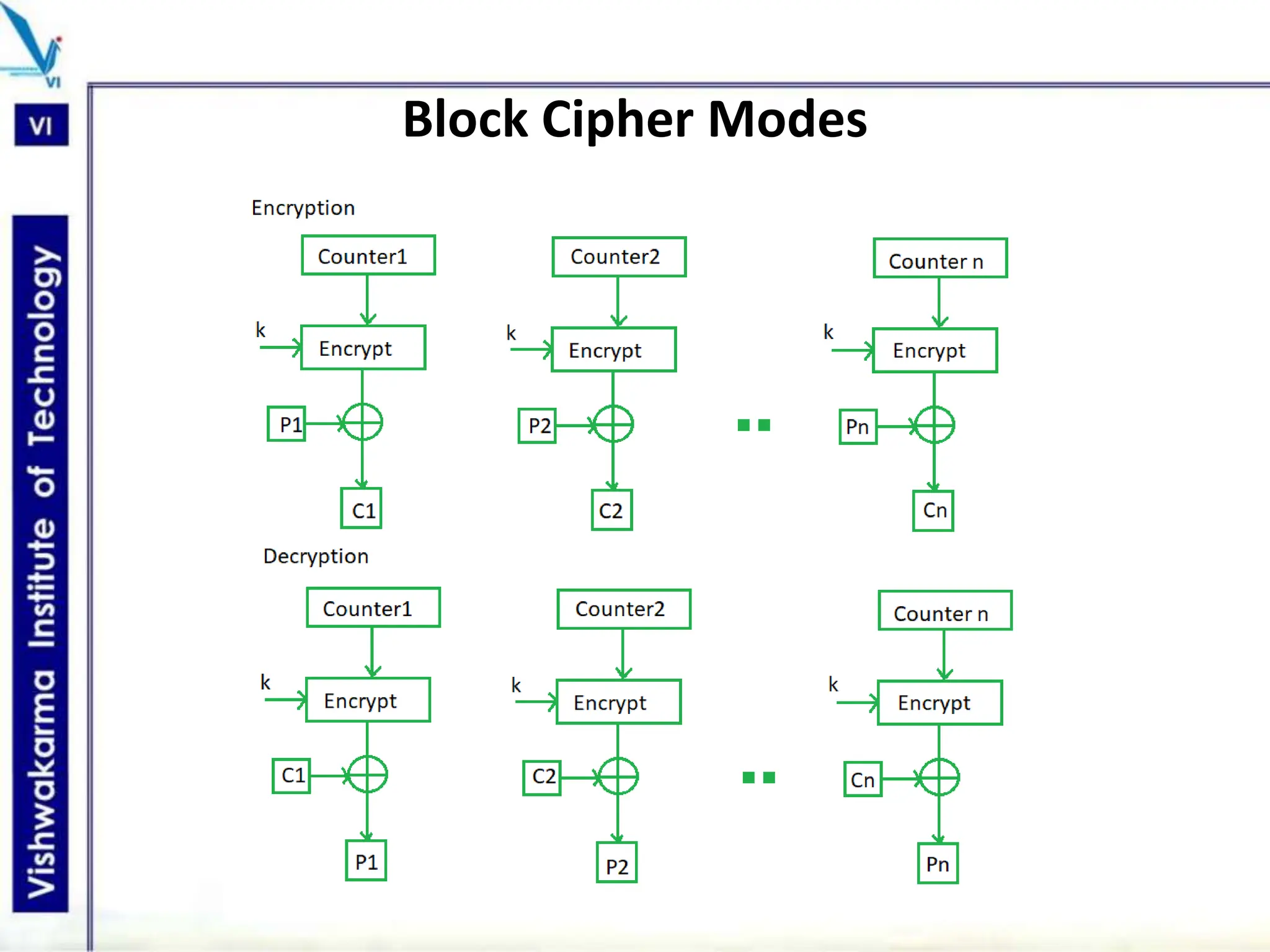
V. Counter (CTR) mode
 Counter mode is one of the modes of encryption in block cipher.
 Counter mode uses a counter whose size must be same as plain
text
 Counter and key is passed to encrypt procedure to generate an
encrypted o/p.
 This encrypted o/p is then XORed with plain text block to
generate a cipher text
Block Cipher Modes
Conclusion
 So as far as now we’ve learnt that block cipher is one the encryption
technique used to generate cipher text.
 As it operates on blocks of plain text rather than one byte at a time
hence named as block cipher.
 There are various modes of operations through which block cipher
operates to generate given cipher text
 These modes are: ECB, CBC, CFB, OFB and CTR mode
 CFB, OFB and CTR modes are used to convert block cipher to stream
cipher
 Each mode has its own pros and cons
 DES is a good example of block cipher
References
 https://searchsecurity.techtarget.com/definition/cipher-block-chaining
 https://vivadifferences.com/what-is-the-difference-between-block-
cipher-stream-cipher/
 https://searchsecurity.techtarget.com/definition/Electronic-Code-
Book#:~:text=Electronic%20Code%20Book%20%28ECB%29%20is%20a%
20simple%20mode,The%20input%20plaintext%20is%20broken%20into%
20numerous%20blocks
 https://www.tutorialspoint.com/cryptography/block_cipher_modes_of_
operation.htm
 https://www.brainkart.com/article/Cipher-Feedback-Mode_8417/
 https://www.geeksforgeeks.org/block-cipher-modes-of-operation/
 https://www.educba.com/block-cipher-modes-of-operation/
NIS block cipher modes network and information security

NIS block cipher modes network and information security

  • 1.
    BLOCK CIPHER MODES NETWORKAND INFORMATION SECURITY Narayan Furmalkar (19) Rohit Kulkarni (33) Rutuja More (37) Akash Sirsat (51) Tukaram Shinde (49)
  • 2.
    Index  Introduction  Streamcipher vs block cipher  Block cipher modes  Conclusion  References
  • 3.
    Introduction  Block cipheris basically a data encryption method.  A block cipher encrypts data which is divided in number of blocks of definite size using a symmetric key.  The cipher text which is outcome of block cipher encryption method is also generated in forms of cipher text blocks  The key in case of block cipher can take any of the size from given range of sizes i.e. 40,56,64,128,256 bits  Block cipher uses same key to encrypt each block of the same plain text or message.  During encryption, it uses the shared key to transform its plaintext input into a cipher text (encrypted text).  During decryption, it uses the same key to transform the cipher text back to the original plaintext.  The length of the output is the same as the input.
  • 4.
  • 5.
    Stream Cipher VsBlock cipher Stream cipher Block cipher Stream cipher uses different key for each byte Block cipher uses the same key to encrypt each block. Stream cipher uses XOR function for converting the plain text into cipher text that is the reason why it is easy to reverse the XORed bits. Block cipher do not use XOR function. Stream cipher uses confusion to encrypt plaint text. Block ciphers use both confusion and diffusion to encrypt plaintext into cipher text. Stream ciphers are more difficult to implement correctly. Relatively easy to implement.
  • 6.
    Stream Cipher VsBlock cipher Stream cipher Block cipher 1 byte (8 bits) at a time is converted in the stream cipher, this makes the process faster. Block ciphers, the normal size of the block could be 64 or 128 bits in the block cipher and this makes block cipher slower than stream cipher.
  • 7.
    Block Cipher Modes Block cipher modes refers to the number of ways through which encryption and decryption can takes place  Different block cipher modes are: I. Electronic Code book (ECB) mode II. Cipher Block Chaining (CBC) III. Cipher Feedback Mode IV. Output Feedback mode V. Counter (CTR) Mode
  • 8.
    Block Cipher Modes I.Electronic Code Book (ECB) mode  Electronic Code Book is one of the modes of encryption in block cipher.  In case of ECB mode, size of the blocks is of 64 bits size  Encryption and decryption of each block is independent of one another  Plain text is divided into blocks of size 64 bits  Same key is used for encryption of all blocks of the same plain text at sender end and same strategy is followed at receiver end.  One drawback of this mode is, this mode is more vulnerable as it is easier for hackers to recognize the pattern
  • 9.
    Block Cipher Modes I.Electronic Code Book (ECB) mode P1 Key E Encrypt C1 - - - - - - - key Encryp t bn Cn Decrypt key - - - - - - - key Decrypt P2 Pn
  • 10.
    Block Cipher Modes II.Cipher Block Chaining(CBC) mode  Cipher Block chaining is one of the modes of encryption in block cipher.  Encryption and decryption of each blocks is dependent upon one another  Plain text is divided into blocks.  Same key is used for each block of plain text so the complexity decreases.  Initialization vector i.e. IV is used for encryption and decryption.  Initialization vector is basically a representation which must as complex, unique and tough to figure out as possible
  • 11.
  • 12.
    Block Cipher Modes II.Cipher Block Chaining(CBC) mode  Advantages: I. Identical blocks do not share the same cipher II. Better security  Disadvantages: I. Not tolerant of block losses II. Parallel CBC encryption is not possible
  • 13.
    Block Cipher Modes III.Cipher Feedback mode  Cipher Feedback mode is one of the modes of encryption in block cipher.  Encryption and decryption of each blocks is dependent upon one another  Plain text is divided into blocks.  Same key is used for each block of plain text.  Initialization vector i.e. IV is used for encryption and decryption.  Initialization vector is basically a representation which must as complex, unique and tough to figure out as possible  This mode uses only one procedure i.e. encrypt for both encryption and decryption
  • 14.
  • 15.
  • 16.
    Block Cipher Modes III.Cipher Feedback mode  CFB mode differs significantly from ECB mode, the cipher text corresponding to a given plaintext block depends not just on that plaintext block and the key, but also on the previous cipher text block.  Apparently CFB mode is used to convert block cipher into stream cipher
  • 17.
    Block Cipher Modes IV.Output Feedback mode  Output Feedback mode is one of the modes of encryption in block cipher.  It is completely same as the previous mode i.e. Cipher Feedback Mode but the only difference is that instead of cipher text, encrypted o/p is sent as feedback to top register.  It decreases the dependency or relationship of the cipher text on plain text
  • 18.
  • 19.
    Block Cipher Modes V.Counter (CTR) mode  Counter mode is one of the modes of encryption in block cipher.  Counter mode uses a counter whose size must be same as plain text  Counter and key is passed to encrypt procedure to generate an encrypted o/p.  This encrypted o/p is then XORed with plain text block to generate a cipher text
  • 20.
  • 21.
    Conclusion  So asfar as now we’ve learnt that block cipher is one the encryption technique used to generate cipher text.  As it operates on blocks of plain text rather than one byte at a time hence named as block cipher.  There are various modes of operations through which block cipher operates to generate given cipher text  These modes are: ECB, CBC, CFB, OFB and CTR mode  CFB, OFB and CTR modes are used to convert block cipher to stream cipher  Each mode has its own pros and cons  DES is a good example of block cipher
  • 22.
    References  https://searchsecurity.techtarget.com/definition/cipher-block-chaining  https://vivadifferences.com/what-is-the-difference-between-block- cipher-stream-cipher/ https://searchsecurity.techtarget.com/definition/Electronic-Code- Book#:~:text=Electronic%20Code%20Book%20%28ECB%29%20is%20a% 20simple%20mode,The%20input%20plaintext%20is%20broken%20into% 20numerous%20blocks  https://www.tutorialspoint.com/cryptography/block_cipher_modes_of_ operation.htm  https://www.brainkart.com/article/Cipher-Feedback-Mode_8417/  https://www.geeksforgeeks.org/block-cipher-modes-of-operation/  https://www.educba.com/block-cipher-modes-of-operation/