Hassaan Ali Gad
Assistant lecturer of urology
Aswan University
 PRIMARY
Develops in sterile urine / ureter, kidney
 SECONDARY
Occurs in presence of
infection ,outflow obstruction
or a foreign body
 BPH
 neurogenic bladder
 Inflammation Bladder
 Medical devices
 Occasionally, bladder catheters
 Kidney stones
Men >women. 8:1
Symptoms
 Frequency
 sensation of incomplete bladder emptying.
 Pain occurs at the end of micturition referred
to tip of penis, Pain is related to movement
 Haematuria .
 Interruption of the urinary stream
 UTI
 lower abdomen(bladder) is enlarged
 DRE to see prostate is enlarged
 Lab
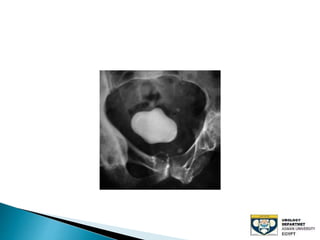
 Radiology
 urine reveals
microscopic haematuria,
WBCs :pus cells
crystals that are typical of thecalculus,
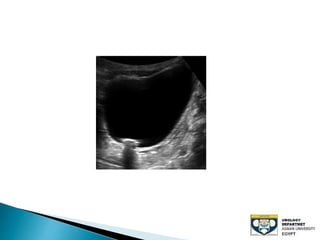
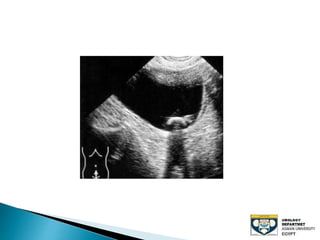
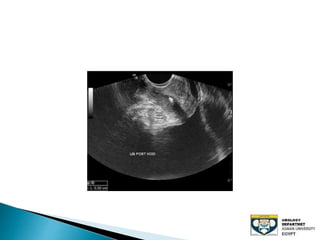
 Ultrasound abdomen
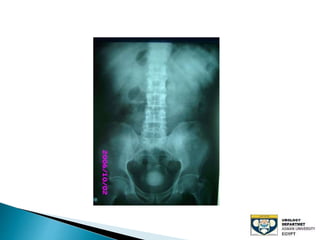
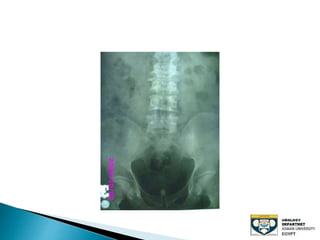
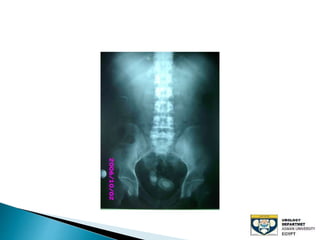
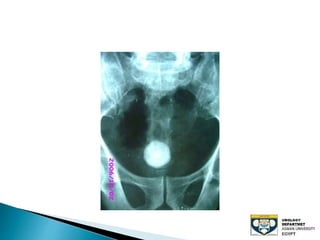
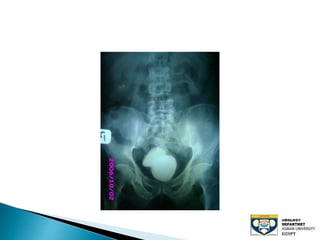
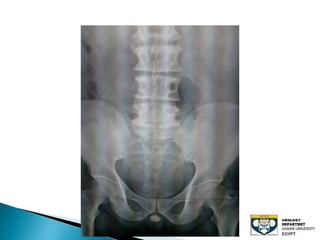
 KUB film
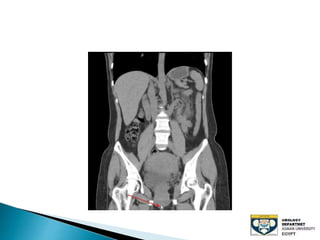
 (CT) scan
considered one of the most sensitive tests for
identifying all types of bladder stones
 Treatmen of the cause
Bladder outflow obstruction
Incomplete bladder emptying in patients
with
neurogenic bladder dysfunction.
MODALITIES
 Per urethral Litholapaxy
 Lithotripsy endoscopy
 Open Surgery
 ESWL
 Urethral calculi are an uncommon type of
urinary tract stones , accounting for 1%
 Clinical presentation
 Most commonly acute lower urinary tract
symptoms and/or urinary retention
 Pain and frequency
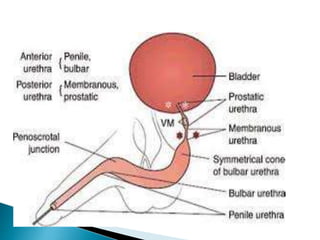
 Location
impact in the prostatic urether or founded in
the anterior urethra
Types
primary
secondary
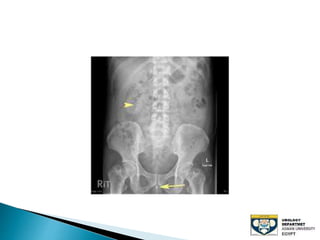
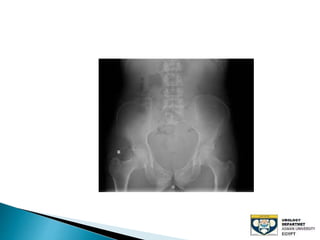
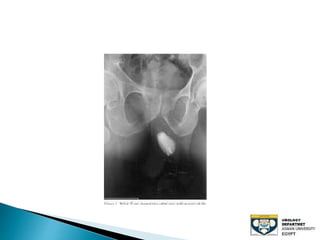
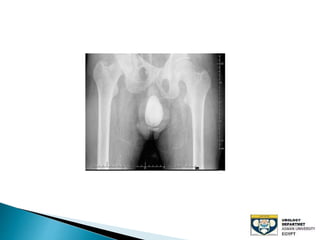
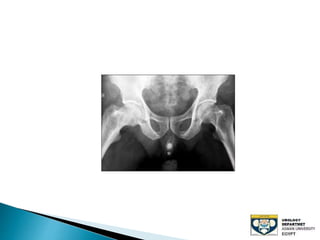
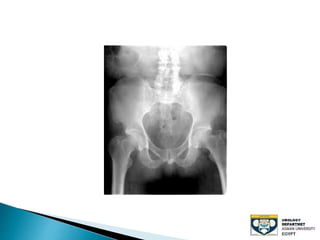
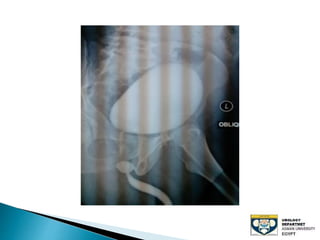
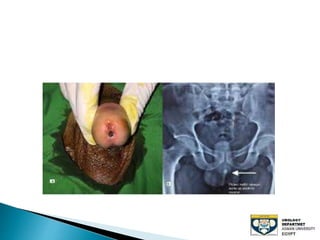
 Radiographic features
 Almost all (98-100%) of urethral stones are
reported to be radiopaque 3 but most are
small and only faintly radiopaque and up to
60% will be missed
Endoscopy
Surgical

Bladder and urethral calculi

  • 1.
    Hassaan Ali Gad Assistantlecturer of urology Aswan University
  • 2.
     PRIMARY Develops insterile urine / ureter, kidney  SECONDARY Occurs in presence of infection ,outflow obstruction or a foreign body
  • 3.
     BPH  neurogenicbladder  Inflammation Bladder  Medical devices  Occasionally, bladder catheters  Kidney stones
  • 4.
    Men >women. 8:1 Symptoms Frequency  sensation of incomplete bladder emptying.  Pain occurs at the end of micturition referred to tip of penis, Pain is related to movement  Haematuria .  Interruption of the urinary stream  UTI
  • 5.
     lower abdomen(bladder)is enlarged  DRE to see prostate is enlarged
  • 6.
     Lab  Radiology urine reveals microscopic haematuria, WBCs :pus cells crystals that are typical of thecalculus,
  • 7.
     Ultrasound abdomen KUB film  (CT) scan considered one of the most sensitive tests for identifying all types of bladder stones
  • 16.
     Treatmen ofthe cause Bladder outflow obstruction Incomplete bladder emptying in patients with neurogenic bladder dysfunction.
  • 17.
    MODALITIES  Per urethralLitholapaxy  Lithotripsy endoscopy  Open Surgery  ESWL
  • 18.
     Urethral calculiare an uncommon type of urinary tract stones , accounting for 1%
  • 19.
     Clinical presentation Most commonly acute lower urinary tract symptoms and/or urinary retention  Pain and frequency
  • 20.
     Location impact inthe prostatic urether or founded in the anterior urethra Types primary secondary
  • 21.
     Radiographic features Almost all (98-100%) of urethral stones are reported to be radiopaque 3 but most are small and only faintly radiopaque and up to 60% will be missed
  • 34.