Dr.Hassaan Ali 20142nd workshop of ED and
Penile Prostheses 1,2 Jan 2015
Aswan Egypt
Dr.Hassaan Ali 2014
ERECTILE DYSFUNCTION
PRACTICAL VIEW
Definition of ED
Epidemiology
Anatomy and Physiology of erection
Causes ED
Examination of patient with ED
Investigations
Treatment
Dr.Hassaan Ali 2014
Synonym: Impotence
Persistent or recurrent inability to obtain or
maintain penile erection (or both)
sufficient for satisfactory sexual
performance, for more than 3-months
duration(1).
Dr.Hassaan Ali 2014
NO!
Sexual function is an important component of
quality of life and subjective well-being.
Sexual problems affect adversely mood, well-
being, and interpersonal functioning.
Nearly every man can be successfully
treated.
Dr.Hassaan Ali 2014
Incidence and prevalence is high
worldwide
Effects up to 52% of men (40-70yrs)
Complete impotence from 5% of 40yr olds
to 15% of 70yr olds
Only 10-20% solely psychogenic
Dr.Hassaan Ali 2014
Prevalence of ED by Age and Severity (%)
Severe
Moderate
Mild or
Mild/Moderate
100%
80%
60%
40%
20%
0%
Dr.Hassaan Ali 2014
Dr.Hassaan Ali 2014
Dr.Hassaan Ali 2014
Dilatation arterioles&arteries
expanding of sinusoids
compression of subtunical
venular plexuses
Emissary veins enclosed
increasing of intracavernous
pressure to raise the penis
Dr.Hassaan Ali 2014
Transient intracorporeal pressure increase
[smooth muscle contraction]
Pressure decrease slowly
[slow reopening of the venous channels]
Pressure decrease fast
[venous outflow capacity is fully restored]
Dr.Hassaan Ali 2014
Dr.Hassaan Ali 2014
Dr.Hassaan Ali 2014
Flaccid phase (1) Minimal arterial and venous flow; b
Latent (filling) phase (2) Increased flow in the internal pudendal
artery during both systolic and diastolic phases. Decreased pressure
in the internal pudendal artery; unchanged intracavernous pressure.
Some elongation of the penis.
Tumescent phase (3) Rising intracavernous pressure until full erection
is achieved. Penis shows more expansion and elongation with
pulsation. The arterial flow rate decreases as the pressure rises..
Full erection phase (4) Intracavernous pressure can rise to as much as
80–90% of the systolic pressure. Pressure in the internal pudendal
artery increases but remains slightly below systemic pressure. Arterial
flow is much less than in the initial filling phase but is still higher than
in the flaccid phase. approach those of arterial blood.
Skeletal or rigid erection phase (5) As a result of contraction of the
ischiocavernous muscle, the intracavernous pressure rises well
above the systolic pressure, resulting in rigid erection..
Detumescent phase (6) After ejaculation or cessation of erotic stimuli,
sympathetic tonic discharge resumes, resulting in contraction of the
smooth muscles around the sinusoids and arterioles. This effectively
diminishes the arterial flow to flaccid levels,.
Dr.Hassaan Ali 2014
Supraspinal pathways
[ hypothalamus, limbic system and cerebral cortex
Parasympathetic nerves S2-4 mediate erection
Sympathetic nerves T11-L2 control ejaculation and
detumescence
Smooth muscle relaxation
Nitric oxide diffuses into cavernosal smooth muscle cells,
activates Guanylate cyclase converts guanosine
triphosphate to cGMP resulting in smooth muscle
relaxation.
Effect of cGMP stopped by Phosphodiesterase type 5 which
exists primarily in corpora cavernosa
Dr.Hassaan Ali 2014
Dr.Hassaan Ali 2014
Sedentary lifestyle
Obesity
Smoking
Hypercholesterolemia
Diabetes mellitus
Dr.Hassaan Ali 2014
Organic
I. Vasculogenic : Arteriogenic Cavernosal Mixed
II. Neurogenic
III. Anatomic
IV. Endocrinology
Psychogenic
I. Generalized
A. Generalized unresponsiveness
1. Primary lack of sexual arousability 2. Aging-related decline in sexual
arousability
B. Generalized inhibition 1. Chronic disorder of sexual intimacy
II. Situational
A. Partner-related 1. Lack of arousability in specific relationship 2. Lack of
arousability owing to sexual object preference 3. High central inhibition owing to
partner conflict or threat
B. Performance-related 1. Associated with other sexual dysfunction/s (e.g., rapid
ejaculation) 2. Situational performance anxiety (e.g., fear of failure)
C. Psychological distress- or adjustment-related 1. Associated with negative
mood state (e.g., depression) or major life stress (e.g., death of partner)
Mixed
Dr.Hassaan Ali 2014
Dr.Hassaan Ali 2014
Vascular
Diabetes
Medication
Pelvic Surgery,
Radiation
or Trauma
Neurological Causes
Endocrine
Problems
Other
Vascular
Diabetes
Medication
Dr.Hassaan Ali 2014
Hypertension
Smoking
Diabetes
Hyperlipidaemia
Peripheral vascular disease
Blunt perineal or pelvic trauma
Pelvic irradiation
Dr.Hassaan Ali 2014
Central:Lesions of medial preoptic nucleus,
paraventicular nucleus, hippocampus
Spinal trauma
Myelodisplasia (spina bifida)
Pelvic surgery/radiotherapy
Multiple sclerosis
Intervertebral disc lesion
Peripheral neuropathies
Alcohol
Diabetes
HIV
Dr.Hassaan Ali 2014
Hypogonadism
Low testosterone
Raised SHBG
Raised Prolactin
Thyroid disease
Hypothyroidism
hyperthyroidism
Dr.Hassaan Ali 2014
Peyronie’s disease
Micropenis
Penile anomalies (hypospadias etc
Dr.Hassaan Ali 2014
Antihypertensives
Thiazides
B blockers
Centrally acting
drugs
Antidepressants
Tricyclics
MAO inhibitors
SSRI
Anticholinergics
Atropine
Antipsychotics
Phenothiazines
Anxiolytics
Benzodiazepines
Psychotropic drugs
Alcohol
Opiates
Amphetamines
Cocaine
Dr.Hassaan Ali 2014
I. Generalized
A. Generalized unresponsiveness
1. Primary lack of sexual arousability
2. Aging-related decline in sexual
arousability
B. Generalized inhibition
1. Chronic disorder of sexual
intimacy
Dr.Hassaan Ali 2014
II. Situational
A. Partner-related
1. Lack of arousability in specific relationship
2. Lack of arousability owing to sexual object
preference
3. High central inhibition owing to partner conflict or
threat
B. Performance-related
1. Associated with other sexual dysfunction/s (e.g., rapid
ejaculation)
2. Situational performance anxiety (e.g., fear of
failure)
C. Psychological distress- or adjustment-related
1. Associated with negative mood state (e.g.,
depression) or major life stress (e.g., death of partner)
Dr.Hassaan Ali 2014
History taking (including drug intake).
physical examinations: testes, penis, signs of
hypoandogenism.
Investigation
Dr.Hassaan Ali 2014
Dr.Hassaan Ali 2014
Medical
Surgical
Psychiatric
Medication
Smoking
Alcohol
Recreational drug use
Dr.Hassaan Ali 2014
International Index of Erectile Function
questionnaire (IIEF) most common
questionnaire
addresses erectile function, orgasmic function,
desire, intercourse satisfaction, overall
satisfaction
Erectile function 1,2,3,4,5,15
Intercourse satisfaction 6,7,8
Orgasmic function 9,10
Sexual desire 11,12
Overall satisfaction 13,14
Dr.Hassaan Ali 2014
International Index of Erectile Function
5-item version for quick office evaluation
Score of 5-7 sever ED
Score of 8-11 moderate
Score of 12-16 mild to moderate
Score of 17-21mild
Score of 22- 25 no ED
Dr.Hassaan Ali 2014
Gradual onset
Normal ejaculation
Normal libido
Medical risk factor
Trauma/surgery/radiotherapy to pelvis
Current medication
Lifestyle
Dr.Hassaan Ali 2014
Sudden onset
Early collapse of erection
Self stimulated or waking erections
Premature ejaculation or inability to
ejaculate
Problems/change in relationship
Major life event
Psychological problems
Dr.Hassaan Ali 2014
Genitourinary examination
Testes size and consistency
Secondary sexual characteristics
Penis for Peyronie’s plaques,
Pulses (femoral), BP
Rectal examination
Dr.Hassaan Ali 2014
Laboratory Investigation
complete blood count,
urinalysis,
renal function,
lipid profile,
fasting blood sugar,
thyroid function.
Routine endocrinologic testing remains
controversial
Dr.Hassaan Ali 2014
1-Young patients who have always had
difficulty in obtaining and/or sustaining
an erection
2-Patients with a history of trauma
3-Where an abnormality of the testes or
penis is found on examination.
4-Patients unresponsive to medical
therapies that may desire surgical
treatment for ED.
Dr.Hassaan Ali 2014
1-Nocturnal penile tumescence and rigidity
(NPTR)
2-vascular studies:
Combined intracavernous injection & stimulation
(CIS)
Duplex ultrasound
Dynamic infusion cavernosometry &
cavernosography (DICC)
Selective penile angiography
3-neurological studies (e.g. bulbocavernosus
reflex latency,nerve conduction studies);
4-endocrinological studies;
5-specialised psycho diagnostic evaluation.
Dr.Hassaan Ali 2014
3 B
.

4 B
4 B
GRLERecommendations for the diagnostic work-up
B3Clinical use of a validated questionnaire related
to ED may help assess all sexual function
domains and the effect of a specific treatment
modality.
B3Physical examination is needed in the initial
assessment of ED to identify underlying medical
conditions associated with ED
B4Routine laboratory tests, including glucose-lipid
profile and total testosterone, are required to
identify and treat any reversible risk factors and
modifiable lifestyle factors.
B4Specific diagnostic tests are indicated by only a
few conditions.
Dr.Hassaan Ali 2014
Total tumescence time 20% of night at puberty Adults – 27 minutes/nigh
RigiScan - 1985
Monitors radial rigidity, tumescence, number, duration of erectile events
Portable – can use at home
Can record 3 different nights up to 10 hrs each
Results
Radial rigidity >70% = good erection
<40% = flaccid penis
Normal = 3-6 erections/night, 10-15 minutes per episode NEVA
device
Uses electrobioimpedance to assess volumetric changes in penis during nocturnal
erections
Undetectable alternating current from glans to hip electrodes
Penile base electrode measures impedance & changes in penile length
Mean volume change in controls = 213% increase (14.4 mL)
Dr.Hassaan Ali 2014
Inject vasodilator, stimulate,
Bypasses neurologic & hormonal influences to
evaluate vascular status
Use:
alprostodil 10-20ug
papaverine & phentolamine (Bimix 0.3 mL)
Trimix 0.3 mL
27 or 29g needle, compress for 5 min after
injection
Normal results = normal venous occlusion
False negative up to 20% w/ borderline
arterial flow
Dr.Hassaan Ali 2014
Penile blood flow study (CIS & blood flow measurement
by US) is most reliable & least invasive evidence
based assessment of ED
Red = towards probe
Blue = away from probe
Can visualize dorsal & cavernous arteries in real time
Can diagnose high flow priapism
Technique
Measure flow velocities 5-10 min after injection
Rate erectile quality
Look at both cavernous arteries & diameters
Asymmetric cavernous arterial flow >10cm/s or reversal
of flow across a collateral may mean atherosclerotic
lesion
Dr.Hassaan Ali 2014
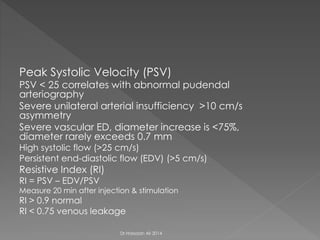
Peak Systolic Velocity (PSV)
PSV < 25 correlates with abnormal pudendal
arteriography
Severe unilateral arterial insufficiency >10 cm/s
asymmetry
Severe vascular ED, diameter increase is <75%,
diameter rarely exceeds 0.7 mm
High systolic flow (>25 cm/s)
Persistent end-diastolic flow (EDV) (>5 cm/s)
Resistive Index (RI)
RI = PSV – EDV/PSV
Measure 20 min after injection & stimulation
RI > 0.9 normal
RI < 0.75 venous leakage
Dr.Hassaan Ali 2014
Intracavernosal injection with color duplex
Doppler ultrasound
Most informative diagnostic test
Least invasive for vascular ED, high vs. low flow
priapism, Peyronie’s plaque
Useful measurements
PSV, cavernous artery diameter, EDV, RI
PSV <25 = severe cavernous artery insufficiency
PSV >35 = normal inflow
Negative relationship between age & PSV
Dr.Hassaan Ali 2014
Cavernous arterial occlusion pressure
Basically penile blood pressure measurement – 1989
Technique
Inject vasodilator
infuse saline into corpora to get pressure > systolic BP
apply Doppler to penile base
Pressure when cavernous arterial flow becomes detectable is cavernous
artery systolic occlusion pressure (CASOP)
Gradient between cavernous & brachial artery pressure <35 &
equal pressure on L & R is normal
Pharmacologic Arteriography
Technique
Inject vasodilator
Cannulate internal pudendal artery
Inject contrast
Look at anatomy of iliac, internal pudendal, penile arteries
Aberrant anatomy in 50% of normal volunteers
Useful for anatomy, not function
Indication:
Young pt w/ ED due to traumatic arterial disruption or perineal compression
injury. Essential for planning reconstruction
Dr.Hassaan Ali 2014
Pharmacologic Cavernosometry &
Cavernosography
Cavernosometry
Saline infusion while monitoring intracavernous
pressure
Assesses penile outflow
Cavernosography
Infusion of contrast into corpora after vasodilator
induced erection
Good for young men who may be candidates for
penile vascular operations
Dr.Hassaan Ali 2014
Penile Brachial Pressure Index
Inaccurate
Penile Plethysmography
Penile pulse volume recording
Infrared Spectrophotometry
Radioisotopic Penography
MRA
Cavernous Smooth Muscle Content
Dr.Hassaan Ali 2014
Only certain types of ED have the potential to be cured
with specific treatments:
General Measures
Smoking cessation
Reduce alcohol
Weight loss
Exercise
Hormonal: testosterone failure – give testosterone
contraindicated in men (prostate carcinoma or with
symptoms of prostatism.)
Post-traumatic arteriogenic: surgical penile revascularization
has a 60-70% long-term success
Psychogenic: underlying problem, sex therapy/counselling,
phosphodiesterase type-5 inhibitors (sildenafil, tadalafil,
vardenafil)
Dr.Hassaan Ali 2014
PDE-5 inhibitors potentiate NO’s
effect
Do not increase NO levels
Need sexual stimulation for
PDE-5 inhibitors to work
Sildenafil (Viagra)
FDA approved 1998
Vardenafil (Levitra)
FDA approved 8/2003
Tadalafil (Cialis)
FDA approved
11/2003
Dr.Hassaan Ali 2014
TadalafilVardenafilSildenafil
15 min – 2 hr15 min – 1 hr
15 min - 1
hr
Onset of Action
17.5 hr4-5 hr3-5 hrHalf-life
Not tested15%40%Bioavailability
No effect↓↓ Absorption
↓↓
Absorption
Fatty Food
YesYesYes
HA, flushing,
dyspepsia
YesRareRareBachache, Myalgia
RareRareYesBlurred/Blue vision
NoYesNo
Precaution w/
antiarrhythmics
YesYesYes
Contraindication w/ Dr.Hassaan Ali 2014
Newer agents
Avanafil
Post Radical Prostatectomy
Diabetes
Acts 15 min
No effect with food
Dr.Hassaan Ali 2014
25-50% placebo response
Acupuncture – psychogenic ED
Androstenedione – may benefit
men w/ low testosterone, lowers
HDL 10%
Ginko biloba – may have blood-
thinning effect
Korean red ginseng – may
benefit
L-Arginine – precursor to Nitric
Oxide, may lower BP
Yohimbine – most supplements
contain little or none, can have
serious side effects
Zinc – good if low zinc, can be
immunosuppressive
Dr.Hassaan Ali 2014
Plastic cylinder connected to vacuum
generating source place constriction ring
after engorgement
Remove ring within 30 min
Satisfaction rate 68-83%
Adverse effects:
pain, petechiae,
bruising,
numbness
Dr.Hassaan Ali 2014
Papaverine
Phentolamine (alpha1 & alpha2-antagonist)
Alprostadil (Caverject & Edex 2-40mcg) -
Prostaglandin E1
Combinations
Papaverine + Phentolamine
Papaverine + Phentolamine + Alprostadil
Dr.Hassaan Ali 2014
Isolated from opium poppy
Inhibitory effect on PDE, increased cAMP & cGMP,
blocks calcium channels
1-2 hr half-life
Good
Low cost
Stable at room temp
Bad
Priapism (up to 35%)
Corporal fibrosis (1-33%) due to acidity
<55% effective
Not FDA approved
Dr.Hassaan Ali 2014
alpha1 & alpha2-antagonist
Side effects
Hypotension
Reflex tachycardia
Nasal congestion
GI upset
30 min half-life
Increases corporal blood flow, but does not
cause significant increase in intracavernous
pressure
Dr.Hassaan Ali 2014
(Caverject & Edex 2-40mcg) - Prostaglandin E1
Exogenous form of a naturally occurring fatty acid
Causes smooth muscle relaxation, vasodilation, inhibition of
platelet aggregation by elevating cAMP
Metabolized by prostaglandin-15-hydroxydehydrogenase in
corpora cavernosa
96% locally metabolized after 60 min
Side effects
Pain at injection site or during erection
Hematoma
Priapism
Much lower incidence of fibrosis
Once reconstituted into liquid from powder, has shortened
half-life if not refrigerated
Dr.Hassaan Ali 2014
Papaverine + Phentolamine
Papaverine + Phentolamine + Alprostadil
Lower incidence of painful erection
As effective as alprostadil alone
Good for failed therapy or painful erection w/
PGE1
Serious side effects
Priapism
Fibrosis
Contraindications
Sickle cell
Schizophrenia
Other severe psychiatric disorders
Severe systemic illness
Dr.Hassaan Ali 2014
Intraurethral suppositories
“MUSE” (Medicated urethral system for
erection
Alprostadil (125mg,
250mg, 500mg,1g
Dr.Hassaan Ali 2014
Types
Malleable prosthesis
ADV: Low Mechanic Failure / Ease of use
DISADV: Constant rigidity / ▲ Erosion Risk
Positional prosthesis
SemiRigid – Articulating Segments
Better to maintain up/down positions
2 – piece inflatable prosthesis
ADV: Ease of implantation
DISADV: ▲ Mechanical Failure Risk
Dr.Hassaan Ali 2014
3 – piece inflatable penis
Most closely resembles natural flaccidity
and erection
Provide penile girth expansion and rigidity
Dr.Hassaan Ali 2014
Dr.Hassaan Ali 2014
Dr.Hassaan Ali 2014
Subcoronal – malleable or positional
Infrapubic - reservoir placement under direct
vision
Penoscrotal – better corporeal exposure, no
dorsal nerve injury, pump fixation possible
Dr.Hassaan Ali 2014
Dr.Hassaan Ali 2014
Foley removed next day
Antibiotic for 1 week
Oral narcotic used for 1 week
Restrict lifting activities if reservoir present
Have pts practice pumping 1 month after
sx
Dr.Hassaan Ali 2014
INFECTIONS – No significant illness, but to
eradicate infection, removal of
prosthesis is required.
To avoid it:
-Delay implanation if UTI or cutaneous inf
-Shave day of surgery
-Prevent by 10 minute skin prep
-Gent vancomycin
-Silicone has a sterile charge and should
be irrigated
Dr.Hassaan Ali 2014
Infections occur either
1st few weeks - gram negative
After 6 months – gram positive Staph epi
Role of diabetes is controversial as related to
infection probability
EARLY INFECTIONS
Swelling, erythema, tenderness, drainage
Occasional fever
LATE INFECTIONS
Skin may be adherent to pump
Erosion is evidence of infection
REMOVE ALL COMPONENTS
Dr.Hassaan Ali 2014
Re-Implant?
To minimize scarring of corporeal dilation, perform
as soon as possible to PREVENT SCARRING AND
PENILE SHORTENING
Rifampin/Minocycline coated prosthesis
showed less infection rate than hydrophilic
coated devices.
IF mechanical failure, usually after 5 years
Dr.Hassaan Ali 2014
If dilator perforates proximal corpora, use a
larger dilator & allow perforation to heal
If dilator perforates urethra, ABANDON
PROCEDURE; place catheter 7-10 days
Can avoid by keeping tip of dilator under
dorsolateral surface of corpus cavernosum
If erosion of one cylinder:
REMOVE THAT CYLINDER. OK w/ one
Dr.Hassaan Ali 2014
“Concorde” type glans after placement b/c of
undersized, or inadequate dilation
SST DEFORMITY
Oversized cylinders cause pain and can erode
Dr.Hassaan Ali 2014
Peyronie’s disease
Scarring in tunic albuginea
Corporoplasty likely needed if length and girth
expanders used
If relaxing incision are done and gap is greater
than 1 cm, must cllose to prevent herniation
of cylinders
Dr.Hassaan Ali 2014
thanks
Dr.Hassaan Ali 2014

Erectile dysfunction

  • 1.
    Dr.Hassaan Ali 20142ndworkshop of ED and Penile Prostheses 1,2 Jan 2015 Aswan Egypt
  • 2.
    Dr.Hassaan Ali 2014 ERECTILEDYSFUNCTION PRACTICAL VIEW
  • 3.
    Definition of ED Epidemiology Anatomyand Physiology of erection Causes ED Examination of patient with ED Investigations Treatment Dr.Hassaan Ali 2014
  • 4.
    Synonym: Impotence Persistent orrecurrent inability to obtain or maintain penile erection (or both) sufficient for satisfactory sexual performance, for more than 3-months duration(1). Dr.Hassaan Ali 2014
  • 5.
    NO! Sexual function isan important component of quality of life and subjective well-being. Sexual problems affect adversely mood, well- being, and interpersonal functioning. Nearly every man can be successfully treated. Dr.Hassaan Ali 2014
  • 6.
    Incidence and prevalenceis high worldwide Effects up to 52% of men (40-70yrs) Complete impotence from 5% of 40yr olds to 15% of 70yr olds Only 10-20% solely psychogenic Dr.Hassaan Ali 2014
  • 7.
    Prevalence of EDby Age and Severity (%) Severe Moderate Mild or Mild/Moderate 100% 80% 60% 40% 20% 0% Dr.Hassaan Ali 2014
  • 8.
  • 9.
  • 10.
    Dilatation arterioles&arteries expanding ofsinusoids compression of subtunical venular plexuses Emissary veins enclosed increasing of intracavernous pressure to raise the penis Dr.Hassaan Ali 2014
  • 11.
    Transient intracorporeal pressureincrease [smooth muscle contraction] Pressure decrease slowly [slow reopening of the venous channels] Pressure decrease fast [venous outflow capacity is fully restored] Dr.Hassaan Ali 2014
  • 12.
  • 13.
  • 14.
    Flaccid phase (1)Minimal arterial and venous flow; b Latent (filling) phase (2) Increased flow in the internal pudendal artery during both systolic and diastolic phases. Decreased pressure in the internal pudendal artery; unchanged intracavernous pressure. Some elongation of the penis. Tumescent phase (3) Rising intracavernous pressure until full erection is achieved. Penis shows more expansion and elongation with pulsation. The arterial flow rate decreases as the pressure rises.. Full erection phase (4) Intracavernous pressure can rise to as much as 80–90% of the systolic pressure. Pressure in the internal pudendal artery increases but remains slightly below systemic pressure. Arterial flow is much less than in the initial filling phase but is still higher than in the flaccid phase. approach those of arterial blood. Skeletal or rigid erection phase (5) As a result of contraction of the ischiocavernous muscle, the intracavernous pressure rises well above the systolic pressure, resulting in rigid erection.. Detumescent phase (6) After ejaculation or cessation of erotic stimuli, sympathetic tonic discharge resumes, resulting in contraction of the smooth muscles around the sinusoids and arterioles. This effectively diminishes the arterial flow to flaccid levels,. Dr.Hassaan Ali 2014
  • 15.
    Supraspinal pathways [ hypothalamus,limbic system and cerebral cortex Parasympathetic nerves S2-4 mediate erection Sympathetic nerves T11-L2 control ejaculation and detumescence Smooth muscle relaxation Nitric oxide diffuses into cavernosal smooth muscle cells, activates Guanylate cyclase converts guanosine triphosphate to cGMP resulting in smooth muscle relaxation. Effect of cGMP stopped by Phosphodiesterase type 5 which exists primarily in corpora cavernosa Dr.Hassaan Ali 2014
  • 16.
  • 17.
  • 18.
    Organic I. Vasculogenic :Arteriogenic Cavernosal Mixed II. Neurogenic III. Anatomic IV. Endocrinology Psychogenic I. Generalized A. Generalized unresponsiveness 1. Primary lack of sexual arousability 2. Aging-related decline in sexual arousability B. Generalized inhibition 1. Chronic disorder of sexual intimacy II. Situational A. Partner-related 1. Lack of arousability in specific relationship 2. Lack of arousability owing to sexual object preference 3. High central inhibition owing to partner conflict or threat B. Performance-related 1. Associated with other sexual dysfunction/s (e.g., rapid ejaculation) 2. Situational performance anxiety (e.g., fear of failure) C. Psychological distress- or adjustment-related 1. Associated with negative mood state (e.g., depression) or major life stress (e.g., death of partner) Mixed Dr.Hassaan Ali 2014
  • 19.
  • 20.
    Vascular Diabetes Medication Pelvic Surgery, Radiation or Trauma NeurologicalCauses Endocrine Problems Other Vascular Diabetes Medication Dr.Hassaan Ali 2014
  • 21.
    Hypertension Smoking Diabetes Hyperlipidaemia Peripheral vascular disease Bluntperineal or pelvic trauma Pelvic irradiation Dr.Hassaan Ali 2014
  • 22.
    Central:Lesions of medialpreoptic nucleus, paraventicular nucleus, hippocampus Spinal trauma Myelodisplasia (spina bifida) Pelvic surgery/radiotherapy Multiple sclerosis Intervertebral disc lesion Peripheral neuropathies Alcohol Diabetes HIV Dr.Hassaan Ali 2014
  • 23.
    Hypogonadism Low testosterone Raised SHBG RaisedProlactin Thyroid disease Hypothyroidism hyperthyroidism Dr.Hassaan Ali 2014
  • 24.
    Peyronie’s disease Micropenis Penile anomalies(hypospadias etc Dr.Hassaan Ali 2014
  • 25.
    Antihypertensives Thiazides B blockers Centrally acting drugs Antidepressants Tricyclics MAOinhibitors SSRI Anticholinergics Atropine Antipsychotics Phenothiazines Anxiolytics Benzodiazepines Psychotropic drugs Alcohol Opiates Amphetamines Cocaine Dr.Hassaan Ali 2014
  • 26.
    I. Generalized A. Generalizedunresponsiveness 1. Primary lack of sexual arousability 2. Aging-related decline in sexual arousability B. Generalized inhibition 1. Chronic disorder of sexual intimacy Dr.Hassaan Ali 2014
  • 27.
    II. Situational A. Partner-related 1.Lack of arousability in specific relationship 2. Lack of arousability owing to sexual object preference 3. High central inhibition owing to partner conflict or threat B. Performance-related 1. Associated with other sexual dysfunction/s (e.g., rapid ejaculation) 2. Situational performance anxiety (e.g., fear of failure) C. Psychological distress- or adjustment-related 1. Associated with negative mood state (e.g., depression) or major life stress (e.g., death of partner) Dr.Hassaan Ali 2014
  • 28.
    History taking (includingdrug intake). physical examinations: testes, penis, signs of hypoandogenism. Investigation Dr.Hassaan Ali 2014
  • 29.
  • 30.
  • 31.
    International Index ofErectile Function questionnaire (IIEF) most common questionnaire addresses erectile function, orgasmic function, desire, intercourse satisfaction, overall satisfaction Erectile function 1,2,3,4,5,15 Intercourse satisfaction 6,7,8 Orgasmic function 9,10 Sexual desire 11,12 Overall satisfaction 13,14 Dr.Hassaan Ali 2014
  • 32.
    International Index ofErectile Function 5-item version for quick office evaluation Score of 5-7 sever ED Score of 8-11 moderate Score of 12-16 mild to moderate Score of 17-21mild Score of 22- 25 no ED Dr.Hassaan Ali 2014
  • 33.
    Gradual onset Normal ejaculation Normallibido Medical risk factor Trauma/surgery/radiotherapy to pelvis Current medication Lifestyle Dr.Hassaan Ali 2014
  • 34.
    Sudden onset Early collapseof erection Self stimulated or waking erections Premature ejaculation or inability to ejaculate Problems/change in relationship Major life event Psychological problems Dr.Hassaan Ali 2014
  • 35.
    Genitourinary examination Testes sizeand consistency Secondary sexual characteristics Penis for Peyronie’s plaques, Pulses (femoral), BP Rectal examination Dr.Hassaan Ali 2014
  • 36.
    Laboratory Investigation complete bloodcount, urinalysis, renal function, lipid profile, fasting blood sugar, thyroid function. Routine endocrinologic testing remains controversial Dr.Hassaan Ali 2014
  • 37.
    1-Young patients whohave always had difficulty in obtaining and/or sustaining an erection 2-Patients with a history of trauma 3-Where an abnormality of the testes or penis is found on examination. 4-Patients unresponsive to medical therapies that may desire surgical treatment for ED. Dr.Hassaan Ali 2014
  • 38.
    1-Nocturnal penile tumescenceand rigidity (NPTR) 2-vascular studies: Combined intracavernous injection & stimulation (CIS) Duplex ultrasound Dynamic infusion cavernosometry & cavernosography (DICC) Selective penile angiography 3-neurological studies (e.g. bulbocavernosus reflex latency,nerve conduction studies); 4-endocrinological studies; 5-specialised psycho diagnostic evaluation. Dr.Hassaan Ali 2014
  • 39.
    3 B .  4 B 4B GRLERecommendations for the diagnostic work-up B3Clinical use of a validated questionnaire related to ED may help assess all sexual function domains and the effect of a specific treatment modality. B3Physical examination is needed in the initial assessment of ED to identify underlying medical conditions associated with ED B4Routine laboratory tests, including glucose-lipid profile and total testosterone, are required to identify and treat any reversible risk factors and modifiable lifestyle factors. B4Specific diagnostic tests are indicated by only a few conditions. Dr.Hassaan Ali 2014
  • 40.
    Total tumescence time20% of night at puberty Adults – 27 minutes/nigh RigiScan - 1985 Monitors radial rigidity, tumescence, number, duration of erectile events Portable – can use at home Can record 3 different nights up to 10 hrs each Results Radial rigidity >70% = good erection <40% = flaccid penis Normal = 3-6 erections/night, 10-15 minutes per episode NEVA device Uses electrobioimpedance to assess volumetric changes in penis during nocturnal erections Undetectable alternating current from glans to hip electrodes Penile base electrode measures impedance & changes in penile length Mean volume change in controls = 213% increase (14.4 mL) Dr.Hassaan Ali 2014
  • 41.
    Inject vasodilator, stimulate, Bypassesneurologic & hormonal influences to evaluate vascular status Use: alprostodil 10-20ug papaverine & phentolamine (Bimix 0.3 mL) Trimix 0.3 mL 27 or 29g needle, compress for 5 min after injection Normal results = normal venous occlusion False negative up to 20% w/ borderline arterial flow Dr.Hassaan Ali 2014
  • 42.
    Penile blood flowstudy (CIS & blood flow measurement by US) is most reliable & least invasive evidence based assessment of ED Red = towards probe Blue = away from probe Can visualize dorsal & cavernous arteries in real time Can diagnose high flow priapism Technique Measure flow velocities 5-10 min after injection Rate erectile quality Look at both cavernous arteries & diameters Asymmetric cavernous arterial flow >10cm/s or reversal of flow across a collateral may mean atherosclerotic lesion Dr.Hassaan Ali 2014
  • 43.
    Peak Systolic Velocity(PSV) PSV < 25 correlates with abnormal pudendal arteriography Severe unilateral arterial insufficiency >10 cm/s asymmetry Severe vascular ED, diameter increase is <75%, diameter rarely exceeds 0.7 mm High systolic flow (>25 cm/s) Persistent end-diastolic flow (EDV) (>5 cm/s) Resistive Index (RI) RI = PSV – EDV/PSV Measure 20 min after injection & stimulation RI > 0.9 normal RI < 0.75 venous leakage Dr.Hassaan Ali 2014
  • 44.
    Intracavernosal injection withcolor duplex Doppler ultrasound Most informative diagnostic test Least invasive for vascular ED, high vs. low flow priapism, Peyronie’s plaque Useful measurements PSV, cavernous artery diameter, EDV, RI PSV <25 = severe cavernous artery insufficiency PSV >35 = normal inflow Negative relationship between age & PSV Dr.Hassaan Ali 2014
  • 45.
    Cavernous arterial occlusionpressure Basically penile blood pressure measurement – 1989 Technique Inject vasodilator infuse saline into corpora to get pressure > systolic BP apply Doppler to penile base Pressure when cavernous arterial flow becomes detectable is cavernous artery systolic occlusion pressure (CASOP) Gradient between cavernous & brachial artery pressure <35 & equal pressure on L & R is normal Pharmacologic Arteriography Technique Inject vasodilator Cannulate internal pudendal artery Inject contrast Look at anatomy of iliac, internal pudendal, penile arteries Aberrant anatomy in 50% of normal volunteers Useful for anatomy, not function Indication: Young pt w/ ED due to traumatic arterial disruption or perineal compression injury. Essential for planning reconstruction Dr.Hassaan Ali 2014
  • 46.
    Pharmacologic Cavernosometry & Cavernosography Cavernosometry Salineinfusion while monitoring intracavernous pressure Assesses penile outflow Cavernosography Infusion of contrast into corpora after vasodilator induced erection Good for young men who may be candidates for penile vascular operations Dr.Hassaan Ali 2014
  • 47.
    Penile Brachial PressureIndex Inaccurate Penile Plethysmography Penile pulse volume recording Infrared Spectrophotometry Radioisotopic Penography MRA Cavernous Smooth Muscle Content Dr.Hassaan Ali 2014
  • 48.
    Only certain typesof ED have the potential to be cured with specific treatments: General Measures Smoking cessation Reduce alcohol Weight loss Exercise Hormonal: testosterone failure – give testosterone contraindicated in men (prostate carcinoma or with symptoms of prostatism.) Post-traumatic arteriogenic: surgical penile revascularization has a 60-70% long-term success Psychogenic: underlying problem, sex therapy/counselling, phosphodiesterase type-5 inhibitors (sildenafil, tadalafil, vardenafil) Dr.Hassaan Ali 2014
  • 49.
    PDE-5 inhibitors potentiateNO’s effect Do not increase NO levels Need sexual stimulation for PDE-5 inhibitors to work Sildenafil (Viagra) FDA approved 1998 Vardenafil (Levitra) FDA approved 8/2003 Tadalafil (Cialis) FDA approved 11/2003 Dr.Hassaan Ali 2014
  • 50.
    TadalafilVardenafilSildenafil 15 min –2 hr15 min – 1 hr 15 min - 1 hr Onset of Action 17.5 hr4-5 hr3-5 hrHalf-life Not tested15%40%Bioavailability No effect↓↓ Absorption ↓↓ Absorption Fatty Food YesYesYes HA, flushing, dyspepsia YesRareRareBachache, Myalgia RareRareYesBlurred/Blue vision NoYesNo Precaution w/ antiarrhythmics YesYesYes Contraindication w/ Dr.Hassaan Ali 2014
  • 51.
    Newer agents Avanafil Post RadicalProstatectomy Diabetes Acts 15 min No effect with food Dr.Hassaan Ali 2014
  • 52.
    25-50% placebo response Acupuncture– psychogenic ED Androstenedione – may benefit men w/ low testosterone, lowers HDL 10% Ginko biloba – may have blood- thinning effect Korean red ginseng – may benefit L-Arginine – precursor to Nitric Oxide, may lower BP Yohimbine – most supplements contain little or none, can have serious side effects Zinc – good if low zinc, can be immunosuppressive Dr.Hassaan Ali 2014
  • 53.
    Plastic cylinder connectedto vacuum generating source place constriction ring after engorgement Remove ring within 30 min Satisfaction rate 68-83% Adverse effects: pain, petechiae, bruising, numbness Dr.Hassaan Ali 2014
  • 54.
    Papaverine Phentolamine (alpha1 &alpha2-antagonist) Alprostadil (Caverject & Edex 2-40mcg) - Prostaglandin E1 Combinations Papaverine + Phentolamine Papaverine + Phentolamine + Alprostadil Dr.Hassaan Ali 2014
  • 55.
    Isolated from opiumpoppy Inhibitory effect on PDE, increased cAMP & cGMP, blocks calcium channels 1-2 hr half-life Good Low cost Stable at room temp Bad Priapism (up to 35%) Corporal fibrosis (1-33%) due to acidity <55% effective Not FDA approved Dr.Hassaan Ali 2014
  • 56.
    alpha1 & alpha2-antagonist Sideeffects Hypotension Reflex tachycardia Nasal congestion GI upset 30 min half-life Increases corporal blood flow, but does not cause significant increase in intracavernous pressure Dr.Hassaan Ali 2014
  • 57.
    (Caverject & Edex2-40mcg) - Prostaglandin E1 Exogenous form of a naturally occurring fatty acid Causes smooth muscle relaxation, vasodilation, inhibition of platelet aggregation by elevating cAMP Metabolized by prostaglandin-15-hydroxydehydrogenase in corpora cavernosa 96% locally metabolized after 60 min Side effects Pain at injection site or during erection Hematoma Priapism Much lower incidence of fibrosis Once reconstituted into liquid from powder, has shortened half-life if not refrigerated Dr.Hassaan Ali 2014
  • 58.
    Papaverine + Phentolamine Papaverine+ Phentolamine + Alprostadil Lower incidence of painful erection As effective as alprostadil alone Good for failed therapy or painful erection w/ PGE1 Serious side effects Priapism Fibrosis Contraindications Sickle cell Schizophrenia Other severe psychiatric disorders Severe systemic illness Dr.Hassaan Ali 2014
  • 59.
    Intraurethral suppositories “MUSE” (Medicatedurethral system for erection Alprostadil (125mg, 250mg, 500mg,1g Dr.Hassaan Ali 2014
  • 60.
    Types Malleable prosthesis ADV: LowMechanic Failure / Ease of use DISADV: Constant rigidity / ▲ Erosion Risk Positional prosthesis SemiRigid – Articulating Segments Better to maintain up/down positions 2 – piece inflatable prosthesis ADV: Ease of implantation DISADV: ▲ Mechanical Failure Risk Dr.Hassaan Ali 2014
  • 61.
    3 – pieceinflatable penis Most closely resembles natural flaccidity and erection Provide penile girth expansion and rigidity Dr.Hassaan Ali 2014
  • 62.
  • 63.
  • 64.
    Subcoronal – malleableor positional Infrapubic - reservoir placement under direct vision Penoscrotal – better corporeal exposure, no dorsal nerve injury, pump fixation possible Dr.Hassaan Ali 2014
  • 65.
  • 66.
    Foley removed nextday Antibiotic for 1 week Oral narcotic used for 1 week Restrict lifting activities if reservoir present Have pts practice pumping 1 month after sx Dr.Hassaan Ali 2014
  • 67.
    INFECTIONS – Nosignificant illness, but to eradicate infection, removal of prosthesis is required. To avoid it: -Delay implanation if UTI or cutaneous inf -Shave day of surgery -Prevent by 10 minute skin prep -Gent vancomycin -Silicone has a sterile charge and should be irrigated Dr.Hassaan Ali 2014
  • 68.
    Infections occur either 1stfew weeks - gram negative After 6 months – gram positive Staph epi Role of diabetes is controversial as related to infection probability EARLY INFECTIONS Swelling, erythema, tenderness, drainage Occasional fever LATE INFECTIONS Skin may be adherent to pump Erosion is evidence of infection REMOVE ALL COMPONENTS Dr.Hassaan Ali 2014
  • 69.
    Re-Implant? To minimize scarringof corporeal dilation, perform as soon as possible to PREVENT SCARRING AND PENILE SHORTENING Rifampin/Minocycline coated prosthesis showed less infection rate than hydrophilic coated devices. IF mechanical failure, usually after 5 years Dr.Hassaan Ali 2014
  • 70.
    If dilator perforatesproximal corpora, use a larger dilator & allow perforation to heal If dilator perforates urethra, ABANDON PROCEDURE; place catheter 7-10 days Can avoid by keeping tip of dilator under dorsolateral surface of corpus cavernosum If erosion of one cylinder: REMOVE THAT CYLINDER. OK w/ one Dr.Hassaan Ali 2014
  • 71.
    “Concorde” type glansafter placement b/c of undersized, or inadequate dilation SST DEFORMITY Oversized cylinders cause pain and can erode Dr.Hassaan Ali 2014
  • 72.
    Peyronie’s disease Scarring intunic albuginea Corporoplasty likely needed if length and girth expanders used If relaxing incision are done and gap is greater than 1 cm, must cllose to prevent herniation of cylinders Dr.Hassaan Ali 2014
  • 73.