Occupational health
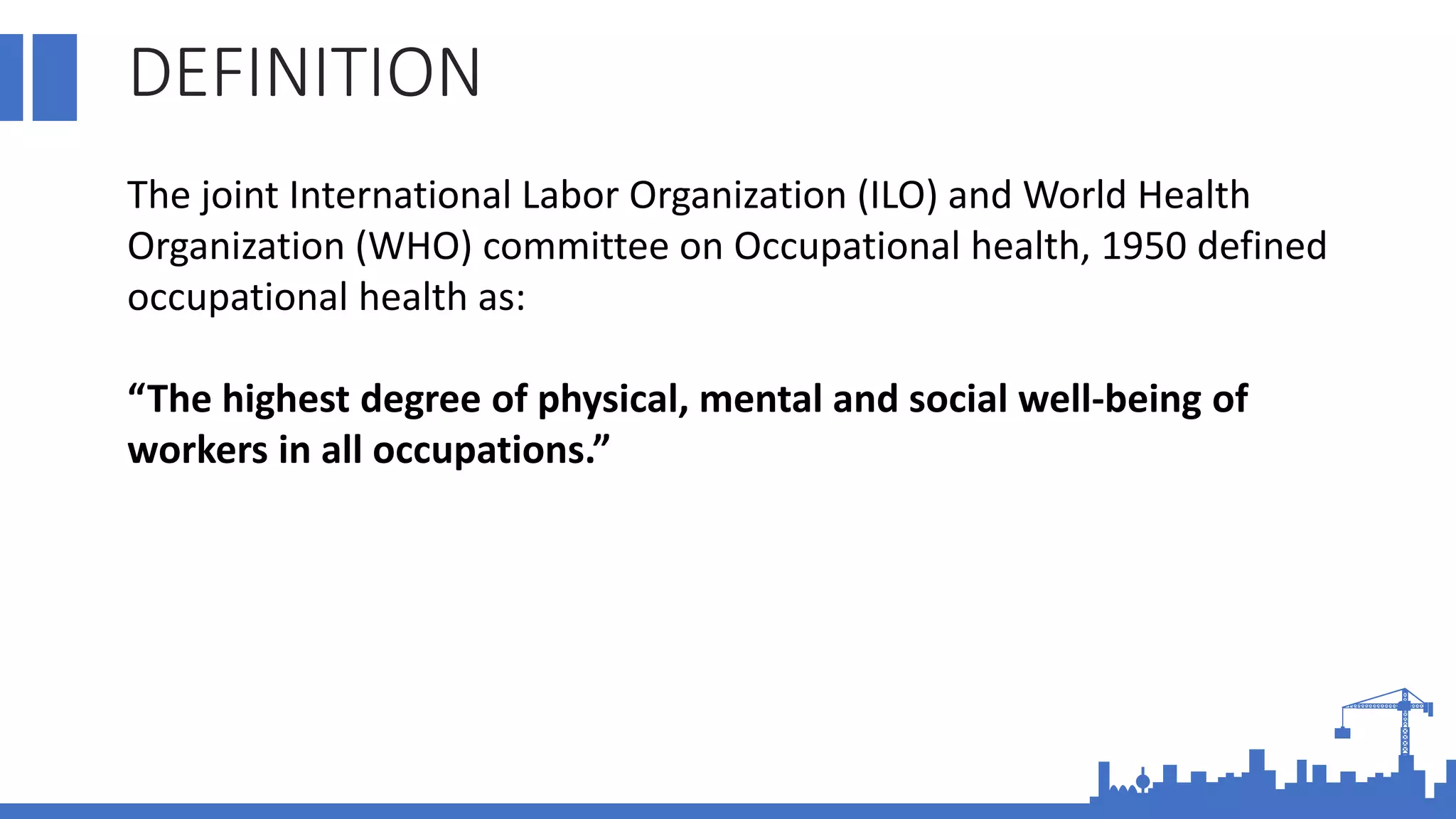
DEFINITION
The joint International Labor Organization (ILO) and World Health
Organization (WHO) committee on Occupational health, 1950 defined
occupational health as:
“The highest degree of physical, mental and social well-being of
workers in all occupations.”
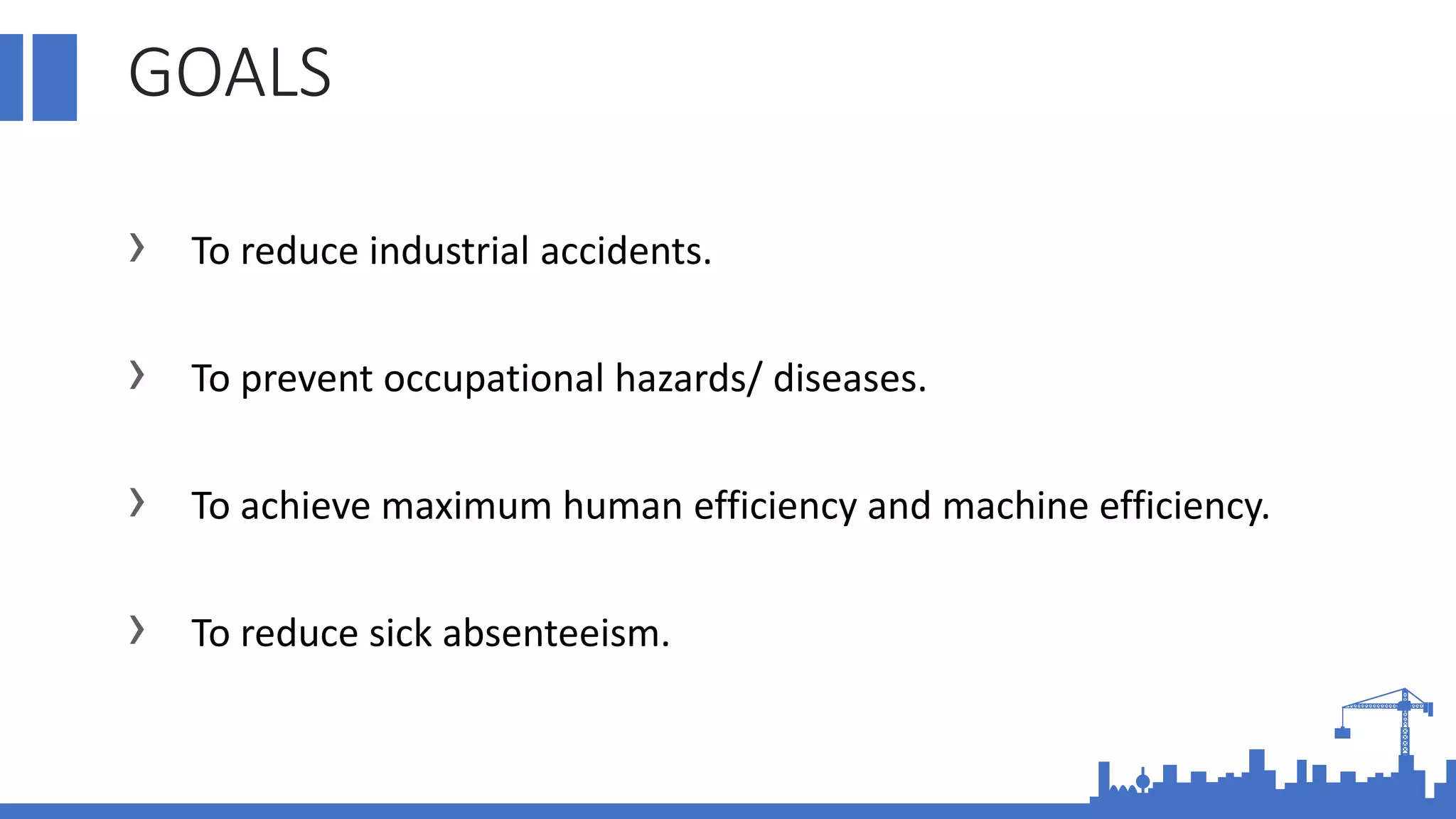
GOALS
› To reduce industrial accidents.
› To prevent occupational hazards/ diseases.
› To achieve maximum human efficiency and machine efficiency.
› To reduce sick absenteeism.
OBJECTIVES OF OCCUPATIONAL HEALTH
› To maintain and promote the physical, mental and social well being of
the workers.
› To prevent occupational diseases and injuries.
› To adapt the workplace and work environment to the needs of the
workers i.e., application of ergonomics principle.
› It should be preventive rather than curative.
OCCUPATIONAL HEALTH
It represents a dynamic equilibrium between the
worker and his occupational environment.
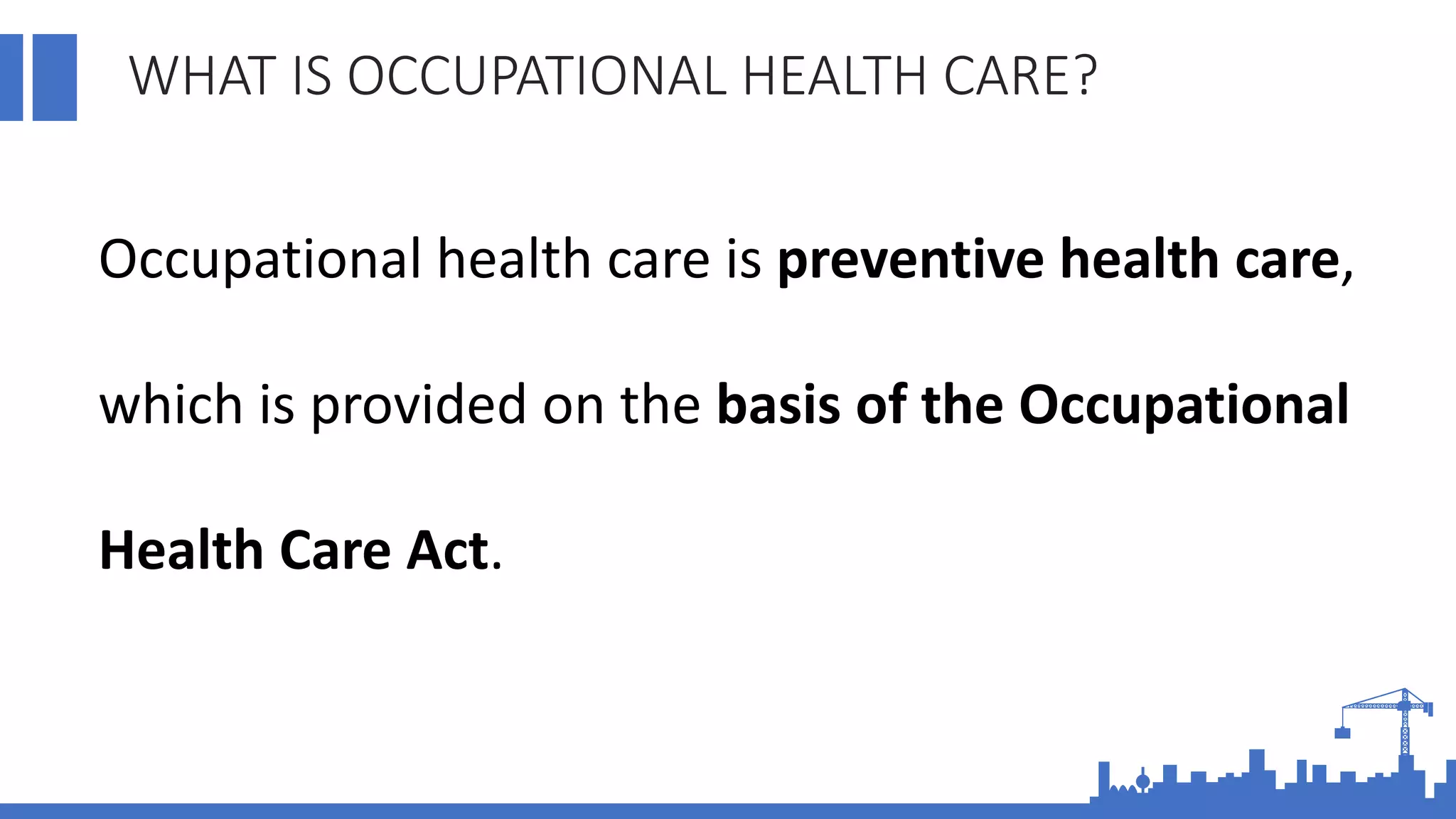
WHAT IS OCCUPATIONAL HEALTH CARE?
Occupational health care is preventive health care,
which is provided on the basis of the Occupational
Health Care Act.
WHAT IS OCCUPATIONAL HEALTH CARE?
The objective of occupational health care is a
healthy and safe working environment, a well-
functioning working community, prevention of
work-related diseases as well as the maintenance
of employees’ working ability and functional
capacity, and promotion of their health.
ADVANTAGES OF OCCUPATIONAL HEALTH CARE
› Investigates and assesses load factors and hazards and gives
expert assistance for eliminating them
› Gives information and advice
› Estimates employees’ working ability and monitors their
health condition
› By its knowledge and skills supports action for maintaining
working ability in the development of individuals, working
environment and working community, in this way also
affecting productivity continued
ADVANTAGES OF OCCUPATIONAL HEALTH CARE
› Prevents occupational diseases and other work-related
illnesses;
› Prevents premature incapacity for work, reduces pension costs;
› Reduces absenteeism due to sickness;
› Can make calculations of the profitability of occupational
safety and health and occupational health care in cooperation
with workplaces or encourage workplaces to make these
themselves.

Introduction.pptx

  • 1.
  • 2.
    DEFINITION The joint InternationalLabor Organization (ILO) and World Health Organization (WHO) committee on Occupational health, 1950 defined occupational health as: “The highest degree of physical, mental and social well-being of workers in all occupations.”
  • 3.
    GOALS › To reduceindustrial accidents. › To prevent occupational hazards/ diseases. › To achieve maximum human efficiency and machine efficiency. › To reduce sick absenteeism.
  • 4.
    OBJECTIVES OF OCCUPATIONALHEALTH › To maintain and promote the physical, mental and social well being of the workers. › To prevent occupational diseases and injuries. › To adapt the workplace and work environment to the needs of the workers i.e., application of ergonomics principle. › It should be preventive rather than curative.
  • 5.
    OCCUPATIONAL HEALTH It representsa dynamic equilibrium between the worker and his occupational environment.
  • 6.
    WHAT IS OCCUPATIONALHEALTH CARE? Occupational health care is preventive health care, which is provided on the basis of the Occupational Health Care Act.
  • 7.
    WHAT IS OCCUPATIONALHEALTH CARE? The objective of occupational health care is a healthy and safe working environment, a well- functioning working community, prevention of work-related diseases as well as the maintenance of employees’ working ability and functional capacity, and promotion of their health.
  • 8.
    ADVANTAGES OF OCCUPATIONALHEALTH CARE › Investigates and assesses load factors and hazards and gives expert assistance for eliminating them › Gives information and advice › Estimates employees’ working ability and monitors their health condition › By its knowledge and skills supports action for maintaining working ability in the development of individuals, working environment and working community, in this way also affecting productivity continued
  • 9.
    ADVANTAGES OF OCCUPATIONALHEALTH CARE › Prevents occupational diseases and other work-related illnesses; › Prevents premature incapacity for work, reduces pension costs; › Reduces absenteeism due to sickness; › Can make calculations of the profitability of occupational safety and health and occupational health care in cooperation with workplaces or encourage workplaces to make these themselves.