WELCOME
PRESENTATION ON
BIO ENERGY
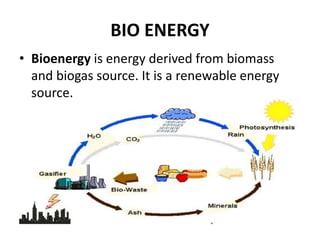
BIO ENERGY
• Bioenergy is energy derived from biomass
and biogas source. It is a renewable energy
source.
BIOMASS
• Biomass is organic matter from plants, micro-
-organism grown on land and water and their
derivatives. The energy obtain from biomass is
also called the biomass energy. It is a renew-
-able energy source. Because organic matter
generated everyday. Coal, petroleum, natural
gas are not come in biomass category because
they produce from dead, burried biomass
under high pressure and temperature during
several millions of year.
Type of biomass
• Biomass are classified in three group…..
1. Biomass from cultivated like fields, crops,
forests etc.
2. Biomass derived from wastes like municipal
waste, animal dung etc.
3. Biomass converted into liquid fuels.
• In first group the biomass is directly
converted into energy by burning the biomass.
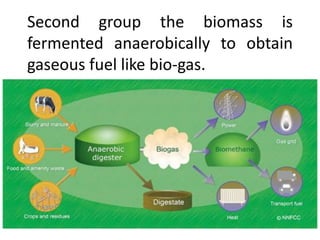
Second group the biomass is
fermented anaerobically to obtain
gaseous fuel like bio-gas.
Anaerobically
• Naturally occurring bacteria breakdown organic
material (such as agricultural energy crops like Giant
King Grass) in the absence of oxygen resulting in the
creation of methane and carbon dioxide, which make
up the composition of biogas. This process is called
anaerobic digestion and occurs in large enclosed
tanks. The biogas is collected from the anaerobic
digestion tanks and processed through a generator to
produce renewable electricity.
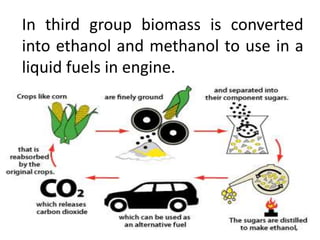
In third group biomass is converted
into ethanol and methanol to use in a
liquid fuels in engine.
Biomass conversion processes
1. Direct combustion
2. Thermochemical conversion
3. Biochemical conversion
direct combustion:-
Combustion is the oldest and
most frequently applied process to extract the
energy content from solid biomass. During
combustion, most of the energy is released in form
of heat. Different thermodynamic processes can be
used to transform part of this heat into electric
power.
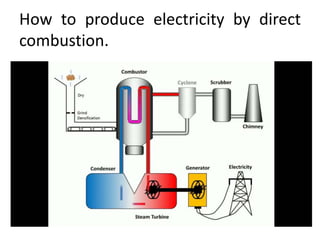
How to produce electricity by direct
combustion.
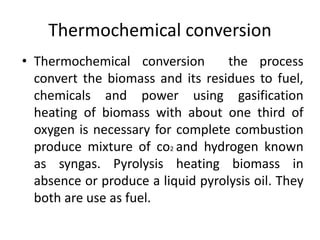
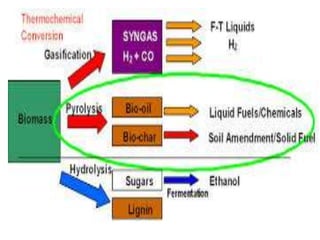
Thermochemical conversion
• Thermochemical conversion the process
convert the biomass and its residues to fuel,
chemicals and power using gasification
heating of biomass with about one third of
oxygen is necessary for complete combustion
produce mixture of co2 and hydrogen known
as syngas. Pyrolysis heating biomass in
absence or produce a liquid pyrolysis oil. They
both are use as fuel.
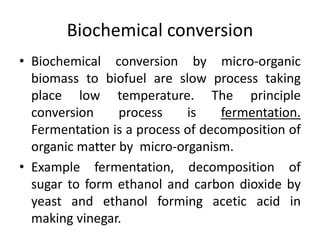
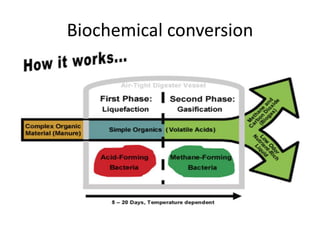
Biochemical conversion
• Biochemical conversion by micro-organic
biomass to biofuel are slow process taking
place low temperature. The principle
conversion process is fermentation.
Fermentation is a process of decomposition of
organic matter by micro-organism.
• Example fermentation, decomposition of
sugar to form ethanol and carbon dioxide by
yeast and ethanol forming acetic acid in
making vinegar.
Biochemical conversion
Application of biomass
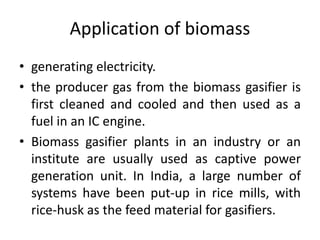
• generating electricity.
• the producer gas from the biomass gasifier is
first cleaned and cooled and then used as a
fuel in an IC engine.
• Biomass gasifier plants in an industry or an
institute are usually used as captive power
generation unit. In India, a large number of
systems have been put-up in rice mills, with
rice-husk as the feed material for gasifiers.
Advantage of biomass
• Biomass Energy (or Bioenergy) is a renewable energy.
• Biomass is always available it can be found anywhere
and includes organic matter such as plants, animals or
waste products from organic sources.
• Less pollution is generated.
• Reduce Fossil Fuel dependency: With the majority of
homes and businesses using oil to provide energy, oil
will gradually run out if people do not switch to a
renewable energy source such as biomass. Once oil is
gone, it is gone forever. The use of biomass will
therefore reduce the dependency on fossil fuels.
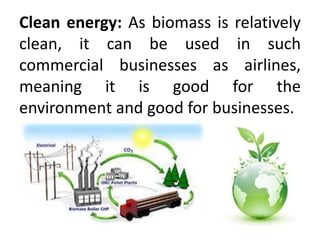
Clean energy: As biomass is relatively
clean, it can be used in such
commercial businesses as airlines,
meaning it is good for the
environment and good for businesses.
Disadvantage of biomass
• The initial costs of a biomass is high.
• Harmful to the environment: Although there is a large
reduction of carbon dioxide emissions compared to
other systems, there is an increase in methane gases,
which can also be harmful to the Earth’s ozone layer.
• Consumes more fuel: In order to acquire enough
lumber to power a plant, for example, companies
would have to clear large forest area. This makes the
use of trees and tree products to power machines
inefficient and can create environmental problems.
• Large area require.
Biogas
• Biogas :-typically refers to a mixture of
different gases like fuel gas, sewer and in India
known as Gobar gas. Gas produced by the
breakdown of organic matter in the absence
of oxygen. Biogas can be produced from raw
materials such as agricultural waste, municipal
waste, plant material, sewage, green waste or
food waste. It is a renewable energy source.
Biogas can be produced by anaerobic
digestion with anaerobic bacteria, which digest
material inside a closed system.
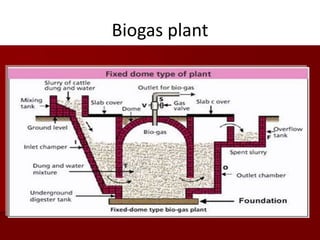
Biogas plant
Dome type gas plant
• This type of biogas plant developed by china. In
china design it is usual to provide a mainhole
cover at the top inlet and outlet are connected at
a mid point of digester. Upper part of digester
above liquid surface provide storage space for
biogas. When gas is produced level of digester
liquid drops whereas that in outlet rises with
height difference between the two varying gas
pressure. This difference in height help to
regulate gas pressure within digester over a wide
range.
Advantage of Dome type gas plant
• No moving parts, therefore no maintenance
problem.
• Longer working life.
• Low cost.
• Low operating cost.
• Large amount of gas produce.
• Space above of the plant may use other
purpose
Disadvantage of Dome type gas plant
• Require skill masons for construction.
• Variable gas pressure.
• Problem of scum formation.
Moveable drum type plant
• This type is also known as floating dome type
biogas plants. A floating-drum plant consists of a
cylindrical or dome-shaped digester and a
moving, floating gas-holder, or drum. The gas-
holder floats either directly in the fermenting
slurry or in a separate water jacket. The drum in
which the biogas collects has an internal and/or
external guide frame that provides stability and
keeps the drum upright. If biogas is produced, the
drum moves up, if gas is consumed, the gas-
holder sinks back.
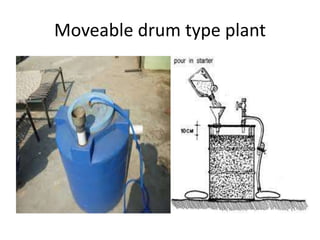
Moveable drum type plant
material
Floating-drums made of glass-fiber reinforced
plastic and high-density polyethylene have been
used successfully, but the construction costs are
higher compared to using steel. Floating-drums
made of wire-mesh-reinforced concrete are
liable to hairline cracking and are intrinsically
porous. They require a gas-tight, elastic internal
coating. PVC drums are unsuitable because they
are not resistant to UV.
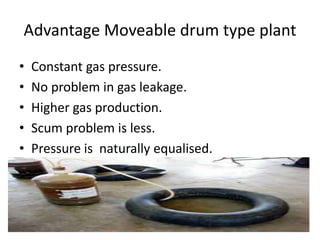
Advantage Moveable drum type plant
• Constant gas pressure.
• No problem in gas leakage.
• Higher gas production.
• Scum problem is less.
• Pressure is naturally equalised.
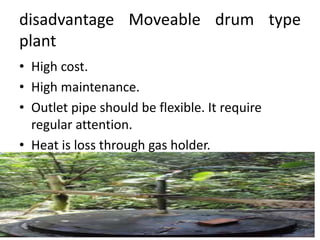
disadvantage Moveable drum type
plant
• High cost.
• High maintenance.
• Outlet pipe should be flexible. It require
regular attention.
• Heat is loss through gas holder.
Direct Combustion video
Fixed dome type biogas plant
Thank you for your attention!

Bio energy

  • 1.
  • 2.
    BIO ENERGY • Bioenergyis energy derived from biomass and biogas source. It is a renewable energy source.
  • 3.
    BIOMASS • Biomass isorganic matter from plants, micro- -organism grown on land and water and their derivatives. The energy obtain from biomass is also called the biomass energy. It is a renew- -able energy source. Because organic matter generated everyday. Coal, petroleum, natural gas are not come in biomass category because they produce from dead, burried biomass under high pressure and temperature during several millions of year.
  • 4.
    Type of biomass •Biomass are classified in three group….. 1. Biomass from cultivated like fields, crops, forests etc. 2. Biomass derived from wastes like municipal waste, animal dung etc. 3. Biomass converted into liquid fuels. • In first group the biomass is directly converted into energy by burning the biomass.
  • 5.
    Second group thebiomass is fermented anaerobically to obtain gaseous fuel like bio-gas.
  • 6.
    Anaerobically • Naturally occurringbacteria breakdown organic material (such as agricultural energy crops like Giant King Grass) in the absence of oxygen resulting in the creation of methane and carbon dioxide, which make up the composition of biogas. This process is called anaerobic digestion and occurs in large enclosed tanks. The biogas is collected from the anaerobic digestion tanks and processed through a generator to produce renewable electricity.
  • 7.
    In third groupbiomass is converted into ethanol and methanol to use in a liquid fuels in engine.
  • 8.
    Biomass conversion processes 1.Direct combustion 2. Thermochemical conversion 3. Biochemical conversion direct combustion:- Combustion is the oldest and most frequently applied process to extract the energy content from solid biomass. During combustion, most of the energy is released in form of heat. Different thermodynamic processes can be used to transform part of this heat into electric power.
  • 9.
    How to produceelectricity by direct combustion.
  • 10.
    Thermochemical conversion • Thermochemicalconversion the process convert the biomass and its residues to fuel, chemicals and power using gasification heating of biomass with about one third of oxygen is necessary for complete combustion produce mixture of co2 and hydrogen known as syngas. Pyrolysis heating biomass in absence or produce a liquid pyrolysis oil. They both are use as fuel.
  • 12.
    Biochemical conversion • Biochemicalconversion by micro-organic biomass to biofuel are slow process taking place low temperature. The principle conversion process is fermentation. Fermentation is a process of decomposition of organic matter by micro-organism. • Example fermentation, decomposition of sugar to form ethanol and carbon dioxide by yeast and ethanol forming acetic acid in making vinegar.
  • 13.
  • 14.
    Application of biomass •generating electricity. • the producer gas from the biomass gasifier is first cleaned and cooled and then used as a fuel in an IC engine. • Biomass gasifier plants in an industry or an institute are usually used as captive power generation unit. In India, a large number of systems have been put-up in rice mills, with rice-husk as the feed material for gasifiers.
  • 15.
    Advantage of biomass •Biomass Energy (or Bioenergy) is a renewable energy. • Biomass is always available it can be found anywhere and includes organic matter such as plants, animals or waste products from organic sources. • Less pollution is generated. • Reduce Fossil Fuel dependency: With the majority of homes and businesses using oil to provide energy, oil will gradually run out if people do not switch to a renewable energy source such as biomass. Once oil is gone, it is gone forever. The use of biomass will therefore reduce the dependency on fossil fuels.
  • 16.
    Clean energy: Asbiomass is relatively clean, it can be used in such commercial businesses as airlines, meaning it is good for the environment and good for businesses.
  • 17.
    Disadvantage of biomass •The initial costs of a biomass is high. • Harmful to the environment: Although there is a large reduction of carbon dioxide emissions compared to other systems, there is an increase in methane gases, which can also be harmful to the Earth’s ozone layer. • Consumes more fuel: In order to acquire enough lumber to power a plant, for example, companies would have to clear large forest area. This makes the use of trees and tree products to power machines inefficient and can create environmental problems. • Large area require.
  • 18.
    Biogas • Biogas :-typicallyrefers to a mixture of different gases like fuel gas, sewer and in India known as Gobar gas. Gas produced by the breakdown of organic matter in the absence of oxygen. Biogas can be produced from raw materials such as agricultural waste, municipal waste, plant material, sewage, green waste or food waste. It is a renewable energy source. Biogas can be produced by anaerobic digestion with anaerobic bacteria, which digest material inside a closed system.
  • 19.
  • 20.
    Dome type gasplant • This type of biogas plant developed by china. In china design it is usual to provide a mainhole cover at the top inlet and outlet are connected at a mid point of digester. Upper part of digester above liquid surface provide storage space for biogas. When gas is produced level of digester liquid drops whereas that in outlet rises with height difference between the two varying gas pressure. This difference in height help to regulate gas pressure within digester over a wide range.
  • 21.
    Advantage of Dometype gas plant • No moving parts, therefore no maintenance problem. • Longer working life. • Low cost. • Low operating cost. • Large amount of gas produce. • Space above of the plant may use other purpose
  • 22.
    Disadvantage of Dometype gas plant • Require skill masons for construction. • Variable gas pressure. • Problem of scum formation.
  • 23.
    Moveable drum typeplant • This type is also known as floating dome type biogas plants. A floating-drum plant consists of a cylindrical or dome-shaped digester and a moving, floating gas-holder, or drum. The gas- holder floats either directly in the fermenting slurry or in a separate water jacket. The drum in which the biogas collects has an internal and/or external guide frame that provides stability and keeps the drum upright. If biogas is produced, the drum moves up, if gas is consumed, the gas- holder sinks back.
  • 24.
  • 25.
    material Floating-drums made ofglass-fiber reinforced plastic and high-density polyethylene have been used successfully, but the construction costs are higher compared to using steel. Floating-drums made of wire-mesh-reinforced concrete are liable to hairline cracking and are intrinsically porous. They require a gas-tight, elastic internal coating. PVC drums are unsuitable because they are not resistant to UV.
  • 26.
    Advantage Moveable drumtype plant • Constant gas pressure. • No problem in gas leakage. • Higher gas production. • Scum problem is less. • Pressure is naturally equalised.
  • 27.
    disadvantage Moveable drumtype plant • High cost. • High maintenance. • Outlet pipe should be flexible. It require regular attention. • Heat is loss through gas holder.
  • 28.
  • 29.
    Fixed dome typebiogas plant
  • 30.
    Thank you foryour attention!