Downloaded 263 times
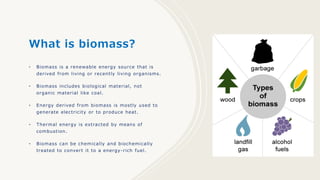

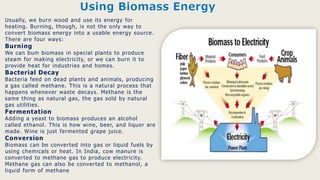
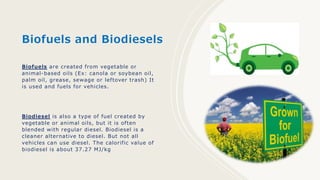
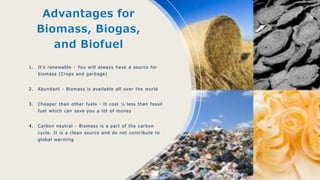
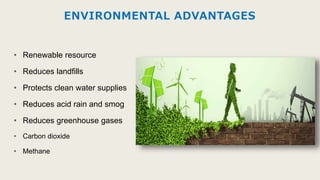
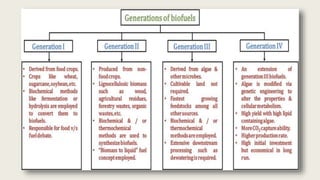
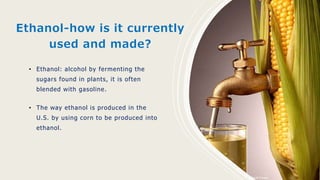
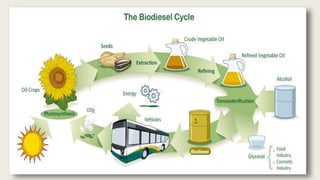
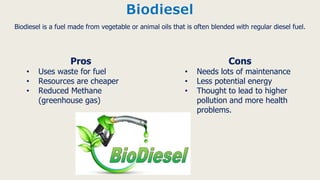
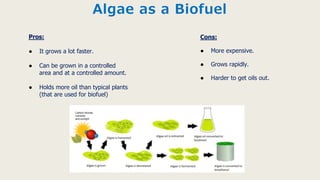
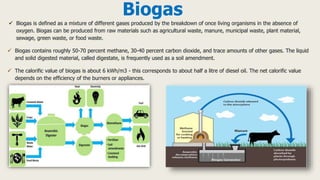
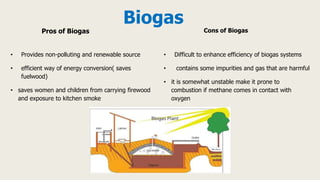
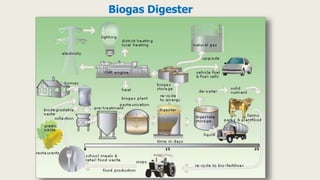
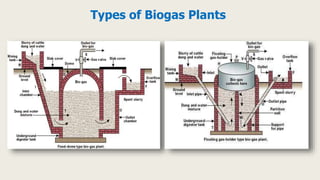
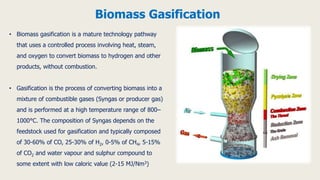
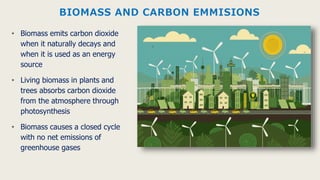
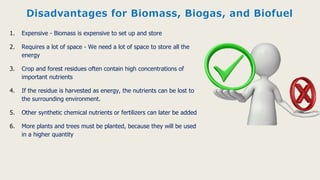
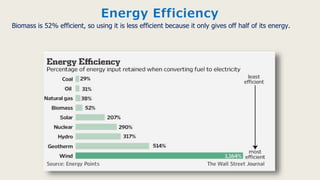

This document discusses various types of bioenergy including biomass, biogas, and biofuels. It defines biomass as a renewable energy source derived from living or recently living organisms. Key types of biomass discussed include wood, agricultural waste, solid waste, and landfill gas. Methods of converting biomass to energy include burning, bacterial decay, fermentation, and thermal or chemical conversion. Biogas is produced via the bacterial breakdown of organic waste. Algae and crops can be converted to liquid biofuels like ethanol or biodiesel. While bioenergy has benefits like being renewable and reducing emissions, it also has disadvantages like being expensive to produce and store and requiring significant space.


![Gitika presentation (1)[1].pptx](https://cdn.slidesharecdn.com/ss_thumbnails/gitikapresentation11-230617144851-5152a024-thumbnail.jpg?width=640&height=640&fit=bounds)


