MODULE-02
HUMAN ORGAN SYSTEMS AND BIO DESIGNS - 1
CONTENTS
Topics Page N0.
Brain as a CPU system
Eye as a Camera system
Heart as a pump system
03-07-2024
MODULE-02
HUMAN ORGAN SYSTEMS AND BIO DESIGNS
03-07-2024
1.Brain as a CPU System:
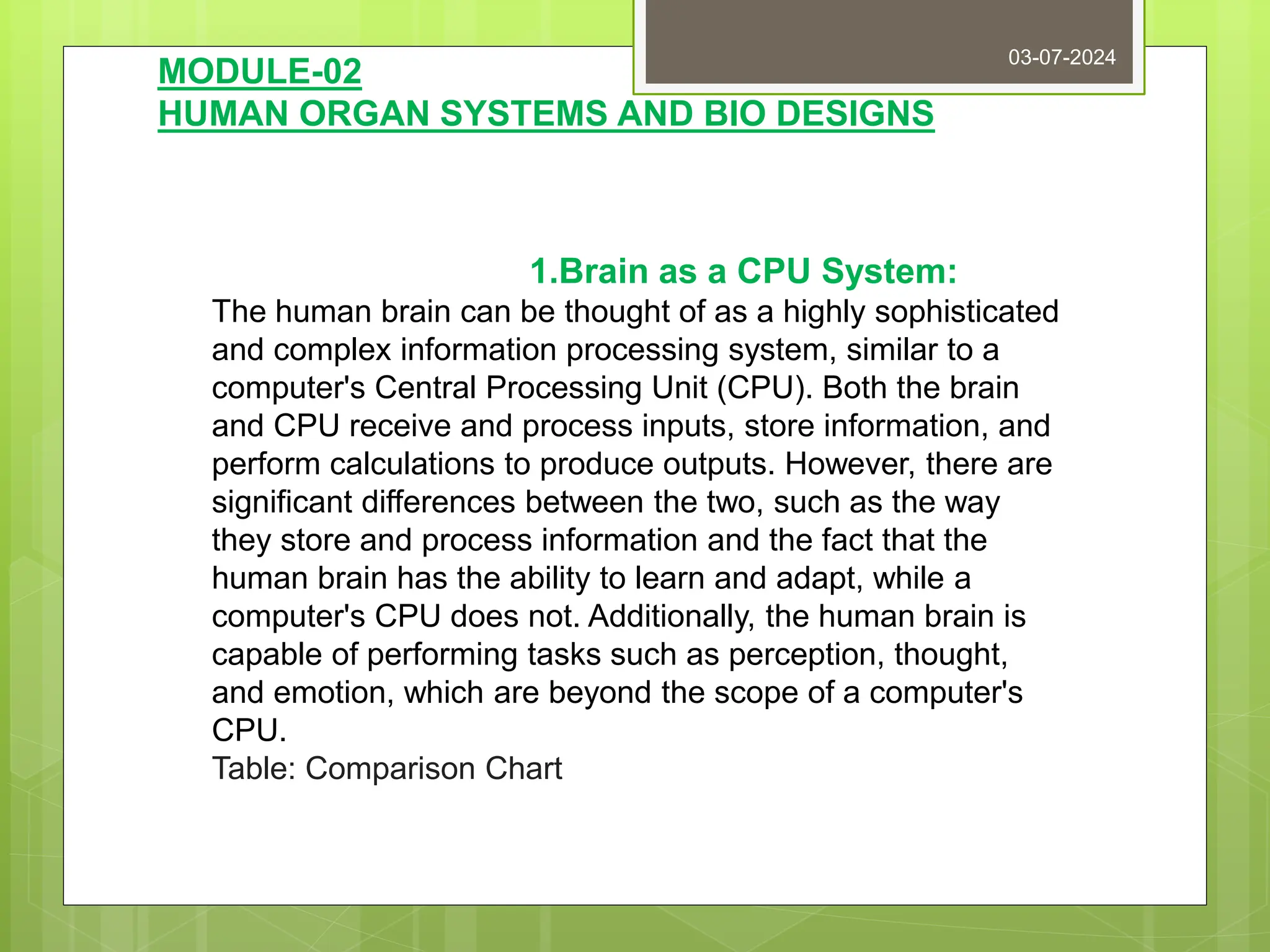
The human brain can be thought of as a highly sophisticated
and complex information processing system, similar to a
computer's Central Processing Unit (CPU). Both the brain
and CPU receive and process inputs, store information, and
perform calculations to produce outputs. However, there are
significant differences between the two, such as the way
they store and process information and the fact that the
human brain has the ability to learn and adapt, while a
computer's CPU does not. Additionally, the human brain is
capable of performing tasks such as perception, thought,
and emotion, which are beyond the scope of a computer's
CPU.
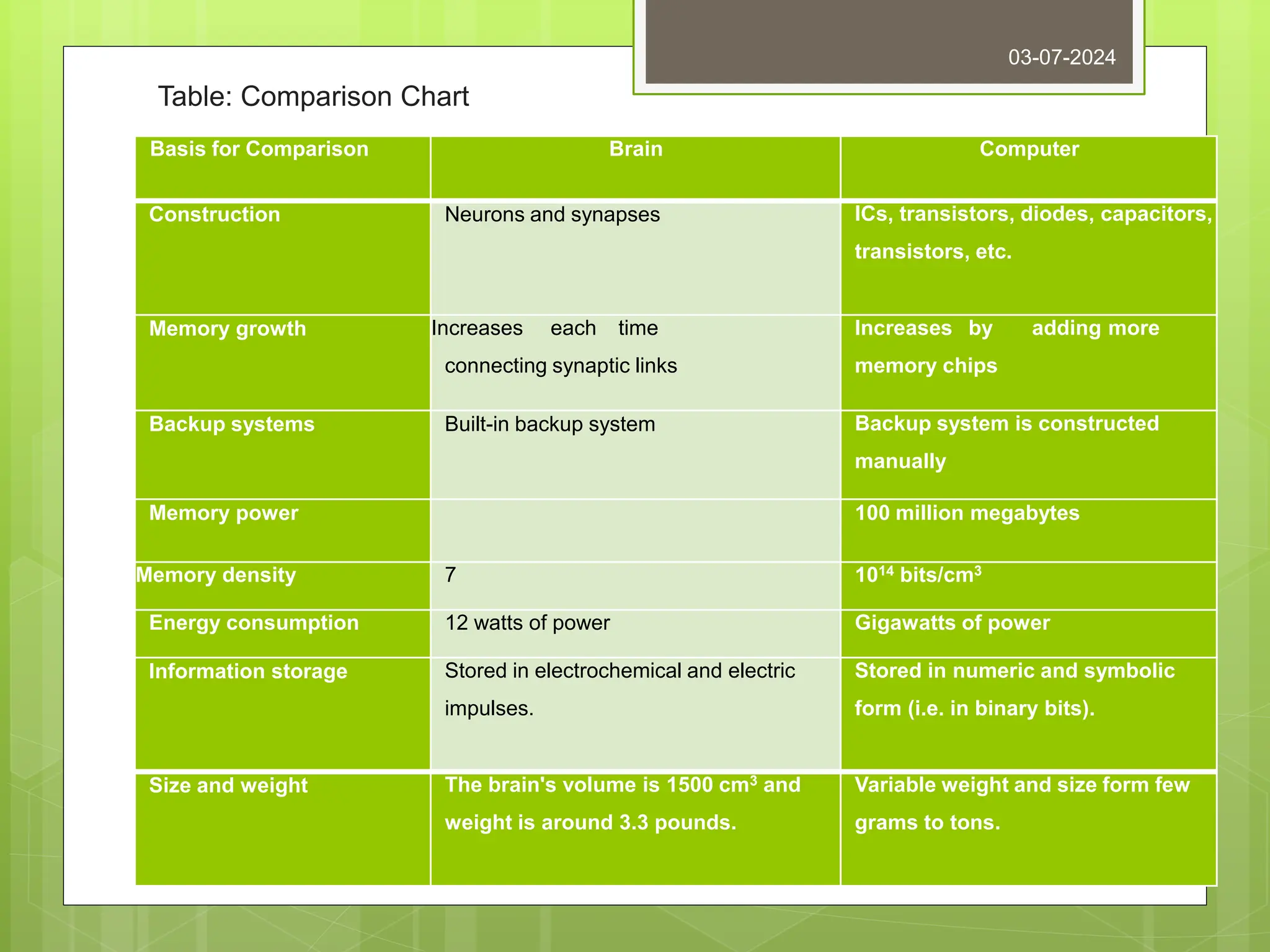
Table: Comparison Chart
Basis for Comparison Brain Computer
Construction Neurons and synapses ICs, transistors, diodes, capacitors,
transistors, etc.
Memory growth Increases each time
connecting synaptic links
Increases by adding more
memory chips
Backup systems Built-in backup system Backup system is constructed
manually
Memory power 100 million megabytes
Memory density 7 1014 bits/cm3
Energy consumption 12 watts of power Gigawatts of power
Information storage Stored in electrochemical and electric
impulses.
Stored in numeric and symbolic
form (i.e. in binary bits).
Size and weight The brain's volume is 1500 cm3 and
weight is around 3.3 pounds.
Variable weight and size form few
grams to tons.
03-07-2024
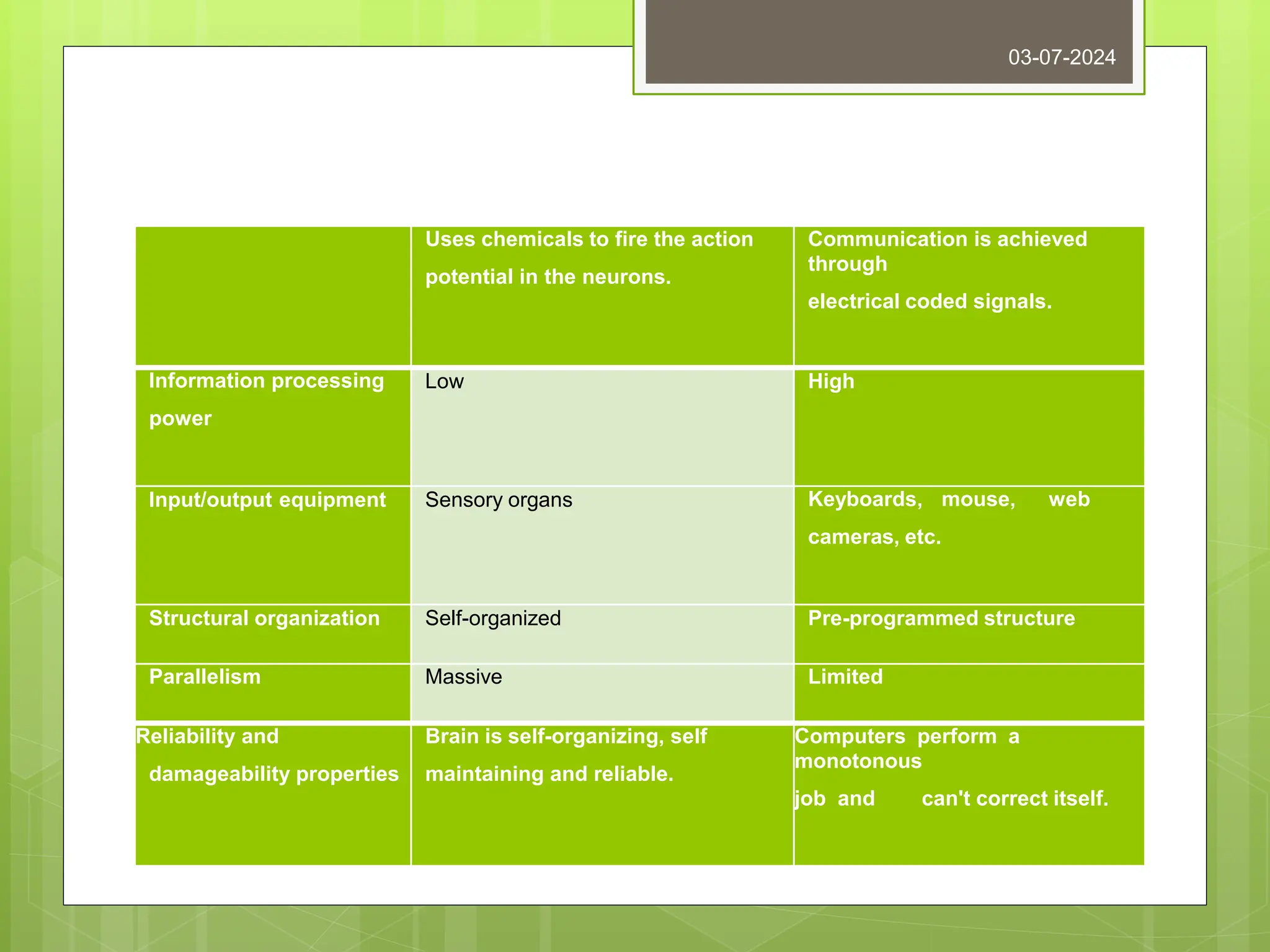
Uses chemicals to fire the action
potential in the neurons.
Communication is achieved
through
electrical coded signals.
Information processing
power
Low High
Input/output equipment Sensory organs Keyboards, mouse, web
cameras, etc.
Structural organization Self-organized Pre-programmed structure
Parallelism Massive Limited
Reliability and
damageability properties
Brain is self-organizing, self
maintaining and reliable.
Computers perform a
monotonous
job and can't correct itself.
03-07-2024
03-07-2024
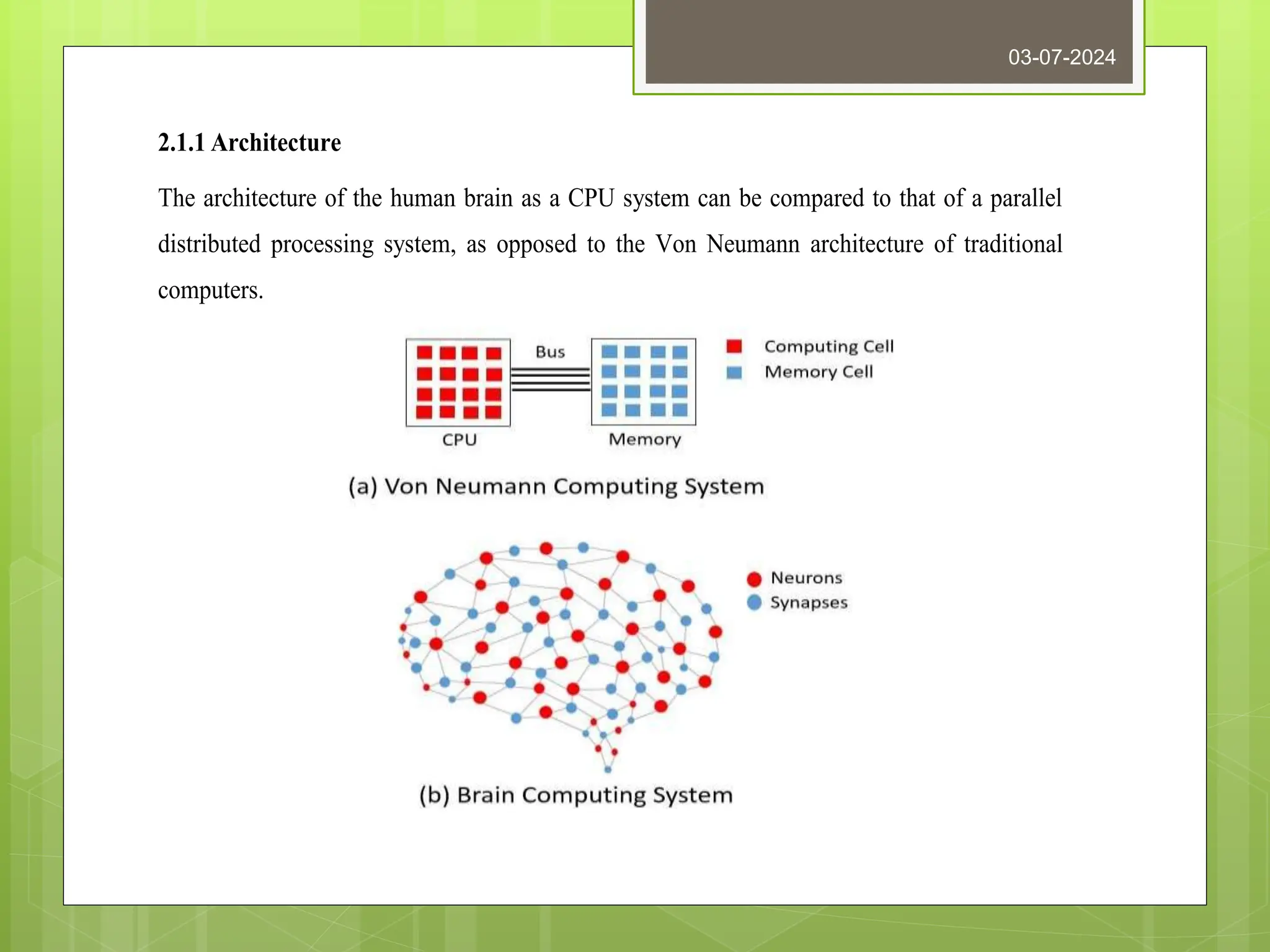
2.1.1 Architecture
The architecture of the human brain as a CPU system can be compared to that of a parallel
distributed processing system, as opposed to the Von Neumann architecture of traditional
computers.
03-07-2024
In the human brain, information is processed in a distributed
manner across multiple regions, each with specialized
functions, rather than being processed sequentially in a single
centralized location.
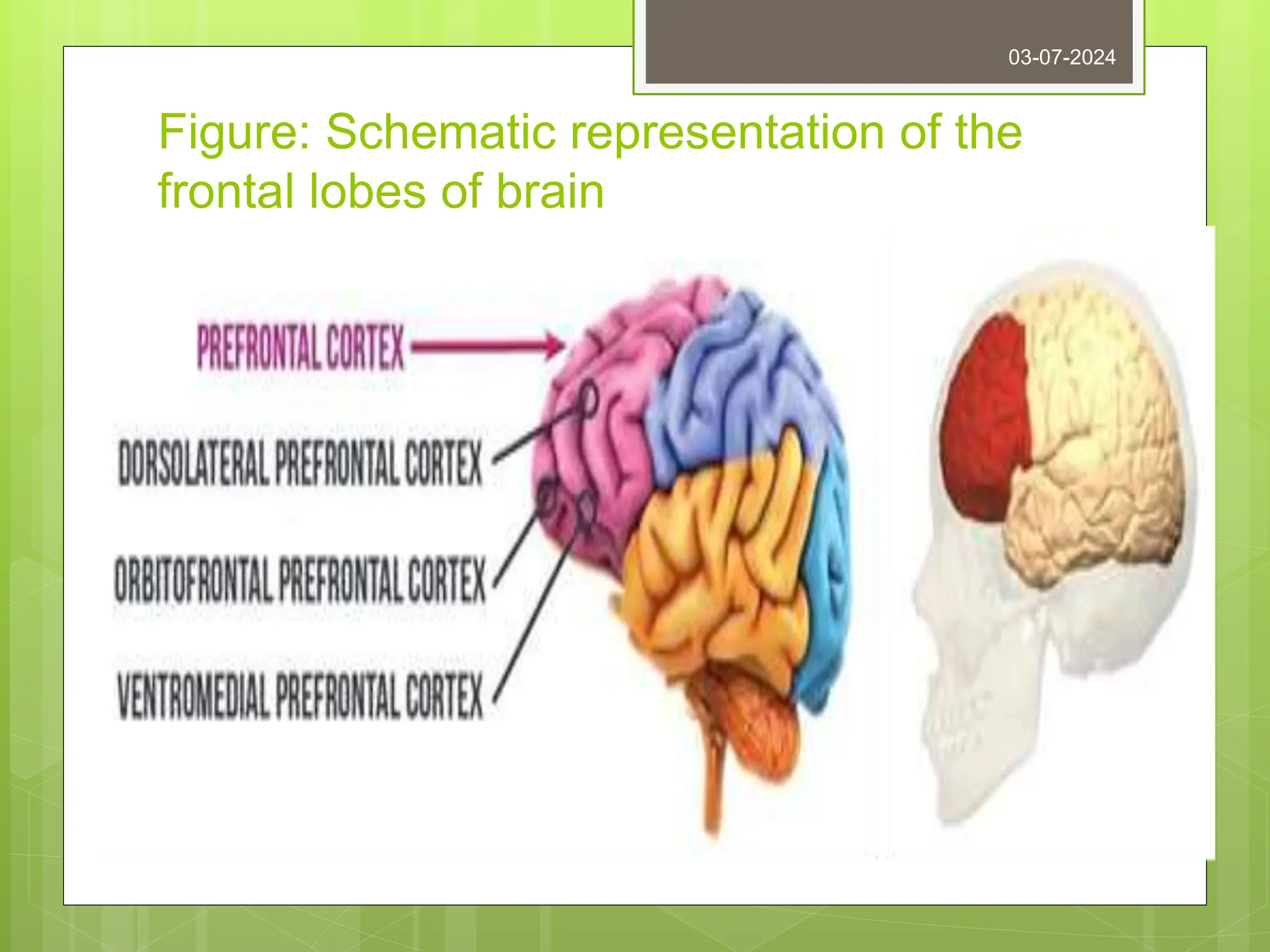
Just like how a computer's CPU has an arithmetic logic unit
(ALU) to perform mathematical calculations, the human brain
has specialized regions for processing mathematical and
logical operations. The prefrontal cortex, for example, is
responsible for higher-level cognitive functions such as
decision making and problem solving Similarly, a computer's
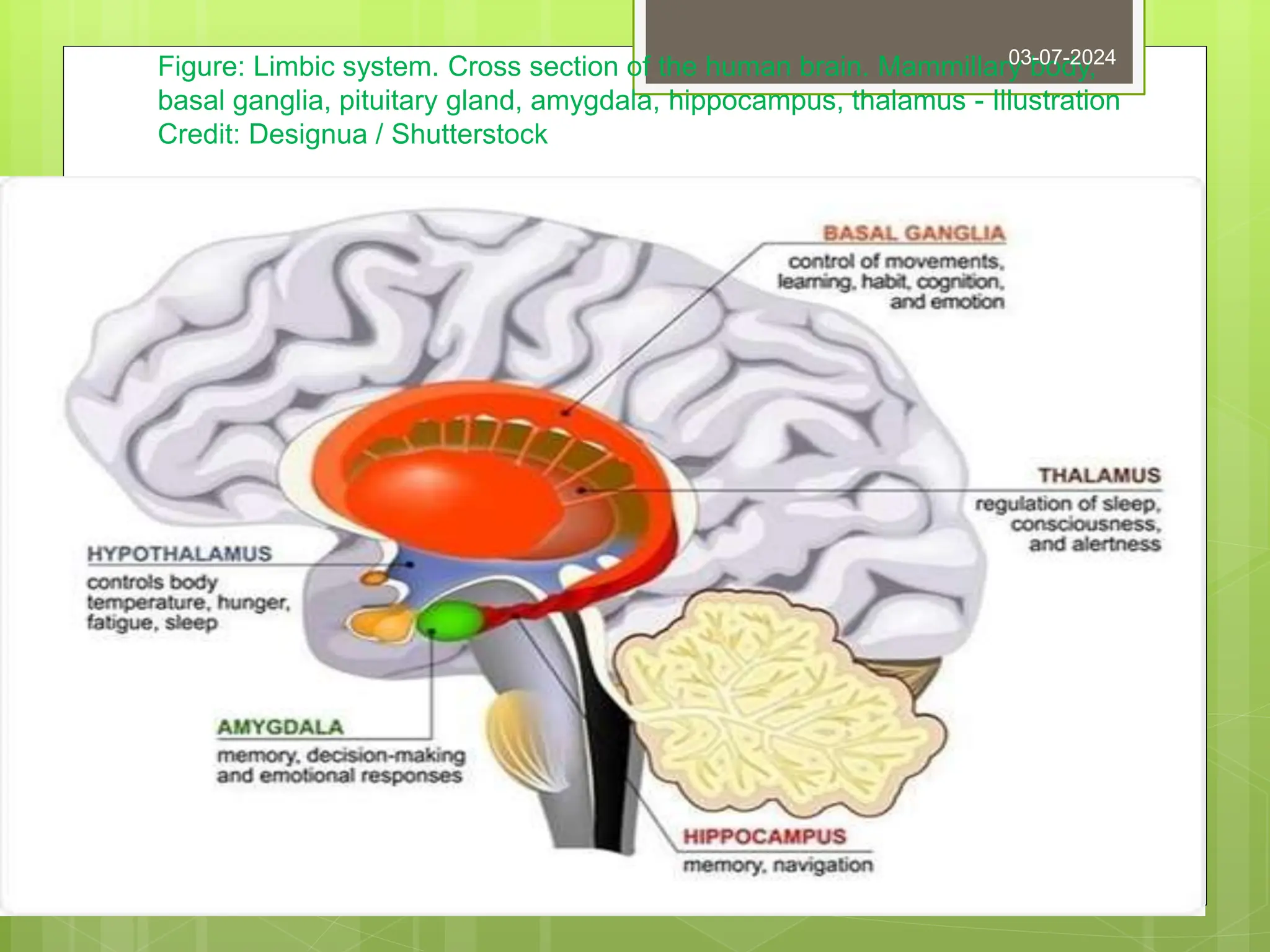
CPU also has memory units for storing information, and the
human brain has several regions dedicated to memory
storage, including the hippocampus and amygdala
Figure: Schematic representation of the
frontal lobes of brain
03-07-2024
Figure: Limbic system. Cross section of the human brain. Mammillary body,
basal ganglia, pituitary gland, amygdala, hippocampus, thalamus - Illustration
Credit: Designua / Shutterstock
03-07-2024
 While the comparison between the human
brain and a computer's CPU can provide
useful insights, it is important to note that the
human brain is a vastly more complex and
capable system, with many functions that are
still not fully understood
03-07-2024
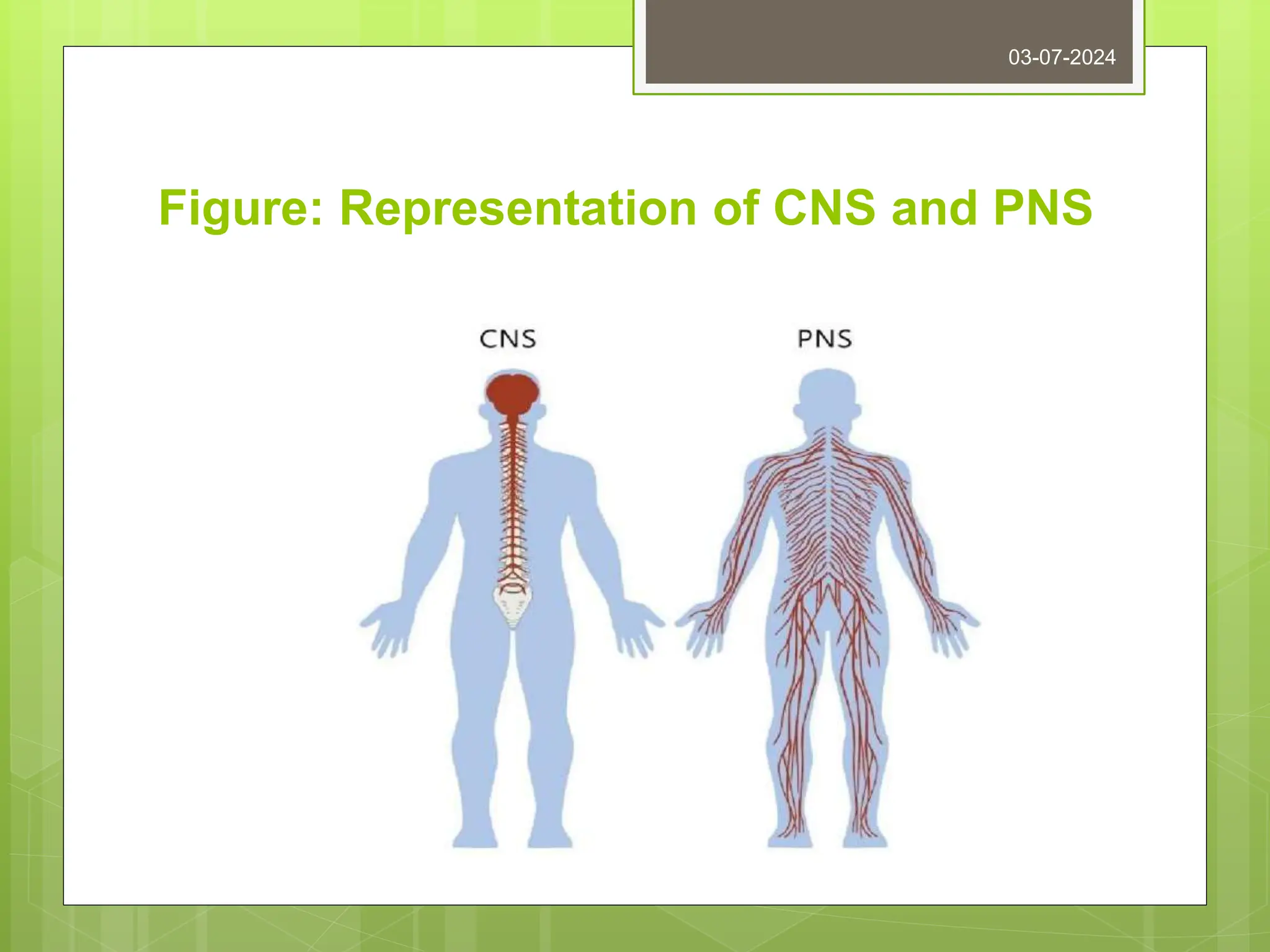
 The Central Nervous System consists of the
brain and spinal cord and is responsible for
receiving, processing, and integrating sensory
information and transmitting commands to the
rest of the body. The brain acts as the
command center, receiving and processing
sensory inputs and generating motor outputs,
while the spinal cord acts as a relay center,
transmitting information between the brain
and peripheral nerves.
03-07-2024
Figure: Representation of CNS and PNS
03-07-2024
 The Peripheral Nervous System, on the other
hand, consists of all the nerves that lie outside the
brain and spinal cord. It is responsible for
transmitting sensory information from the
periphery of the body (such as the skin, muscles,
and organs) to the CNS, and transmitting
commands from the CNS to the periphery. The
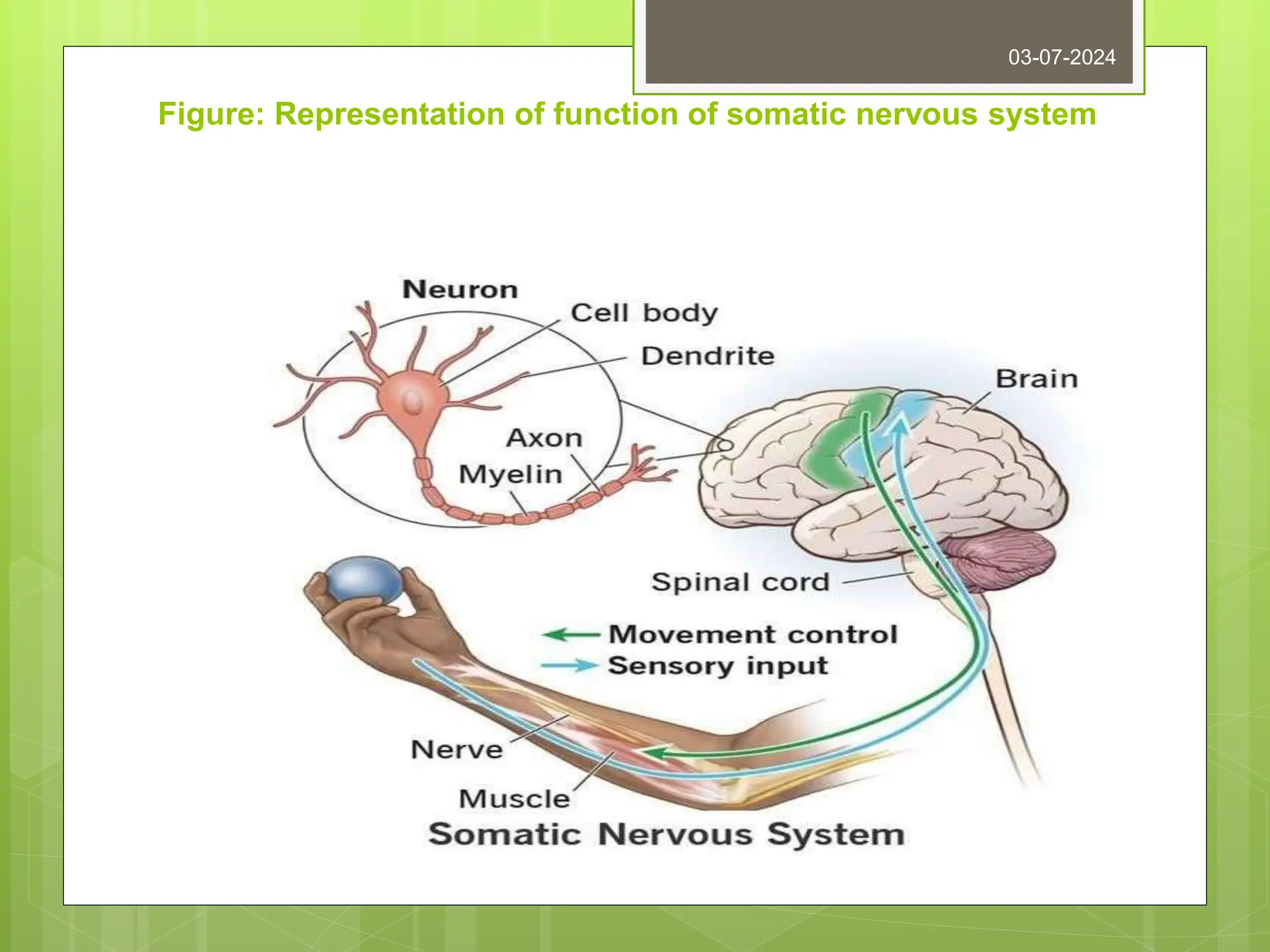
PNS can be further divided into the somatic
nervous system and the autonomic nervous
system.
03-07-2024
Figure: Representation of function of somatic nervous system
03-07-2024
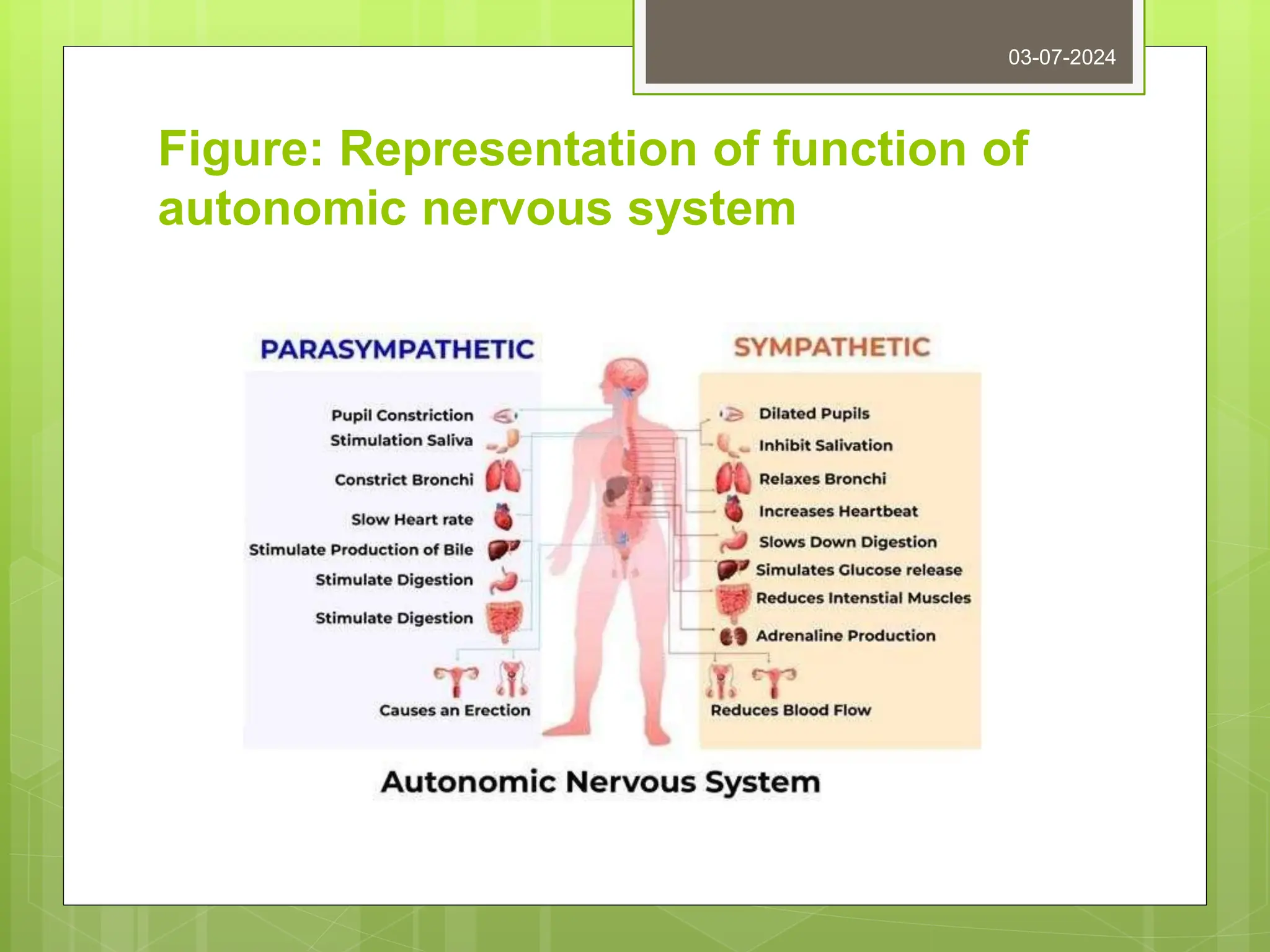
 The somatic nervous system controls
voluntary movements, while the autonomic
nervous system controls involuntary functions
such as heart rate, digestion, and respiration.
03-07-2024
Figure: Representation of function of
autonomic nervous system
03-07-2024
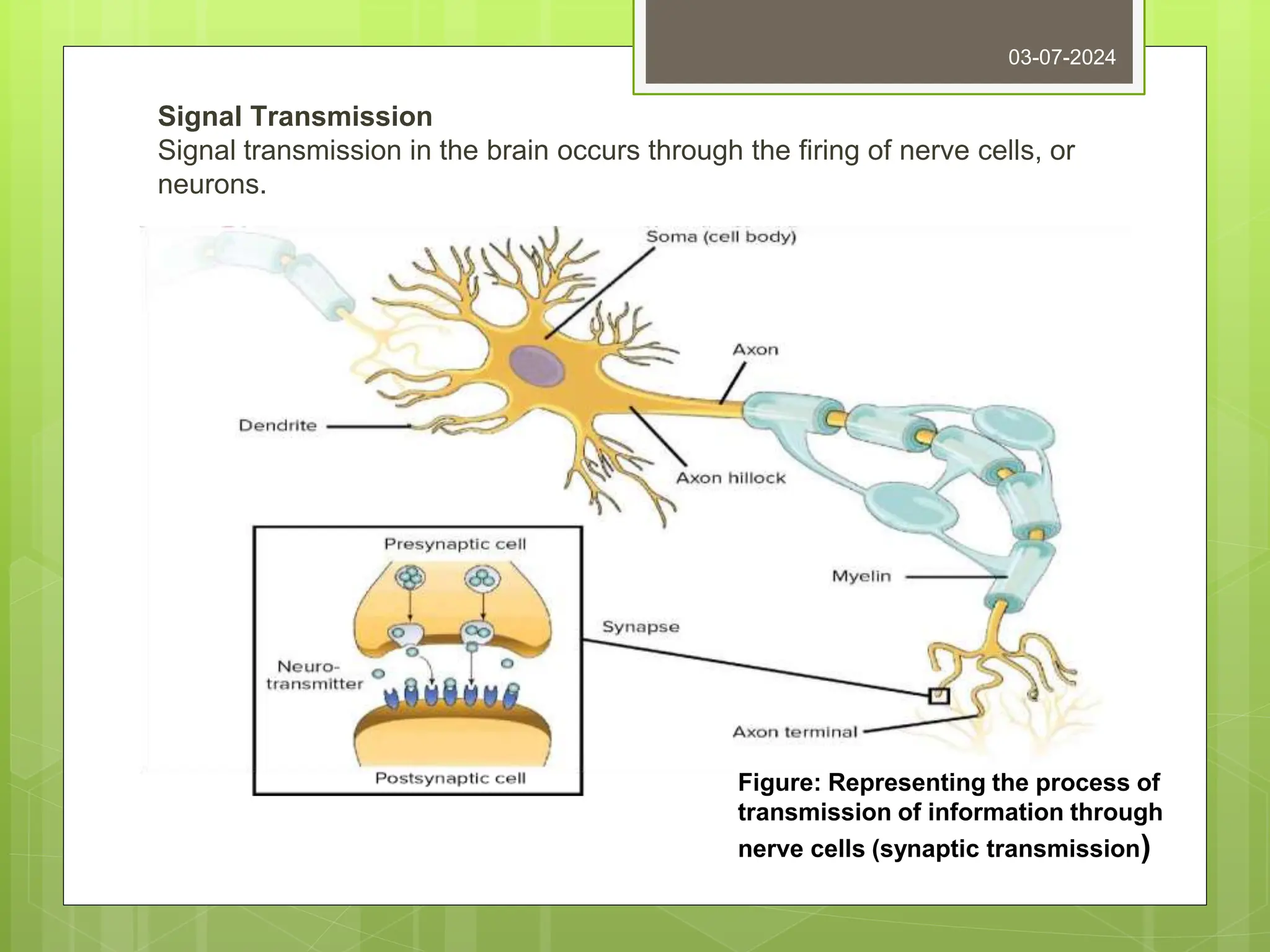
Signal Transmission
Signal transmission in the brain occurs through the firing of nerve cells, or
neurons.
03-07-2024
Figure: Representing the process of
transmission of information through
nerve cells (synaptic transmission)
 A neuron receives inputs from other neurons at its
dendrites, integrates the information, and then
generates an electrical impulse, or action potential,
that travels down its axon to the synaptic terminals. At
the synaptic terminals, the neuron releases chemical
neurotransmitters, which cross the synaptic gap and
bind to receptors on the postsynaptic neuron, leading
to the initiation of another action potential in the
postsynaptic neuron.
 This process of transmitting information from one
neuron to another is known as synaptic transmission
and forms the basis of communication within the brain.
03-07-2024
 Different types of neurotransmitters have different
effects on postsynaptic neurons, and the balance of
neurotransmitter levels can influence brain function,
including mood, learning, and memory.

Signal transmission in the brain is also influenced by
various forms of synaptic plasticity, including long-term
potentiation (LTP) and long-term depression (LTD),
which can modify the strength of synaptic connections
and contribute to learning and memory processes.

03-07-2024
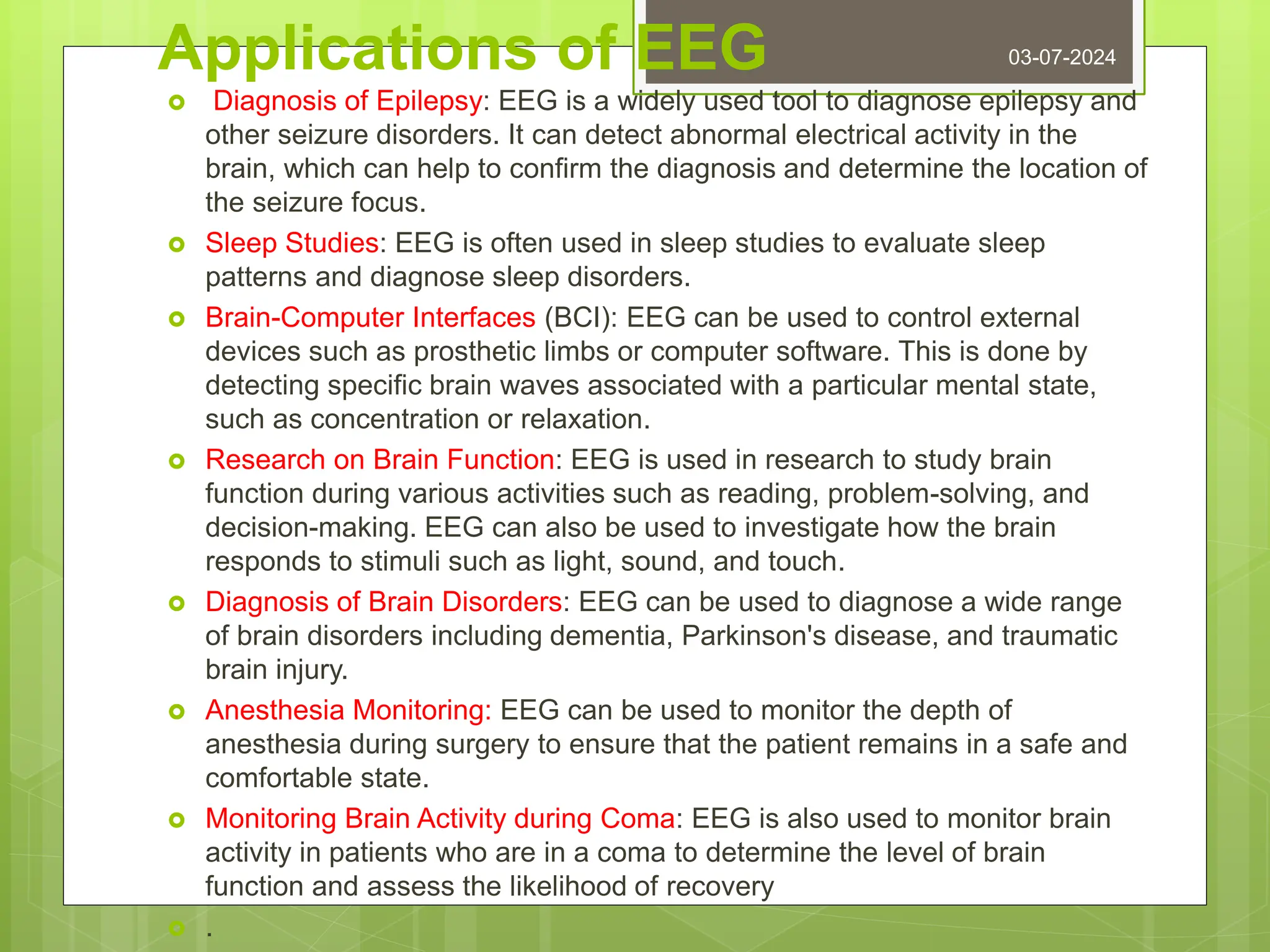
EEG
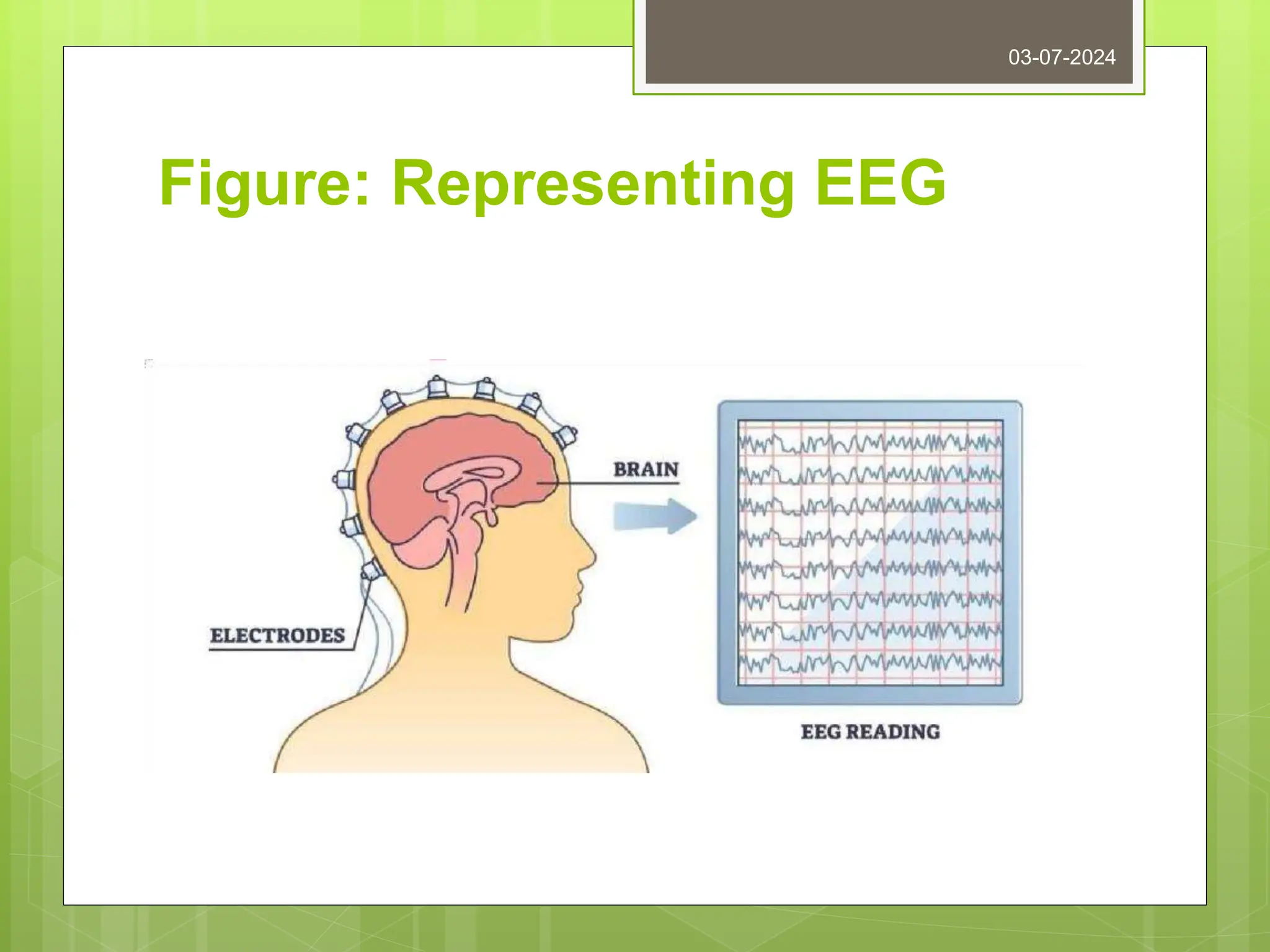
 EEG stands for electroencephalography,
which is a non-invasive method for measuring
the electrical activity of the brain. An EEG
records the electrical signals generated by the
brain's neurons as they communicate with
each other. The signals are recorded through
electrodes placed on the scalp and the
resulting EEG pattern provides information
about the synchronized electrical activity of
large populations of neurons.
03-07-2024
Figure: Representing EEG
03-07-2024
Applications of EEG
 Diagnosis of Epilepsy: EEG is a widely used tool to diagnose epilepsy and
other seizure disorders. It can detect abnormal electrical activity in the
brain, which can help to confirm the diagnosis and determine the location of
the seizure focus.
 Sleep Studies: EEG is often used in sleep studies to evaluate sleep
patterns and diagnose sleep disorders.
 Brain-Computer Interfaces (BCI): EEG can be used to control external
devices such as prosthetic limbs or computer software. This is done by
detecting specific brain waves associated with a particular mental state,
such as concentration or relaxation.
 Research on Brain Function: EEG is used in research to study brain
function during various activities such as reading, problem-solving, and
decision-making. EEG can also be used to investigate how the brain
responds to stimuli such as light, sound, and touch.
 Diagnosis of Brain Disorders: EEG can be used to diagnose a wide range
of brain disorders including dementia, Parkinson's disease, and traumatic
brain injury.
 Anesthesia Monitoring: EEG can be used to monitor the depth of
anesthesia during surgery to ensure that the patient remains in a safe and
comfortable state.
 Monitoring Brain Activity during Coma: EEG is also used to monitor brain
activity in patients who are in a coma to determine the level of brain
function and assess the likelihood of recovery
 .
03-07-2024
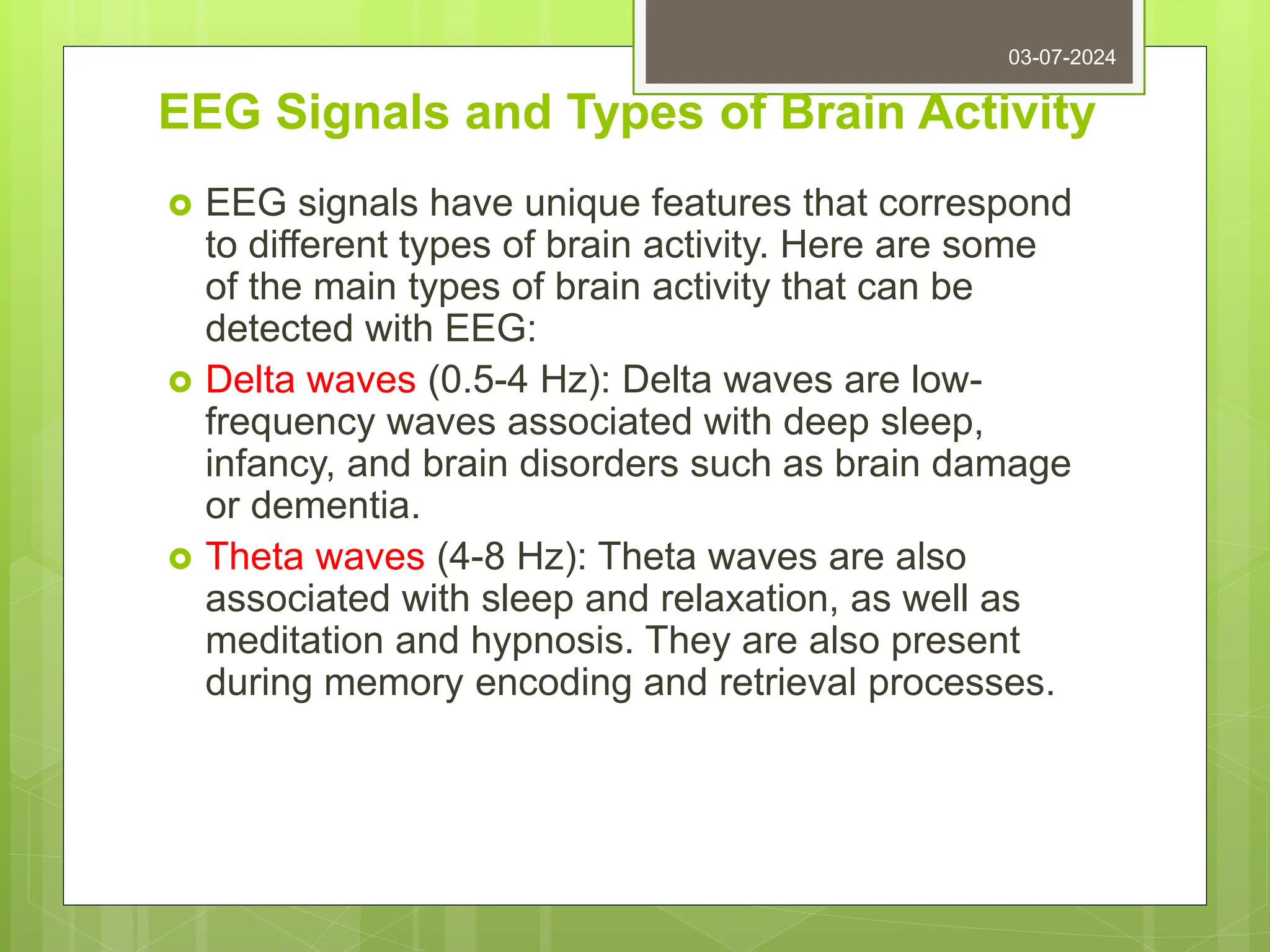
EEG Signals and Types of Brain Activity
 EEG signals have unique features that correspond
to different types of brain activity. Here are some
of the main types of brain activity that can be
detected with EEG:
 Delta waves (0.5-4 Hz): Delta waves are low-
frequency waves associated with deep sleep,
infancy, and brain disorders such as brain damage
or dementia.
 Theta waves (4-8 Hz): Theta waves are also
associated with sleep and relaxation, as well as
meditation and hypnosis. They are also present
during memory encoding and retrieval processes.
03-07-2024
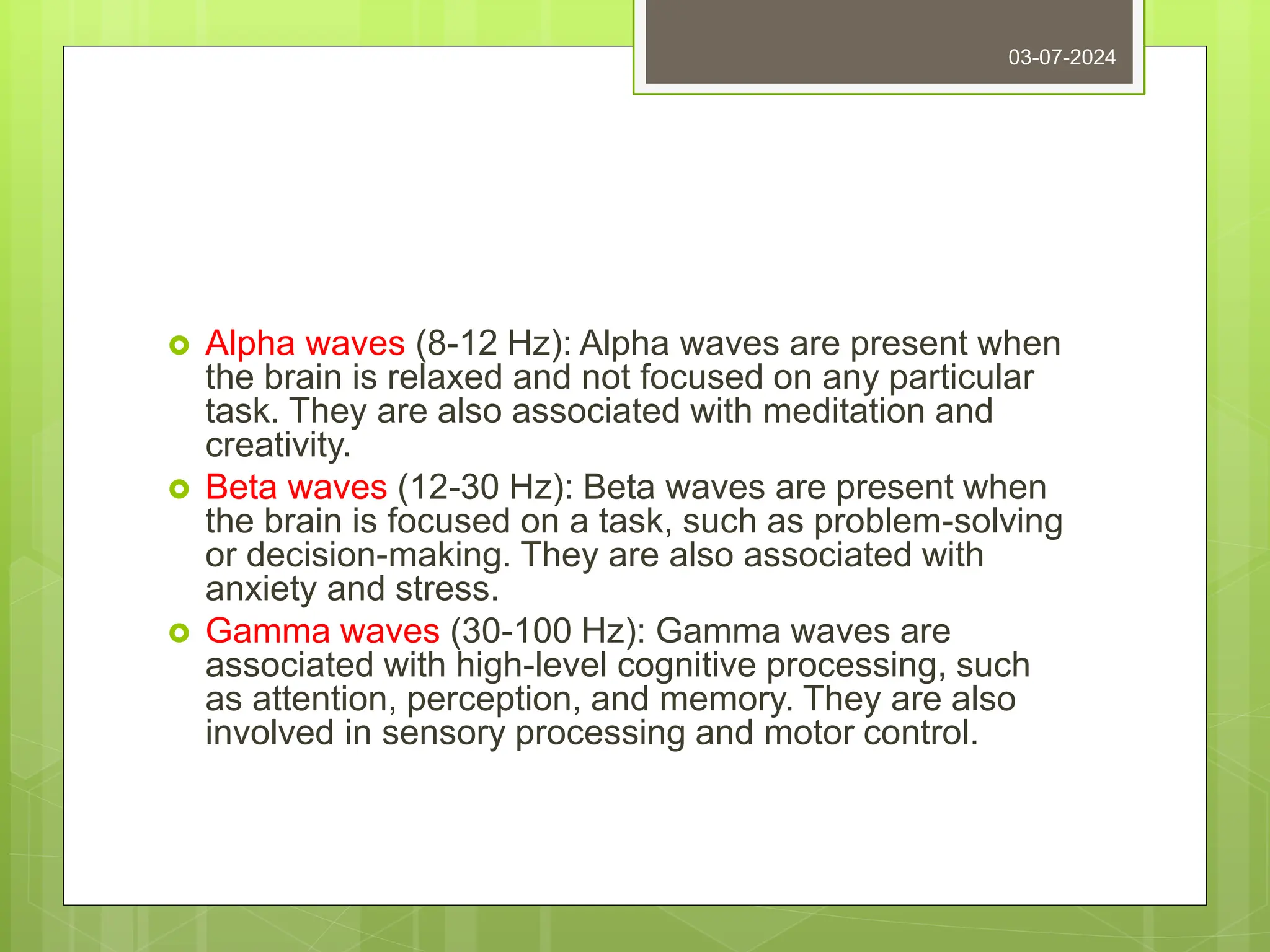
 Alpha waves (8-12 Hz): Alpha waves are present when
the brain is relaxed and not focused on any particular
task. They are also associated with meditation and
creativity.
 Beta waves (12-30 Hz): Beta waves are present when
the brain is focused on a task, such as problem-solving
or decision-making. They are also associated with
anxiety and stress.
 Gamma waves (30-100 Hz): Gamma waves are
associated with high-level cognitive processing, such
as attention, perception, and memory. They are also
involved in sensory processing and motor control.
03-07-2024
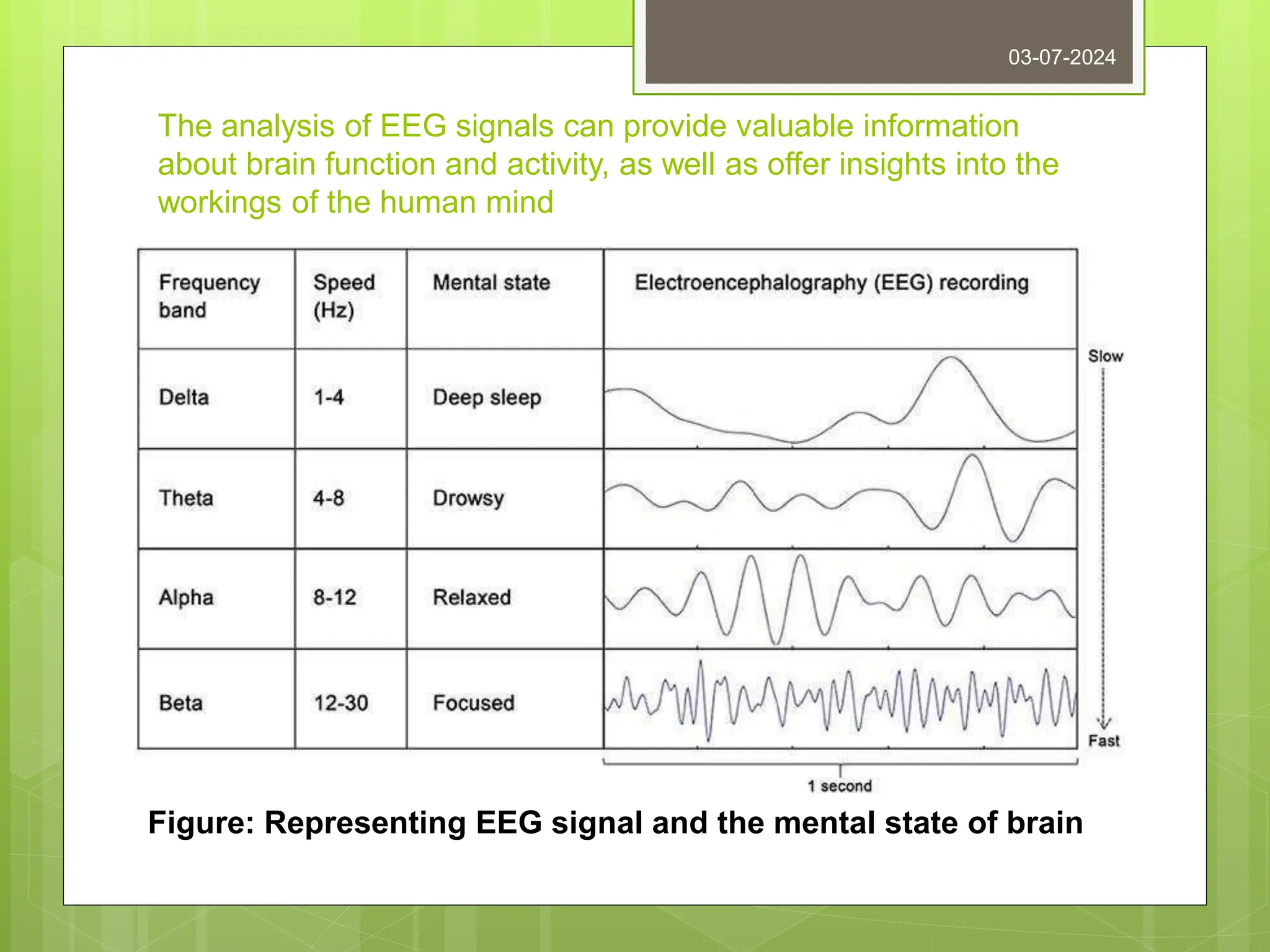
The analysis of EEG signals can provide valuable information
about brain function and activity, as well as offer insights into the
workings of the human mind
03-07-2024
Figure: Representing EEG signal and the mental state of brain
Robotic Arms for Prosthetics
 Robotic arms for prosthetics are advanced prosthetic
devices that use robotics technology to restore
functionality to individuals with upper limb amputations.
 These devices typically use motors, actuators, and
sensors to mimic the movements of a human arm and
hand, allowing the wearer to perform tasks such as
reaching, grasping, and manipulating objects.
 Robotic arms for prosthetics can be controlled in a variety
of ways, including direct control through muscle signals
(myoelectric control) or brain-machine interfaces, which
use electrodes implanted in the brain or placed on the
scalp to detect and interpret brain activity.
 Some prosthetic arms also incorporate machine learning
algorithms to improve their performance and adapt to the
user's needs over time.

03-07-2024
Robotic Arm Prosthetic Direct Control through Muscle
Signals (myoelectric control)
 Myoelectric control of a robotic arm prosthetic
involves using the electrical signals generated
by the wearer's remaining muscles to control
the movement of the prosthetic. The system
typically involves electrodes placed on the
skin over the remaining muscle that are used
to detect and interpret the electrical signals
generated by the muscle contractions.
03-07-2024
03-07-2024
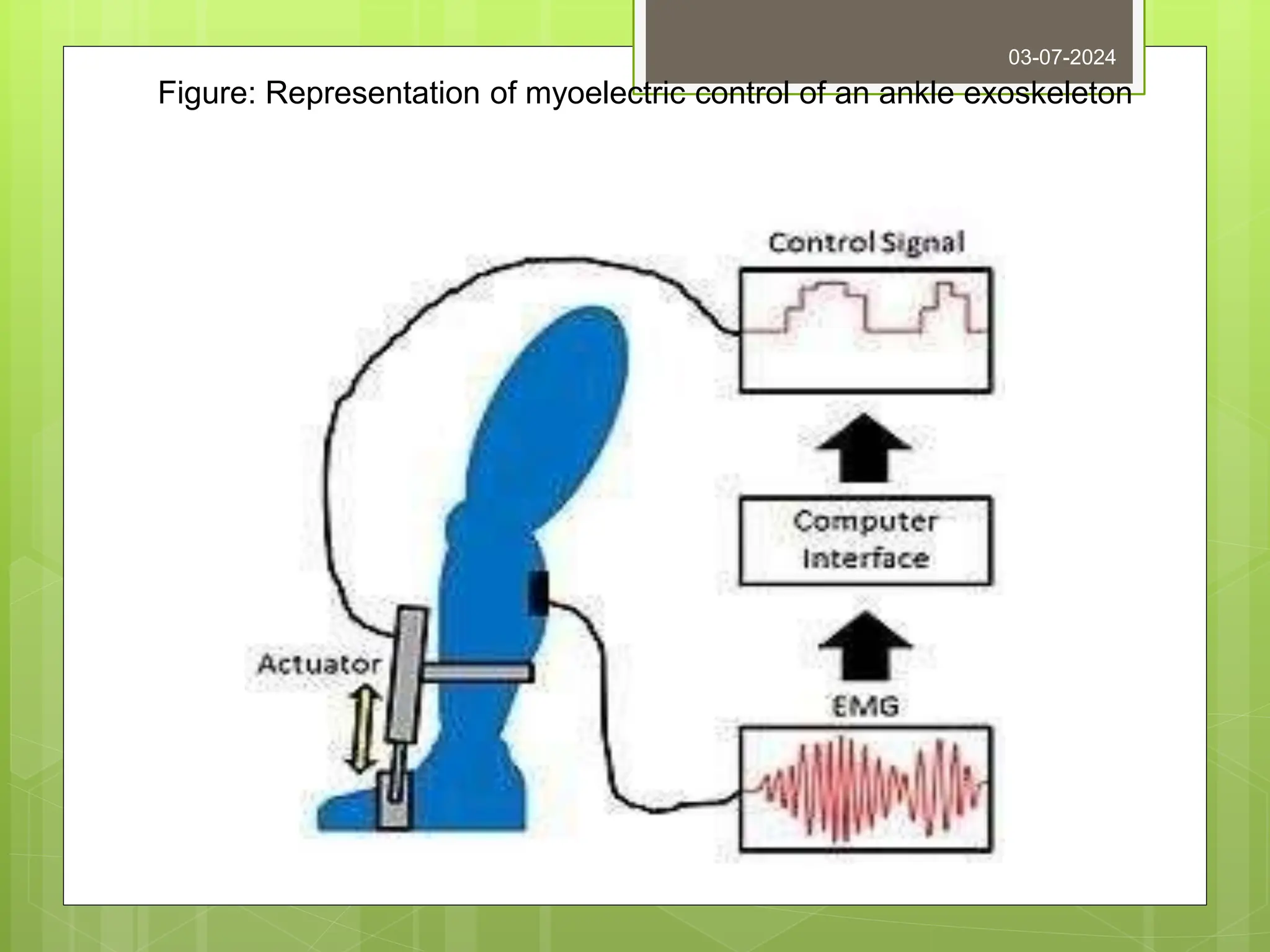
Figure: Representation of myoelectric control of an ankle exoskeleton
 When the wearer contracts their muscles, the electrodes detect the
electrical signals and send them to a control unit, which interprets the
signals and uses them to control the movement of the robotic arm.
Depending on the specific design, the control unit may use pattern
recognition algorithms to determine which movement the wearer is
intending to perform, or the wearer may use a combination of muscle
signals to control specific degrees of freedom in the prosthetic arm.
 Myoelectric control has the advantage of being directly controlled by
the user, allowing for a more intuitive and natural interaction with the
prosthetic. It can also provide a high level of control and precision, as
the electrical signals generated by the muscles are unique to each
individual and can be used to perform a wide range of movements.
 However, myoelectric control systems can be complex and may
require extensive rehabilitation and training to use effectively, as well
as ongoing maintenance to ensure proper function. Additionally, the
system may not be suitable for individuals with muscle weakness or
other conditions that affect the ability to generate strong electrical
signals
03-07-2024
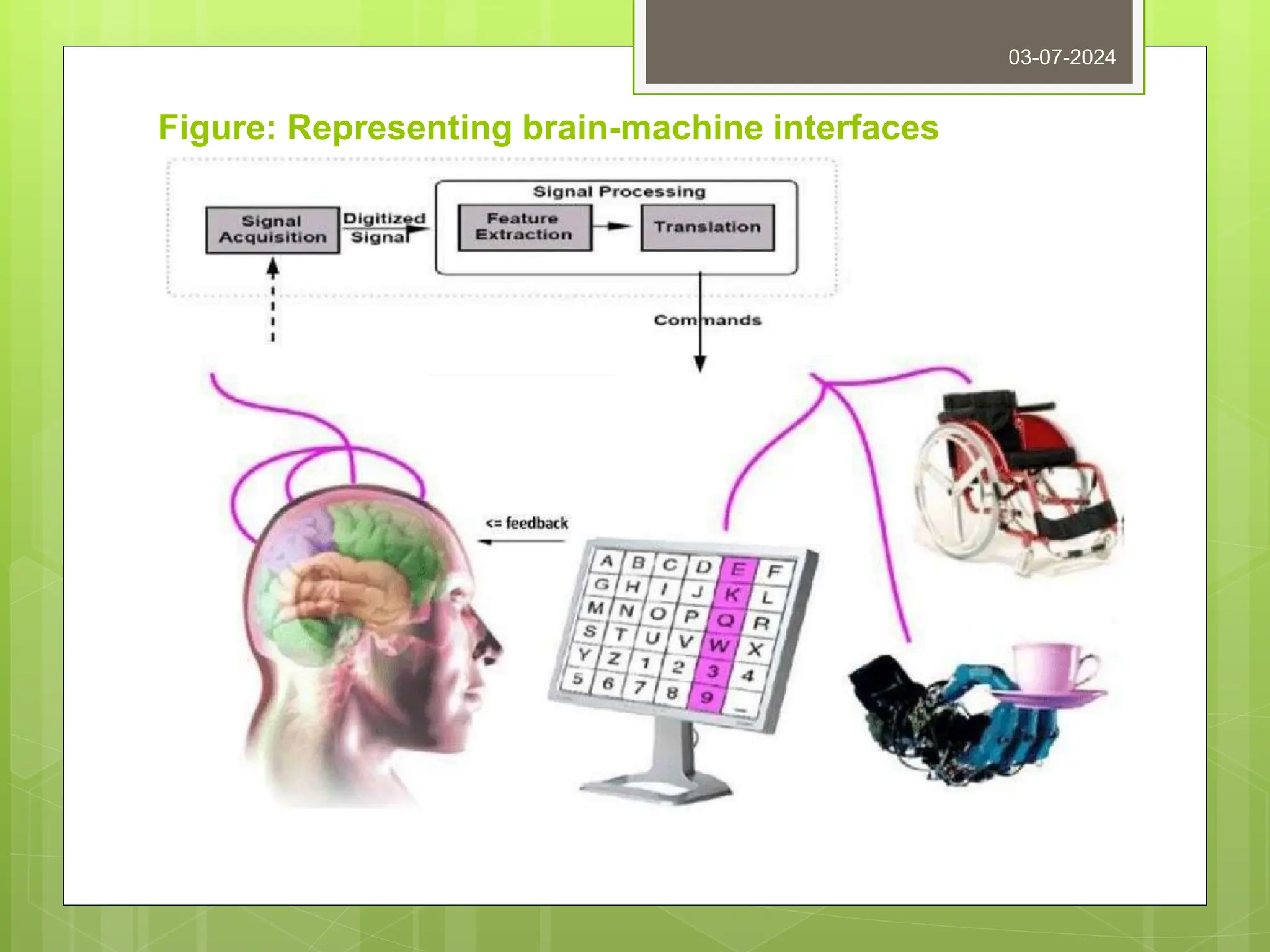
Robotic Arm Prosthetic by Brain-Machine Interfaces
 Brain-machine interfaces (BMIs) are a type of
technology that allows a user to control a robotic
arm prosthetic directly with their brain activity. The
system typically involves electrodes placed on the
scalp or implanted directly into the brain to detect
and interpret the user's brain signals
 When the user thinks about moving the prosthetic
arm, the electrodes detect the corresponding
brain activity and send the signals to a control
unit, which uses algorithms to interpret the signals
and control the movement of the prosthetic. The
user can then control the movement of the
prosthetic in real-time by thinking about the
desired movement.
03-07-2024
Figure: Representing brain-machine interfaces
03-07-2024
 BMIs have the advantage of providing a direct and intuitive
connection between the user's brain and the prosthetic,
allowing for a high level of control and precision. Additionally,
BMIs can be used to provide sensory feedback to the user,
allowing them to experience the sensation of touch through
the prosthetic.
 However, BMIs can be complex and invasive systems,
requiring surgical implantation and ongoing maintenance to
ensure proper function. Additionally, they may not be suitable
for individuals with conditions that affect brain activity or who
are unable to generate strong enough brain signals to
control the prosthetic effectively.
 Ongoing research and development is aimed at improving
the performance and accessibility of BMIs, as well as
increasing their ease of use and reliability.
03-07-2024
Engineering Solutions for Parkinson’s Disease
 Parkinson's disease is a neurodegenerative disorder
that affects movement and motor function. There are
several engineering solutions aimed at improving the
quality of life for individuals with Parkinson's disease,
including:
 Deep Brain Stimulation (DBS): DBS involves the
implantation of electrodes into specific regions of the
brain to deliver electrical stimulation, which can help to
relieve symptoms such as tremors, stiffness, and
difficulty with movement.
 Exoskeletons: Exoskeletons are wearable devices that
provide support and assistance for individuals with
mobility issues. Some exoskeletons have been
developed specifically for people with Parkinson's
disease, and can help to improve balance, reduce
tremors, and increase overall mobility.
03-07-2024
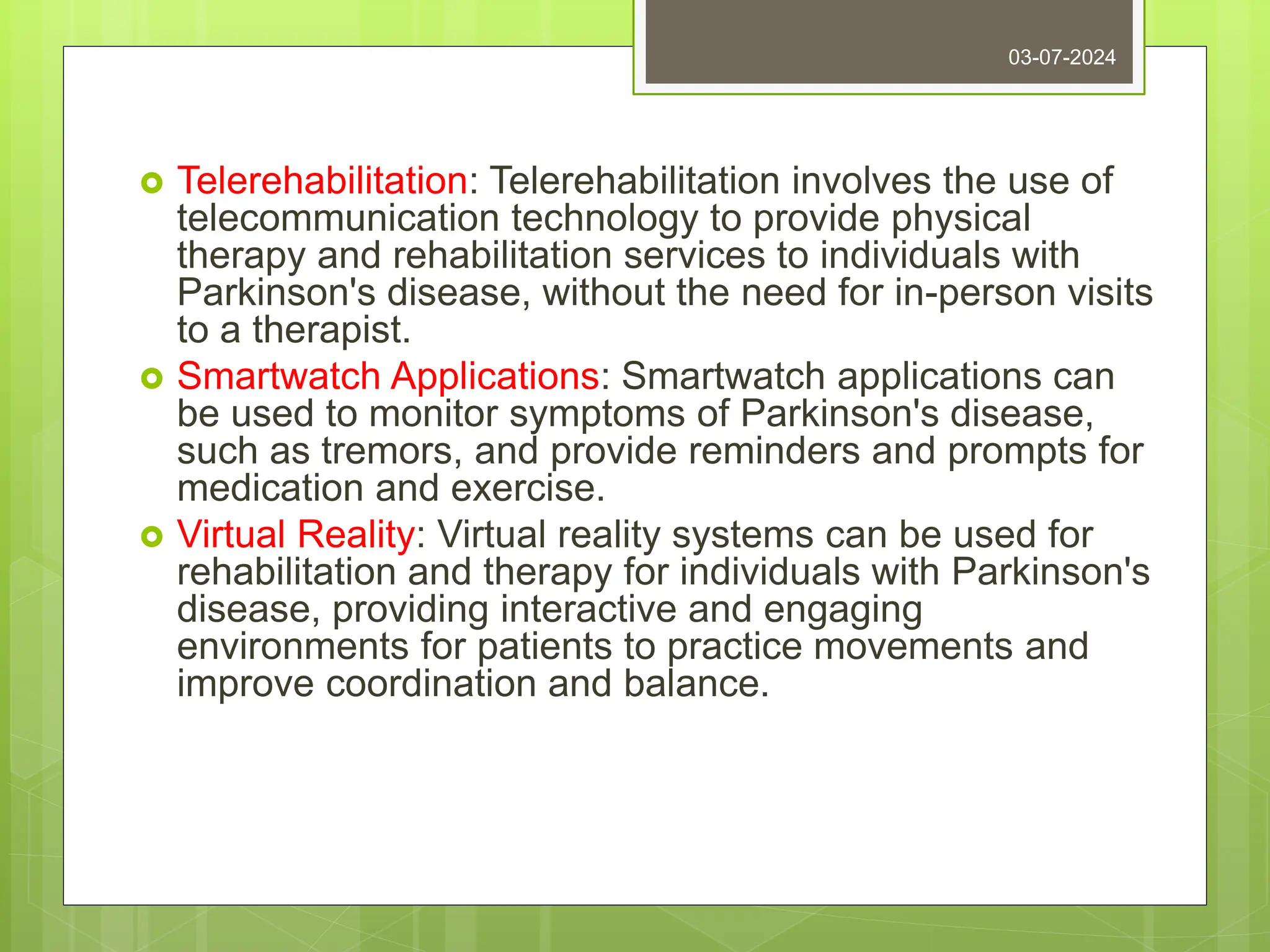
 Telerehabilitation: Telerehabilitation involves the use of
telecommunication technology to provide physical
therapy and rehabilitation services to individuals with
Parkinson's disease, without the need for in-person visits
to a therapist.
 Smartwatch Applications: Smartwatch applications can
be used to monitor symptoms of Parkinson's disease,
such as tremors, and provide reminders and prompts for
medication and exercise.
 Virtual Reality: Virtual reality systems can be used for
rehabilitation and therapy for individuals with Parkinson's
disease, providing interactive and engaging
environments for patients to practice movements and
improve coordination and balance.
03-07-2024
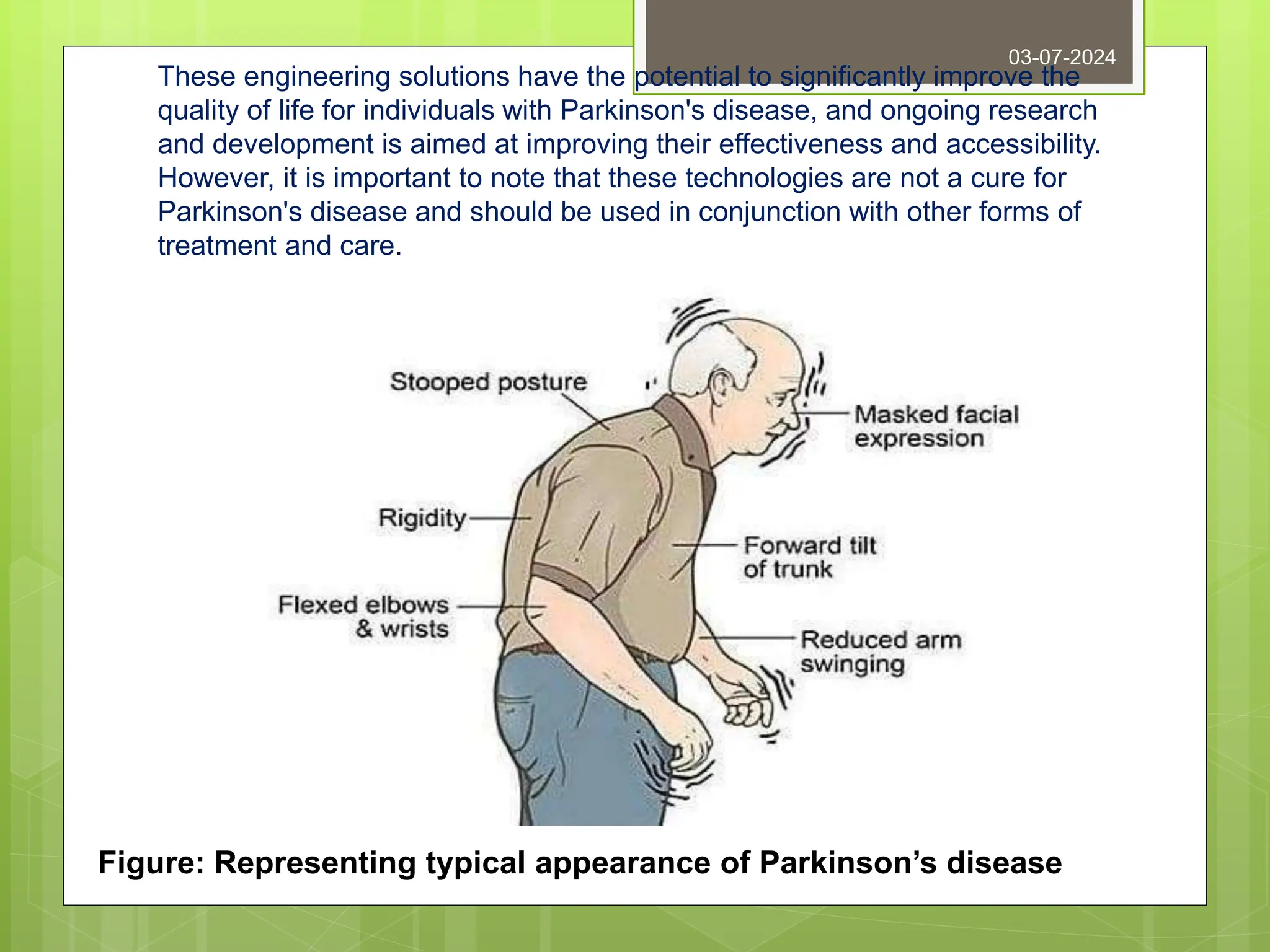
These engineering solutions have the potential to significantly improve the
quality of life for individuals with Parkinson's disease, and ongoing research
and development is aimed at improving their effectiveness and accessibility.
However, it is important to note that these technologies are not a cure for
Parkinson's disease and should be used in conjunction with other forms of
treatment and care.
03-07-2024
Figure: Representing typical appearance of Parkinson’s disease
Artificial Brain
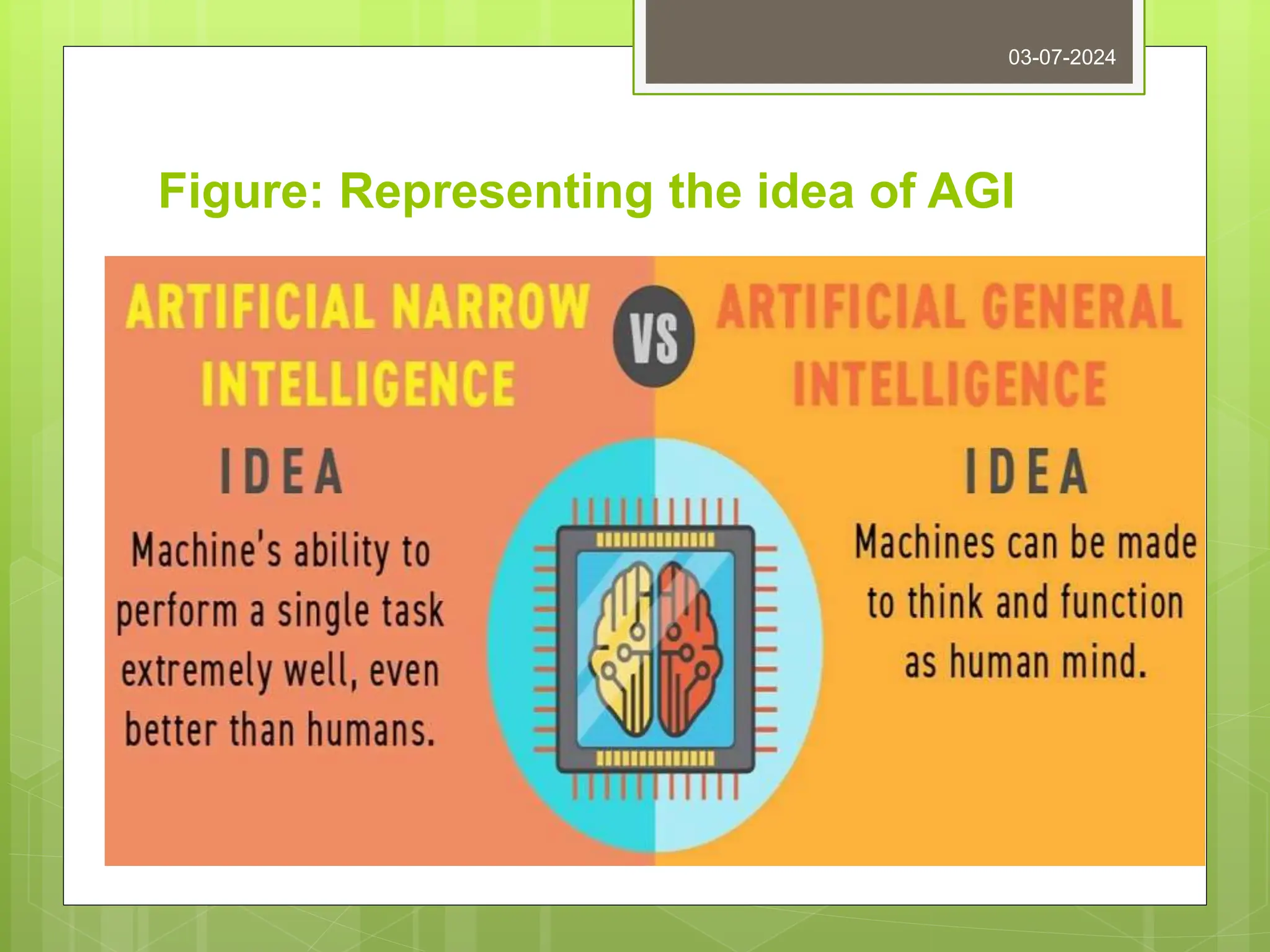
 An artificial brain, also known as an artificial general intelligence
(AGI) or a synthetic brain, refers to a hypothetical machine that
could possess cognitive abilities similar to those of a human
brain. The idea behind artificial brains is to create a machine that
can learn, reason, and solve problems in the same way that
humans do. However, the development of artificial brains is still
in the early stages and there are many technical, ethical, and
philosophical challenges that need to be addressed
 Currently, artificial intelligence (AI) systems are designed to
perform specific tasks, such as image recognition, speech
recognition, or decision making, but they are not capable of
general intelligence. This is because AI systems are designed to
operate within a narrow domain and lack the ability to learn from
new experiences, generalize from past experiences, or reason
about the world in the same way that humans do.
03-07-2024
Figure: Representing the idea of AGI
03-07-2024
 The development of artificial brains requires a deep
understanding of the human brain and its functions, as well
as advanced computer science and engineering skills.
Researchers are working on creating artificial brain models
that can simulate the complex processes of human
cognition and adapt to new situations. Despite the
significant challenges, some experts believe that artificial
brains are a realistic possibility and that they have the
potential to revolutionize the field of AI and bring about new
technological advancements.
 However, others argue that it is unlikely that we will ever be
able to recreate the human brain in a machine, due to the
complexity and intricacy of the brain's structure and
functions.
03-07-2024
Eye as a Camera System:
 The human eye can be analogized to a camera system, as both the
eye and a camera capture light and convert it into an image.
 The main components of the eye that correspond to a camera system
include:

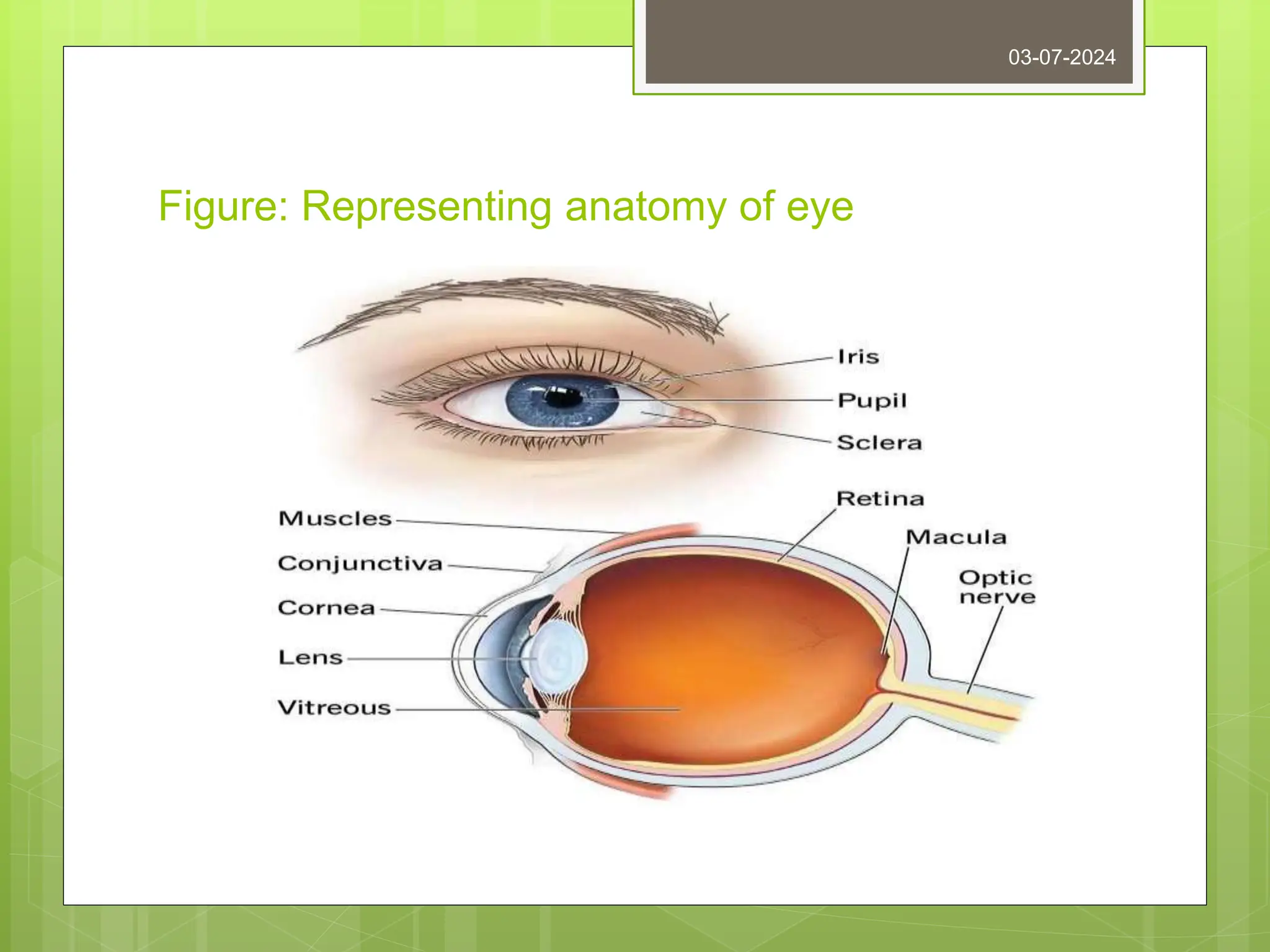
 The Cornea: This transparent outer layer of the eye functions like a
camera lens, bending light to focus it onto the retina.
 The Iris: The iris functions like the diaphragm in a camera, controlling
the amount of light that enters the eye.
 The Pupil: The pupil functions like the aperture in a camera, adjusting
the size to control the amount of light entering the eye.
 The Retina: The retina functions like the camera film or sensor,
capturing the light and converting it into electrical signals that are sent
to the brain.

The Optic Nerve: The optic nerve functions like the cable connecting
the camera to a computer, transmitting the electrical signals from the
retina to the brain.
03-07-2024
Figure: Comparing camera and anatomy of eye
03-07-2024
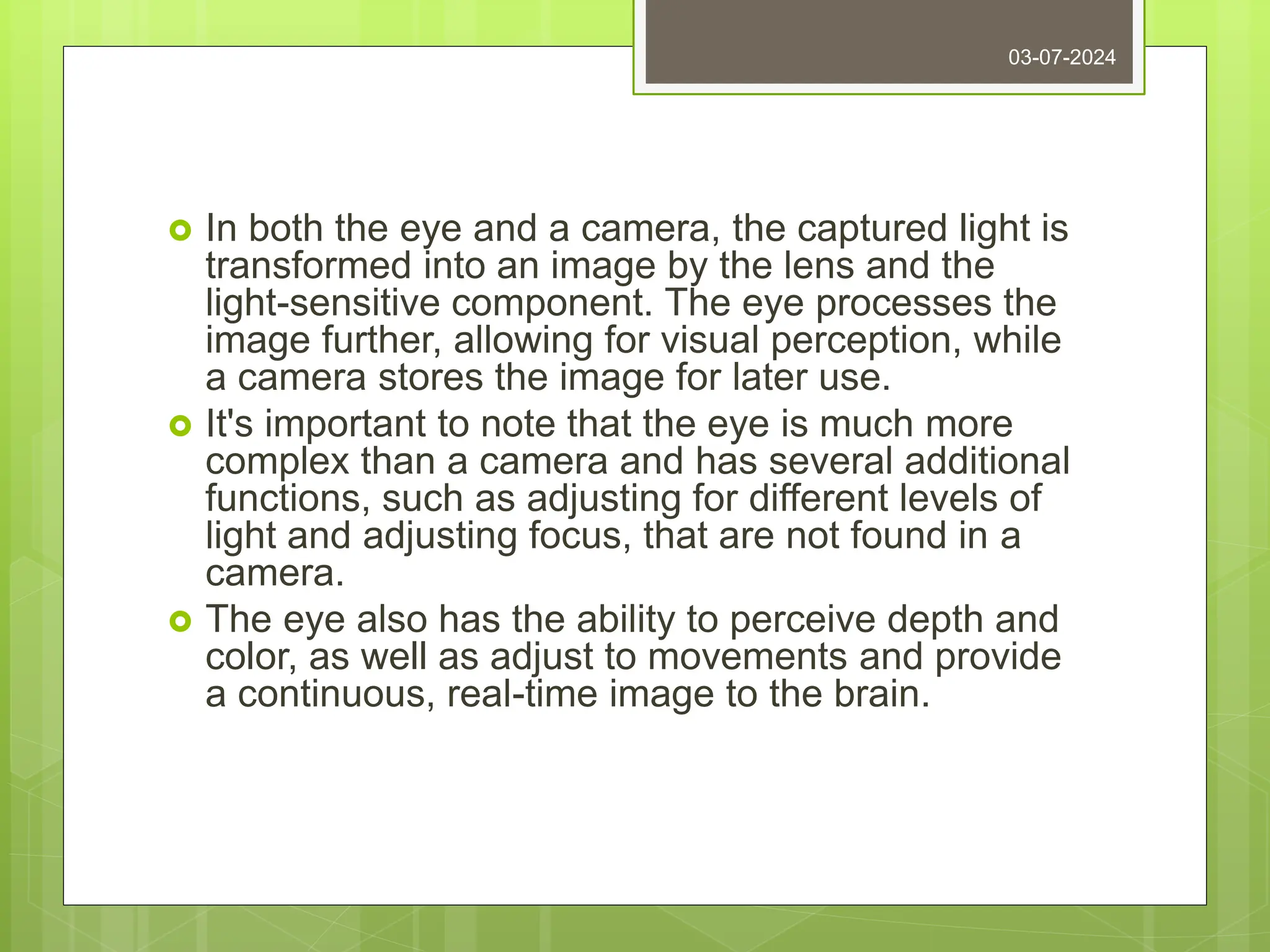
 In both the eye and a camera, the captured light is
transformed into an image by the lens and the
light-sensitive component. The eye processes the
image further, allowing for visual perception, while
a camera stores the image for later use.
 It's important to note that the eye is much more
complex than a camera and has several additional
functions, such as adjusting for different levels of
light and adjusting focus, that are not found in a
camera.
 The eye also has the ability to perceive depth and
color, as well as adjust to movements and provide
a continuous, real-time image to the brain.
03-07-2024
Figure: Representing anatomy of eye
03-07-2024
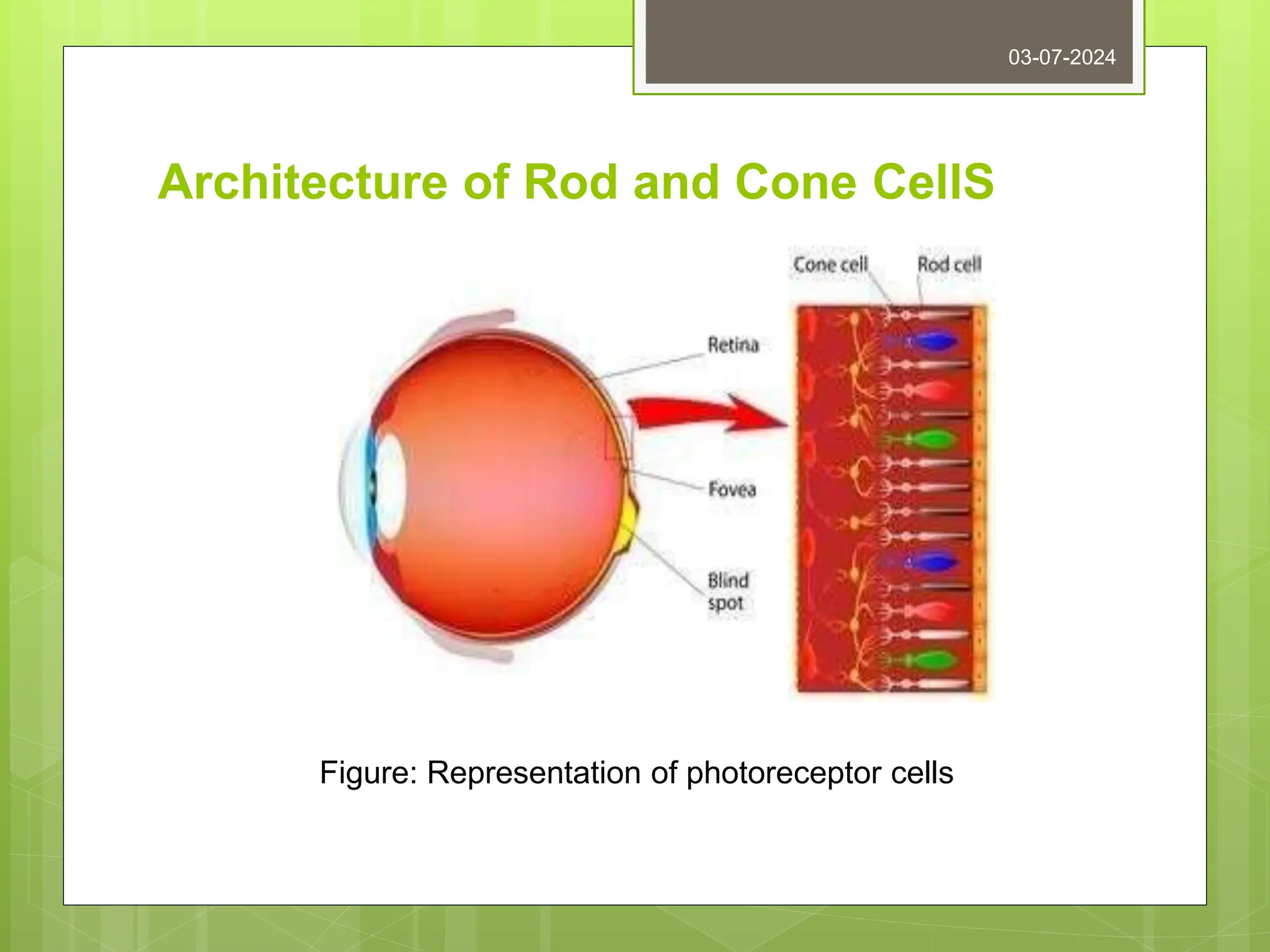
Architecture of Rod and Cone CellS
03-07-2024
Figure: Representation of photoreceptor cells
 Rod Cells
 Rod cells are photoreceptor cells in the retina of the eye that are responsible
for detecting light and transmitting signals to the brain for the perception of
vision, especially in low light conditions. They contain a protein called
rhodopsin that absorbs light and triggers a chain of events leading to the
activation of neural signals. Rods are more sensitive to light than cone cells
but do not distinguish color as well.
 Cone Cells
 Cone cells are photoreceptor cells in the retina of the eye that are
responsible for color vision and visual acuity (sharpness of vision). There are
three types of cone cells, each containing a different photopigment sensitive
to different wavelengths of light (red, green, and blue), which allow for the
perception of color. Cones are less sensitive to light than rod cells but
provide better visual acuity and color discrimination. They are concentrated
in the fovea, the central part of the retina responsible for detailed and sharp
vision.
03-07-2024
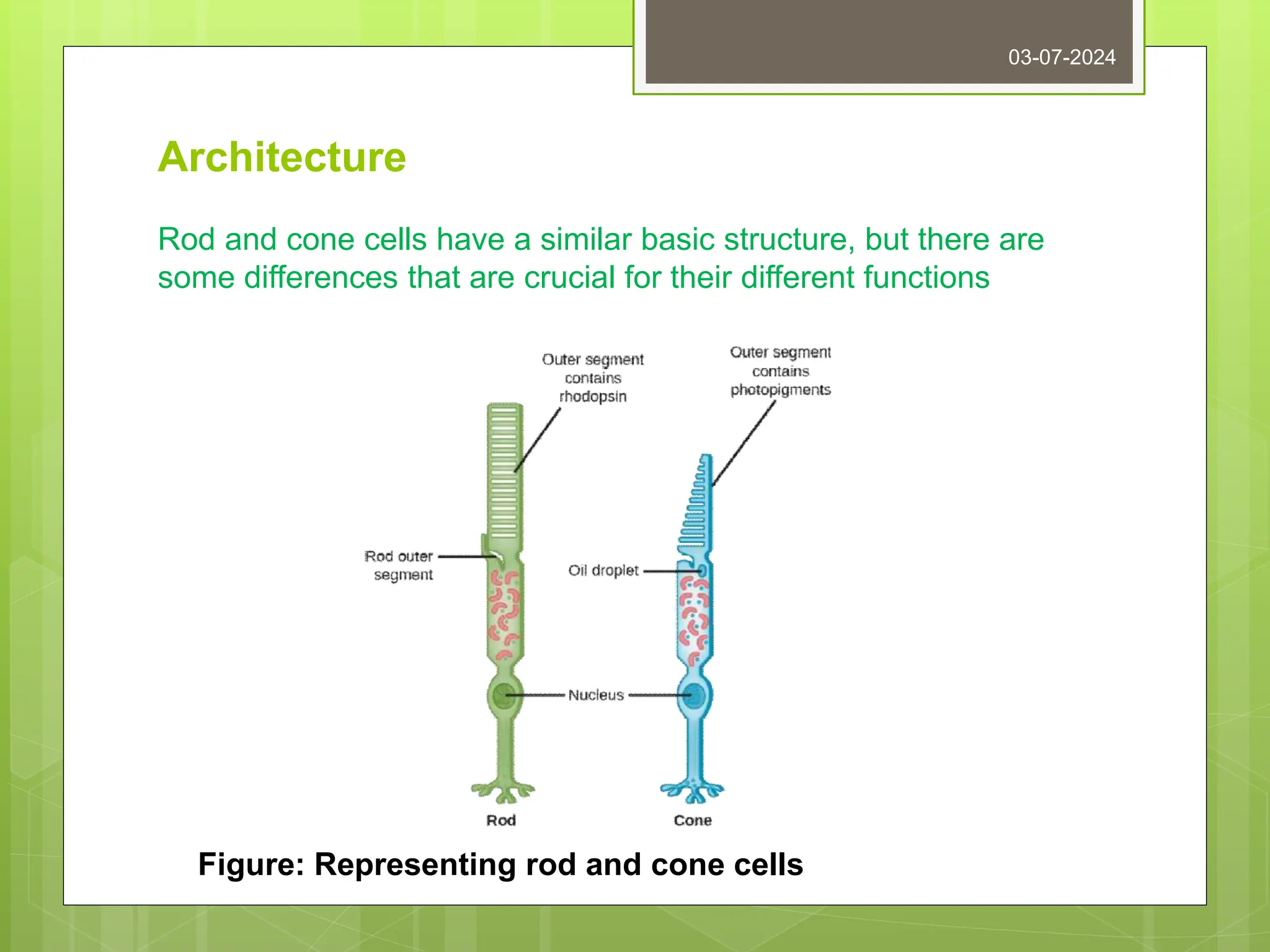
Architecture
Rod and cone cells have a similar basic structure, but there are
some differences that are crucial for their different functions
03-07-2024
Figure: Representing rod and cone cells
 Both types of cells have a photoreceptor outer segment that contains the
photo pigment (rhodopsin in rods and photo pigments in cones) that
absorbs light and triggers a change in membrane potential. The inner
segment contains the cell's organelles, including the nucleus and
mitochondria.
 The major difference between rod and cone cells is their shape. Rod cells
are elongated and cylindrical, while cone cells are shorter and more
conical in shape. This difference in shape affects the distribution of photo
pigments and the number of synaptic contacts with bipolar and ganglion
cells, which transmit the signals to the brain. Rod cells have a single long
outer segment, while cone cells have several shorter segments.
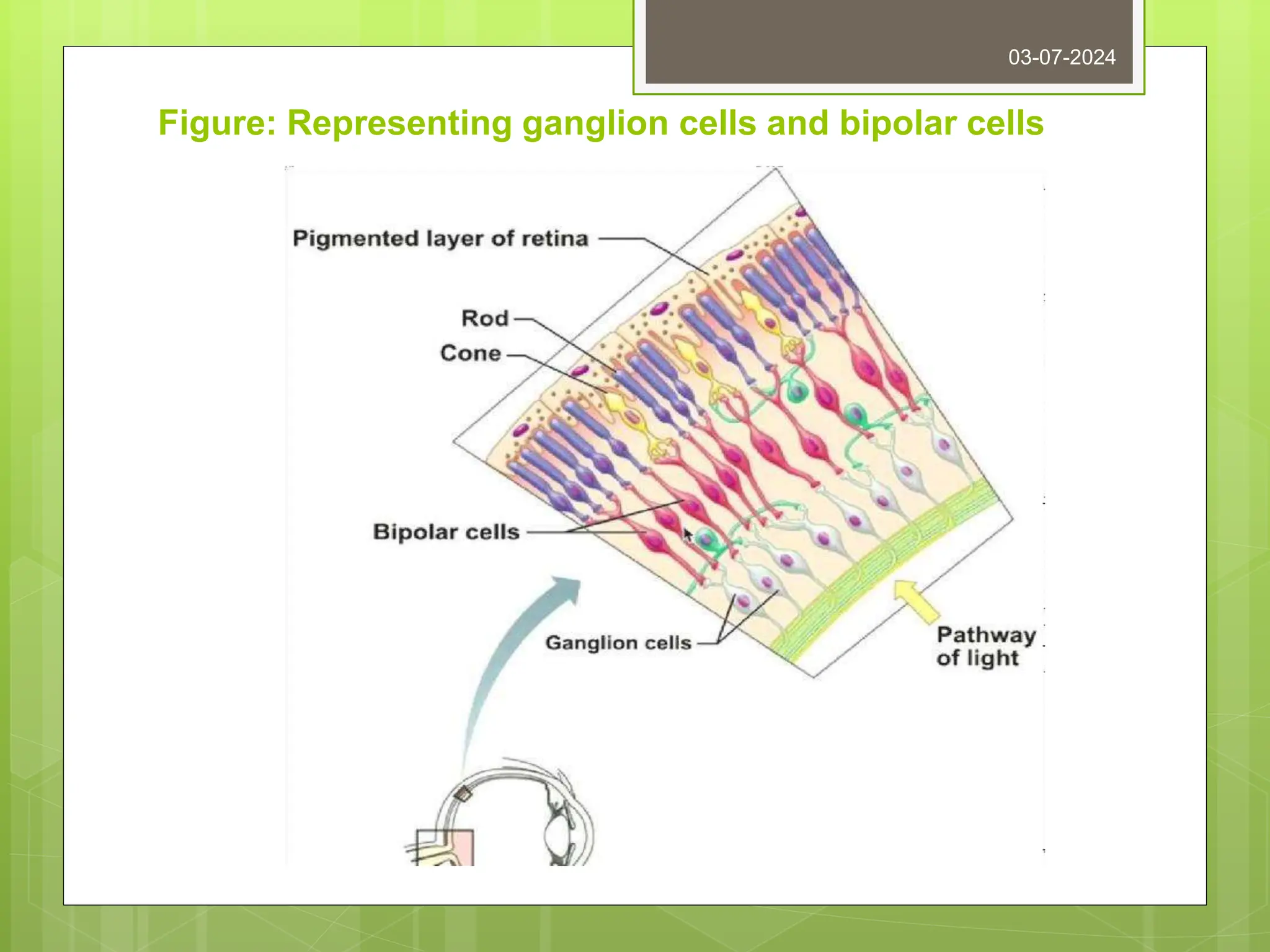
 Another difference between the two types of cells is the distribution of their
synaptic contacts with bipolar cells. Rod cells make synapses with one
bipolar cell, while cone cells synapse with one of several bipolar cells. This
difference in synapse distribution is critical for the different functions of rod
and cone cells in vision.
03-07-2024
03-07-2024
Figure: Representing ganglion cells and bipolar cells
03-07-2024
Optical Corrections
 Optical corrections refer to devices or techniques
used to improve or correct vision problems
caused by a refractive error in the eye.
 Refractive errors occur when light entering the
eye is not properly focused on the retina, leading
to blurred vision. There are several types of
refractive errors, including:
 Myopia (nearsightedness): Light is focused in front of the
retina, making distant objects appear blurry.
 Hyperopia (farsightedness): Light is focused behind the
retina, making near objects appear blurry.
 Astigmatism: Light is not focused evenly on the retina,
leading to blurred or distorted vision.
03-07-2024
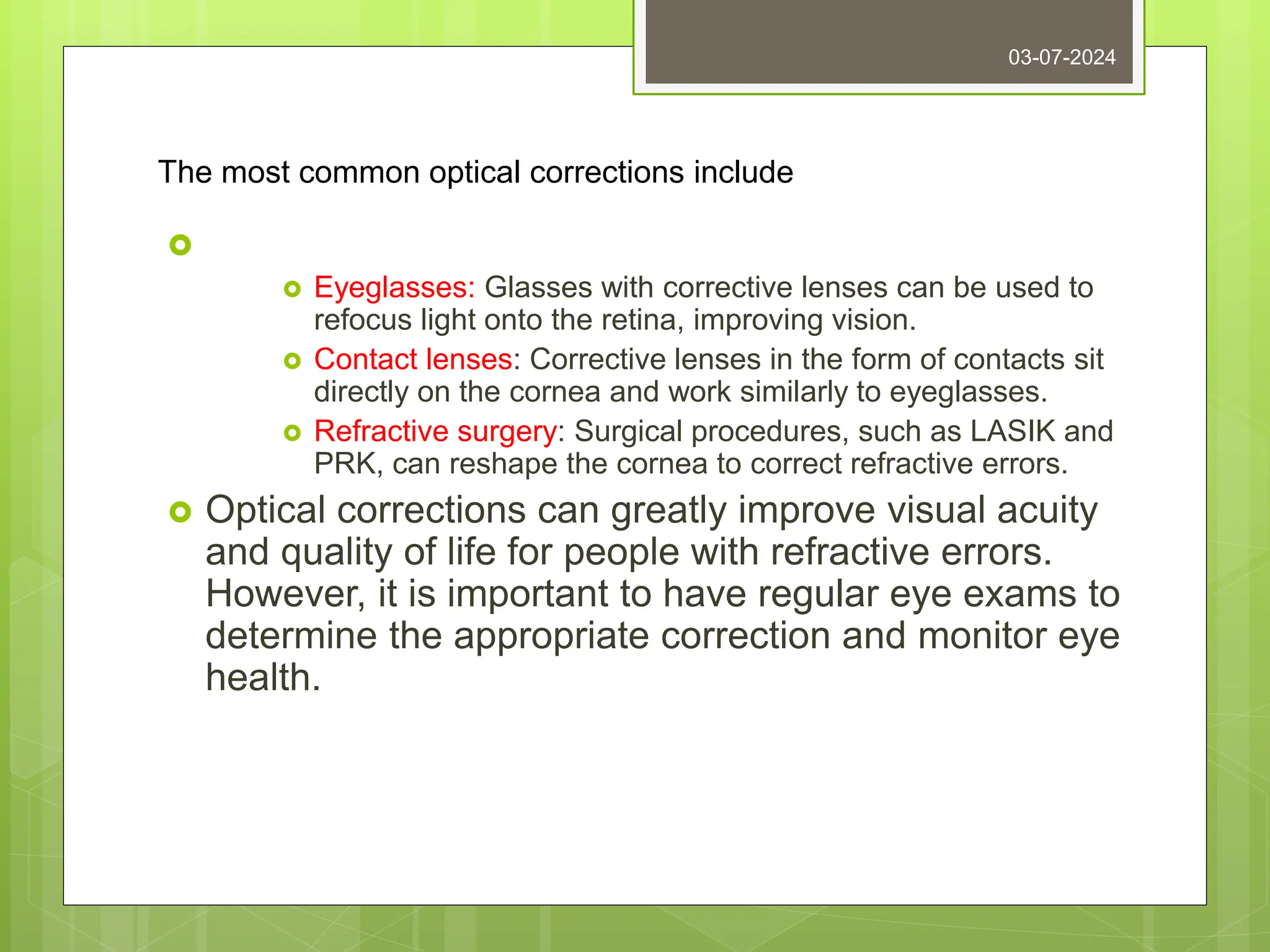
The most common optical corrections include

 Eyeglasses: Glasses with corrective lenses can be used to
refocus light onto the retina, improving vision.
 Contact lenses: Corrective lenses in the form of contacts sit
directly on the cornea and work similarly to eyeglasses.
 Refractive surgery: Surgical procedures, such as LASIK and
PRK, can reshape the cornea to correct refractive errors.
 Optical corrections can greatly improve visual acuity
and quality of life for people with refractive errors.
However, it is important to have regular eye exams to
determine the appropriate correction and monitor eye
health.
03-07-2024
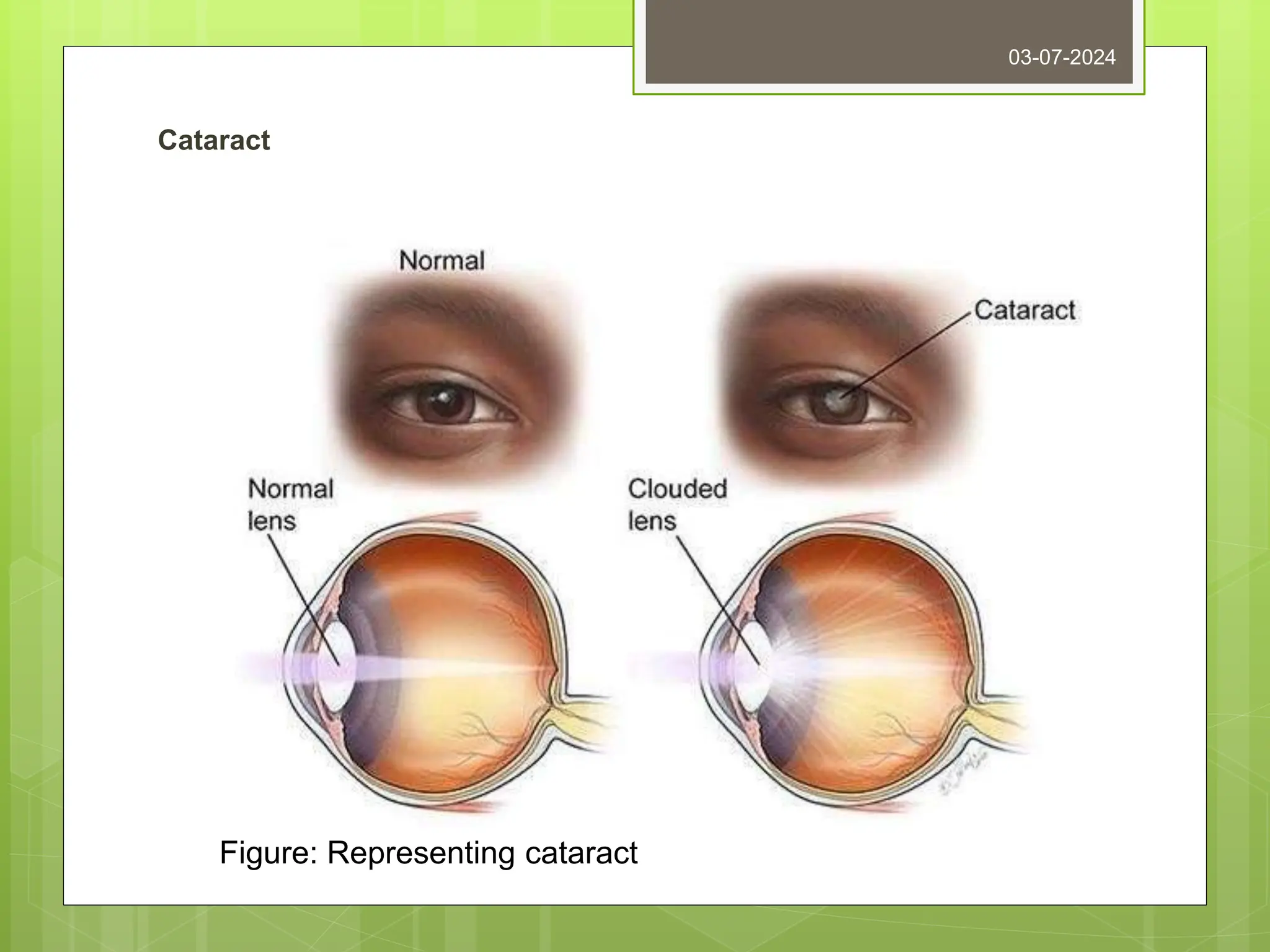
Cataract
03-07-2024
Figure: Representing cataract
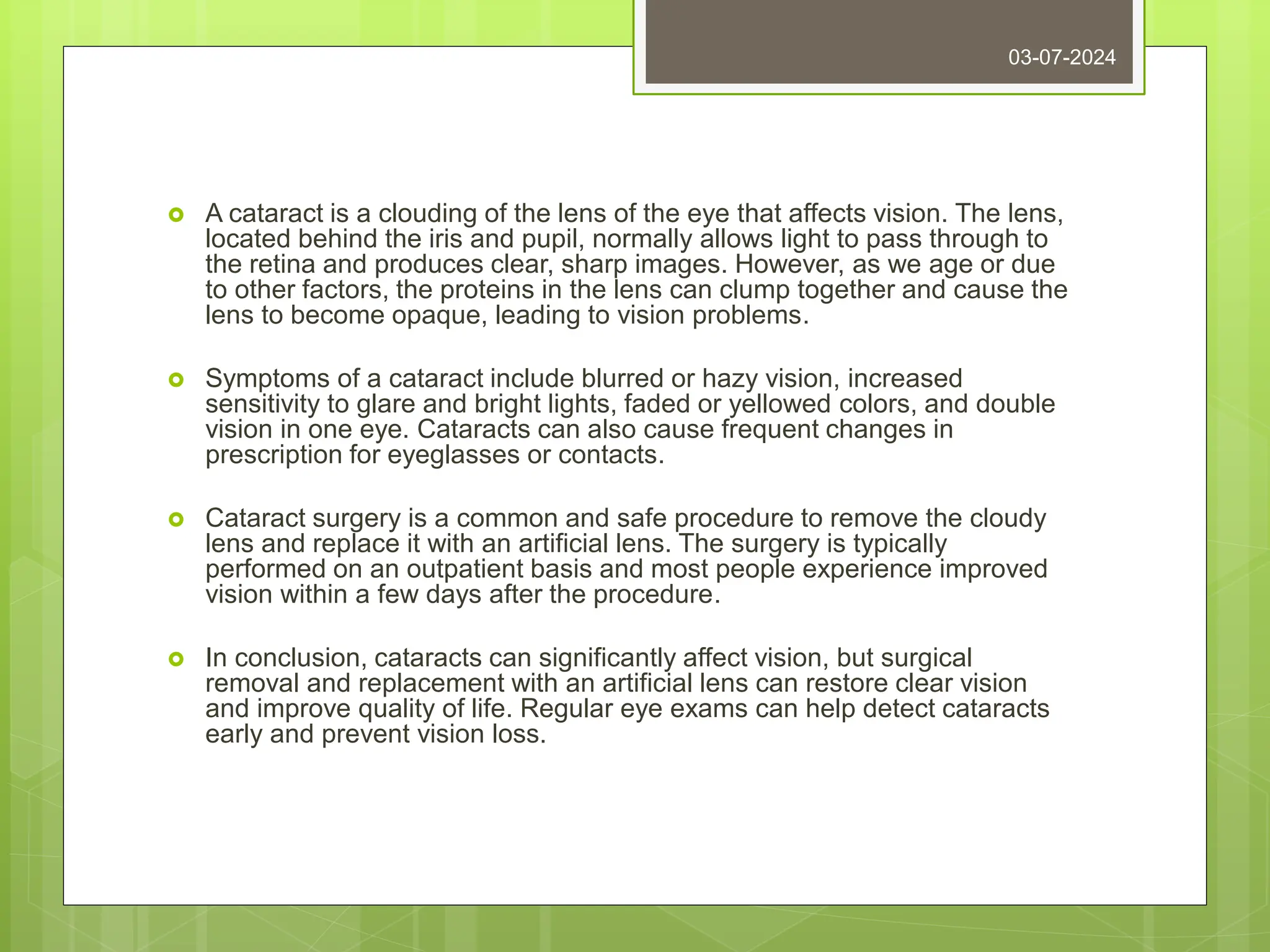
 A cataract is a clouding of the lens of the eye that affects vision. The lens,
located behind the iris and pupil, normally allows light to pass through to
the retina and produces clear, sharp images. However, as we age or due
to other factors, the proteins in the lens can clump together and cause the
lens to become opaque, leading to vision problems.
 Symptoms of a cataract include blurred or hazy vision, increased
sensitivity to glare and bright lights, faded or yellowed colors, and double
vision in one eye. Cataracts can also cause frequent changes in
prescription for eyeglasses or contacts.
 Cataract surgery is a common and safe procedure to remove the cloudy
lens and replace it with an artificial lens. The surgery is typically
performed on an outpatient basis and most people experience improved
vision within a few days after the procedure.
 In conclusion, cataracts can significantly affect vision, but surgical
removal and replacement with an artificial lens can restore clear vision
and improve quality of life. Regular eye exams can help detect cataracts
early and prevent vision loss.
03-07-2024
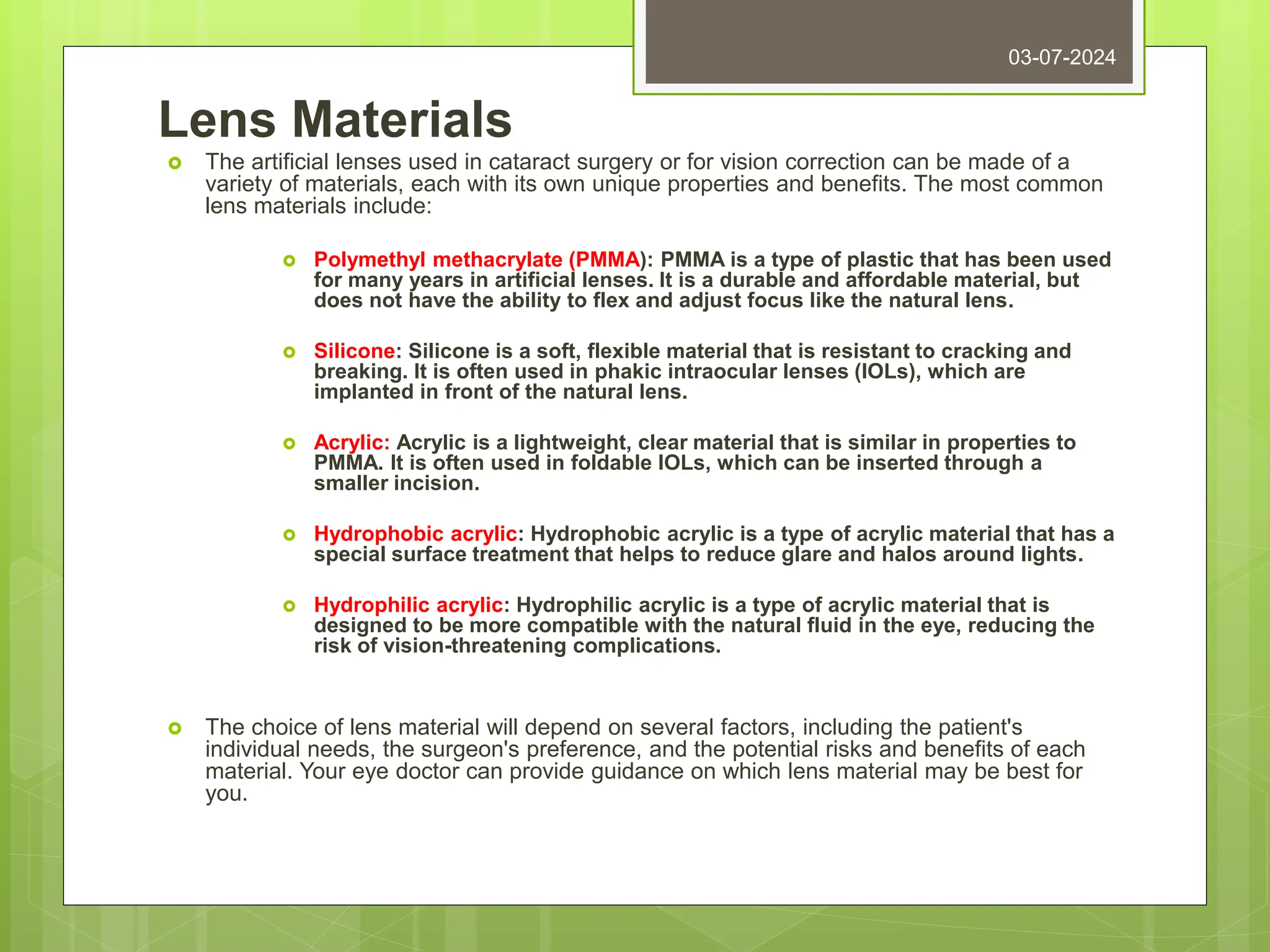
Lens Materials
 The artificial lenses used in cataract surgery or for vision correction can be made of a
variety of materials, each with its own unique properties and benefits. The most common
lens materials include:
 Polymethyl methacrylate (PMMA): PMMA is a type of plastic that has been used
for many years in artificial lenses. It is a durable and affordable material, but
does not have the ability to flex and adjust focus like the natural lens.
 Silicone: Silicone is a soft, flexible material that is resistant to cracking and
breaking. It is often used in phakic intraocular lenses (IOLs), which are
implanted in front of the natural lens.
 Acrylic: Acrylic is a lightweight, clear material that is similar in properties to
PMMA. It is often used in foldable IOLs, which can be inserted through a
smaller incision.
 Hydrophobic acrylic: Hydrophobic acrylic is a type of acrylic material that has a
special surface treatment that helps to reduce glare and halos around lights.
 Hydrophilic acrylic: Hydrophilic acrylic is a type of acrylic material that is
designed to be more compatible with the natural fluid in the eye, reducing the
risk of vision-threatening complications.
 The choice of lens material will depend on several factors, including the patient's
individual needs, the surgeon's preference, and the potential risks and benefits of each
material. Your eye doctor can provide guidance on which lens material may be best for
you.
03-07-2024
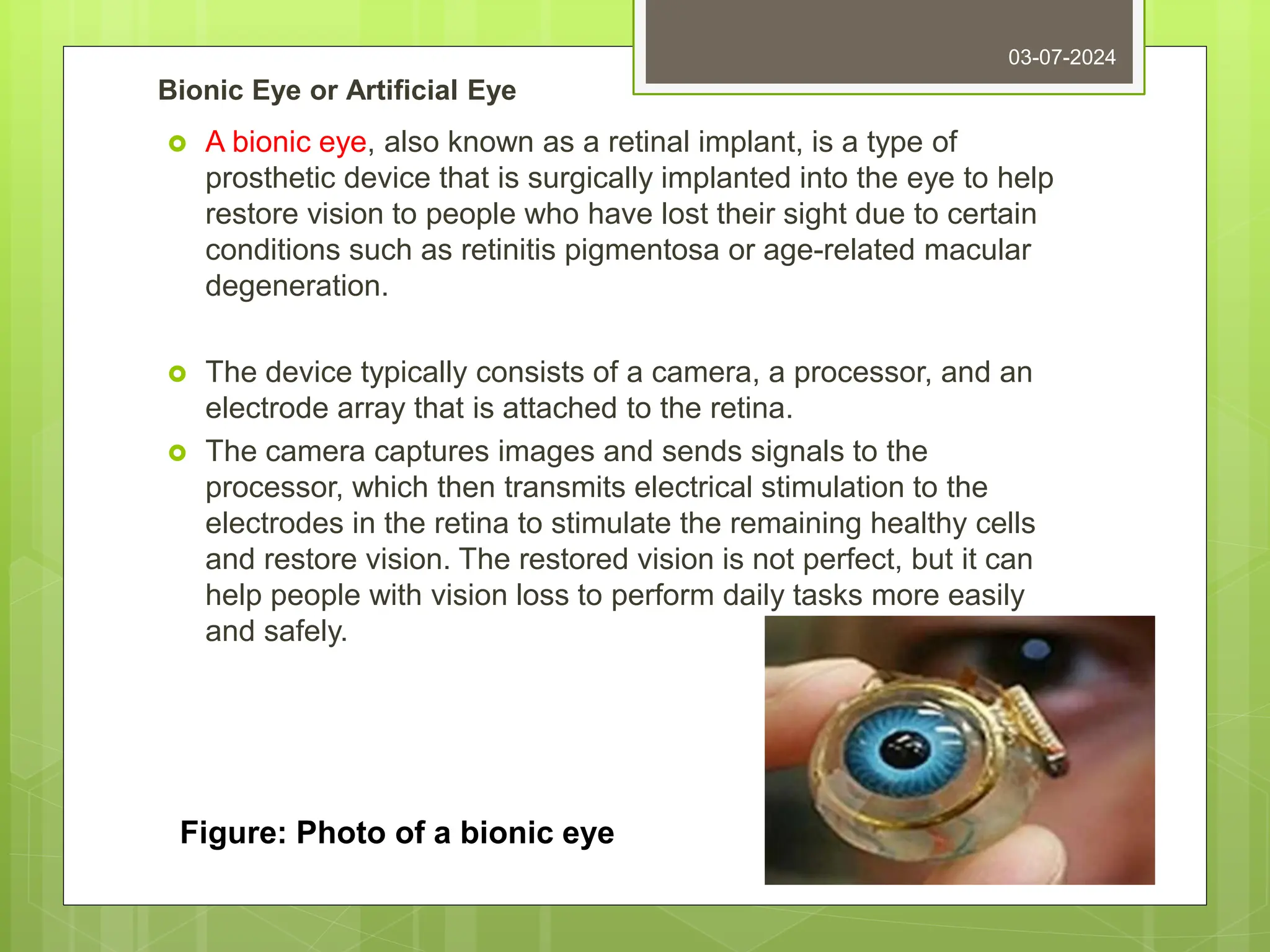
Bionic Eye or Artificial Eye
 A bionic eye, also known as a retinal implant, is a type of
prosthetic device that is surgically implanted into the eye to help
restore vision to people who have lost their sight due to certain
conditions such as retinitis pigmentosa or age-related macular
degeneration.
 The device typically consists of a camera, a processor, and an
electrode array that is attached to the retina.
 The camera captures images and sends signals to the
processor, which then transmits electrical stimulation to the
electrodes in the retina to stimulate the remaining healthy cells
and restore vision. The restored vision is not perfect, but it can
help people with vision loss to perform daily tasks more easily
and safely.
03-07-2024
Figure: Photo of a bionic eye
Materials Used in Bionic Eye
 The materials used in a bionic eye can vary depending on the specific device and
manufacturer. However, some of the common materials used in bionic eye
technology include:
 Silicon or other semiconducting materials for the camera and the
electrode array.
 Biocompatible materials for the casing of the device and the electrode
array, such as titanium or titanium alloys, to minimize the risk of
infection and rejection by the body.
 Conductive materials, such as platinum, iridium, or gold, for the
electrodes in the array to provide efficient electrical stimulation to the
retina.
 Polymers, such as silicone or polyimide, for insulation and protection
of the electrodes and other components.
 Optical materials, such as glass or acrylic, for the lens of the camera.
 Biocompatible and flexible materials for the electrical connections between the
camera and the processing unit and between the processing unit and the electrode
array.
 In addition to these materials, advanced computer algorithms and machine learning
techniques are also used to improve the accuracy and reliability of the bionic eye
technology.
03-07-2024
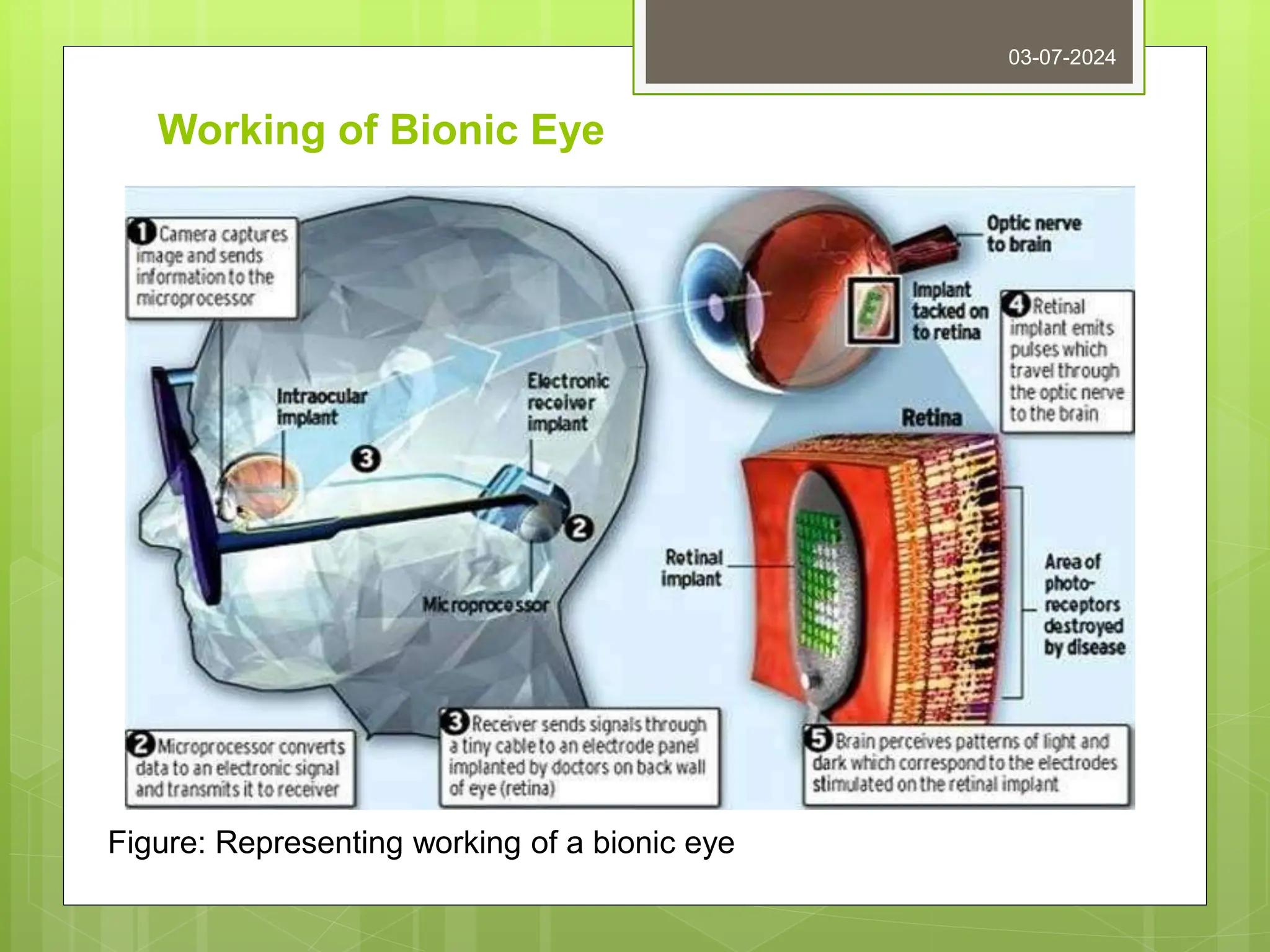
Working of Bionic Eye
03-07-2024
Figure: Representing working of a bionic eye
 A bionic eye typically works by capturing images with a small camera
and transmitting the information to a processing unit that is attached
to the eye. The processing unit then converts the visual information
into electrical signals and sends them to an electrode array that is
surgically implanted onto the retina. The electrodes stimulate the
remaining healthy cells in the retina, which then sends signals to the
brain to create the perception of vision.
 The restored vision is not perfect, but it can help people with vision
loss to perform daily tasks more easily and safely. The amount and
quality of vision that can be restored varies depending on the
individual and the type of bionic eye being used. Some bionic eyes
only restore basic visual shapes and patterns, while others can
provide more detailed vision.
 The bionic eye is powered by a battery that is typically implanted
behind the ear. The battery is recharged through a device that is held
near the eye, which transmits power wirelessly to the battery. The
device is typically rechargeable and can be used for several years
before it needs to be replaced.
03-07-2024
Heart as a Pump System:
03-07-2024
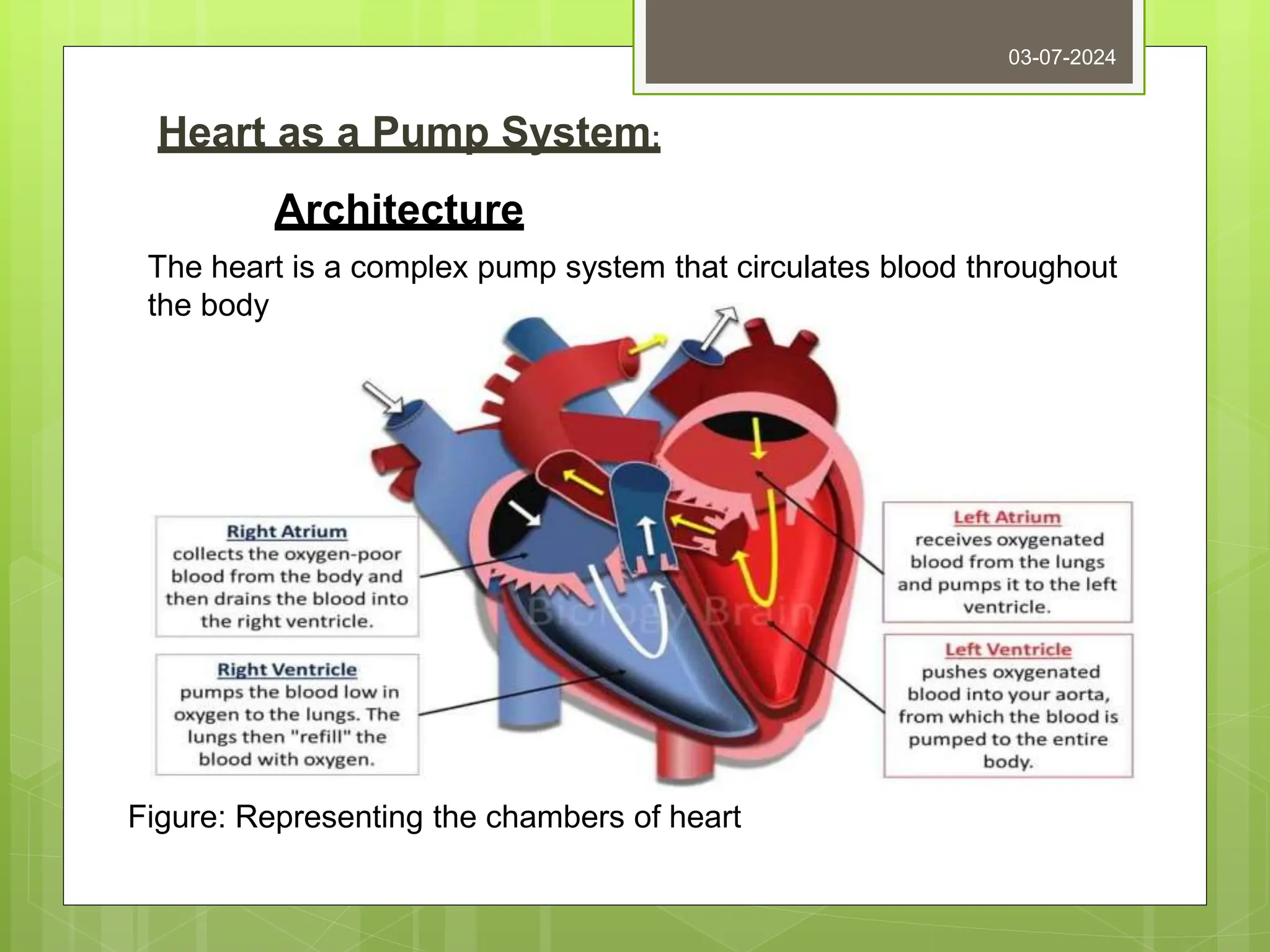
Architecture
The heart is a complex pump system that circulates blood throughout
the body
Figure: Representing the chambers of heart
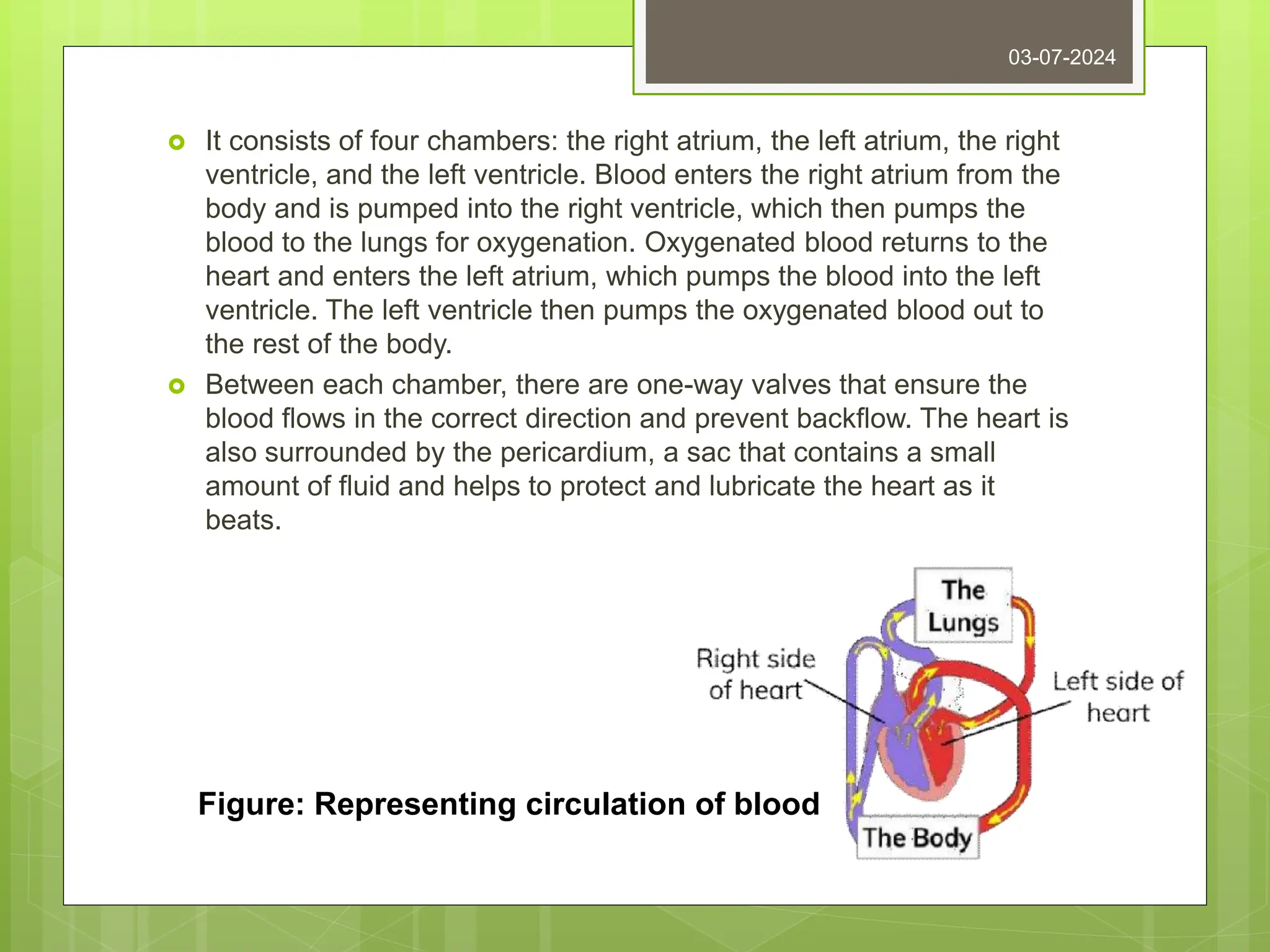
 It consists of four chambers: the right atrium, the left atrium, the right
ventricle, and the left ventricle. Blood enters the right atrium from the
body and is pumped into the right ventricle, which then pumps the
blood to the lungs for oxygenation. Oxygenated blood returns to the
heart and enters the left atrium, which pumps the blood into the left
ventricle. The left ventricle then pumps the oxygenated blood out to
the rest of the body.
 Between each chamber, there are one-way valves that ensure the
blood flows in the correct direction and prevent backflow. The heart is
also surrounded by the pericardium, a sac that contains a small
amount of fluid and helps to protect and lubricate the heart as it
beats.
03-07-2024
Figure: Representing circulation of blood
The Heart Beat
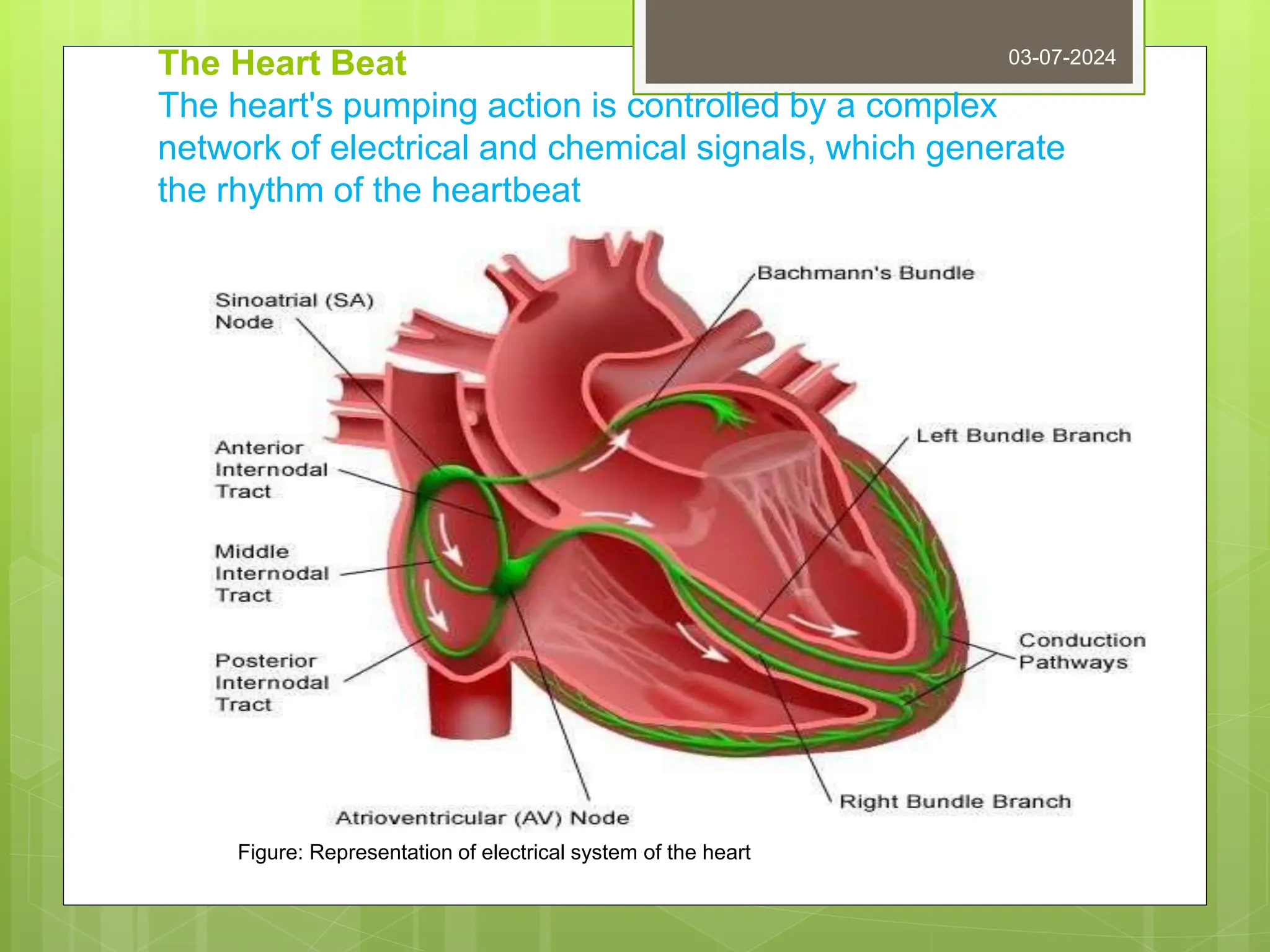
The heart's pumping action is controlled by a complex
network of electrical and chemical signals, which generate
the rhythm of the heartbeat
03-07-2024
Figure: Representation of electrical system of the heart
 An electrical stimulus is generated in a special
part of the heart muscle called the sinus node. It's
also called the sinoatrial node (SA node). The
sinus node is a small mass of special tissue in the
right upper chamber of the heart (right atrium). In
an adult, the sinus node sends out a regular
electrical pulse 60 to 100 times per minute.
 This electrical pulse travels down through the
conduction pathways and causes the heart's lower
chambers (ventricles) to contract and pump out
blood. The right and left atria are stimulated first
and contract to push blood from the atria into the
ventricles. The ventricles then contract to push
blood out into the blood vessels of the body
03-07-2024
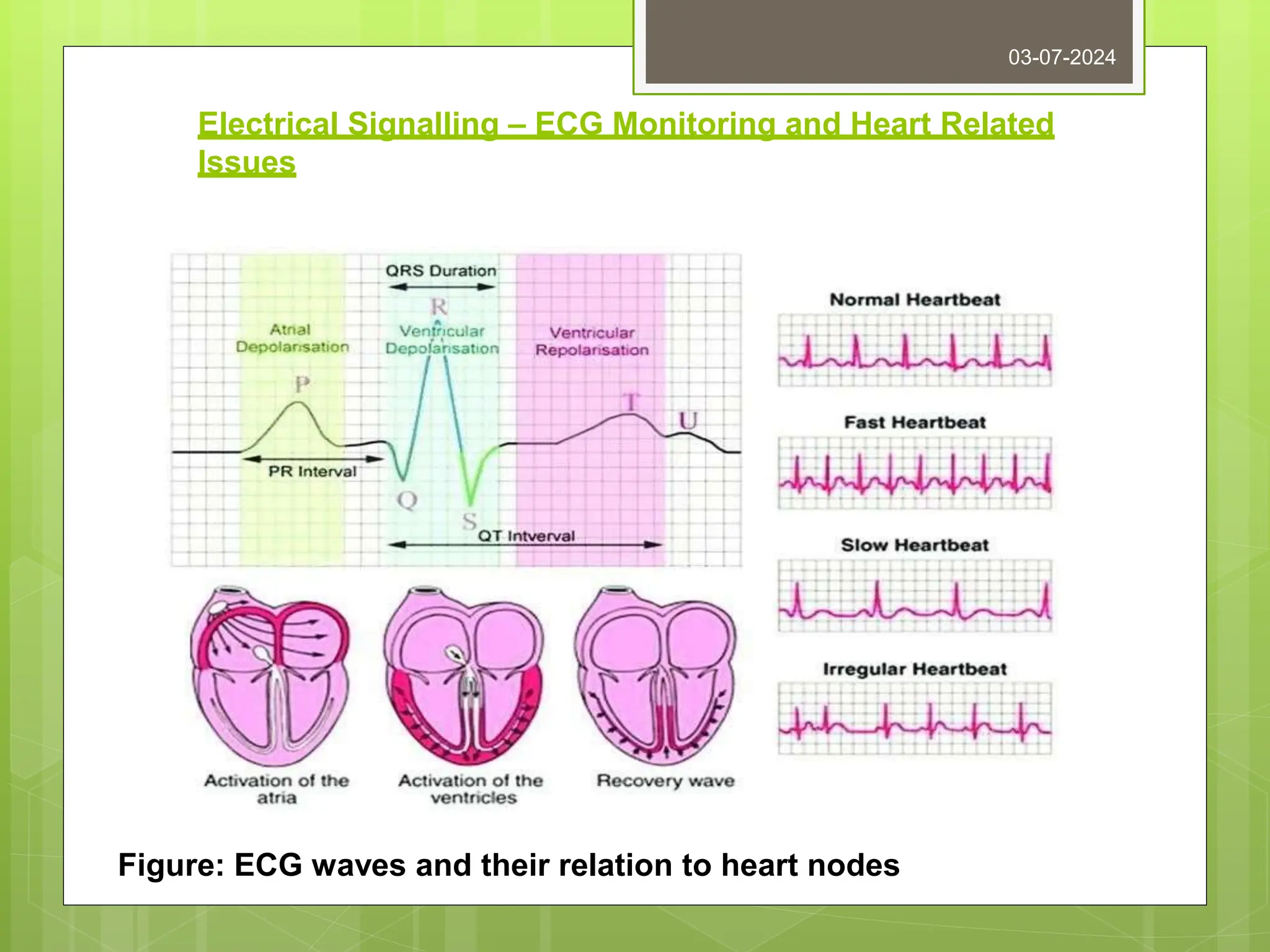
Electrical Signalling – ECG Monitoring and Heart Related
Issues
03-07-2024
Figure: ECG waves and their relation to heart nodes
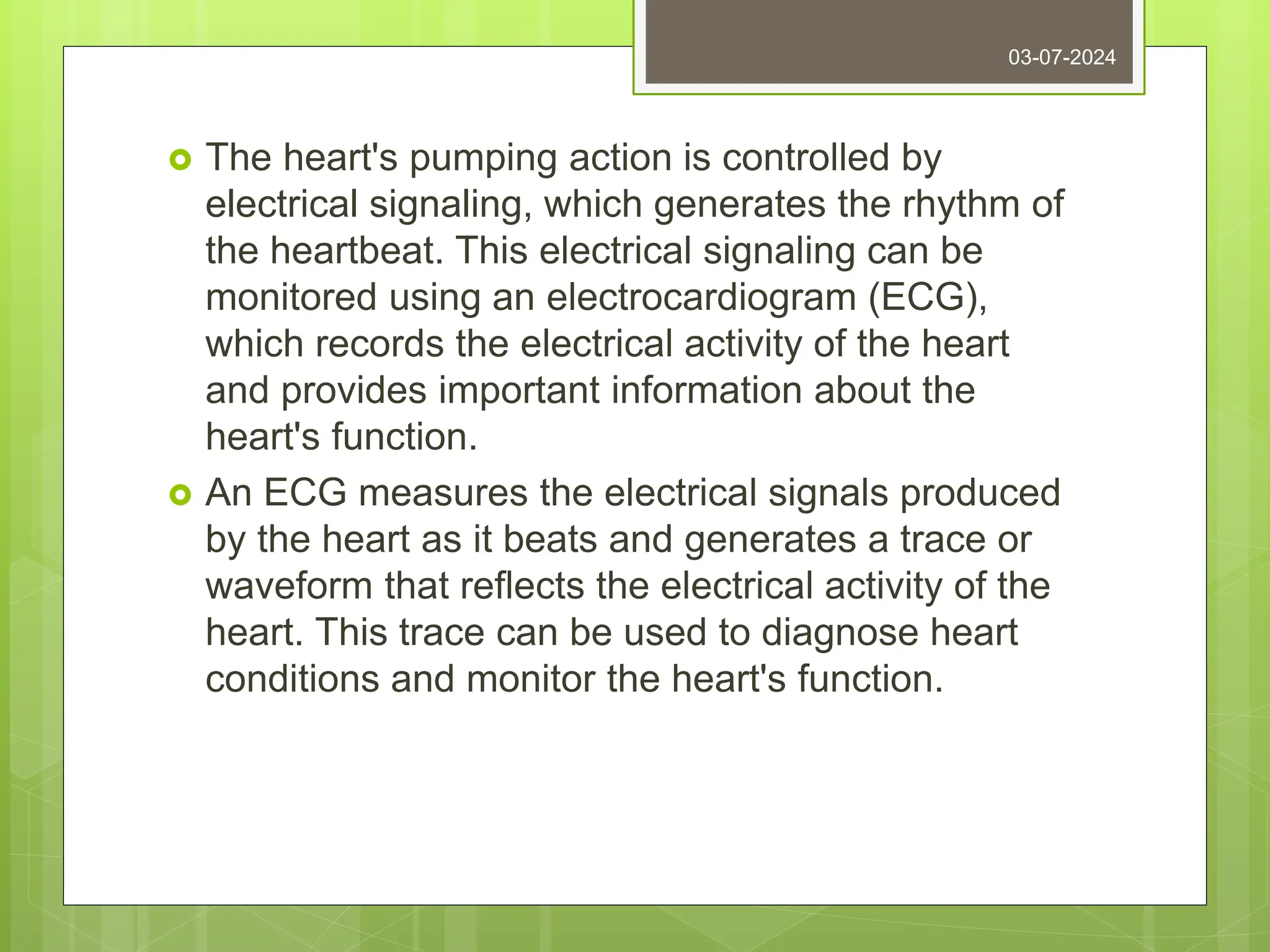
 The heart's pumping action is controlled by
electrical signaling, which generates the rhythm of
the heartbeat. This electrical signaling can be
monitored using an electrocardiogram (ECG),
which records the electrical activity of the heart
and provides important information about the
heart's function.
 An ECG measures the electrical signals produced
by the heart as it beats and generates a trace or
waveform that reflects the electrical activity of the
heart. This trace can be used to diagnose heart
conditions and monitor the heart's function.
03-07-2024
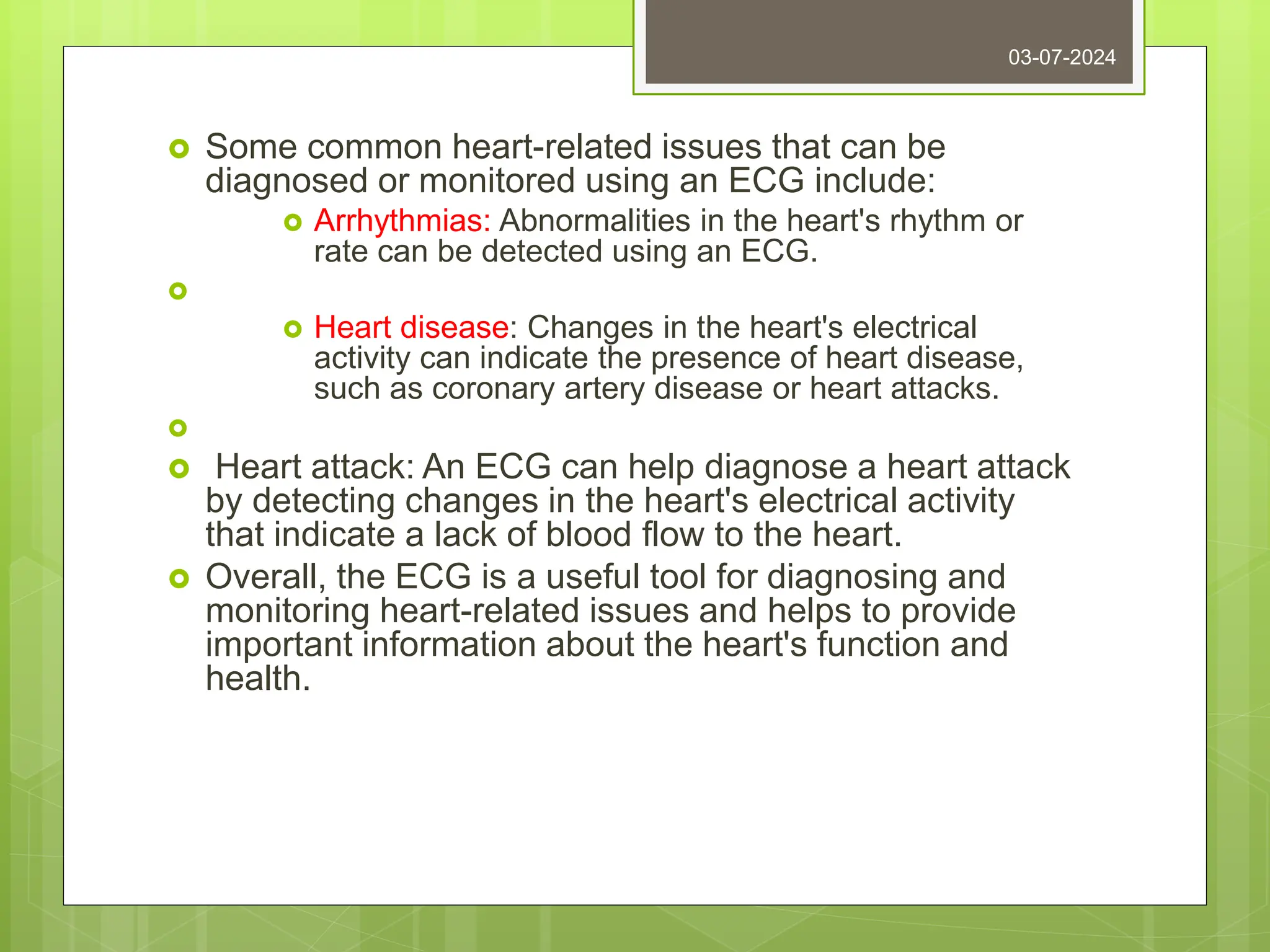
 Some common heart-related issues that can be
diagnosed or monitored using an ECG include:
 Arrhythmias: Abnormalities in the heart's rhythm or
rate can be detected using an ECG.

 Heart disease: Changes in the heart's electrical
activity can indicate the presence of heart disease,
such as coronary artery disease or heart attacks.

 Heart attack: An ECG can help diagnose a heart attack
by detecting changes in the heart's electrical activity
that indicate a lack of blood flow to the heart.
 Overall, the ECG is a useful tool for diagnosing and
monitoring heart-related issues and helps to provide
important information about the heart's function and
health.
03-07-2024
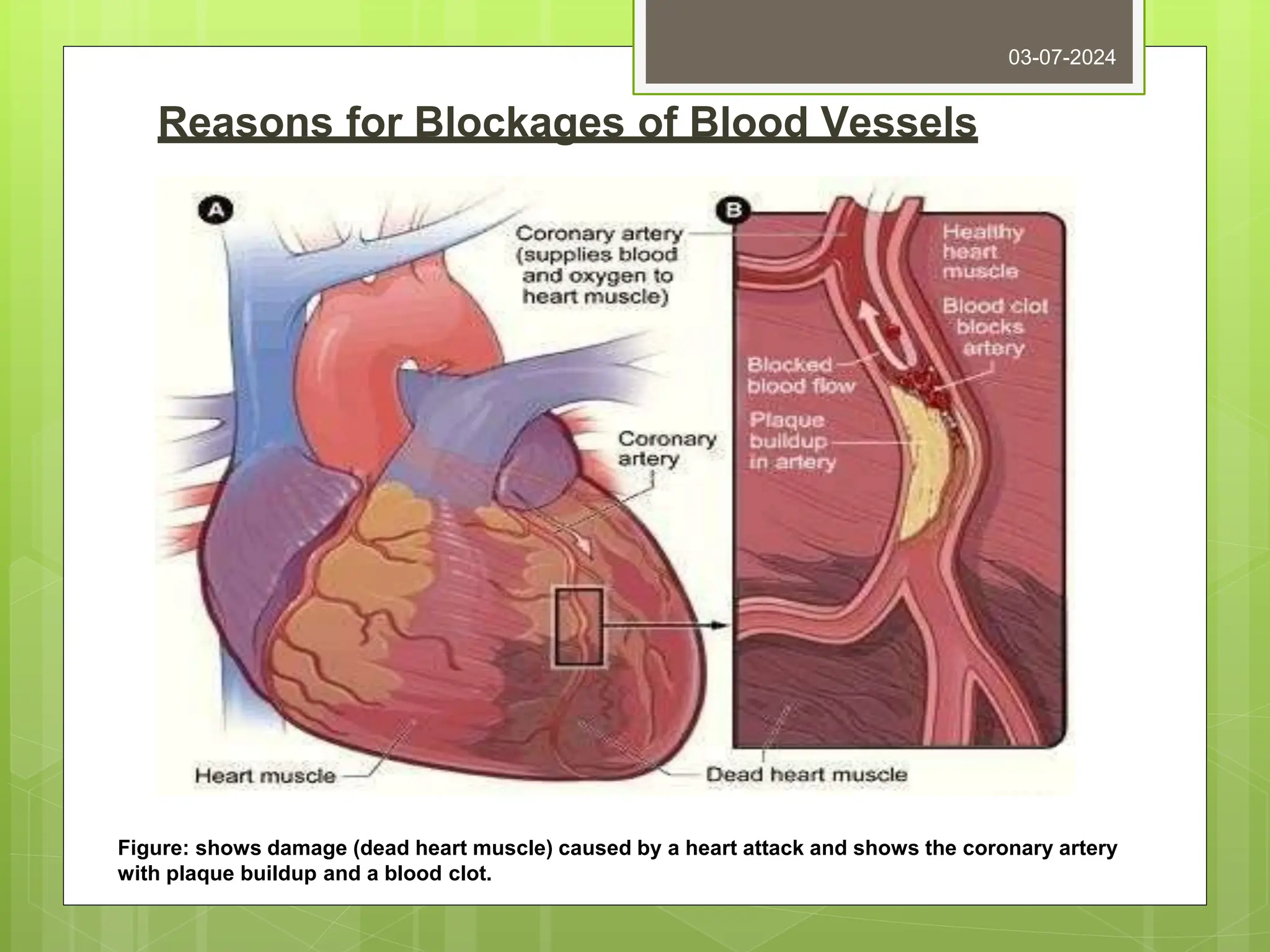
Reasons for Blockages of Blood Vessels
03-07-2024
Figure: shows damage (dead heart muscle) caused by a heart attack and shows the coronary artery
with plaque buildup and a blood clot.
 Blockages in blood vessels, also known as arterial blockages or
atherosclerosis, can occur for several reasons:
 High cholesterol levels: Excessive amounts of low-density lipoprotein (LDL)
cholesterol in the blood can lead to the formation of plaque in the blood vessels,
which can narrow or block them.
 High blood pressure: Over time, high blood pressure can cause damage to the
blood vessels, leading to the formation of plaque and blockages.
 Smoking: Smoking can damage the inner walls of blood vessels and promote
the buildup of plaque, leading to blockages.
 Diabetes: People with uncontrolled diabetes are at a higher risk of developing
blockages in their blood vessels, due to damage to the blood vessels from high
levels of glucose.
 Age: As people age, the blood vessels can become stiff and less flexible,
increasing the risk of blockages.
 Genetics: Some people may be predisposed to developing blockages
in their blood vessels due to genetic factors.
 Poor diet: A diet high in saturated fats, trans fats, and cholesterol can increase
the risk of developing blockages in the blood vessels.
 The blockages in blood vessels can have serious health
consequences, such as heart attacks and stroke. Maintaining a
healthy lifestyle, including eating a healthy diet, exercising regularly,
and avoiding smoking, can help reduce the risk of developing
blockages in blood vessels.
03-07-2024
Design of Stents
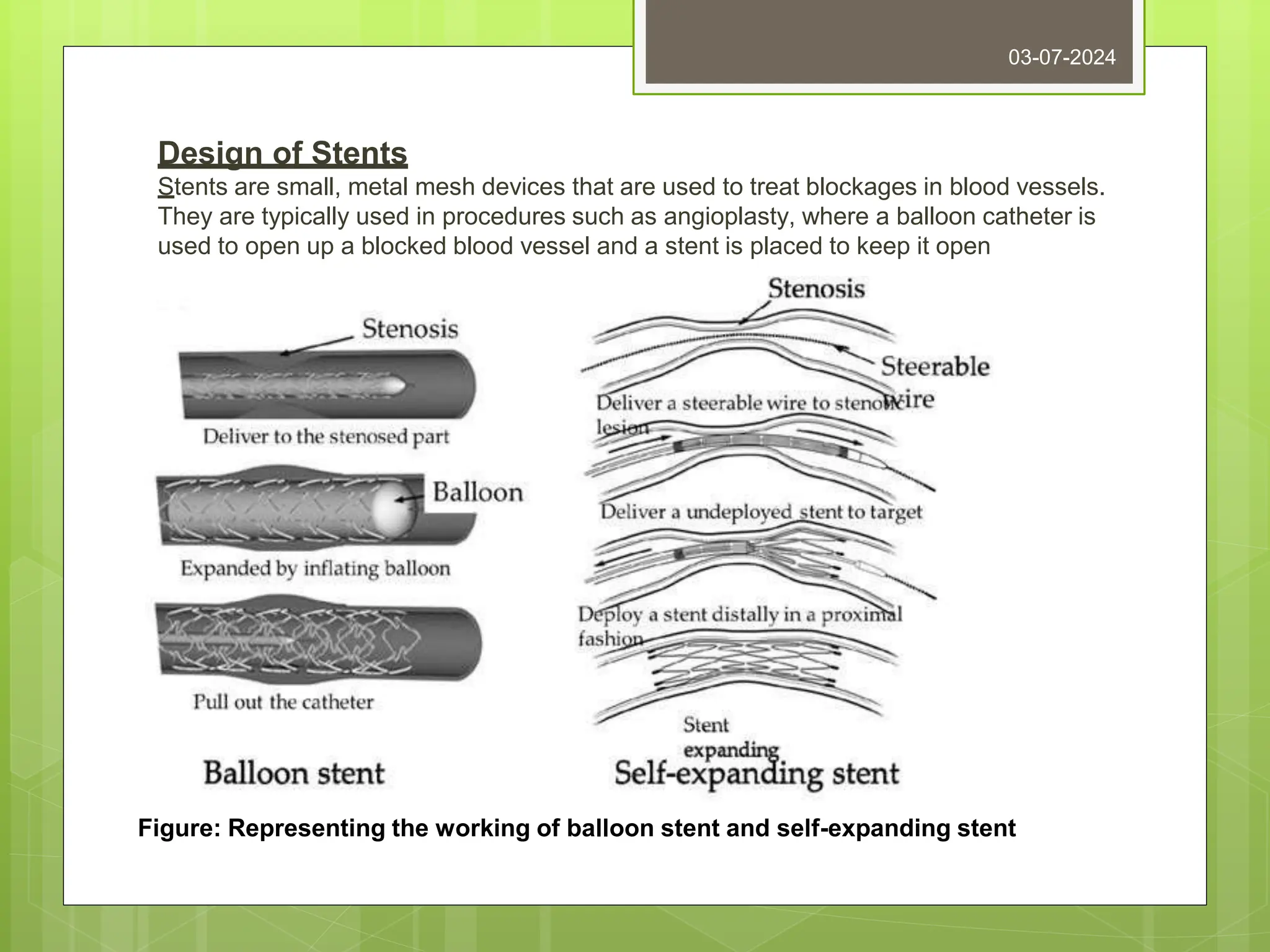
Stents are small, metal mesh devices that are used to treat blockages in blood vessels.
They are typically used in procedures such as angioplasty, where a balloon catheter is
used to open up a blocked blood vessel and a stent is placed to keep it open
03-07-2024
Figure: Representing the working of balloon stent and self-expanding stent
 The design of stents can vary depending on the type of stent
and the specific medical condition it is used to treat. Some
common design features of stents include:
 Shape: Stents can be designed in a variety of shapes, including
cylindrical, helical, and spiraled, to match the shape of the blood vessel
and provide adequate support.
 Material: Stents can be made of different materials, including
stainless steel, cobalt chromium, and nitinol (a type of metal
that is flexible and can return to its original shape after being
expanded).
 Coating: Stents can be coated with different materials to prevent blood
clots from forming and reduce the risk of restenosis (recurrent blockage of
the blood vessel). Expansion mechanism: Stents can be designed to
expand in different ways, such as by balloon inflation or self-expansion,
depending on the type of stent and the specific medical condition it is
used to treat.
 Overall, the design of stents plays an important role in their
effectiveness and safety. Stents must be designed to provide
adequate support to the blood vessel, prevent restenosis,
and minimize the risk of complications such as blood clots.
03-07-2024
Pace Makers
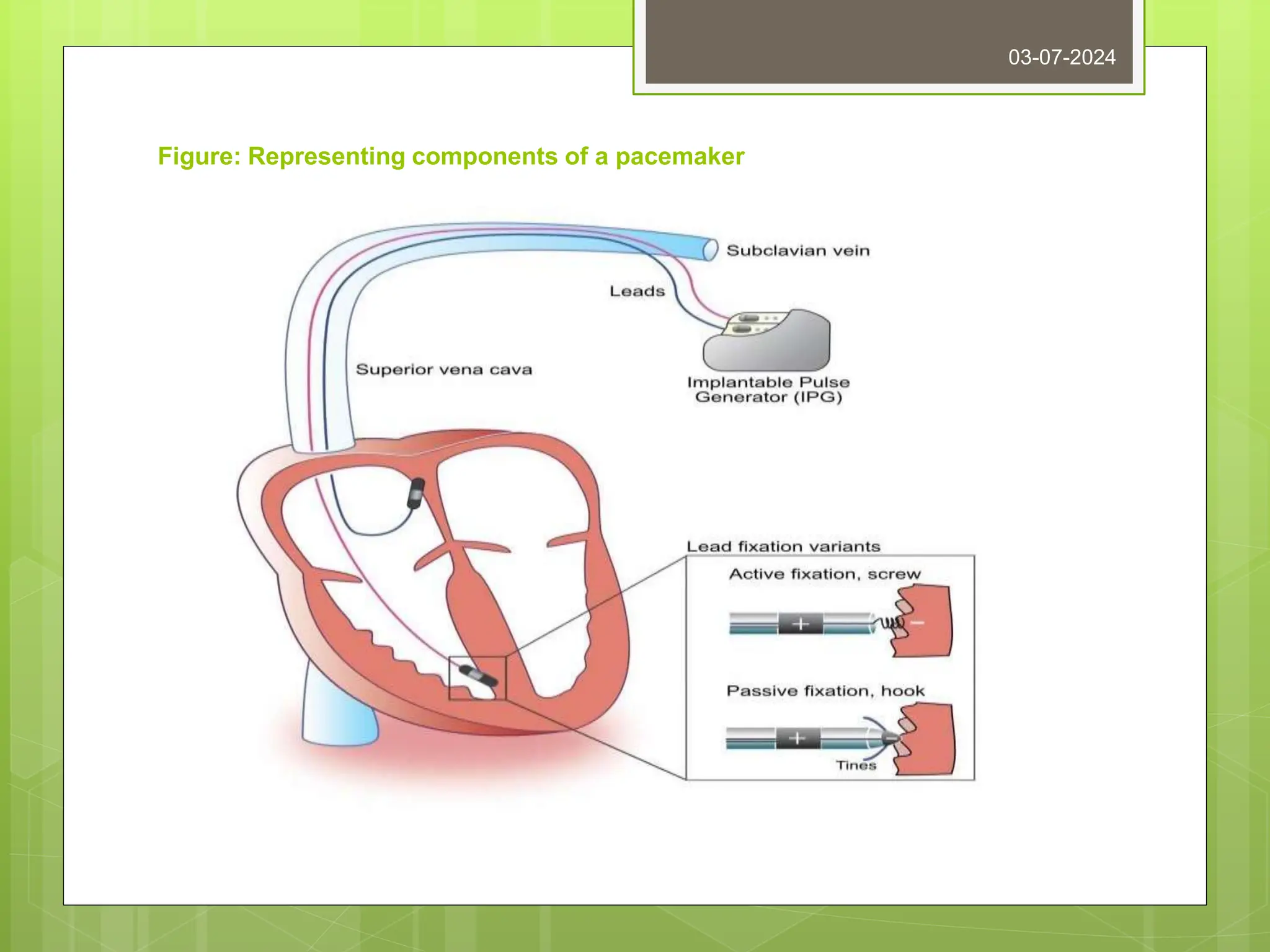
 A pacemaker is a small device that is surgically implanted in the
chest to regulate the heartbeat. It is used to treat heart rhythm
disorders, such as bradycardia (a slow heartbeat) or arrhythmias
(abnormal heart rhythms), by delivering electrical impulses to the
heart to regulate its rhythm The basic design of a pacemaker
consists of:

 Generator: The generator is the main component of
the pacemaker and contains a battery and electronic
circuitry to generate and control the electrical
impulses.
 Leads: Leads are thin wires that connect the
generator to the heart and carry the electrical
impulses from the generator to the heart.
 Electrodes: The electrodes are located at the end of
the leads and are used to deliver the electrical
impulses to the heart.
03-07-2024
Figure: Representing components of a pacemaker
03-07-2024
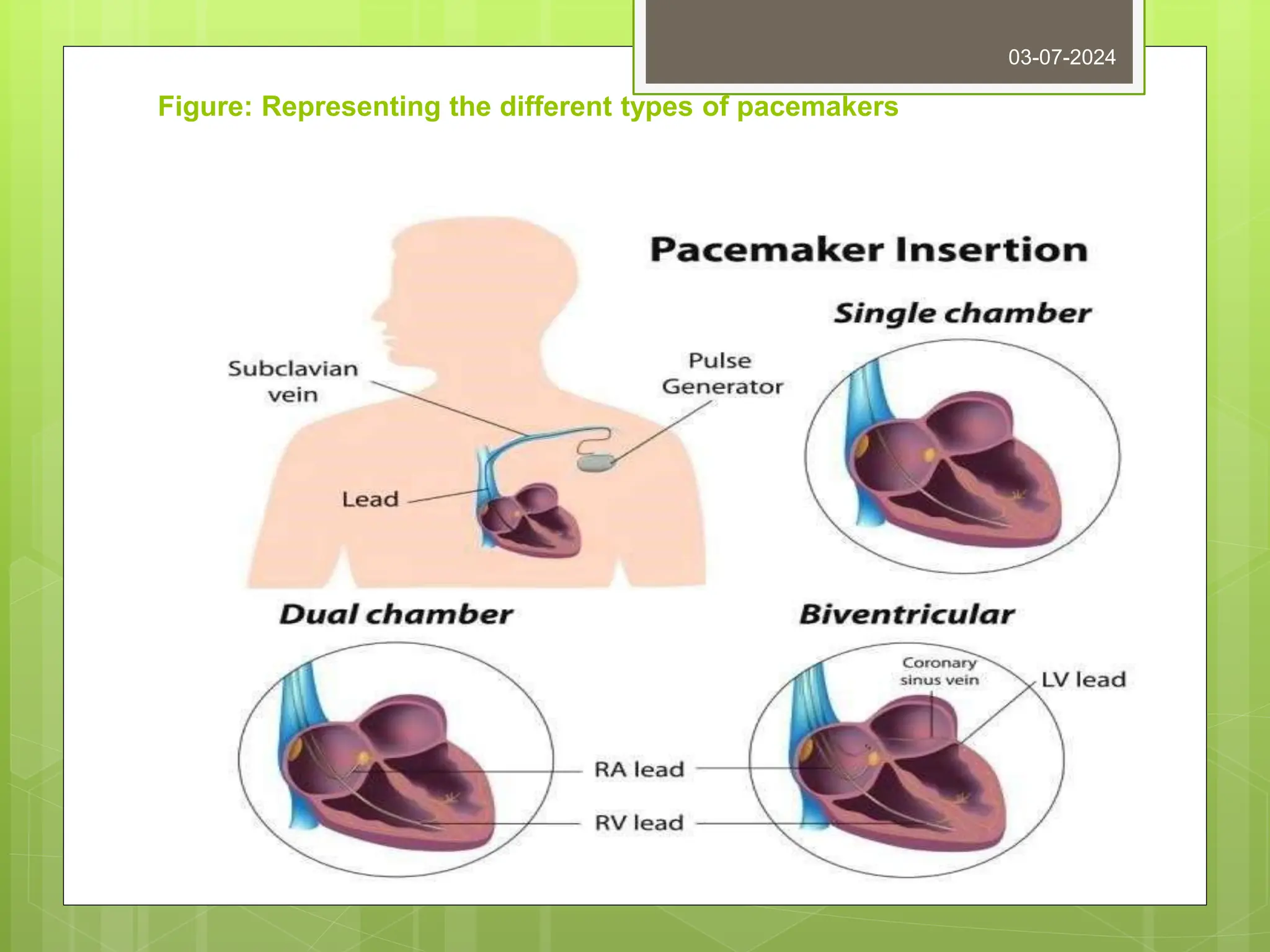
 Pacemakers can be designed to work in
different ways, including:

 Single-chamber pacemaker: A single-chamber
pacemaker delivers electrical impulses to either the
right atrium or the right ventricle of the heart to
regulate its rhythm.
 Dual-chamber pacemaker: A dual-chamber
pacemaker delivers electrical impulses to both the
right atrium and the right ventricle of the heart to
regulate its rhythm.
 Biventricular pacemaker: A biventricular pacemaker
delivers electrical impulses to both ventricles of the
heart to coordinate their contractions and improve
heart function in people with heart failure.
03-07-2024
Figure: Representing the different types of pacemakers
03-07-2024
Construction of a Pacemaker
 The construction of a pacemaker involves the use of high-quality materials
and specialized manufacturing processes to ensure their safety and
reliability. Materials used in the construction of pacemakers include:
 Medical-grade plastics: Medical-grade plastics, such as polycarbonate, are used
to construct the exterior of the device and to provide insulation and protection for
the internal components.
 Metals: Metals, such as stainless steel and titanium, are used in the construction
of the leads and electrodes to ensure their durability and long-lasting
performance.
 Electronic components: Electronic components, such as microprocessors,
batteries, and capacitors, are used to control the delivery of the electrical
impulses and to provide power to the device.
 Adhesives: Adhesives, such as cyanoacrylate and epoxy, are used to secure the
components of the device and to provide insulation and protection for the
internal components.
 The manufacturing process for pacemakers includes multiple quality
control measures to ensure their safety and reliability. This includes testing
of individual components and final assembly testing to verify the proper
operation of the device before it is released for use.
03-07-2024
Defibrillators
03-07-2024
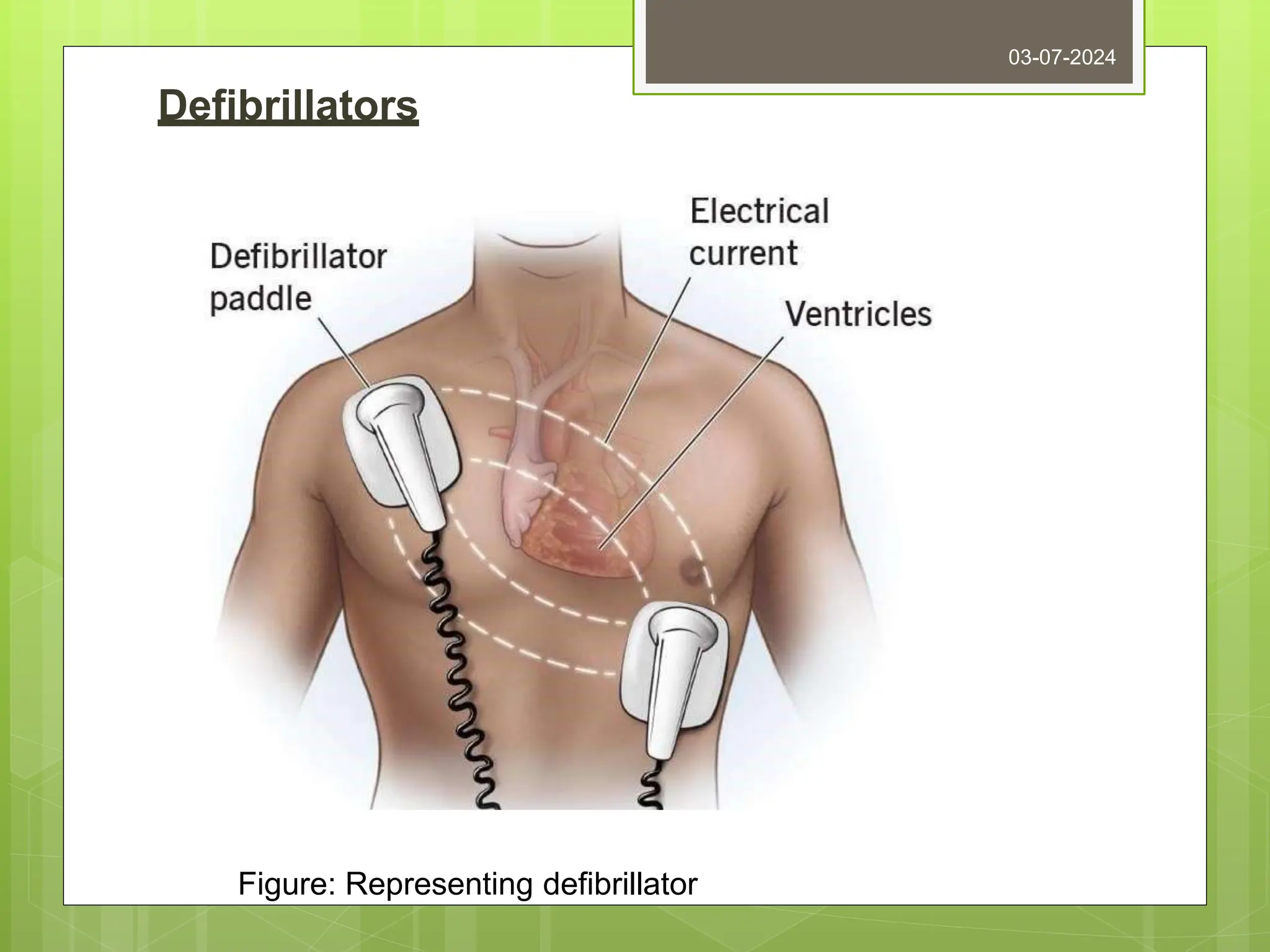
Figure: Representing defibrillator
 A defibrillator is a medical device that delivers an electric shock
to the heart to restore its normal rhythm in cases of cardiac
arrest or other life-threatening heart rhythm disorders.
Defibrillators can be external (placed on the chest) or internal
(implanted within the body).
 The basic design of a defibrillator consists of:

 Power source: The power source, typically a battery, provides
energy to deliver the electric shock to the heart
 .
 Electrodes: The electrodes are placed on the chest and deliver
the electric shock to the heart.

 Circuitry: The circuitry in the defibrillator controls the delivery of
the electric shock, including the timing, strength, and duration of
the shock.
 Display: A display on the defibrillator provides information about
the heart rhythm, battery life, and other relevant information.

03-07-2024
 Automated External Defibrillators
 External defibrillators, also known as automated external
defibrillators (AEDs), are designed for use by laypeople
and are commonly found in public places such as airports,
shopping centers, and schools. They are relatively simple
in design and typically have voice prompts and visual
cues to guide the user through the process of delivering
the electric shock.
 Implantable Cardioverter Defibrillators
 Internal defibrillators, also known as implantable
cardioverter defibrillators (ICDs), are surgically implanted
within the body and are used to treat people with a high
risk of sudden cardiac arrest. They are typically more
complex in design, including features such as continuous
monitoring of the heart rhythm, and automatic delivery of
shocks when necessary.
03-07-2024
Construction
of
defibrillators
 The construction of defibrillators involves the use of high-quality
materials and specialized manufacturing processes to ensure
their safety and reliability.
 Materials Used
 Materials used in the construction of defibrillators include:
 Medical-grade plastics: Medical-grade plastics, such as
polycarbonate, are used to construct the exterior of the device and to
provide insulation and protection for the internal components.
 Metals: Metals, such as stainless steel and titanium, are
used in the construction of the leads and electrodes to
ensure their durability and long-lasting performance.
03-07-2024
 Electronic components: Electronic components, such as
microprocessors, batteries, capacitors, and high-voltage
transformers, are used to control the delivery of the
electrical impulses and to provide power to the device.
 Adhesives: Adhesives, such as cyanoacrylate and
epoxy, are used to secure the components of the device
and to provide insulation and protection for the internal
components.
 The manufacturing process for defibrillators
includes multiple quality control measures to
ensure their safety and reliability. This includes
testing of individual components and final
assembly testing to verify the proper operation of
the device before it is released for use
03-07-2024
Basic Design
 The basic design of a defibrillator consists of:
 Power source: The power source, typically a battery, provides
energy to deliver the electrical impulses to the heart.
 Electrodes: The electrodes are placed on the chest and
deliver the electrical impulses to the heart to restore normal
rhythm
 Circuitry: The circuitry in the defibrillator controls the delivery
of the electrical impulses, including the timing, strength, and
duration of the impulses.
 Display: A display on the defibrillator provides information
about the heart rhythm, battery life, and other relevant
information.
03-07-2024
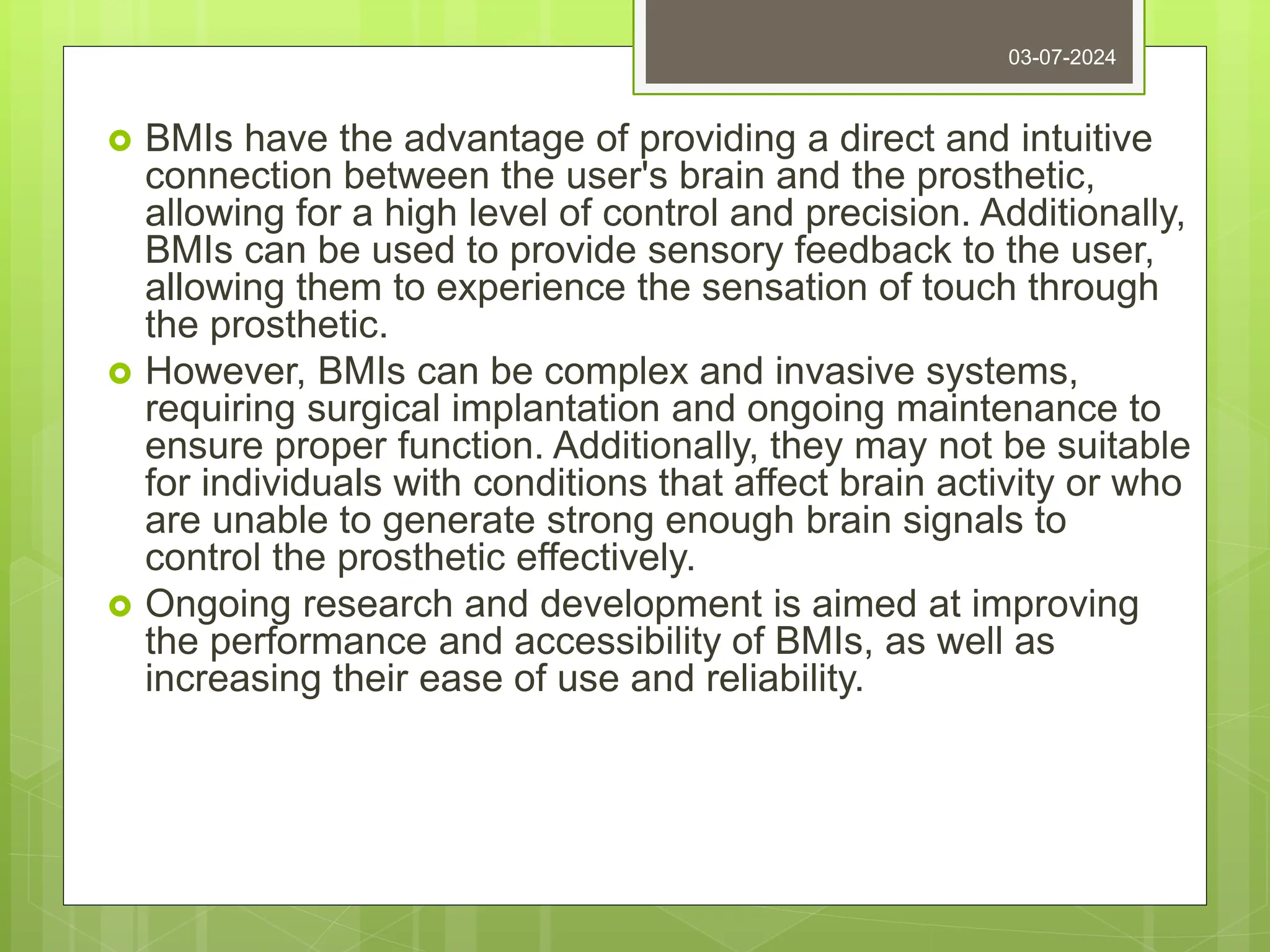
Artificial Heart
 An artificial heart is a device that is designed to replace the
functions of a damaged or failing heart. It can be used as a
temporary measure to support a patient while they are waiting for
a heart transplant, or as a permanent solution for people who are
not eligible for a heart transplant.
 There are two main types of artificial hearts: total artificial hearts
and heart assist devices.
 A total artificial heart is a self-contained device that completely
replaces the functions of the natural heart. It is used as a bridge
to transplant, meaning it provides temporary support to a patient
while they are waiting for a heart transplant. Heart assist devices,
on the other hand, are devices that are surgically implanted into
the heart and work alongside the natural heart to support its
functions.
 While these devices are still in the early stages of development,
they have the potential to greatly improve the survival and well-
being of people with heart disease.
03-07-2024
Figure: Schematic representation of artificial heart
03-07-2024
03-07-2024

Biology for computer science BBOC407 vtu

  • 1.
    MODULE-02 HUMAN ORGAN SYSTEMSAND BIO DESIGNS - 1 CONTENTS Topics Page N0. Brain as a CPU system Eye as a Camera system Heart as a pump system 03-07-2024
  • 2.
    MODULE-02 HUMAN ORGAN SYSTEMSAND BIO DESIGNS 03-07-2024 1.Brain as a CPU System: The human brain can be thought of as a highly sophisticated and complex information processing system, similar to a computer's Central Processing Unit (CPU). Both the brain and CPU receive and process inputs, store information, and perform calculations to produce outputs. However, there are significant differences between the two, such as the way they store and process information and the fact that the human brain has the ability to learn and adapt, while a computer's CPU does not. Additionally, the human brain is capable of performing tasks such as perception, thought, and emotion, which are beyond the scope of a computer's CPU. Table: Comparison Chart
  • 3.
    Table: Comparison Chart Basisfor Comparison Brain Computer Construction Neurons and synapses ICs, transistors, diodes, capacitors, transistors, etc. Memory growth Increases each time connecting synaptic links Increases by adding more memory chips Backup systems Built-in backup system Backup system is constructed manually Memory power 100 million megabytes Memory density 7 1014 bits/cm3 Energy consumption 12 watts of power Gigawatts of power Information storage Stored in electrochemical and electric impulses. Stored in numeric and symbolic form (i.e. in binary bits). Size and weight The brain's volume is 1500 cm3 and weight is around 3.3 pounds. Variable weight and size form few grams to tons. 03-07-2024
  • 4.
    Uses chemicals tofire the action potential in the neurons. Communication is achieved through electrical coded signals. Information processing power Low High Input/output equipment Sensory organs Keyboards, mouse, web cameras, etc. Structural organization Self-organized Pre-programmed structure Parallelism Massive Limited Reliability and damageability properties Brain is self-organizing, self maintaining and reliable. Computers perform a monotonous job and can't correct itself. 03-07-2024
  • 5.
    03-07-2024 2.1.1 Architecture The architectureof the human brain as a CPU system can be compared to that of a parallel distributed processing system, as opposed to the Von Neumann architecture of traditional computers.
  • 6.
    03-07-2024 In the humanbrain, information is processed in a distributed manner across multiple regions, each with specialized functions, rather than being processed sequentially in a single centralized location. Just like how a computer's CPU has an arithmetic logic unit (ALU) to perform mathematical calculations, the human brain has specialized regions for processing mathematical and logical operations. The prefrontal cortex, for example, is responsible for higher-level cognitive functions such as decision making and problem solving Similarly, a computer's CPU also has memory units for storing information, and the human brain has several regions dedicated to memory storage, including the hippocampus and amygdala
  • 7.
    Figure: Schematic representationof the frontal lobes of brain 03-07-2024
  • 8.
    Figure: Limbic system.Cross section of the human brain. Mammillary body, basal ganglia, pituitary gland, amygdala, hippocampus, thalamus - Illustration Credit: Designua / Shutterstock 03-07-2024
  • 9.
     While thecomparison between the human brain and a computer's CPU can provide useful insights, it is important to note that the human brain is a vastly more complex and capable system, with many functions that are still not fully understood 03-07-2024
  • 10.
     The CentralNervous System consists of the brain and spinal cord and is responsible for receiving, processing, and integrating sensory information and transmitting commands to the rest of the body. The brain acts as the command center, receiving and processing sensory inputs and generating motor outputs, while the spinal cord acts as a relay center, transmitting information between the brain and peripheral nerves. 03-07-2024
  • 11.
    Figure: Representation ofCNS and PNS 03-07-2024
  • 12.
     The PeripheralNervous System, on the other hand, consists of all the nerves that lie outside the brain and spinal cord. It is responsible for transmitting sensory information from the periphery of the body (such as the skin, muscles, and organs) to the CNS, and transmitting commands from the CNS to the periphery. The PNS can be further divided into the somatic nervous system and the autonomic nervous system. 03-07-2024
  • 13.
    Figure: Representation offunction of somatic nervous system 03-07-2024
  • 14.
     The somaticnervous system controls voluntary movements, while the autonomic nervous system controls involuntary functions such as heart rate, digestion, and respiration. 03-07-2024
  • 15.
    Figure: Representation offunction of autonomic nervous system 03-07-2024
  • 16.
    Signal Transmission Signal transmissionin the brain occurs through the firing of nerve cells, or neurons. 03-07-2024 Figure: Representing the process of transmission of information through nerve cells (synaptic transmission)
  • 17.
     A neuronreceives inputs from other neurons at its dendrites, integrates the information, and then generates an electrical impulse, or action potential, that travels down its axon to the synaptic terminals. At the synaptic terminals, the neuron releases chemical neurotransmitters, which cross the synaptic gap and bind to receptors on the postsynaptic neuron, leading to the initiation of another action potential in the postsynaptic neuron.  This process of transmitting information from one neuron to another is known as synaptic transmission and forms the basis of communication within the brain. 03-07-2024
  • 18.
     Different typesof neurotransmitters have different effects on postsynaptic neurons, and the balance of neurotransmitter levels can influence brain function, including mood, learning, and memory.  Signal transmission in the brain is also influenced by various forms of synaptic plasticity, including long-term potentiation (LTP) and long-term depression (LTD), which can modify the strength of synaptic connections and contribute to learning and memory processes.  03-07-2024
  • 19.
    EEG  EEG standsfor electroencephalography, which is a non-invasive method for measuring the electrical activity of the brain. An EEG records the electrical signals generated by the brain's neurons as they communicate with each other. The signals are recorded through electrodes placed on the scalp and the resulting EEG pattern provides information about the synchronized electrical activity of large populations of neurons. 03-07-2024
  • 20.
  • 21.
    Applications of EEG Diagnosis of Epilepsy: EEG is a widely used tool to diagnose epilepsy and other seizure disorders. It can detect abnormal electrical activity in the brain, which can help to confirm the diagnosis and determine the location of the seizure focus.  Sleep Studies: EEG is often used in sleep studies to evaluate sleep patterns and diagnose sleep disorders.  Brain-Computer Interfaces (BCI): EEG can be used to control external devices such as prosthetic limbs or computer software. This is done by detecting specific brain waves associated with a particular mental state, such as concentration or relaxation.  Research on Brain Function: EEG is used in research to study brain function during various activities such as reading, problem-solving, and decision-making. EEG can also be used to investigate how the brain responds to stimuli such as light, sound, and touch.  Diagnosis of Brain Disorders: EEG can be used to diagnose a wide range of brain disorders including dementia, Parkinson's disease, and traumatic brain injury.  Anesthesia Monitoring: EEG can be used to monitor the depth of anesthesia during surgery to ensure that the patient remains in a safe and comfortable state.  Monitoring Brain Activity during Coma: EEG is also used to monitor brain activity in patients who are in a coma to determine the level of brain function and assess the likelihood of recovery  . 03-07-2024
  • 22.
    EEG Signals andTypes of Brain Activity  EEG signals have unique features that correspond to different types of brain activity. Here are some of the main types of brain activity that can be detected with EEG:  Delta waves (0.5-4 Hz): Delta waves are low- frequency waves associated with deep sleep, infancy, and brain disorders such as brain damage or dementia.  Theta waves (4-8 Hz): Theta waves are also associated with sleep and relaxation, as well as meditation and hypnosis. They are also present during memory encoding and retrieval processes. 03-07-2024
  • 23.
     Alpha waves(8-12 Hz): Alpha waves are present when the brain is relaxed and not focused on any particular task. They are also associated with meditation and creativity.  Beta waves (12-30 Hz): Beta waves are present when the brain is focused on a task, such as problem-solving or decision-making. They are also associated with anxiety and stress.  Gamma waves (30-100 Hz): Gamma waves are associated with high-level cognitive processing, such as attention, perception, and memory. They are also involved in sensory processing and motor control. 03-07-2024
  • 24.
    The analysis ofEEG signals can provide valuable information about brain function and activity, as well as offer insights into the workings of the human mind 03-07-2024 Figure: Representing EEG signal and the mental state of brain
  • 25.
    Robotic Arms forProsthetics  Robotic arms for prosthetics are advanced prosthetic devices that use robotics technology to restore functionality to individuals with upper limb amputations.  These devices typically use motors, actuators, and sensors to mimic the movements of a human arm and hand, allowing the wearer to perform tasks such as reaching, grasping, and manipulating objects.  Robotic arms for prosthetics can be controlled in a variety of ways, including direct control through muscle signals (myoelectric control) or brain-machine interfaces, which use electrodes implanted in the brain or placed on the scalp to detect and interpret brain activity.  Some prosthetic arms also incorporate machine learning algorithms to improve their performance and adapt to the user's needs over time.  03-07-2024
  • 26.
    Robotic Arm ProstheticDirect Control through Muscle Signals (myoelectric control)  Myoelectric control of a robotic arm prosthetic involves using the electrical signals generated by the wearer's remaining muscles to control the movement of the prosthetic. The system typically involves electrodes placed on the skin over the remaining muscle that are used to detect and interpret the electrical signals generated by the muscle contractions. 03-07-2024
  • 27.
    03-07-2024 Figure: Representation ofmyoelectric control of an ankle exoskeleton
  • 28.
     When thewearer contracts their muscles, the electrodes detect the electrical signals and send them to a control unit, which interprets the signals and uses them to control the movement of the robotic arm. Depending on the specific design, the control unit may use pattern recognition algorithms to determine which movement the wearer is intending to perform, or the wearer may use a combination of muscle signals to control specific degrees of freedom in the prosthetic arm.  Myoelectric control has the advantage of being directly controlled by the user, allowing for a more intuitive and natural interaction with the prosthetic. It can also provide a high level of control and precision, as the electrical signals generated by the muscles are unique to each individual and can be used to perform a wide range of movements.  However, myoelectric control systems can be complex and may require extensive rehabilitation and training to use effectively, as well as ongoing maintenance to ensure proper function. Additionally, the system may not be suitable for individuals with muscle weakness or other conditions that affect the ability to generate strong electrical signals 03-07-2024
  • 29.
    Robotic Arm Prostheticby Brain-Machine Interfaces  Brain-machine interfaces (BMIs) are a type of technology that allows a user to control a robotic arm prosthetic directly with their brain activity. The system typically involves electrodes placed on the scalp or implanted directly into the brain to detect and interpret the user's brain signals  When the user thinks about moving the prosthetic arm, the electrodes detect the corresponding brain activity and send the signals to a control unit, which uses algorithms to interpret the signals and control the movement of the prosthetic. The user can then control the movement of the prosthetic in real-time by thinking about the desired movement. 03-07-2024
  • 30.
  • 31.
     BMIs havethe advantage of providing a direct and intuitive connection between the user's brain and the prosthetic, allowing for a high level of control and precision. Additionally, BMIs can be used to provide sensory feedback to the user, allowing them to experience the sensation of touch through the prosthetic.  However, BMIs can be complex and invasive systems, requiring surgical implantation and ongoing maintenance to ensure proper function. Additionally, they may not be suitable for individuals with conditions that affect brain activity or who are unable to generate strong enough brain signals to control the prosthetic effectively.  Ongoing research and development is aimed at improving the performance and accessibility of BMIs, as well as increasing their ease of use and reliability. 03-07-2024
  • 32.
    Engineering Solutions forParkinson’s Disease  Parkinson's disease is a neurodegenerative disorder that affects movement and motor function. There are several engineering solutions aimed at improving the quality of life for individuals with Parkinson's disease, including:  Deep Brain Stimulation (DBS): DBS involves the implantation of electrodes into specific regions of the brain to deliver electrical stimulation, which can help to relieve symptoms such as tremors, stiffness, and difficulty with movement.  Exoskeletons: Exoskeletons are wearable devices that provide support and assistance for individuals with mobility issues. Some exoskeletons have been developed specifically for people with Parkinson's disease, and can help to improve balance, reduce tremors, and increase overall mobility. 03-07-2024
  • 33.
     Telerehabilitation: Telerehabilitationinvolves the use of telecommunication technology to provide physical therapy and rehabilitation services to individuals with Parkinson's disease, without the need for in-person visits to a therapist.  Smartwatch Applications: Smartwatch applications can be used to monitor symptoms of Parkinson's disease, such as tremors, and provide reminders and prompts for medication and exercise.  Virtual Reality: Virtual reality systems can be used for rehabilitation and therapy for individuals with Parkinson's disease, providing interactive and engaging environments for patients to practice movements and improve coordination and balance. 03-07-2024
  • 34.
    These engineering solutionshave the potential to significantly improve the quality of life for individuals with Parkinson's disease, and ongoing research and development is aimed at improving their effectiveness and accessibility. However, it is important to note that these technologies are not a cure for Parkinson's disease and should be used in conjunction with other forms of treatment and care. 03-07-2024 Figure: Representing typical appearance of Parkinson’s disease
  • 35.
    Artificial Brain  Anartificial brain, also known as an artificial general intelligence (AGI) or a synthetic brain, refers to a hypothetical machine that could possess cognitive abilities similar to those of a human brain. The idea behind artificial brains is to create a machine that can learn, reason, and solve problems in the same way that humans do. However, the development of artificial brains is still in the early stages and there are many technical, ethical, and philosophical challenges that need to be addressed  Currently, artificial intelligence (AI) systems are designed to perform specific tasks, such as image recognition, speech recognition, or decision making, but they are not capable of general intelligence. This is because AI systems are designed to operate within a narrow domain and lack the ability to learn from new experiences, generalize from past experiences, or reason about the world in the same way that humans do. 03-07-2024
  • 36.
    Figure: Representing theidea of AGI 03-07-2024
  • 37.
     The developmentof artificial brains requires a deep understanding of the human brain and its functions, as well as advanced computer science and engineering skills. Researchers are working on creating artificial brain models that can simulate the complex processes of human cognition and adapt to new situations. Despite the significant challenges, some experts believe that artificial brains are a realistic possibility and that they have the potential to revolutionize the field of AI and bring about new technological advancements.  However, others argue that it is unlikely that we will ever be able to recreate the human brain in a machine, due to the complexity and intricacy of the brain's structure and functions. 03-07-2024
  • 38.
    Eye as aCamera System:  The human eye can be analogized to a camera system, as both the eye and a camera capture light and convert it into an image.  The main components of the eye that correspond to a camera system include:   The Cornea: This transparent outer layer of the eye functions like a camera lens, bending light to focus it onto the retina.  The Iris: The iris functions like the diaphragm in a camera, controlling the amount of light that enters the eye.  The Pupil: The pupil functions like the aperture in a camera, adjusting the size to control the amount of light entering the eye.  The Retina: The retina functions like the camera film or sensor, capturing the light and converting it into electrical signals that are sent to the brain.  The Optic Nerve: The optic nerve functions like the cable connecting the camera to a computer, transmitting the electrical signals from the retina to the brain. 03-07-2024
  • 39.
    Figure: Comparing cameraand anatomy of eye 03-07-2024
  • 40.
     In boththe eye and a camera, the captured light is transformed into an image by the lens and the light-sensitive component. The eye processes the image further, allowing for visual perception, while a camera stores the image for later use.  It's important to note that the eye is much more complex than a camera and has several additional functions, such as adjusting for different levels of light and adjusting focus, that are not found in a camera.  The eye also has the ability to perceive depth and color, as well as adjust to movements and provide a continuous, real-time image to the brain. 03-07-2024
  • 41.
  • 42.
    Architecture of Rodand Cone CellS 03-07-2024 Figure: Representation of photoreceptor cells
  • 43.
     Rod Cells Rod cells are photoreceptor cells in the retina of the eye that are responsible for detecting light and transmitting signals to the brain for the perception of vision, especially in low light conditions. They contain a protein called rhodopsin that absorbs light and triggers a chain of events leading to the activation of neural signals. Rods are more sensitive to light than cone cells but do not distinguish color as well.  Cone Cells  Cone cells are photoreceptor cells in the retina of the eye that are responsible for color vision and visual acuity (sharpness of vision). There are three types of cone cells, each containing a different photopigment sensitive to different wavelengths of light (red, green, and blue), which allow for the perception of color. Cones are less sensitive to light than rod cells but provide better visual acuity and color discrimination. They are concentrated in the fovea, the central part of the retina responsible for detailed and sharp vision. 03-07-2024
  • 44.
    Architecture Rod and conecells have a similar basic structure, but there are some differences that are crucial for their different functions 03-07-2024 Figure: Representing rod and cone cells
  • 45.
     Both typesof cells have a photoreceptor outer segment that contains the photo pigment (rhodopsin in rods and photo pigments in cones) that absorbs light and triggers a change in membrane potential. The inner segment contains the cell's organelles, including the nucleus and mitochondria.  The major difference between rod and cone cells is their shape. Rod cells are elongated and cylindrical, while cone cells are shorter and more conical in shape. This difference in shape affects the distribution of photo pigments and the number of synaptic contacts with bipolar and ganglion cells, which transmit the signals to the brain. Rod cells have a single long outer segment, while cone cells have several shorter segments.  Another difference between the two types of cells is the distribution of their synaptic contacts with bipolar cells. Rod cells make synapses with one bipolar cell, while cone cells synapse with one of several bipolar cells. This difference in synapse distribution is critical for the different functions of rod and cone cells in vision. 03-07-2024
  • 46.
  • 47.
    Figure: Representing ganglioncells and bipolar cells 03-07-2024
  • 48.
    Optical Corrections  Opticalcorrections refer to devices or techniques used to improve or correct vision problems caused by a refractive error in the eye.  Refractive errors occur when light entering the eye is not properly focused on the retina, leading to blurred vision. There are several types of refractive errors, including:  Myopia (nearsightedness): Light is focused in front of the retina, making distant objects appear blurry.  Hyperopia (farsightedness): Light is focused behind the retina, making near objects appear blurry.  Astigmatism: Light is not focused evenly on the retina, leading to blurred or distorted vision. 03-07-2024
  • 49.
    The most commonoptical corrections include   Eyeglasses: Glasses with corrective lenses can be used to refocus light onto the retina, improving vision.  Contact lenses: Corrective lenses in the form of contacts sit directly on the cornea and work similarly to eyeglasses.  Refractive surgery: Surgical procedures, such as LASIK and PRK, can reshape the cornea to correct refractive errors.  Optical corrections can greatly improve visual acuity and quality of life for people with refractive errors. However, it is important to have regular eye exams to determine the appropriate correction and monitor eye health. 03-07-2024
  • 50.
  • 51.
     A cataractis a clouding of the lens of the eye that affects vision. The lens, located behind the iris and pupil, normally allows light to pass through to the retina and produces clear, sharp images. However, as we age or due to other factors, the proteins in the lens can clump together and cause the lens to become opaque, leading to vision problems.  Symptoms of a cataract include blurred or hazy vision, increased sensitivity to glare and bright lights, faded or yellowed colors, and double vision in one eye. Cataracts can also cause frequent changes in prescription for eyeglasses or contacts.  Cataract surgery is a common and safe procedure to remove the cloudy lens and replace it with an artificial lens. The surgery is typically performed on an outpatient basis and most people experience improved vision within a few days after the procedure.  In conclusion, cataracts can significantly affect vision, but surgical removal and replacement with an artificial lens can restore clear vision and improve quality of life. Regular eye exams can help detect cataracts early and prevent vision loss. 03-07-2024
  • 52.
    Lens Materials  Theartificial lenses used in cataract surgery or for vision correction can be made of a variety of materials, each with its own unique properties and benefits. The most common lens materials include:  Polymethyl methacrylate (PMMA): PMMA is a type of plastic that has been used for many years in artificial lenses. It is a durable and affordable material, but does not have the ability to flex and adjust focus like the natural lens.  Silicone: Silicone is a soft, flexible material that is resistant to cracking and breaking. It is often used in phakic intraocular lenses (IOLs), which are implanted in front of the natural lens.  Acrylic: Acrylic is a lightweight, clear material that is similar in properties to PMMA. It is often used in foldable IOLs, which can be inserted through a smaller incision.  Hydrophobic acrylic: Hydrophobic acrylic is a type of acrylic material that has a special surface treatment that helps to reduce glare and halos around lights.  Hydrophilic acrylic: Hydrophilic acrylic is a type of acrylic material that is designed to be more compatible with the natural fluid in the eye, reducing the risk of vision-threatening complications.  The choice of lens material will depend on several factors, including the patient's individual needs, the surgeon's preference, and the potential risks and benefits of each material. Your eye doctor can provide guidance on which lens material may be best for you. 03-07-2024
  • 53.
    Bionic Eye orArtificial Eye  A bionic eye, also known as a retinal implant, is a type of prosthetic device that is surgically implanted into the eye to help restore vision to people who have lost their sight due to certain conditions such as retinitis pigmentosa or age-related macular degeneration.  The device typically consists of a camera, a processor, and an electrode array that is attached to the retina.  The camera captures images and sends signals to the processor, which then transmits electrical stimulation to the electrodes in the retina to stimulate the remaining healthy cells and restore vision. The restored vision is not perfect, but it can help people with vision loss to perform daily tasks more easily and safely. 03-07-2024 Figure: Photo of a bionic eye
  • 54.
    Materials Used inBionic Eye  The materials used in a bionic eye can vary depending on the specific device and manufacturer. However, some of the common materials used in bionic eye technology include:  Silicon or other semiconducting materials for the camera and the electrode array.  Biocompatible materials for the casing of the device and the electrode array, such as titanium or titanium alloys, to minimize the risk of infection and rejection by the body.  Conductive materials, such as platinum, iridium, or gold, for the electrodes in the array to provide efficient electrical stimulation to the retina.  Polymers, such as silicone or polyimide, for insulation and protection of the electrodes and other components.  Optical materials, such as glass or acrylic, for the lens of the camera.  Biocompatible and flexible materials for the electrical connections between the camera and the processing unit and between the processing unit and the electrode array.  In addition to these materials, advanced computer algorithms and machine learning techniques are also used to improve the accuracy and reliability of the bionic eye technology. 03-07-2024
  • 55.
    Working of BionicEye 03-07-2024 Figure: Representing working of a bionic eye
  • 56.
     A bioniceye typically works by capturing images with a small camera and transmitting the information to a processing unit that is attached to the eye. The processing unit then converts the visual information into electrical signals and sends them to an electrode array that is surgically implanted onto the retina. The electrodes stimulate the remaining healthy cells in the retina, which then sends signals to the brain to create the perception of vision.  The restored vision is not perfect, but it can help people with vision loss to perform daily tasks more easily and safely. The amount and quality of vision that can be restored varies depending on the individual and the type of bionic eye being used. Some bionic eyes only restore basic visual shapes and patterns, while others can provide more detailed vision.  The bionic eye is powered by a battery that is typically implanted behind the ear. The battery is recharged through a device that is held near the eye, which transmits power wirelessly to the battery. The device is typically rechargeable and can be used for several years before it needs to be replaced. 03-07-2024
  • 57.
    Heart as aPump System: 03-07-2024 Architecture The heart is a complex pump system that circulates blood throughout the body Figure: Representing the chambers of heart
  • 58.
     It consistsof four chambers: the right atrium, the left atrium, the right ventricle, and the left ventricle. Blood enters the right atrium from the body and is pumped into the right ventricle, which then pumps the blood to the lungs for oxygenation. Oxygenated blood returns to the heart and enters the left atrium, which pumps the blood into the left ventricle. The left ventricle then pumps the oxygenated blood out to the rest of the body.  Between each chamber, there are one-way valves that ensure the blood flows in the correct direction and prevent backflow. The heart is also surrounded by the pericardium, a sac that contains a small amount of fluid and helps to protect and lubricate the heart as it beats. 03-07-2024 Figure: Representing circulation of blood
  • 59.
    The Heart Beat Theheart's pumping action is controlled by a complex network of electrical and chemical signals, which generate the rhythm of the heartbeat 03-07-2024 Figure: Representation of electrical system of the heart
  • 60.
     An electricalstimulus is generated in a special part of the heart muscle called the sinus node. It's also called the sinoatrial node (SA node). The sinus node is a small mass of special tissue in the right upper chamber of the heart (right atrium). In an adult, the sinus node sends out a regular electrical pulse 60 to 100 times per minute.  This electrical pulse travels down through the conduction pathways and causes the heart's lower chambers (ventricles) to contract and pump out blood. The right and left atria are stimulated first and contract to push blood from the atria into the ventricles. The ventricles then contract to push blood out into the blood vessels of the body 03-07-2024
  • 61.
    Electrical Signalling –ECG Monitoring and Heart Related Issues 03-07-2024 Figure: ECG waves and their relation to heart nodes
  • 62.
     The heart'spumping action is controlled by electrical signaling, which generates the rhythm of the heartbeat. This electrical signaling can be monitored using an electrocardiogram (ECG), which records the electrical activity of the heart and provides important information about the heart's function.  An ECG measures the electrical signals produced by the heart as it beats and generates a trace or waveform that reflects the electrical activity of the heart. This trace can be used to diagnose heart conditions and monitor the heart's function. 03-07-2024
  • 63.
     Some commonheart-related issues that can be diagnosed or monitored using an ECG include:  Arrhythmias: Abnormalities in the heart's rhythm or rate can be detected using an ECG.   Heart disease: Changes in the heart's electrical activity can indicate the presence of heart disease, such as coronary artery disease or heart attacks.   Heart attack: An ECG can help diagnose a heart attack by detecting changes in the heart's electrical activity that indicate a lack of blood flow to the heart.  Overall, the ECG is a useful tool for diagnosing and monitoring heart-related issues and helps to provide important information about the heart's function and health. 03-07-2024
  • 64.
    Reasons for Blockagesof Blood Vessels 03-07-2024 Figure: shows damage (dead heart muscle) caused by a heart attack and shows the coronary artery with plaque buildup and a blood clot.
  • 65.
     Blockages inblood vessels, also known as arterial blockages or atherosclerosis, can occur for several reasons:  High cholesterol levels: Excessive amounts of low-density lipoprotein (LDL) cholesterol in the blood can lead to the formation of plaque in the blood vessels, which can narrow or block them.  High blood pressure: Over time, high blood pressure can cause damage to the blood vessels, leading to the formation of plaque and blockages.  Smoking: Smoking can damage the inner walls of blood vessels and promote the buildup of plaque, leading to blockages.  Diabetes: People with uncontrolled diabetes are at a higher risk of developing blockages in their blood vessels, due to damage to the blood vessels from high levels of glucose.  Age: As people age, the blood vessels can become stiff and less flexible, increasing the risk of blockages.  Genetics: Some people may be predisposed to developing blockages in their blood vessels due to genetic factors.  Poor diet: A diet high in saturated fats, trans fats, and cholesterol can increase the risk of developing blockages in the blood vessels.  The blockages in blood vessels can have serious health consequences, such as heart attacks and stroke. Maintaining a healthy lifestyle, including eating a healthy diet, exercising regularly, and avoiding smoking, can help reduce the risk of developing blockages in blood vessels. 03-07-2024
  • 66.
    Design of Stents Stentsare small, metal mesh devices that are used to treat blockages in blood vessels. They are typically used in procedures such as angioplasty, where a balloon catheter is used to open up a blocked blood vessel and a stent is placed to keep it open 03-07-2024 Figure: Representing the working of balloon stent and self-expanding stent
  • 67.
     The designof stents can vary depending on the type of stent and the specific medical condition it is used to treat. Some common design features of stents include:  Shape: Stents can be designed in a variety of shapes, including cylindrical, helical, and spiraled, to match the shape of the blood vessel and provide adequate support.  Material: Stents can be made of different materials, including stainless steel, cobalt chromium, and nitinol (a type of metal that is flexible and can return to its original shape after being expanded).  Coating: Stents can be coated with different materials to prevent blood clots from forming and reduce the risk of restenosis (recurrent blockage of the blood vessel). Expansion mechanism: Stents can be designed to expand in different ways, such as by balloon inflation or self-expansion, depending on the type of stent and the specific medical condition it is used to treat.  Overall, the design of stents plays an important role in their effectiveness and safety. Stents must be designed to provide adequate support to the blood vessel, prevent restenosis, and minimize the risk of complications such as blood clots. 03-07-2024
  • 68.
    Pace Makers  Apacemaker is a small device that is surgically implanted in the chest to regulate the heartbeat. It is used to treat heart rhythm disorders, such as bradycardia (a slow heartbeat) or arrhythmias (abnormal heart rhythms), by delivering electrical impulses to the heart to regulate its rhythm The basic design of a pacemaker consists of:   Generator: The generator is the main component of the pacemaker and contains a battery and electronic circuitry to generate and control the electrical impulses.  Leads: Leads are thin wires that connect the generator to the heart and carry the electrical impulses from the generator to the heart.  Electrodes: The electrodes are located at the end of the leads and are used to deliver the electrical impulses to the heart. 03-07-2024
  • 69.
    Figure: Representing componentsof a pacemaker 03-07-2024
  • 70.
     Pacemakers canbe designed to work in different ways, including:   Single-chamber pacemaker: A single-chamber pacemaker delivers electrical impulses to either the right atrium or the right ventricle of the heart to regulate its rhythm.  Dual-chamber pacemaker: A dual-chamber pacemaker delivers electrical impulses to both the right atrium and the right ventricle of the heart to regulate its rhythm.  Biventricular pacemaker: A biventricular pacemaker delivers electrical impulses to both ventricles of the heart to coordinate their contractions and improve heart function in people with heart failure. 03-07-2024
  • 71.
    Figure: Representing thedifferent types of pacemakers 03-07-2024
  • 72.
    Construction of aPacemaker  The construction of a pacemaker involves the use of high-quality materials and specialized manufacturing processes to ensure their safety and reliability. Materials used in the construction of pacemakers include:  Medical-grade plastics: Medical-grade plastics, such as polycarbonate, are used to construct the exterior of the device and to provide insulation and protection for the internal components.  Metals: Metals, such as stainless steel and titanium, are used in the construction of the leads and electrodes to ensure their durability and long-lasting performance.  Electronic components: Electronic components, such as microprocessors, batteries, and capacitors, are used to control the delivery of the electrical impulses and to provide power to the device.  Adhesives: Adhesives, such as cyanoacrylate and epoxy, are used to secure the components of the device and to provide insulation and protection for the internal components.  The manufacturing process for pacemakers includes multiple quality control measures to ensure their safety and reliability. This includes testing of individual components and final assembly testing to verify the proper operation of the device before it is released for use. 03-07-2024
  • 73.
  • 74.
     A defibrillatoris a medical device that delivers an electric shock to the heart to restore its normal rhythm in cases of cardiac arrest or other life-threatening heart rhythm disorders. Defibrillators can be external (placed on the chest) or internal (implanted within the body).  The basic design of a defibrillator consists of:   Power source: The power source, typically a battery, provides energy to deliver the electric shock to the heart  .  Electrodes: The electrodes are placed on the chest and deliver the electric shock to the heart.   Circuitry: The circuitry in the defibrillator controls the delivery of the electric shock, including the timing, strength, and duration of the shock.  Display: A display on the defibrillator provides information about the heart rhythm, battery life, and other relevant information.  03-07-2024
  • 75.
     Automated ExternalDefibrillators  External defibrillators, also known as automated external defibrillators (AEDs), are designed for use by laypeople and are commonly found in public places such as airports, shopping centers, and schools. They are relatively simple in design and typically have voice prompts and visual cues to guide the user through the process of delivering the electric shock.  Implantable Cardioverter Defibrillators  Internal defibrillators, also known as implantable cardioverter defibrillators (ICDs), are surgically implanted within the body and are used to treat people with a high risk of sudden cardiac arrest. They are typically more complex in design, including features such as continuous monitoring of the heart rhythm, and automatic delivery of shocks when necessary. 03-07-2024
  • 76.
    Construction of defibrillators  The constructionof defibrillators involves the use of high-quality materials and specialized manufacturing processes to ensure their safety and reliability.  Materials Used  Materials used in the construction of defibrillators include:  Medical-grade plastics: Medical-grade plastics, such as polycarbonate, are used to construct the exterior of the device and to provide insulation and protection for the internal components.  Metals: Metals, such as stainless steel and titanium, are used in the construction of the leads and electrodes to ensure their durability and long-lasting performance. 03-07-2024
  • 77.
     Electronic components:Electronic components, such as microprocessors, batteries, capacitors, and high-voltage transformers, are used to control the delivery of the electrical impulses and to provide power to the device.  Adhesives: Adhesives, such as cyanoacrylate and epoxy, are used to secure the components of the device and to provide insulation and protection for the internal components.  The manufacturing process for defibrillators includes multiple quality control measures to ensure their safety and reliability. This includes testing of individual components and final assembly testing to verify the proper operation of the device before it is released for use 03-07-2024
  • 78.
    Basic Design  Thebasic design of a defibrillator consists of:  Power source: The power source, typically a battery, provides energy to deliver the electrical impulses to the heart.  Electrodes: The electrodes are placed on the chest and deliver the electrical impulses to the heart to restore normal rhythm  Circuitry: The circuitry in the defibrillator controls the delivery of the electrical impulses, including the timing, strength, and duration of the impulses.  Display: A display on the defibrillator provides information about the heart rhythm, battery life, and other relevant information. 03-07-2024
  • 79.
    Artificial Heart  Anartificial heart is a device that is designed to replace the functions of a damaged or failing heart. It can be used as a temporary measure to support a patient while they are waiting for a heart transplant, or as a permanent solution for people who are not eligible for a heart transplant.  There are two main types of artificial hearts: total artificial hearts and heart assist devices.  A total artificial heart is a self-contained device that completely replaces the functions of the natural heart. It is used as a bridge to transplant, meaning it provides temporary support to a patient while they are waiting for a heart transplant. Heart assist devices, on the other hand, are devices that are surgically implanted into the heart and work alongside the natural heart to support its functions.  While these devices are still in the early stages of development, they have the potential to greatly improve the survival and well- being of people with heart disease. 03-07-2024
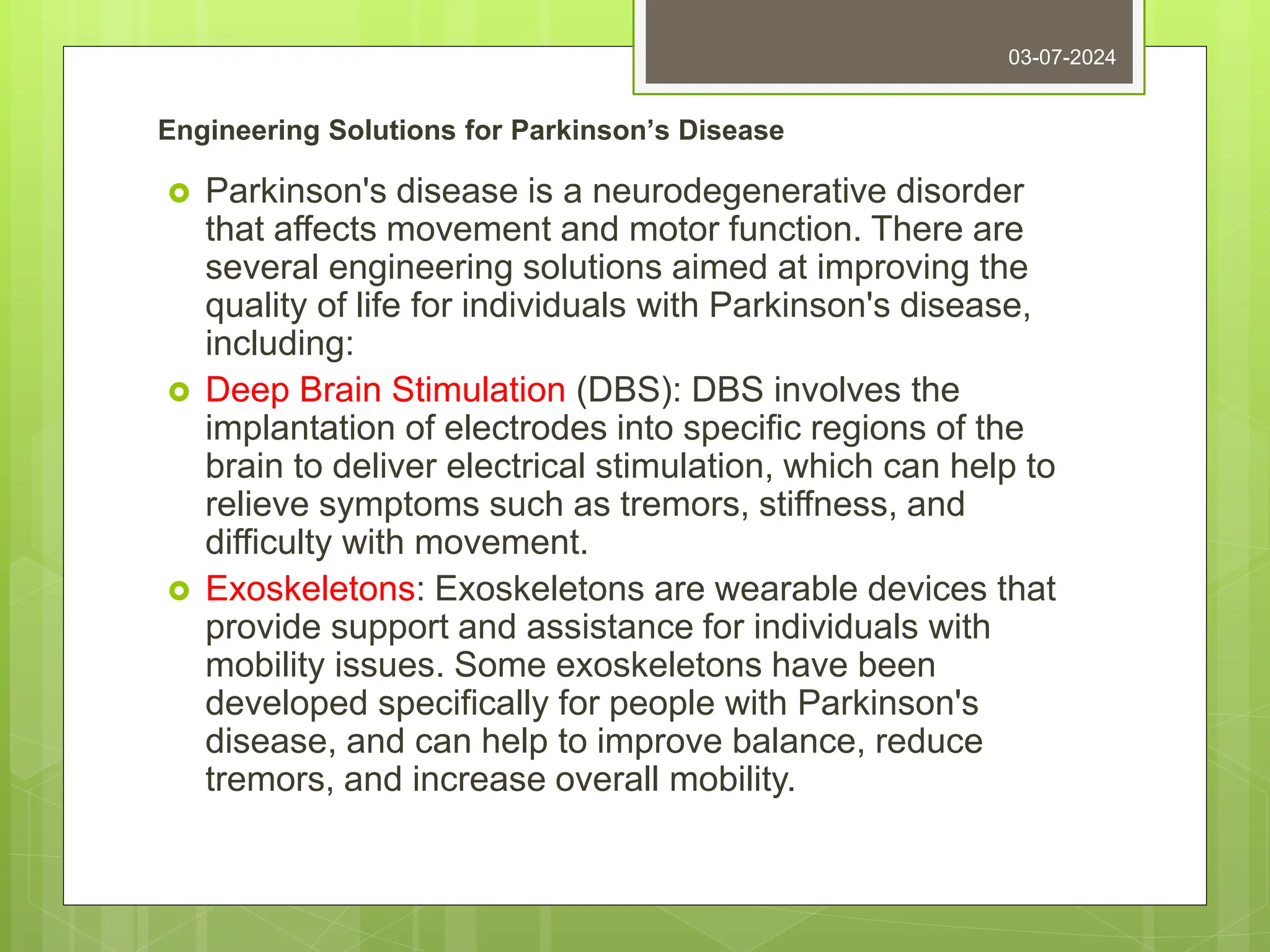
  • 80.
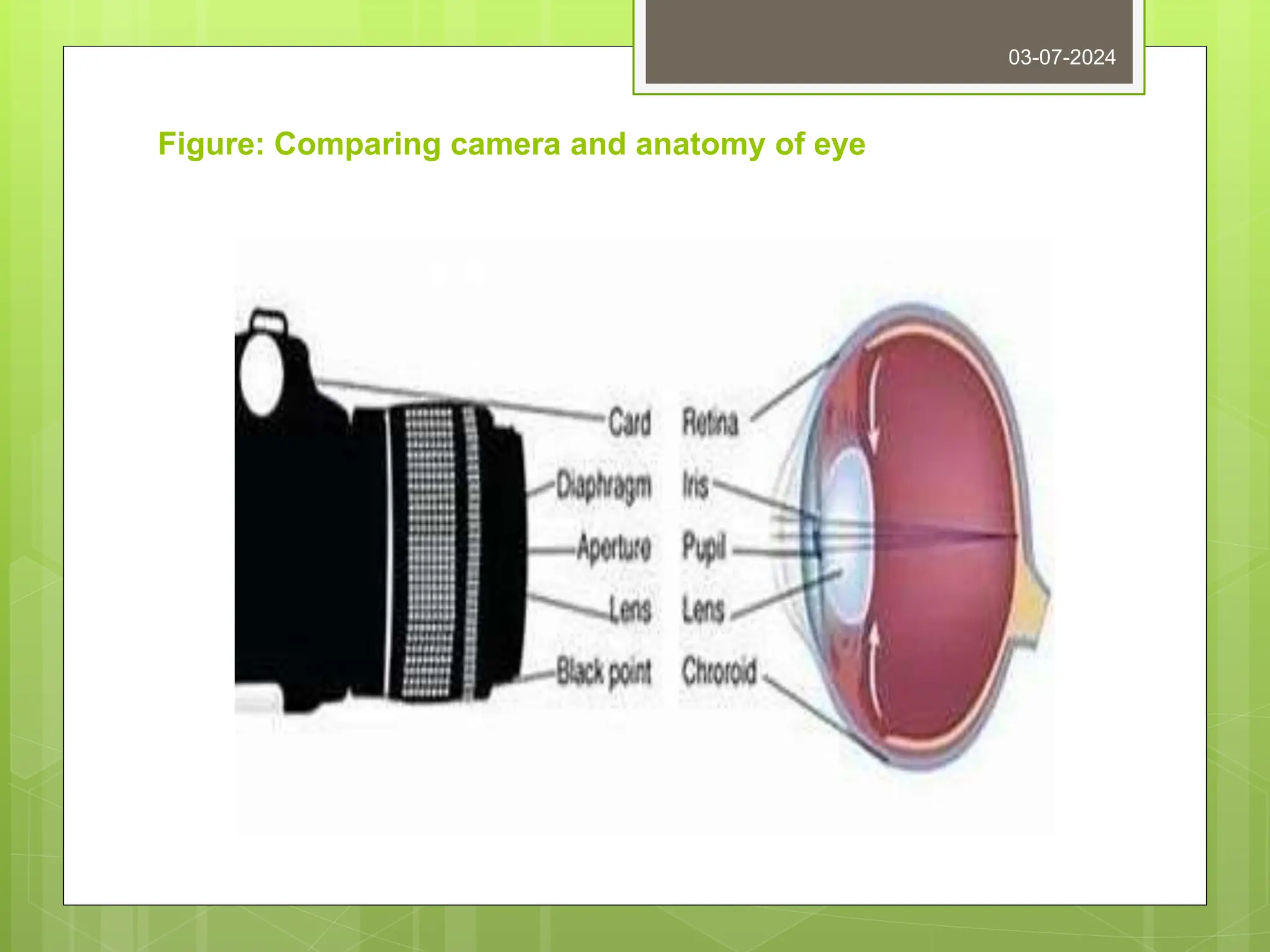
    Figure: Schematic representationof artificial heart 03-07-2024
  • 81.