22-2 BryophytesChapter 22 Plant Diversity
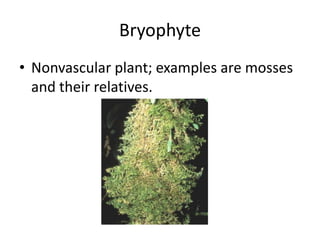
BryophyteNonvascular plant; examples are mosses and their relatives.
Rhizoid In fungi, a rootlikehypha that penetrates the surface of an object; in mosses, a long, thin cell that anchors the moss to the ground and absorbs water and mineral from the surrounding soil.
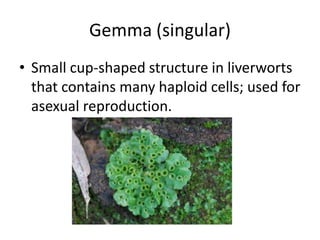
Gemma (singular)Small cup-shaped structure in liverworts that contains many haploid cells; used for asexual reproduction.
ProtonemaMass of tangled green filaments in mosses that forms during germination.
AntheridiumMale reproductive structure in some algae and plants.
ArchegoniumFemale reproductive structure in some plants, including mosses and liverworts.
Key ConceptBryophytes have life cycles that depend on water for reproduction. Lacking vascular tissue, these plants can draw up water by osmosis only a few centimeters above the ground.
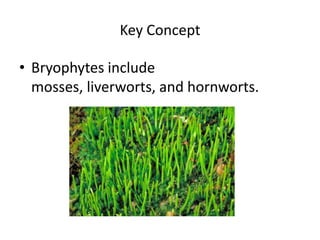
Key ConceptBryophytes include mosses, liverworts, and hornworts.
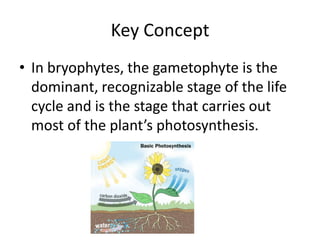
Key ConceptIn bryophytes, the gametophyte is the dominant, recognizable stage of the life cycle and is the stage that carries out most of the plant’s photosynthesis.

Biology 22 2[1]