19.1 Bacteria
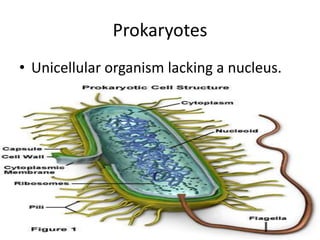
Prokaryotes Unicellular organism lacking a nucleus.
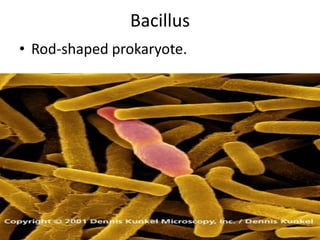
Bacillus Rod-shaped prokaryote.
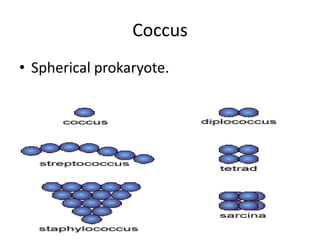
Coccus Spherical prokaryote.
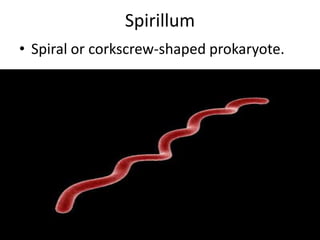
SpirillumSpiral or corkscrew-shaped prokaryote.
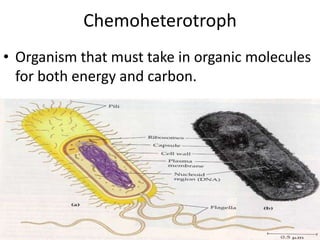
Chemoheterotroph Organism that must take in organic molecules for both energy and carbon.
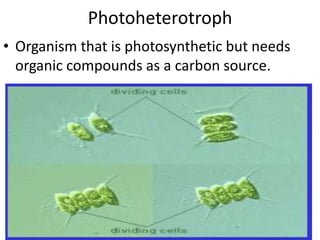
Photoheterotroph Organism that is photosynthetic but needs organic compounds as a carbon source.
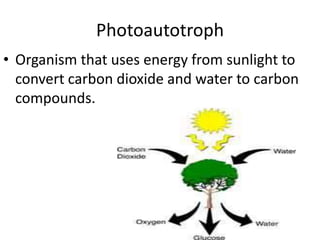
Photoautotroph Organism that uses energy from sunlight to convert carbon dioxide and water to carbon compounds.
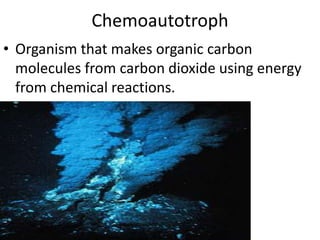
Chemoautotroph Organism that makes organic carbon molecules from carbon dioxide using energy from chemical reactions.
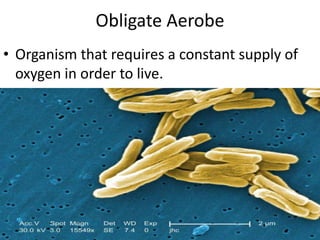
Obligate Aerobe Organism that requires a constant supply of oxygen in order to live.
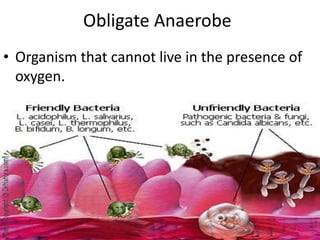
Obligate Anaerobe Organism that cannot live in the presence of oxygen.
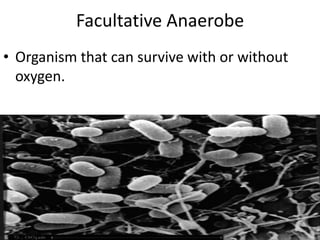
Facultative Anaerobe Organism that can survive with or without oxygen.
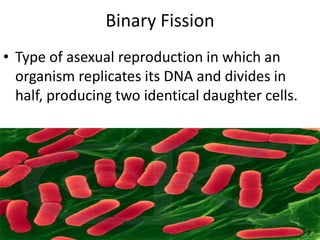
Binary FissionType of asexual reproduction in which an organism replicates its DNA and divides in half, producing two identical daughter cells.
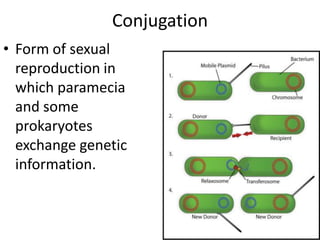
Conjugation Form of sexual reproduction in which paramecia and some prokaryotes exchange genetic information.
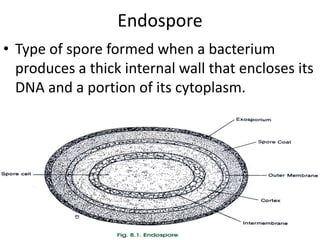
Endospore Type of spore formed when a bacterium produces a thick internal wall that encloses its DNA and a portion of its cytoplasm.
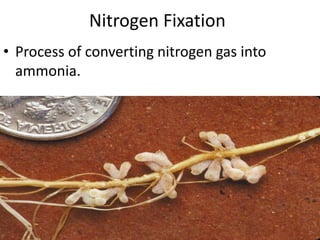
Nitrogen Fixation Process of converting nitrogen gas into ammonia.
Key ConceptBacteria are vital to maintaining the living world. Some are producers that capture energy by photosynthesis. Other are decomposers that break down the nutrients in dead matter and the atmosphere.

Biology 19.1