Bio fuels
An Alternate Fuel
March 24, 2018 1
Presented By:
Kamal Jeet Chauhan
CSJMA14001390203
Chemical Engg.
B. Tech (IV)
Submitted To:
Dr. Brishti
Mitra
Chemical
Engg.(HOD)
Introduction of Biofuels
Biofuel feedstock
Classification of Biofuels
Bioethanol
Biogas
Advantages and Disadvantages of Biofuel
References
March 24, 2018 2
Biofuel is the fuel which is produced from organic
products and wastes.
The common commercially used biofuels are
bioethanol, biodiesel and biomethane.
Bioethanol is made from sugar, algae, wheat and
sugar beet.
Biodiesel is made from vegetable oil, algal lipids,
animal fats.
Biomethane can be produced from waste organic
material, sewage, agriculture waste and domestic
wastes.
March 24, 2018 3
Soybean Corn Sugarcane Sugar beet
Switchgrass Jatropha Camelina Algae
March 24, 2018 4
Cassava Palm oil Certain fungi
Animal fat Agricultural wastes
March 24, 2018 5
Bioethanol
Biodiesel
Biogas
Biobutanol
March 24, 2018 6
Bioethanol is produced by the fermentation of
carbohydrate rich source which includes sugar
cane, sugar beet, corn etc.
 It is colorless and clear liquid.
One of the widely used alternative automotive
fuel in the world.
March 24, 2018 7
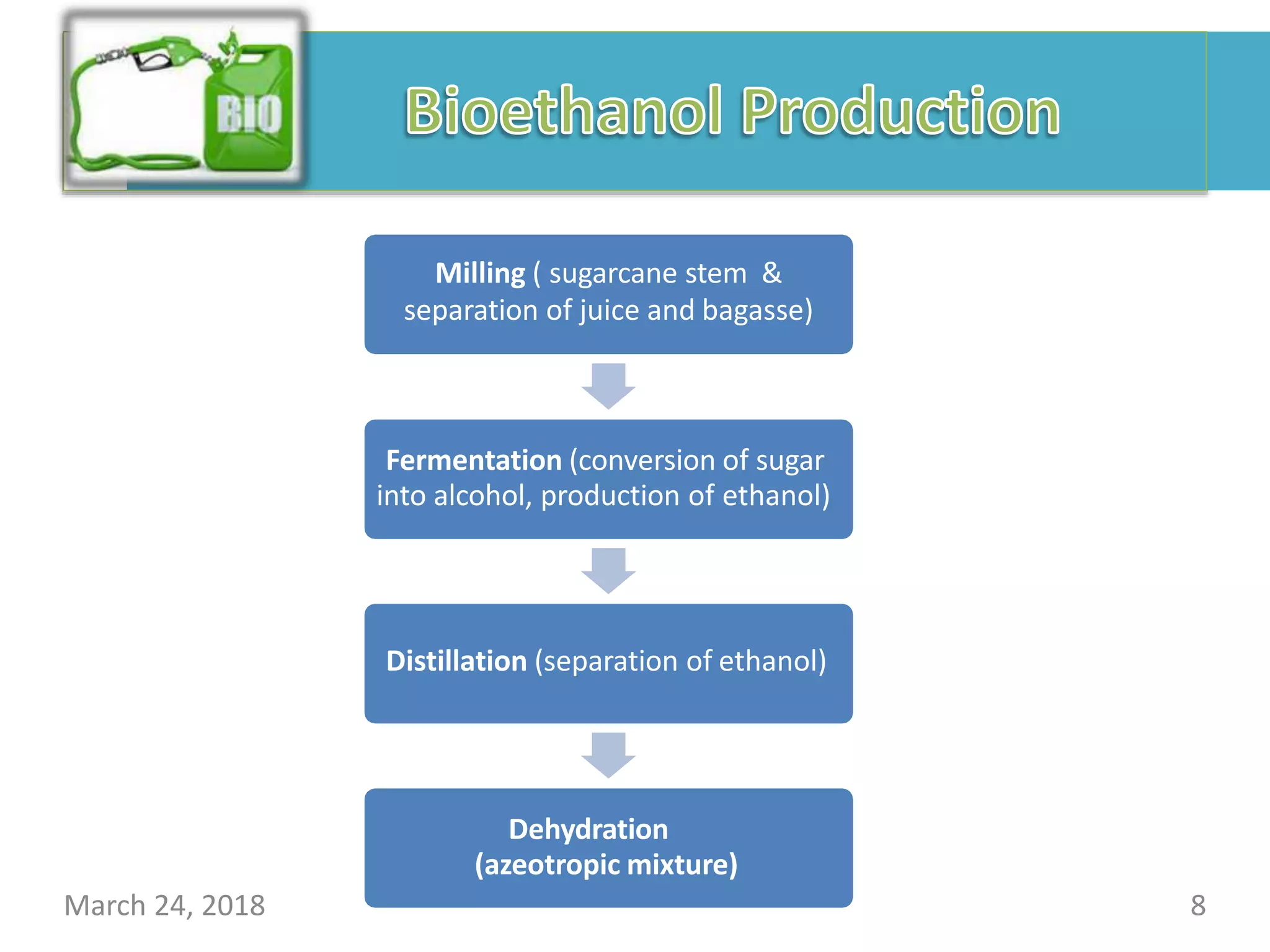
Milling ( sugarcane stem &
separation of juice and bagasse)
Fermentation (conversion of sugar
into alcohol, production of ethanol)
Distillation (separation of ethanol)
Dehydration
(azeotropic mixture)
March 24, 2018 8
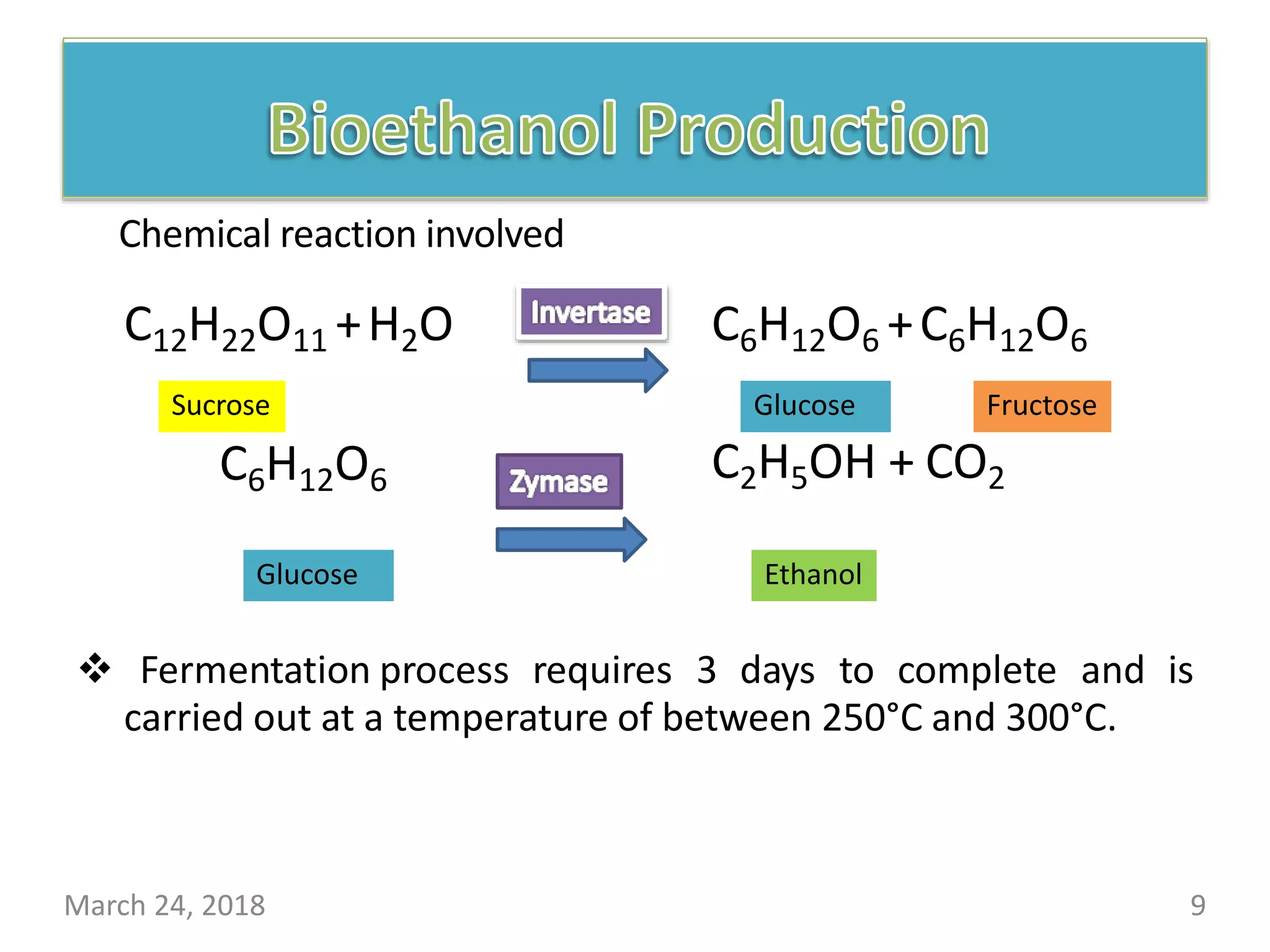
C12H22O11 +H2O C6H12O6 +C6H12O6
C6H12O6 C2H5OH + CO2
 Fermentation process requires 3 days to complete and is
carried out at a temperature of between 250°C and 300°C.
Sucrose Glucose
Glucose
Fructose
Ethanol
March 24, 2018 9
Chemical reaction involved
Advantages Disadvantages
Ethanol is a renewable resource Large amounts leading to problems
such as soil erosion, deforestation.
Ethanol burns more cleanly in air than
petroleum
Typical current engines would require
modification
The use of ethanol reduce carbon
dioxide emissions
Expensive
March 24, 2018 10
March 24, 2018 11
A mixture of CH4 , CO2 and other gases
Gas %
Methane 50–75
Carbon dioxide 25–50
Nitrogen 0–10
Hydrogen 0–1
Hydrogen sulfide 0–3
Oxygen 0–2
March 24, 2018 12
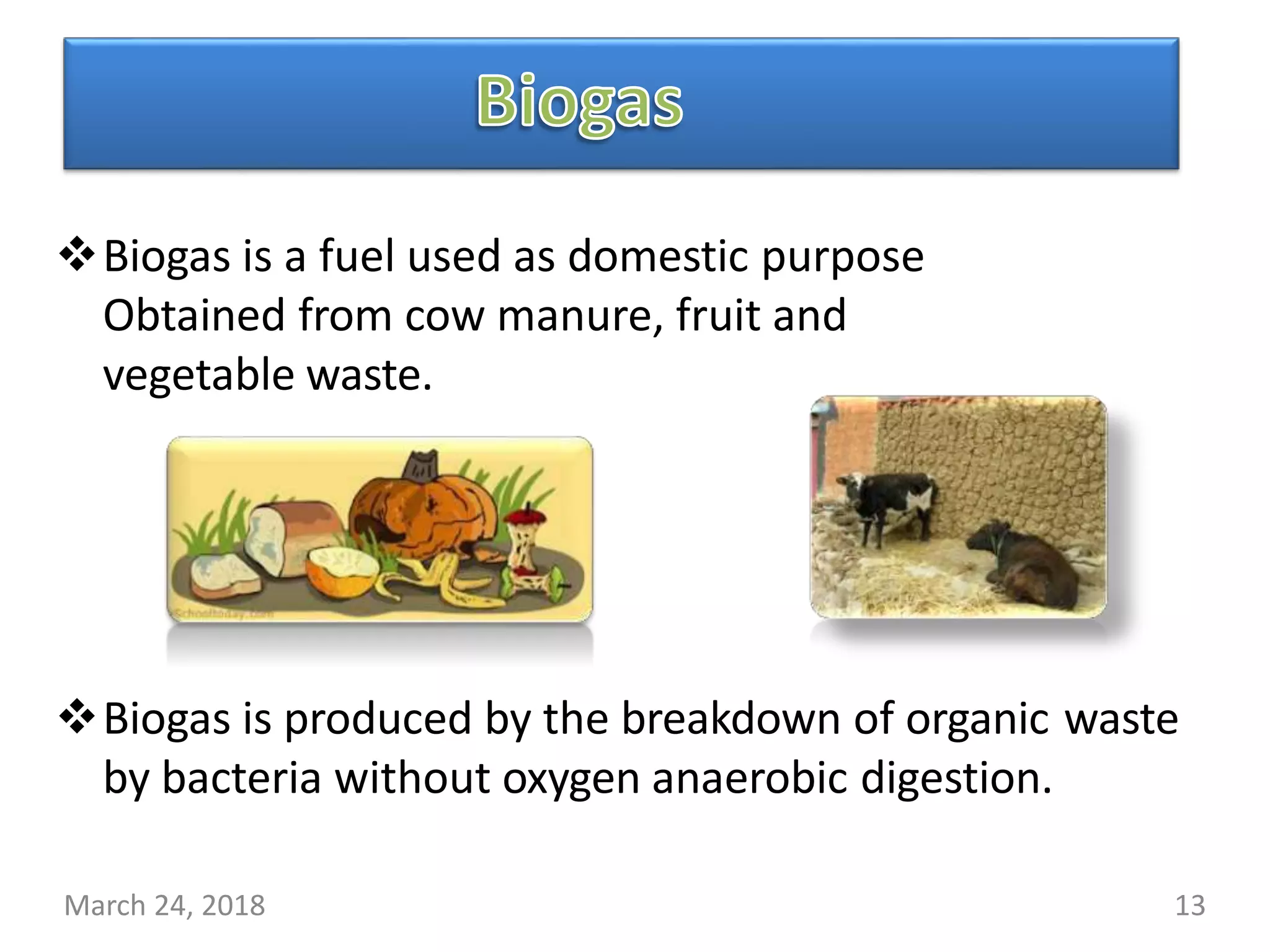
Biogas is a fuel used as domestic purpose
Obtained from cow manure, fruit and
vegetable waste.
Biogas is produced by the breakdown of organic waste
by bacteria without oxygen anaerobic digestion.
March 24, 2018 13
Two Types of Anaerobic Digestion
25-38°C for 14-30 days
50-60°C for 12-14 days
Mesophilic process
Thermophilic process
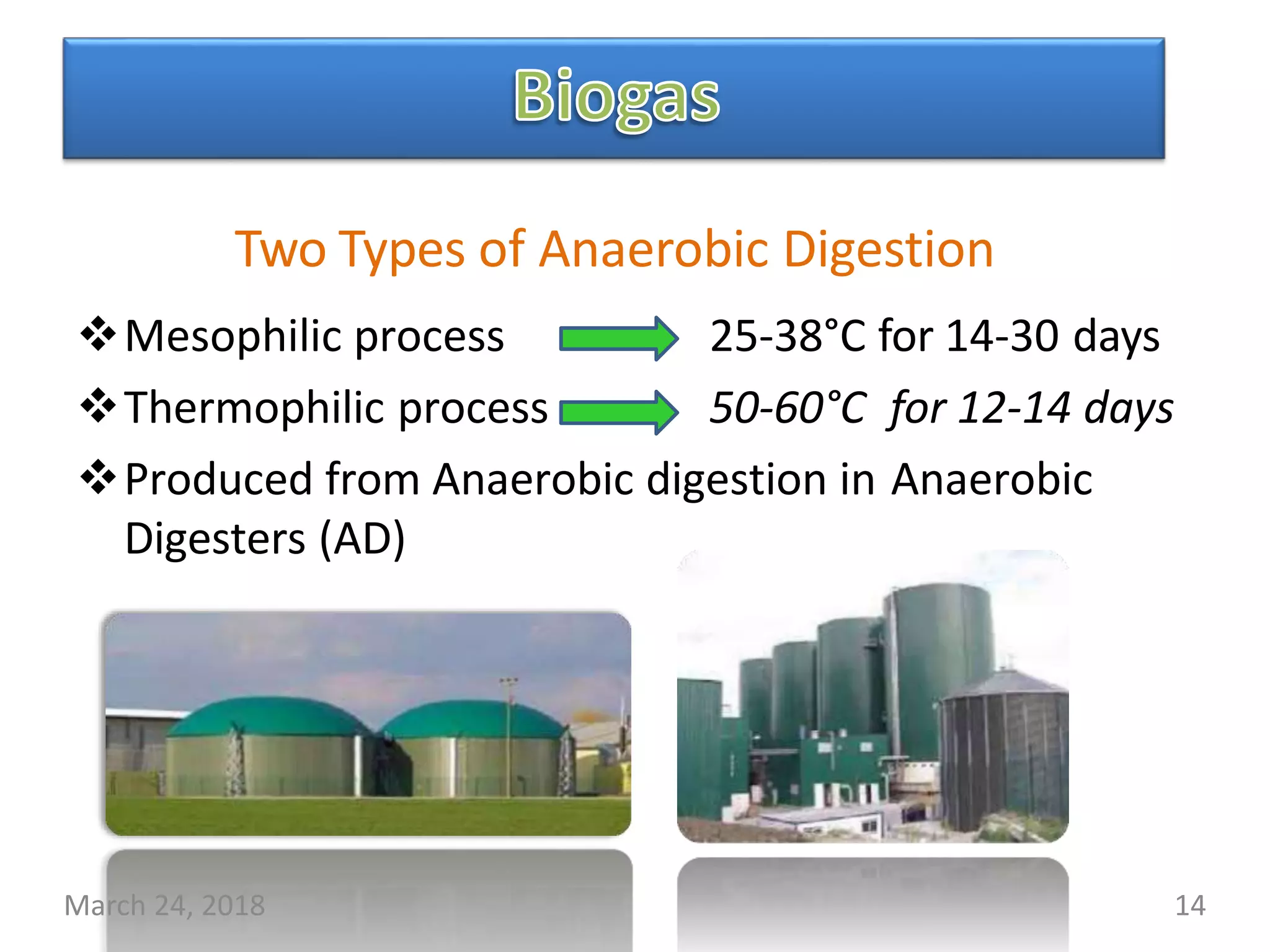
Produced from Anaerobic digestion in Anaerobic
Digesters (AD)
March 24, 2018 14
Stops air getting intothe
digester- creates
anaerobic condition
Gas to kitchen
Sludge used asa
fertiliser
March 24, 2018 15
A. Methanosarcina (cocci) Methanosaeta
Clostridium formicoaceticumSyntrophomonas wolfeiMarch 24, 2018 16
Reduce air and water pollution more
environmentally friendly fertilizers
Reduced greenhouse gas emissions
concerns about waste management in the
agriculture and food industry
Energy security
March 24, 2018 17
Cooking
Lighting
Fuel for engine
March 24, 2018 18
Renewable
Reduce Greenhouse Gases
Economic Security
Easy to Source
Lower level of Pollution
March 24, 2018 19
High Cost of Production
Industrial Pollution
Future Rise in Price
Shortage of Food
Use of Fertilizer
March 24, 2018 20
Reduce wastes
New agricultural markets
Improve balance of payments
global warming reduction
Benefit developing nations
March 24, 2018 21
March 24, 2018 22
 Kroschwitz, J.I. Kirk –Othmer Encylopedia of Chemical
Technology,
Vol. 9
 https://en.wikipedia.org/wiki/Biofuel
 Cardona, C.A. and Sánchez, Ó.J., 2007. Fuel ethanol
production: process design trends and integration
opportunities. Bioresource technology, 98(12), pp.2415-
2457.
 Oura E.(1977), Reaction products of yeast fermentation,
Process Biochemistry,edt.12(Vol.3):19-21
March 24, 2018 23

BIOFUEL

  • 1.
    Bio fuels An AlternateFuel March 24, 2018 1 Presented By: Kamal Jeet Chauhan CSJMA14001390203 Chemical Engg. B. Tech (IV) Submitted To: Dr. Brishti Mitra Chemical Engg.(HOD)
  • 2.
    Introduction of Biofuels Biofuelfeedstock Classification of Biofuels Bioethanol Biogas Advantages and Disadvantages of Biofuel References March 24, 2018 2
  • 3.
    Biofuel is thefuel which is produced from organic products and wastes. The common commercially used biofuels are bioethanol, biodiesel and biomethane. Bioethanol is made from sugar, algae, wheat and sugar beet. Biodiesel is made from vegetable oil, algal lipids, animal fats. Biomethane can be produced from waste organic material, sewage, agriculture waste and domestic wastes. March 24, 2018 3
  • 4.
    Soybean Corn SugarcaneSugar beet Switchgrass Jatropha Camelina Algae March 24, 2018 4
  • 5.
    Cassava Palm oilCertain fungi Animal fat Agricultural wastes March 24, 2018 5
  • 6.
  • 7.
    Bioethanol is producedby the fermentation of carbohydrate rich source which includes sugar cane, sugar beet, corn etc.  It is colorless and clear liquid. One of the widely used alternative automotive fuel in the world. March 24, 2018 7
  • 8.
    Milling ( sugarcanestem & separation of juice and bagasse) Fermentation (conversion of sugar into alcohol, production of ethanol) Distillation (separation of ethanol) Dehydration (azeotropic mixture) March 24, 2018 8
  • 9.
    C12H22O11 +H2O C6H12O6+C6H12O6 C6H12O6 C2H5OH + CO2  Fermentation process requires 3 days to complete and is carried out at a temperature of between 250°C and 300°C. Sucrose Glucose Glucose Fructose Ethanol March 24, 2018 9 Chemical reaction involved
  • 10.
    Advantages Disadvantages Ethanol isa renewable resource Large amounts leading to problems such as soil erosion, deforestation. Ethanol burns more cleanly in air than petroleum Typical current engines would require modification The use of ethanol reduce carbon dioxide emissions Expensive March 24, 2018 10
  • 11.
  • 12.
    A mixture ofCH4 , CO2 and other gases Gas % Methane 50–75 Carbon dioxide 25–50 Nitrogen 0–10 Hydrogen 0–1 Hydrogen sulfide 0–3 Oxygen 0–2 March 24, 2018 12
  • 13.
    Biogas is afuel used as domestic purpose Obtained from cow manure, fruit and vegetable waste. Biogas is produced by the breakdown of organic waste by bacteria without oxygen anaerobic digestion. March 24, 2018 13
  • 14.
    Two Types ofAnaerobic Digestion 25-38°C for 14-30 days 50-60°C for 12-14 days Mesophilic process Thermophilic process Produced from Anaerobic digestion in Anaerobic Digesters (AD) March 24, 2018 14
  • 15.
    Stops air gettingintothe digester- creates anaerobic condition Gas to kitchen Sludge used asa fertiliser March 24, 2018 15
  • 16.
    A. Methanosarcina (cocci)Methanosaeta Clostridium formicoaceticumSyntrophomonas wolfeiMarch 24, 2018 16
  • 17.
    Reduce air andwater pollution more environmentally friendly fertilizers Reduced greenhouse gas emissions concerns about waste management in the agriculture and food industry Energy security March 24, 2018 17
  • 18.
  • 19.
    Renewable Reduce Greenhouse Gases EconomicSecurity Easy to Source Lower level of Pollution March 24, 2018 19
  • 20.
    High Cost ofProduction Industrial Pollution Future Rise in Price Shortage of Food Use of Fertilizer March 24, 2018 20
  • 21.
    Reduce wastes New agriculturalmarkets Improve balance of payments global warming reduction Benefit developing nations March 24, 2018 21
  • 22.
    March 24, 201822  Kroschwitz, J.I. Kirk –Othmer Encylopedia of Chemical Technology, Vol. 9  https://en.wikipedia.org/wiki/Biofuel  Cardona, C.A. and Sánchez, Ó.J., 2007. Fuel ethanol production: process design trends and integration opportunities. Bioresource technology, 98(12), pp.2415- 2457.  Oura E.(1977), Reaction products of yeast fermentation, Process Biochemistry,edt.12(Vol.3):19-21
  • 23.