Contents
Introduction.
Concept of biodiversity and its types.
Distribution of biodiversity.
Benefits of biodiversity.
Threats of biodiversity.
Conservation of biodiversity.
Conventions on biodiversity.
Conclusion.
The Term Biodiversity was first coined
by Walter G. Rosen in 1986.
The biosphere comprises of complex collections of
innumerable organisms, known as the biodiversity,
which constitute the vital support for survival of human
race.
Biological diversity, abbreviated as biodiversity,
represent the sum total of various life forms such as
Unicellular fungi, protozoa, bacteria and multi cellular
organisms Such as Plants, Animals, Birds, Reptiles Etc.
Biodiversity is the Variety of life forms on earth and
the essential interdependence of all living things.
As defined in the Conventions on biological diversity
signed at Rio De Janerio (Brazil) in 1992 by 154
Countries, the Biodiversity Defined as “ the variability
among living organisms from all sources including,
inter alia, terrestrial, marine and other aquatic eco-
systems and the ecological complexes of which the
area part- this include diversity with in species,
between species and of the ecosystems.
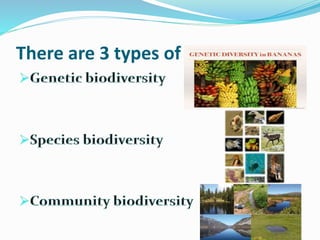
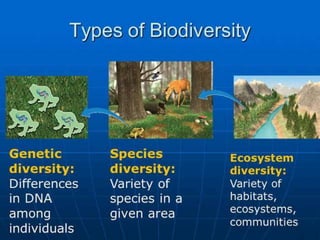
There are 3 types of Biodiversity:-
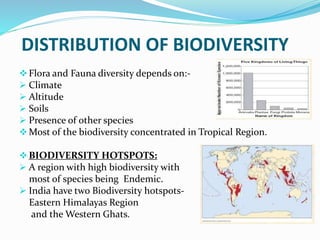
DISTRIBUTION OF BIODIVERSITY
Flora and Fauna diversity depends on:-
 Climate
 Altitude
 Soils
 Presence of other species
Most of the biodiversity concentrated in Tropical Region.
BIODIVERSITY HOTSPOTS:
 A region with high biodiversity with
most of species being Endemic.
 India have two Biodiversity hotspots-
Eastern Himalayas Region
and the Western Ghats.
BENEFITS OF BIODIVERSITY
 Consumptive Value:-
 Food/ Drink
 Fuel
 Medicine
 Better crop varieties
 Industrial materials
 Non- Consumptive value:-
 Recreation
 Education and Research
 Traditional Value
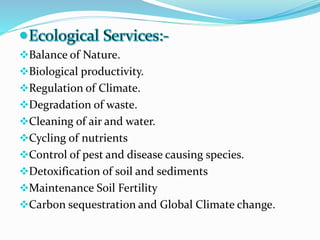
Balance of Nature.
Biological productivity.
Regulation of Climate.
Degradation of waste.
Cleaning of air and water.
Cycling of nutrients
Control of pest and disease causing species.
Detoxification of soil and sediments
Maintenance Soil Fertility
Carbon sequestration and Global Climate change.
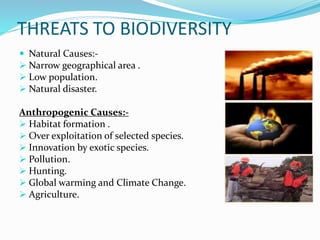
THREATS TO BIODIVERSITY
 Natural Causes:-
 Narrow geographical area .
 Low population.
 Natural disaster.
Anthropogenic Causes:-
 Habitat formation .
 Over exploitation of selected species.
 Innovation by exotic species.
 Pollution.
 Hunting.
 Global warming and Climate Change.
 Agriculture.
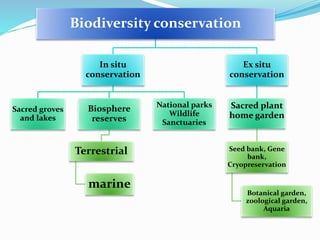
Biodiversity conservation
In situ
conservation
Sacred groves
and lakes
Biosphere
reserves
Terrestrial
marine
National parks
Wildlife
Sanctuaries
Ex situ
conservation
Sacred plant
home garden
Seed bank, Gene
bank,
Cryopreservation
Botanical garden,
zoological garden,
Aquaria
BIODIVERSITY CONVENTIONS
 The first conventions on biodiversity organized at Rio De Janerio,
capital of Brazil from June 5 to 16, 1992 named as United Nations
Conference On Environment And Development (UNCED), better
known as Rio summit to maintain ecological balance and enrich
biodiversity. The aggrement on biodiversity signed by 150 countries
including three Programmes:-
 To ensure conservation of biodiversity.
 Sustainable use of biodiversity.
 Rational and equitable share of profit to accrue from use of genetic
resources.
 The second convention organized at Johannesburg in 2002 called world
Summit On Sustainable Development(WSSD) where the Biodiversity
and Sustainable Ecosystem management was the issue.
The International Conference held on Biodiversity in
Relation to Food & Human Security in a warming planet
15 -17 February,2010 in Chennai.
International Conference on Wildlife & Biodiversity
Conservation held on 3 to 5 June, 2010 at Dal lake,
Srinagar , Kashmir.
Convention on International Trade in Endangered
Species of Wild Fauna and Flora (CITIES)
Convention on the Conservation of Migratory Species of
Wild Animals(CMS).
Convention on wetlands ( Ramsar Conventions)
World Heritage Convention(WHC)
Convention on Biological diversity(CBD)
Biodiversity is our life. If the Biodiversity got lost
at this rate then in near future, the survival of
Human being will be threatened. So, it is our
moral duty to conserve Biodiversity as well as our
Environment. Long term maintenance of species
and their management requires co-operative
efforts across entire landscapes. Biodiversity
should be dealt with at scale of habitats or
ecosystems rather than at species level.

Biodiversity ppt

  • 2.
    Contents Introduction. Concept of biodiversityand its types. Distribution of biodiversity. Benefits of biodiversity. Threats of biodiversity. Conservation of biodiversity. Conventions on biodiversity. Conclusion.
  • 3.
    The Term Biodiversitywas first coined by Walter G. Rosen in 1986. The biosphere comprises of complex collections of innumerable organisms, known as the biodiversity, which constitute the vital support for survival of human race. Biological diversity, abbreviated as biodiversity, represent the sum total of various life forms such as Unicellular fungi, protozoa, bacteria and multi cellular organisms Such as Plants, Animals, Birds, Reptiles Etc.
  • 4.
    Biodiversity is theVariety of life forms on earth and the essential interdependence of all living things. As defined in the Conventions on biological diversity signed at Rio De Janerio (Brazil) in 1992 by 154 Countries, the Biodiversity Defined as “ the variability among living organisms from all sources including, inter alia, terrestrial, marine and other aquatic eco- systems and the ecological complexes of which the area part- this include diversity with in species, between species and of the ecosystems.
  • 5.
    There are 3types of Biodiversity:-
  • 7.
    DISTRIBUTION OF BIODIVERSITY Floraand Fauna diversity depends on:-  Climate  Altitude  Soils  Presence of other species Most of the biodiversity concentrated in Tropical Region. BIODIVERSITY HOTSPOTS:  A region with high biodiversity with most of species being Endemic.  India have two Biodiversity hotspots- Eastern Himalayas Region and the Western Ghats.
  • 8.
    BENEFITS OF BIODIVERSITY Consumptive Value:-  Food/ Drink  Fuel  Medicine  Better crop varieties  Industrial materials  Non- Consumptive value:-  Recreation  Education and Research  Traditional Value
  • 9.
    Balance of Nature. Biologicalproductivity. Regulation of Climate. Degradation of waste. Cleaning of air and water. Cycling of nutrients Control of pest and disease causing species. Detoxification of soil and sediments Maintenance Soil Fertility Carbon sequestration and Global Climate change.
  • 10.
    THREATS TO BIODIVERSITY Natural Causes:-  Narrow geographical area .  Low population.  Natural disaster. Anthropogenic Causes:-  Habitat formation .  Over exploitation of selected species.  Innovation by exotic species.  Pollution.  Hunting.  Global warming and Climate Change.  Agriculture.
  • 11.
    Biodiversity conservation In situ conservation Sacredgroves and lakes Biosphere reserves Terrestrial marine National parks Wildlife Sanctuaries Ex situ conservation Sacred plant home garden Seed bank, Gene bank, Cryopreservation Botanical garden, zoological garden, Aquaria
  • 12.
    BIODIVERSITY CONVENTIONS  Thefirst conventions on biodiversity organized at Rio De Janerio, capital of Brazil from June 5 to 16, 1992 named as United Nations Conference On Environment And Development (UNCED), better known as Rio summit to maintain ecological balance and enrich biodiversity. The aggrement on biodiversity signed by 150 countries including three Programmes:-  To ensure conservation of biodiversity.  Sustainable use of biodiversity.  Rational and equitable share of profit to accrue from use of genetic resources.  The second convention organized at Johannesburg in 2002 called world Summit On Sustainable Development(WSSD) where the Biodiversity and Sustainable Ecosystem management was the issue.
  • 13.
    The International Conferenceheld on Biodiversity in Relation to Food & Human Security in a warming planet 15 -17 February,2010 in Chennai. International Conference on Wildlife & Biodiversity Conservation held on 3 to 5 June, 2010 at Dal lake, Srinagar , Kashmir. Convention on International Trade in Endangered Species of Wild Fauna and Flora (CITIES) Convention on the Conservation of Migratory Species of Wild Animals(CMS). Convention on wetlands ( Ramsar Conventions) World Heritage Convention(WHC) Convention on Biological diversity(CBD)
  • 14.
    Biodiversity is ourlife. If the Biodiversity got lost at this rate then in near future, the survival of Human being will be threatened. So, it is our moral duty to conserve Biodiversity as well as our Environment. Long term maintenance of species and their management requires co-operative efforts across entire landscapes. Biodiversity should be dealt with at scale of habitats or ecosystems rather than at species level.