Defeating Pneumonia:
Overcoming the Challenges
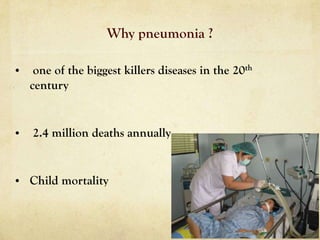
Why pneumonia ?

•    one of the biggest killers diseases in the 20th
    century


•   2.4 million deaths annually


• Child mortality
Why Pneumonia
Enough efforts ?

  WHO & UNICEF campaigns


  Sub-Sahara countries and pneumonia
Causes of pneumonia

bacterial, viral and fungal
Pneumonia and ARI
Spreading infection ways
Mechanism of the disease
Symptoms

General symptoms


Decisive symptoms


Chest X-ray and blood test
Vulnerability enhancing
        factors
Demographics
Age
        Children under 5
        Immune system
        Breastfeeding: GAPP Target

Gender?


Source: WHO; “Pneumonia, the forgotten killer of children”
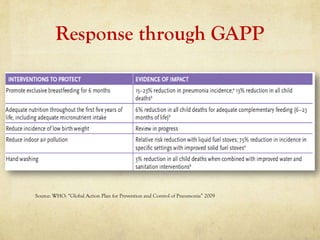
Response through GAPP


Source: WHO: “Global Action Plan for Prevention and Control of Pneumonia” 2009
Context 1

Indoor smoke pollution
   50% of mortality
   Cognitive
   impairment, COPD, lung
   cancer, inflammations and
   immune system
   GAPP Target
Response through GAPP


Source: WHO: “Global Action Plan for Prevention and Control of Pneumonia” 2009
Context 2

Disasters and crises
    Rise of mortality: 17 %
    to 30 %
    Shelter
    Hygiene
    Overcrowding
    Nutrition
    Access to healthcare
    Clustering
HIV/AIDS and pneumonia
Ineffective immune
system
Globally
    90% in low income
    countries
    Antiretroviral therapy
    coverage

Different strategy
    Pneumocystis Jirovecii
    Standard vaccinations
    ineffective
Antiretroviral Therapy Coverage Low-
   and middle income countries


    http://gamapserver.who.int/gho/interactive_charts/hi
    v/art/atlas.html
Response through GAPP


Source: WHO: “Global Action Plan for Prevention and Control of Pneumonia” 2009
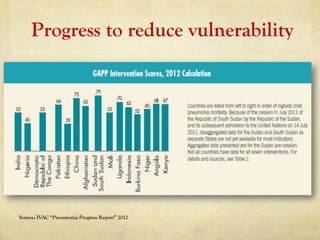
Progress to reduce vulnerability


Source: IVAC “Pneumonia Progress Report” 2012
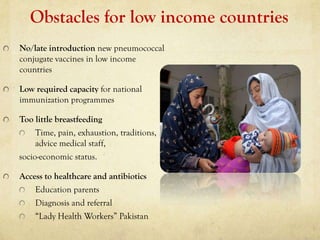
Obstacles for low income countries
No/late introduction new pneumococcal
conjugate vaccines in low income
countries

Low required capacity for national
immunization programmes

Too little breastfeeding
     Time, pain, exhaustion, traditions,
     advice medical staff,
socio-economic status.

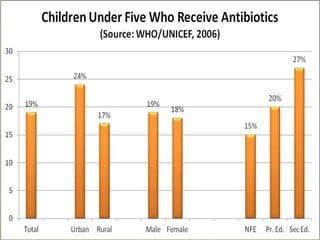
Access to healthcare and antibiotics
    Education parents
    Diagnosis and referral
    “Lady Health Workers” Pakistan
Pneumonia
Prevention, Treatment and
  Rehabilitation
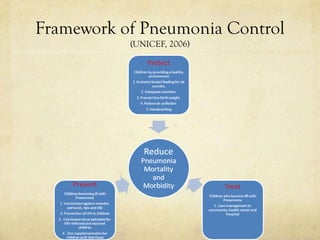
Framework of Pneumonia Control
           (UNICEF, 2006)
Controlling Pneumonia
Vaccination, which includes the use of vaccines against
Streptococcus Pneumonia and Haemophilus Influenza type b.
Case management in the community, health centers and
the hospitals
Exclusive breast feeding for the first six months of life
Improvement in nutrition and prevention of low birth
weight
Control of indoor air pollution and promotion of a
healthy environment
Prevention and management of HIV infection
Source: WHO/UNICEF, 2006


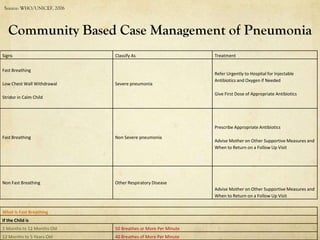
   Community Based Case Management of Pneumonia
Signs                       Classify As                      Treatment

Fast Breathing
                                                             Refer Urgently to Hospital for Injectable
                                                             Antibiotics and Oxygen if Needed
Low Chest Wall Withdrawal   Severe pneumonia

                                                             Give First Dose of Appropriate Antibiotics
Stridor in Calm Child


                                                             Prescribe Appropriate Antibiotics

Fast Breathing              Non Severe pneumonia
                                                             Advise Mother on Other Supportive Measures and
                                                             When to Return on a Follow Up Visit


Non Fast Breathing          Other Respiratory Disease
                                                             Advise Mother on Other Supportive Measures and
                                                             When to Return on a Follow Up Visit


What is Fast Breathing
If the Child is
2 Months to 12 Months Old   50 Breathes or More Per Minute
12 Months to 5 Years Old    40 Breathes of More Per Minute
Treatment
Prompt identification

Full course of antibiotics (bacterial): dangerous if given
without proper diagnosis
Pneumonia Prevention:
               Challenges
   Lack of resources (46% sub sahara, 39 % south asia, 36%
   LDCs)

   Access formal medical services

   Training of community level volunteers

   Creating a barrier

free environment
Socioeconomic Factors:
Opportunities and Liabilities
 Mexico

 Kenya

 Nicaragua
Mexico: Socioeconomic Liabilities
               (I)
 Pneumonia caused by H1N1

 Pandemic and Post-Pandemic Group

 Socio-economic Status (SES)
Mexico: Socioeconomic Liabilities
               (I)
 Socio-economic Status (SES)

 Basic necessities, medical care, insurance

 Access to information

 Health Care Seeking Behaviour
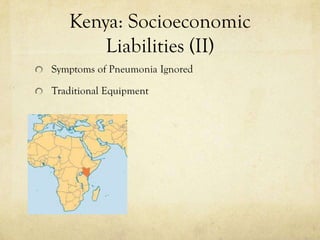
Kenya: Socioeconomic
       Liabilities (II)
Symptoms of Pneumonia Ignored

Traditional Equipment
CCM in Nicaragua:
Socioeconomic Opportunities
Community Case Management

36% Reduction in Mortality in Children 0-4

Integral part of Nicaragua’s Maternal and Child Health
Strategy

Proactive and Reactive Measures
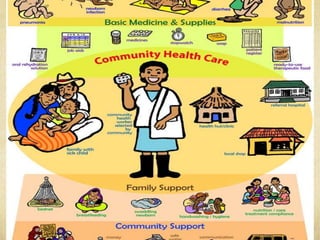
CCM in Nicaragua:
   Socioeconomic Opportunities
Step 1: Find      Step 4: Empower

Step 2: Train     Step 5: Visit

Step 3: Educate
Policy Recommendations
GAPP: Cost Implications
Pneumonia under the National Immunization
Plan
National Campaign on exclusive breast feeding
Integrated Child Disease Management Plan at the
National Level
Promotion of Community Case Management
Equitable distribution of resources
Mass Awareness Program
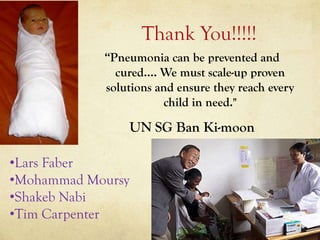
Thank You!!!!!
            “Pneumonia can be prevented and
              cured.... We must scale-up proven
            solutions and ensure they reach every
                        child in need."

                   UN SG Ban Ki-moon

•Lars Faber
•Mohammad Moursy
•Shakeb Nabi
•Tim Carpenter

Fighting Pneumonia: Issues and Challenges

  • 1.
  • 2.
    Why pneumonia ? • one of the biggest killers diseases in the 20th century • 2.4 million deaths annually • Child mortality
  • 3.
  • 4.
    Enough efforts ? WHO & UNICEF campaigns Sub-Sahara countries and pneumonia
  • 5.
    Causes of pneumonia bacterial,viral and fungal Pneumonia and ARI Spreading infection ways Mechanism of the disease
  • 6.
  • 7.
  • 8.
    Demographics Age Children under 5 Immune system Breastfeeding: GAPP Target Gender? Source: WHO; “Pneumonia, the forgotten killer of children”
  • 9.
    Response through GAPP Source:WHO: “Global Action Plan for Prevention and Control of Pneumonia” 2009
  • 10.
    Context 1 Indoor smokepollution 50% of mortality Cognitive impairment, COPD, lung cancer, inflammations and immune system GAPP Target
  • 11.
    Response through GAPP Source:WHO: “Global Action Plan for Prevention and Control of Pneumonia” 2009
  • 12.
    Context 2 Disasters andcrises Rise of mortality: 17 % to 30 % Shelter Hygiene Overcrowding Nutrition Access to healthcare Clustering
  • 13.
    HIV/AIDS and pneumonia Ineffectiveimmune system Globally 90% in low income countries Antiretroviral therapy coverage Different strategy Pneumocystis Jirovecii Standard vaccinations ineffective
  • 14.
    Antiretroviral Therapy CoverageLow- and middle income countries http://gamapserver.who.int/gho/interactive_charts/hi v/art/atlas.html
  • 15.
    Response through GAPP Source:WHO: “Global Action Plan for Prevention and Control of Pneumonia” 2009
  • 16.
    Progress to reducevulnerability Source: IVAC “Pneumonia Progress Report” 2012
  • 17.
    Obstacles for lowincome countries No/late introduction new pneumococcal conjugate vaccines in low income countries Low required capacity for national immunization programmes Too little breastfeeding Time, pain, exhaustion, traditions, advice medical staff, socio-economic status. Access to healthcare and antibiotics Education parents Diagnosis and referral “Lady Health Workers” Pakistan
  • 18.
  • 22.
    Framework of PneumoniaControl (UNICEF, 2006)
  • 23.
    Controlling Pneumonia Vaccination, whichincludes the use of vaccines against Streptococcus Pneumonia and Haemophilus Influenza type b. Case management in the community, health centers and the hospitals Exclusive breast feeding for the first six months of life Improvement in nutrition and prevention of low birth weight Control of indoor air pollution and promotion of a healthy environment Prevention and management of HIV infection
  • 24.
    Source: WHO/UNICEF, 2006 Community Based Case Management of Pneumonia Signs Classify As Treatment Fast Breathing Refer Urgently to Hospital for Injectable Antibiotics and Oxygen if Needed Low Chest Wall Withdrawal Severe pneumonia Give First Dose of Appropriate Antibiotics Stridor in Calm Child Prescribe Appropriate Antibiotics Fast Breathing Non Severe pneumonia Advise Mother on Other Supportive Measures and When to Return on a Follow Up Visit Non Fast Breathing Other Respiratory Disease Advise Mother on Other Supportive Measures and When to Return on a Follow Up Visit What is Fast Breathing If the Child is 2 Months to 12 Months Old 50 Breathes or More Per Minute 12 Months to 5 Years Old 40 Breathes of More Per Minute
  • 25.
    Treatment Prompt identification Full courseof antibiotics (bacterial): dangerous if given without proper diagnosis
  • 26.
    Pneumonia Prevention: Challenges Lack of resources (46% sub sahara, 39 % south asia, 36% LDCs) Access formal medical services Training of community level volunteers Creating a barrier free environment
  • 27.
    Socioeconomic Factors: Opportunities andLiabilities Mexico Kenya Nicaragua
  • 28.
    Mexico: Socioeconomic Liabilities (I) Pneumonia caused by H1N1 Pandemic and Post-Pandemic Group Socio-economic Status (SES)
  • 29.
    Mexico: Socioeconomic Liabilities (I) Socio-economic Status (SES) Basic necessities, medical care, insurance Access to information Health Care Seeking Behaviour
  • 30.
    Kenya: Socioeconomic Liabilities (II) Symptoms of Pneumonia Ignored Traditional Equipment
  • 31.
    CCM in Nicaragua: SocioeconomicOpportunities Community Case Management 36% Reduction in Mortality in Children 0-4 Integral part of Nicaragua’s Maternal and Child Health Strategy Proactive and Reactive Measures
  • 33.
    CCM in Nicaragua: Socioeconomic Opportunities Step 1: Find Step 4: Empower Step 2: Train Step 5: Visit Step 3: Educate
  • 34.
    Policy Recommendations GAPP: CostImplications Pneumonia under the National Immunization Plan National Campaign on exclusive breast feeding Integrated Child Disease Management Plan at the National Level Promotion of Community Case Management Equitable distribution of resources Mass Awareness Program
  • 35.
    Thank You!!!!! “Pneumonia can be prevented and cured.... We must scale-up proven solutions and ensure they reach every child in need." UN SG Ban Ki-moon •Lars Faber •Mohammad Moursy •Shakeb Nabi •Tim Carpenter