Download to read offline
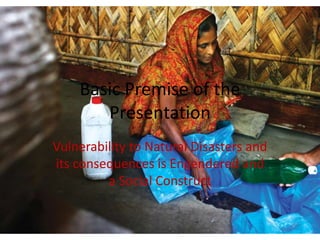
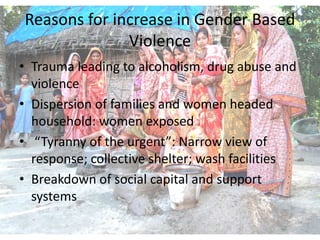
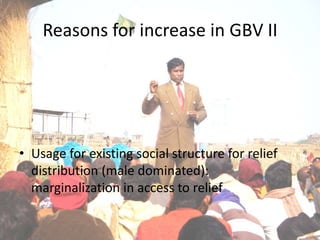
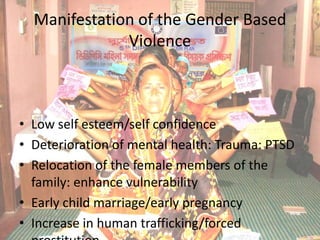
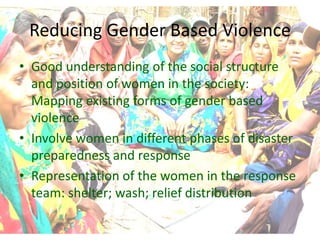
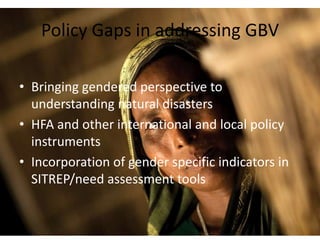
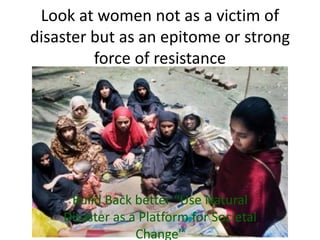


This document discusses gender-based violence after natural disasters. It summarizes that GBV increases after disasters due to trauma, dispersed families exposing women, and relief efforts prioritizing urgent needs over safety. GBV is manifested through lower self-esteem, mental health issues, and risks like child marriage. Reducing GBV requires understanding social structures, involving women in disaster response, and having women represented on response teams distributing relief. Current policy gaps include a lack of gender perspective in disaster frameworks and response indicators. The conclusion calls for seeing women as strong forces of resistance and using disasters as opportunities for societal change.


