From local to 
global: realizing 
water security for 
sustainable 
development 
1 
Dr Ania Grobicki 
GWP Executive Secretary 
27 October 2014
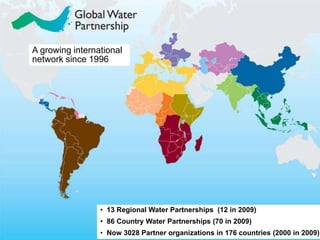
A growing international 
network since 1996 
• 13 Regional Water Partnerships (12 in 2009) 
• 86 Country Water Partnerships (70 in 2009) 
• Now 3028 Partner organizations in 176 countries (2000 in 2009)
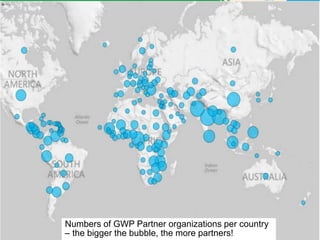
A global action network 
Numbers of GWP Partner organizations per country 
– the bigger the bubble, the more partners!
What might a water secure world 
look like? 
Enough water for all – for society, for economic 
development, and for ecosystems 
Reducing risks of drought, floods, landslides, water-borne 
diseases – all the negative aspects of water 
Improved quality of life for the most vulnerable, especially 
women and children 
Through an integrated approach – holistic, participatory, 
recognizing ecosystem values, working with all sectors 
and stakeholders
5
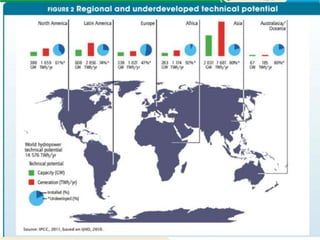
Regional and underdeveloped technical 
potential 
7
8
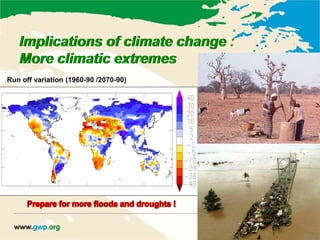
Implications of climate change 
More climatic extremes 
Run off variation (1960-90 /2070-90) 
:
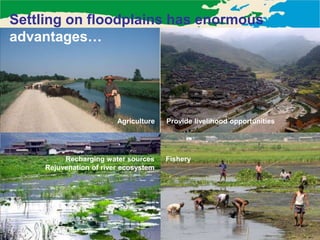
Settling on floodplains has enormous 
advantages… 
Agriculture Provide livelihood opportunities 
Recharging water sources 
Rejuvenation of river ecosystem 
Fishery
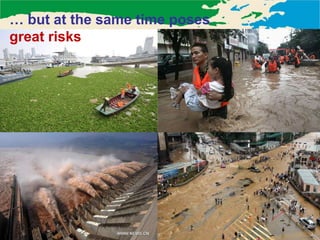
… but at the same time poses 
great risks
Paradigm shift required : 
• From defensive and reactive approaches to 
• pro-active approaches; 
• From ad-hoc to Integrated Flood 
Management 
• Towards a culture of prevention by managing 
flood risk & living with floods; 
• Balancing flood risk and achieving 
sustainable development needs; 
• Changes in decision making processes to 
include risk management approaches.
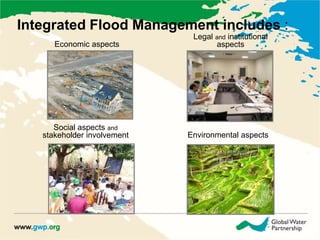
Integrated Flood Management includes : 
Economic aspects aspects 
Social aspects and 
Legal and institutional 
stakeholder involvement Environmental aspects
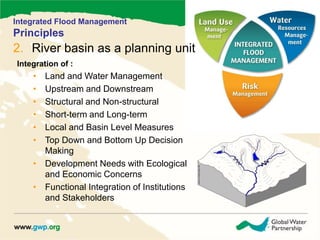
Integrated Flood Management 
Principles 
2. River basin as a planning unit 
Integration of : 
• Land and Water Management 
• Upstream and Downstream 
• Structural and Non-structural 
• Short-term and Long-term 
• Local and Basin Level Measures 
• Top Down and Bottom Up Decision 
Making 
• Development Needs with Ecological 
and Economic Concerns 
• Functional Integration of Institutions 
and Stakeholders
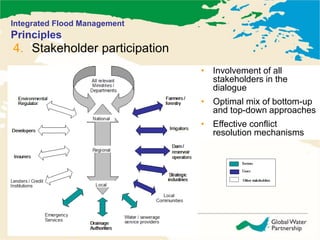
Integrated Flood Management 
Principles 
4. Stakeholder participation 
• Involvement of all 
stakeholders in the 
dialogue 
• Optimal mix of bottom-up 
and top-down approaches 
• Effective conflict 
resolution mechanisms
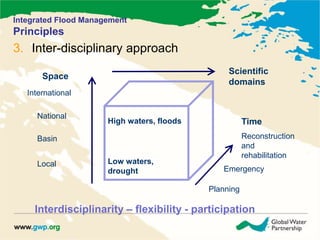
Integrated Flood Management 
Principles 
3. Inter-disciplinary approach 
Scientific 
domains 
Time 
Space 
International 
National 
Basin 
Local 
Reconstruction 
and 
rehabilitation 
Emergency 
Planning 
High waters, floods 
Low waters, 
drought 
Interdisciplinarity – flexibility - participation
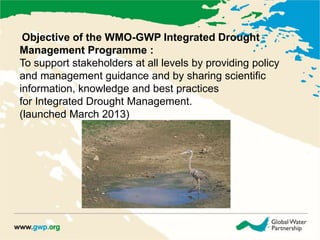
Objective of the WMO-GWP Integrated Drought 
Management Programme : 
To support stakeholders at all levels by providing policy 
and management guidance and by sharing scientific 
information, knowledge and best practices 
for Integrated Drought Management. 
(launched March 2013)
19
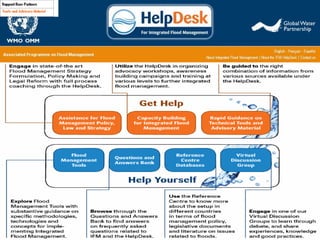
GWP – WMO Associated Programme on Flood 
Management established in 2001 to promote the 
concept and practice of Integrated Flood 
Management (IFM) 
Flood HelpDesk launched in 2009 
GWP Water, Climate and Development Programme 
(WACDEP Africa) launched in 2011 
GWP – WMO Integrated Drought Management 
Programme global launch in 2013 (regional drought 
programmes in GWP CEE in 2012, GWP EAf and GWP 
WAf in 2013, GWP SAs and GWP CAm in 2014)
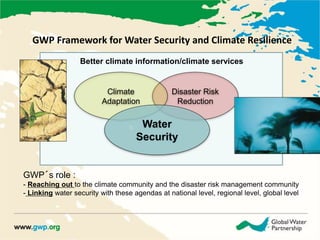
GWP Framework for Water Security and Climate Resilience 
Better climate information/climate services 
Disaster Risk 
Reduction 
Climate 
Adaptation 
Water 
Security 
GWP´s role : 
- Reaching out to the climate community and the disaster risk management community 
- Linking water security with these agendas at national level, regional level, global level
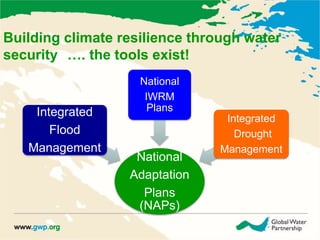
Building climate resilience through water 
security …. the tools exist! 
National 
Adaptation 
Plans 
(NAPs) 
Integrated 
Flood 
Management 
National 
IWRM 
Plans 
Integrated 
Drought 
Management
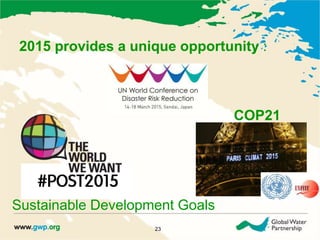
2015 provides a unique opportunity : 
Sustainable Development Goals 
23 
COP21
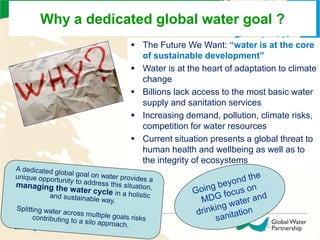
Why a dedicated global water goal ? 
 The Future We Want: “water is at the core 
of sustainable development” 
 Water is at the heart of adaptation to climate 
change 
 Billions lack access to the most basic water 
supply and sanitation services 
 Increasing demand, pollution, climate risks, 
competition for water resources 
 Current situation presents a global threat to 
human health and wellbeing as well as to 
the integrity of ecosystems
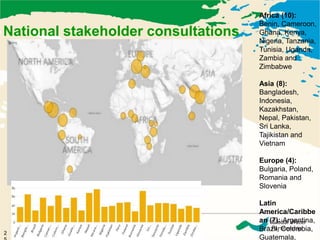
National stakeholder consultations 
Octo Integrated thinking, collaborative action 
2 
5 
Africa (10): 
Benin, Cameroon, 
Ghana, Kenya, 
Nigeria, Tanzania, 
Tunisia, Uganda, 
Zambia and 
Zimbabwe 
Asia (8): 
Bangladesh, 
Indonesia, 
Kazakhstan, 
Nepal, Pakistan, 
Sri Lanka, 
Tajikistan and 
Vietnam 
Europe (4): 
Bulgaria, Poland, 
Romania and 
Slovenia 
Latin 
America/Caribbe 
an (7): Argentina, 
Brazil, Colombia, 
Guatemala,
OWG Proposal for Goal 6 
Ensure availability and sustainable management of 
water and sanitation for all 
By 2030: 
6.1 drinking water for all 
6.2 sanitation and hygiene for all, 
6.3 improve water quality 
6.4 water-use efficiency, sustainable withdrawals 
6.5 implement integrated water resources management 
6.6 by 2020 protect and restore water-related ecosystems 
26
WCDRR, Sendai – input from the water 
community to strengthen the post-2015 
Disaster Risk Reduction Framework 
• Reflect that water-related disasters (floods, droughts and windstorms) account for 
almost 90% of the 1,000 most disastrous events since 1990. 
• Move from the implicit references to water to mentioning water explicitly, including 
droughts and floods, in order to be action oriented and point to implementation. 
• Integrated Water Resources Management is an effective way to strengthen resilience 
for disaster risk reduction and climate adaptation. 
• Integrated flood management and integrated drought management are participatory, 
multi-stakeholder approaches to developing solutions and reducing water-related 
disaster risks. 
• Recognize that food and energy security depend on managing water resources in a 
sound way so that societies are more resilient to climatic extremes, such as droughts 
and floods. 
• Recognize the close linkages between development and poverty reduction and sound 
water resource management, as well as access to drinking water and sanitation, to 
enhance the resilience to climate extremes. 
• Recognize the severe impacts on public health from climate extremes such as floods 
and droughts and the degradation of water resources through pollution. 
• Address the requirement that the basis for improved water resources management is 
hydrological data. Unless we have good quality design data, we cannot build resilient 
structures/communities with any confidence.
Proposed Target for the post-2015 DRR Framework 
to address water-related disaster risk : 
Target: Reduce mortality by (x%) and economic loss by (y%) from natural 
and human-induced water-related disasters 
Proposed core indicators: 
1. Mortality due to water-related disasters and mortality within vulnerable 
groups and by gender 
2. Direct economic losses due to water-related disasters, as percentage of 
GDP 
3. Proportion of at-risk communities with effective people-centred early 
warning systems for water-related disasters 
4. Proportion of nations that have assessed their risk of water-related 
disaster and that have established plans and strategies for integrated 
disaster risk management, including monitoring systems and preparedness
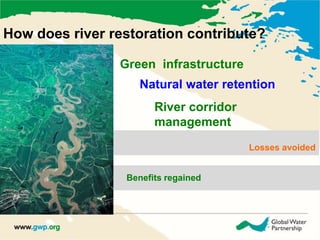
How does river restoration contribute? 
Green infrastructure 
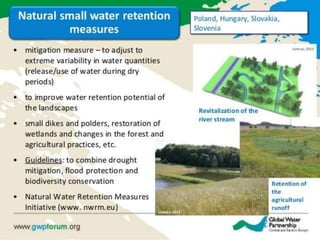
Natural water retention 
River corridor 
management 
Losses avoided 
Benefits retained 
Benefits regained
Reflections for the conference 
 What progress has been made in advocating for river 
restoration ? 
 Which broader stakeholder communities have been 
engaged? 
How can your organization play its part during 2015 in 
contributing to : 
 Flood and drought risk management targets (Sendai) ? 
 Climate resilience (COP21) ? 
 A dedicated Global Water Goal for sustainable 
development ? 
30

From Local to Global: Realizing Water Security for Sustainable Development - by GWP Executive Secretary Dr. Ania Grobicki

  • 1.
    From local to global: realizing water security for sustainable development 1 Dr Ania Grobicki GWP Executive Secretary 27 October 2014
  • 2.
    A growing international network since 1996 • 13 Regional Water Partnerships (12 in 2009) • 86 Country Water Partnerships (70 in 2009) • Now 3028 Partner organizations in 176 countries (2000 in 2009)
  • 3.
    A global actionnetwork Numbers of GWP Partner organizations per country – the bigger the bubble, the more partners!
  • 4.
    What might awater secure world look like? Enough water for all – for society, for economic development, and for ecosystems Reducing risks of drought, floods, landslides, water-borne diseases – all the negative aspects of water Improved quality of life for the most vulnerable, especially women and children Through an integrated approach – holistic, participatory, recognizing ecosystem values, working with all sectors and stakeholders
  • 5.
  • 7.
    Regional and underdevelopedtechnical potential 7
  • 8.
  • 9.
    Implications of climatechange More climatic extremes Run off variation (1960-90 /2070-90) :
  • 10.
    Settling on floodplainshas enormous advantages… Agriculture Provide livelihood opportunities Recharging water sources Rejuvenation of river ecosystem Fishery
  • 11.
    … but atthe same time poses great risks
  • 12.
    Paradigm shift required: • From defensive and reactive approaches to • pro-active approaches; • From ad-hoc to Integrated Flood Management • Towards a culture of prevention by managing flood risk & living with floods; • Balancing flood risk and achieving sustainable development needs; • Changes in decision making processes to include risk management approaches.
  • 13.
    Integrated Flood Managementincludes : Economic aspects aspects Social aspects and Legal and institutional stakeholder involvement Environmental aspects
  • 14.
    Integrated Flood Management Principles 2. River basin as a planning unit Integration of : • Land and Water Management • Upstream and Downstream • Structural and Non-structural • Short-term and Long-term • Local and Basin Level Measures • Top Down and Bottom Up Decision Making • Development Needs with Ecological and Economic Concerns • Functional Integration of Institutions and Stakeholders
  • 15.
    Integrated Flood Management Principles 4. Stakeholder participation • Involvement of all stakeholders in the dialogue • Optimal mix of bottom-up and top-down approaches • Effective conflict resolution mechanisms
  • 16.
    Integrated Flood Management Principles 3. Inter-disciplinary approach Scientific domains Time Space International National Basin Local Reconstruction and rehabilitation Emergency Planning High waters, floods Low waters, drought Interdisciplinarity – flexibility - participation
  • 18.
    Objective of theWMO-GWP Integrated Drought Management Programme : To support stakeholders at all levels by providing policy and management guidance and by sharing scientific information, knowledge and best practices for Integrated Drought Management. (launched March 2013)
  • 19.
  • 20.
    GWP – WMOAssociated Programme on Flood Management established in 2001 to promote the concept and practice of Integrated Flood Management (IFM) Flood HelpDesk launched in 2009 GWP Water, Climate and Development Programme (WACDEP Africa) launched in 2011 GWP – WMO Integrated Drought Management Programme global launch in 2013 (regional drought programmes in GWP CEE in 2012, GWP EAf and GWP WAf in 2013, GWP SAs and GWP CAm in 2014)
  • 21.
    GWP Framework forWater Security and Climate Resilience Better climate information/climate services Disaster Risk Reduction Climate Adaptation Water Security GWP´s role : - Reaching out to the climate community and the disaster risk management community - Linking water security with these agendas at national level, regional level, global level
  • 22.
    Building climate resiliencethrough water security …. the tools exist! National Adaptation Plans (NAPs) Integrated Flood Management National IWRM Plans Integrated Drought Management
  • 23.
    2015 provides aunique opportunity : Sustainable Development Goals 23 COP21
  • 24.
    Why a dedicatedglobal water goal ?  The Future We Want: “water is at the core of sustainable development”  Water is at the heart of adaptation to climate change  Billions lack access to the most basic water supply and sanitation services  Increasing demand, pollution, climate risks, competition for water resources  Current situation presents a global threat to human health and wellbeing as well as to the integrity of ecosystems
  • 25.
    National stakeholder consultations Octo Integrated thinking, collaborative action 2 5 Africa (10): Benin, Cameroon, Ghana, Kenya, Nigeria, Tanzania, Tunisia, Uganda, Zambia and Zimbabwe Asia (8): Bangladesh, Indonesia, Kazakhstan, Nepal, Pakistan, Sri Lanka, Tajikistan and Vietnam Europe (4): Bulgaria, Poland, Romania and Slovenia Latin America/Caribbe an (7): Argentina, Brazil, Colombia, Guatemala,
  • 26.
    OWG Proposal forGoal 6 Ensure availability and sustainable management of water and sanitation for all By 2030: 6.1 drinking water for all 6.2 sanitation and hygiene for all, 6.3 improve water quality 6.4 water-use efficiency, sustainable withdrawals 6.5 implement integrated water resources management 6.6 by 2020 protect and restore water-related ecosystems 26
  • 27.
    WCDRR, Sendai –input from the water community to strengthen the post-2015 Disaster Risk Reduction Framework • Reflect that water-related disasters (floods, droughts and windstorms) account for almost 90% of the 1,000 most disastrous events since 1990. • Move from the implicit references to water to mentioning water explicitly, including droughts and floods, in order to be action oriented and point to implementation. • Integrated Water Resources Management is an effective way to strengthen resilience for disaster risk reduction and climate adaptation. • Integrated flood management and integrated drought management are participatory, multi-stakeholder approaches to developing solutions and reducing water-related disaster risks. • Recognize that food and energy security depend on managing water resources in a sound way so that societies are more resilient to climatic extremes, such as droughts and floods. • Recognize the close linkages between development and poverty reduction and sound water resource management, as well as access to drinking water and sanitation, to enhance the resilience to climate extremes. • Recognize the severe impacts on public health from climate extremes such as floods and droughts and the degradation of water resources through pollution. • Address the requirement that the basis for improved water resources management is hydrological data. Unless we have good quality design data, we cannot build resilient structures/communities with any confidence.
  • 28.
    Proposed Target forthe post-2015 DRR Framework to address water-related disaster risk : Target: Reduce mortality by (x%) and economic loss by (y%) from natural and human-induced water-related disasters Proposed core indicators: 1. Mortality due to water-related disasters and mortality within vulnerable groups and by gender 2. Direct economic losses due to water-related disasters, as percentage of GDP 3. Proportion of at-risk communities with effective people-centred early warning systems for water-related disasters 4. Proportion of nations that have assessed their risk of water-related disaster and that have established plans and strategies for integrated disaster risk management, including monitoring systems and preparedness
  • 29.
    How does riverrestoration contribute? Green infrastructure Natural water retention River corridor management Losses avoided Benefits retained Benefits regained
  • 30.
    Reflections for theconference  What progress has been made in advocating for river restoration ?  Which broader stakeholder communities have been engaged? How can your organization play its part during 2015 in contributing to :  Flood and drought risk management targets (Sendai) ?  Climate resilience (COP21) ?  A dedicated Global Water Goal for sustainable development ? 30