
Topics under discussion
 Identification
 How to cultivate( fertilizers and irrigation )
 Preservation
 Nutrients
 Anti nutritional factors
Berseem
 Scientific name : Trifolium alexandrinum
 Common name : berseem
 One of most important leguminous forages in
Mediterranean region and Middle East
Characheristics
 Rabi crop
 Leguminous forage
 It is annual, Sparcely hairy, erect forage legume, 30-
80cm high
 Has shallow taproot
 Stems are hollow, branching at base with alternate
leaves
Characteristics
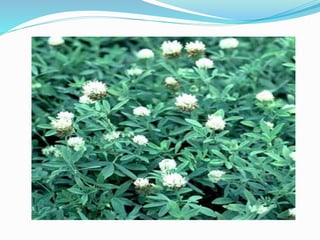
 Flowers are yellowish white
 Form dense cluster heads about 2cm in diameter
 Flowers are cross pollinated
 Fruit is pod containing single white to purplish seed
Characteristics
 It is compared to Alfalfa due to same nutritional profile
 But less likely to cause bloat
 And less drought resistant
 Grow in early autumn
Method of production
 Propagated by seeds
 Sown in early autumn
 Grown alone or with other species i.e sarson( Brassica
juncea) or turnips
 Moderately cold environment is required
 Not less than 20°C
 Grown in canal irrigated area
Methods of production
 Eight kg of seeds per acre is required
 To ensure kasni free seeds, Seeds are put in 10% NaCl
and seive the floating kasni seeds
 2-3 ploughings are done
 Tolerant for salinity, economical for Reclamation of
saline land
Fertilization and watering
One bag of DAP is required per acre for phosphorus
One packet per acre of special culture of bacteria
(rhizobium trifoli)
1kg of molybedenum is added
Fertilization and watering
 Irrigating depends upon soil and climatic conditions
 Irrigation is done within 3-5 days for light soil
 For heavy soil within 7-10 days
 15-20 days subsequent intervals from march to last
cutting
 Subsequent cut after 30 days. LAst cut before 15 march
Harvest
 Harvested in 45-60 days after sowing
 Mature in 3rd week of April
Preservation
 Silage : Suitable for forrage with high moisture content
and high concentration of fermentable carbohydrates
 Mixed with 20% ground maize for high quality Silage
 Berseem + 5% molasses
Hay
 Not good
 Because its succulent stem does not dry
 Intended for hay, only last spring cut used
 Firstly wilt in feild and dry on rooftops
 Good Nutritive value compared to Alfalfa
Nutritive value Nutrients
 Crude fiber
 Crude protein
 NDF
 ADF
 Ether
 Ash
 Calcium
 Phosphorus
 Percentage
 22.3%
 19.9%
 44.8%
 27.5%
 3.2%
 15.4%
 19.3 g/kg
 2.7g/kg
Anti nutritional factors
 ANFs are substances that interfere with utilization of
dietary Nutrients in variety of ways:
Reducing protein digestibility
Binding to nutrients
Damage to gut wall
ANFs Conti..
 These may be:
Lectins
Protease inhibitors
Tannis
Glucosinolate
Phytic acid
ANFs Conti….
 Main inhibitors are trypsin and chymotrypsin in
leguminous plants
 They form complexes with pancreatic enzymes
therefore reduce availability of enzymes
 Hence CCK release more also cause hypertrophy of
pancreas
ANFs Conti…
 Phytic acid binds with phosphorus, calcium, COpper,
Mg and Mn
 Therefore reduces availability
THE END OF
PRESENTATION

Berseem

  • 2.
    Topics under discussion Identification  How to cultivate( fertilizers and irrigation )  Preservation  Nutrients  Anti nutritional factors
  • 3.
    Berseem  Scientific name: Trifolium alexandrinum  Common name : berseem  One of most important leguminous forages in Mediterranean region and Middle East
  • 4.
    Characheristics  Rabi crop Leguminous forage  It is annual, Sparcely hairy, erect forage legume, 30- 80cm high  Has shallow taproot  Stems are hollow, branching at base with alternate leaves
  • 6.
    Characteristics  Flowers areyellowish white  Form dense cluster heads about 2cm in diameter  Flowers are cross pollinated  Fruit is pod containing single white to purplish seed
  • 8.
    Characteristics  It iscompared to Alfalfa due to same nutritional profile  But less likely to cause bloat  And less drought resistant  Grow in early autumn
  • 9.
    Method of production Propagated by seeds  Sown in early autumn  Grown alone or with other species i.e sarson( Brassica juncea) or turnips  Moderately cold environment is required  Not less than 20°C  Grown in canal irrigated area
  • 10.
    Methods of production Eight kg of seeds per acre is required  To ensure kasni free seeds, Seeds are put in 10% NaCl and seive the floating kasni seeds  2-3 ploughings are done  Tolerant for salinity, economical for Reclamation of saline land
  • 12.
    Fertilization and watering Onebag of DAP is required per acre for phosphorus One packet per acre of special culture of bacteria (rhizobium trifoli) 1kg of molybedenum is added
  • 13.
    Fertilization and watering Irrigating depends upon soil and climatic conditions  Irrigation is done within 3-5 days for light soil  For heavy soil within 7-10 days  15-20 days subsequent intervals from march to last cutting  Subsequent cut after 30 days. LAst cut before 15 march
  • 14.
    Harvest  Harvested in45-60 days after sowing  Mature in 3rd week of April
  • 15.
    Preservation  Silage :Suitable for forrage with high moisture content and high concentration of fermentable carbohydrates  Mixed with 20% ground maize for high quality Silage  Berseem + 5% molasses
  • 16.
    Hay  Not good Because its succulent stem does not dry  Intended for hay, only last spring cut used  Firstly wilt in feild and dry on rooftops  Good Nutritive value compared to Alfalfa
  • 17.
    Nutritive value Nutrients Crude fiber  Crude protein  NDF  ADF  Ether  Ash  Calcium  Phosphorus  Percentage  22.3%  19.9%  44.8%  27.5%  3.2%  15.4%  19.3 g/kg  2.7g/kg
  • 18.
    Anti nutritional factors ANFs are substances that interfere with utilization of dietary Nutrients in variety of ways: Reducing protein digestibility Binding to nutrients Damage to gut wall
  • 19.
    ANFs Conti..  Thesemay be: Lectins Protease inhibitors Tannis Glucosinolate Phytic acid
  • 20.
    ANFs Conti….  Maininhibitors are trypsin and chymotrypsin in leguminous plants  They form complexes with pancreatic enzymes therefore reduce availability of enzymes  Hence CCK release more also cause hypertrophy of pancreas
  • 21.
    ANFs Conti…  Phyticacid binds with phosphorus, calcium, COpper, Mg and Mn  Therefore reduces availability
  • 22.