Sorghum Fodder
Related Contents
• Discription
• Sowing Time
• Yield
• Nutritive Profile
• Anti-Nutritional Factors
• Cultivation Time
• Preservation
Description
Botanical Name : Sorghum bicolor
• Local names are “Jawar” , “Milo”
• Grow in harsh environament
• Self-pollinating plant
• Height of plant 60-460 cm
• Sorghum seed is small and round
• The long, wide leaves grow off the stalk
Description
• 5th most imp crop grown in the world
• Plant use for Grain, Fiber and Fodder
• Consider best summer crop
• Use as Staple Food
History
• Native to the tropical areas in Africa
• The oldest cultivation record dates back
to 3000 B.C. in Egypt
• The original variety of sorghum was
purple or red and the seed coat was red
• In the 1950s hybrid sorghums were
developed for higher yields
Country
Area(000
ha)
Yield(kg/ha)
China 784 6396
India 9200 706
Pakistan 400 575
Sorghum cultivating areas in Asia:
Sowing Time
In Punjab:
• For fodder in March-August
• For grain June-July
Sindh:
• In June for both fodder and grain
KPK:
• During June and July
Baluchistan:
• In July and August
Climate and Soil
• Sorghum is tropical plant
• More drought and temperature resistant
• Can grow on all types of soils except
saline and waterlogged
• Heavy, loamy soils are most suitable
• Prefers hot, dry climate
• Does not grow well in areas with high
summer rainfall
Seedbed Preparation
• Requires good seedbed
• Which can be prepared with 1 ploughing
with mouldboard plough
• Followed by 2 ploughings
Manuring
• 1.25 bag of Urea at first Irrigation
Fertilizer Quantity
(per Ha)
DAP 2.5 bags
Urea 1.25 bags
Varieties
JS 2002
• Certified variety of Sargodha
• Long and sweet plants which remain green
for long time
• Production is 700 mounds/acre
Chakwal 2008
• Best for Arid zone
• Sweet stemmed and remains green for
long time
Hegari
• Tall, sweet stemmed and high yielding
• Production is 550 mounds/acre
• Good seed production also
JS-263
• Suitable for fodder and grain
• Production is 500 mounds/acre
• Attack of Red Leaf Spot disease
Method of Sowing
• Mostly sown by broadcasting
• Recommended method is line sowing
(pora method)
• Line to line distance should be 30 cm for
fodder crop
• 45-60 cm distance between lines in case
of seed production
Seed Rate
• 32-35 kg/acre for fodder crop
• 6-8 kg/acre for grain purpose
Irrigation
• 3-4 irrigations for March, June crops
• 1-2 irrigations for monsoon crops
depending upon rainfall
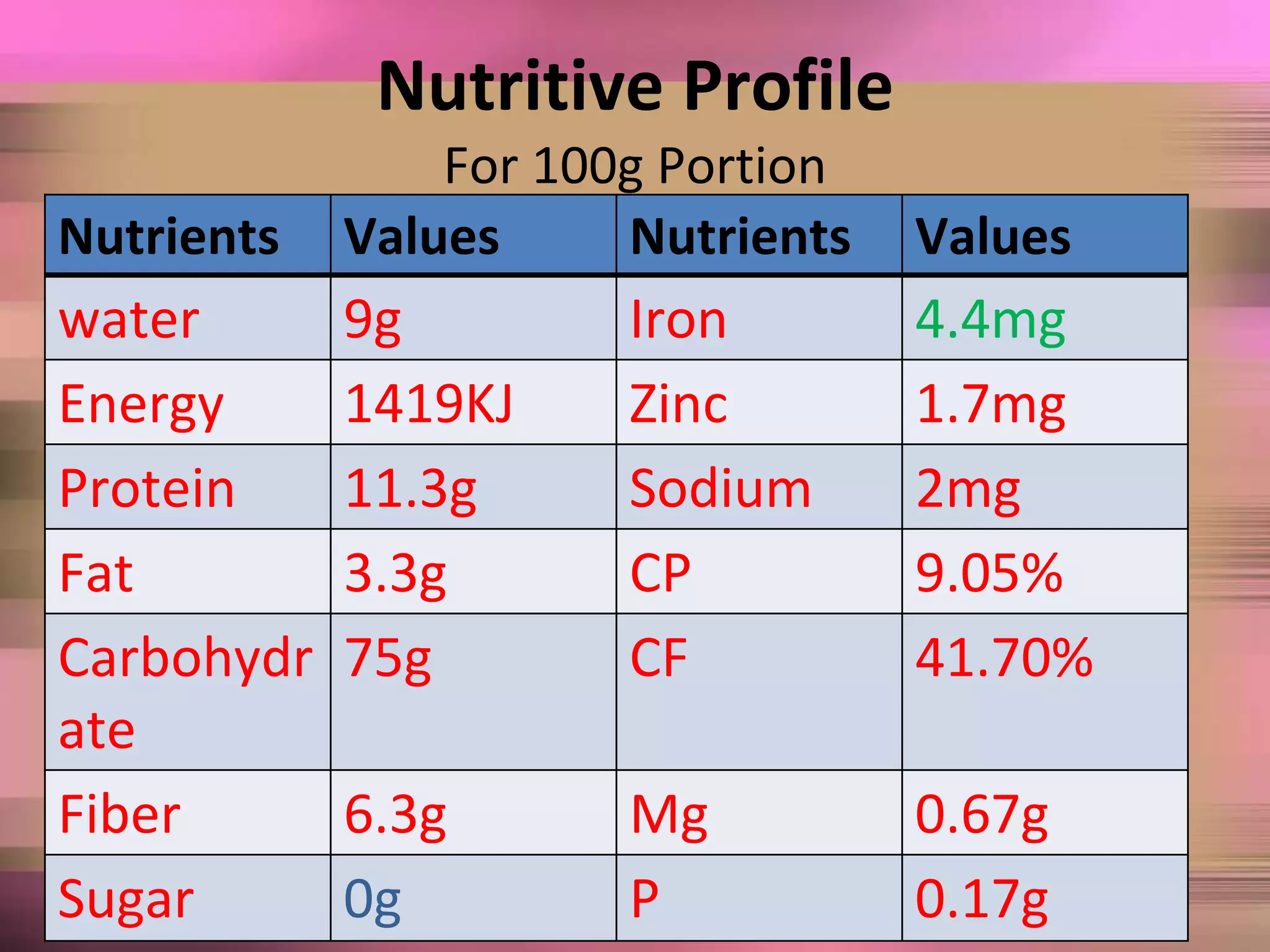
Nutritive Profile
For 100g Portion
Nutrients Values Nutrients Values
water 9g Iron 4.4mg
Energy 1419KJ Zinc 1.7mg
Protein 11.3g Sodium 2mg
Fat 3.3g CP 9.05%
Carbohydr
ate
75g CF 41.70%
Fiber 6.3g Mg 0.67g
Sugar 0g P 0.17g
Anti-Nutritional Factors
1.Tannin
Polyphenolic Compound present in grain
Yellowish in color
Bitter in Taste
Effects:
Reduction in Voluntary Feed intake due to
reduce Palatability
Produce toxicity on metabolism
Tannins
• Reduce Proteolytic Enzyme Activity and
stop Protein Digestion
• Positive effect is Suppress Bloat in Cattle
• Catechol Tannins is famous
• Increased level of Plasma Growth
Hormone intake of CT in Sheep
ANF
2.Dhurrin
A Cyanogenic Glucoside compound
Located in Aerial Shoot & Sprouted Seeds
• Effects
On Enzyme action yield Hydrogen Cyanide
Excess Cyanide ion can quickly Produce
Anoxia
ANF
of CNS through inactivating the
Cytochrome Oxidase System and cause
death in few sec
Making Hay/Silage reduce Poison.
Pests and Diseases
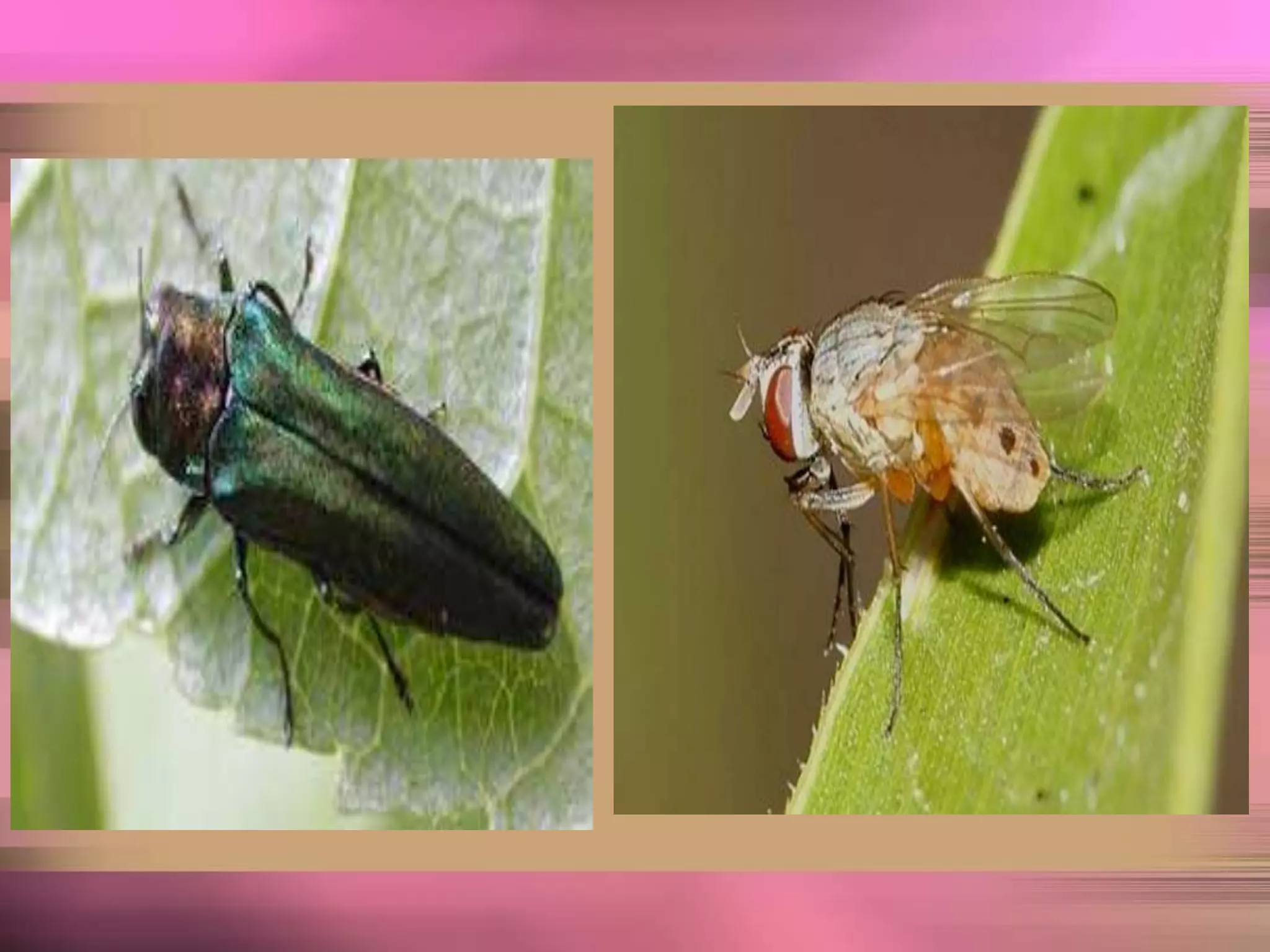
• Shootfly and Borer cause serious damage
• Apply 3% Furadan granules/Carbofuran
10-12 kg/acre
• Red leaf spot is most serious disease
• Seeds should be treated with Vitavax or
Benlate 2g/kg of seed
• Light irrigation during disease attack
Time of Harvesting
Preservation
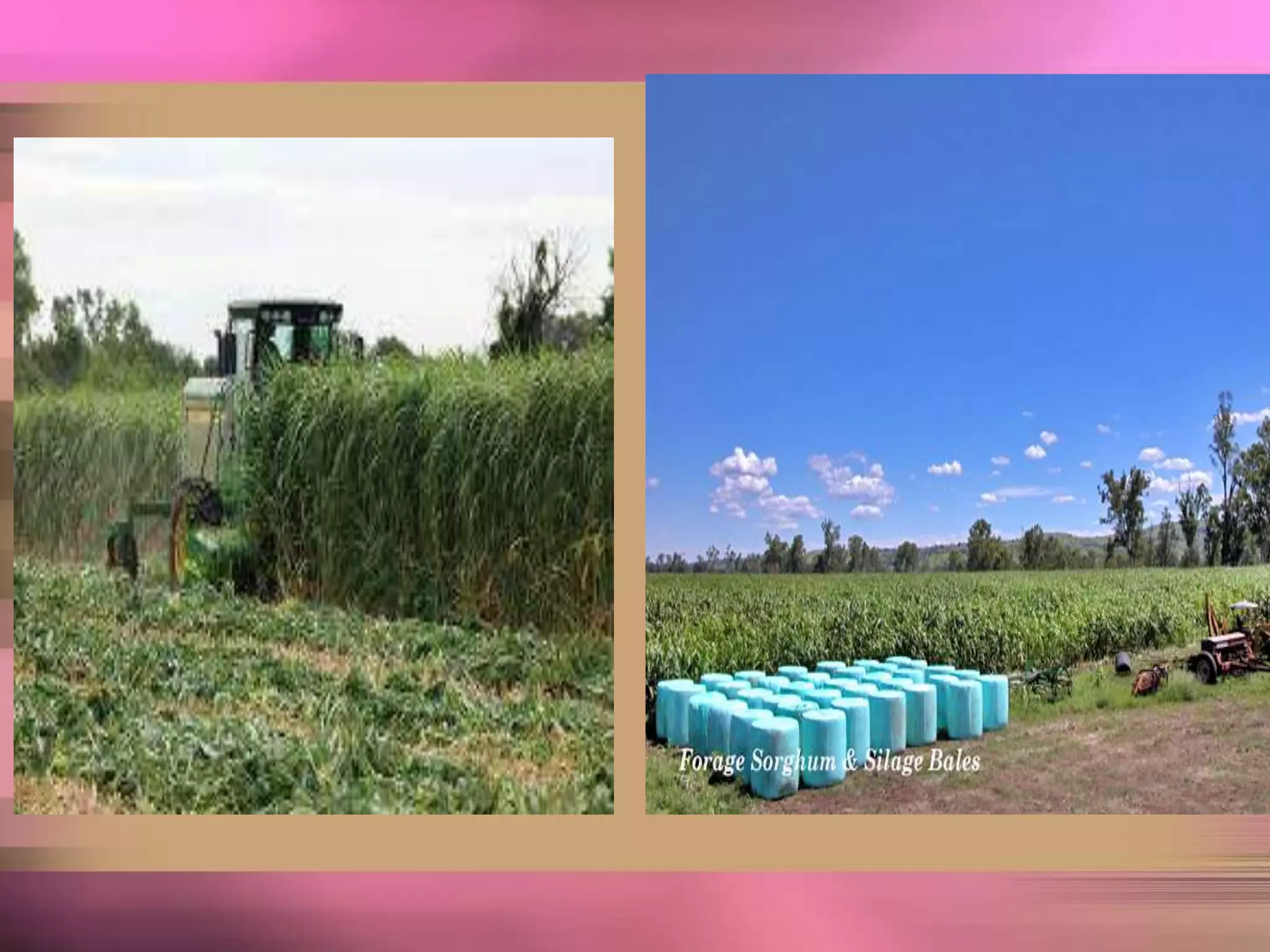
• Silage
Use Anaerobic Conditions
Make Forages
May use Bunker, Pit and Bale Silo for
Silage making
Use Molasses because Sorghum have
zero gram Sugar
Silage
• Yoghurt can be used for Production of
Lactic Acid
• 2-3 Year may Preserve
• If Baled Silo Performed avoid from Birds
In case of any confusion
Contact
0305-5304181
Shoaibbhutta40@gmail.com
Good Luck

Sorghum fodder

  • 1.
  • 3.
    Related Contents • Discription •Sowing Time • Yield • Nutritive Profile • Anti-Nutritional Factors • Cultivation Time • Preservation
  • 4.
    Description Botanical Name :Sorghum bicolor • Local names are “Jawar” , “Milo” • Grow in harsh environament • Self-pollinating plant • Height of plant 60-460 cm • Sorghum seed is small and round • The long, wide leaves grow off the stalk
  • 5.
    Description • 5th mostimp crop grown in the world • Plant use for Grain, Fiber and Fodder • Consider best summer crop • Use as Staple Food
  • 6.
    History • Native tothe tropical areas in Africa • The oldest cultivation record dates back to 3000 B.C. in Egypt • The original variety of sorghum was purple or red and the seed coat was red • In the 1950s hybrid sorghums were developed for higher yields
  • 7.
    Country Area(000 ha) Yield(kg/ha) China 784 6396 India9200 706 Pakistan 400 575 Sorghum cultivating areas in Asia:
  • 8.
    Sowing Time In Punjab: •For fodder in March-August • For grain June-July Sindh: • In June for both fodder and grain KPK: • During June and July Baluchistan: • In July and August
  • 9.
    Climate and Soil •Sorghum is tropical plant • More drought and temperature resistant • Can grow on all types of soils except saline and waterlogged • Heavy, loamy soils are most suitable • Prefers hot, dry climate • Does not grow well in areas with high summer rainfall
  • 10.
    Seedbed Preparation • Requiresgood seedbed • Which can be prepared with 1 ploughing with mouldboard plough • Followed by 2 ploughings
  • 12.
    Manuring • 1.25 bagof Urea at first Irrigation Fertilizer Quantity (per Ha) DAP 2.5 bags Urea 1.25 bags
  • 13.
    Varieties JS 2002 • Certifiedvariety of Sargodha • Long and sweet plants which remain green for long time • Production is 700 mounds/acre Chakwal 2008 • Best for Arid zone • Sweet stemmed and remains green for long time
  • 14.
    Hegari • Tall, sweetstemmed and high yielding • Production is 550 mounds/acre • Good seed production also JS-263 • Suitable for fodder and grain • Production is 500 mounds/acre • Attack of Red Leaf Spot disease
  • 15.
    Method of Sowing •Mostly sown by broadcasting • Recommended method is line sowing (pora method) • Line to line distance should be 30 cm for fodder crop • 45-60 cm distance between lines in case of seed production
  • 16.
    Seed Rate • 32-35kg/acre for fodder crop • 6-8 kg/acre for grain purpose
  • 17.
    Irrigation • 3-4 irrigationsfor March, June crops • 1-2 irrigations for monsoon crops depending upon rainfall
  • 18.
    Nutritive Profile For 100gPortion Nutrients Values Nutrients Values water 9g Iron 4.4mg Energy 1419KJ Zinc 1.7mg Protein 11.3g Sodium 2mg Fat 3.3g CP 9.05% Carbohydr ate 75g CF 41.70% Fiber 6.3g Mg 0.67g Sugar 0g P 0.17g
  • 19.
    Anti-Nutritional Factors 1.Tannin Polyphenolic Compoundpresent in grain Yellowish in color Bitter in Taste Effects: Reduction in Voluntary Feed intake due to reduce Palatability Produce toxicity on metabolism
  • 20.
    Tannins • Reduce ProteolyticEnzyme Activity and stop Protein Digestion • Positive effect is Suppress Bloat in Cattle • Catechol Tannins is famous • Increased level of Plasma Growth Hormone intake of CT in Sheep
  • 21.
    ANF 2.Dhurrin A Cyanogenic Glucosidecompound Located in Aerial Shoot & Sprouted Seeds • Effects On Enzyme action yield Hydrogen Cyanide Excess Cyanide ion can quickly Produce Anoxia
  • 22.
    ANF of CNS throughinactivating the Cytochrome Oxidase System and cause death in few sec Making Hay/Silage reduce Poison.
  • 23.
    Pests and Diseases •Shootfly and Borer cause serious damage • Apply 3% Furadan granules/Carbofuran 10-12 kg/acre • Red leaf spot is most serious disease • Seeds should be treated with Vitavax or Benlate 2g/kg of seed • Light irrigation during disease attack
  • 27.
  • 28.
    Preservation • Silage Use AnaerobicConditions Make Forages May use Bunker, Pit and Bale Silo for Silage making Use Molasses because Sorghum have zero gram Sugar
  • 29.
    Silage • Yoghurt canbe used for Production of Lactic Acid • 2-3 Year may Preserve • If Baled Silo Performed avoid from Birds
  • 33.
    In case ofany confusion Contact 0305-5304181 Shoaibbhutta40@gmail.com Good Luck