Digital Engagement


Dave Harte
Birmingham City University
Birmingham, UK

dave.harte@bcu.ac.uk
@daveharte
Dave Harte
Birmingham City University
Birmingham, UK

dave.harte@bcu.ac.uk
@daveharte
Today
Familiarisation with platforms

Useful concepts

Case studies
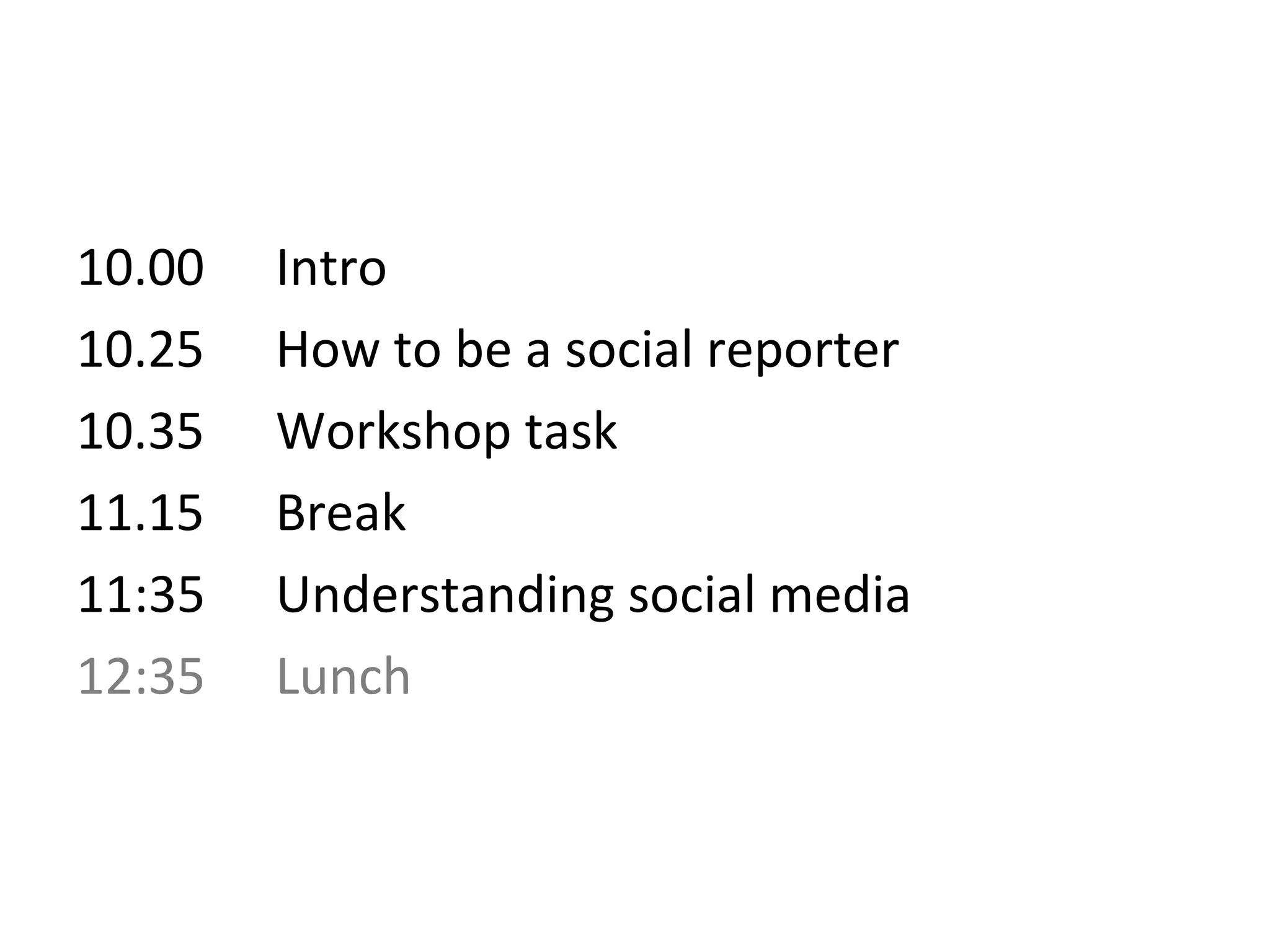
10.00   Intro
10.25   How to be a social reporter
10.35   Workshop task
11.15   Break
11:35   Understanding social media
12:35   Lunch
1:30    Writing Social Media guidelines
2:00    Understanding your network
2:30    Using Social Media to promote your
  organisation - a case study
3:00    Break
3:20    Social Media Surgery
4.00    Finish
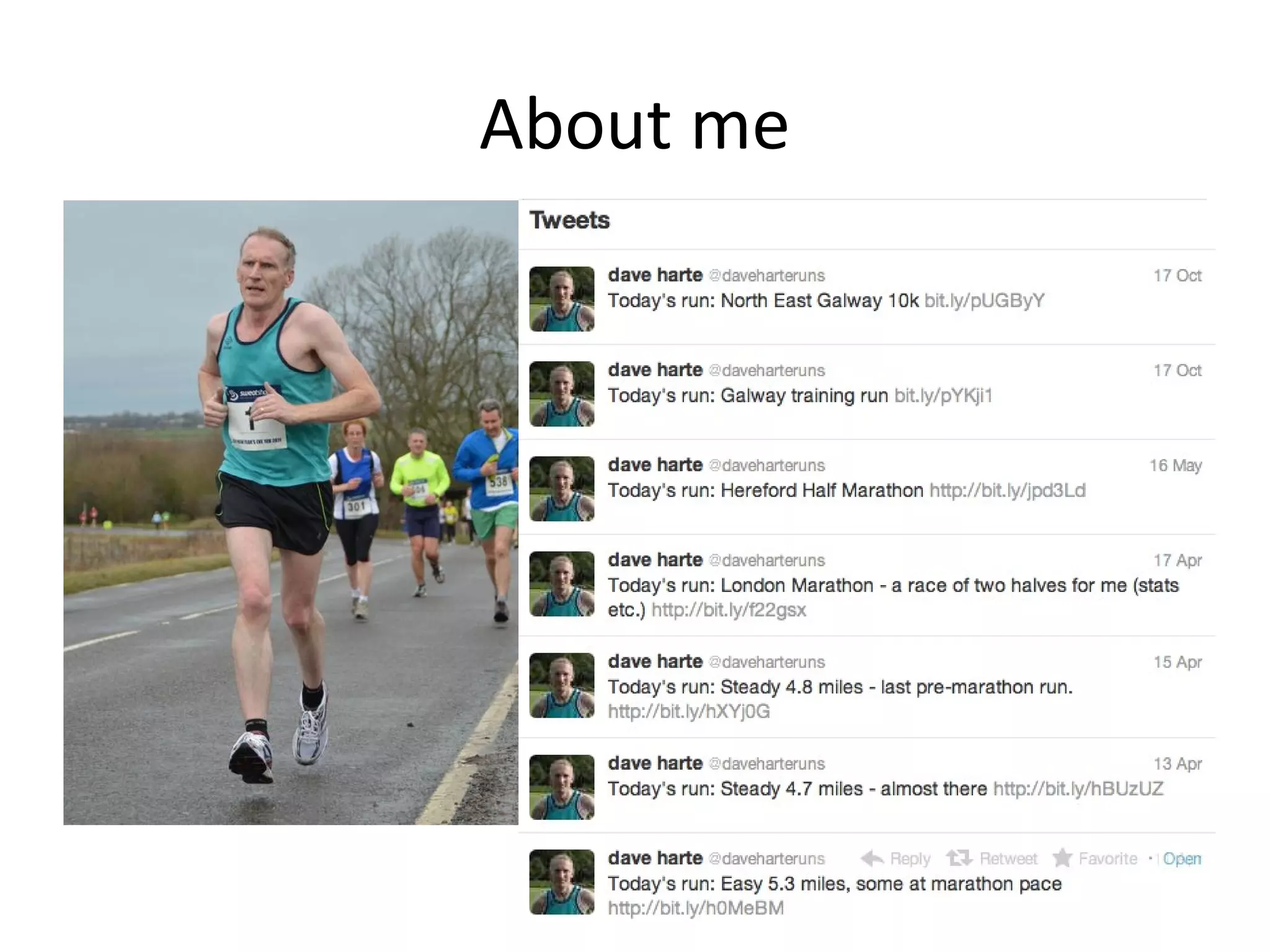
About me
Some context
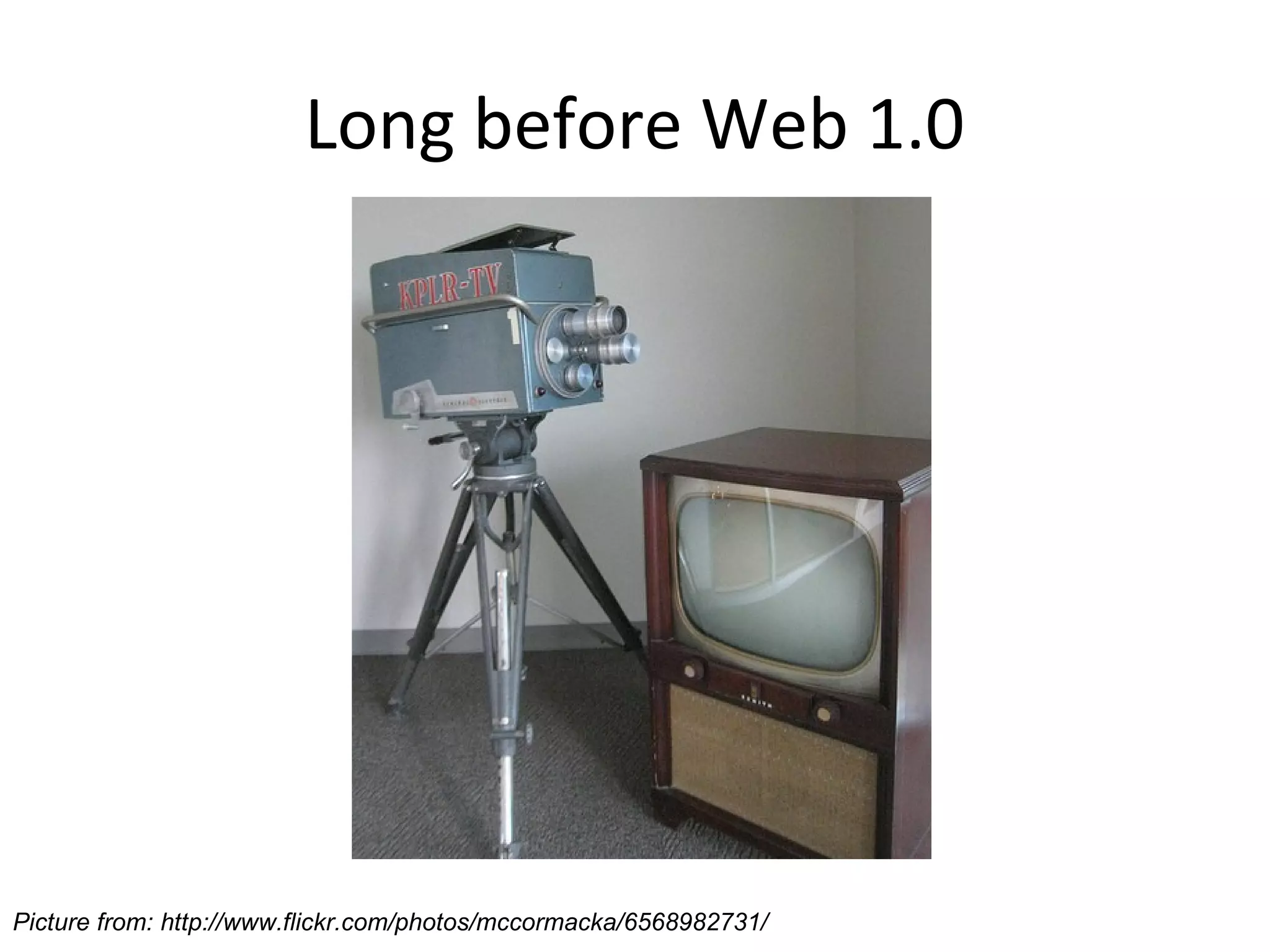
Long before Web 1.0


Picture from: http://www.flickr.com/photos/mccormacka/6568982731/
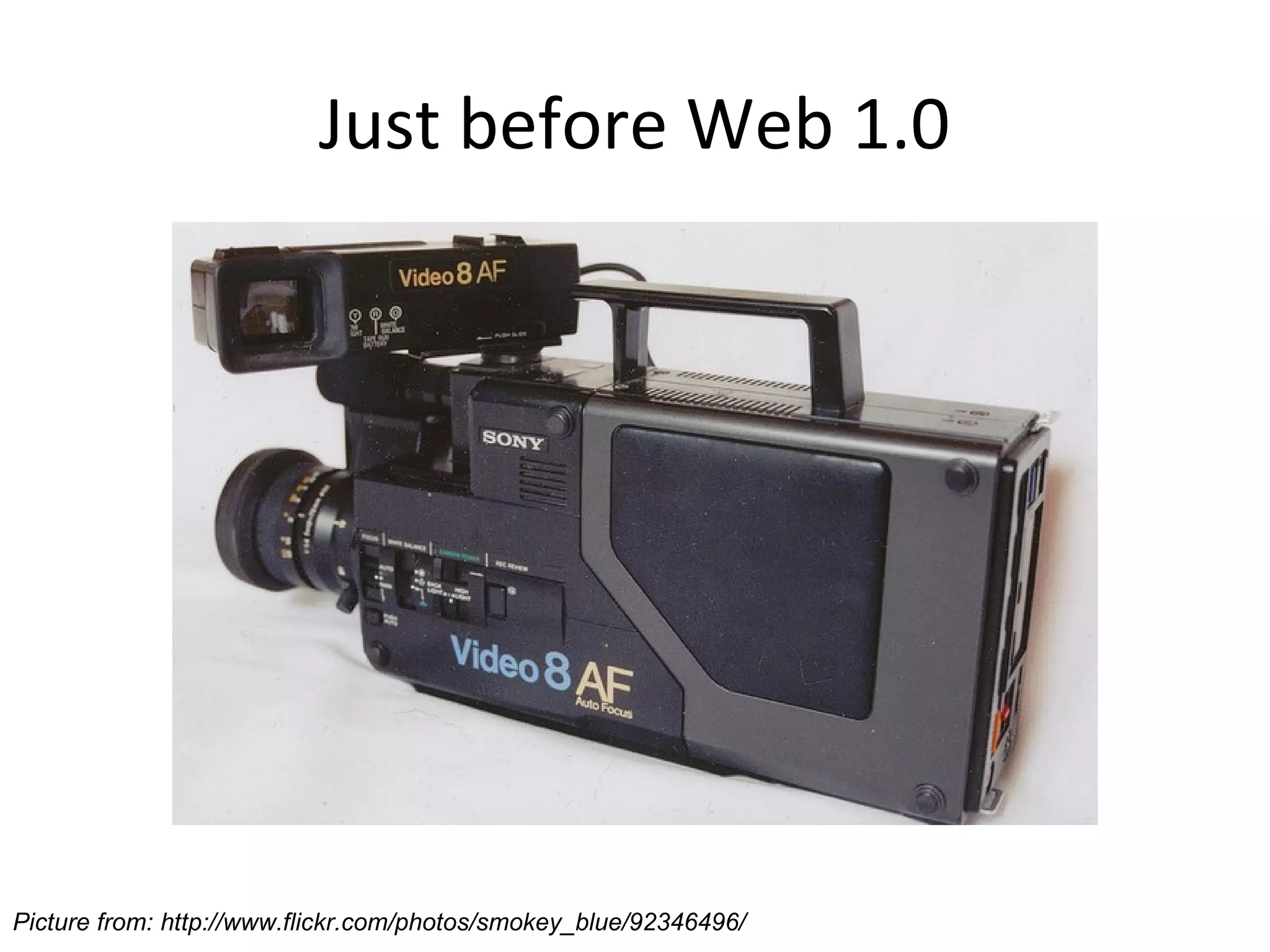
Just before Web 1.0


Picture from: http://www.flickr.com/photos/smokey_blue/92346496/
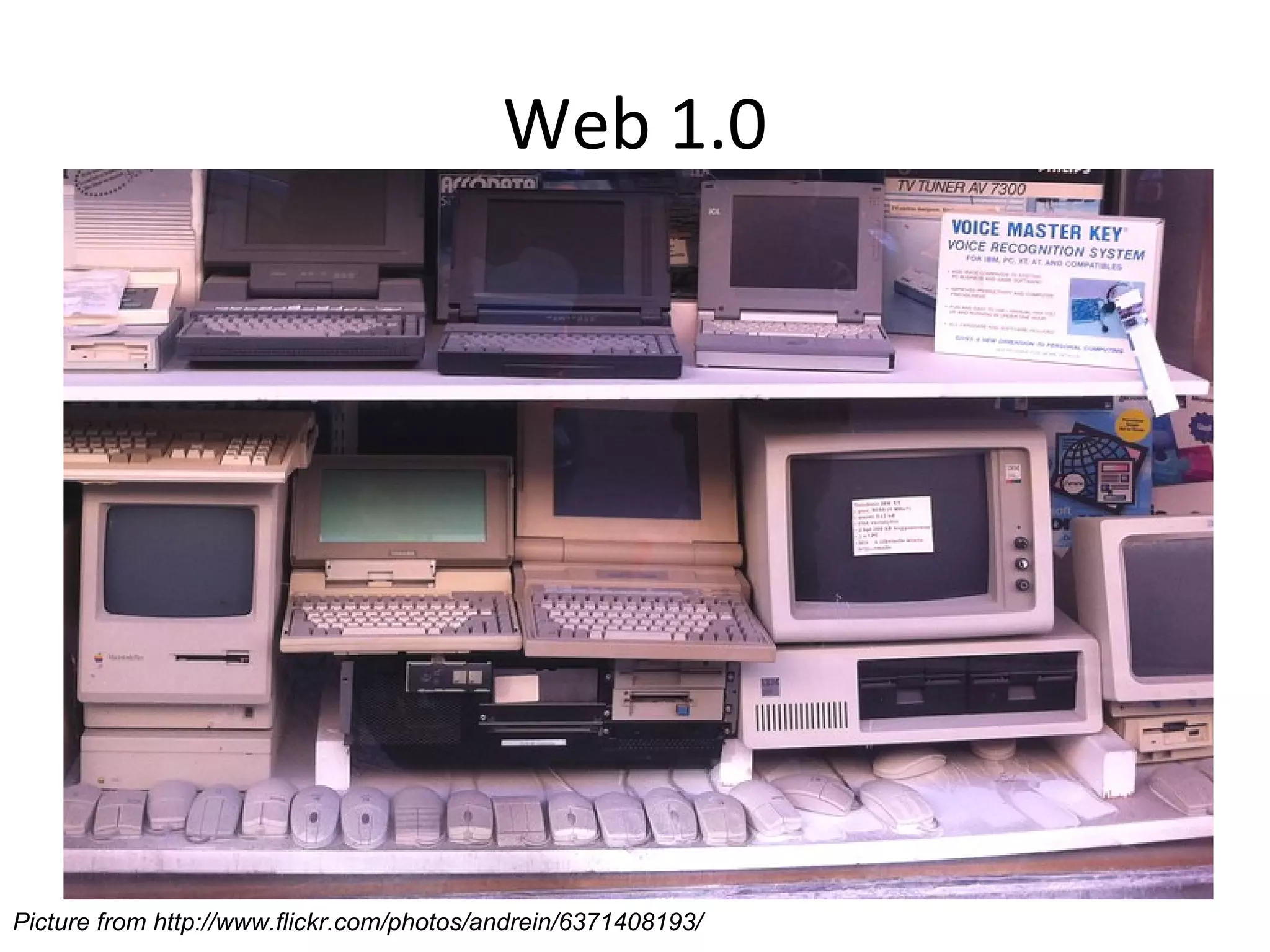
Web 1.0


Picture from http://www.flickr.com/photos/andrein/6371408193/
What was Web 1.0?
Web pages linked to each other
Static
Read-only
Slow (by today’s standard) download speeds
The first dot com bubble
A web of documents, a web of looking
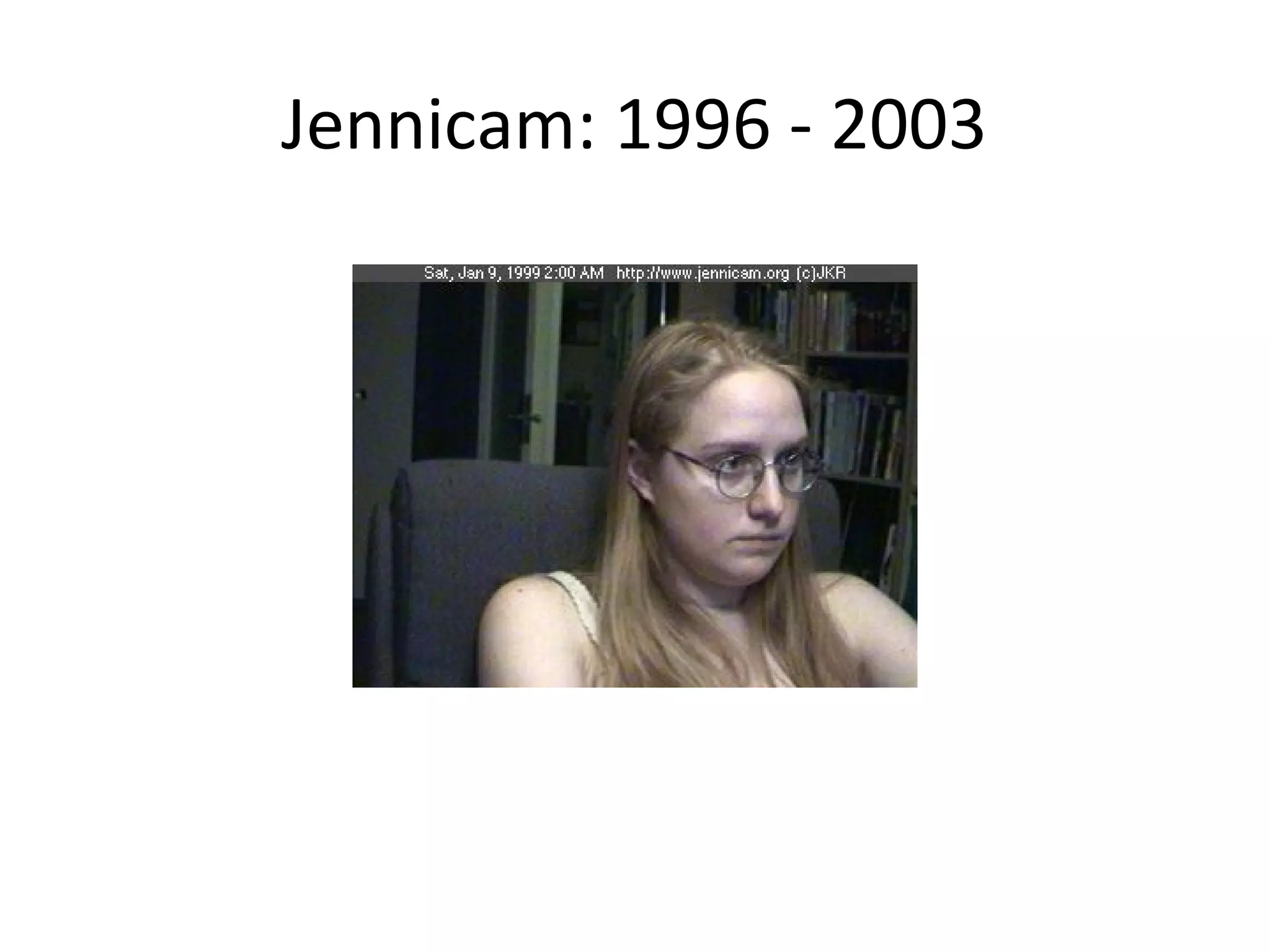
Jennicam: 1996 - 2003
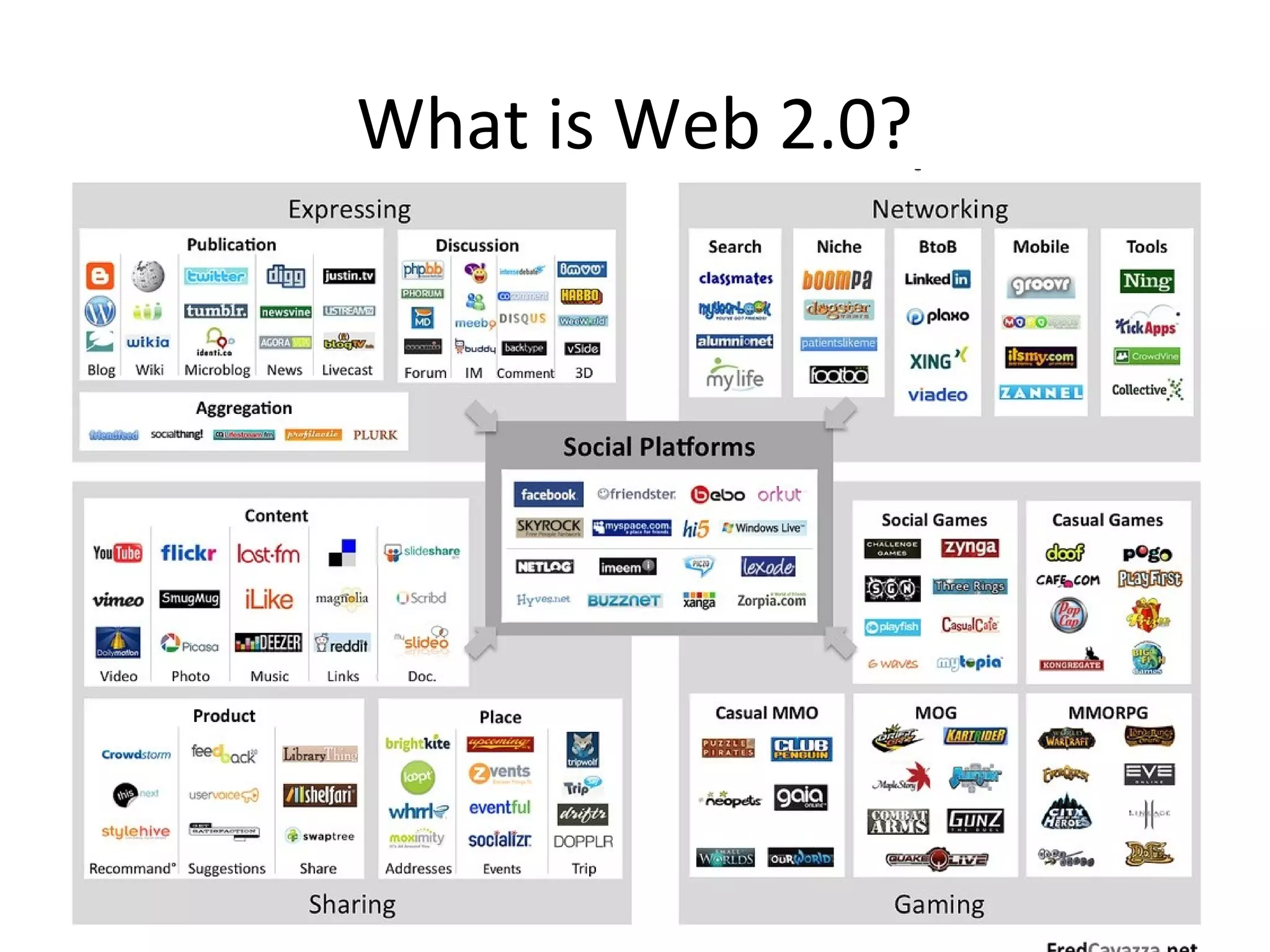
What is Web 2.0?
What is Web 2.0?
Connected
Social
User-generated
Personalised
Mobile services
Blogging, networking, tagging
Social Network Sites
“allow individuals to:
(1) construct a public or semi-public profile
within a bounded system
(2) articulate a list of other users with whom
they share a connections
(3) view and traverse their list of connections
and those made by others within the system”
Boyd / Ellison (2007)
From broadcasting to sharing

Sharing is scary
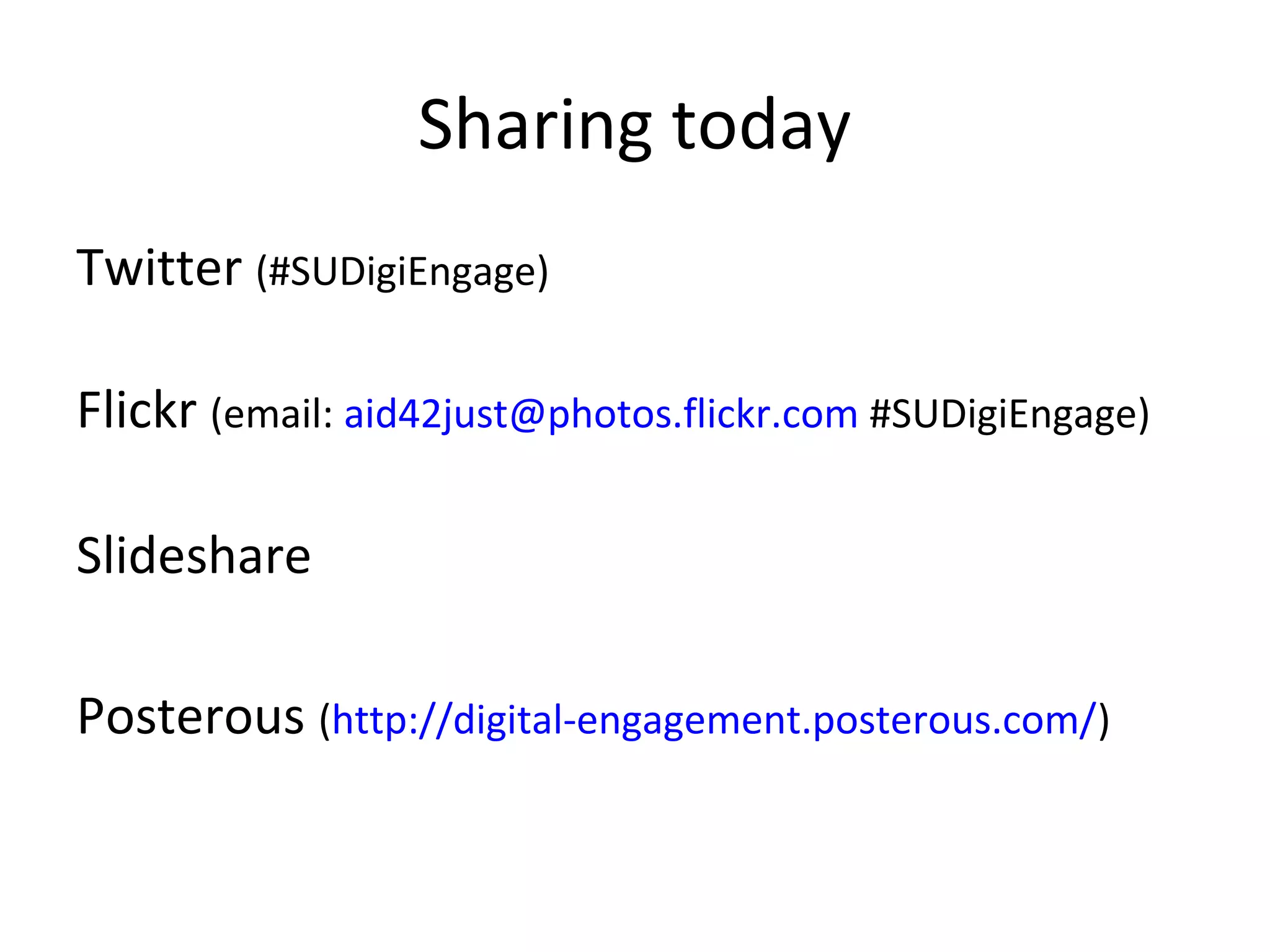
Sharing today
Twitter (#SUDigiEngage)

Flickr (email: aid42just@photos.flickr.com #SUDigiEngage)

Slideshare

Posterous (http://digital-engagement.posterous.com/)
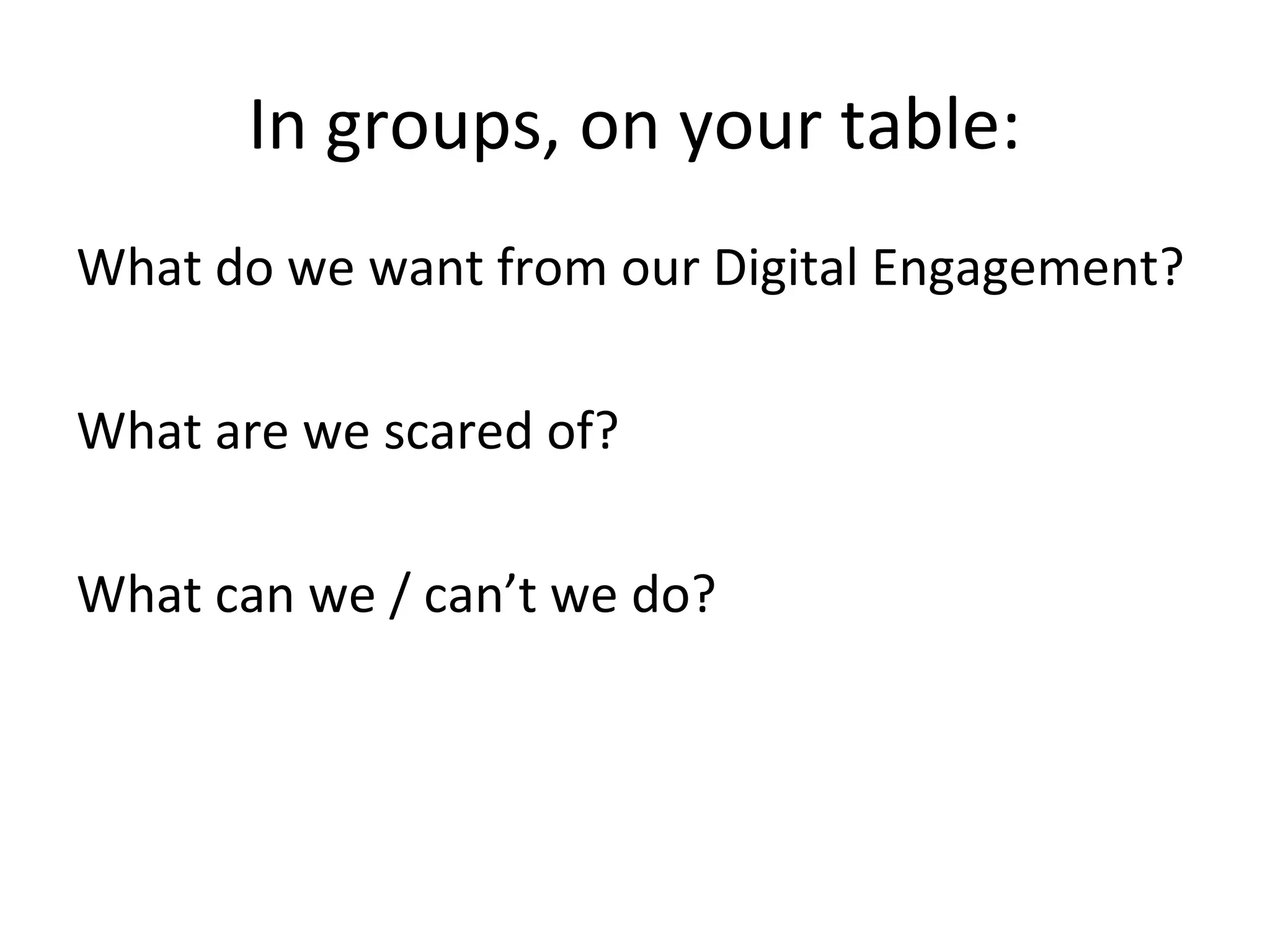
In groups, on your table:
What do we want from our Digital Engagement?

What are we scared of?

What can we / can’t we do?
BCUSU presentation part one

BCUSU presentation part one

  • 1.
    Digital Engagement Dave Harte BirminghamCity University Birmingham, UK dave.harte@bcu.ac.uk @daveharte
  • 2.
    Dave Harte Birmingham CityUniversity Birmingham, UK dave.harte@bcu.ac.uk @daveharte
  • 3.
  • 4.
    10.00 Intro 10.25 How to be a social reporter 10.35 Workshop task 11.15 Break 11:35 Understanding social media 12:35 Lunch
  • 5.
    1:30 Writing Social Media guidelines 2:00 Understanding your network 2:30 Using Social Media to promote your organisation - a case study 3:00 Break 3:20 Social Media Surgery 4.00 Finish
  • 6.
  • 7.
  • 8.
    Long before Web1.0 Picture from: http://www.flickr.com/photos/mccormacka/6568982731/
  • 9.
    Just before Web1.0 Picture from: http://www.flickr.com/photos/smokey_blue/92346496/
  • 10.
    Web 1.0 Picture fromhttp://www.flickr.com/photos/andrein/6371408193/
  • 11.
    What was Web1.0? Web pages linked to each other Static Read-only Slow (by today’s standard) download speeds The first dot com bubble A web of documents, a web of looking
  • 12.
  • 13.
  • 14.
    What is Web2.0? Connected Social User-generated Personalised Mobile services Blogging, networking, tagging
  • 15.
    Social Network Sites “allowindividuals to: (1) construct a public or semi-public profile within a bounded system (2) articulate a list of other users with whom they share a connections (3) view and traverse their list of connections and those made by others within the system” Boyd / Ellison (2007)
  • 16.
    From broadcasting tosharing Sharing is scary
  • 19.
    Sharing today Twitter (#SUDigiEngage) Flickr(email: aid42just@photos.flickr.com #SUDigiEngage) Slideshare Posterous (http://digital-engagement.posterous.com/)
  • 20.
    In groups, onyour table: What do we want from our Digital Engagement? What are we scared of? What can we / can’t we do?

Editor's Notes

  • #3 Let’s be careful from the outset. There aren ’ t ‘versions’ of the web. There isn ’ t a point at which 1.0 became 2.0 and 2.0 will become 3.0. If only life was so simple. This presentation is about some emerging developments that relate to how we use the internet. Some call this Web 3.0 but let’s focus on what the development are: Open Data, the Semantic Web and the Internet of Things
  • #7 I’m a digital enthusiast from Birmingham, UK who teaches Media and Communication. I blog, I run, and I collect up data as I go along. This is my running data. I’ll come back to what this has to do with web 3.0 but even though you are here as professionals, I want you to think about what data you create as you go about your every day lives.
  • #9 Media used to be a difficult thing to make. It involved big cameras or large printing presses. It was something that was ‘transmitted’ to you. It certainly wasn’t something you could make yourself. It involved institutions, many of which were controlled by the state or those with access to money.
  • #10 But we can trace a shift towards participation throughout the 20 th and even late 19 th centuries. In the 1980s and 1990s perhaps we saw the most rapid shift as the consumer electronics market started to open up and the shift from analogue to digital meant devices became smaller and easier to use and began to demand less involvement from outside organisations (such as those who chemically developed films). We were at the start of a digital revolution long before the internet became a dominant force in our lives.
  • #11 But what was clear from the mid-90s onwards was that the personal computer would play a significant part in our media experience. It offered storage, it offered manipulation tools, it offered access to the outside world.
  • #13 Perhaps the end of this ‘looking’ era came with the closure of the Jennicam website. For 7 years from 1996-2003 Jennifer Ringley operated a live camera from her house in which she allowed members of the public to log on. At its height it had 3-4 million viewers daily. This was before youtube. Before the time when looking at mundane clips from other people’s lives became the norm. For me Jennicam sums up web 1.0 – it was about the act of looking, not participating.
  • #16 Boyd / Ellison (2007) Social Network Sites: Definition, History and Scholarship
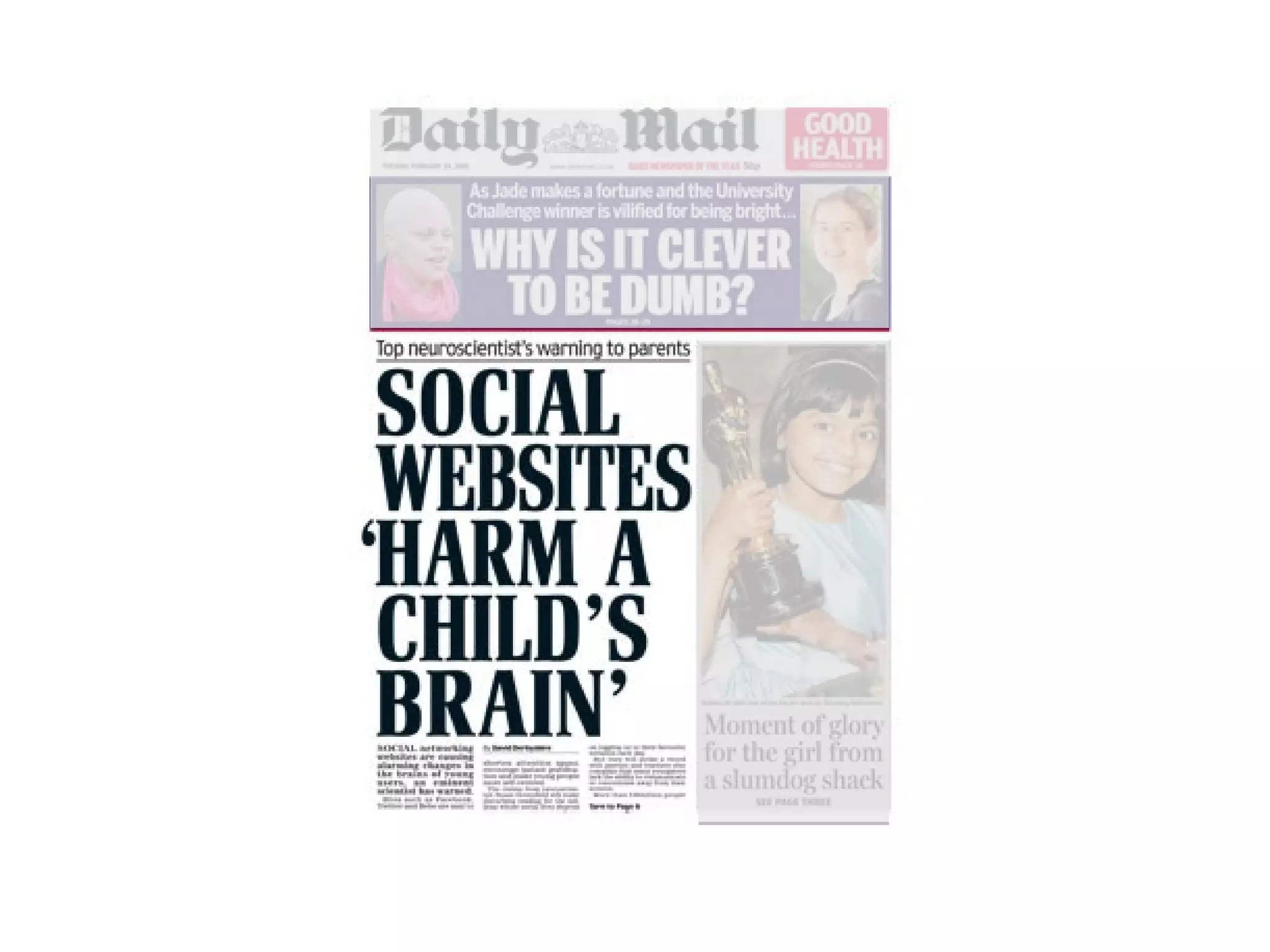
  • #18 But there’s a tension about social media. Some embrace the brave new word it offers whilst other worry that it’s a distraction and is an unnecessary invasion in our lives. Most public organisations still prevent th ier staff from accessing most social media websites. Parents have concerns about their chldren entering this world – it’s seen as something threatening. Of course, the mainstream media play a part it perpetuating myths about the social web.