Base Load Plants & Peak Load
Plants
Prepared by
Prof. S. G. Taji
Dept. of Civil Engineering
S.R.E.S’s Sanjivani College of Engineering,
Kopargaon
Base &Peak Load Power Station
Prepared by: Prof. Taji S. G.
2
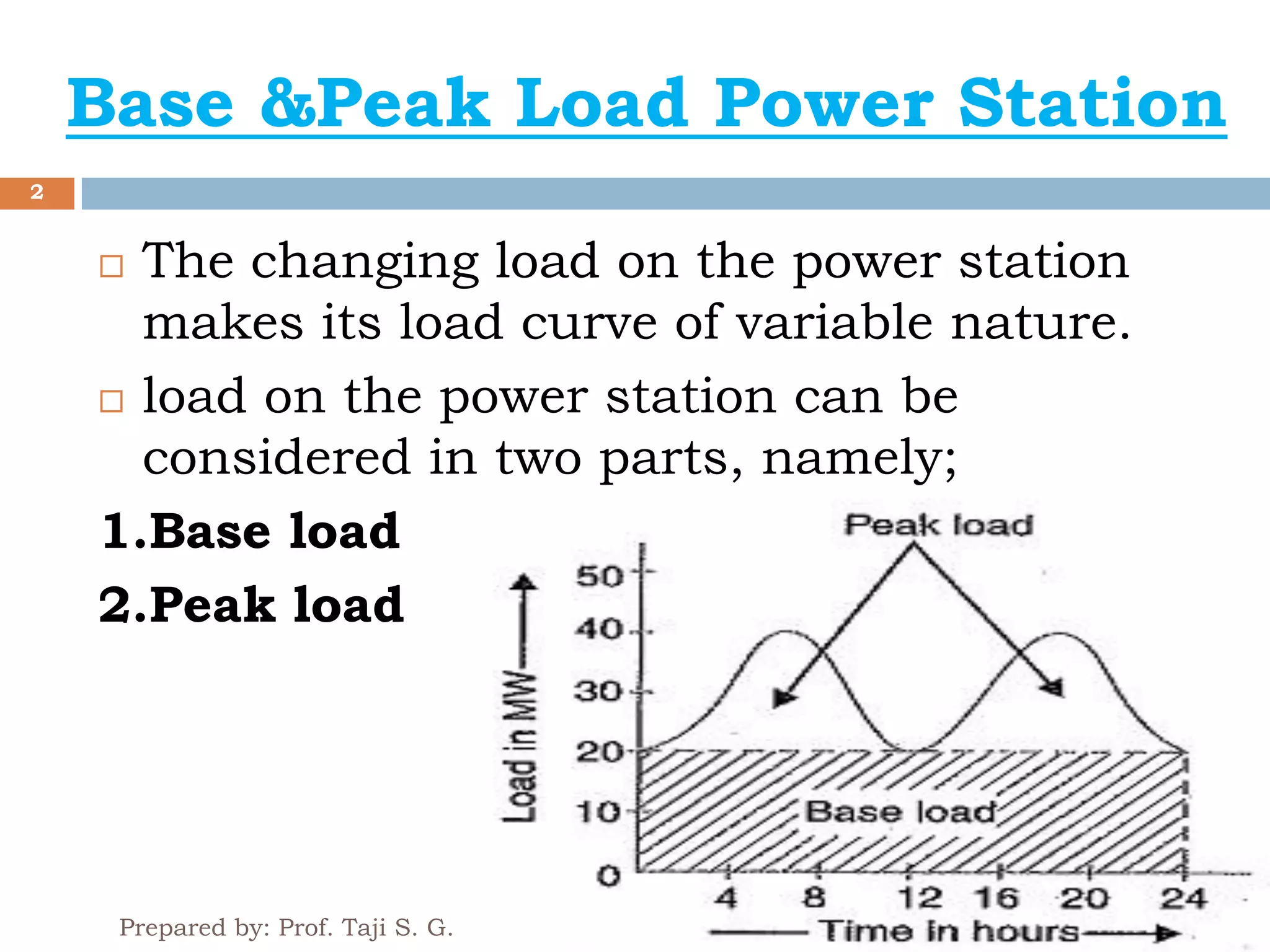
 The changing load on the power station
makes its load curve of variable nature.
 load on the power station can be
considered in two parts, namely;
1.Base load
2.Peak load
Method of Meeting the Load
Prepared by: Prof. Taji S. G.
3
 In order to achieve overall economy, the best
method to meet load is to interconnect two
different power stations.
 The more efficient plant is used to supply the
base load and is known as base load power
station.
 The less efficient plant is used to supply the
peak loads and is known as peak load power
station.
Prepared by: Prof. Taji S. G.
4
 There is no hard and fast rule for selection
of base load and peak load stations as it
would depend upon the particular
situation.
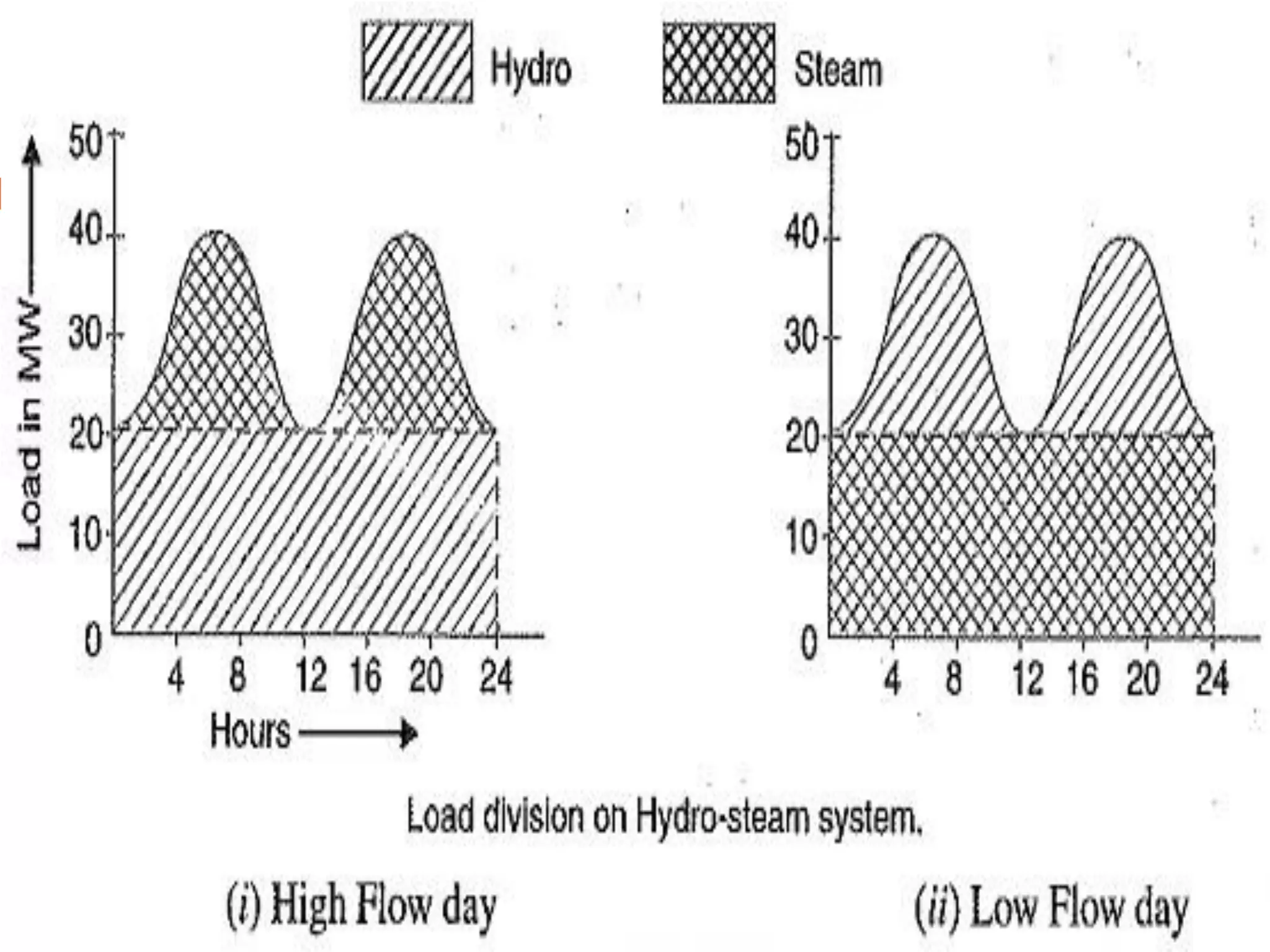
 For example, both hydro-electric and
steam power stations are quite efficient
and can be used as base load as well as
peak load station to meet a particular load
requirement. Illustration.
Prepared by: Prof. Taji S. G.
6
Requirements of a plant supplying “Base Load”
Prepared by: Prof. Taji S. G.
7
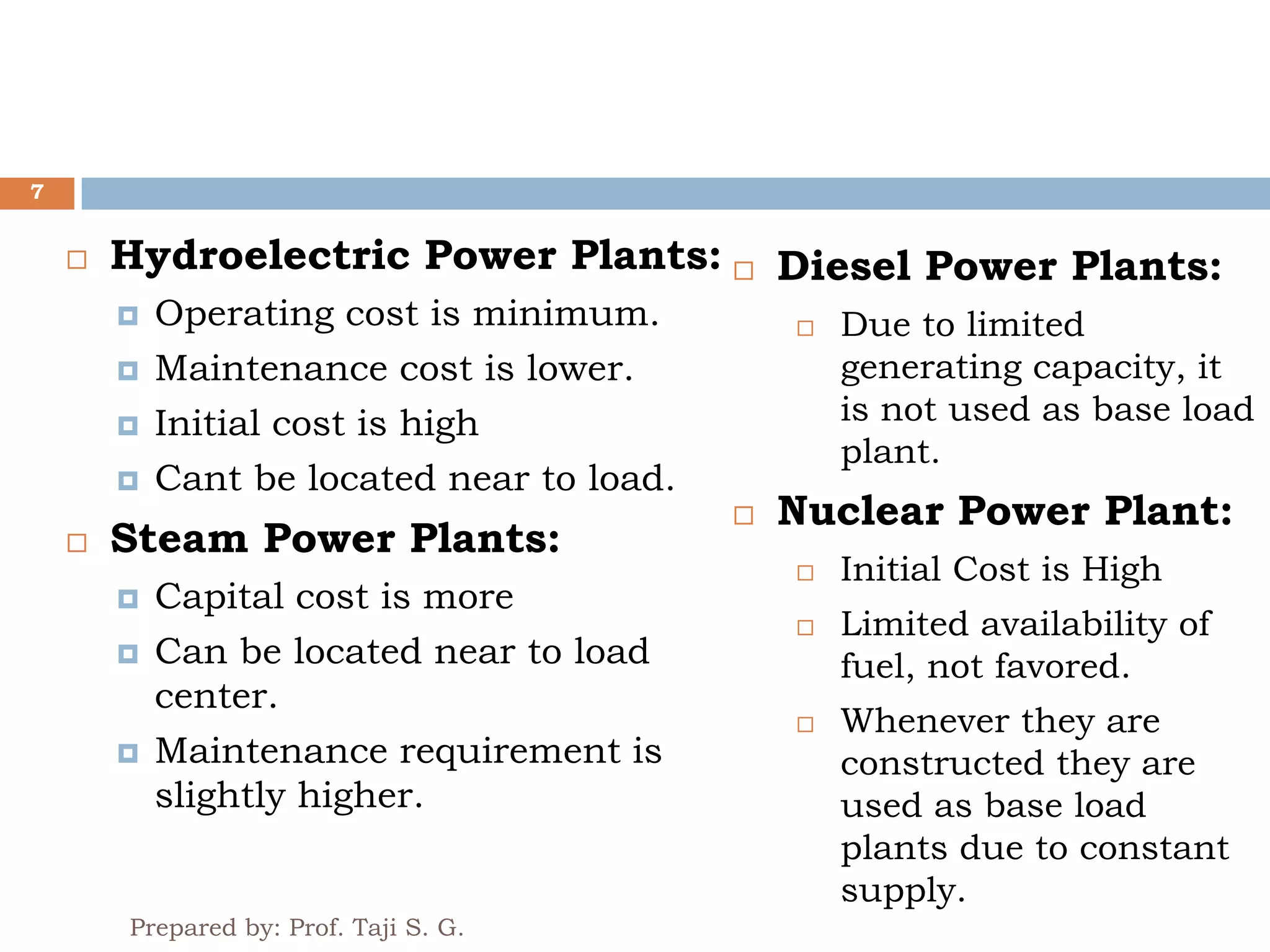
 Hydroelectric Power Plants:
 Operating cost is minimum.
 Maintenance cost is lower.
 Initial cost is high
 Cant be located near to load.
 Steam Power Plants:
 Capital cost is more
 Can be located near to load
center.
 Maintenance requirement is
slightly higher.
 Diesel Power Plants:
 Due to limited
generating capacity, it
is not used as base load
plant.
 Nuclear Power Plant:
 Initial Cost is High
 Limited availability of
fuel, not favored.
 Whenever they are
constructed they are
used as base load
plants due to constant
supply.
Prepared by: Prof. Taji S. G.
8
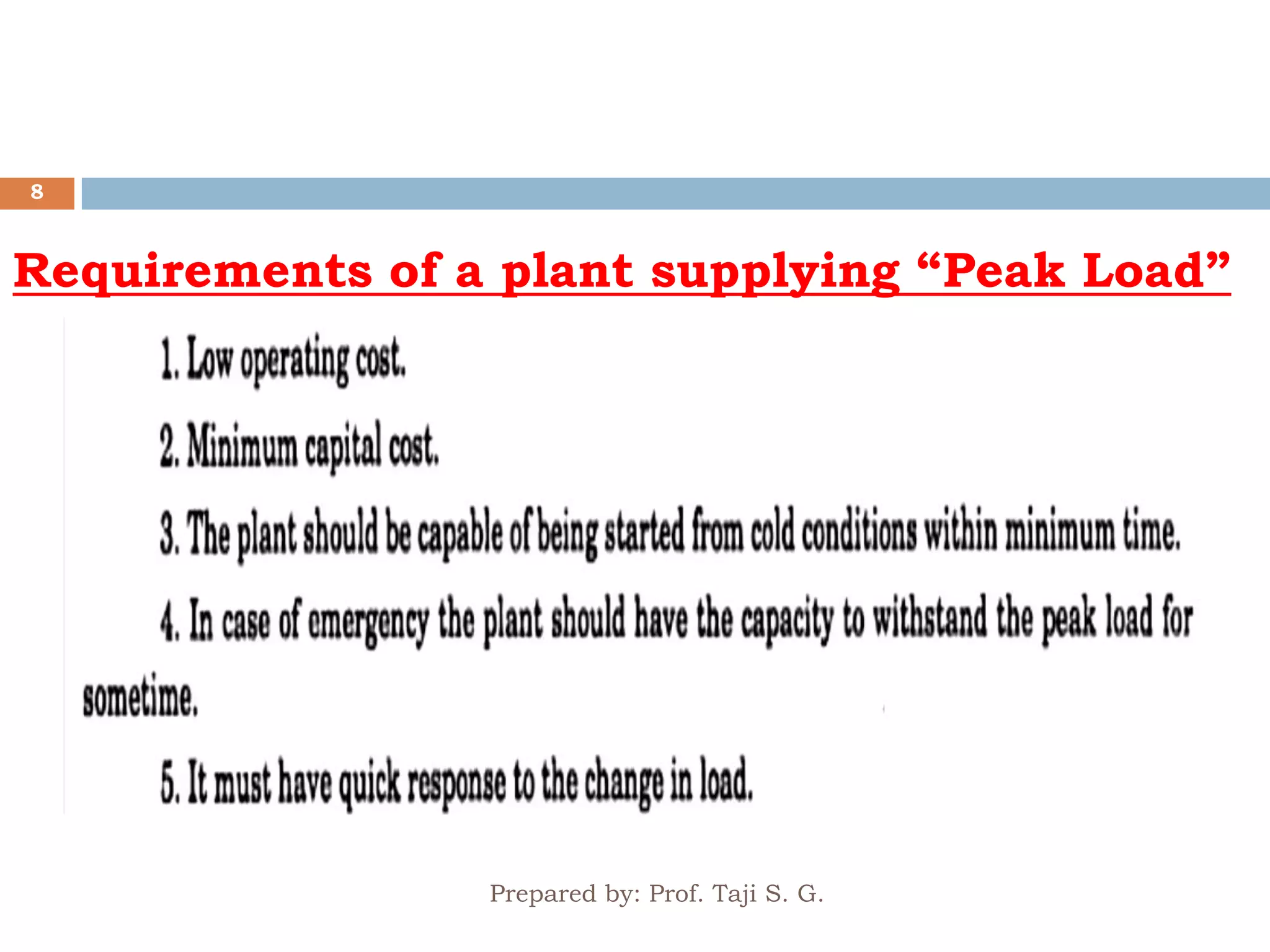
Requirements of a plant supplying “Peak Load”
Prepared by: Prof. Taji S. G.
9
 Hydroelectric Plants:
 can be considered as peak load plant.
 It can be easily started.
 No fuel required.
 Nuclear Power Plants:
 they are not used as peak load plants.
 Diesel Power Plants:
 can be used for peak load plants
 Easily start from cold conditions.
 Number of auxiliaries required is limited, so less
maintenance.
 They have good overload capacity.
 They have high thermal efficiency therefore less
operating cost than steam power plants.
Interconnected Grid System
Prepared by: Prof. Taji S. G.
10
 The connection of several generating
stations in parallel is known as
interconnected grid system.
 The various problems facing the power
engineers are considerably reduced by
interconnecting different power stations
in parallel.
Interconnected Grid System Advantages
Prepared by: Prof. Taji S. G.
11
 Exchange of peak loads :
 An important advantage of interconnected system is
that the peak load of the power station can be
exchanged.
 If the load curve of a power station shows a peak
demand that is greater than the rated capacity of the
plant, then the excess load can be shared by other
stations interconnected with it.
12
 Use of older plants :
 The interconnected system makes it possible to
use the older and less efficient plants to carry
peak loads of short duration.
 Although such plants may be inadequate when
used alone, yet they have sufficient capacity to
carry short peaks of loads when interconnected
with other modern plants.
 Therefore, interconnected system gives a direct
key to the use of obsolete plants.
Interconnected Grid System Advantages
Prepared by: Prof. Taji S. G.
13
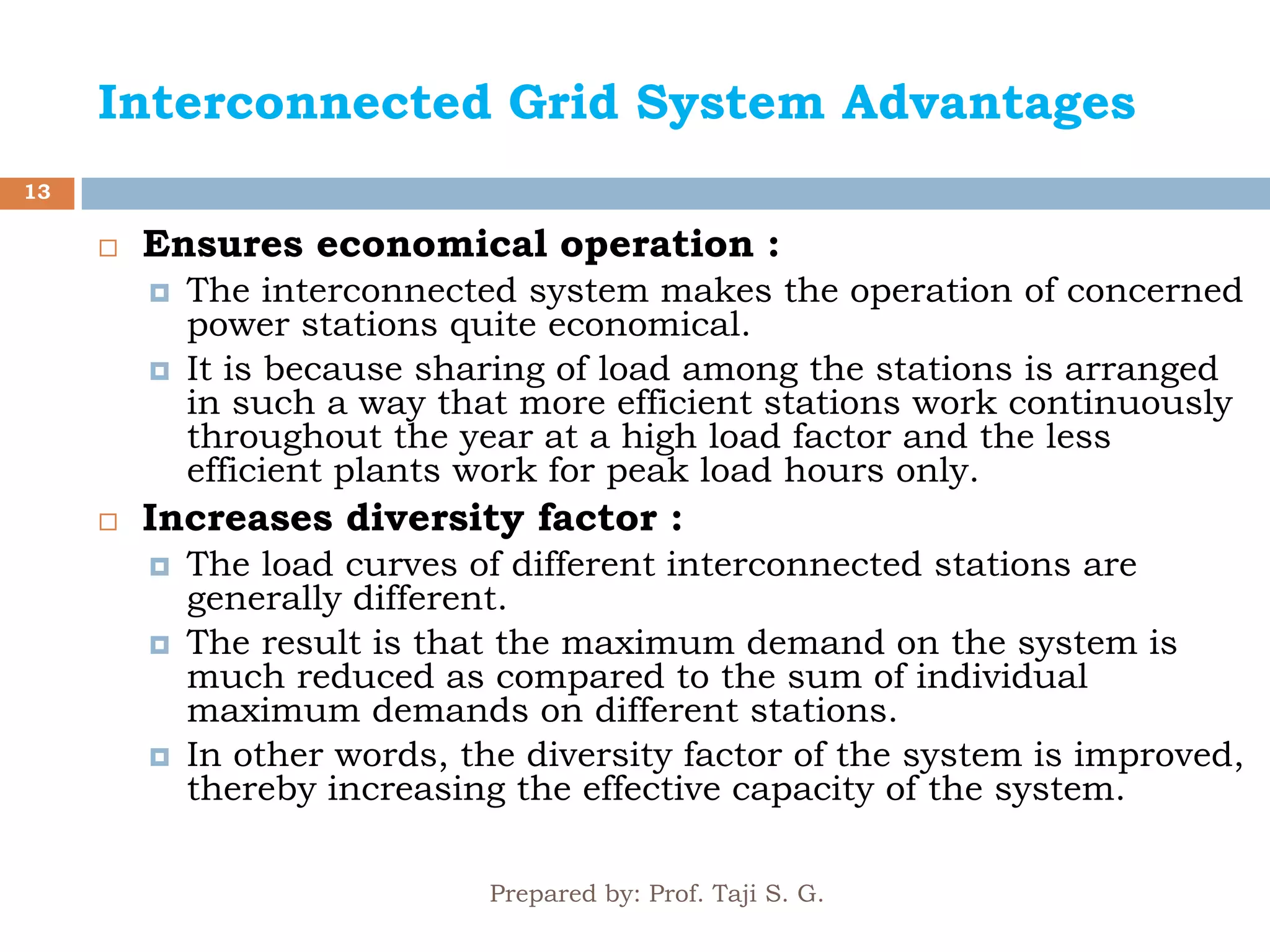
 Ensures economical operation :
 The interconnected system makes the operation of concerned
power stations quite economical.
 It is because sharing of load among the stations is arranged
in such a way that more efficient stations work continuously
throughout the year at a high load factor and the less
efficient plants work for peak load hours only.
 Increases diversity factor :
 The load curves of different interconnected stations are
generally different.
 The result is that the maximum demand on the system is
much reduced as compared to the sum of individual
maximum demands on different stations.
 In other words, the diversity factor of the system is improved,
thereby increasing the effective capacity of the system.
Interconnected Grid System Advantages
Prepared by: Prof. Taji S. G.
14
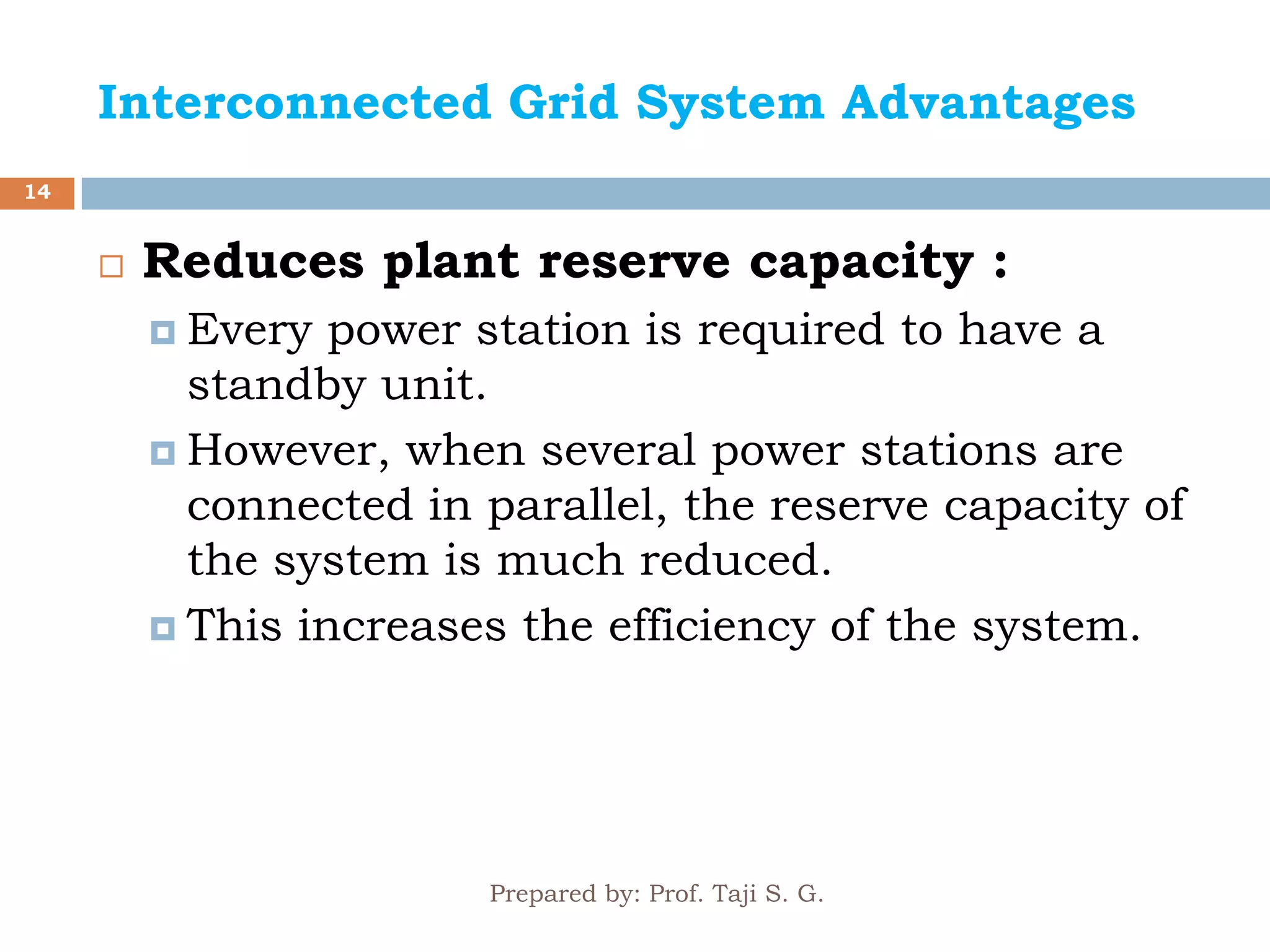
 Reduces plant reserve capacity :
 Every power station is required to have a
standby unit.
 However, when several power stations are
connected in parallel, the reserve capacity of
the system is much reduced.
 This increases the efficiency of the system.
Interconnected Grid System Advantages
Combined operation of Plants
Prepared by: Prof. Taji S. G.
15
Hydroelectric Plant in combination with
Steam Power Plant.
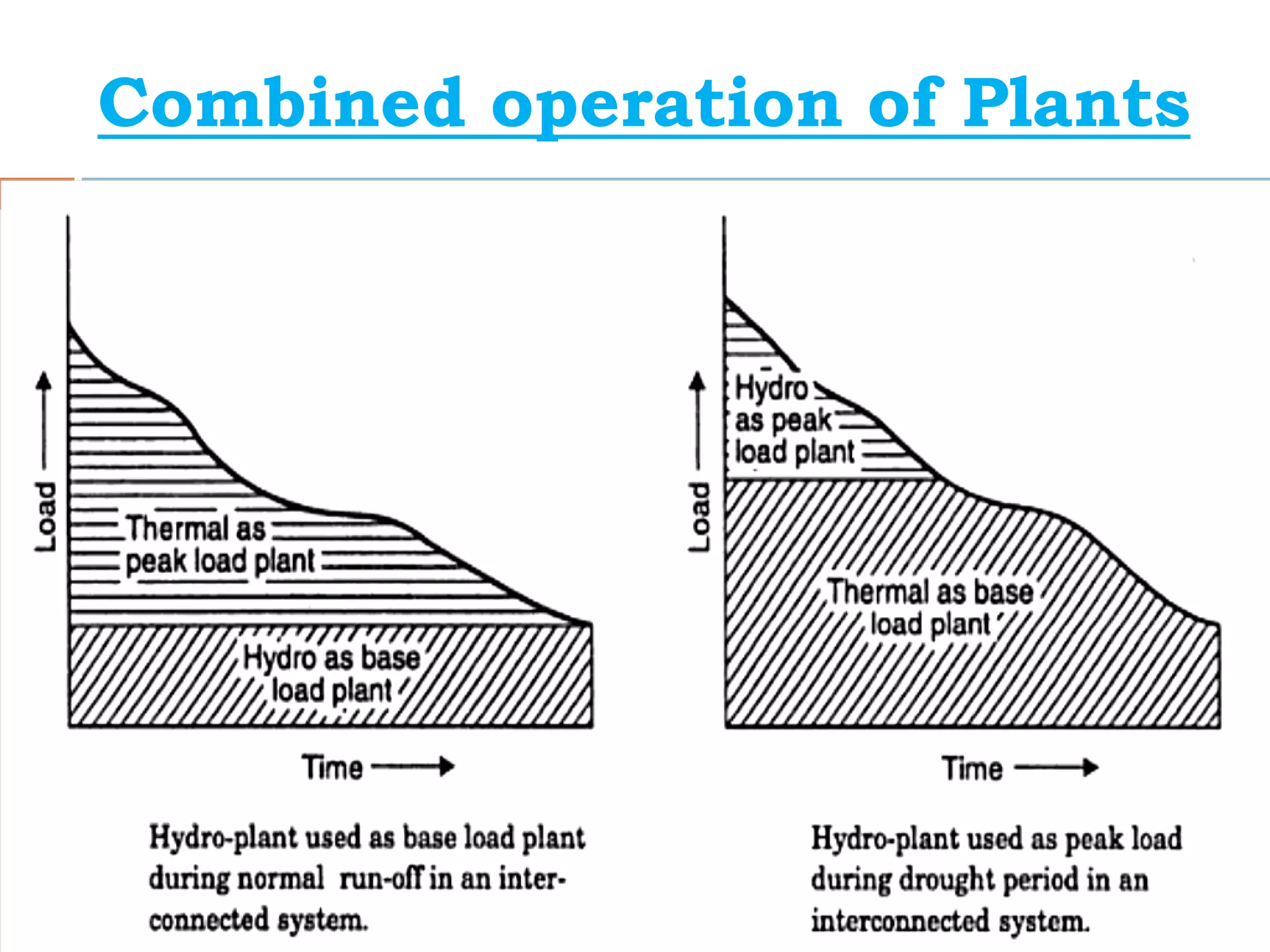
 Hydro Electric plants can take up the load
quickly and follow the peak variations much
better than thermal plants.
 When the run-off is sufficient (in monsoons)
Hydro plant is used as base load plant and
thermal plant is used as peak load plant.
 Thermal plant is used as base load plant
during the draught period and hydro plant
works as peak load plant.
Prepared by: Prof. Taji S. G.
16
Combined operation of Plants
17
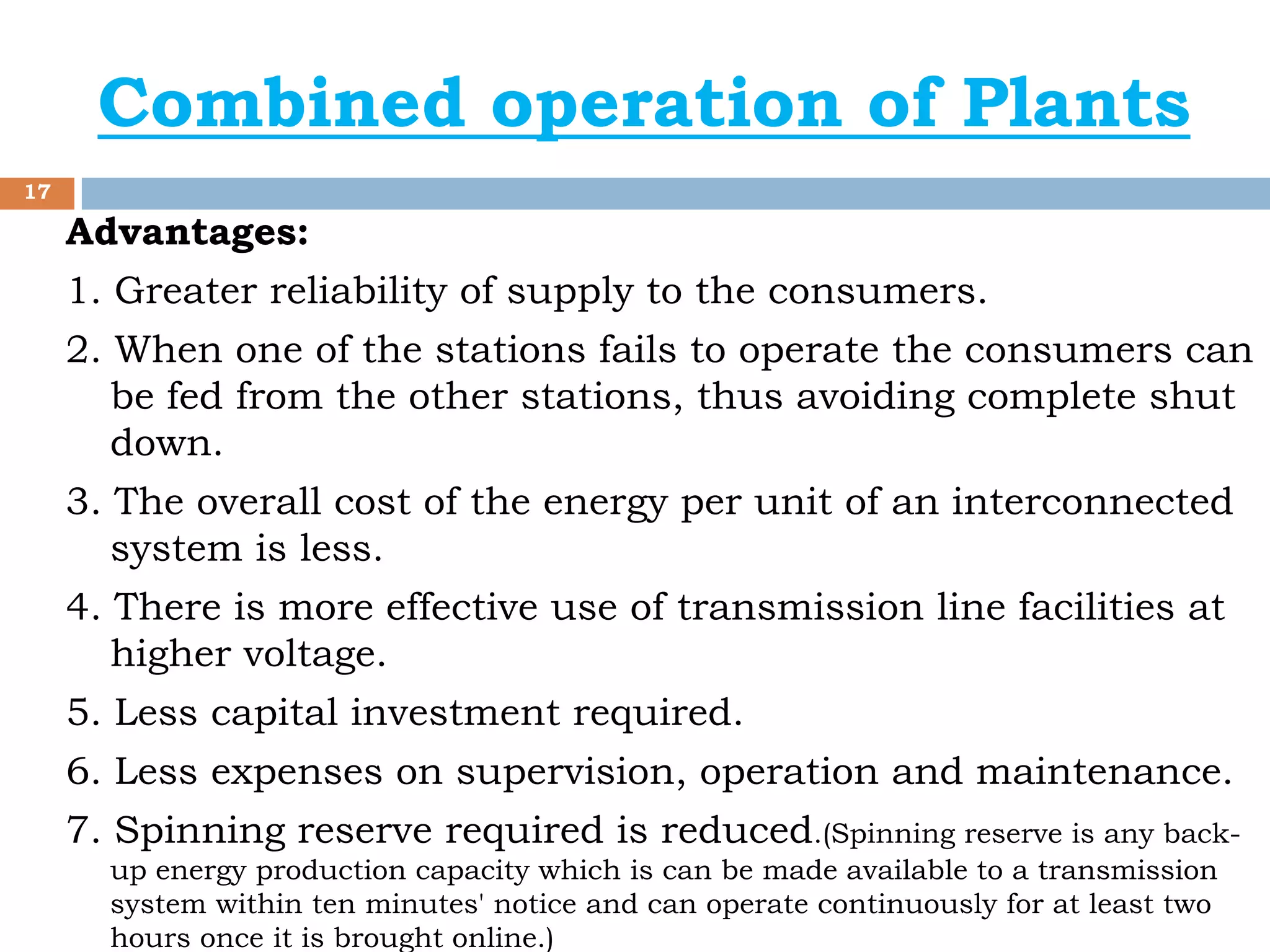
Advantages:
1. Greater reliability of supply to the consumers.
2. When one of the stations fails to operate the consumers can
be fed from the other stations, thus avoiding complete shut
down.
3. The overall cost of the energy per unit of an interconnected
system is less.
4. There is more effective use of transmission line facilities at
higher voltage.
5. Less capital investment required.
6. Less expenses on supervision, operation and maintenance.
7. Spinning reserve required is reduced.(Spinning reserve is any back-
up energy production capacity which is can be made available to a transmission
system within ten minutes' notice and can operate continuously for at least two
hours once it is brought online.)
Combined operation of Plants
Prepared by: Prof. Taji S. G.
18
 Hydrothermal Scheduling: Hydrothermal
scheduling is performed in order to find the
optimum allocation of hydro energy so that
the annual operating cost of a mixed hydro-
thermal system is minimized.
Combined operation of Plants
Prepared by: Prof. Taji S. G.
19
Hydro Thermal Scheduling Methods
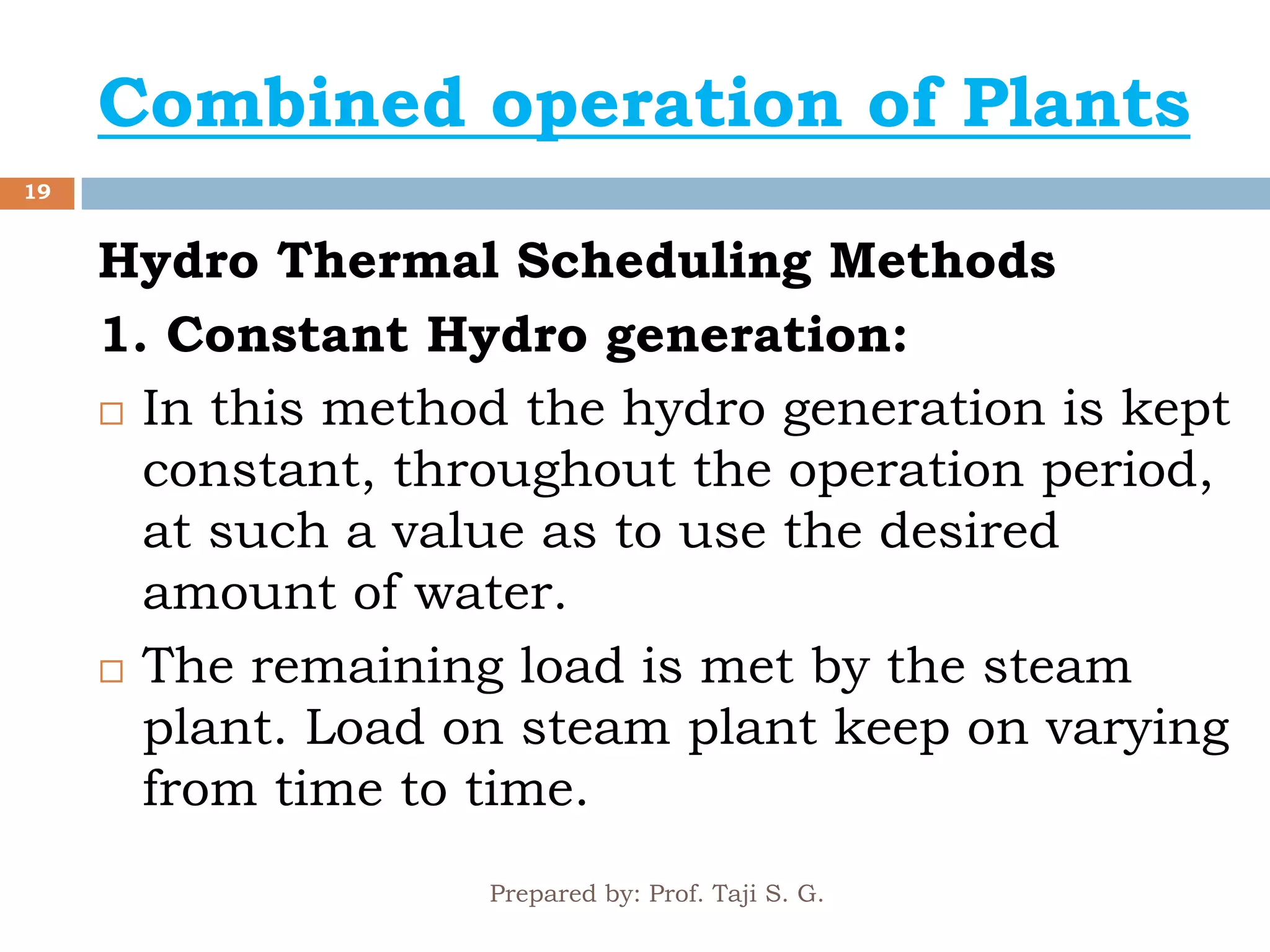
1. Constant Hydro generation:
 In this method the hydro generation is kept
constant, throughout the operation period,
at such a value as to use the desired
amount of water.
 The remaining load is met by the steam
plant. Load on steam plant keep on varying
from time to time.
Combined operation of Plants
20
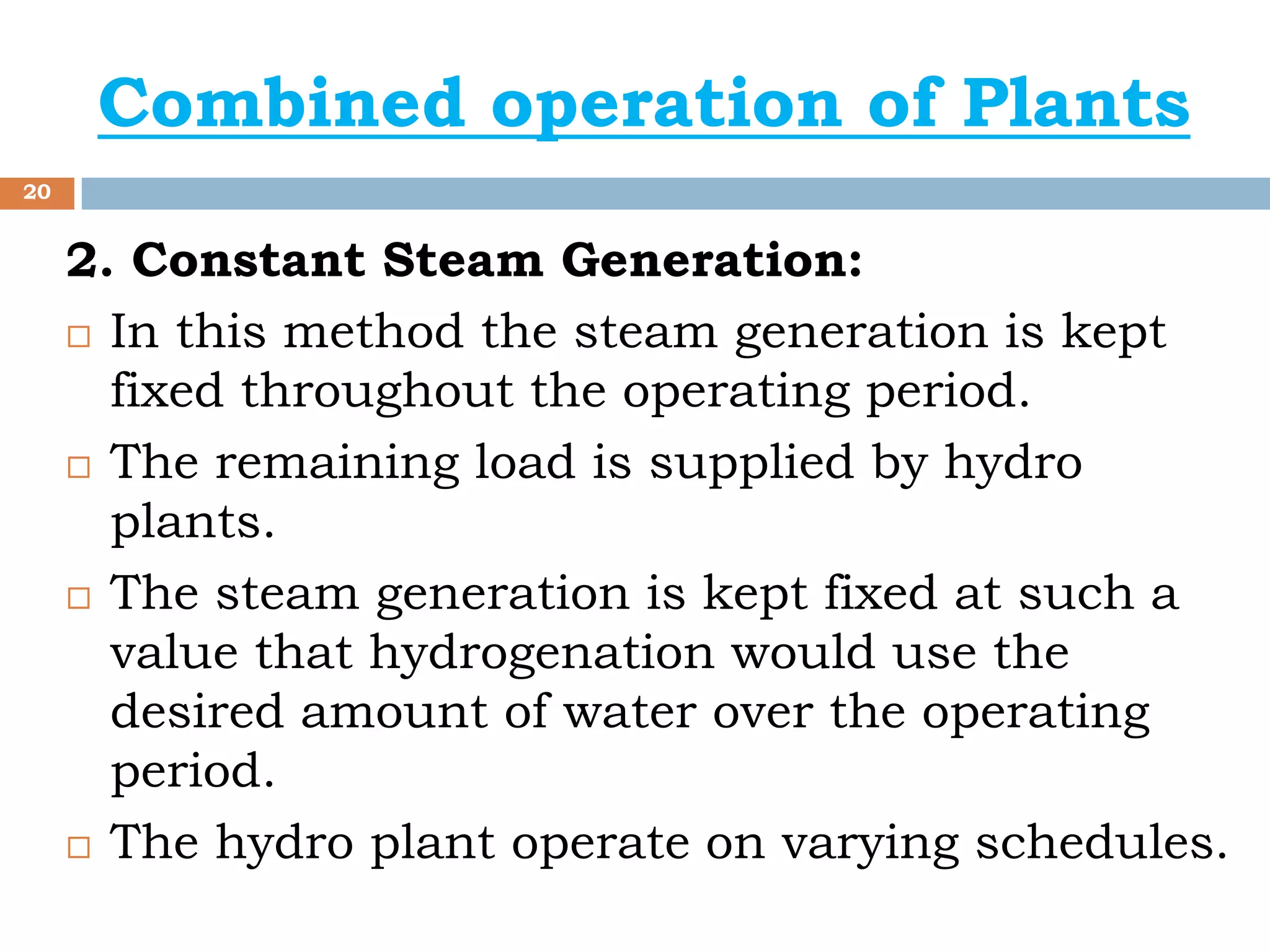
2. Constant Steam Generation:
 In this method the steam generation is kept
fixed throughout the operating period.
 The remaining load is supplied by hydro
plants.
 The steam generation is kept fixed at such a
value that hydrogenation would use the
desired amount of water over the operating
period.
 The hydro plant operate on varying schedules.
Combined operation of Plants
21
3. Maximum hydro efficiency method:
 In this method the hydro plants during
peak load periods are operated at
maximum efficiency.
 During off – peak hours the hydro
generation is scheduled so that desired
amount of water is used over the operating
period and hydro plant works near the
point of maximum efficiency as possible.
 The remaining load is met by steam plant.
Combined operation of Plants

Base Load Plants and Peak Load Plant

  • 1.
    Base Load Plants& Peak Load Plants Prepared by Prof. S. G. Taji Dept. of Civil Engineering S.R.E.S’s Sanjivani College of Engineering, Kopargaon
  • 2.
    Base &Peak LoadPower Station Prepared by: Prof. Taji S. G. 2  The changing load on the power station makes its load curve of variable nature.  load on the power station can be considered in two parts, namely; 1.Base load 2.Peak load
  • 3.
    Method of Meetingthe Load Prepared by: Prof. Taji S. G. 3  In order to achieve overall economy, the best method to meet load is to interconnect two different power stations.  The more efficient plant is used to supply the base load and is known as base load power station.  The less efficient plant is used to supply the peak loads and is known as peak load power station.
  • 4.
    Prepared by: Prof.Taji S. G. 4  There is no hard and fast rule for selection of base load and peak load stations as it would depend upon the particular situation.  For example, both hydro-electric and steam power stations are quite efficient and can be used as base load as well as peak load station to meet a particular load requirement. Illustration.
  • 6.
    Prepared by: Prof.Taji S. G. 6 Requirements of a plant supplying “Base Load”
  • 7.
    Prepared by: Prof.Taji S. G. 7  Hydroelectric Power Plants:  Operating cost is minimum.  Maintenance cost is lower.  Initial cost is high  Cant be located near to load.  Steam Power Plants:  Capital cost is more  Can be located near to load center.  Maintenance requirement is slightly higher.  Diesel Power Plants:  Due to limited generating capacity, it is not used as base load plant.  Nuclear Power Plant:  Initial Cost is High  Limited availability of fuel, not favored.  Whenever they are constructed they are used as base load plants due to constant supply.
  • 8.
    Prepared by: Prof.Taji S. G. 8 Requirements of a plant supplying “Peak Load”
  • 9.
    Prepared by: Prof.Taji S. G. 9  Hydroelectric Plants:  can be considered as peak load plant.  It can be easily started.  No fuel required.  Nuclear Power Plants:  they are not used as peak load plants.  Diesel Power Plants:  can be used for peak load plants  Easily start from cold conditions.  Number of auxiliaries required is limited, so less maintenance.  They have good overload capacity.  They have high thermal efficiency therefore less operating cost than steam power plants.
  • 10.
    Interconnected Grid System Preparedby: Prof. Taji S. G. 10  The connection of several generating stations in parallel is known as interconnected grid system.  The various problems facing the power engineers are considerably reduced by interconnecting different power stations in parallel.
  • 11.
    Interconnected Grid SystemAdvantages Prepared by: Prof. Taji S. G. 11  Exchange of peak loads :  An important advantage of interconnected system is that the peak load of the power station can be exchanged.  If the load curve of a power station shows a peak demand that is greater than the rated capacity of the plant, then the excess load can be shared by other stations interconnected with it.
  • 12.
    12  Use ofolder plants :  The interconnected system makes it possible to use the older and less efficient plants to carry peak loads of short duration.  Although such plants may be inadequate when used alone, yet they have sufficient capacity to carry short peaks of loads when interconnected with other modern plants.  Therefore, interconnected system gives a direct key to the use of obsolete plants. Interconnected Grid System Advantages
  • 13.
    Prepared by: Prof.Taji S. G. 13  Ensures economical operation :  The interconnected system makes the operation of concerned power stations quite economical.  It is because sharing of load among the stations is arranged in such a way that more efficient stations work continuously throughout the year at a high load factor and the less efficient plants work for peak load hours only.  Increases diversity factor :  The load curves of different interconnected stations are generally different.  The result is that the maximum demand on the system is much reduced as compared to the sum of individual maximum demands on different stations.  In other words, the diversity factor of the system is improved, thereby increasing the effective capacity of the system. Interconnected Grid System Advantages
  • 14.
    Prepared by: Prof.Taji S. G. 14  Reduces plant reserve capacity :  Every power station is required to have a standby unit.  However, when several power stations are connected in parallel, the reserve capacity of the system is much reduced.  This increases the efficiency of the system. Interconnected Grid System Advantages
  • 15.
    Combined operation ofPlants Prepared by: Prof. Taji S. G. 15 Hydroelectric Plant in combination with Steam Power Plant.  Hydro Electric plants can take up the load quickly and follow the peak variations much better than thermal plants.  When the run-off is sufficient (in monsoons) Hydro plant is used as base load plant and thermal plant is used as peak load plant.  Thermal plant is used as base load plant during the draught period and hydro plant works as peak load plant.
  • 16.
    Prepared by: Prof.Taji S. G. 16 Combined operation of Plants
  • 17.
    17 Advantages: 1. Greater reliabilityof supply to the consumers. 2. When one of the stations fails to operate the consumers can be fed from the other stations, thus avoiding complete shut down. 3. The overall cost of the energy per unit of an interconnected system is less. 4. There is more effective use of transmission line facilities at higher voltage. 5. Less capital investment required. 6. Less expenses on supervision, operation and maintenance. 7. Spinning reserve required is reduced.(Spinning reserve is any back- up energy production capacity which is can be made available to a transmission system within ten minutes' notice and can operate continuously for at least two hours once it is brought online.) Combined operation of Plants
  • 18.
    Prepared by: Prof.Taji S. G. 18  Hydrothermal Scheduling: Hydrothermal scheduling is performed in order to find the optimum allocation of hydro energy so that the annual operating cost of a mixed hydro- thermal system is minimized. Combined operation of Plants
  • 19.
    Prepared by: Prof.Taji S. G. 19 Hydro Thermal Scheduling Methods 1. Constant Hydro generation:  In this method the hydro generation is kept constant, throughout the operation period, at such a value as to use the desired amount of water.  The remaining load is met by the steam plant. Load on steam plant keep on varying from time to time. Combined operation of Plants
  • 20.
    20 2. Constant SteamGeneration:  In this method the steam generation is kept fixed throughout the operating period.  The remaining load is supplied by hydro plants.  The steam generation is kept fixed at such a value that hydrogenation would use the desired amount of water over the operating period.  The hydro plant operate on varying schedules. Combined operation of Plants
  • 21.
    21 3. Maximum hydroefficiency method:  In this method the hydro plants during peak load periods are operated at maximum efficiency.  During off – peak hours the hydro generation is scheduled so that desired amount of water is used over the operating period and hydro plant works near the point of maximum efficiency as possible.  The remaining load is met by steam plant. Combined operation of Plants