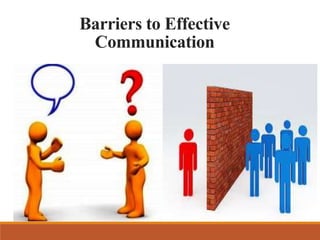
Barriers to Effective
Communication
Definition
Any interference or noise that disrupts
the smooth flow of effective
communication.
These barriers may emanate from either the
sender/receiver or the circumstances of
communication.
They may confuse the listener or reader, create
misunderstanding and confusion, and may sometimes
lead to communication breakdown.
Barriers to Effective
Communication
A careful analysis of communication barriers
reveal that they are generally created by
improper encoding
bypassing
frame of reference
physical distractions
psychological and emotional interference
intercultural difference
Improper Encoding
Selection of inappropriate or
unfamiliar linguistic code --------
communication breakdown due to
misunderstanding or confusion
Bypassing
Misunderstanding resulting from missed meanings because of the
use of abstract words and phrases on which both senders and
receivers do not agree.
Words mean different things to different people.
Age, education and cultural background influence the language a
person uses.
Frame of Reference
Your weakness in viewing others within your frame of reference may
also lead to confusion and misunderstanding.
Interpretation of others’ point of view from your angle.
Preconceived notions and prejudices.
Physical Distractions
Physical discomfort may cause communication failure.
Noise
High room temperature
Fatigue
Sickness
Distance from the speaker or listener
Psychological and Emotional
Interference
Any psychological or emotional turbulence or disturbance can prove to
be a barrier to effective communication.
Sadness
Fear
Anger
Anxiety
Excitement
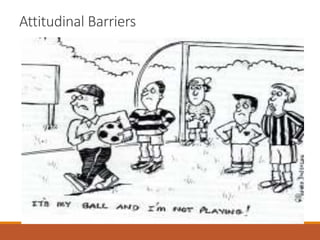
Attitudinal Barriers
Attitudinal barriers are behaviors or perceptions that prevent people from
communicating properly.
Attitudes are commonly formed by an individual's opinions or personal
feelings on a subject or person and can be difficult to alter.
When attitudinal barriers override the sense of professionalism in a
workplace, it can become difficult for a group to engage in productive
communication.
…………………..…….Continued
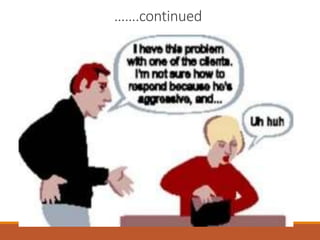
Abstracting-- It can also be referred to as "selective hearing."
Emotional Editing—It is an attitudinal barrier based on your personal
feelings about a person or topic.
Prejudice-- Prejudice is the act of excluding or disliking someone or
something because they belong to a particular group.
Assertiveness VS Aggressiveness
Assertiveness:
The term assertiveness is described as being self-assured and
confident.
Assertive behavior includes politeness, firmness and
confidence, but there is definitely no sign of aggression.
An assertive person pushes forth his take or opinion on a
particular situation by keeping his voice calm and conversational.
Assertive persons are also keen listeners to other people's point
of view. They value the freedom of personal tastes and choices.
Aggressive Behavior
An aggressive person is often known to blurt out his views and
opinions without considering what others feel about the whole
situation.
Such people are also known to impose their views forcibly on others
I-Syndrome
Too much usage of “I” leads to I-syndrome.
Co-interactant also needs to be included in the discussion.
I-attitude should be changed to You-attitude.
Speaker should not lead the interaction from a higher pedestal.
Intercultural Differences
Misinterpretation of meaning
during intercultural
communication due to different
cultures and shared values.
Attitudinal Barriers
…….continued
Overcoming Barriers
Know your audience---- Try to know their needs, perceptions, and
expectations from you.
Try to experience the world from the receiver’s perspective.
Use an appropriate and effective personal style and avoid using a negative or
angry tone.
Encode your message well.
……..Continued
Avoid physical and psychological
barriers.
Listen attentively.
Avoid information overload.
Be open, frank and positive.
Appreciate and understand cultural
differences.
Study the following communicative situations to
identify communication barriers. Justify your answer
by giving a reason for the identified barrier.
Ahmad has to attend a meeting where he must present a business
proposal, but he is very disturbed because his sister is very sick.
A friend wants to know why you are doing BCS. You are not very clear
about the reasons and ideas behind joining the program. You cannot
respond to his query comprehensively because you do not have
appropriate words to explain.
Irtaza works for a multinational company. In a meeting, he has
presented an innovative idea to solve the technical problems of his
company. He is not considering other colleagues’ input and is thinking
that ‘I know more than others’.
Barriers to Effective Communication final.ppt

Barriers to Effective Communication final.ppt

  • 1.
  • 2.
    Definition Any interference ornoise that disrupts the smooth flow of effective communication. These barriers may emanate from either the sender/receiver or the circumstances of communication. They may confuse the listener or reader, create misunderstanding and confusion, and may sometimes lead to communication breakdown.
  • 3.
    Barriers to Effective Communication Acareful analysis of communication barriers reveal that they are generally created by improper encoding bypassing frame of reference physical distractions psychological and emotional interference intercultural difference
  • 4.
    Improper Encoding Selection ofinappropriate or unfamiliar linguistic code -------- communication breakdown due to misunderstanding or confusion
  • 5.
    Bypassing Misunderstanding resulting frommissed meanings because of the use of abstract words and phrases on which both senders and receivers do not agree. Words mean different things to different people. Age, education and cultural background influence the language a person uses.
  • 6.
    Frame of Reference Yourweakness in viewing others within your frame of reference may also lead to confusion and misunderstanding. Interpretation of others’ point of view from your angle. Preconceived notions and prejudices.
  • 7.
    Physical Distractions Physical discomfortmay cause communication failure. Noise High room temperature Fatigue Sickness Distance from the speaker or listener
  • 8.
    Psychological and Emotional Interference Anypsychological or emotional turbulence or disturbance can prove to be a barrier to effective communication. Sadness Fear Anger Anxiety Excitement
  • 9.
    Attitudinal Barriers Attitudinal barriersare behaviors or perceptions that prevent people from communicating properly. Attitudes are commonly formed by an individual's opinions or personal feelings on a subject or person and can be difficult to alter. When attitudinal barriers override the sense of professionalism in a workplace, it can become difficult for a group to engage in productive communication.
  • 10.
    …………………..…….Continued Abstracting-- It canalso be referred to as "selective hearing." Emotional Editing—It is an attitudinal barrier based on your personal feelings about a person or topic. Prejudice-- Prejudice is the act of excluding or disliking someone or something because they belong to a particular group.
  • 11.
    Assertiveness VS Aggressiveness Assertiveness: Theterm assertiveness is described as being self-assured and confident. Assertive behavior includes politeness, firmness and confidence, but there is definitely no sign of aggression. An assertive person pushes forth his take or opinion on a particular situation by keeping his voice calm and conversational. Assertive persons are also keen listeners to other people's point of view. They value the freedom of personal tastes and choices.
  • 12.
    Aggressive Behavior An aggressiveperson is often known to blurt out his views and opinions without considering what others feel about the whole situation. Such people are also known to impose their views forcibly on others
  • 13.
    I-Syndrome Too much usageof “I” leads to I-syndrome. Co-interactant also needs to be included in the discussion. I-attitude should be changed to You-attitude. Speaker should not lead the interaction from a higher pedestal.
  • 14.
    Intercultural Differences Misinterpretation ofmeaning during intercultural communication due to different cultures and shared values.
  • 15.
  • 16.
  • 17.
    Overcoming Barriers Know youraudience---- Try to know their needs, perceptions, and expectations from you. Try to experience the world from the receiver’s perspective. Use an appropriate and effective personal style and avoid using a negative or angry tone. Encode your message well.
  • 18.
    ……..Continued Avoid physical andpsychological barriers. Listen attentively. Avoid information overload. Be open, frank and positive. Appreciate and understand cultural differences.
  • 19.
    Study the followingcommunicative situations to identify communication barriers. Justify your answer by giving a reason for the identified barrier. Ahmad has to attend a meeting where he must present a business proposal, but he is very disturbed because his sister is very sick. A friend wants to know why you are doing BCS. You are not very clear about the reasons and ideas behind joining the program. You cannot respond to his query comprehensively because you do not have appropriate words to explain. Irtaza works for a multinational company. In a meeting, he has presented an innovative idea to solve the technical problems of his company. He is not considering other colleagues’ input and is thinking that ‘I know more than others’.