BARRIERS TO
COMMUINCATION
PRESENTED BY:
AIMAN ZIA SATTI
MAHGULL
SARA NAJAM
The word ‘communicate’ has been
derived from the Latin word ‘Communis’
which means to ‘share’.
Communication is a process by which
information is exchanged between
individuals through a common system of
symbols, signs or behavior.
COMMUNICATION
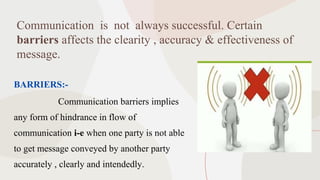
Communication is not always successful. Certain
barriers affects the clearity , accuracy & effectiveness of
message.
BARRIERS:-
Communication barriers implies
any form of hindrance in flow of
communication i-e when one party is not able
to get message conveyed by another party
accurately , clearly and intendedly.
• SEMENTIC BARRIERS
• PHYSICAL BARRIER
• LACK OF PLANNING
• FALSE ASSUMPTION
• AMBIGUITY
• DISTORTION
• PASSING JUDGEMENTS
• IMPLIED MEANINGS
• LACK OF TRUST
• TECHNOLOGICAL BARRRIERS
BARRIERS TO COMMUNICATION
SEMANTIC BARRIER
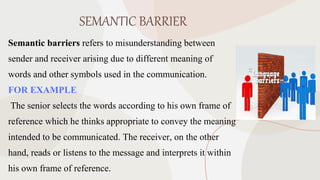
Semantic barriers refers to misunderstanding between
sender and receiver arising due to different meaning of
words and other symbols used in the communication.
FOR EXAMPLE
The senior selects the words according to his own frame of
reference which he thinks appropriate to convey the meaning
intended to be communicated. The receiver, on the other
hand, reads or listens to the message and interprets it within
his own frame of reference.
PHYSICAL BARRIER
A physical barrier to communication can be defined as
an element or a physical factor that acts as a distraction
to hinder the flow of communication.
FOR EXAMPLE:-
Noise is one of the most common barriers in
communication.
Types of noise:-
• physical interruptions by people
• interruption by technology, e.g. ringing telephone.
• external noise e.g. distracting activities going on
nearby such as traffic noise outside the building or
conversations taking place in or near the room .
LACK OF PLANNING
Every message is conveyed with a
specific purpose in mind. One needs to
know one’s own abilities to express the
message well. If a message is
communicated without adequate
planning, the desired result would not
be obtained.
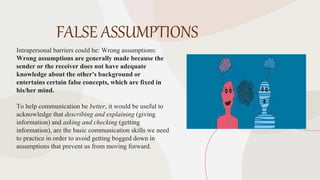
Intrapersonal barriers could be: Wrong assumptions:
Wrong assumptions are generally made because the
sender or the receiver does not have adequate
knowledge about the other's background or
entertains certain false concepts, which are fixed in
his/her mind.
To help communication be better, it would be useful to
acknowledge that describing and explaining (giving
information) and asking and checking (getting
information), are the basic communication skills we need
to practice in order to avoid getting bogged down in
assumptions that prevent us from moving forward.
FALSE ASSUMPTIONS
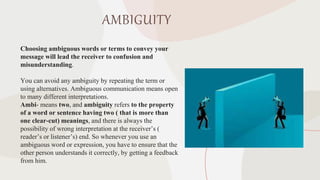
AMBIGUITY
Choosing ambiguous words or terms to convey your
message will lead the receiver to confusion and
misunderstanding.
You can avoid any ambiguity by repeating the term or
using alternatives. Ambiguous communication means open
to many different interpretations.
Ambi- means two, and ambiguity refers to the property
of a word or sentence having two ( that is more than
one clear-cut) meanings, and there is always the
possibility of wrong interpretation at the receiver’s (
reader’s or listener’s) end. So whenever you use an
ambiguous word or expression, you have to ensure that the
other person understands it correctly, by getting a feedback
from him.
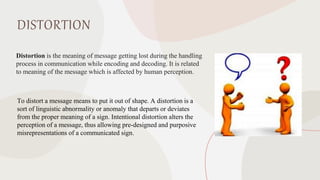
DISTORTION
Distortion is the meaning of message getting lost during the handling
process in communication while encoding and decoding. It is related
to meaning of the message which is affected by human perception.
To distort a message means to put it out of shape. A distortion is a
sort of linguistic abnormality or anomaly that departs or deviates
from the proper meaning of a sign. Intentional distortion alters the
perception of a message, thus allowing pre-designed and purposive
misrepresentations of a communicated sign.
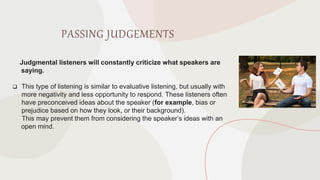
PASSING JUDGEMENTS
Judgmental listeners will constantly criticize what speakers are
saying.
 This type of listening is similar to evaluative listening, but usually with
more negativity and less opportunity to respond. These listeners often
have preconceived ideas about the speaker (for example, bias or
prejudice based on how they look, or their background).
This may prevent them from considering the speaker’s ideas with an
open mind.
IMPLIED MEANINGS
The implied meaning of a word is known as Connotative meaning.
Connotative barrier in communication refers to the difference of meaning
according to different abstract situations, contexts, actions and feelings.
Both the communicators know both meanings of the word, but use only one
meaning according to the context, which might be being used differently in
the context.
For example, the word astonish can be used to describe surprise as well as
startle. The words, when used by someone, can have any of the meaning. The
context in which it is used will only let the receiver know what the sender
means. Another example is the word god, which is used differently by
people following different religions.
LACK OF TRUST
When there is no trust, there is no effective communication. In other
words, when employees don’t trust their employers, leaders, or
managers, communication suffers.
This is the reason why one of the main goals for organizations across
the world has become to build trust in the workplace. Yet, many
employers still have a long way to go to become more trustworthy.
TECHNOLOGICAL BARRRIERS
A technological barrier is limited access to proper,
appropriate, and related hardware and software when the use
of technology fails to fulfill the demands and achieve the
target goals for which the technology was initially used.
Most organizations limit access to communication based on
levels of authority. In most cases, this is necessary unless
it’s a flat organization with flexible roles. But this can also
act as a technological barrier. If some employees can’t
access the communication channel whereas others can, it
not only impacts their work but also demotivates them.
Communication should be open and honest, whether in
person or online.
THANKYOU!!!

BARRIERS TO COMMUNICATION (1).pptx

  • 1.
  • 2.
    The word ‘communicate’has been derived from the Latin word ‘Communis’ which means to ‘share’. Communication is a process by which information is exchanged between individuals through a common system of symbols, signs or behavior. COMMUNICATION
  • 3.
    Communication is notalways successful. Certain barriers affects the clearity , accuracy & effectiveness of message. BARRIERS:- Communication barriers implies any form of hindrance in flow of communication i-e when one party is not able to get message conveyed by another party accurately , clearly and intendedly.
  • 4.
    • SEMENTIC BARRIERS •PHYSICAL BARRIER • LACK OF PLANNING • FALSE ASSUMPTION • AMBIGUITY • DISTORTION • PASSING JUDGEMENTS • IMPLIED MEANINGS • LACK OF TRUST • TECHNOLOGICAL BARRRIERS BARRIERS TO COMMUNICATION
  • 5.
    SEMANTIC BARRIER Semantic barriersrefers to misunderstanding between sender and receiver arising due to different meaning of words and other symbols used in the communication. FOR EXAMPLE The senior selects the words according to his own frame of reference which he thinks appropriate to convey the meaning intended to be communicated. The receiver, on the other hand, reads or listens to the message and interprets it within his own frame of reference.
  • 6.
    PHYSICAL BARRIER A physicalbarrier to communication can be defined as an element or a physical factor that acts as a distraction to hinder the flow of communication. FOR EXAMPLE:- Noise is one of the most common barriers in communication. Types of noise:- • physical interruptions by people • interruption by technology, e.g. ringing telephone. • external noise e.g. distracting activities going on nearby such as traffic noise outside the building or conversations taking place in or near the room .
  • 7.
    LACK OF PLANNING Everymessage is conveyed with a specific purpose in mind. One needs to know one’s own abilities to express the message well. If a message is communicated without adequate planning, the desired result would not be obtained.
  • 8.
    Intrapersonal barriers couldbe: Wrong assumptions: Wrong assumptions are generally made because the sender or the receiver does not have adequate knowledge about the other's background or entertains certain false concepts, which are fixed in his/her mind. To help communication be better, it would be useful to acknowledge that describing and explaining (giving information) and asking and checking (getting information), are the basic communication skills we need to practice in order to avoid getting bogged down in assumptions that prevent us from moving forward. FALSE ASSUMPTIONS
  • 9.
    AMBIGUITY Choosing ambiguous wordsor terms to convey your message will lead the receiver to confusion and misunderstanding. You can avoid any ambiguity by repeating the term or using alternatives. Ambiguous communication means open to many different interpretations. Ambi- means two, and ambiguity refers to the property of a word or sentence having two ( that is more than one clear-cut) meanings, and there is always the possibility of wrong interpretation at the receiver’s ( reader’s or listener’s) end. So whenever you use an ambiguous word or expression, you have to ensure that the other person understands it correctly, by getting a feedback from him.
  • 10.
    DISTORTION Distortion is themeaning of message getting lost during the handling process in communication while encoding and decoding. It is related to meaning of the message which is affected by human perception. To distort a message means to put it out of shape. A distortion is a sort of linguistic abnormality or anomaly that departs or deviates from the proper meaning of a sign. Intentional distortion alters the perception of a message, thus allowing pre-designed and purposive misrepresentations of a communicated sign.
  • 11.
    PASSING JUDGEMENTS Judgmental listenerswill constantly criticize what speakers are saying.  This type of listening is similar to evaluative listening, but usually with more negativity and less opportunity to respond. These listeners often have preconceived ideas about the speaker (for example, bias or prejudice based on how they look, or their background). This may prevent them from considering the speaker’s ideas with an open mind.
  • 12.
    IMPLIED MEANINGS The impliedmeaning of a word is known as Connotative meaning. Connotative barrier in communication refers to the difference of meaning according to different abstract situations, contexts, actions and feelings. Both the communicators know both meanings of the word, but use only one meaning according to the context, which might be being used differently in the context. For example, the word astonish can be used to describe surprise as well as startle. The words, when used by someone, can have any of the meaning. The context in which it is used will only let the receiver know what the sender means. Another example is the word god, which is used differently by people following different religions.
  • 13.
    LACK OF TRUST Whenthere is no trust, there is no effective communication. In other words, when employees don’t trust their employers, leaders, or managers, communication suffers. This is the reason why one of the main goals for organizations across the world has become to build trust in the workplace. Yet, many employers still have a long way to go to become more trustworthy.
  • 14.
    TECHNOLOGICAL BARRRIERS A technologicalbarrier is limited access to proper, appropriate, and related hardware and software when the use of technology fails to fulfill the demands and achieve the target goals for which the technology was initially used. Most organizations limit access to communication based on levels of authority. In most cases, this is necessary unless it’s a flat organization with flexible roles. But this can also act as a technological barrier. If some employees can’t access the communication channel whereas others can, it not only impacts their work but also demotivates them. Communication should be open and honest, whether in person or online.
  • 15.