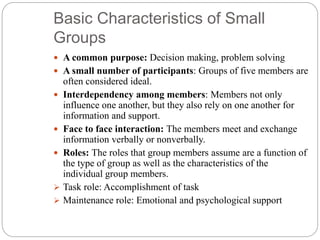
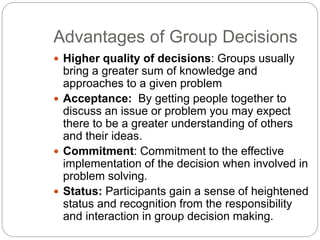
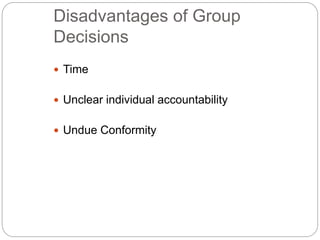
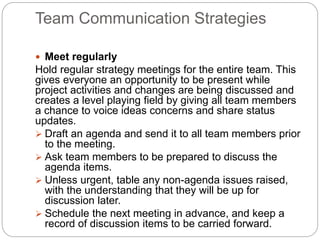
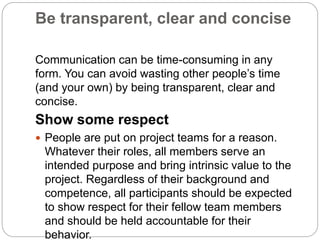
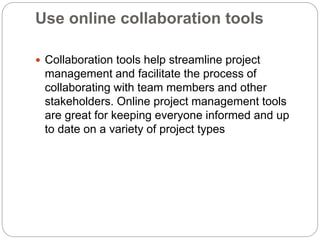
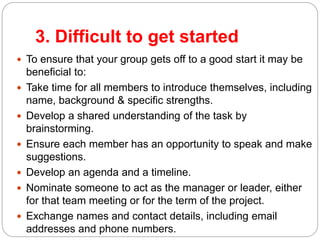
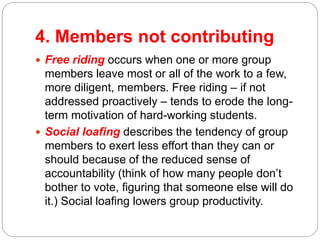
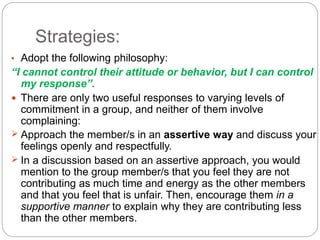
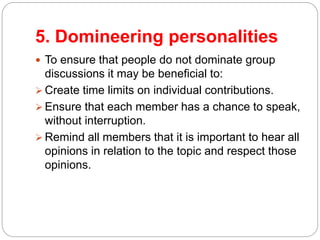
Small groups are effective for problem solving because they allow for interaction between members and bring together diverse knowledge and perspectives. Effective small groups have 5 or fewer interdependent members working toward a common goal through face-to-face interaction where members take on task and maintenance roles. While group decisions can produce higher quality solutions through greater input and commitment, they also take more time and may result in unclear accountability or undue conformity. Effective communication strategies for teams include regular meetings, transparency, respecting all members, and using online collaboration tools. Challenges that can arise in group work include micromanagement, coordination costs, difficultly getting started, free riding, domineering personalities, conflicts, knowledge gaps, and potential for gender bias.