Bully-Proof Kids
Raising Happy Kids in an
Anxious World
BA (Hons) Counselling & Psychotherapy
Post Grad Dip. MBCT
Dip. Youth Studies
Dip. Psychometric Testing
APCP; BPS
• Resilience
• Positive Outlook
• Commitment to well-being
• Altruism/ Spirit of
contribution
Anxiety disorder is the
most common mental
health condition in
Ireland
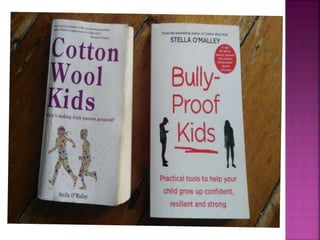
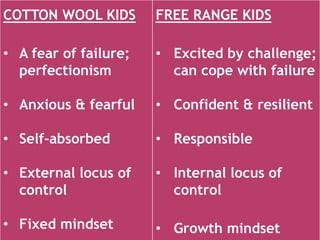
COTTON WOOL KIDS
• A fear of failure;
perfectionism
• Anxious & fearful
• Self-absorbed
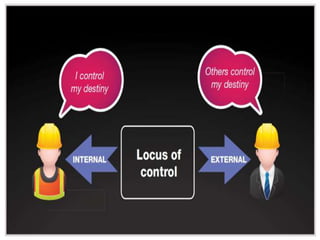
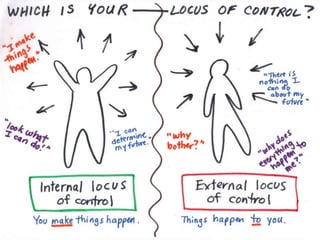
• External locus of
control
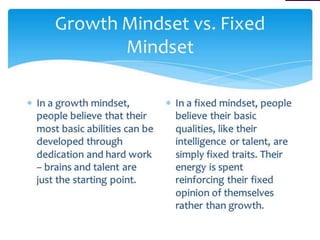
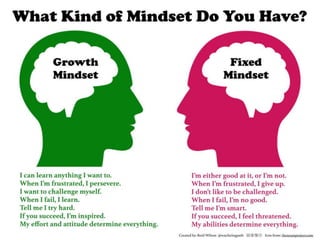
• Fixed mindset
FREE RANGE KIDS
• Excited by challenge;
can cope with failure
• Confident & resilient
• Responsible
• Internal locus of
control
• Growth mindset
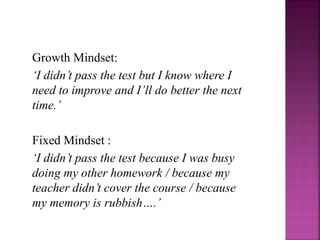
Growth Mindset:
‘I didn’t pass the test but I know where I
need to improve and I’ll do better the next
time.’
Fixed Mindset :
‘I didn’t pass the test because I was busy
doing my other homework / because my
teacher didn’t cover the course / because
my memory is rubbish….’
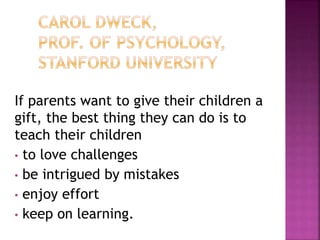
If parents want to give their children a
gift, the best thing they can do is to
teach their children
• to love challenges
• be intrigued by mistakes
• enjoy effort
• keep on learning.
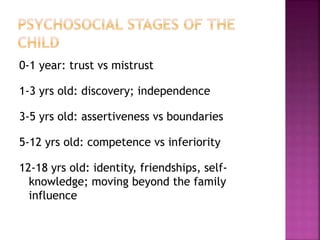
0-1 year: trust vs mistrust
1-3 yrs old: discovery; independence
3-5 yrs old: assertiveness vs boundaries
5-12 yrs old: competence vs inferiority
12-18 yrs old: identity, friendships, self-
knowledge; moving beyond the family
influence
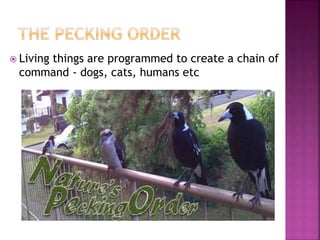
 Living things are programmed to create a chain of
command - dogs, cats, humans etc
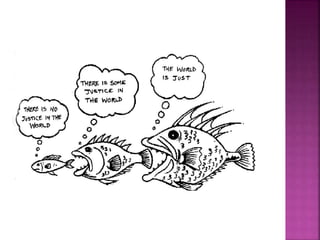
•In an insecure environment, where many
people feel threatened, this chain of
command becomes more intense & more
competitive
•In a secure environment, where most
people feel good about themselves, then
there is less need to worry about who is in
charge etc and the pecking order isn’t so
intense
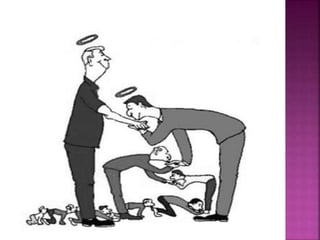
 In many schools, children are continuously
tested and compared with each other
which makes everyone feel insecure and
competitive.
 This creates a ‘dog-eat-dog’ world that is
very concerned about the Pecking Order
 The principal sets the tone
 Within each classroom the teachers set the tone
 …then the dominant personalities within 6th Class
 …then the rest of 6th class
 …then dominant personalities within 5th class
 …then the rest of 5th class
 Dominant personalities such as the ‘Queen Bees’
and ringleaders within each classroom help set
the tone
“I've learned that
people will forget what you said,
people will forget what you did,
but people will never forget how you
made them feel.”
Maya Angelou
• Good enough?
• Inadequate? Unsure?
• Insecure? Nervous?
• Confident?
• Warm?
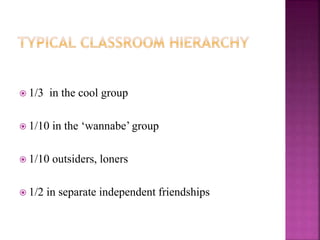
 1/3 in the cool group
 1/10 in the ‘wannabe’ group
 1/10 outsiders, loners
 1/2 in separate independent friendships
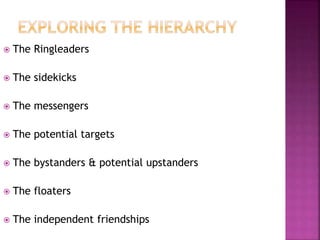
 The Ringleaders
 The sidekicks
 The messengers
 The potential targets
 The bystanders & potential upstanders
 The floaters
 The independent friendships
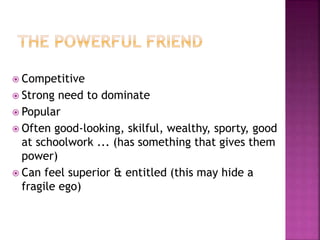
 Competitive
 Strong need to dominate
 Popular
 Often good-looking, skilful, wealthy, sporty, good
at schoolwork ... (has something that gives them
power)
 Can feel superior & entitled (this may hide a
fragile ego)
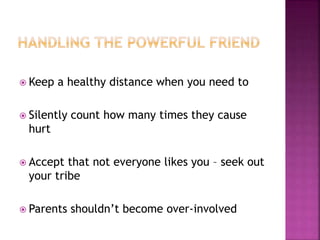
 Keep a healthy distance when you need to
 Silently count how many times they cause
hurt
 Accept that not everyone likes you – seek out
your tribe
 Parents shouldn’t become over-involved
‘Repeated, aggressive
behaviour by somebody with
more power’
Dr. James O’Higgins Norman, director of the
National Anti-Bullying Centre in DCU
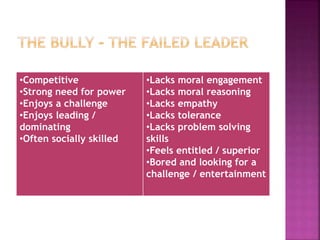
•Competitive
•Strong need for power
•Enjoys a challenge
•Enjoys leading /
dominating
•Often socially skilled
•Lacks moral engagement
•Lacks moral reasoning
•Lacks empathy
•Lacks tolerance
•Lacks problem solving
skills
•Feels entitled / superior
•Bored and looking for a
challenge / entertainment
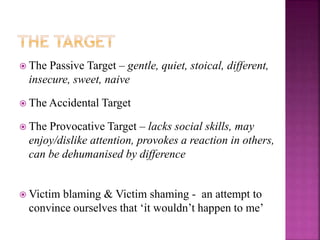
 The Passive Target – gentle, quiet, stoical, different,
insecure, sweet, naive
 The Accidental Target
 The Provocative Target – lacks social skills, may
enjoy/dislike attention, provokes a reaction in others,
can be dehumanised by difference
 Victim blaming & Victim shaming - an attempt to
convince ourselves that ‘it wouldn’t happen to me’
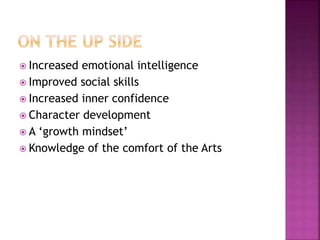
 Increased emotional intelligence
 Improved social skills
 Increased inner confidence
 Character development
 A ‘growth mindset’
 Knowledge of the comfort of the Arts
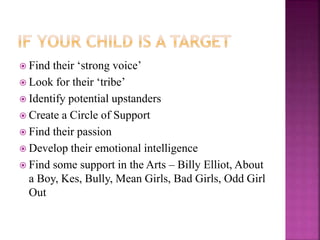
 Find their ‘strong voice’
 Look for their ‘tribe’
 Identify potential upstanders
 Create a Circle of Support
 Find their passion
 Develop their emotional intelligence
 Find some support in the Arts – Billy Elliot, About
a Boy, Kes, Bully, Mean Girls, Bad Girls, Odd Girl
Out
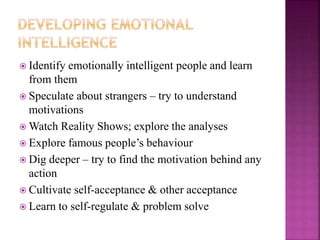
 Identify emotionally intelligent people and learn
from them
 Speculate about strangers – try to understand
motivations
 Watch Reality Shows; explore the analyses
 Explore famous people’s behaviour
 Dig deeper – try to find the motivation behind any
action
 Cultivate self-acceptance & other acceptance
 Learn to self-regulate & problem solve
 Build emotional intelligence
 Develop social skills
 Develop communication skills
 Develop self- and other- acceptance
 Don’t hand all the responsibility over to the
school
 Analyse the environment – identify the
weaknesses & strengths –join the parents’
committee; push for initiatives
 Identify potential upstanders
 ‘What measures will you take to ensure that
my child doesn’t feel threatened when they
are in school?’
 When will these measures be taken?
 How will I know when these measures will be
taken?
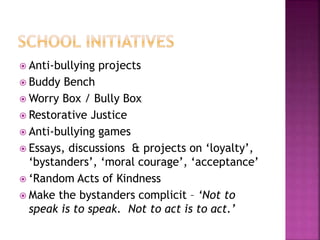
 Anti-bullying projects
 Buddy Bench
 Worry Box / Bully Box
 Restorative Justice
 Anti-bullying games
 Essays, discussions & projects on ‘loyalty’,
‘bystanders’, ‘moral courage’, ‘acceptance’
 ‘Random Acts of Kindness
 Make the bystanders complicit – ‘Not to
speak is to speak. Not to act is to act.’
 1. Ignore the bully
 2. Tell the bully to stop
 3. Tell a responsive adult
 But a more complicated continuum could be:
1. Resist the bullies physical attacks
2. Use force equal to the level needed to
escape from the bullies’ attack
3. Tell a responsive adult as soon as possible
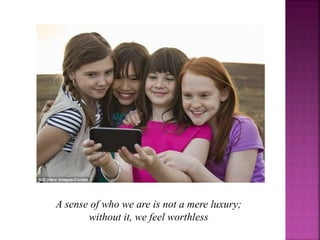
A sense of who we are is not a mere luxury;
without it, we feel worthless
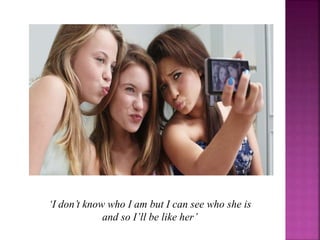
‘I don’t know who I am but I can see who she is
and so I’ll be like her’
The easiest way to raise happy
and healthy children
... is to be happy and healthy
yourself!
Facebook: Stella O Malley
Phone : 085 7112211
www.stellaomalley.com

Bandon Bully-Proof Kids

  • 1.
    Bully-Proof Kids Raising HappyKids in an Anxious World
  • 2.
    BA (Hons) Counselling& Psychotherapy Post Grad Dip. MBCT Dip. Youth Studies Dip. Psychometric Testing APCP; BPS
  • 4.
    • Resilience • PositiveOutlook • Commitment to well-being • Altruism/ Spirit of contribution
  • 5.
    Anxiety disorder isthe most common mental health condition in Ireland
  • 7.
    COTTON WOOL KIDS •A fear of failure; perfectionism • Anxious & fearful • Self-absorbed • External locus of control • Fixed mindset FREE RANGE KIDS • Excited by challenge; can cope with failure • Confident & resilient • Responsible • Internal locus of control • Growth mindset
  • 12.
    Growth Mindset: ‘I didn’tpass the test but I know where I need to improve and I’ll do better the next time.’ Fixed Mindset : ‘I didn’t pass the test because I was busy doing my other homework / because my teacher didn’t cover the course / because my memory is rubbish….’
  • 15.
    If parents wantto give their children a gift, the best thing they can do is to teach their children • to love challenges • be intrigued by mistakes • enjoy effort • keep on learning.
  • 16.
    0-1 year: trustvs mistrust 1-3 yrs old: discovery; independence 3-5 yrs old: assertiveness vs boundaries 5-12 yrs old: competence vs inferiority 12-18 yrs old: identity, friendships, self- knowledge; moving beyond the family influence
  • 17.
     Living thingsare programmed to create a chain of command - dogs, cats, humans etc
  • 18.
    •In an insecureenvironment, where many people feel threatened, this chain of command becomes more intense & more competitive •In a secure environment, where most people feel good about themselves, then there is less need to worry about who is in charge etc and the pecking order isn’t so intense
  • 20.
     In manyschools, children are continuously tested and compared with each other which makes everyone feel insecure and competitive.  This creates a ‘dog-eat-dog’ world that is very concerned about the Pecking Order
  • 22.
     The principalsets the tone  Within each classroom the teachers set the tone  …then the dominant personalities within 6th Class  …then the rest of 6th class  …then dominant personalities within 5th class  …then the rest of 5th class  Dominant personalities such as the ‘Queen Bees’ and ringleaders within each classroom help set the tone
  • 23.
    “I've learned that peoplewill forget what you said, people will forget what you did, but people will never forget how you made them feel.” Maya Angelou
  • 24.
    • Good enough? •Inadequate? Unsure? • Insecure? Nervous? • Confident? • Warm?
  • 25.
     1/3 inthe cool group  1/10 in the ‘wannabe’ group  1/10 outsiders, loners  1/2 in separate independent friendships
  • 26.
     The Ringleaders The sidekicks  The messengers  The potential targets  The bystanders & potential upstanders  The floaters  The independent friendships
  • 27.
     Competitive  Strongneed to dominate  Popular  Often good-looking, skilful, wealthy, sporty, good at schoolwork ... (has something that gives them power)  Can feel superior & entitled (this may hide a fragile ego)
  • 28.
     Keep ahealthy distance when you need to  Silently count how many times they cause hurt  Accept that not everyone likes you – seek out your tribe  Parents shouldn’t become over-involved
  • 29.
    ‘Repeated, aggressive behaviour bysomebody with more power’ Dr. James O’Higgins Norman, director of the National Anti-Bullying Centre in DCU
  • 30.
    •Competitive •Strong need forpower •Enjoys a challenge •Enjoys leading / dominating •Often socially skilled •Lacks moral engagement •Lacks moral reasoning •Lacks empathy •Lacks tolerance •Lacks problem solving skills •Feels entitled / superior •Bored and looking for a challenge / entertainment
  • 31.
     The PassiveTarget – gentle, quiet, stoical, different, insecure, sweet, naive  The Accidental Target  The Provocative Target – lacks social skills, may enjoy/dislike attention, provokes a reaction in others, can be dehumanised by difference  Victim blaming & Victim shaming - an attempt to convince ourselves that ‘it wouldn’t happen to me’
  • 32.
     Increased emotionalintelligence  Improved social skills  Increased inner confidence  Character development  A ‘growth mindset’  Knowledge of the comfort of the Arts
  • 33.
     Find their‘strong voice’  Look for their ‘tribe’  Identify potential upstanders  Create a Circle of Support  Find their passion  Develop their emotional intelligence  Find some support in the Arts – Billy Elliot, About a Boy, Kes, Bully, Mean Girls, Bad Girls, Odd Girl Out
  • 35.
     Identify emotionallyintelligent people and learn from them  Speculate about strangers – try to understand motivations  Watch Reality Shows; explore the analyses  Explore famous people’s behaviour  Dig deeper – try to find the motivation behind any action  Cultivate self-acceptance & other acceptance  Learn to self-regulate & problem solve
  • 36.
     Build emotionalintelligence  Develop social skills  Develop communication skills  Develop self- and other- acceptance  Don’t hand all the responsibility over to the school  Analyse the environment – identify the weaknesses & strengths –join the parents’ committee; push for initiatives  Identify potential upstanders
  • 37.
     ‘What measureswill you take to ensure that my child doesn’t feel threatened when they are in school?’  When will these measures be taken?  How will I know when these measures will be taken?
  • 38.
     Anti-bullying projects Buddy Bench  Worry Box / Bully Box  Restorative Justice  Anti-bullying games  Essays, discussions & projects on ‘loyalty’, ‘bystanders’, ‘moral courage’, ‘acceptance’  ‘Random Acts of Kindness  Make the bystanders complicit – ‘Not to speak is to speak. Not to act is to act.’
  • 39.
     1. Ignorethe bully  2. Tell the bully to stop  3. Tell a responsive adult  But a more complicated continuum could be: 1. Resist the bullies physical attacks 2. Use force equal to the level needed to escape from the bullies’ attack 3. Tell a responsive adult as soon as possible
  • 41.
    A sense ofwho we are is not a mere luxury; without it, we feel worthless
  • 42.
    ‘I don’t knowwho I am but I can see who she is and so I’ll be like her’
  • 43.
    The easiest wayto raise happy and healthy children ... is to be happy and healthy yourself!
  • 44.
    Facebook: Stella OMalley Phone : 085 7112211 www.stellaomalley.com

Editor's Notes

  • #6 1 in 4 adults suffer from mental health issues
  • #12 Carol Dweck, prof of psychology, Stanford University
  • #16 Dweck; world leading researcher in the field of motivation
  • #17 18 – 40 yrs old: intimacy & relationships 40 – 65 : generativity vs stagnation; 65 + integrity vs despair
  • #23 7,800 jews / 7,220 escaped / 99% of Danish Jews survived the holocaust
  • #25 How you make people feel is your manner of communicating; no matter what your verbal communication is expressing
  • #30 June 2016
  • #32 Dr. Marvin Lerner; 1960s study, participants given electric shocks and people who couldn’t help tended to criticise
  • #39 Dietrich Bonhoeffer ... Restorative justice focuses on needs of victims and offenders... To rehabiliate and reconcile
  • #40 Paul McGrath