S
MARIST COLLEGE
TEACHERS OF
TOMORROW
Coordinated By:
Rosemarie Martens
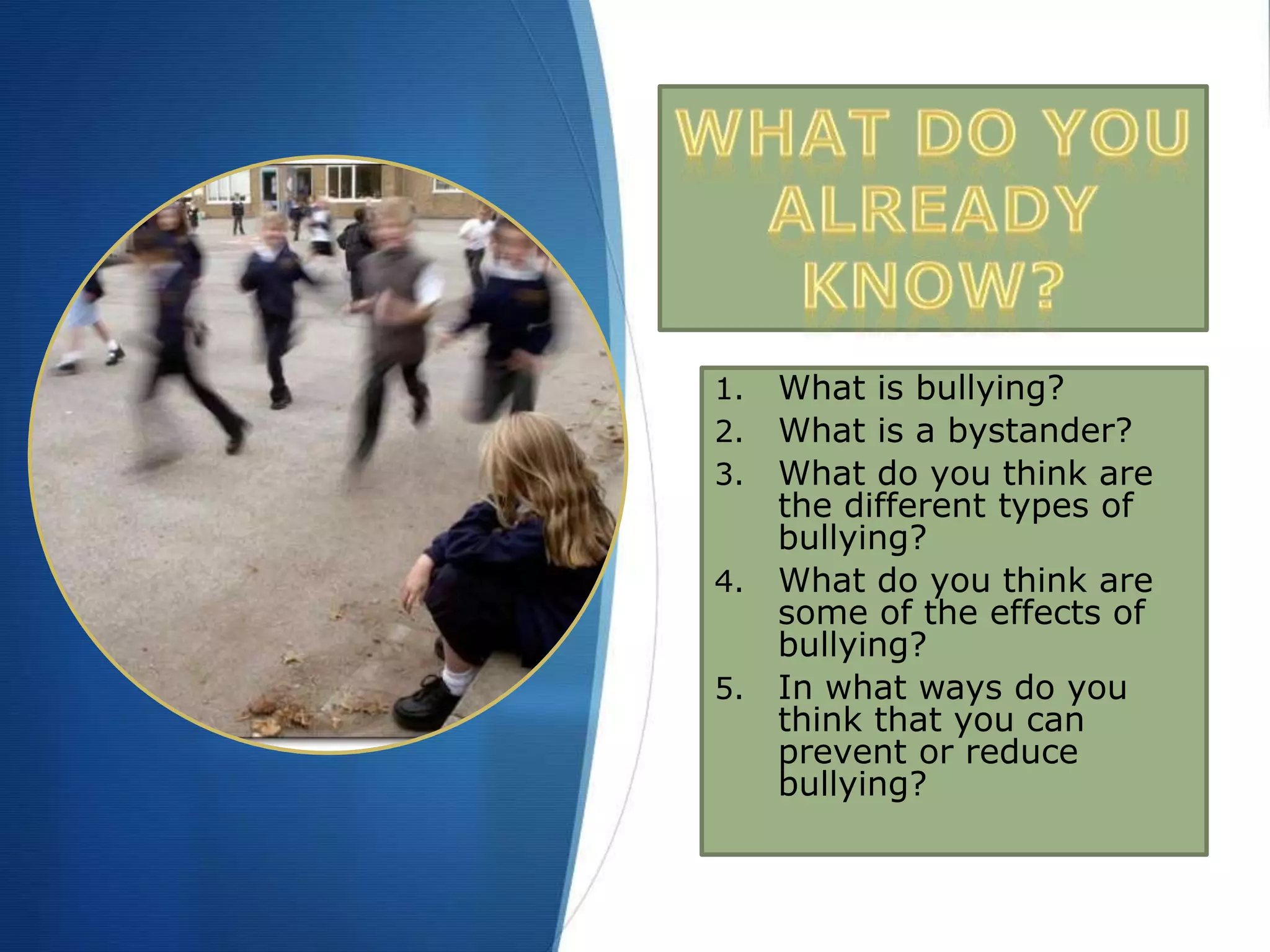
1. What is bullying?
2. What is a bystander?
3. What do you think are
the different types of
bullying?
4. What do you think are
some of the effects of
bullying?
5. In what ways do you
think that you can
prevent or reduce
bullying?
S
http://www.youtube.com/watch?v=gliH
yklHr6c&feature=player_detailpage
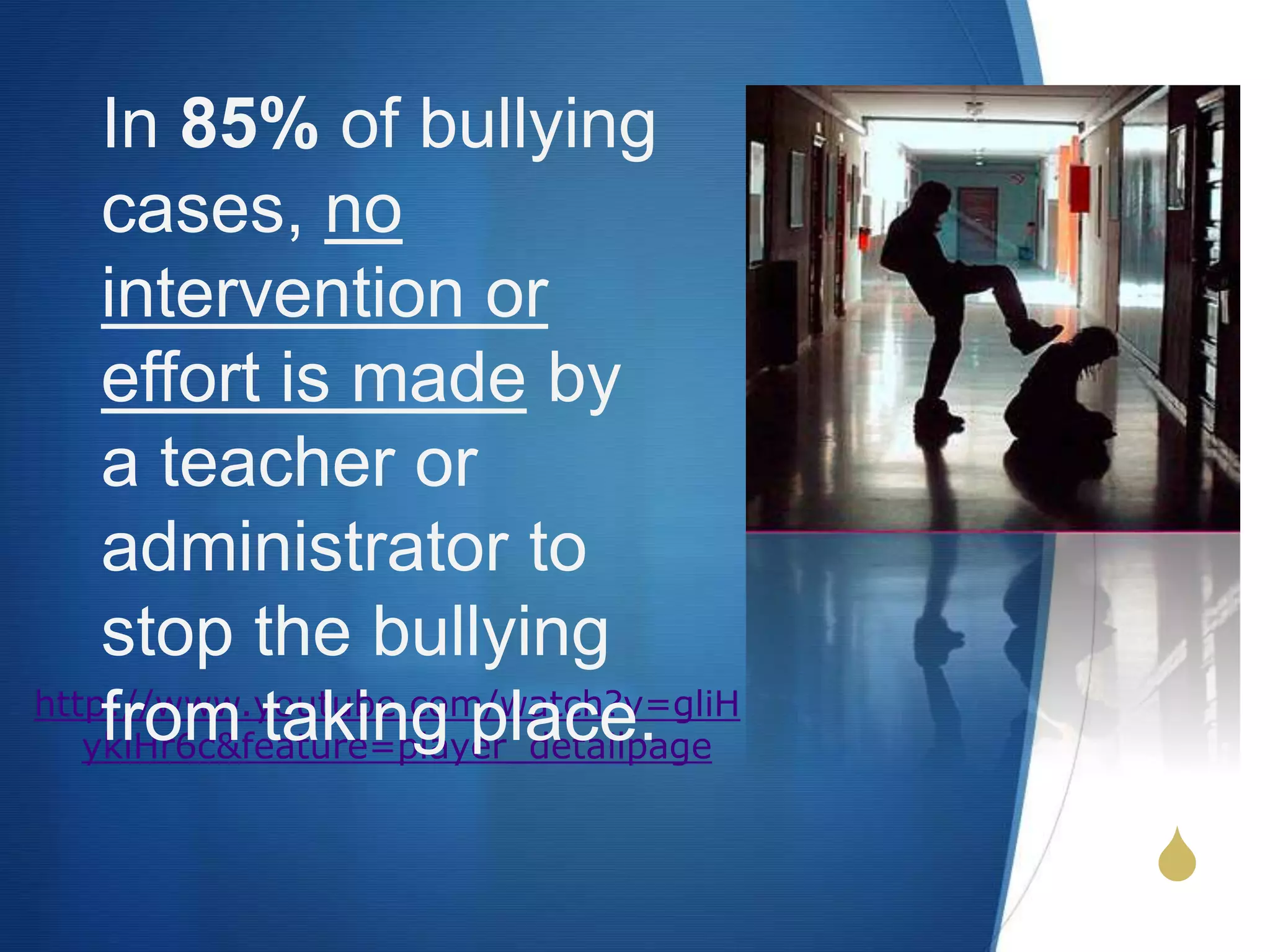
In 85% of bullying
cases, no
intervention or
effort is made by
a teacher or
administrator to
stop the bullying
from taking place.
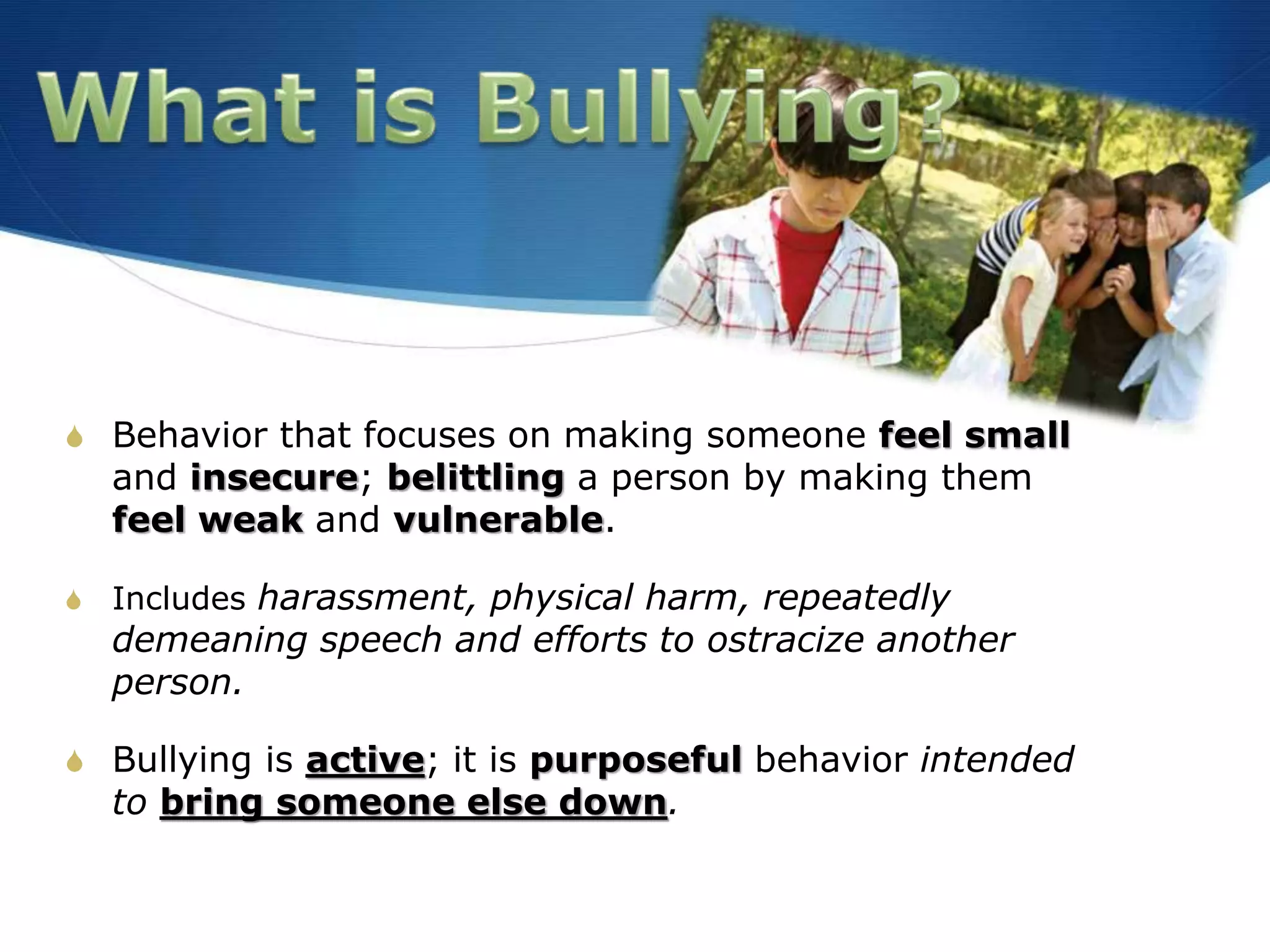
S Behavior that focuses on making someone feel small
and insecure; belittling a person by making them
feel weak and vulnerable.
S Includes harassment, physical harm, repeatedly
demeaning speech and efforts to ostracize another
person.
S Bullying is active; it is purposeful behavior intended
to bring someone else down.
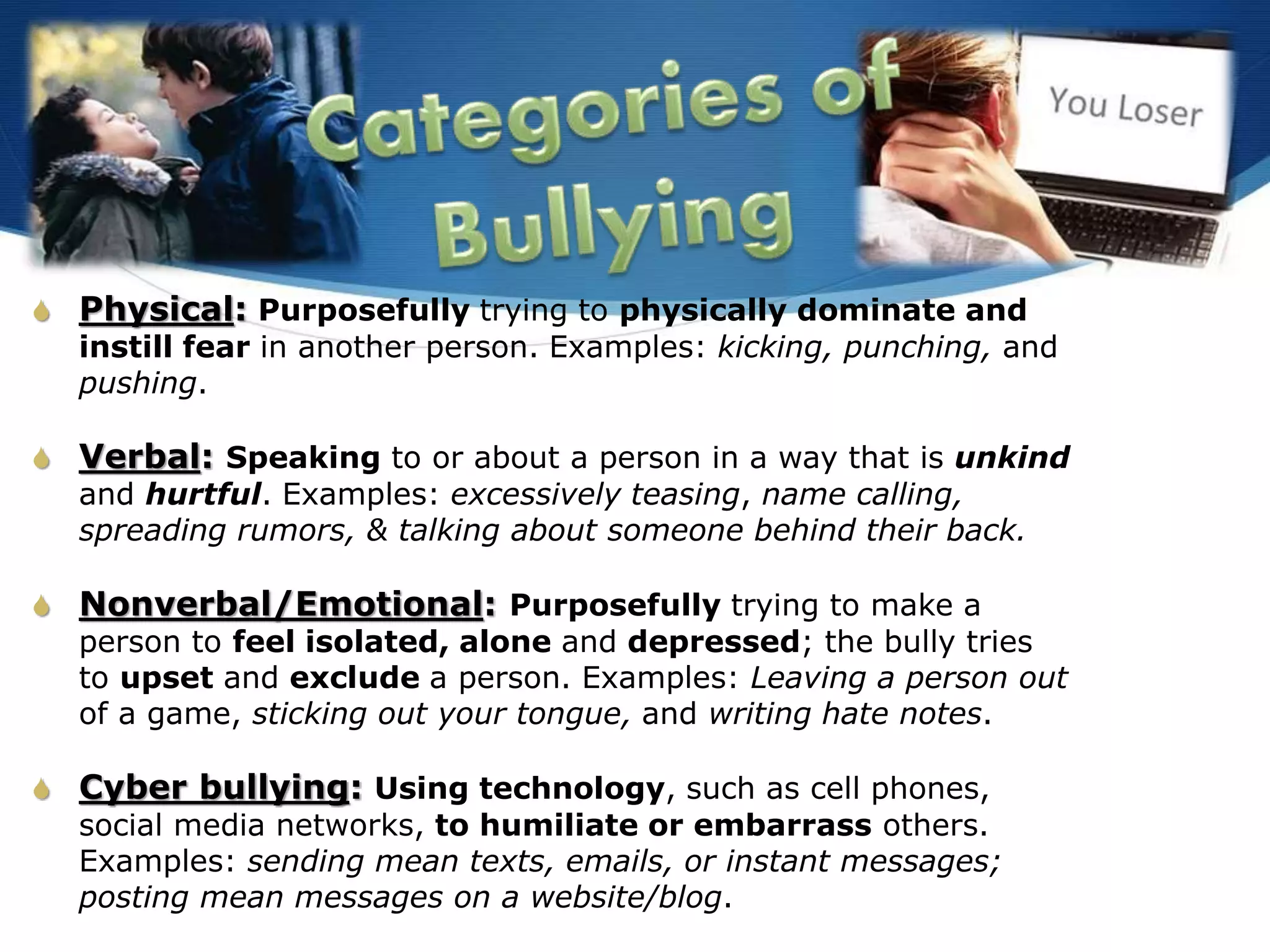
S Physical: Purposefully trying to physically dominate and
instill fear in another person. Examples: kicking, punching, and
pushing.
S Verbal: Speaking to or about a person in a way that is unkind
and hurtful. Examples: excessively teasing, name calling,
spreading rumors, & talking about someone behind their back.
S Nonverbal/Emotional: Purposefully trying to make a
person to feel isolated, alone and depressed; the bully tries
to upset and exclude a person. Examples: Leaving a person out
of a game, sticking out your tongue, and writing hate notes.
S Cyber bullying: Using technology, such as cell phones,
social media networks, to humiliate or embarrass others.
Examples: sending mean texts, emails, or instant messages;
posting mean messages on a website/blog.
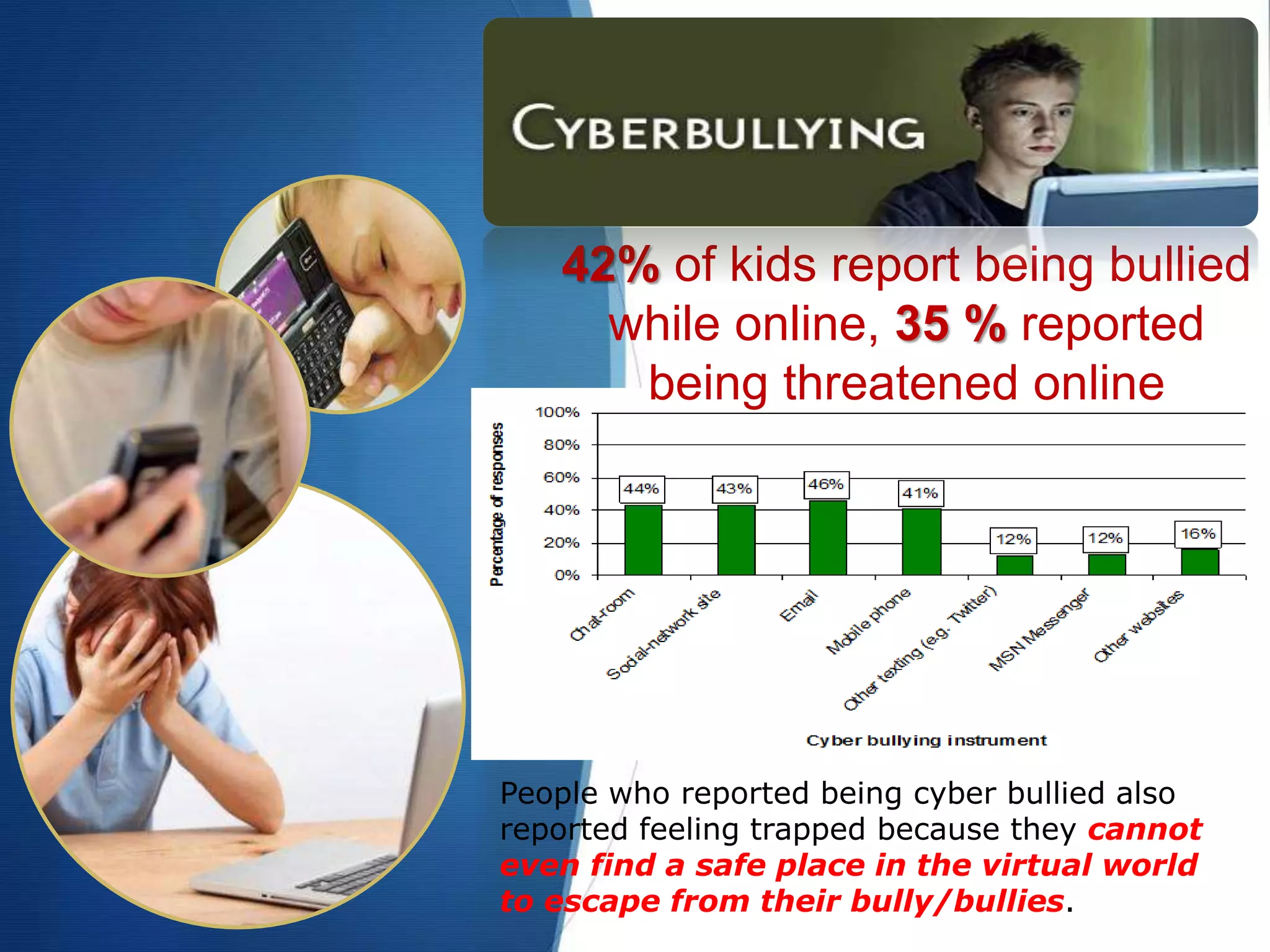
42% of kids report being bullied
while online, 35 % reported
being threatened online
People who reported being cyber bullied also
reported feeling trapped because they cannot
even find a safe place in the virtual world
to escape from their bully/bullies.
Is Bullying
Common?
S According to statistics…
S Almost half of all students
fear harassment or bullying at
school to avoid this, many
students try creating excuses in
order to cut class or an entire
school day.
S About 42% kids have been
bullied while online, 1 in 4 being
verbally attacked more than once.
S 58% of kids have reported that
they experienced nasty name
calling, rumors or insulting
comments made about them
behind their back, to their
face, and/or at them online.
S Physical bullying tends to be more
common among boys, while girls
often favor verbal and nonverbal
bullying.
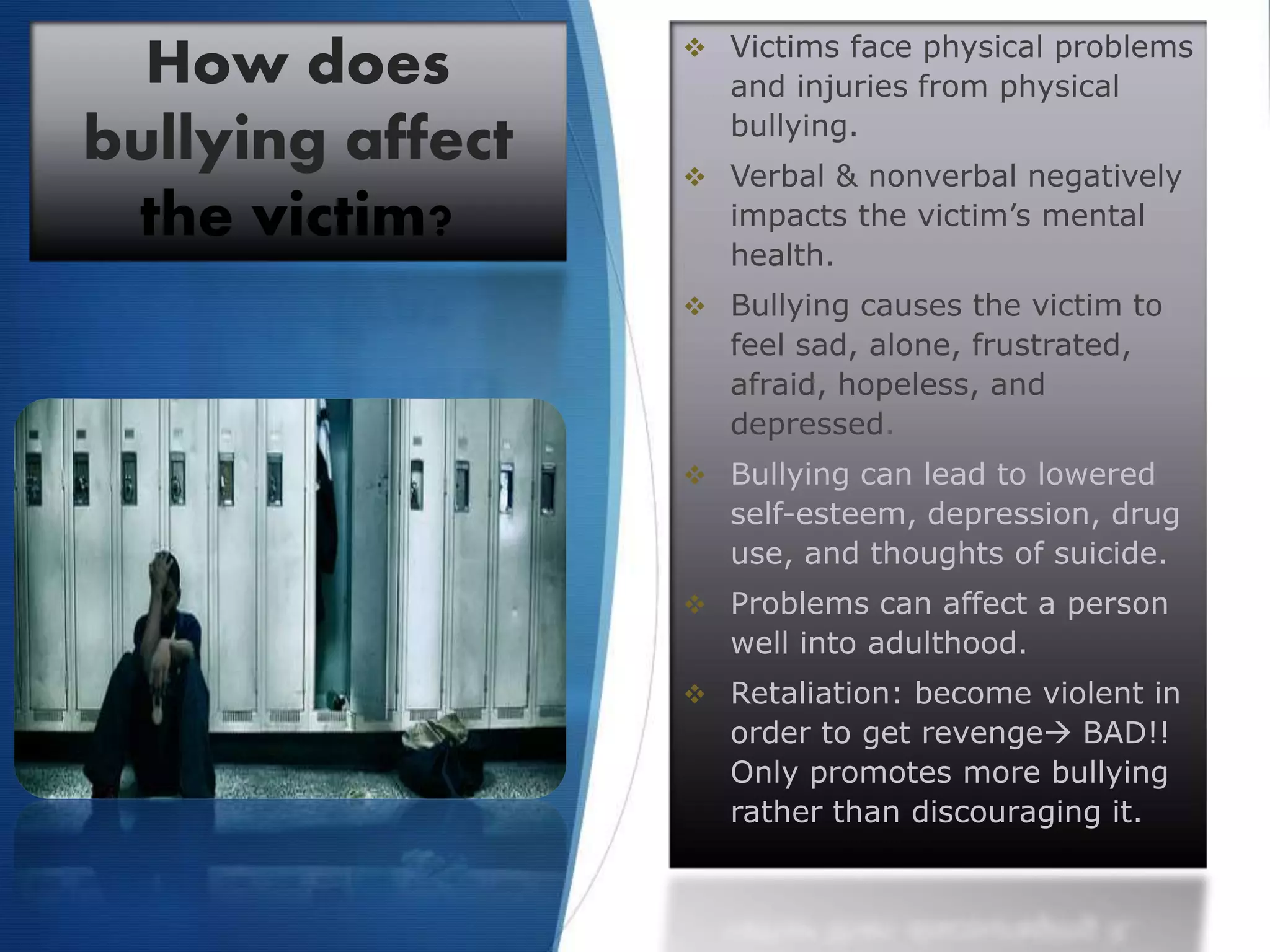
 Victims face physical problems
and injuries from physical
bullying.
 Verbal & nonverbal negatively
impacts the victim’s mental
health.
 Bullying causes the victim to
feel sad, alone, frustrated,
afraid, hopeless, and
depressed.
 Bullying can lead to lowered
self-esteem, depression, drug
use, and thoughts of suicide.
 Problems can affect a person
well into adulthood.
 Retaliation: become violent in
order to get revenge BAD!!
Only promotes more bullying
rather than discouraging it.
How does
bullying affect
the victim?
Bully
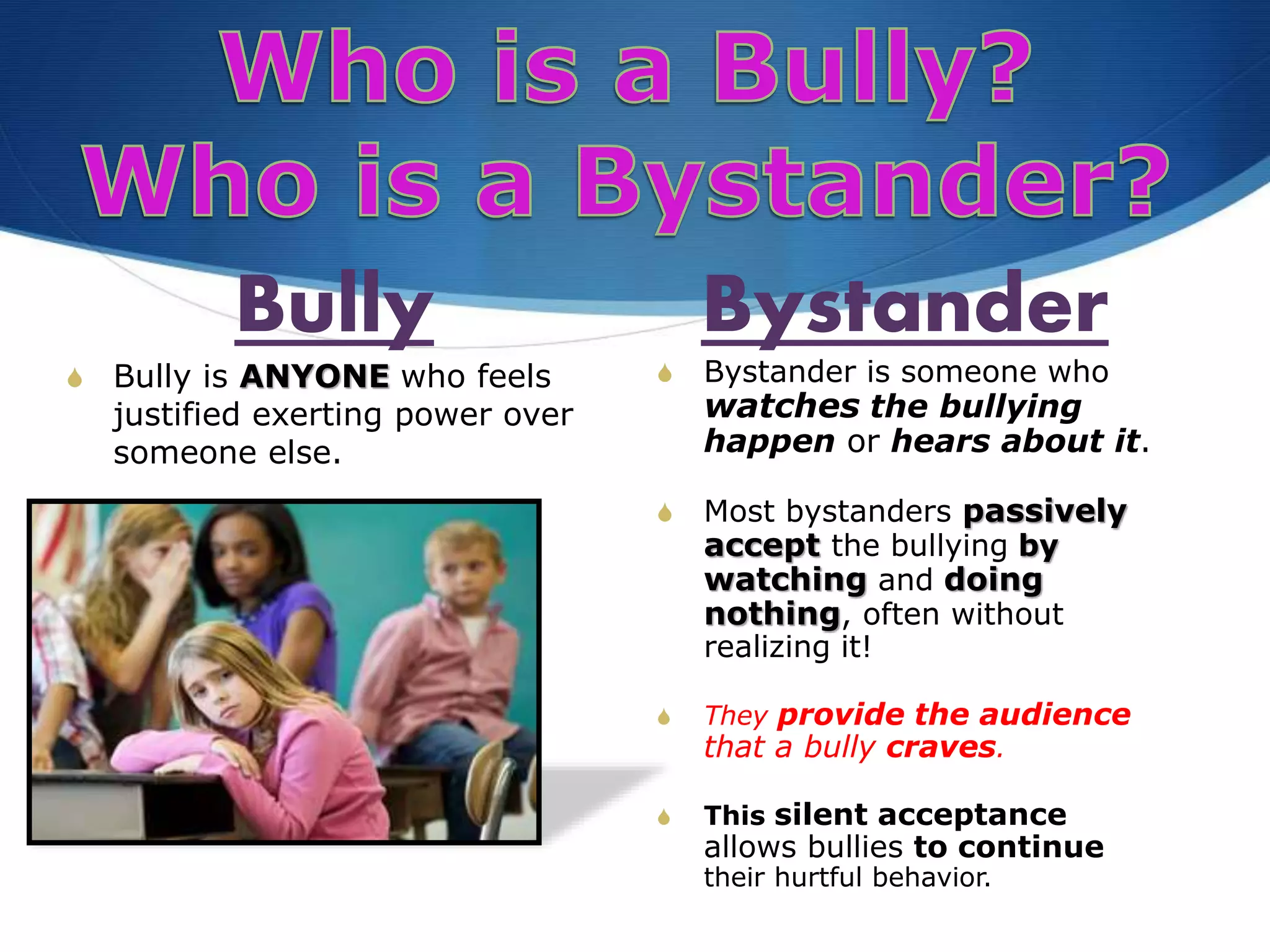
S Bully is ANYONE who feels
justified exerting power over
someone else.
Bystander
S Bystander is someone who
watches the bullying
happen or hears about it.
S Most bystanders passively
accept the bullying by
watching and doing
nothing, often without
realizing it!
S They provide the audience
that a bully craves.
S This silent acceptance
allows bullies to continue
their hurtful behavior.
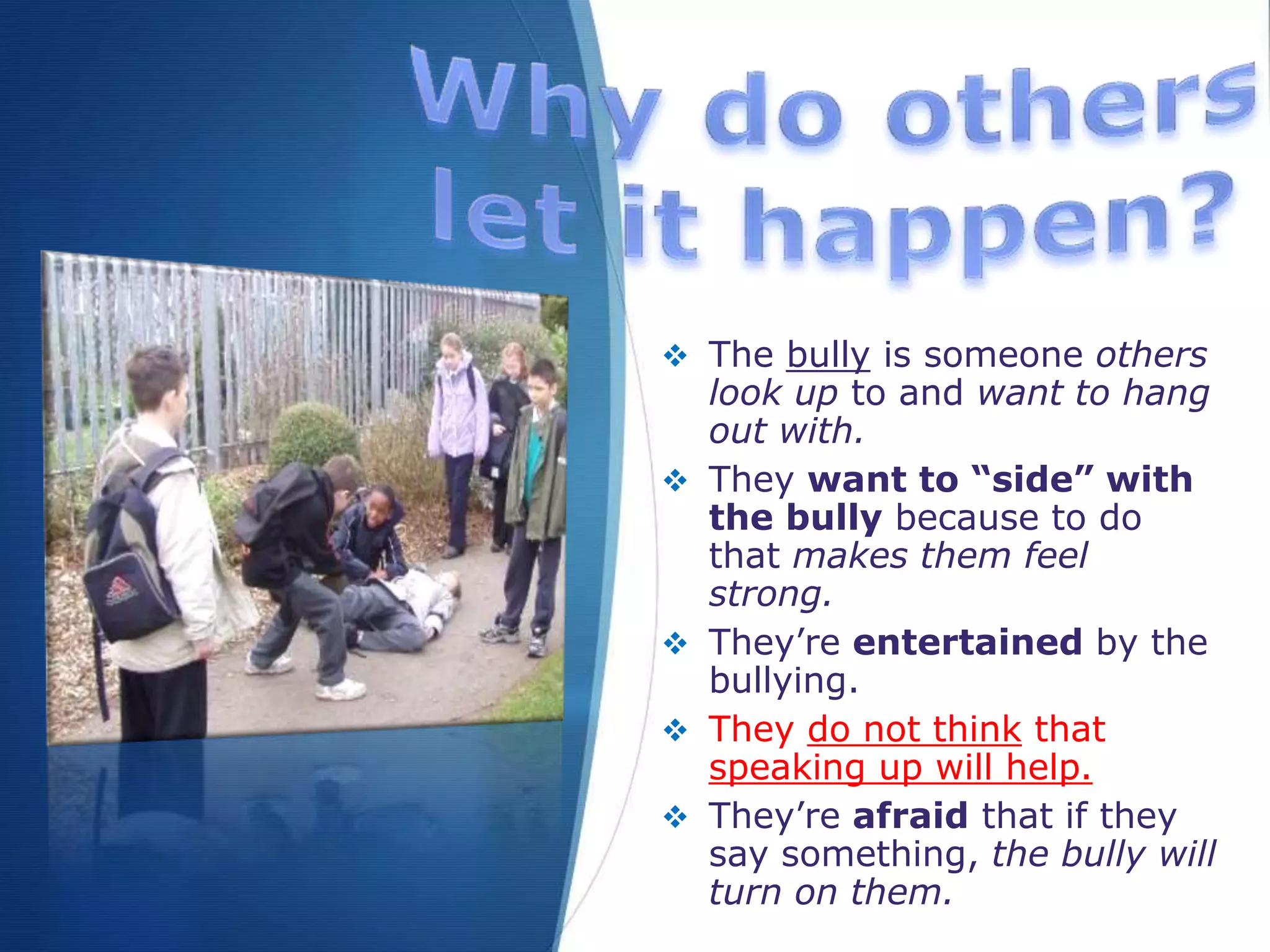
 The bully is someone others
look up to and want to hang
out with.
 They want to “side” with
the bully because to do
that makes them feel
strong.
 They’re entertained by the
bullying.
 They do not think that
speaking up will help.
 They’re afraid that if they
say something, the bully will
turn on them.
o Avoid unsupervised areas.
o Walk with a group of friends to
class.
o Act confident.
o Hold your head up, stand up
straight, and make eye contact.
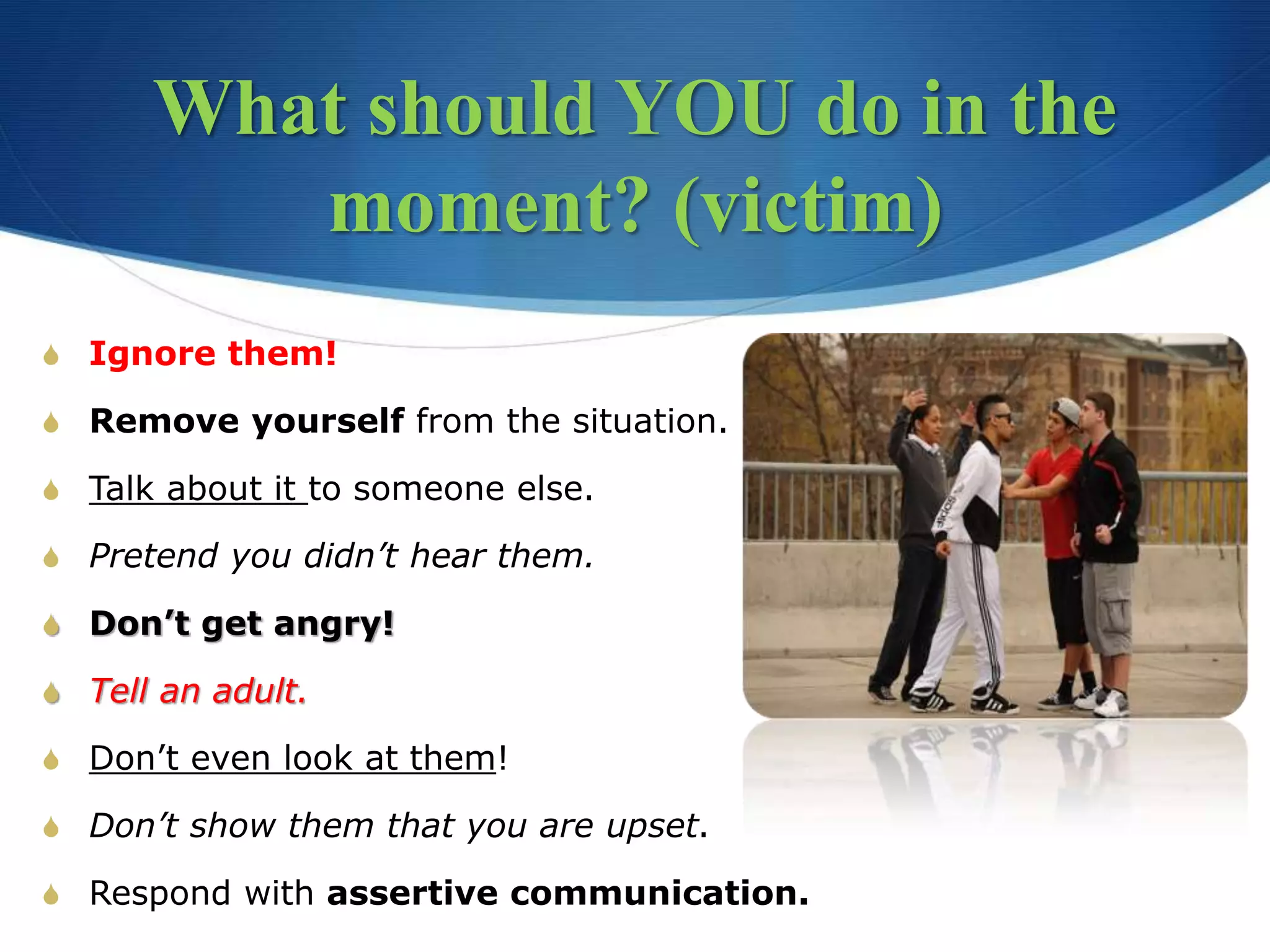
What should YOU do in the
moment? (victim)
S Ignore them!
S Remove yourself from the situation.
S Talk about it to someone else.
S Pretend you didn’t hear them.
S Don’t get angry!
S Tell an adult.
S Don’t even look at them!
S Don’t show them that you are upset.
S Respond with assertive communication.
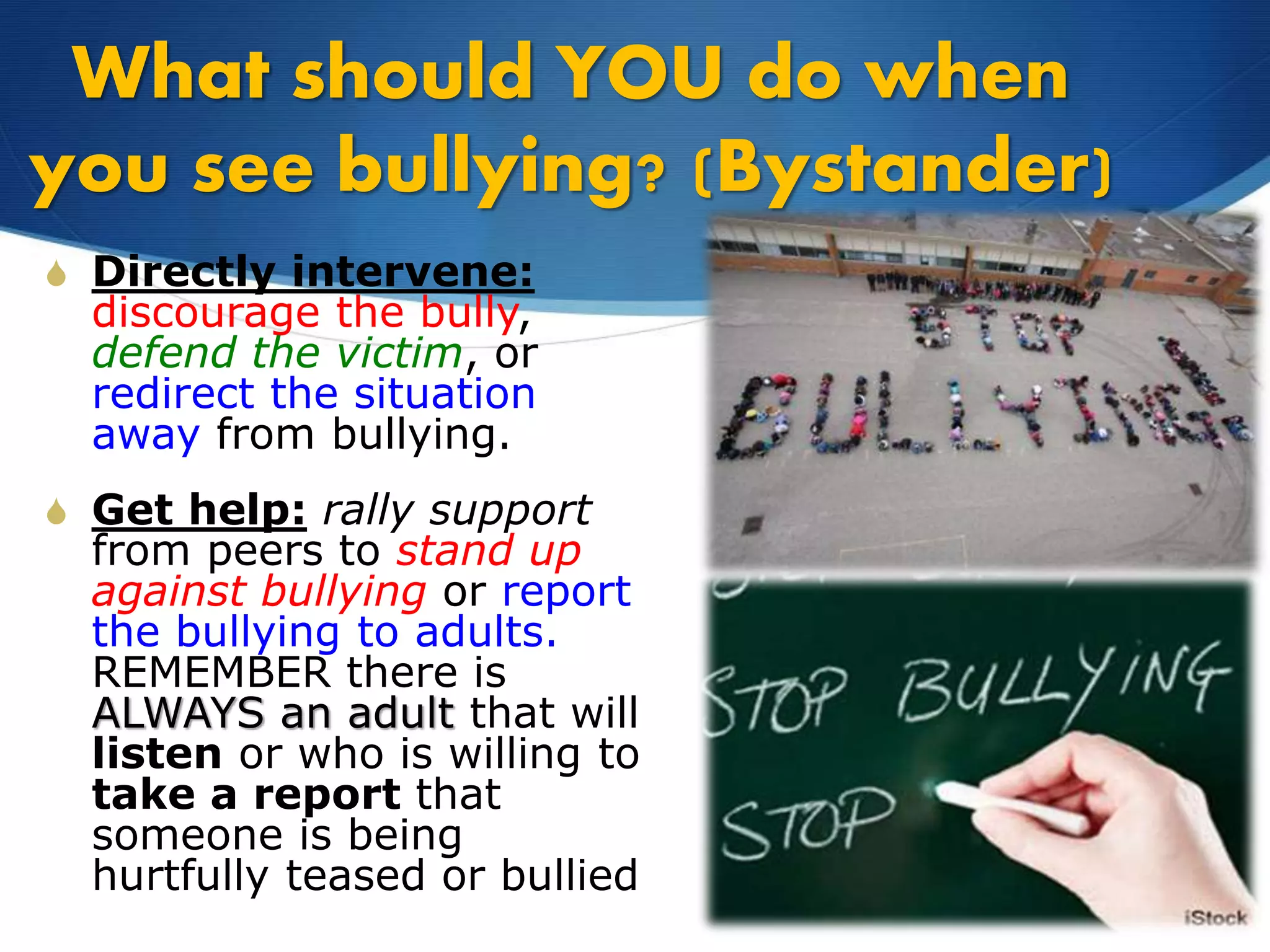
What should YOU do when
you see bullying? (Bystander)
S Directly intervene:
discourage the bully,
defend the victim, or
redirect the situation
away from bullying.
S Get help: rally support
from peers to stand up
against bullying or report
the bullying to adults.
REMEMBER there is
ALWAYS an adult that will
listen or who is willing to
take a report that
someone is being
hurtfully teased or bullied
STRATEGIES…
 Distraction: If you are with a
friend who begins to hurtfully
tease someone else, quickly
distract your friend by
changing the subject or
asking him a question.
 Support the target/victim
privately: If you could not get
the person(s) to stop the hurtful
teasing or bullying behavior, for
whatever reason, go back to
the target/victim of the
behavior and support them
privately.
 Support the person openly:
Recommended only to kids
who feel confident or have a
certain amount of respect
among their peers.
 Do not feed into the
behavior: That means do not
laugh at their jokes if they are
humiliating someone, and do
not promote or attend a
fight.
 As bystanders, it is our
responsibility to reduce the
situation, not feed fuel to an
already hot fire.
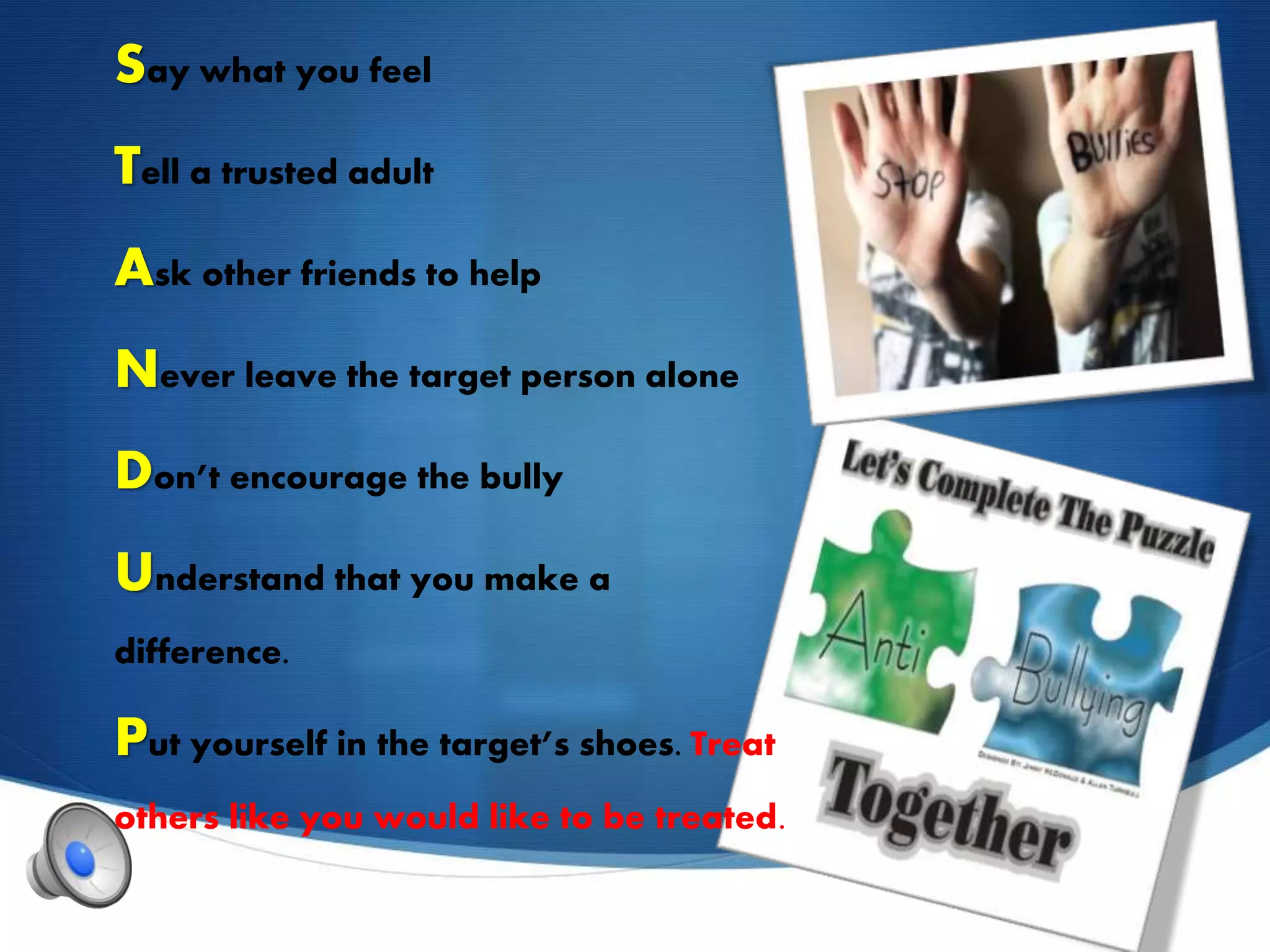
Say what you feel
Tell a trusted adult
Ask other friends to help
Never leave the target person alone
Don’t encourage the bully
Understand that you make a
difference.
Put yourself in the target’s shoes. Treat
others like you would like to be treated.
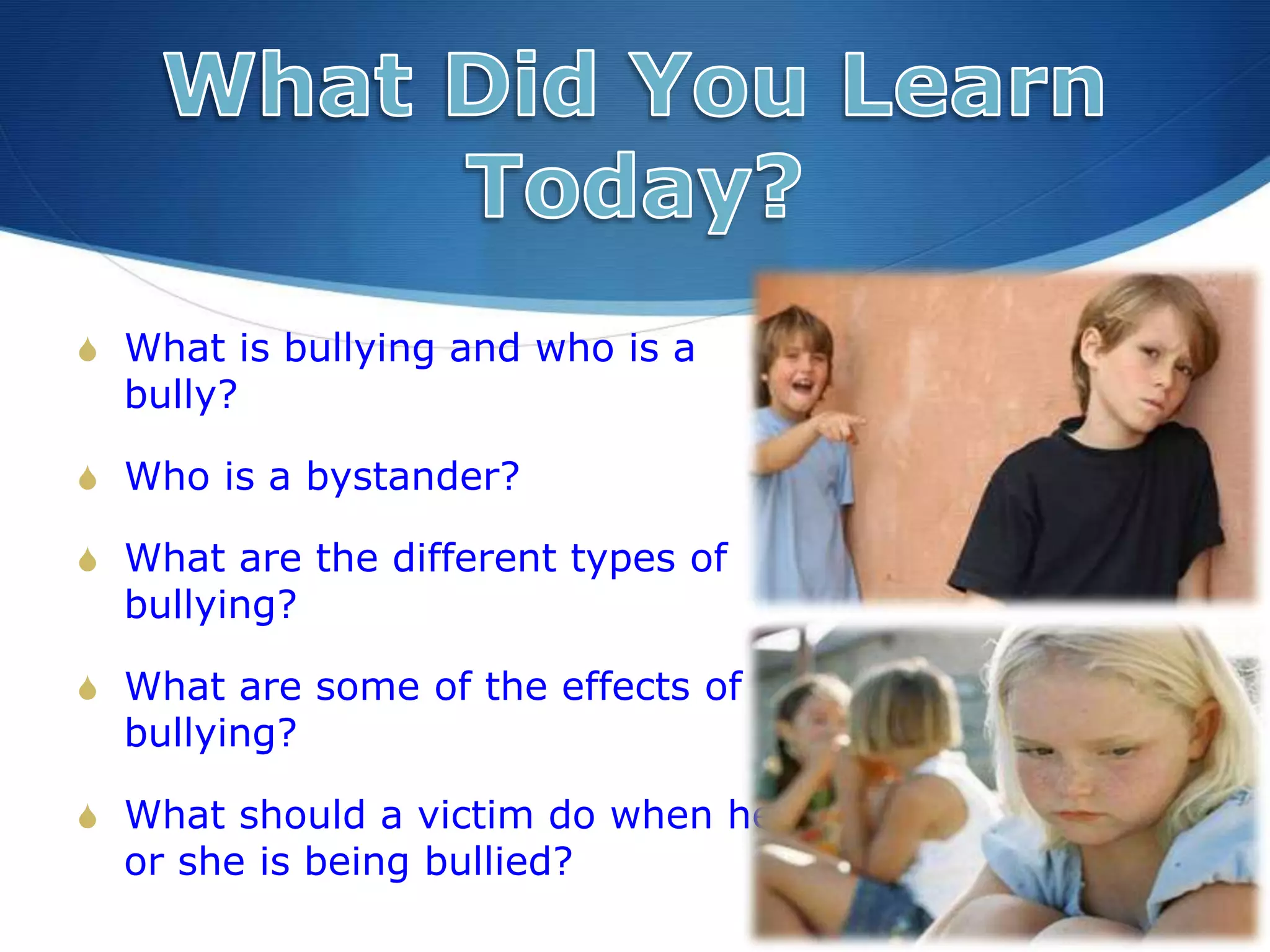
S What is bullying and who is a
bully?
S Who is a bystander?
S What are the different types of
bullying?
S What are some of the effects of
bullying?
S What should a victim do when he
or she is being bullied?

Bullying Campaign at Poughkeepsie School PPT

  • 1.
  • 2.
    1. What isbullying? 2. What is a bystander? 3. What do you think are the different types of bullying? 4. What do you think are some of the effects of bullying? 5. In what ways do you think that you can prevent or reduce bullying?
  • 3.
    S http://www.youtube.com/watch?v=gliH yklHr6c&feature=player_detailpage In 85% ofbullying cases, no intervention or effort is made by a teacher or administrator to stop the bullying from taking place.
  • 4.
    S Behavior thatfocuses on making someone feel small and insecure; belittling a person by making them feel weak and vulnerable. S Includes harassment, physical harm, repeatedly demeaning speech and efforts to ostracize another person. S Bullying is active; it is purposeful behavior intended to bring someone else down.
  • 5.
    S Physical: Purposefullytrying to physically dominate and instill fear in another person. Examples: kicking, punching, and pushing. S Verbal: Speaking to or about a person in a way that is unkind and hurtful. Examples: excessively teasing, name calling, spreading rumors, & talking about someone behind their back. S Nonverbal/Emotional: Purposefully trying to make a person to feel isolated, alone and depressed; the bully tries to upset and exclude a person. Examples: Leaving a person out of a game, sticking out your tongue, and writing hate notes. S Cyber bullying: Using technology, such as cell phones, social media networks, to humiliate or embarrass others. Examples: sending mean texts, emails, or instant messages; posting mean messages on a website/blog.
  • 6.
    42% of kidsreport being bullied while online, 35 % reported being threatened online People who reported being cyber bullied also reported feeling trapped because they cannot even find a safe place in the virtual world to escape from their bully/bullies.
  • 7.
    Is Bullying Common? S Accordingto statistics… S Almost half of all students fear harassment or bullying at school to avoid this, many students try creating excuses in order to cut class or an entire school day. S About 42% kids have been bullied while online, 1 in 4 being verbally attacked more than once. S 58% of kids have reported that they experienced nasty name calling, rumors or insulting comments made about them behind their back, to their face, and/or at them online. S Physical bullying tends to be more common among boys, while girls often favor verbal and nonverbal bullying.
  • 9.
     Victims facephysical problems and injuries from physical bullying.  Verbal & nonverbal negatively impacts the victim’s mental health.  Bullying causes the victim to feel sad, alone, frustrated, afraid, hopeless, and depressed.  Bullying can lead to lowered self-esteem, depression, drug use, and thoughts of suicide.  Problems can affect a person well into adulthood.  Retaliation: become violent in order to get revenge BAD!! Only promotes more bullying rather than discouraging it. How does bullying affect the victim?
  • 10.
    Bully S Bully isANYONE who feels justified exerting power over someone else. Bystander S Bystander is someone who watches the bullying happen or hears about it. S Most bystanders passively accept the bullying by watching and doing nothing, often without realizing it! S They provide the audience that a bully craves. S This silent acceptance allows bullies to continue their hurtful behavior.
  • 11.
     The bullyis someone others look up to and want to hang out with.  They want to “side” with the bully because to do that makes them feel strong.  They’re entertained by the bullying.  They do not think that speaking up will help.  They’re afraid that if they say something, the bully will turn on them.
  • 12.
    o Avoid unsupervisedareas. o Walk with a group of friends to class. o Act confident. o Hold your head up, stand up straight, and make eye contact.
  • 13.
    What should YOUdo in the moment? (victim) S Ignore them! S Remove yourself from the situation. S Talk about it to someone else. S Pretend you didn’t hear them. S Don’t get angry! S Tell an adult. S Don’t even look at them! S Don’t show them that you are upset. S Respond with assertive communication.
  • 14.
    What should YOUdo when you see bullying? (Bystander) S Directly intervene: discourage the bully, defend the victim, or redirect the situation away from bullying. S Get help: rally support from peers to stand up against bullying or report the bullying to adults. REMEMBER there is ALWAYS an adult that will listen or who is willing to take a report that someone is being hurtfully teased or bullied
  • 15.
    STRATEGIES…  Distraction: Ifyou are with a friend who begins to hurtfully tease someone else, quickly distract your friend by changing the subject or asking him a question.  Support the target/victim privately: If you could not get the person(s) to stop the hurtful teasing or bullying behavior, for whatever reason, go back to the target/victim of the behavior and support them privately.  Support the person openly: Recommended only to kids who feel confident or have a certain amount of respect among their peers.  Do not feed into the behavior: That means do not laugh at their jokes if they are humiliating someone, and do not promote or attend a fight.  As bystanders, it is our responsibility to reduce the situation, not feed fuel to an already hot fire.
  • 16.
    Say what youfeel Tell a trusted adult Ask other friends to help Never leave the target person alone Don’t encourage the bully Understand that you make a difference. Put yourself in the target’s shoes. Treat others like you would like to be treated.
  • 17.
    S What isbullying and who is a bully? S Who is a bystander? S What are the different types of bullying? S What are some of the effects of bullying? S What should a victim do when he or she is being bullied?

Editor's Notes

  • #8 - Ask if they think it is common an then supply the statistics -Explain what we mean by being involved in bullying- being bullied, being the bully, watching and not doing anything to stop the bullying or even being the person who has to stop the bullying of someone else tells them - With emotional bullying, mention that often times girls report that they are often the targets of nasty rumors - especially involving sexual gossip and are more likely to use exclusion as a teenage bullying technique than boys are -