Bullying is EverywhereNot just Over ThereMarcia M. Laviage, PhDClinical PsychologistMedical Staff – Texas Children’s Hospital281-242-2595marcylaviage@gmail.comwww.sugarbendcenter.com
OBJECTIVES To define what is/is not bullyingTo identify consequences of bullyingTo be able to engage in effective discussion with your child whether he/she is a bully or a victimTo be able to address the issue with your child without panic, fear, and/or anger
What IS Bullying?Repeated actions causing embarrassment, shame, fear, and/or anxietyPhysical, verbal, emotional/nonverbal, and/or cyber-bullyingIntentionalInvolves an imbalance of power or strengthIncidents last only a few secondsIn unstructured settings (hallways, playgrounds, lunchrooms, bathrooms)
What’s NOT Bullying? Fighting2 children of equal skillHumiliation and harm is not an important part of the processEarly elementary developmentVerbal emotional expression not yet developedCan appear aggressiveDoesn’t mean will grow up to be a bully
MYTHS ABOUT BULLYINGMost bullying now happens onlineBullies are bullies and victims are victimsBullying ends when you grow upBullying is a major cause of suicideWe can end bullying
Here’s the Upside…2009 StudySteps to Respect (elementary school program) teaching how to Recognize, Refuse, and Report bullying, be assertive, and build friendships – 31% reduction in bullyingOther reductions reported withParent TrainingIncreased Playground SupervisionEffective Disciplinary MethodsHome-and-School CommunicationClassroom ManagementTraining Videos
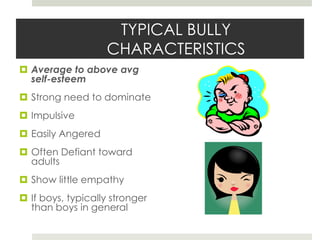
TYPICAL BULLY CHARACTERISTICSAverage to above avg self-esteemStrong need to dominateImpulsiveEasily AngeredOften Defiant toward adultsShow little empathyIf boys, typically stronger than boys in general
Did You Say Higher Self-Esteem?Children who bully more likely than peers to:Get into frequent fightsBe injured in a fightVandalize propertyStealDrink alcoholSmokeBe truant/Drop out of School
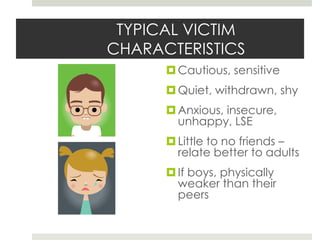
TYPICAL VICTIM CHARACTERISTICSCautious, sensitiveQuiet, withdrawn, shyAnxious, insecure, unhappy, LSELittle to no friends – relate better to adultsIf boys, physically weaker than their peers
BULLY VS NON-BULLYFalse DichotomyLabeling others and themselves as either a bully or a non-bully…AT ALL TIMESProblem – what happens when a non-bully (ie, gets good grades, participates in extracurricular activities) engages in bully behavior?Student dismisses anti-bullying messages as “not for me.”Teachers can make same mistake – miss viewing bullying as a problem in their schools
GIRLS and GOSSIP905 children ages 10-14Those rated as socially aggressive for spreading gossip or intentionally excluding others are more popular at young end of age rangePopular 5th graders who rated high in gossip – by 9th grade, popularity and likeability were negatively correlated to gossip
BUT CAN IT BE STOPPED?Study – recording of lunchtime chat of 78 middle-school studentsWhen child started to gossip, others responded encouragingly 80% of the timeOnce this happens, others rarely disagreedHOWEVER, IF someone countered the gossip immediately, others more likely to dissent
CONSEQUENCES OF BULLYING GIRLSGirls targeted in primary school 2 ½ times more likely to remain victims than boysGirls directly victimized at 6 years old significantly more likely to still be a direct victim at age 10 Bullying changes over age Direct victimization to relational victimization (spreading of gossip, withdrawal of friendships, social exclusion)
BULLY=POPULAR=LIKABLE?Increase Popularity = Decrease LikabilityPopularity = Social InfluencePopularity does not translate into who you want your child to become
SOCIAL STATUSResearch has CONFIRMED (February, 2011):	Kids intent on climbing the social ladder at school are more likely to pick on their fellow studentsStatus increases Aggression
SOCIAL STATUS (cont.)98%Top 2%Aggressive behavior peakedWorking hard to get to the topAggression – physical attacks, verbal harassment, rumors, ostracizing peersHigher social status in Fall predicted higher rates of aggression in SpringDid not harass peersLittle left to gain by being meanPicking on others only made them insecure
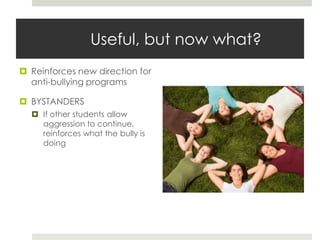
Useful, but now what?Reinforces new direction for anti-bullying programsBYSTANDERSIf other students allow aggression to continue, reinforces what the bully is doing
CYBER-BULLYINGWillful and repeated harm inflicted through the use of computers, cell phones, and other electronic devices…The Cyberbullying Research Center
CYBERBULLYING (cont.)2010 Study by The CB Research CenterN=4,441 Students ages 10-18Large Southern School District37 Schools2010 Research Study20% experienced CB20% engaged in CBTeenage Girls most likely to CB (21% vs. 18%)Girls – spread rumorsBoys – hurtful pictures/videosStudents who have experienced CB, 1.5x more likely to have thoughts of suicide
What Can Parents do?Do NOT take away…FACEBOOK, MY SPACE, EMAIL, TEXT, TWITTER, AIM, IM, …WHY?The #1 Reason teens do NOT talk to their parents?  They do NOT want their computer, cell phone taken away!
BUT…Talk about Responsible BehaviorTalk about Reporting Irresponsible BehaviorMonitor Use – Time spent onlineSupervise – Gave up right to freedom when put life publicly on internetReport Behavior Yourself (to police, school)
Websites about CBCenter for Safe & Responsible Internet Usehttp://csriu.org/WiredSafety.org - http://www.wiredsafety.org/Steps to Respect – http:community.cfchildren.org/i-Safe America - http://www.isafe.org/Cyberbullying Research Centerhttp://www.cyberbullying.us
CONSEQUENCES OF BULLYINGFinnish Study – 2,540 boys at age 8 then again at ages 18-23Bullies  - more likely to develop Antisocial Personality, Substance Abuse, Depression, and AnxietyVictims – more likely to develop only AnxietyBullies AND victims – more likely to develop Antisocial Personality and Anxiety D/O
CONSEQUENCES OF BULLYING (cont.)University of Illinois study – 10,060 10th graders in 659 public AND private high schoolsLooked at Verbal Harrassment ONLY1 out of 5 “often put down” by peersPsychologically hostile classroom  - good students have difficulty learning; students who are behind have trouble catching upBoys experience verbal bullying more often than girls, particularly if in private schoolSmaller, private, and more affluent schools do very little to protect students from verbal abuse
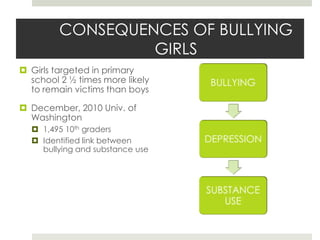
CONSEQUENCES OF BULLYING GIRLSGirls targeted in primary school 2 ½ times more likely to remain victims than boysDecember, 2010 Univ. of Washington1,495 10th gradersIdentified link between bullying and substance use
CONSEQUENCES OF BULLYING (cont.)Low Self EsteemFeelings of FearSchool phobia/absenteeismNightmares, SleeplessnessDepression, AnixetyThoughts of Suicide
WEST JORDAN, UTAH6TH grader drafted hit list of 12 studentsMonths of taunting – beatings and having dog manure thrown in his faceOne of the bullies grabbed the list from him and gave it to a teacherWho got into trouble?
CAN WE GET TO THE GOOD STUFF ALREADY??
CAUSES OF BULLYINGNo Single CauseCharacteristics of…IndividualFamilyPeersSchoolCommunity/ReligionAll can place a child at risk
FAMILY RISK FACTORSOverly-permissive parenting – lack of limitsLack of SupervisionHarsh, physical disciplineModeling of bullying behaviorLack of warmthLack of parental involvement
MY CHILD…A BULLY?Not born to bullyCombination of learned behavior and genetic pre-dispositionIf they can learn it…They can unlearn itDepends on YOU
IF SO…Have a serious talk Clear and consistent rulesMODEL, MODEL, MODEL!!! Don’t be a bully!Spend more time with him/herIncrease supervision with friendsCommunicate with teacherConsult
WHAT CAN YOU DO IF YOUR CHILD IS BEING BULLIED?Be aware of signsTorn or missing clothing, books, itemsResistance to going to schoolLost interest in schoolwork/decline in gradesSad, moody when comes home after schoolCommunicate directly to school staffDocument incidentsBe collaborative, not combativeModel positive behavior Avoid putting child in position of exclusivity
HOW TO TALK TO YOUR CHILD“What’s going on?” Who, When, Where, Why, How, How many times?Explain cliques in terms of power/control, not friendshipShare your own memories – empathyBrainstorm/Problem-solveThis too shall pass
HOW NOT TO TALK TO YOUR CHILD“What did you do to aggravate him/her?”“Just ignore him.”“Tease/fight back.”“Why did you handle it that way? That was a bad idea!”“Don’t be a tattle tale.”
WHAT CAN YOU DO?Don’t Stir the Pot!“Sugar and Spite and a Legal Mess Not Nice."
WHAT CAN THE CHILD DO?Always tell an adultIf told an adult before with no response, tell someone elseIf afraid to go alone, bring along friend/siblingTell adult: Who, When, Where, How Long, How it made him/her feelIf adult is at school, ask them how they will help stop the bullyingStay in a groupLess of an easy target
WHAT CAN THE CHILD DO? (cont)Assertive, not Provocative ResponsesStand Up to the BullyDoes NOT mean to FIGHT/BULLY BACK!Tell Bully (1) I don’t like it and (2) STOP, then walk awayUse a calm voiceAppear confident - Do NOT show distressed emotion
WHAT CAN THE SCHOOL DO?70% teachers believed that teachers intervene “almost always” in bullying situation25% students agreed 25% teachers see nothing wrong with bullying – intervene 4% of the timeStudents describe adult intervention isInfrequent, unhelpful, more harmful30% 3rd-8th graders say adults did little to nothing to help
SO…WHAT IS HELPFUL?Private talk with the student being bulliedPrivate talk with “innocent” bystandersPrivate talk with parents of both bully and victim
WHAT CAN SCHOOL DO (cont)Train all StaffModels for respectful behaviorResponse is consistentDiscipline is therapeutic, not punitiveEncourage reports of aggression rather than focusing on reducing “tattling”Do NOT blame the victim – send clear message to bully that he/she is fully responsible for actions
What Works in Schools?School-Wide environment that discourages bullying Student surveyTraining to recognize and respond to bullyingDevelopment of consistent rules against bullyingReview and enhancement of school’s disciplinary code related to bullying behavior
What Works in Schools?Classroom activities to discuss issues related to bullyingIntegration of bullying prevention themes across the curriculumInvolvement of parents in bullying prevention
WHAT DOES NOT WORK?Forced apologiesZero tolerance policiesConflict Resolution/Peer MediationNOT a conflict!; its victimizationNO negotiationGroup Treatment for BulliesFeed off one another
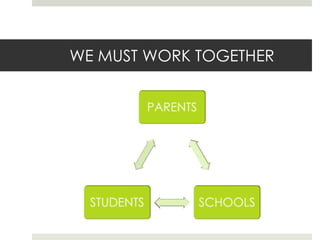
WE MUST WORK TOGETHER
Q & A
RESOURCESOlweusBullying Prevention Programwww.clemson.edu/olweusStop Bullying Now – HRSAwww.stopbullyingnow.comBack Off Bully – Stuart Twemlow, MDwww.backoffbully.comSAMHSAwww.samhsa.gov/library/searchreal.aspx (use search to find bullying)
Bullying talk kolter

  • 1.
    Bullying is EverywhereNotjust Over ThereMarcia M. Laviage, PhDClinical PsychologistMedical Staff – Texas Children’s Hospital281-242-2595marcylaviage@gmail.comwww.sugarbendcenter.com
  • 2.
    OBJECTIVES To definewhat is/is not bullyingTo identify consequences of bullyingTo be able to engage in effective discussion with your child whether he/she is a bully or a victimTo be able to address the issue with your child without panic, fear, and/or anger
  • 3.
    What IS Bullying?Repeatedactions causing embarrassment, shame, fear, and/or anxietyPhysical, verbal, emotional/nonverbal, and/or cyber-bullyingIntentionalInvolves an imbalance of power or strengthIncidents last only a few secondsIn unstructured settings (hallways, playgrounds, lunchrooms, bathrooms)
  • 4.
    What’s NOT Bullying?Fighting2 children of equal skillHumiliation and harm is not an important part of the processEarly elementary developmentVerbal emotional expression not yet developedCan appear aggressiveDoesn’t mean will grow up to be a bully
  • 5.
    MYTHS ABOUT BULLYINGMostbullying now happens onlineBullies are bullies and victims are victimsBullying ends when you grow upBullying is a major cause of suicideWe can end bullying
  • 6.
    Here’s the Upside…2009StudySteps to Respect (elementary school program) teaching how to Recognize, Refuse, and Report bullying, be assertive, and build friendships – 31% reduction in bullyingOther reductions reported withParent TrainingIncreased Playground SupervisionEffective Disciplinary MethodsHome-and-School CommunicationClassroom ManagementTraining Videos
  • 7.
    TYPICAL BULLY CHARACTERISTICSAverageto above avg self-esteemStrong need to dominateImpulsiveEasily AngeredOften Defiant toward adultsShow little empathyIf boys, typically stronger than boys in general
  • 8.
    Did You SayHigher Self-Esteem?Children who bully more likely than peers to:Get into frequent fightsBe injured in a fightVandalize propertyStealDrink alcoholSmokeBe truant/Drop out of School
  • 9.
    TYPICAL VICTIM CHARACTERISTICSCautious,sensitiveQuiet, withdrawn, shyAnxious, insecure, unhappy, LSELittle to no friends – relate better to adultsIf boys, physically weaker than their peers
  • 10.
    BULLY VS NON-BULLYFalseDichotomyLabeling others and themselves as either a bully or a non-bully…AT ALL TIMESProblem – what happens when a non-bully (ie, gets good grades, participates in extracurricular activities) engages in bully behavior?Student dismisses anti-bullying messages as “not for me.”Teachers can make same mistake – miss viewing bullying as a problem in their schools
  • 11.
    GIRLS and GOSSIP905children ages 10-14Those rated as socially aggressive for spreading gossip or intentionally excluding others are more popular at young end of age rangePopular 5th graders who rated high in gossip – by 9th grade, popularity and likeability were negatively correlated to gossip
  • 12.
    BUT CAN ITBE STOPPED?Study – recording of lunchtime chat of 78 middle-school studentsWhen child started to gossip, others responded encouragingly 80% of the timeOnce this happens, others rarely disagreedHOWEVER, IF someone countered the gossip immediately, others more likely to dissent
  • 13.
    CONSEQUENCES OF BULLYINGGIRLSGirls targeted in primary school 2 ½ times more likely to remain victims than boysGirls directly victimized at 6 years old significantly more likely to still be a direct victim at age 10 Bullying changes over age Direct victimization to relational victimization (spreading of gossip, withdrawal of friendships, social exclusion)
  • 14.
    BULLY=POPULAR=LIKABLE?Increase Popularity =Decrease LikabilityPopularity = Social InfluencePopularity does not translate into who you want your child to become
  • 15.
    SOCIAL STATUSResearch hasCONFIRMED (February, 2011): Kids intent on climbing the social ladder at school are more likely to pick on their fellow studentsStatus increases Aggression
  • 16.
    SOCIAL STATUS (cont.)98%Top2%Aggressive behavior peakedWorking hard to get to the topAggression – physical attacks, verbal harassment, rumors, ostracizing peersHigher social status in Fall predicted higher rates of aggression in SpringDid not harass peersLittle left to gain by being meanPicking on others only made them insecure
  • 17.
    Useful, but nowwhat?Reinforces new direction for anti-bullying programsBYSTANDERSIf other students allow aggression to continue, reinforces what the bully is doing
  • 18.
    CYBER-BULLYINGWillful and repeatedharm inflicted through the use of computers, cell phones, and other electronic devices…The Cyberbullying Research Center
  • 19.
    CYBERBULLYING (cont.)2010 Studyby The CB Research CenterN=4,441 Students ages 10-18Large Southern School District37 Schools2010 Research Study20% experienced CB20% engaged in CBTeenage Girls most likely to CB (21% vs. 18%)Girls – spread rumorsBoys – hurtful pictures/videosStudents who have experienced CB, 1.5x more likely to have thoughts of suicide
  • 20.
    What Can Parentsdo?Do NOT take away…FACEBOOK, MY SPACE, EMAIL, TEXT, TWITTER, AIM, IM, …WHY?The #1 Reason teens do NOT talk to their parents? They do NOT want their computer, cell phone taken away!
  • 21.
    BUT…Talk about ResponsibleBehaviorTalk about Reporting Irresponsible BehaviorMonitor Use – Time spent onlineSupervise – Gave up right to freedom when put life publicly on internetReport Behavior Yourself (to police, school)
  • 22.
    Websites about CBCenterfor Safe & Responsible Internet Usehttp://csriu.org/WiredSafety.org - http://www.wiredsafety.org/Steps to Respect – http:community.cfchildren.org/i-Safe America - http://www.isafe.org/Cyberbullying Research Centerhttp://www.cyberbullying.us
  • 23.
    CONSEQUENCES OF BULLYINGFinnishStudy – 2,540 boys at age 8 then again at ages 18-23Bullies - more likely to develop Antisocial Personality, Substance Abuse, Depression, and AnxietyVictims – more likely to develop only AnxietyBullies AND victims – more likely to develop Antisocial Personality and Anxiety D/O
  • 24.
    CONSEQUENCES OF BULLYING(cont.)University of Illinois study – 10,060 10th graders in 659 public AND private high schoolsLooked at Verbal Harrassment ONLY1 out of 5 “often put down” by peersPsychologically hostile classroom - good students have difficulty learning; students who are behind have trouble catching upBoys experience verbal bullying more often than girls, particularly if in private schoolSmaller, private, and more affluent schools do very little to protect students from verbal abuse
  • 25.
    CONSEQUENCES OF BULLYINGGIRLSGirls targeted in primary school 2 ½ times more likely to remain victims than boysDecember, 2010 Univ. of Washington1,495 10th gradersIdentified link between bullying and substance use
  • 26.
    CONSEQUENCES OF BULLYING(cont.)Low Self EsteemFeelings of FearSchool phobia/absenteeismNightmares, SleeplessnessDepression, AnixetyThoughts of Suicide
  • 27.
    WEST JORDAN, UTAH6THgrader drafted hit list of 12 studentsMonths of taunting – beatings and having dog manure thrown in his faceOne of the bullies grabbed the list from him and gave it to a teacherWho got into trouble?
  • 28.
    CAN WE GETTO THE GOOD STUFF ALREADY??
  • 29.
    CAUSES OF BULLYINGNoSingle CauseCharacteristics of…IndividualFamilyPeersSchoolCommunity/ReligionAll can place a child at risk
  • 30.
    FAMILY RISK FACTORSOverly-permissiveparenting – lack of limitsLack of SupervisionHarsh, physical disciplineModeling of bullying behaviorLack of warmthLack of parental involvement
  • 31.
    MY CHILD…A BULLY?Notborn to bullyCombination of learned behavior and genetic pre-dispositionIf they can learn it…They can unlearn itDepends on YOU
  • 32.
    IF SO…Have aserious talk Clear and consistent rulesMODEL, MODEL, MODEL!!! Don’t be a bully!Spend more time with him/herIncrease supervision with friendsCommunicate with teacherConsult
  • 33.
    WHAT CAN YOUDO IF YOUR CHILD IS BEING BULLIED?Be aware of signsTorn or missing clothing, books, itemsResistance to going to schoolLost interest in schoolwork/decline in gradesSad, moody when comes home after schoolCommunicate directly to school staffDocument incidentsBe collaborative, not combativeModel positive behavior Avoid putting child in position of exclusivity
  • 34.
    HOW TO TALKTO YOUR CHILD“What’s going on?” Who, When, Where, Why, How, How many times?Explain cliques in terms of power/control, not friendshipShare your own memories – empathyBrainstorm/Problem-solveThis too shall pass
  • 35.
    HOW NOT TOTALK TO YOUR CHILD“What did you do to aggravate him/her?”“Just ignore him.”“Tease/fight back.”“Why did you handle it that way? That was a bad idea!”“Don’t be a tattle tale.”
  • 36.
    WHAT CAN YOUDO?Don’t Stir the Pot!“Sugar and Spite and a Legal Mess Not Nice."
  • 37.
    WHAT CAN THECHILD DO?Always tell an adultIf told an adult before with no response, tell someone elseIf afraid to go alone, bring along friend/siblingTell adult: Who, When, Where, How Long, How it made him/her feelIf adult is at school, ask them how they will help stop the bullyingStay in a groupLess of an easy target
  • 38.
    WHAT CAN THECHILD DO? (cont)Assertive, not Provocative ResponsesStand Up to the BullyDoes NOT mean to FIGHT/BULLY BACK!Tell Bully (1) I don’t like it and (2) STOP, then walk awayUse a calm voiceAppear confident - Do NOT show distressed emotion
  • 39.
    WHAT CAN THESCHOOL DO?70% teachers believed that teachers intervene “almost always” in bullying situation25% students agreed 25% teachers see nothing wrong with bullying – intervene 4% of the timeStudents describe adult intervention isInfrequent, unhelpful, more harmful30% 3rd-8th graders say adults did little to nothing to help
  • 40.
    SO…WHAT IS HELPFUL?Privatetalk with the student being bulliedPrivate talk with “innocent” bystandersPrivate talk with parents of both bully and victim
  • 41.
    WHAT CAN SCHOOLDO (cont)Train all StaffModels for respectful behaviorResponse is consistentDiscipline is therapeutic, not punitiveEncourage reports of aggression rather than focusing on reducing “tattling”Do NOT blame the victim – send clear message to bully that he/she is fully responsible for actions
  • 42.
    What Works inSchools?School-Wide environment that discourages bullying Student surveyTraining to recognize and respond to bullyingDevelopment of consistent rules against bullyingReview and enhancement of school’s disciplinary code related to bullying behavior
  • 43.
    What Works inSchools?Classroom activities to discuss issues related to bullyingIntegration of bullying prevention themes across the curriculumInvolvement of parents in bullying prevention
  • 44.
    WHAT DOES NOTWORK?Forced apologiesZero tolerance policiesConflict Resolution/Peer MediationNOT a conflict!; its victimizationNO negotiationGroup Treatment for BulliesFeed off one another
  • 45.
    WE MUST WORKTOGETHER
  • 46.
  • 47.
    RESOURCESOlweusBullying Prevention Programwww.clemson.edu/olweusStopBullying Now – HRSAwww.stopbullyingnow.comBack Off Bully – Stuart Twemlow, MDwww.backoffbully.comSAMHSAwww.samhsa.gov/library/searchreal.aspx (use search to find bullying)

Editor's Notes

  • #6 Cyberbullying2006 suicide of Megan Meier, an 8th graders who was bullied on MySpaceSept. 2010 suicide of Tyler Clementi a Rutgers freshmanAt least 25% students ACROSS the nation are bullied in traditional ways: hit, shoved, kicked, gossiped about, intimidated, or excluded form social groupsRecent survey of more than 40,000 US high school students, 47% reported bullied in past year20% cyberbullying – likely to keep growing (2007, 10%)CO study of 5th, 8th, and 11th graders – more likely bullied verbally or physically than onlineCommon for kids bullied at home by older sibling or abused by parent to become bullies at schoolStudy of bullying in Japan, South Africa, and US, 72% children who were physically abused by parents became bully, victim of bully, or bothAlmost 50% experience bullying in the workplace (study of 400 workers)Suicide is 3rd leading cause of death for 15-24 year olds (behind traffic accidents and homicides) Risk factors for suicide: Family History, Depression or other MI, Alcohol/drug abuse, personal loss, easy access to firearms and medications, exposure to suicidal behavior of others, isolation5. 2008 – study of school bullying prevention programs over nearly 25 years found they changed attitudes and perceptions of bullying but not bullying behavior
  • #7 Olweus – 1982 3 suicides in Norway of boys ages 10-14; next years started anti-bullying prevention in schools with 50 reduction
  • #16 UC-Davis study: 3,722 middle and high school students over course of 2004-2005 academic year 8th-10th grades in 19 schools in North Carolina
  • #17 Research Method:Asked to name up to 5 best friendsup to 5 kids they had picked on in previous 3 monthsup to 5 students who had picked on themAsked about students’ grades, participation in sports teams, dating hx, race and family incomeAllowed researcher to create “Social Maps” of each school, charting positive and negative relationships among students
  • #23 Center for Safe & Responsible Internet Use geared towards teachers and schools but has wealth of info for parents; specific guides for parents and students on CB can be downloaded; created by educator-lawyerWiredSafety.org provides assistance to victims of cybercrime and harrassment as well as info and education to school, public, law enforcement regarding internet safety, privacy, securityiSafety America run by non-profit with focus on all aspects of internet safety, extensive materials for educators with free info to children, teens, parentsMedia Awareness Network – Canadian resource to promote media and digital literacy; education material for parents and educatorsCB Research Center – maintained by 2 professors with graduate degrees in criminal justice dedicated to providing UP TO DATE info about causes/consequences of CB among teens
  • #31 Vanderbilt study 687 children ages 10-14: what is relationship b/w # hrs parents worked and adolescent bullying behavior?What is relationship b/w adolescent bullying behavior and time perceived by teen that parents spend with them?RESULTS: children’s perception of how much time spent with FATHERS had the most impact on bullying behavior – work FT or overtimeMOTHER – little to no impact – still perceived as available
  • #45 Zero tolerance Can’t suspend/expel 1 out of 5 students! Student exclusion – making them feels worse Threatening may discourage reportingConflict Resolution – NOT a conflict; its