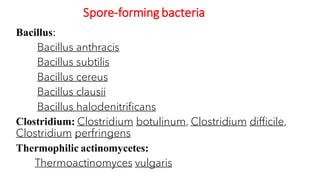
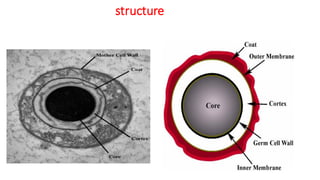
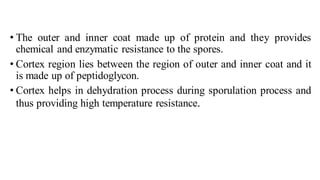
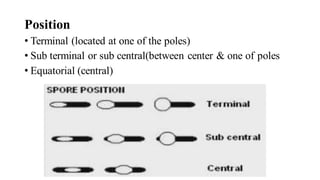
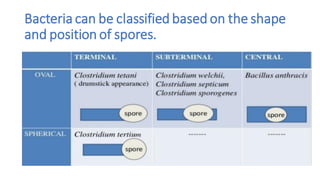
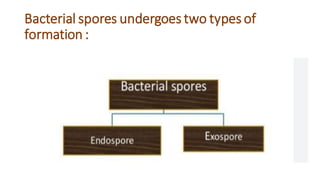
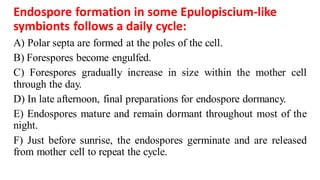
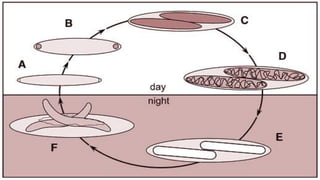
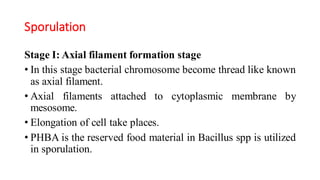
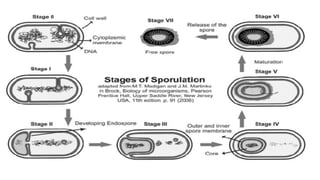
Bacterial spores are highly resistant structures that form during unfavorable conditions as part of the lifecycle of certain bacteria. They can survive without nutrients. Spores are formed intracellularly and are called endospores. Key spore-forming bacteria include Bacillus and Clostridium species. The spore structure includes a core, cortex layer, and inner and outer coatings that provide chemical and heat resistance. Sporulation is a multi-stage process where a forespore is formed and engulfed, developing protective layers before maturing into a dormant endospore. Endospores can remain dormant for long periods before germinating under favorable conditions.





![Polymer [ बहुलक ] Chemistry Notes PDF - Irfanullah Mehar - JJ Sir Chemistry.pdf](https://cdn.slidesharecdn.com/ss_thumbnails/polymerchemistrynotespdf-irfanullahmehar-jjsirchemistry-260210172118-3f9b37f7-thumbnail.jpg?width=640&height=640&fit=bounds)


