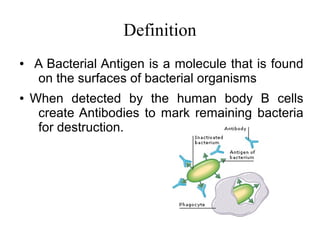
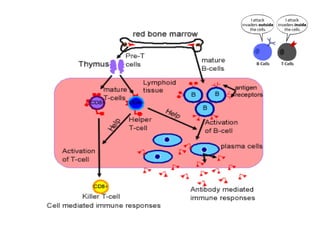
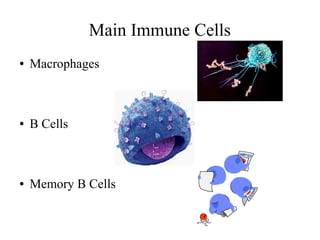
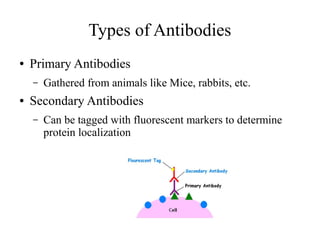
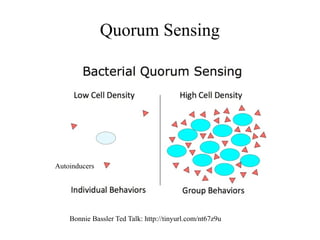
The document discusses bacterial antigens, which are molecules found on bacterial surfaces that are detected by the human body's immune cells like macrophages and B cells. When B cells detect antigens, they create antibodies to mark bacteria for destruction. There are primary antibodies gathered from animals and secondary antibodies that can be tagged with fluorescent markers. While antigens allow bacteria to be detected by the human immune system, they may remain on bacteria for important functions like inter-bacterial communication through quorum sensing or because some antigens are critical for bacterial survival and highly conserved.