Introduction to the Immune system: Lectures 1 and 2 Hugh Brady [email_address] Recommended textbook: Janeway’s Immunobiology (7 th  Ed) 2008, Garland Science
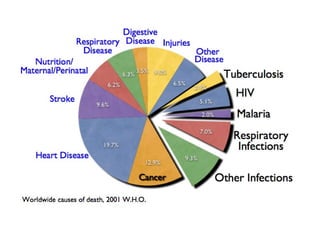
Why study immunology? Several reasons, most important in terms of numbers: Infectious diseases are a major burden worldwide Major challenges are HIV/AIDS, TB and malaria 42 million people living with HIV and AIDS worldwide  Malaria causes more than 300 million acute illnesses and at least one million deaths annually An estimated two million deaths resulted from tuberculosis in 2002 We need new strategies or vaccines to prevent or treat infectious disease


Do pathogens “want” to kill us? Does the immune system (usually) “win” the fight  with pathogens, enabling survival of the  host? Or does the pathogen evolve to adapt to  the host, including the host immune  response, enabling it to more effectively  persist?
Virulence and evolutionary fitness Multiple theories: Virulence (damage to host) is detrimental to pathogen: a dead  host is less effective at transmission Highly virulent pathogens are recently emerged and will  evolve towards lower pathogenicity Virulence factors confer increased fitness to pathogen Virulence may increase as pathogens evolve. Are both true?  Perhaps virulence increases to a limit, after which it is counterproductive to the pathogen Must also consider that immune response is often responsible for  host damage
The role of the immune system To protect us from infection: Viruses; 20-400nm  (obligate intracellular) Bacteria; 1-5   m Fungi; 2-20   m Protozoan parasites; 1- 50  m Metazoan parasites (worms) 3mm – 7m
 
Apart from infectious diseases, why else study immunology? Autoimmune disease –  eg  multiple sclerosis, rheumatoid arthritis Allergy – Allergy and asthma prevalence increasing 300 million people suffer from asthma and >180 000 die annually Asthma deaths are predicted to increase by almost 20% in the next 10 years  Unwanted responses – transplantation.
The immune system Physical barriers Cells Soluble effector proteins  –  complement, antibodies Cytokines – communication
Cells of the immune system


Lymphocytes are mostly small and inactive cells


An infection and the response to it can be divided into a series of stages
Innate immunity Many barriers prevent pathogens from crossing epithelia and colonizing tissues
Time frame for different stages of immune response
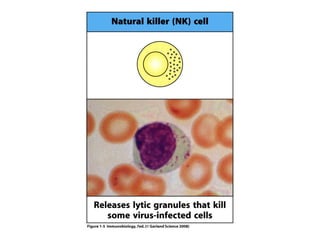
The innate immune response Mediated (initiated) by phagocytes, NK cells and soluble proteins Phagocytes Cells specialized in the process of phagocytosis Macrophages Reside in tissues and recruit neutrophils Neutrophils Enter infected tissues in large numbers Recognize common molecules of bacterial cell surface using a few surface receptors Phagocytosis Capture, engulfment and breakdown of bacterial pathogen
The largest cells in the blood Monocytes are the precursors to macrophages in the tissue Can be tissue resident or recruited to sites of inflammation Engulf and kill viruses and bacteria Important for antigen presentation to T cells Monocyte / macrophage
 
Macrophages are activated by pathogens and both engulf them and initiate inflammatory responses
Pattern recognition in innate immunity Microrganisms have repeating patterns of molecular structure on their surface in cell walls of Gram-positive and Gram-negative bacteria Peptidoglycan molecules Other microbial elements with repetitive structure Bacterial DNA with unmethylated CpG dinucleotide repeats The repetitive structures are known as  pathogen-associated molecular patterns (PAMPs)  and the receptors that recognise them as  pattern recognition receptors (PRRs)
 
 
Phagocytes Most common leukocyte (white blood cell) in blood (up to 80%) Distinctive lobed nucleus and intracellular granules Highly motile, they respond rapidly to inflammatory stimuli by migrating out of the blood and into tissues in large numbers. Recognise, engulf and kill viruses and bacteria Short life span – about 24hrs Dead neutrophils are a major constituent of pus! Neutrophils
The innate immune response Inflammatory response enhances phagocytosis through acute phase proteins Mannose-binding lectin (MBL) Binds to bacterial surface with particular spatial arrangement of mannose or fucose C-reactive protein (CRP) Binds to phosphorylcholine on bacterial surface Complement Set of proteins which bind to bacterial surface Inflammatory response Accumulation of fluid and cells at infection site (swelling, redness, heat and pain)
Complement system
Complement system Pre-formed protein cascade:  Punches holes in pathogen membranes  Alerts and recruits other components of immune system to danger  Coats pathogens for uptake by phagocytes:  ‘ opsonisation’
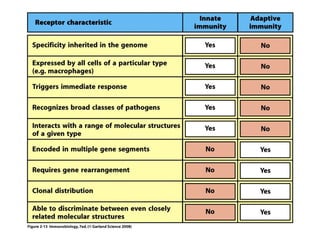
Innate immunity First line of defence against infection Pre-existing or very rapid response (hrs) Recognition of pathogens is based upon pattern recognition (PAMPs) using  germline  encoded receptors (PRRs) or proteins. Non-adaptive  No memory Evolutionarily early
 
Acquired / adaptive immunity Specific to a particular  antigen  – detected by specific receptors on T and B cells Response improves with time Results in  MEMORY  = Protection against re-infection with the same pathogen Evolutionarily late – only present in vertebrates Involves T and B lymphocytes
B cells Produce antibodies Sometimes called “humoral immunity” Proliferation  Differentiation B cell receptors Long lived
T cells T cell receptor (TCR)  only recognises foreign antigen as a peptide on an  MHC molecule  presented by an  antigen presenting cell  (APC)
Pathogen Recognition:  T and B cell receptors T and B cells have receptors specific for only one antigen Genes for the antigen receptors are re-arranged in each cell – every cell is different Gene rearrangement results in receptors that can recognise a huge variety of antigens (10 8  different specificities in a human at one time)
T and B cell responses are initiated in secondary lymphoid organs - lymph nodes and spleen Haematopoiesis B cells Neutrophils etc T cell development
Primary and secondary immune responses
Smallpox - an immunology success story Evolution of smallpox lesions on proximal upper  extremity on days 3, 5, and 7 of lesions
1796  Exposure to cowpox protects against smallpox Jenner
Smallpox Vaccination well known in 16 th  century China
Smallpox is the only major human disease to have been eradicated.
 
The Adaptive Immune response Creates millions of different B and T cells for specific antibody-mediated and cell-mediated immunity Antibody-Mediated Immunity (AMI) Involves B lymphocytes, plasma cells and antibodies Humoral immunity Name derives from antibodies found in body fluids (humors - old medical term) Cell-Mediated Immunity (CMI) Involves T lymphocytes, antigen-presenting cells and MHC (major histocompatibility complex) molecules Cellular immunity
Antibody-mediated (humoral) immunity Directed against extracellular microorganisms  and toxins B-lymphocytes (B cells) Differentiate into plasma cells which produce antibodies Function as antigen-presenting cells (APC’s) Classification of Antibodies (Immunoglobulins) Immunoglobulin M (IgM) Immunoglobulin G (IgG) Immunoglobulin A (IgA) Immunoglobulin D (IgD) Immunoglobulin E (IgE)
Cell-mediated immunity Directed against intracellular microorganisms  Phagocytic cells and nonphagocytic cells T-lymphocytes (T cells) Differentiate into effector cells following antigen presentation by antigen presenting cells (APC’s) Activate B lymphocytes Functional types of T cells Helper (CD4 T cells) T H 1 and T H 2 cells Cytotoxic (CD8 T cells) Regulatory (Suppressor) CD4 Tregs  CD8 Tregs
The nature of antigens Historically named as  anti body  gen erators Molecule which stimulates production of and binds specifically to an antibody Contemporary view distinguishes between Antigen Molecule which can bind to specific antibody but cannot elicit adaptive immune response Immunogen Molecule which can stimulate adaptive immune response Best immunogens are proteins with  MW > 10,000
The nature of antigens Carbohydrates, nucleic acids and lipids are also potential antigens / immunogens Hapten Small (low MW) molecule unable to elicit immune response Combines with larger carrier molecule which together function as immunogen Antibody may react independently with hapten following hapten/carrier adaptive immune response Example Penicillin G (MW of 372) Albumin (MW of 66,000)
Antigens are the molecules recognized by the immune response Epitopes are sites within antigens to which antigen receptors bind
An antibody binds an antigen directly whereas a T-cell receptor binds a complex of antigen fragment and self molecule
The nature of antibodies Antibodies are glycoproteins Exist as monomers, dimers or pentamers of basic structure Basic antibody structure has 4 polypeptide chains 2 identical light chains 2 identical heavy chains Regions of heavy and light chains Variable Constant
 
The nature of antibodies Also referred to as Immune globulins / Immunoglobulins (IG) Immune serum globulins (ISG) Gamma globulins Contemporary immunology Antibody Secreted form of IG made by plasma cells Immunoglobulin Antigen binding molecules of B cells  (B cell antigen receptors)
Classification of Antibodies (Immunoglobulins) Five (5) classes (isotypes) IgA IgG IgM IgD IgE Based on structural differences in constant regions of heavy chains Classes have specialized effector functions High affinity IgG and IgA antibodies neutralize bacterial  toxins and can inhibit infectivity of viruses IgE has specialized role activating Mast Cells
B cells and antibody-mediated immunity B lymphocytes originate from stem cells in bone marrow Maturation takes place in bone marrow followed by migration to secondary lymphoid tissue Antigen exposure in secondary lymphoid tissue Following exposure to antigen, B lymphocytes differentiate into plasma cells and memory cells Plasma cells produce antibodies of all IG classes
1. Neutralisation Antibodies block the interaction of the virus with its receptor
2. Opsonisation Antibodies label the virus and it is now recognised by phagocytes NB Abs can also label the whole virally infected cell for phagocytosis
3. Complement activation Membrane Attack Complex damage to the viral envelope,  MAC contains activated complement proteins, forms pore
Activation of antibody producing cells by clonal selection B lymphocytes recognize intact pathogenic microorganisms and toxins B lymphocytes possess specific surface receptors for recognition of specific antigen IgM and IgD Binding of specific antigen results in proliferation of a clonal population of cells Antigen determines clonal proliferation
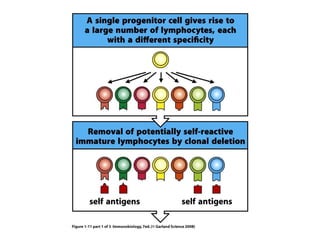
T and B cell responses are clonal Receptor diversity; T and B cells have receptors specific for only one antigen Each cell is unique Specific antigen recognition Precursors Clonal Proliferation Memory cells ‘ Effector cells’


Activation of antibody producing cells by clonal selection Proliferation of activated cells is followed by differentiation into Plasma cells Life span of 4 to 5 days 1 to 2 months Produce 2,000 antibody molecules / second Memory cells Life span of years to decades Differentiate into plasma cells following stimulation by same antigen
Primary and secondary immune responses
Primary and secondary antibody response Primary Response Following exposure to an antigen, there is a slow rise in IgM followed by a slow rise in IgG Secondary Response Following exposure to previously encountered antigen, there is a rapid rise in IgG and slow or no rise in IgM Memory response
T cells and cell-mediated immunity T lymphocytes originate from stem cells in bone marrow followed by migration to thymus gland Maturation takes place in thymus gland followed by migration to secondary lymphoid tissue T lymphocytes respond to antigens on the surface of antigen presenting cells (APC’s) Antigen presenting cells (APC’s) Macrophages Dendritic cells B lymphocytes
T cells and cell-mediated immunity Antigen presenting cells (APCs) Ingest and process antigens then display fragments (short peptides) on their surface in association with molecules of major histocompatibility complex (MHC) Major histocompatibility (MHC) molecules MHC class I molecules Present antigens to CD8 T cells MHC class II molecules Present antigens to CD4 T cells T cells which encounter antigen differentiate into effector T cells
Pathogen Recognition:  T and B cell receptors T and B cells have receptors specific for only one antigen Genes for the antigen receptors are re-arranged in each cell – every cell is different Gene rearrangement results in receptors that can recognise a huge variety of antigens (10 8  different specificities in a human at one time)
How T-cells are made
Mechanism of host defence against intracellular infection by viruses
Mechanism of host defence against intracellular infection by  Bacterium
MHC class I molecules present antigen derived from proteins in the cytosol
Cytotoxic T cells CD8+ cells Kill by releasing granzymes and perforin or  by engagement of Fas on target cells by Fas Ligand Granule contents cause apoptosis in the target cell
MHC class II molecules present antigen originating in intracellular vesicles
 
Summary The immune system protects us against a huge variety of different pathogens Innate immunity  is our first line of defence  Physical barriers Complement Phagocytes Acquired / Adaptive immunity Involves T and B lymphocytes Responses are antigen specific and clonal Memory responses Secondary responses are faster and better (more and higher affinity antibody) than primary responses – the basis of vaccination

Jimmy

  • 1.
    Introduction to theImmune system: Lectures 1 and 2 Hugh Brady [email_address] Recommended textbook: Janeway’s Immunobiology (7 th Ed) 2008, Garland Science
  • 2.
    Why study immunology?Several reasons, most important in terms of numbers: Infectious diseases are a major burden worldwide Major challenges are HIV/AIDS, TB and malaria 42 million people living with HIV and AIDS worldwide Malaria causes more than 300 million acute illnesses and at least one million deaths annually An estimated two million deaths resulted from tuberculosis in 2002 We need new strategies or vaccines to prevent or treat infectious disease
  • 3.
  • 4.
  • 5.
  • 6.
  • 7.
  • 8.
    Do pathogens “want”to kill us? Does the immune system (usually) “win” the fight with pathogens, enabling survival of the host? Or does the pathogen evolve to adapt to the host, including the host immune response, enabling it to more effectively persist?
  • 9.
    Virulence and evolutionaryfitness Multiple theories: Virulence (damage to host) is detrimental to pathogen: a dead host is less effective at transmission Highly virulent pathogens are recently emerged and will evolve towards lower pathogenicity Virulence factors confer increased fitness to pathogen Virulence may increase as pathogens evolve. Are both true? Perhaps virulence increases to a limit, after which it is counterproductive to the pathogen Must also consider that immune response is often responsible for host damage
  • 10.
    The role ofthe immune system To protect us from infection: Viruses; 20-400nm (obligate intracellular) Bacteria; 1-5  m Fungi; 2-20  m Protozoan parasites; 1- 50  m Metazoan parasites (worms) 3mm – 7m
  • 11.
  • 12.
    Apart from infectiousdiseases, why else study immunology? Autoimmune disease – eg multiple sclerosis, rheumatoid arthritis Allergy – Allergy and asthma prevalence increasing 300 million people suffer from asthma and >180 000 die annually Asthma deaths are predicted to increase by almost 20% in the next 10 years Unwanted responses – transplantation.
  • 13.
    The immune systemPhysical barriers Cells Soluble effector proteins – complement, antibodies Cytokines – communication
  • 14.
    Cells of theimmune system
  • 15.
  • 16.
  • 17.
  • 18.
  • 19.
  • 20.
  • 21.
  • 22.
    Lymphocytes are mostlysmall and inactive cells
  • 23.
  • 24.
  • 25.
  • 26.
  • 27.
  • 28.
    An infection andthe response to it can be divided into a series of stages
  • 29.
    Innate immunity Manybarriers prevent pathogens from crossing epithelia and colonizing tissues
  • 30.
    Time frame fordifferent stages of immune response
  • 31.
    The innate immuneresponse Mediated (initiated) by phagocytes, NK cells and soluble proteins Phagocytes Cells specialized in the process of phagocytosis Macrophages Reside in tissues and recruit neutrophils Neutrophils Enter infected tissues in large numbers Recognize common molecules of bacterial cell surface using a few surface receptors Phagocytosis Capture, engulfment and breakdown of bacterial pathogen
  • 32.
    The largest cellsin the blood Monocytes are the precursors to macrophages in the tissue Can be tissue resident or recruited to sites of inflammation Engulf and kill viruses and bacteria Important for antigen presentation to T cells Monocyte / macrophage
  • 33.
  • 34.
    Macrophages are activatedby pathogens and both engulf them and initiate inflammatory responses
  • 35.
    Pattern recognition ininnate immunity Microrganisms have repeating patterns of molecular structure on their surface in cell walls of Gram-positive and Gram-negative bacteria Peptidoglycan molecules Other microbial elements with repetitive structure Bacterial DNA with unmethylated CpG dinucleotide repeats The repetitive structures are known as pathogen-associated molecular patterns (PAMPs) and the receptors that recognise them as pattern recognition receptors (PRRs)
  • 36.
  • 37.
  • 38.
    Phagocytes Most commonleukocyte (white blood cell) in blood (up to 80%) Distinctive lobed nucleus and intracellular granules Highly motile, they respond rapidly to inflammatory stimuli by migrating out of the blood and into tissues in large numbers. Recognise, engulf and kill viruses and bacteria Short life span – about 24hrs Dead neutrophils are a major constituent of pus! Neutrophils
  • 39.
    The innate immuneresponse Inflammatory response enhances phagocytosis through acute phase proteins Mannose-binding lectin (MBL) Binds to bacterial surface with particular spatial arrangement of mannose or fucose C-reactive protein (CRP) Binds to phosphorylcholine on bacterial surface Complement Set of proteins which bind to bacterial surface Inflammatory response Accumulation of fluid and cells at infection site (swelling, redness, heat and pain)
  • 40.
  • 41.
    Complement system Pre-formedprotein cascade: Punches holes in pathogen membranes Alerts and recruits other components of immune system to danger Coats pathogens for uptake by phagocytes: ‘ opsonisation’
  • 42.
    Innate immunity Firstline of defence against infection Pre-existing or very rapid response (hrs) Recognition of pathogens is based upon pattern recognition (PAMPs) using germline encoded receptors (PRRs) or proteins. Non-adaptive No memory Evolutionarily early
  • 43.
  • 44.
    Acquired / adaptiveimmunity Specific to a particular antigen – detected by specific receptors on T and B cells Response improves with time Results in MEMORY = Protection against re-infection with the same pathogen Evolutionarily late – only present in vertebrates Involves T and B lymphocytes
  • 45.
    B cells Produceantibodies Sometimes called “humoral immunity” Proliferation Differentiation B cell receptors Long lived
  • 46.
    T cells Tcell receptor (TCR) only recognises foreign antigen as a peptide on an MHC molecule presented by an antigen presenting cell (APC)
  • 47.
    Pathogen Recognition: T and B cell receptors T and B cells have receptors specific for only one antigen Genes for the antigen receptors are re-arranged in each cell – every cell is different Gene rearrangement results in receptors that can recognise a huge variety of antigens (10 8 different specificities in a human at one time)
  • 48.
    T and Bcell responses are initiated in secondary lymphoid organs - lymph nodes and spleen Haematopoiesis B cells Neutrophils etc T cell development
  • 49.
    Primary and secondaryimmune responses
  • 50.
    Smallpox - animmunology success story Evolution of smallpox lesions on proximal upper extremity on days 3, 5, and 7 of lesions
  • 51.
    1796 Exposureto cowpox protects against smallpox Jenner
  • 52.
    Smallpox Vaccination wellknown in 16 th century China
  • 53.
    Smallpox is theonly major human disease to have been eradicated.
  • 54.
  • 55.
    The Adaptive Immuneresponse Creates millions of different B and T cells for specific antibody-mediated and cell-mediated immunity Antibody-Mediated Immunity (AMI) Involves B lymphocytes, plasma cells and antibodies Humoral immunity Name derives from antibodies found in body fluids (humors - old medical term) Cell-Mediated Immunity (CMI) Involves T lymphocytes, antigen-presenting cells and MHC (major histocompatibility complex) molecules Cellular immunity
  • 56.
    Antibody-mediated (humoral) immunityDirected against extracellular microorganisms and toxins B-lymphocytes (B cells) Differentiate into plasma cells which produce antibodies Function as antigen-presenting cells (APC’s) Classification of Antibodies (Immunoglobulins) Immunoglobulin M (IgM) Immunoglobulin G (IgG) Immunoglobulin A (IgA) Immunoglobulin D (IgD) Immunoglobulin E (IgE)
  • 57.
    Cell-mediated immunity Directedagainst intracellular microorganisms Phagocytic cells and nonphagocytic cells T-lymphocytes (T cells) Differentiate into effector cells following antigen presentation by antigen presenting cells (APC’s) Activate B lymphocytes Functional types of T cells Helper (CD4 T cells) T H 1 and T H 2 cells Cytotoxic (CD8 T cells) Regulatory (Suppressor) CD4 Tregs CD8 Tregs
  • 58.
    The nature ofantigens Historically named as anti body gen erators Molecule which stimulates production of and binds specifically to an antibody Contemporary view distinguishes between Antigen Molecule which can bind to specific antibody but cannot elicit adaptive immune response Immunogen Molecule which can stimulate adaptive immune response Best immunogens are proteins with MW > 10,000
  • 59.
    The nature ofantigens Carbohydrates, nucleic acids and lipids are also potential antigens / immunogens Hapten Small (low MW) molecule unable to elicit immune response Combines with larger carrier molecule which together function as immunogen Antibody may react independently with hapten following hapten/carrier adaptive immune response Example Penicillin G (MW of 372) Albumin (MW of 66,000)
  • 60.
    Antigens are themolecules recognized by the immune response Epitopes are sites within antigens to which antigen receptors bind
  • 61.
    An antibody bindsan antigen directly whereas a T-cell receptor binds a complex of antigen fragment and self molecule
  • 62.
    The nature ofantibodies Antibodies are glycoproteins Exist as monomers, dimers or pentamers of basic structure Basic antibody structure has 4 polypeptide chains 2 identical light chains 2 identical heavy chains Regions of heavy and light chains Variable Constant
  • 63.
  • 64.
    The nature ofantibodies Also referred to as Immune globulins / Immunoglobulins (IG) Immune serum globulins (ISG) Gamma globulins Contemporary immunology Antibody Secreted form of IG made by plasma cells Immunoglobulin Antigen binding molecules of B cells (B cell antigen receptors)
  • 65.
    Classification of Antibodies(Immunoglobulins) Five (5) classes (isotypes) IgA IgG IgM IgD IgE Based on structural differences in constant regions of heavy chains Classes have specialized effector functions High affinity IgG and IgA antibodies neutralize bacterial toxins and can inhibit infectivity of viruses IgE has specialized role activating Mast Cells
  • 66.
    B cells andantibody-mediated immunity B lymphocytes originate from stem cells in bone marrow Maturation takes place in bone marrow followed by migration to secondary lymphoid tissue Antigen exposure in secondary lymphoid tissue Following exposure to antigen, B lymphocytes differentiate into plasma cells and memory cells Plasma cells produce antibodies of all IG classes
  • 67.
    1. Neutralisation Antibodiesblock the interaction of the virus with its receptor
  • 68.
    2. Opsonisation Antibodieslabel the virus and it is now recognised by phagocytes NB Abs can also label the whole virally infected cell for phagocytosis
  • 69.
    3. Complement activationMembrane Attack Complex damage to the viral envelope, MAC contains activated complement proteins, forms pore
  • 70.
    Activation of antibodyproducing cells by clonal selection B lymphocytes recognize intact pathogenic microorganisms and toxins B lymphocytes possess specific surface receptors for recognition of specific antigen IgM and IgD Binding of specific antigen results in proliferation of a clonal population of cells Antigen determines clonal proliferation
  • 71.
    T and Bcell responses are clonal Receptor diversity; T and B cells have receptors specific for only one antigen Each cell is unique Specific antigen recognition Precursors Clonal Proliferation Memory cells ‘ Effector cells’
  • 72.
  • 73.
  • 74.
  • 75.
  • 76.
    Activation of antibodyproducing cells by clonal selection Proliferation of activated cells is followed by differentiation into Plasma cells Life span of 4 to 5 days 1 to 2 months Produce 2,000 antibody molecules / second Memory cells Life span of years to decades Differentiate into plasma cells following stimulation by same antigen
  • 77.
    Primary and secondaryimmune responses
  • 78.
    Primary and secondaryantibody response Primary Response Following exposure to an antigen, there is a slow rise in IgM followed by a slow rise in IgG Secondary Response Following exposure to previously encountered antigen, there is a rapid rise in IgG and slow or no rise in IgM Memory response
  • 79.
    T cells andcell-mediated immunity T lymphocytes originate from stem cells in bone marrow followed by migration to thymus gland Maturation takes place in thymus gland followed by migration to secondary lymphoid tissue T lymphocytes respond to antigens on the surface of antigen presenting cells (APC’s) Antigen presenting cells (APC’s) Macrophages Dendritic cells B lymphocytes
  • 80.
    T cells andcell-mediated immunity Antigen presenting cells (APCs) Ingest and process antigens then display fragments (short peptides) on their surface in association with molecules of major histocompatibility complex (MHC) Major histocompatibility (MHC) molecules MHC class I molecules Present antigens to CD8 T cells MHC class II molecules Present antigens to CD4 T cells T cells which encounter antigen differentiate into effector T cells
  • 81.
    Pathogen Recognition: T and B cell receptors T and B cells have receptors specific for only one antigen Genes for the antigen receptors are re-arranged in each cell – every cell is different Gene rearrangement results in receptors that can recognise a huge variety of antigens (10 8 different specificities in a human at one time)
  • 82.
  • 83.
    Mechanism of hostdefence against intracellular infection by viruses
  • 84.
    Mechanism of hostdefence against intracellular infection by Bacterium
  • 85.
    MHC class Imolecules present antigen derived from proteins in the cytosol
  • 86.
    Cytotoxic T cellsCD8+ cells Kill by releasing granzymes and perforin or by engagement of Fas on target cells by Fas Ligand Granule contents cause apoptosis in the target cell
  • 87.
    MHC class IImolecules present antigen originating in intracellular vesicles
  • 88.
  • 89.
    Summary The immunesystem protects us against a huge variety of different pathogens Innate immunity is our first line of defence Physical barriers Complement Phagocytes Acquired / Adaptive immunity Involves T and B lymphocytes Responses are antigen specific and clonal Memory responses Secondary responses are faster and better (more and higher affinity antibody) than primary responses – the basis of vaccination