Chris Shinkle
Director of Innovation
@chrisshinkle | cmshinkle@sep.com
Build Better Backlogs Using
Behavioral Design
[DISCLAMER]
I am not a cognitive scientist or
behavioral economist.
• Psychology
• Cognitive science
• Influence
• Neuroscience
• Behavioral economics
• Decision making
}
These topics have
become more important
when building products
for today’s consumer
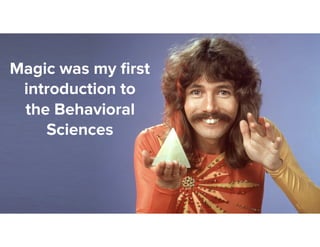
Magic was my first
introduction to
the Behavioral
Sciences
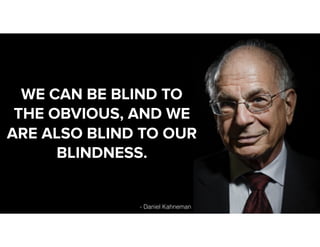
- Daniel Kahneman
WE CAN BE BLIND TO
THE OBVIOUS, AND WE
ARE ALSO BLIND TO OUR
BLINDNESS.
What does this have to do
with product development?
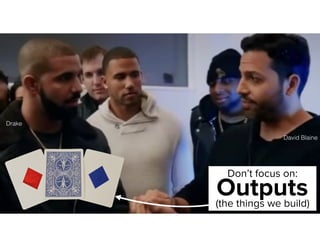
Don’t focus on:
Outputs(the things we build)
David Blaine
Drake
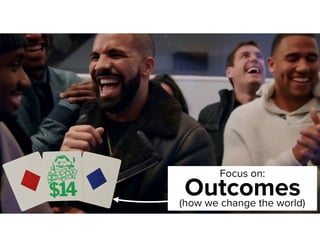
Focus on:
Outcomes(how we change the world)
BEHAVIORAL DESIGN
noun | be·hav·ior de·sign | bē-ˈhā-vyər di-ˈzīn
design that uses ideas taken from
Behavioral Science - the study of why
people behave as they do.
2 - 2 - 2presentation
2 Contrasting Viewpoints
2 Design Methods
2 Practical Applications
2
Conflicting
Viewpoints
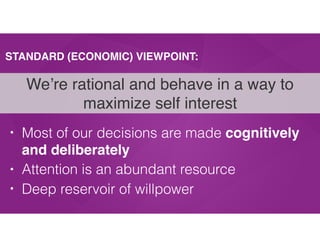
STANDARD (ECONOMIC) VIEWPOINT:
• Most of our decisions are made cognitively
and deliberately
• Attention is an abundant resource
• Deep reservoir of willpower
We’re rational and behave in a way to
maximize self interest
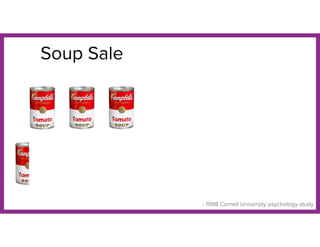
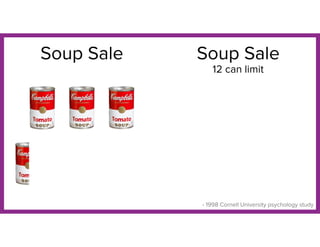
Soup Sale
- 1998 Cornell University psychology study
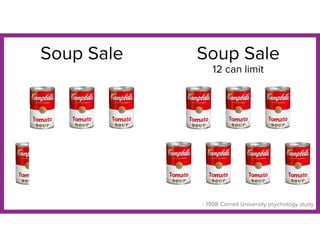
Soup Sale Soup Sale
12 can limit
- 1998 Cornell University psychology study
Soup Sale Soup Sale
12 can limit
- 1998 Cornell University psychology study
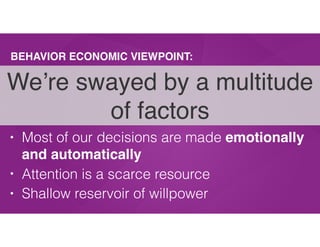
BEHAVIOR ECONOMIC VIEWPOINT:
• Most of our decisions are made emotionally
and automatically
• Attention is a scarce resource
• Shallow reservoir of willpower
We’re swayed by a multitude
of factors
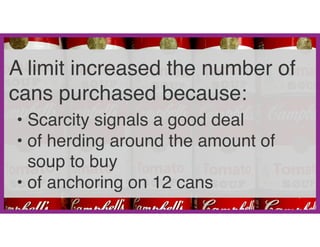
A limit increased the number of
cans purchased because:
• Scarcity signals a good deal
• of herding around the amount of
soup to buy
• of anchoring on 12 cans
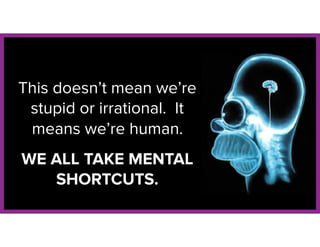
This doesn’t mean we’re
stupid or irrational. It
means we’re human.
WE ALL TAKE MENTAL
SHORTCUTS.
If we understand how people behave
and how they’re influenced…
We can design for it.
2
Design
Methods
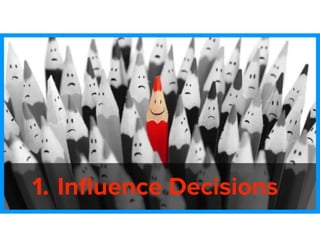
1. Influence Decisions
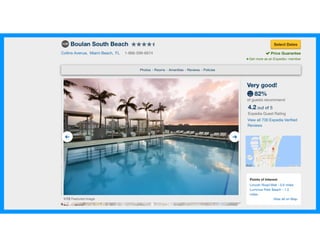
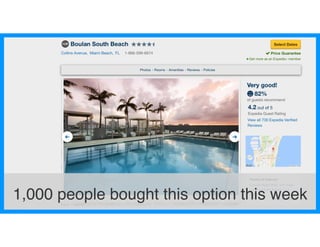
1,000 people bought this option this week
To influence decisions, we
must familiarize ourselves with
the science
- Nathalie Nahai, Webs of Influence, The psychology of online Persuasion
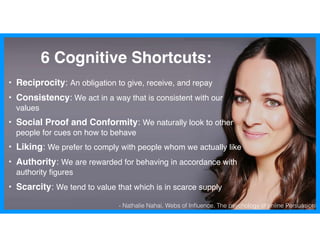
6 Cognitive Shortcuts:
• Reciprocity: An obligation to give, receive, and repay
• Consistency: We act in a way that is consistent with our
values
• Social Proof and Conformity: We naturally look to other
people for cues on how to behave
• Liking: We prefer to comply with people whom we actually like
• Authority: We are rewarded for behaving in accordance with
authority figures
• Scarcity: We tend to value that which is in scarce supply
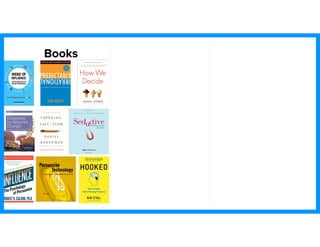
Books
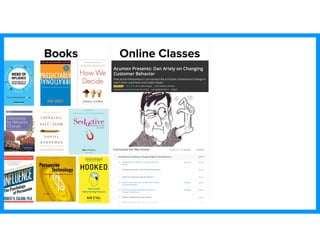
Books Online Classes
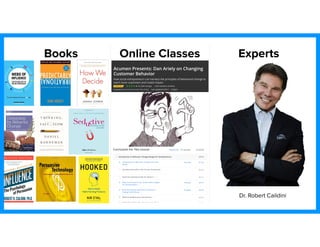
Books Online Classes Experts
Dr. Robert Caildini
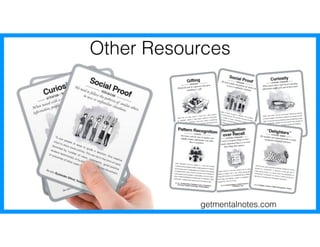
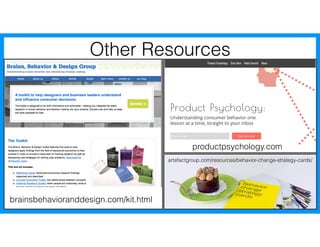
Other Resources
getmentalnotes.com
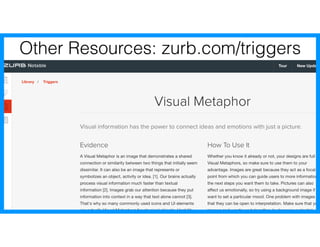
Other Resources: zurb.com/triggers
Other Resources
brainsbehavioranddesign.com/kit.html
productpsychology.com
artefactgroup.com/resources/behavior-change-strategy-cards/
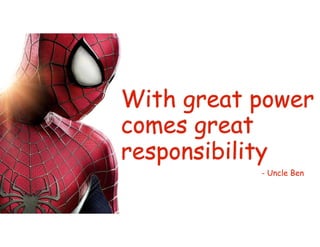
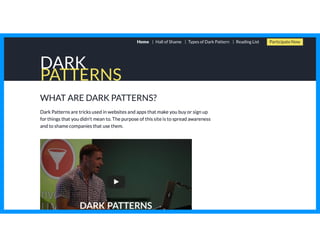
Is This Immoral?
With great power
comes great
responsibility
- Uncle Ben
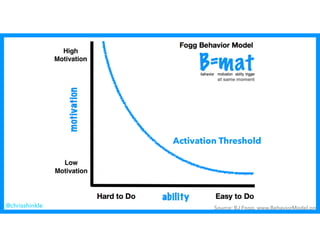
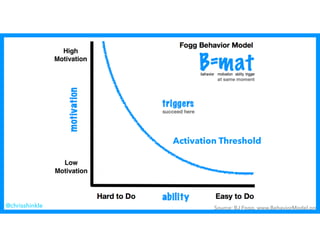
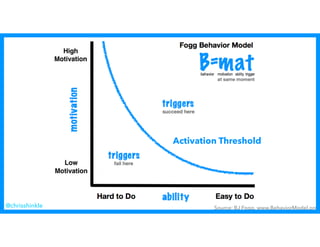
2. Facilitate Actions
(and sustain behaviors)
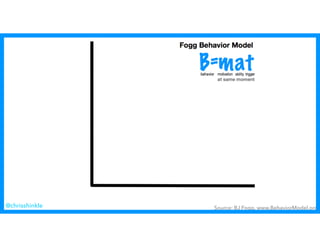
Source: BJ Fogg, www.BehaviorModel.org@chrisshinkle
Activation Threshold
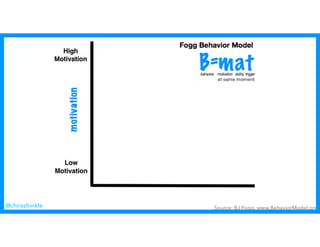
Source: BJ Fogg, www.BehaviorModel.org@chrisshinkle
Activation Threshold
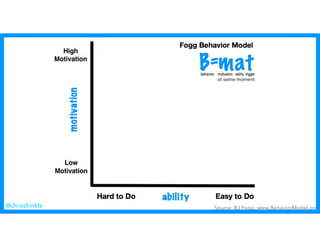
Source: BJ Fogg, www.BehaviorModel.org@chrisshinkle
Activation Threshold
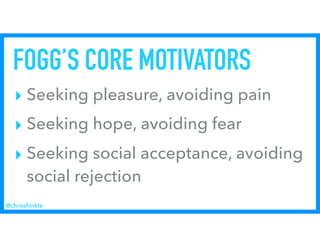
FOGG’S CORE MOTIVATORS
‣ Seeking pleasure, avoiding pain
‣ Seeking hope, avoiding fear
‣ Seeking social acceptance, avoiding
social rejection
@chrisshinkle
@chrisshinkle
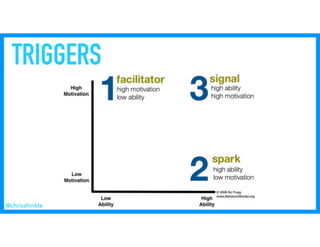
TRIGGERS
‣Time
‣Money
‣Physical effort
‣Brain cycles
‣Social deviance
‣Non-routineness
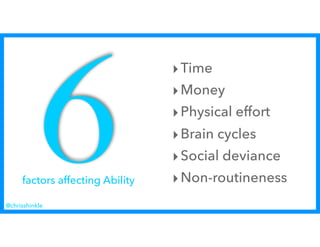
6factors affecting Ability
@chrisshinkle
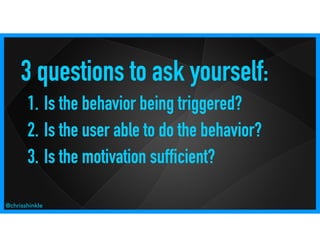
3 questions to ask yourself:
1. Is the behavior being triggered?
2. Is the user able to do the behavior?
3. Is the motivation sufficient?
@chrisshinkle
2
Practical
Applications
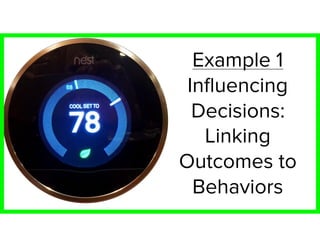
Example 1
Influencing
Decisions:
Linking
Outcomes to
Behaviors
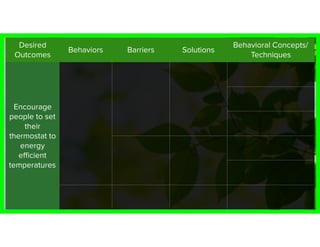
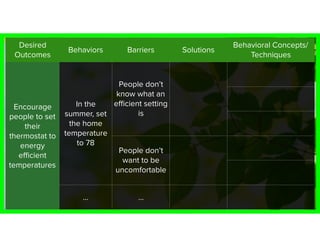
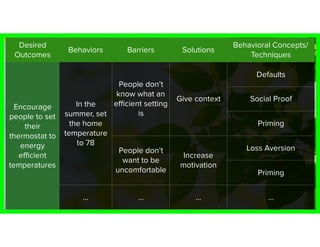
Desired
Outcomes
Behaviors Barriers Solutions
Behavioral Concepts/
Techniques
Encourage
people to set
their
thermostat to
energy
efficient
temperatures
Desired
Outcomes
Behaviors Barriers Solutions
Behavioral Concepts/
Techniques
Encourage
people to set
their
thermostat to
energy
efficient
temperatures
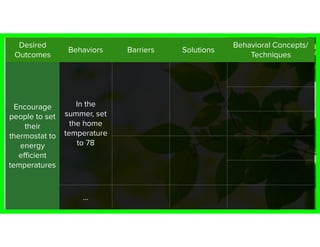
In the
summer, set
the home
temperature
to 78
…
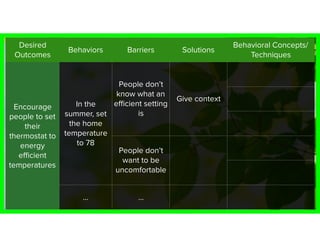
Desired
Outcomes
Behaviors Barriers Solutions
Behavioral Concepts/
Techniques
Encourage
people to set
their
thermostat to
energy
efficient
temperatures
In the
summer, set
the home
temperature
to 78
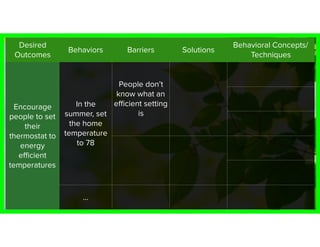
People don’t
know what an
efficient setting
is
…
Desired
Outcomes
Behaviors Barriers Solutions
Behavioral Concepts/
Techniques
Encourage
people to set
their
thermostat to
energy
efficient
temperatures
In the
summer, set
the home
temperature
to 78
People don’t
know what an
efficient setting
is
People don’t
want to be
uncomfortable
… …
Desired
Outcomes
Behaviors Barriers Solutions
Behavioral Concepts/
Techniques
Encourage
people to set
their
thermostat to
energy
efficient
temperatures
In the
summer, set
the home
temperature
to 78
People don’t
know what an
efficient setting
is
Give context
People don’t
want to be
uncomfortable
… …
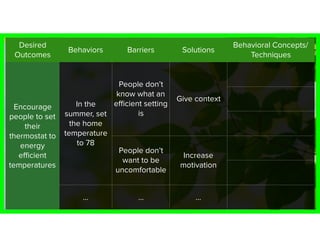
Desired
Outcomes
Behaviors Barriers Solutions
Behavioral Concepts/
Techniques
Encourage
people to set
their
thermostat to
energy
efficient
temperatures
In the
summer, set
the home
temperature
to 78
People don’t
know what an
efficient setting
is
Give context
People don’t
want to be
uncomfortable
Increase
motivation
… … …
Desired
Outcomes
Behaviors Barriers Solutions
Behavioral Concepts/
Techniques
Encourage
people to set
their
thermostat to
energy
efficient
temperatures
In the
summer, set
the home
temperature
to 78
People don’t
know what an
efficient setting
is
Give context
Defaults
Social Proof
Priming
People don’t
want to be
uncomfortable
Increase
motivation
… … …
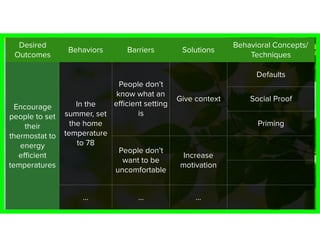
Desired
Outcomes
Behaviors Barriers Solutions
Behavioral Concepts/
Techniques
Encourage
people to set
their
thermostat to
energy
efficient
temperatures
In the
summer, set
the home
temperature
to 78
People don’t
know what an
efficient setting
is
Give context
Defaults
Social Proof
Priming
People don’t
want to be
uncomfortable
Increase
motivation
Loss Aversion
Priming
… … … …
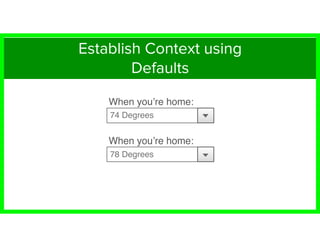
74 Degrees
78 Degrees
When you’re home:
When you’re home:
Establish Context using
Defaults
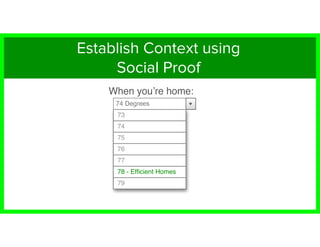
When you’re home:
74 Degrees
75
74
73
76
77
78 - Efficient Homes
79
Establish Context using
Social Proof
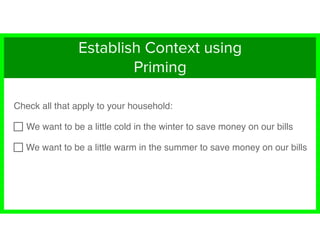
Check all that apply to your household:
We want to be a little cold in the winter to save money on our bills
We want to be a little warm in the summer to save money on our bills
Establish Context using
Priming
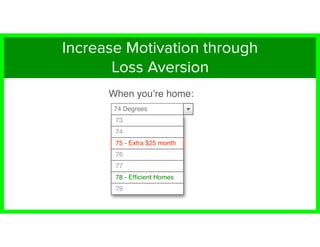
When you’re home:
74 Degrees
75 - Extra $25 month
74
73
76
77
78 - Efficient Homes
79
Increase Motivation through
Loss Aversion
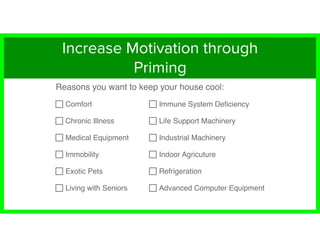
Reasons you want to keep your house cool:
Comfort
Chronic Illness
Medical Equipment
Immobility
Exotic Pets
Living with Seniors
Immune System Deficiency
Life Support Machinery
Industrial Machinery
Indoor Agricuture
Refrigeration
Advanced Computer Equipment
Increase Motivation through
Priming
62
Example 2
Facilitating Actions:
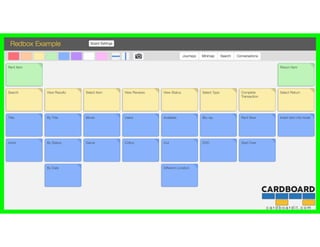
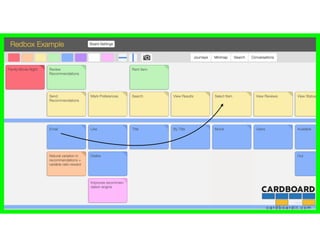
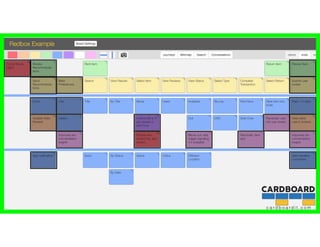
Augmenting Your Story
Map
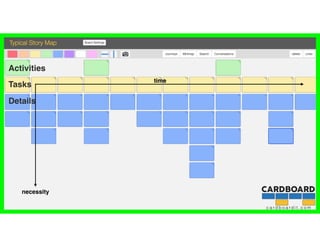
Tasks
Activities
Details
c a r d b o a r d i t . c o m
time
necessity
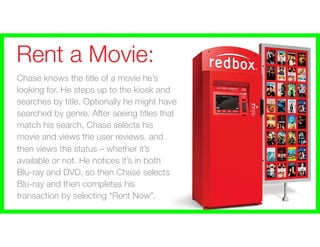
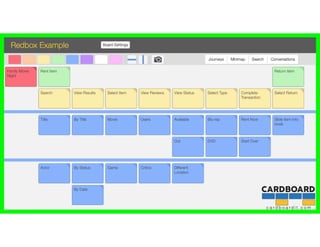
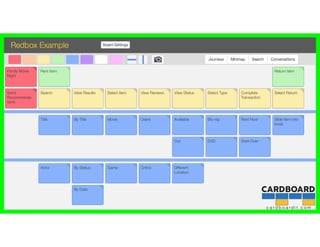
Rent a Movie:
Chase knows the title of a movie he’s
looking for. He steps up to the kiosk and
searches by title. Optionally he might have
searched by genre. After seeing titles that
match his search, Chase selects his
movie and views the user reviews, and
then views the status – whether it’s
available or not. He notices it’s in both
Blu-ray and DVD, so then Chase selects
Blu-ray and then completes his
transaction by selecting “Rent Now”.
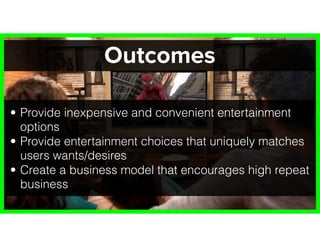
Outcomes
• Provide inexpensive and convenient entertainment
options
• Provide entertainment choices that uniquely matches
users wants/desires
• Create a business model that encourages high repeat
business
c a r d b o a r d i t . c o m
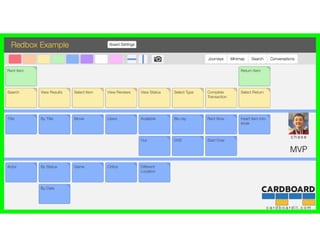
c h a s e
MVP
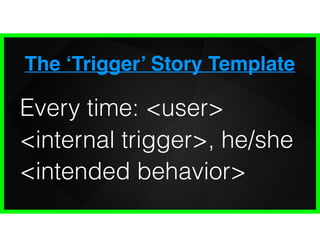
The ‘Trigger’ Story Template
Every time: <user>
<internal trigger>, he/she
<intended behavior>
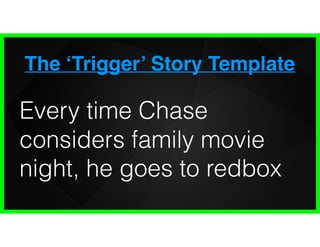
The ‘Trigger’ Story Template
Every time Chase
considers family movie
night, he goes to redbox
c a r d b o a r d i t . c o m
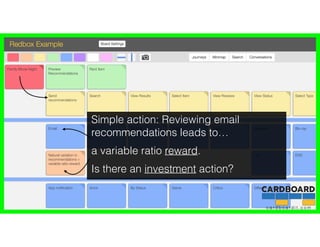
Simple action: Reviewing email
recommendations leads to…
a variable ratio reward.
Is there an investment action?
c a r d b o a r d i t . c o m
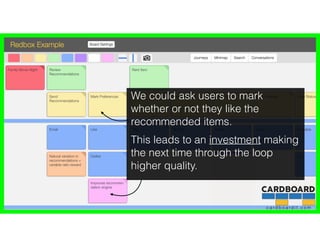
We could ask users to mark
whether or not they like the
recommended items.
This leads to an investment making
the next time through the loop
higher quality.
c a r d b o a r d i t . c o m
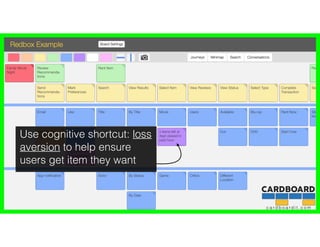
Use cognitive shortcut: loss
aversion to help ensure
users get item they want
c a r d b o a r d i t . c o m
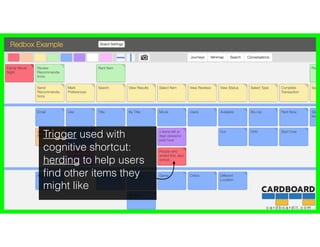
Trigger used with
cognitive shortcut:
herding to help users
find other items they
might like
c a r d b o a r d i t . c o m
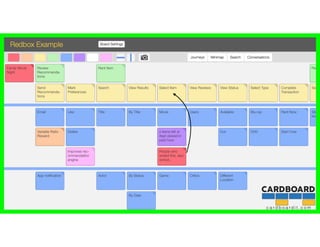
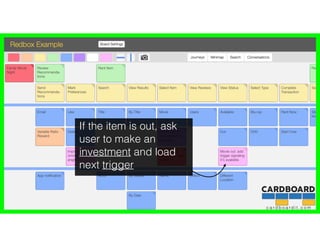
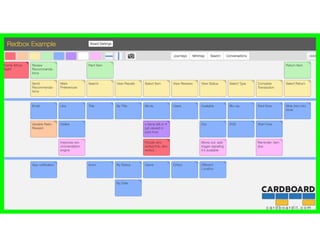
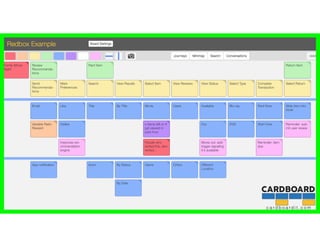
If the item is out, ask
user to make an
investment and load
next trigger
c a r d b o a r d i t . c o m
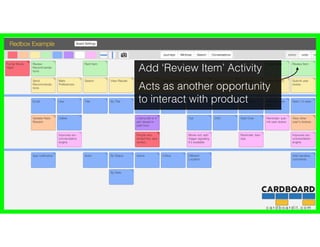
Add ‘Review Item’ Activity
Acts as another opportunity
to interact with product
c a r d b o a r d i t . c o m
Closing
Thoughts…
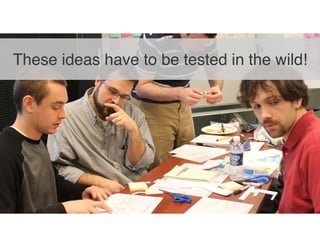
These ideas have to be tested in the wild!
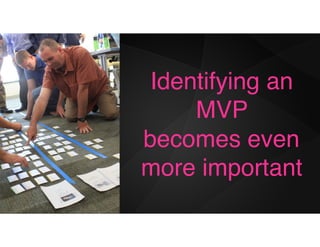
Identifying an
MVP
becomes even
more important
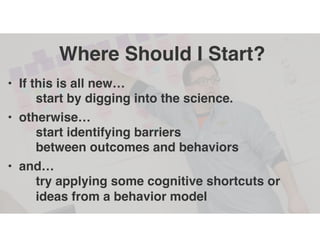
Where Should I Start?
• If this is all new…
start by digging into the science.
• otherwise…
start identifying barriers
between outcomes and behaviors
• and…
try applying some cognitive shortcuts or
ideas from a behavior model
info.sep.com/milehigh17
Download slides at:
90
Chris Shinkle
chrisshinkle@sep.com
LinkedIn: www.linkedin.com/in/chrisshinkle
Twitter: @chrisshinkle
http://info.sep.com/milehigh17

Backlogs and behavioral design