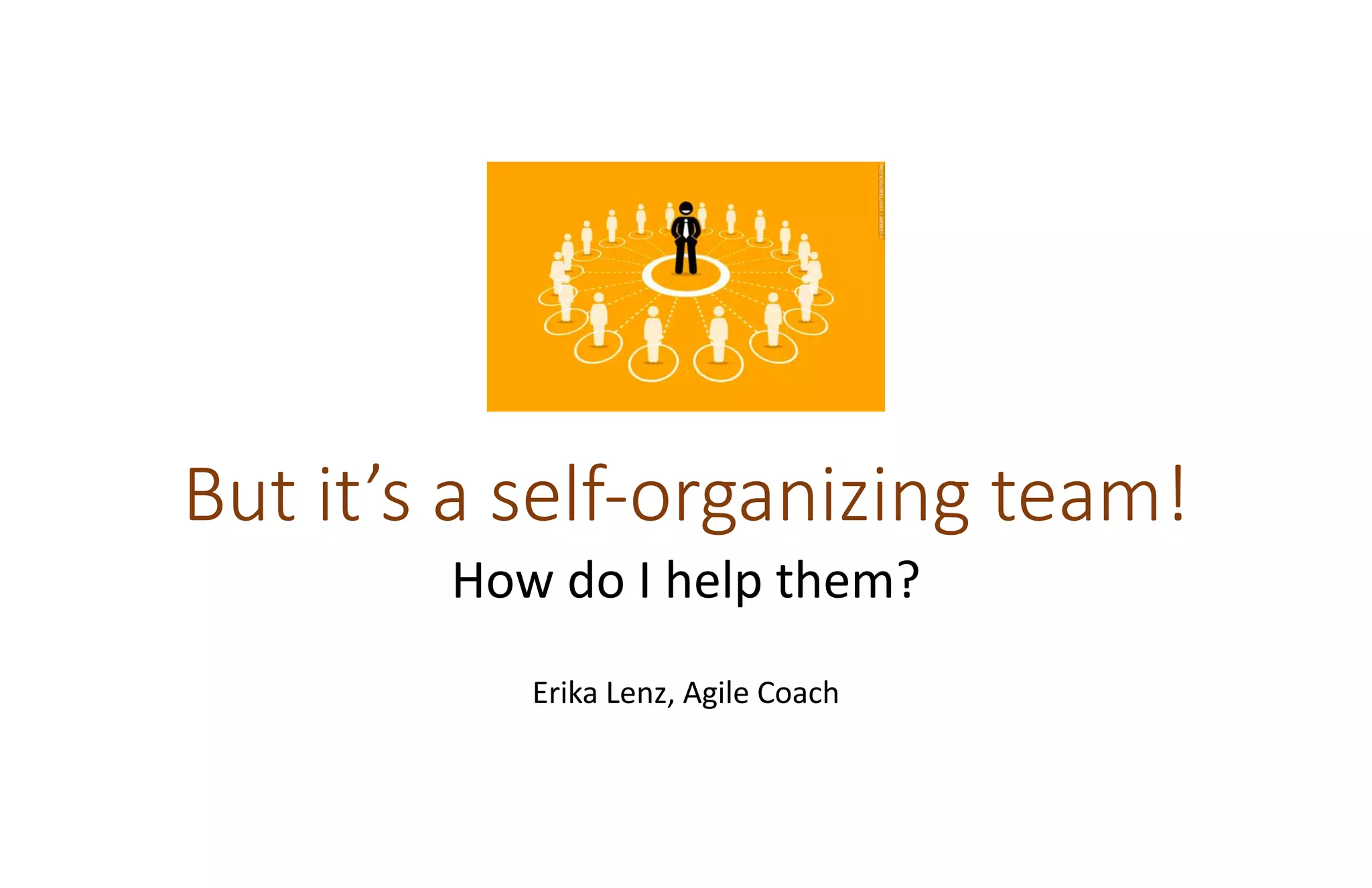
But it’s a self-organizing team!
How do I help them?
Erika Lenz, Agile Coach
Agenda
• Experiment with self-organization
• Four ways to organize teams
• A model to help you think about helping teams self-organize
• Servant leadership hacks
But first,
I need some volunteers!
Let’s experiment!
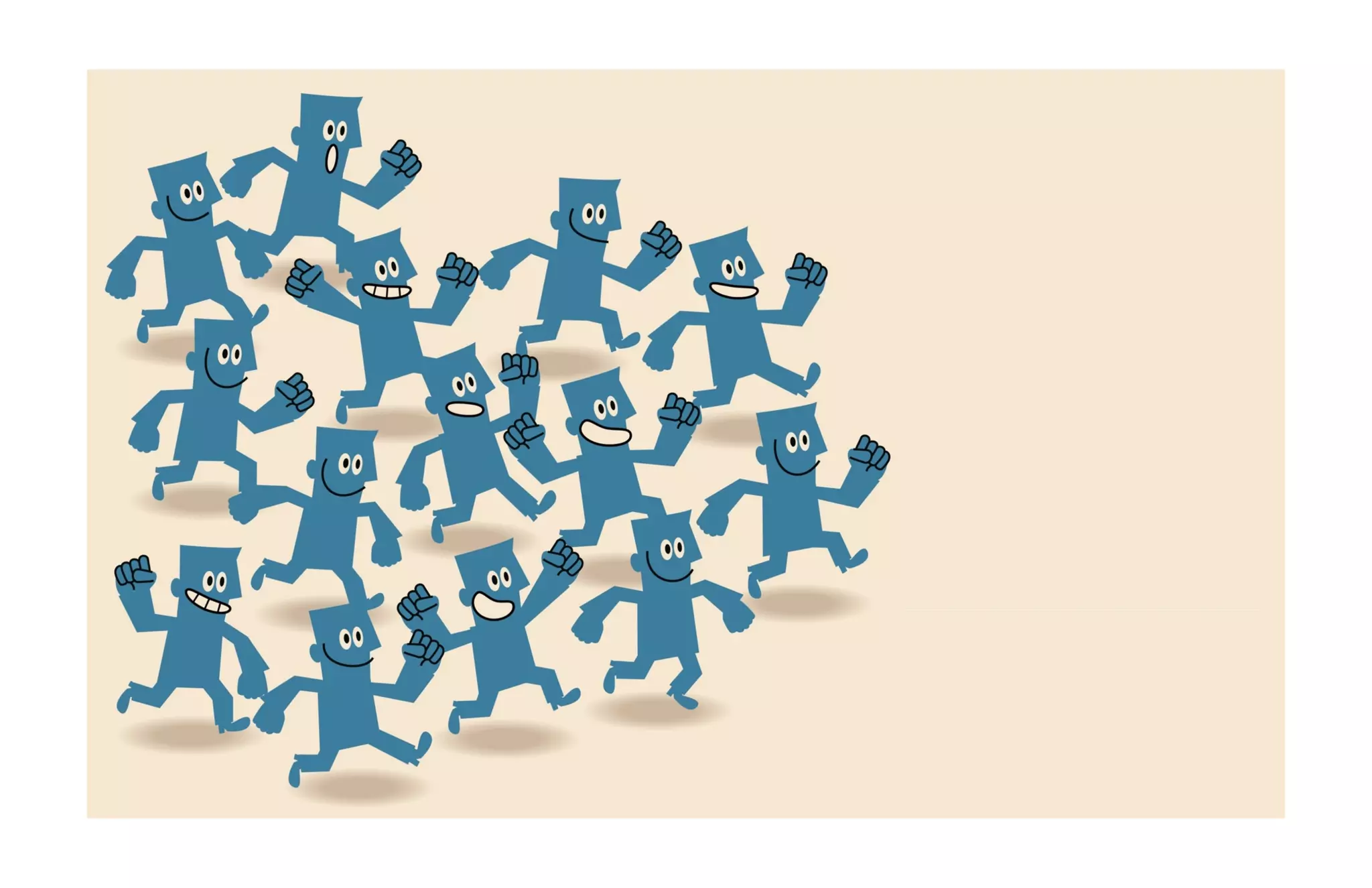
• Each team member picks 2 other people (not next to or opposite)
• The manager's task is to make sure each team member stands at
equal distance from the people he or she chose.
• The manager can accomplish this task in any way they see fit.
• Time-box: 5 minutes
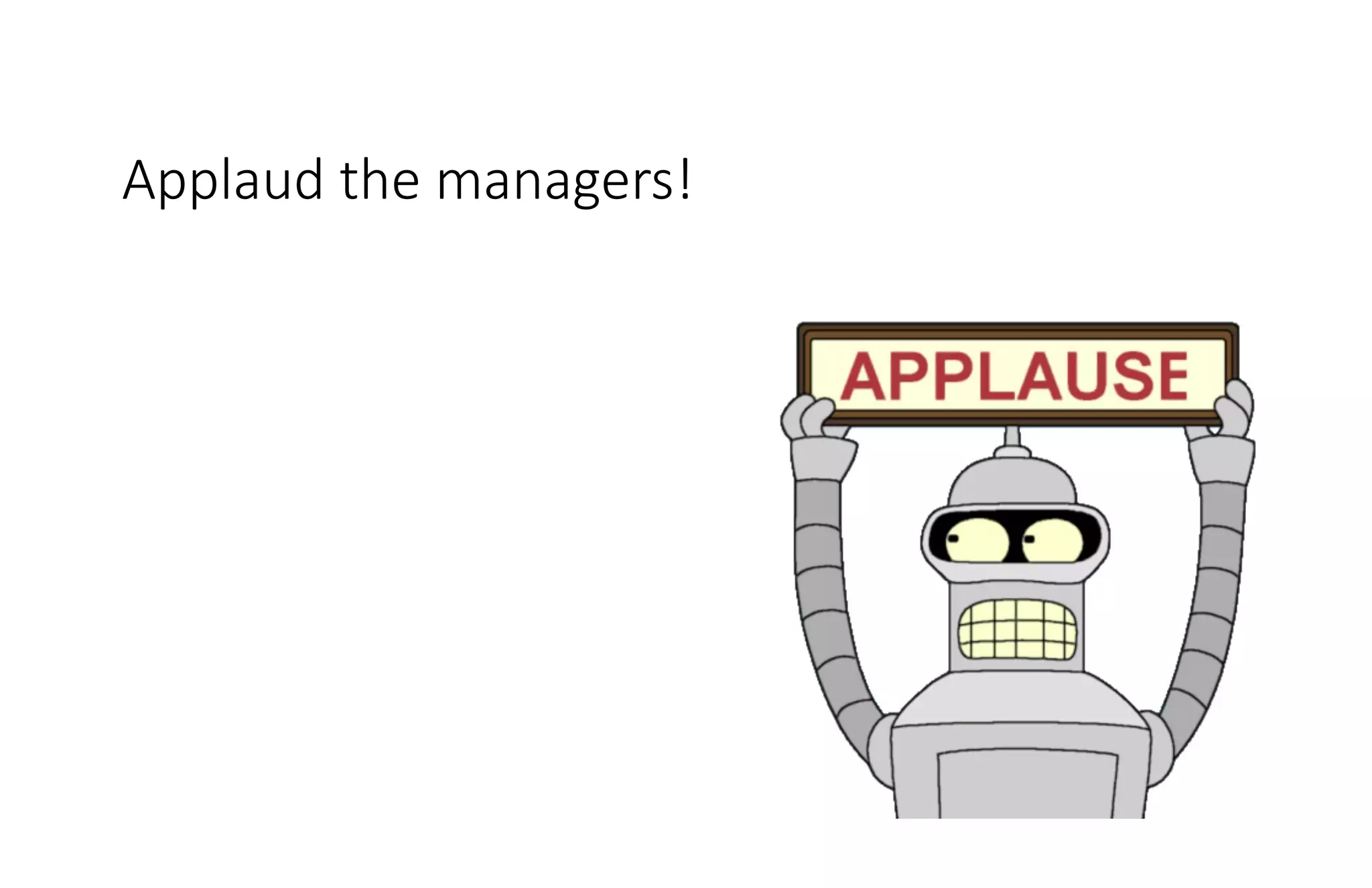
Applaud the managers!
Repeat
• Each team member picks 2 different people (again, not next
to or opposite). This time don't tell anyone who you chose.
• Try to stand equal distance from the two persons you chose
– but NO TALKING!
• Time-box: 5 minutes
Whoa. What just happened?
• Why was it hard for the manager to
get the team organized?
• What happened in the second round
that worked so quickly?
(Yes, this happens nearly every time.)
• Would it change if the order was switched?
• Who had the most accurate information
—the manager or the team?
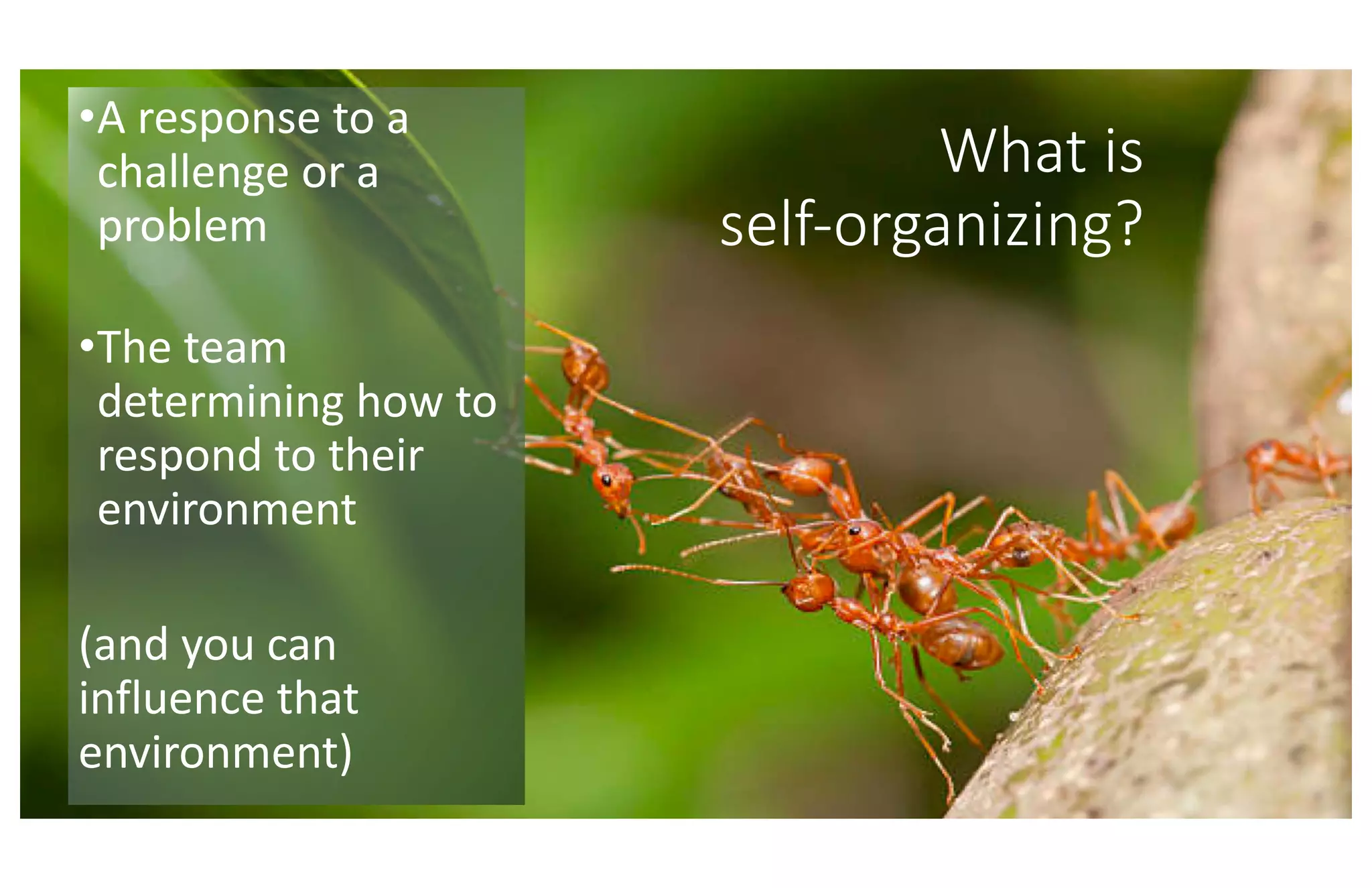
What is
self-organizing?
•A response to a
challenge or a
problem
•The team
determining how to
respond to their
environment
(and you can
influence that
environment)
Agenda
üExperiment with self-organization
• Four ways to organize teams
• A model to help you think about helping teams self-organize
• Servant leadership hacks
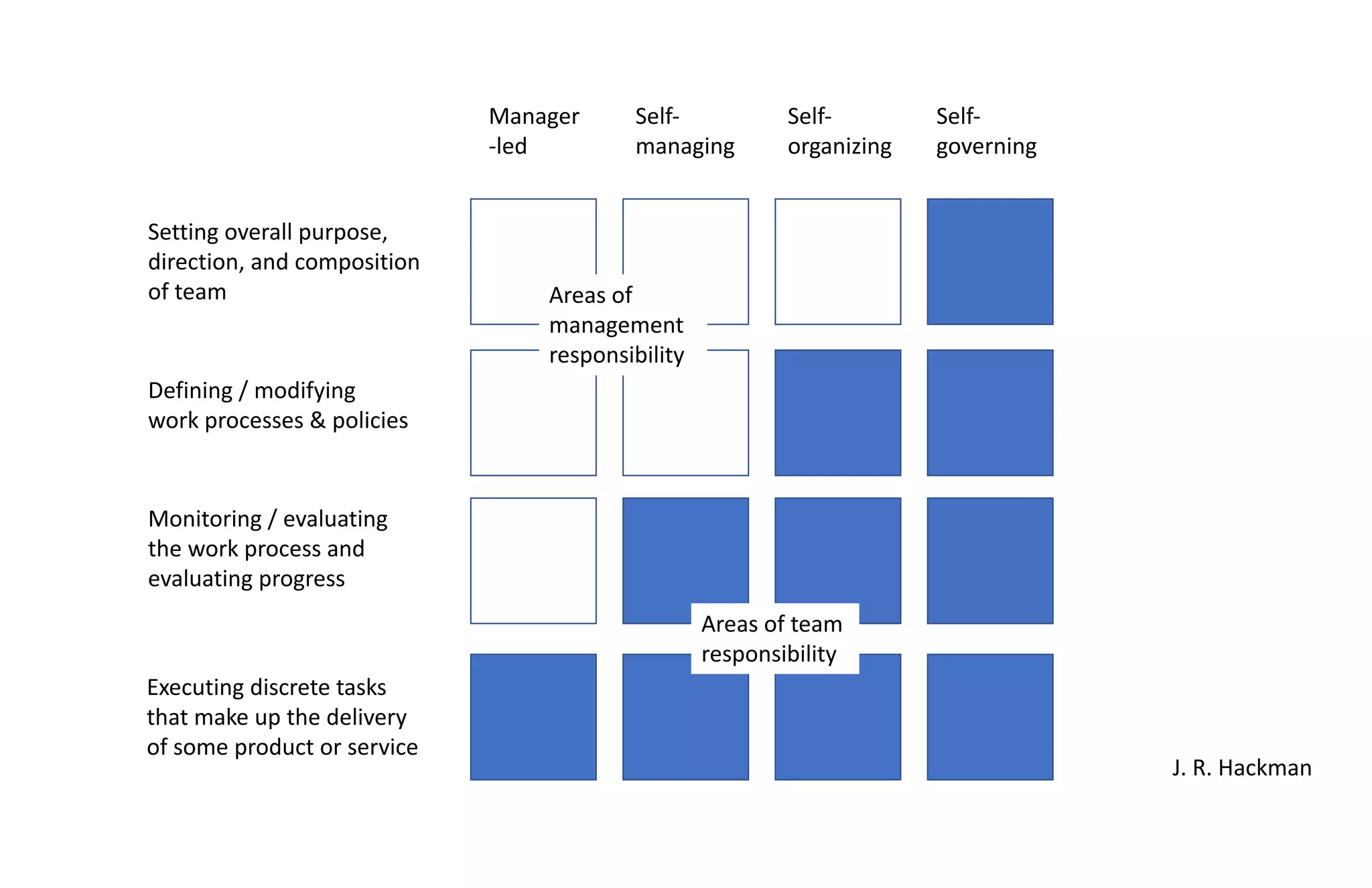
Setting overall purpose,
direction, and composition
of team
Defining / modifying
work processes & policies
Monitoring / evaluating
the work process and
evaluating progress
Executing discrete tasks
that make up the delivery
of some product or service
Self-
managing
Self-
organizing
Self-
governing
Manager
-led
Areas of
management
responsibility
Areas of team
responsibility
J. R. Hackman
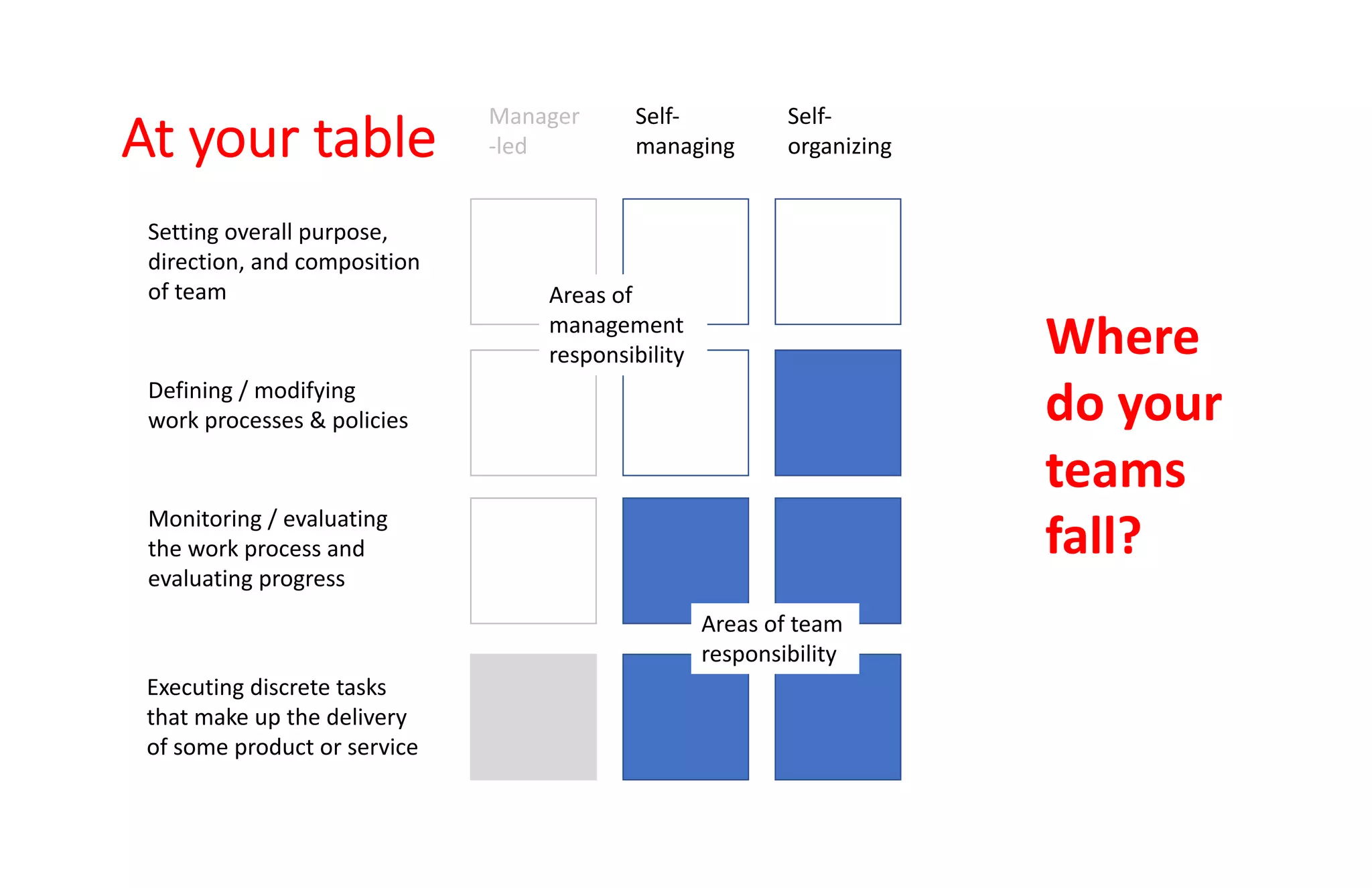
Setting overall purpose,
direction, and composition
of team
Defining / modifying
work processes & policies
Monitoring / evaluating
the work process and
evaluating progress
Executing discrete tasks
that make up the delivery
of some product or service
Self-
managing
Self-
organizing
Areas of team
responsibility
Where
do your
teams
fall?
At your table
Manager
-led
Areas of
management
responsibility
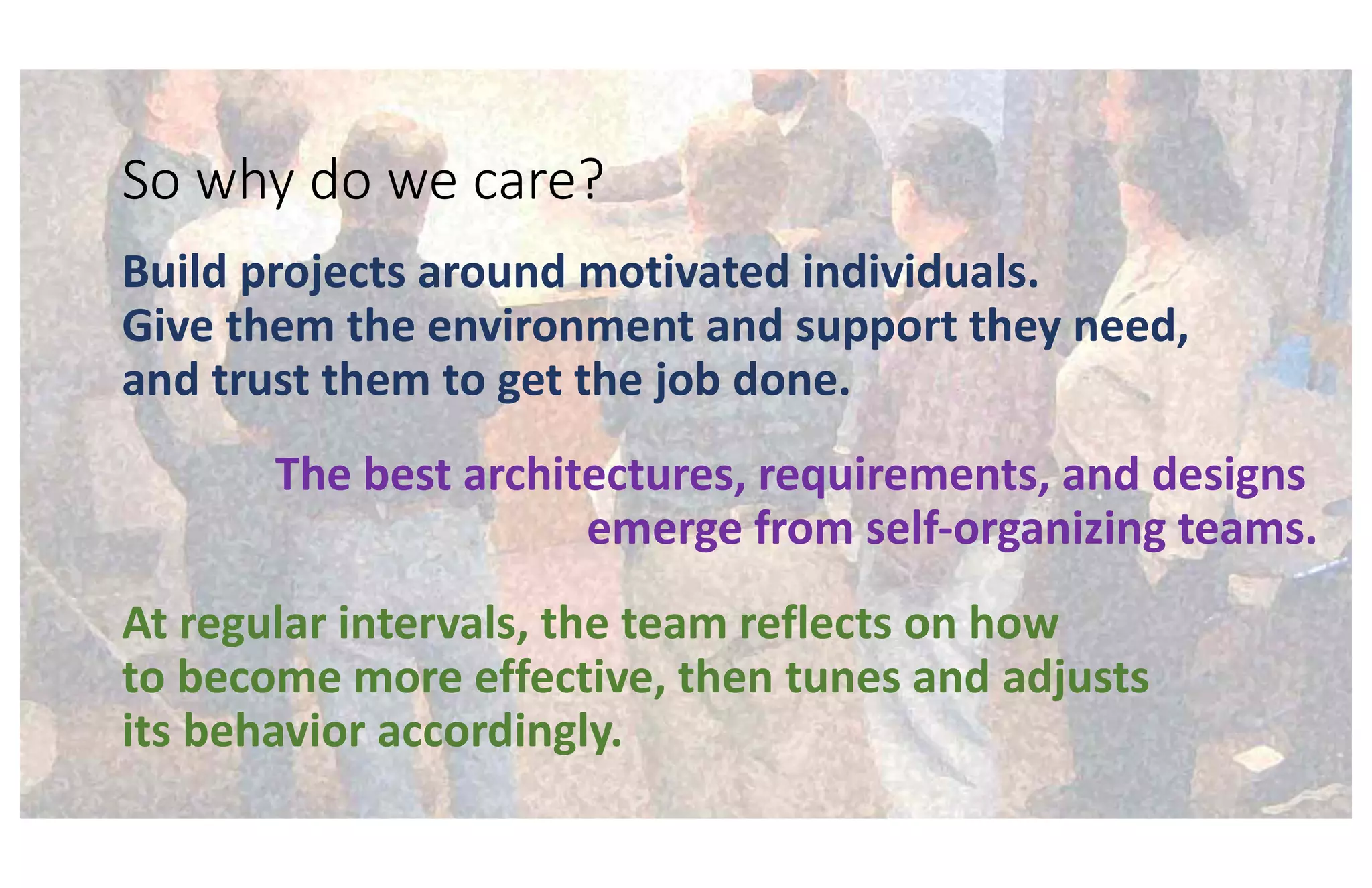
So why do we care?
Build projects around motivated individuals.
Give them the environment and support they need,
and trust them to get the job done.
The best architectures, requirements, and designs
emerge from self-organizing teams.
At regular intervals, the team reflects on how
to become more effective, then tunes and adjusts
its behavior accordingly.
Agenda
üExperiment with self-organization
üFour ways to organize teams
• A model to help you think about helping teams self-
organize
• Servant leadership hacks
“Self-organization does not mean that
workers instead of managers engineer an
organization design. It does not mean letting
people do whatever they want to do. It
means that management commits to guiding
the evolution of behaviors that emerge
from the interaction of independent agents
instead of specifying in advance what
effective behavior is.”
–Philip Anderson, The Biology of Business
“Self-organization does not mean that
workers instead of managers engineer an
organization design. It does not mean letting
people do whatever they want to do. It
means that management commits to guiding
the evolution of behaviors that emerge
from the interaction of independent agents
instead of specifying in advance what
effective behavior is.”
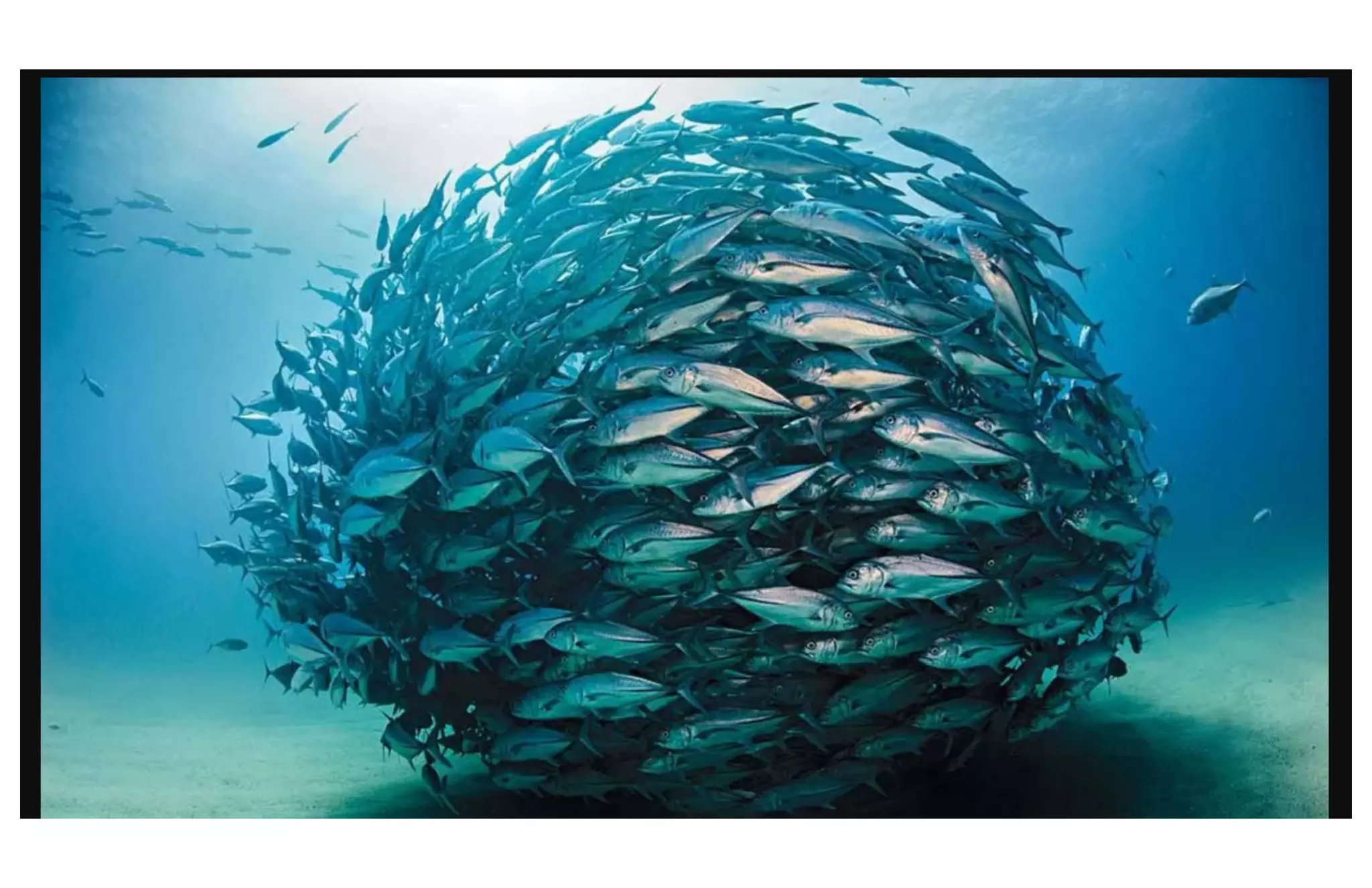
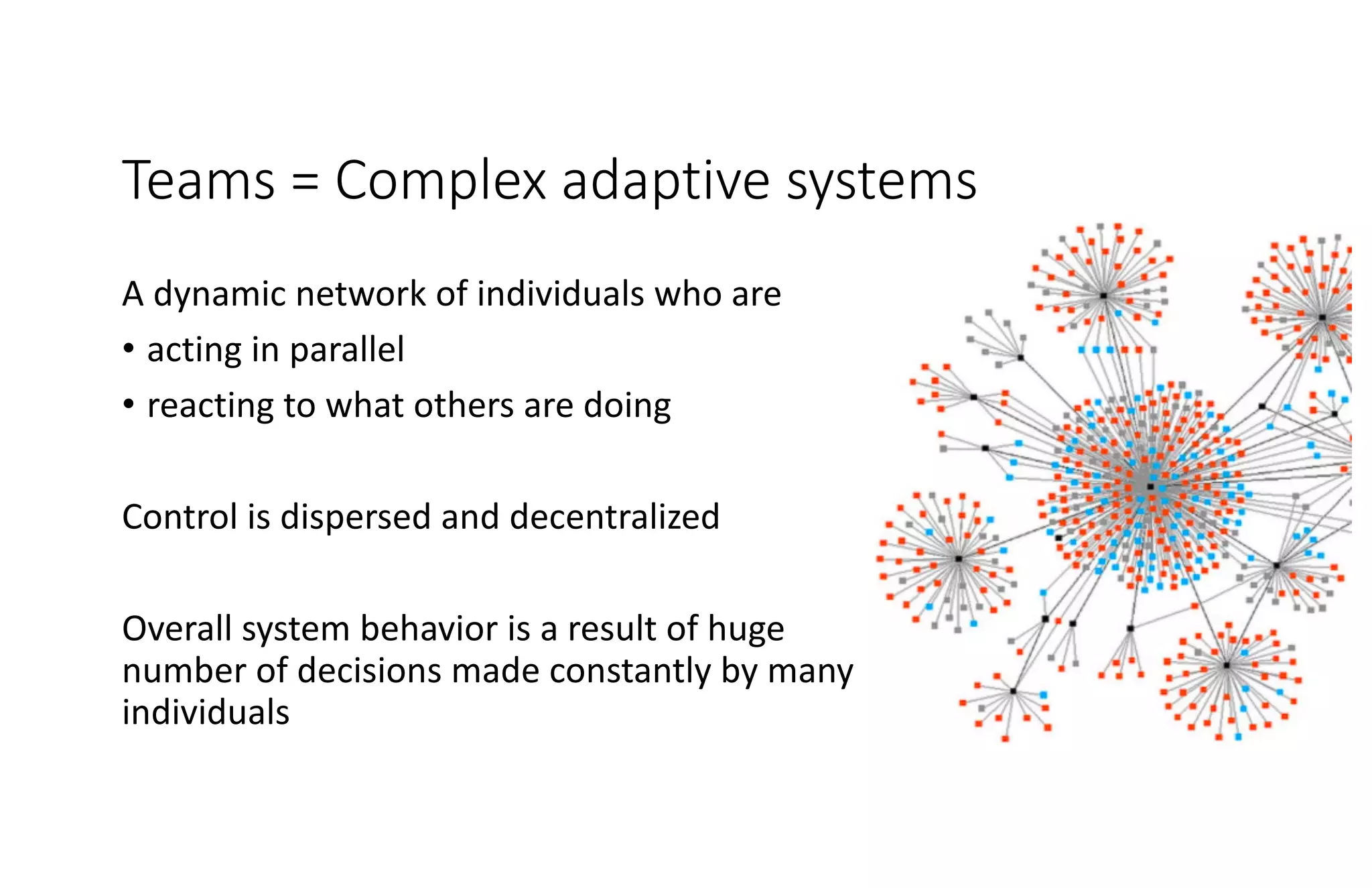
Teams = Complex adaptive systems
A dynamic network of individuals who are
• acting in parallel
• reacting to what others are doing
Control is dispersed and decentralized
Overall system behavior is a result of huge
number of decisions made constantly by many
individuals
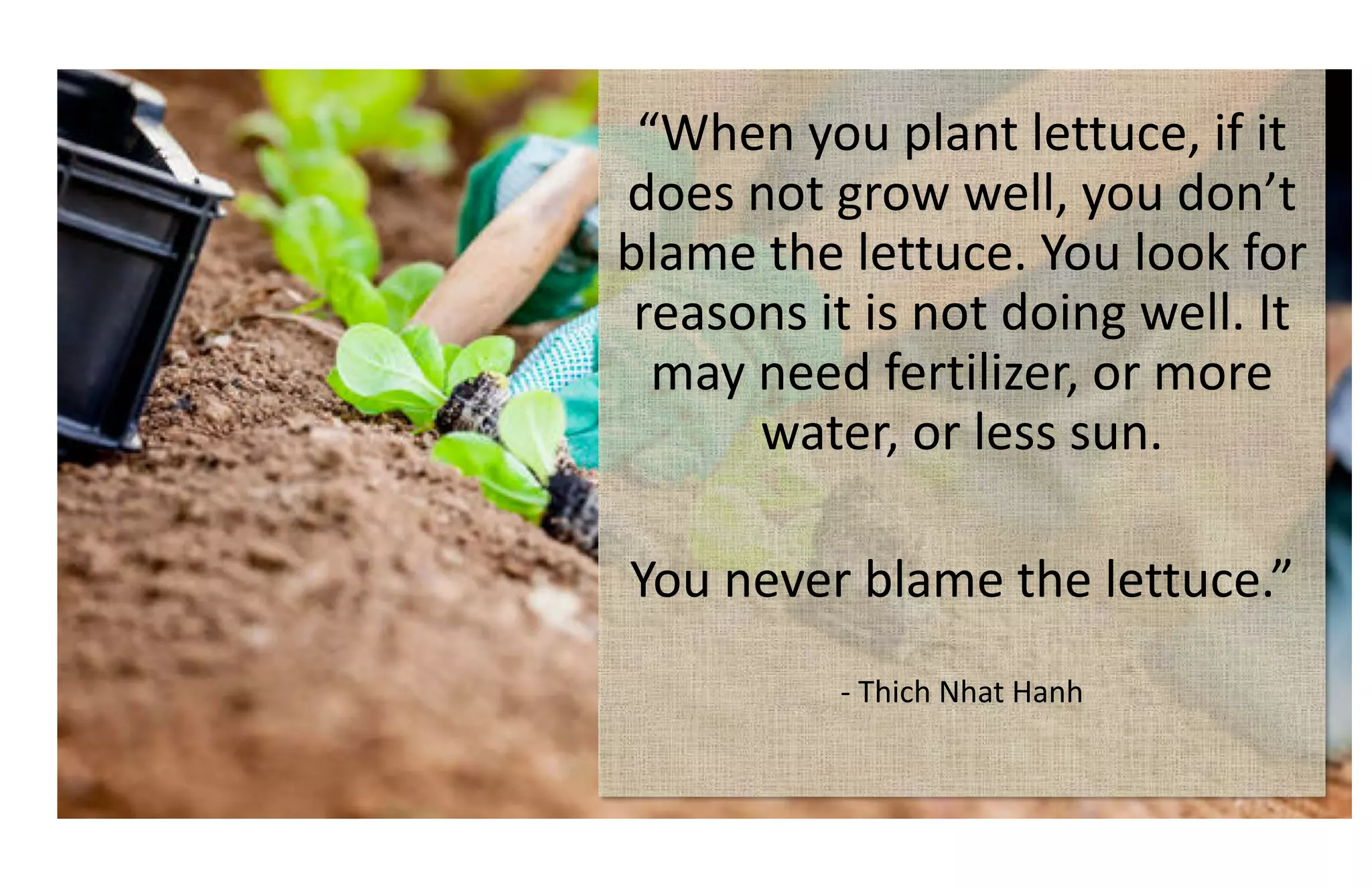
“When you plant lettuce, if it
does not grow well, you don’t
blame the lettuce. You look for
reasons it is not doing well. It
may need fertilizer, or more
water, or less sun.
You never blame the lettuce.”
- Thich Nhat Hanh
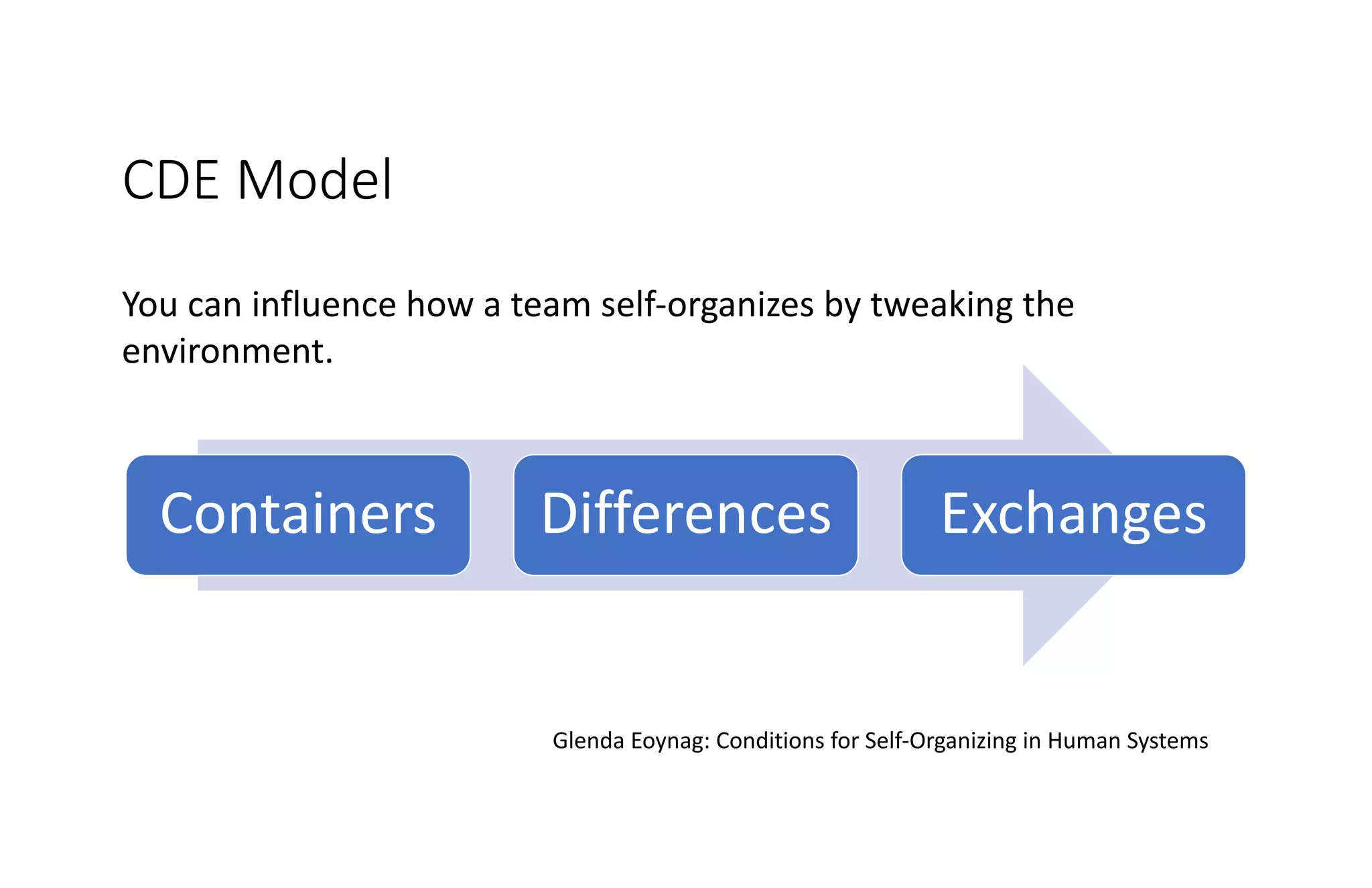
CDE Model
Containers Differences Exchanges
Glenda Eoynag: Conditions for Self-Organizing in Human Systems
You can influence how a team self-organizes by tweaking the
environment.
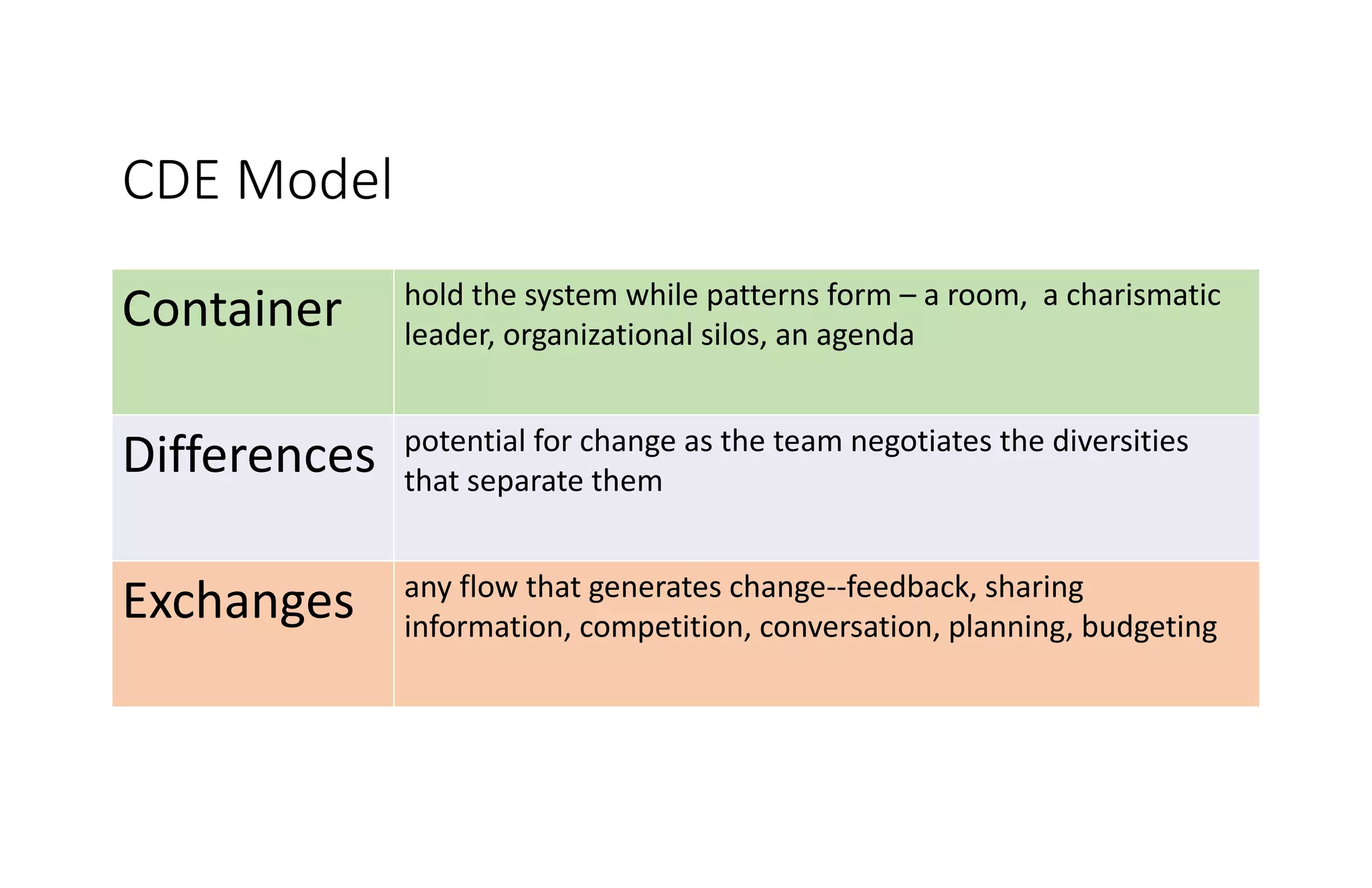
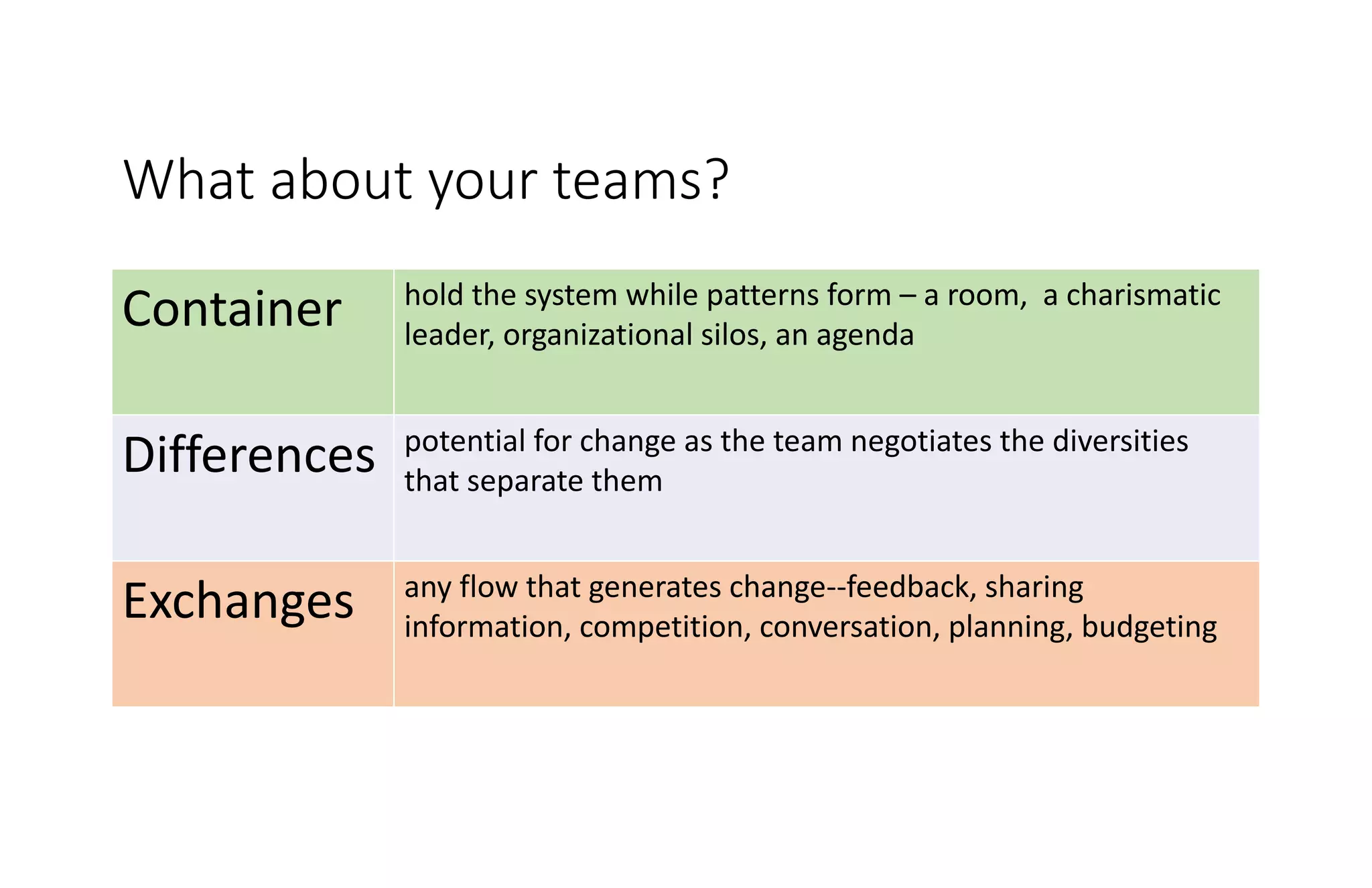
CDE Model
Container hold the system while patterns form – a room, a charismatic
leader, organizational silos, an agenda
Differences potential for change as the team negotiates the diversities
that separate them
Exchanges any flow that generates change--feedback, sharing
information, competition, conversation, planning, budgeting
Agenda
üExperiment with self-organization
üFour ways to organize teams
üA model to help you think about helping teams self-organize
• Servant leadership hacks
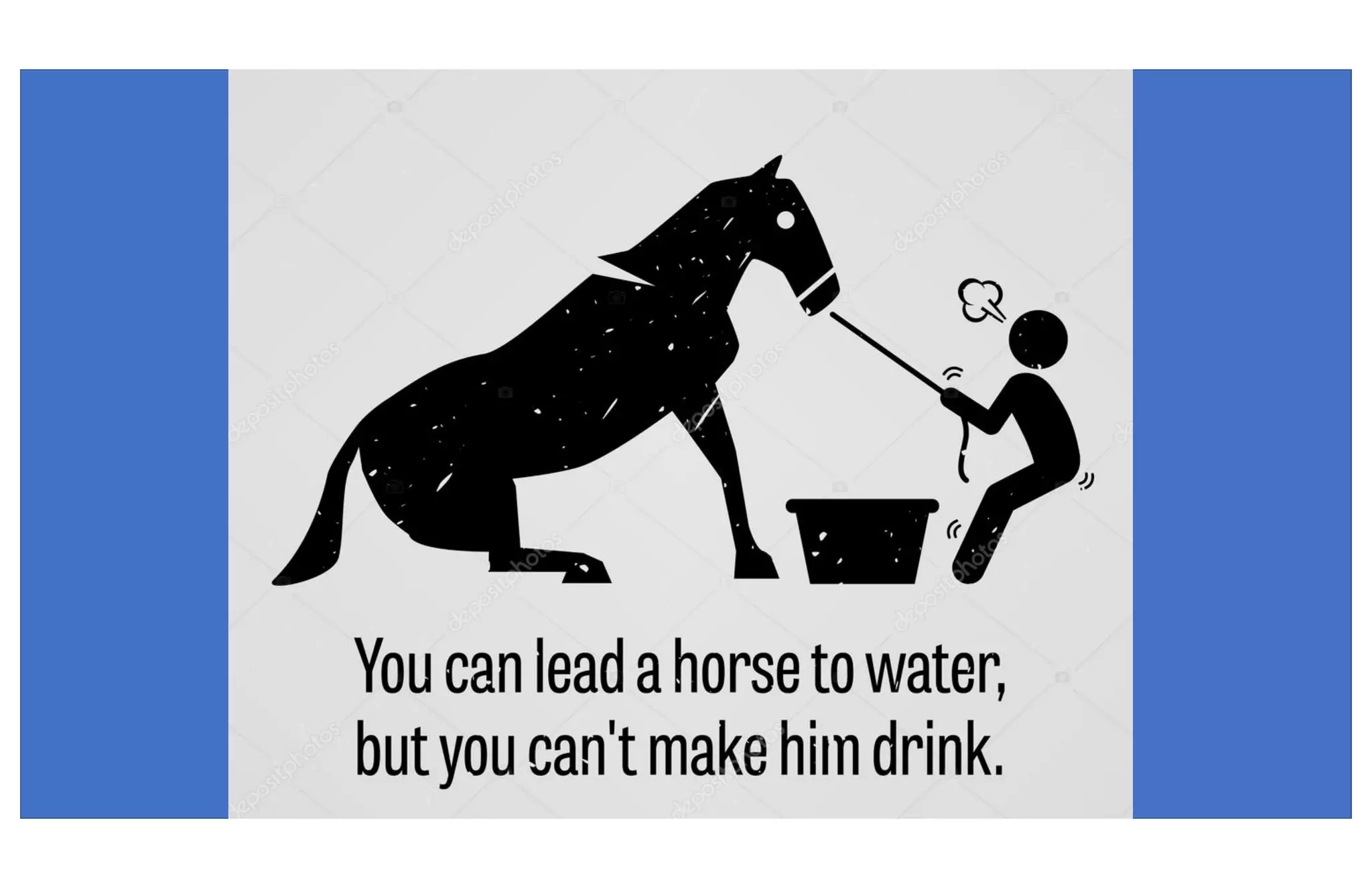
Get real.
Horses love
water.
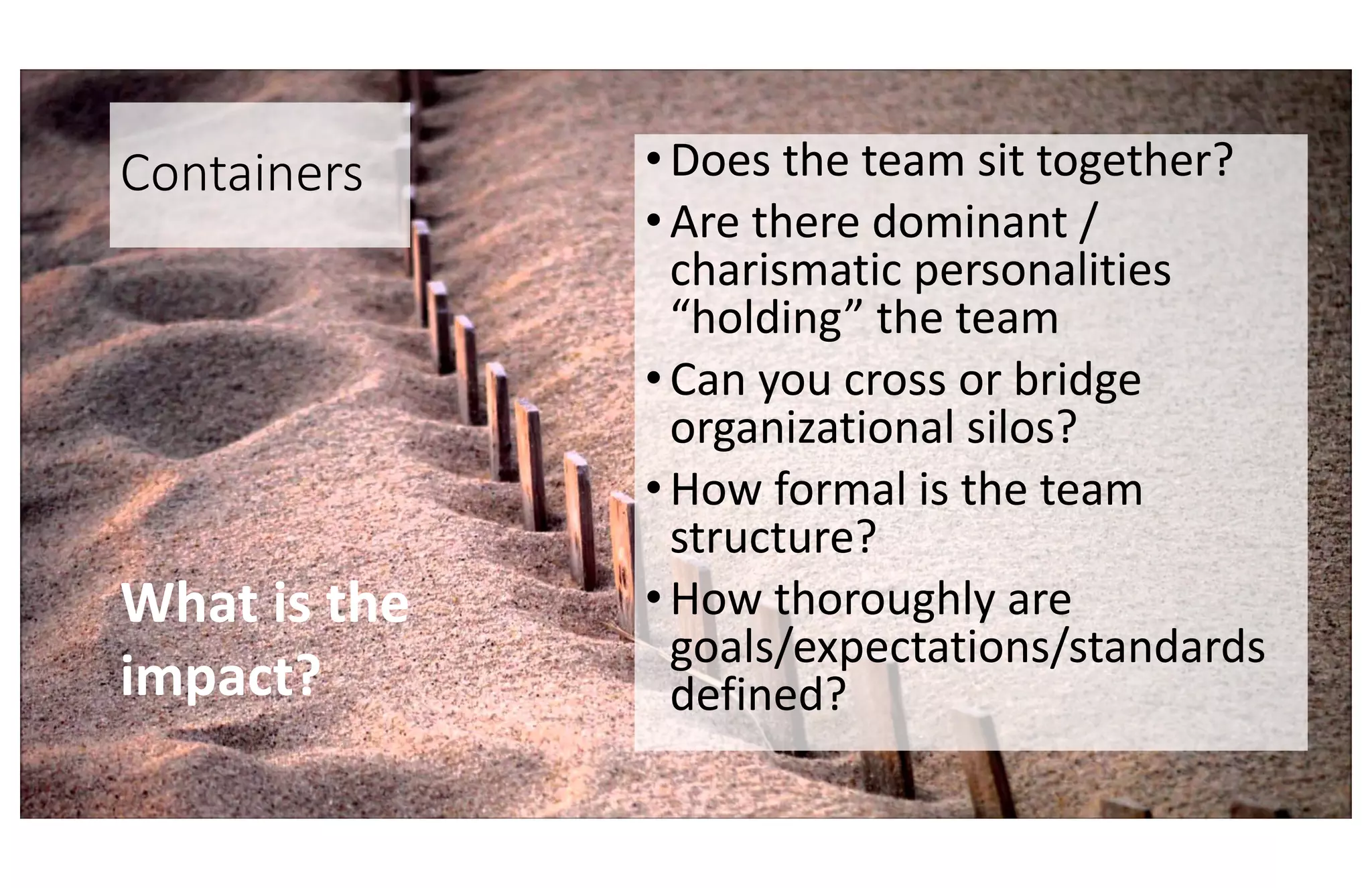
Containers •Does the team sit together?
•Are there dominant /
charismatic personalities
“holding” the team
•Can you cross or bridge
organizational silos?
•How formal is the team
structure?
•How thoroughly are
goals/expectations/standards
defined?
What is the
impact?
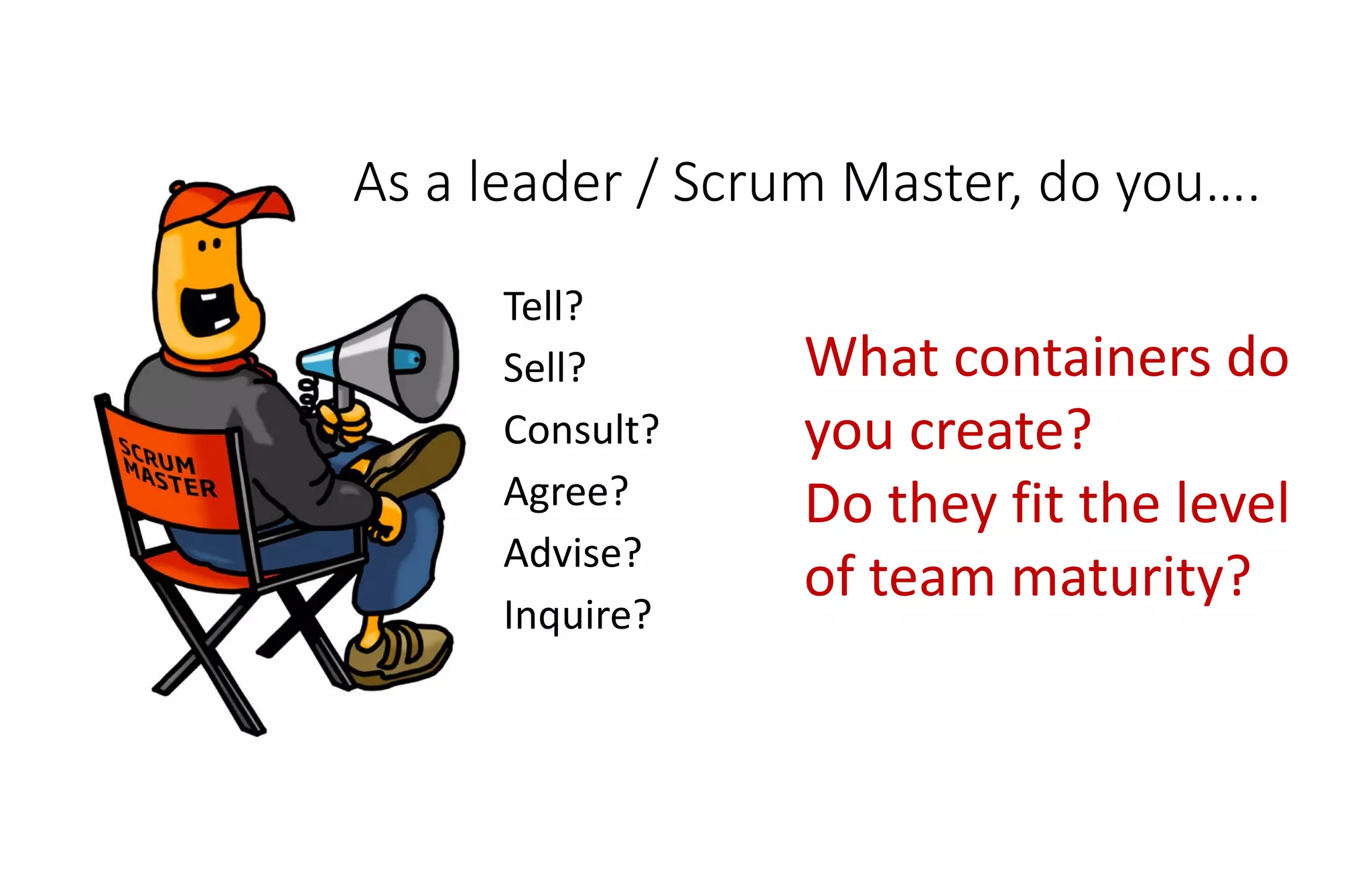
As a leader / Scrum Master, do you….
Tell?
Sell?
Consult?
Agree?
Advise?
Inquire?
What containers do
you create?
Do they fit the level
of team maturity?
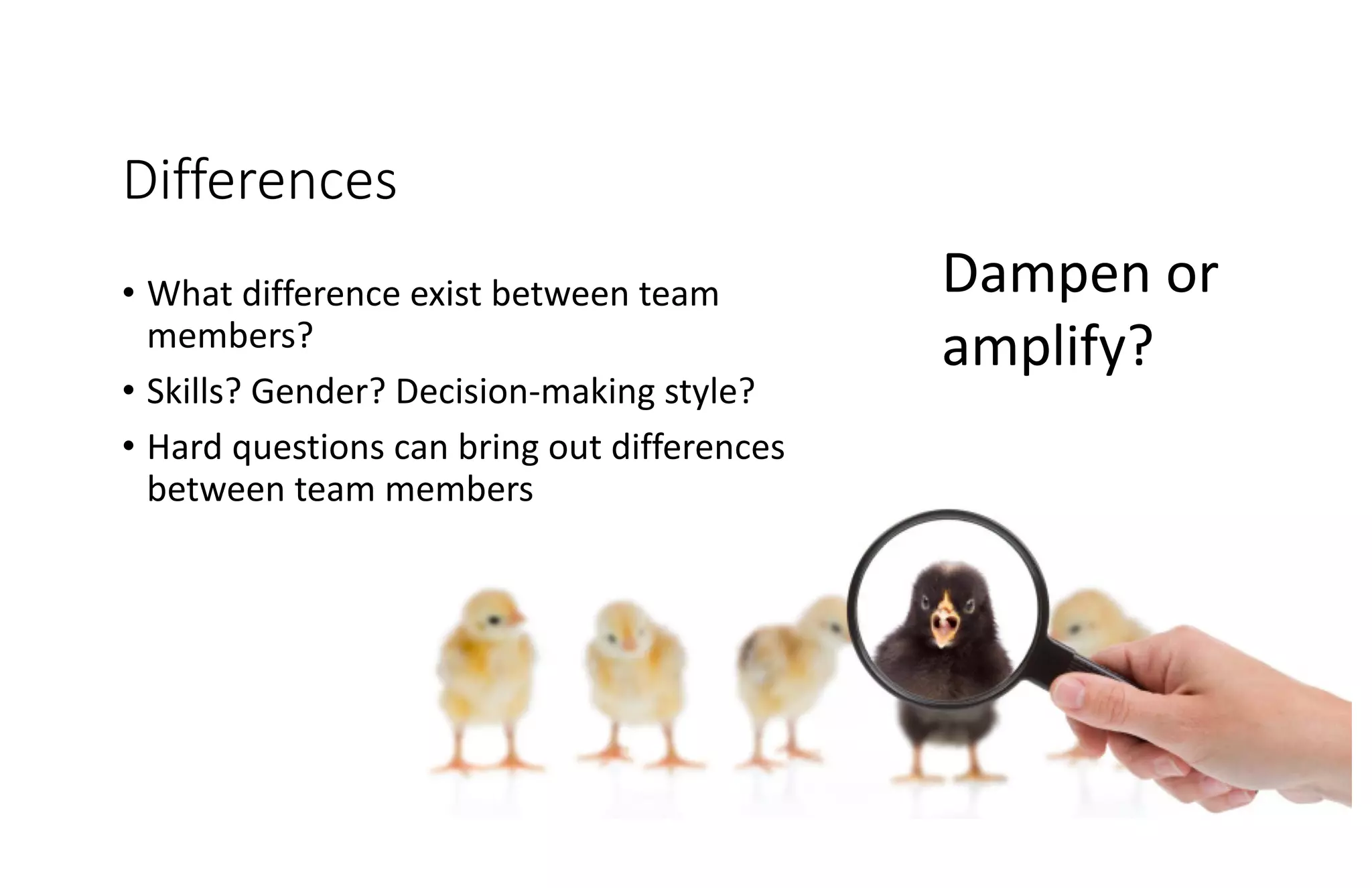
Differences
• What difference exist between team
members?
• Skills? Gender? Decision-making style?
• Hard questions can bring out differences
between team members
Dampen or
amplify?
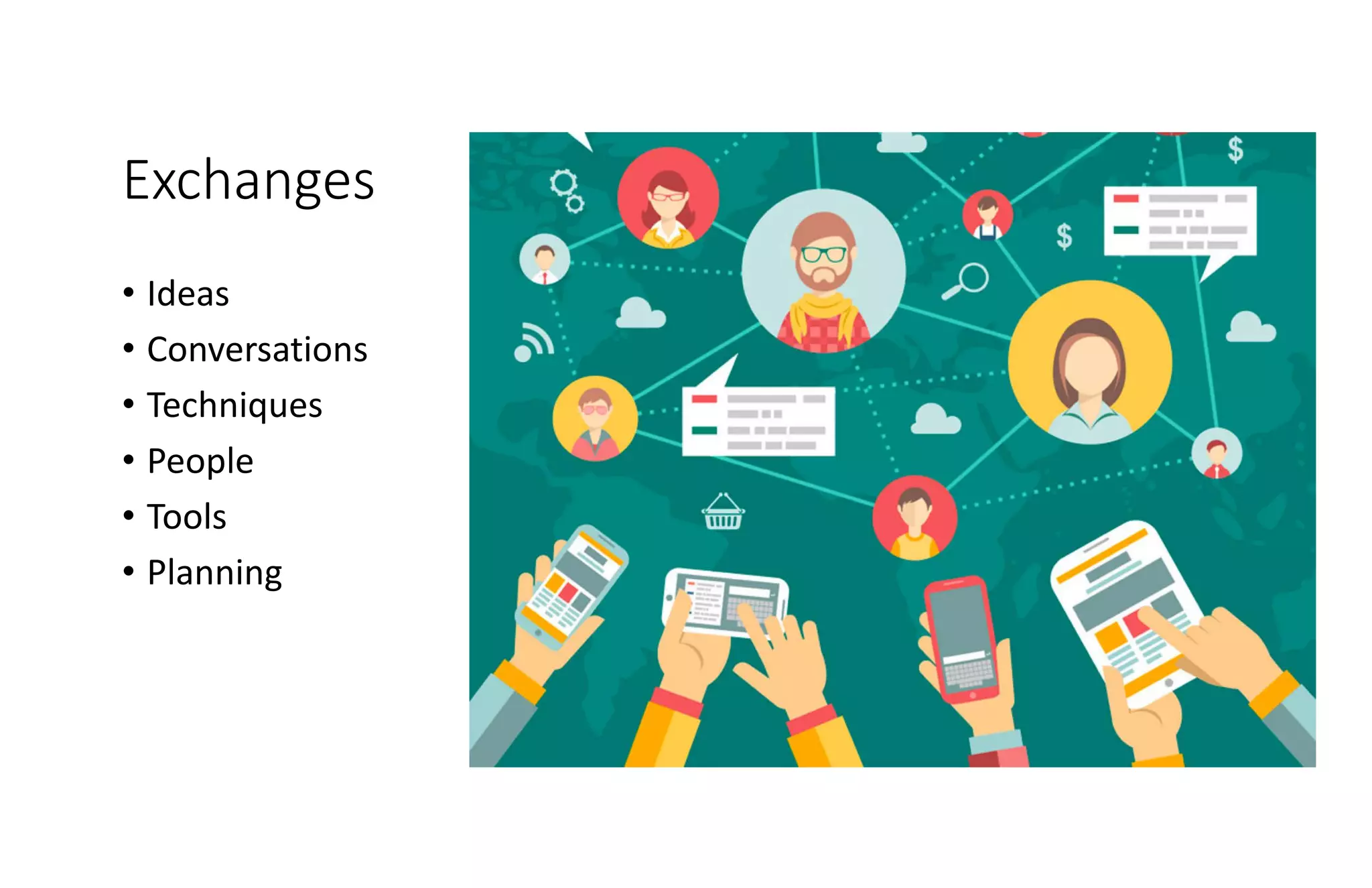
Exchanges
• Ideas
• Conversations
• Techniques
• People
• Tools
• Planning
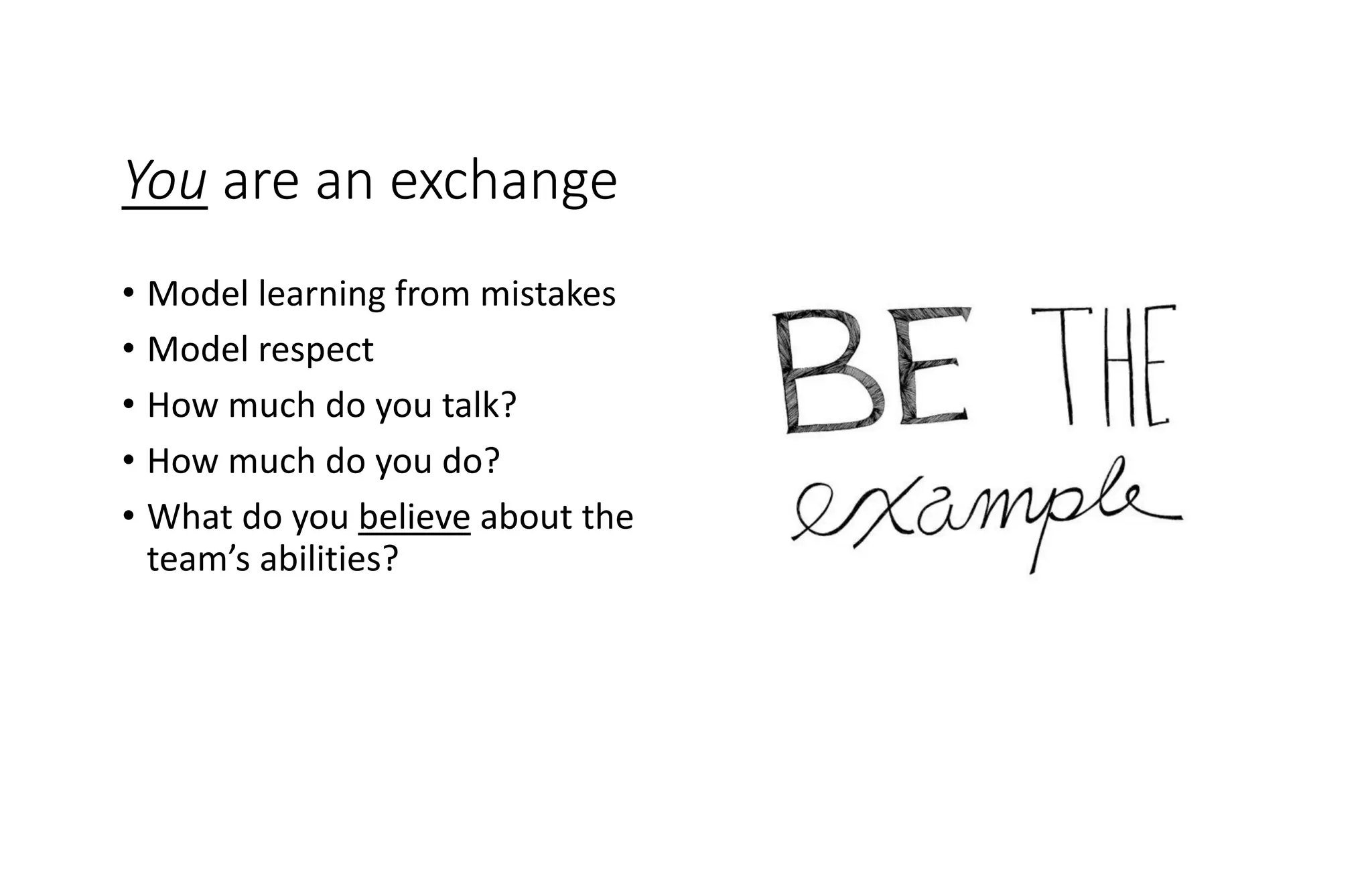
You are an exchange
• Model learning from mistakes
• Model respect
• How much do you talk?
• How much do you do?
• What do you believe about the
team’s abilities?
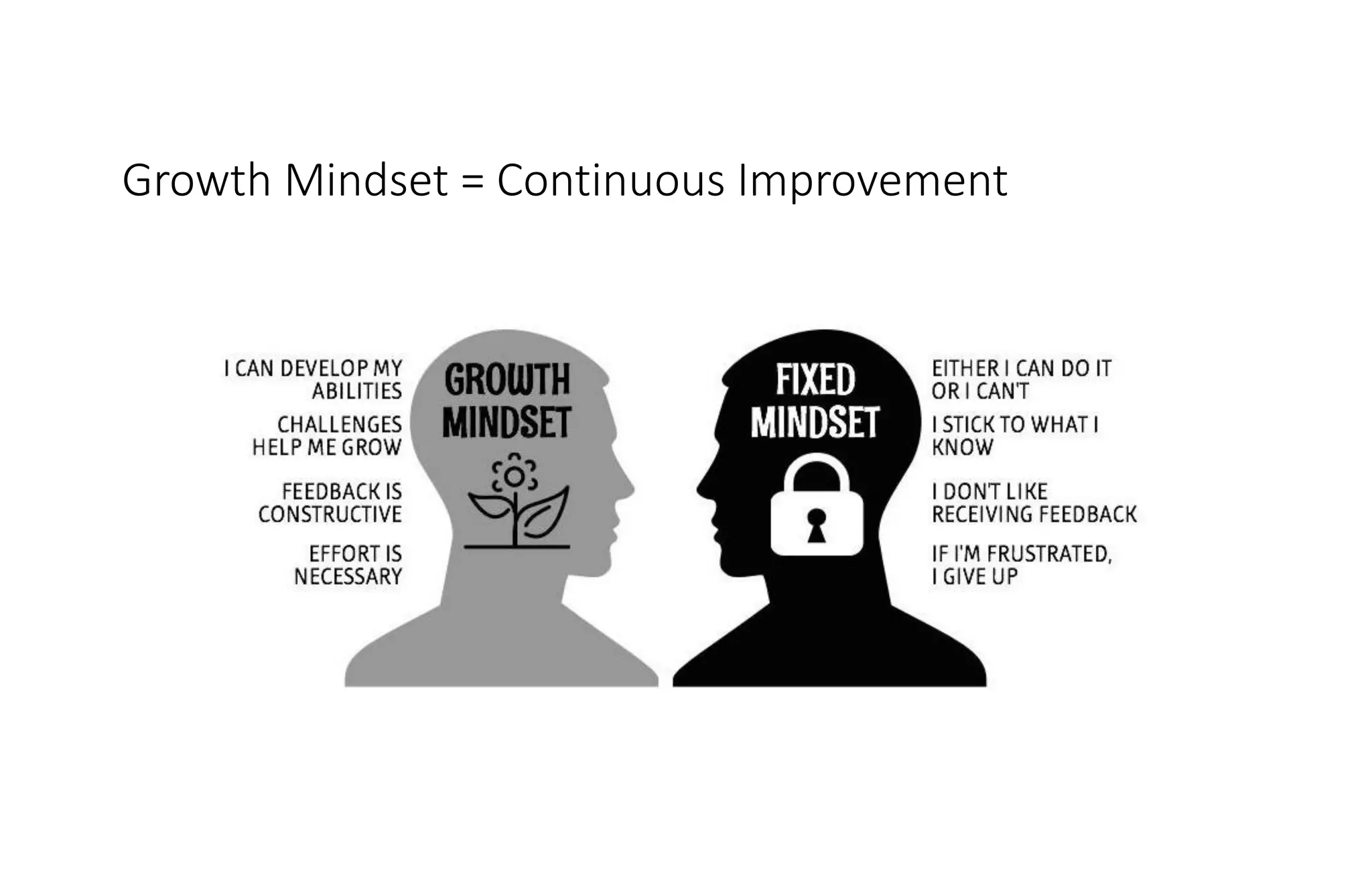
Growth Mindset = Continuous Improvement
Container hold the system while patterns form – a room, a charismatic
leader, organizational silos, an agenda
Differences potential for change as the team negotiates the diversities
that separate them
Exchanges any flow that generates change--feedback, sharing
information, competition, conversation, planning, budgeting
What about your teams?
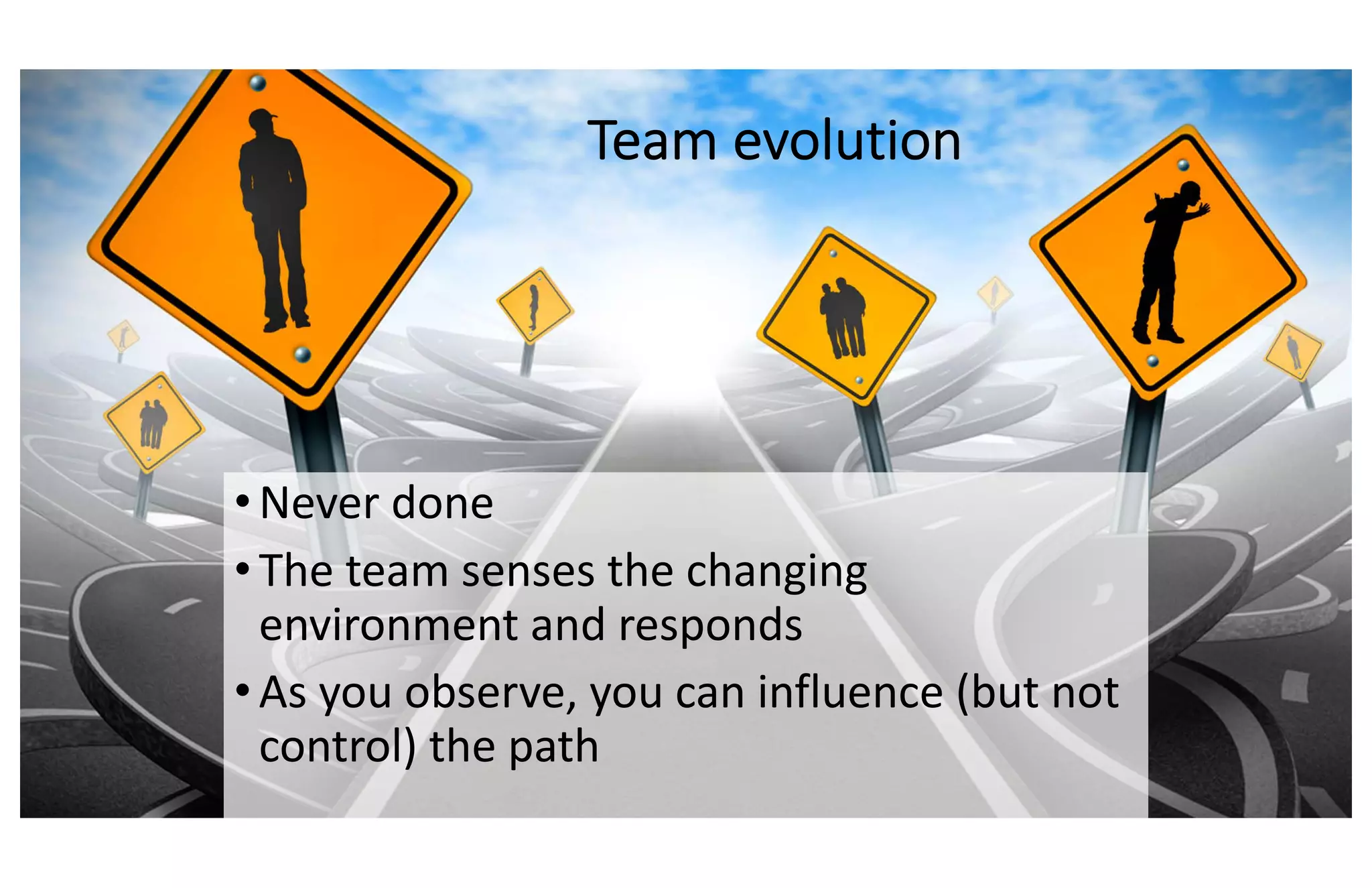
Team evolution
•Never done
•The team senses the changing
environment and responds
•As you observe, you can influence (but not
control) the path
Resources
Glenda Eoyang, Conditions for Self-organizing in Human Systems (2004):
http://www.complexityforum.com/members/Eoyang%202004%20Conditions%20for%20self-org.pdf
Marcel VanHove, The ScrumMaster – How to develop a team
https://www.youtube.com/watch?time_continue=393&v=yuHuSHoZlmk
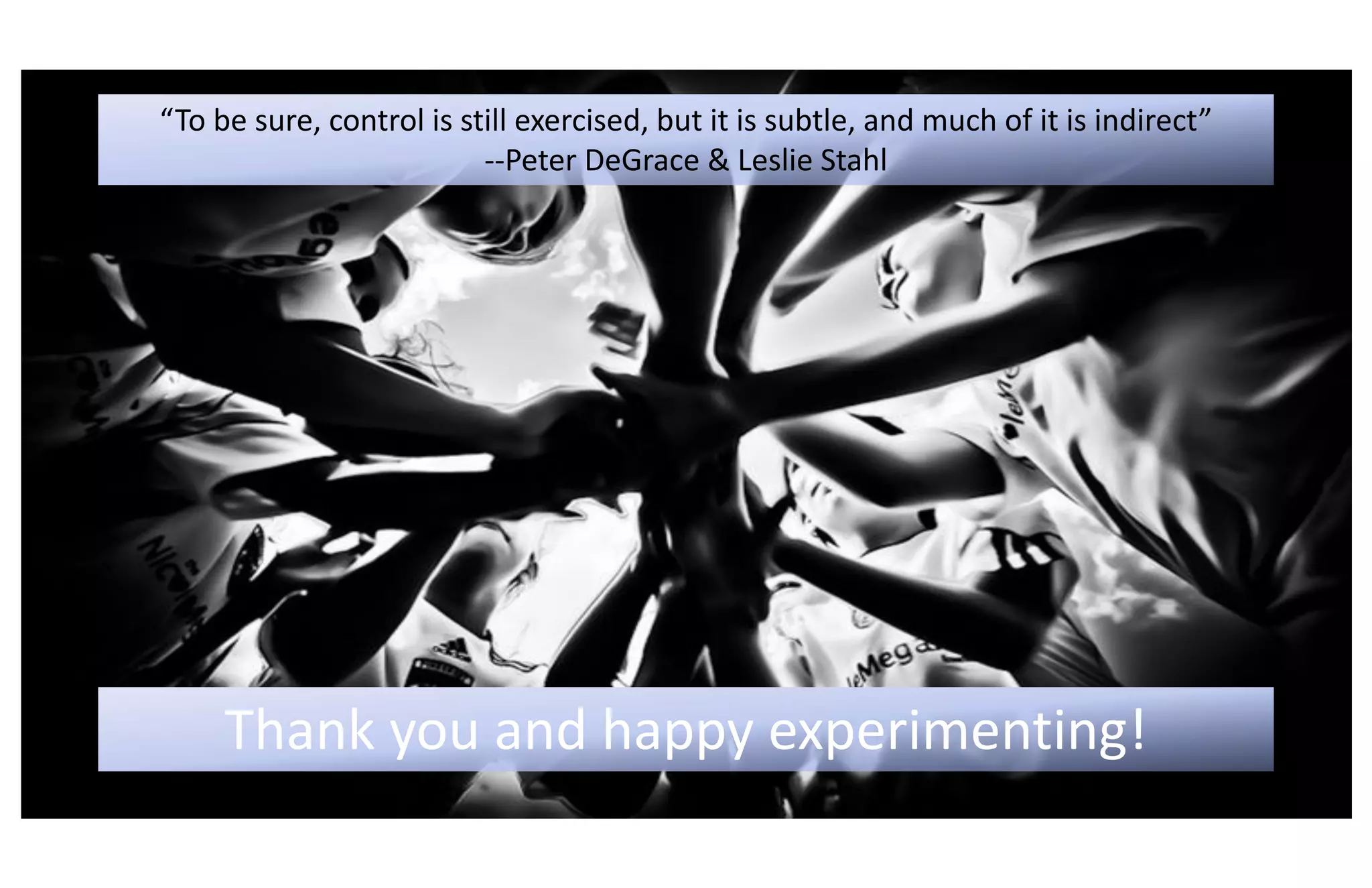
Thank you and happy experimenting!
“To be sure, control is still exercised, but it is subtle, and much of it is indirect”
--Peter DeGrace & Leslie Stahl

MHA2018 - It's a "self-organizing" team -- how can I help them? - Erika Lenz

  • 1.
    But it’s aself-organizing team! How do I help them? Erika Lenz, Agile Coach
  • 2.
    Agenda • Experiment withself-organization • Four ways to organize teams • A model to help you think about helping teams self-organize • Servant leadership hacks
  • 3.
    But first, I needsome volunteers!
  • 4.
    Let’s experiment! • Eachteam member picks 2 other people (not next to or opposite) • The manager's task is to make sure each team member stands at equal distance from the people he or she chose. • The manager can accomplish this task in any way they see fit. • Time-box: 5 minutes
  • 5.
  • 7.
    Repeat • Each teammember picks 2 different people (again, not next to or opposite). This time don't tell anyone who you chose. • Try to stand equal distance from the two persons you chose – but NO TALKING! • Time-box: 5 minutes
  • 8.
    Whoa. What justhappened? • Why was it hard for the manager to get the team organized? • What happened in the second round that worked so quickly? (Yes, this happens nearly every time.) • Would it change if the order was switched? • Who had the most accurate information —the manager or the team?
  • 9.
    What is self-organizing? •A responseto a challenge or a problem •The team determining how to respond to their environment (and you can influence that environment)
  • 10.
    Agenda üExperiment with self-organization •Four ways to organize teams • A model to help you think about helping teams self-organize • Servant leadership hacks
  • 11.
    Setting overall purpose, direction,and composition of team Defining / modifying work processes & policies Monitoring / evaluating the work process and evaluating progress Executing discrete tasks that make up the delivery of some product or service Self- managing Self- organizing Self- governing Manager -led Areas of management responsibility Areas of team responsibility J. R. Hackman
  • 12.
    Setting overall purpose, direction,and composition of team Defining / modifying work processes & policies Monitoring / evaluating the work process and evaluating progress Executing discrete tasks that make up the delivery of some product or service Self- managing Self- organizing Areas of team responsibility Where do your teams fall? At your table Manager -led Areas of management responsibility
  • 13.
    So why dowe care? Build projects around motivated individuals. Give them the environment and support they need, and trust them to get the job done. The best architectures, requirements, and designs emerge from self-organizing teams. At regular intervals, the team reflects on how to become more effective, then tunes and adjusts its behavior accordingly.
  • 14.
    Agenda üExperiment with self-organization üFourways to organize teams • A model to help you think about helping teams self- organize • Servant leadership hacks
  • 15.
    “Self-organization does notmean that workers instead of managers engineer an organization design. It does not mean letting people do whatever they want to do. It means that management commits to guiding the evolution of behaviors that emerge from the interaction of independent agents instead of specifying in advance what effective behavior is.” –Philip Anderson, The Biology of Business “Self-organization does not mean that workers instead of managers engineer an organization design. It does not mean letting people do whatever they want to do. It means that management commits to guiding the evolution of behaviors that emerge from the interaction of independent agents instead of specifying in advance what effective behavior is.”
  • 19.
    Teams = Complexadaptive systems A dynamic network of individuals who are • acting in parallel • reacting to what others are doing Control is dispersed and decentralized Overall system behavior is a result of huge number of decisions made constantly by many individuals
  • 20.
    “When you plantlettuce, if it does not grow well, you don’t blame the lettuce. You look for reasons it is not doing well. It may need fertilizer, or more water, or less sun. You never blame the lettuce.” - Thich Nhat Hanh
  • 21.
    CDE Model Containers DifferencesExchanges Glenda Eoynag: Conditions for Self-Organizing in Human Systems You can influence how a team self-organizes by tweaking the environment.
  • 22.
    CDE Model Container holdthe system while patterns form – a room, a charismatic leader, organizational silos, an agenda Differences potential for change as the team negotiates the diversities that separate them Exchanges any flow that generates change--feedback, sharing information, competition, conversation, planning, budgeting
  • 23.
    Agenda üExperiment with self-organization üFourways to organize teams üA model to help you think about helping teams self-organize • Servant leadership hacks
  • 26.
  • 27.
    Containers •Does theteam sit together? •Are there dominant / charismatic personalities “holding” the team •Can you cross or bridge organizational silos? •How formal is the team structure? •How thoroughly are goals/expectations/standards defined? What is the impact?
  • 28.
    As a leader/ Scrum Master, do you…. Tell? Sell? Consult? Agree? Advise? Inquire? What containers do you create? Do they fit the level of team maturity?
  • 29.
    Differences • What differenceexist between team members? • Skills? Gender? Decision-making style? • Hard questions can bring out differences between team members Dampen or amplify?
  • 30.
    Exchanges • Ideas • Conversations •Techniques • People • Tools • Planning
  • 31.
    You are anexchange • Model learning from mistakes • Model respect • How much do you talk? • How much do you do? • What do you believe about the team’s abilities?
  • 32.
    Growth Mindset =Continuous Improvement
  • 33.
    Container hold thesystem while patterns form – a room, a charismatic leader, organizational silos, an agenda Differences potential for change as the team negotiates the diversities that separate them Exchanges any flow that generates change--feedback, sharing information, competition, conversation, planning, budgeting What about your teams?
  • 34.
    Team evolution •Never done •Theteam senses the changing environment and responds •As you observe, you can influence (but not control) the path
  • 35.
    Resources Glenda Eoyang, Conditionsfor Self-organizing in Human Systems (2004): http://www.complexityforum.com/members/Eoyang%202004%20Conditions%20for%20self-org.pdf Marcel VanHove, The ScrumMaster – How to develop a team https://www.youtube.com/watch?time_continue=393&v=yuHuSHoZlmk
  • 36.
    Thank you andhappy experimenting! “To be sure, control is still exercised, but it is subtle, and much of it is indirect” --Peter DeGrace & Leslie Stahl