Sarah Balaj
Rilee Bartlett
Beth Miller
 Rebel against Abstract Expressionism
 Involved in the personal/individual mind of
people
 Thought to be over-intense
 Viewed as fine art
 Started at the end of World War II
 Originated in London, but started in United
States with the election of John F. Kennedy
 Rebel against past traditions
 Bring back materialized aspect of art
 Form of art that uses everyday objects as the
subject matter for artistic composition.
 Reflects the time
 Expression of the people
in a society that puts less
emphasis on formal
education and even wealth
 Attempts to erase lines
between high and low art
 Independent Group of Artists and
Intellectuals
 critics, painters, architects, musicians,
designers
 Fascinated by the impact that American mass
media had on British life
 Talked about changing nature of the urban
experience in postwar Europe
 Embrace popular culture instead of
separation with fine art
 Usually very bright colors
 Flat imagery influenced by comic books and
newspaper photographs
 Images of celebrities or fictional characters
in comic books, advertisements and fan
magazines
 In sculpture, an innovative use of media
 Jasper Johns
 Andy Warhol
 Roy Lichtenstein
 Robert Rauschenberg
 Claes Oldenburg
 Born May 15, 1930 in Augusta Georgia
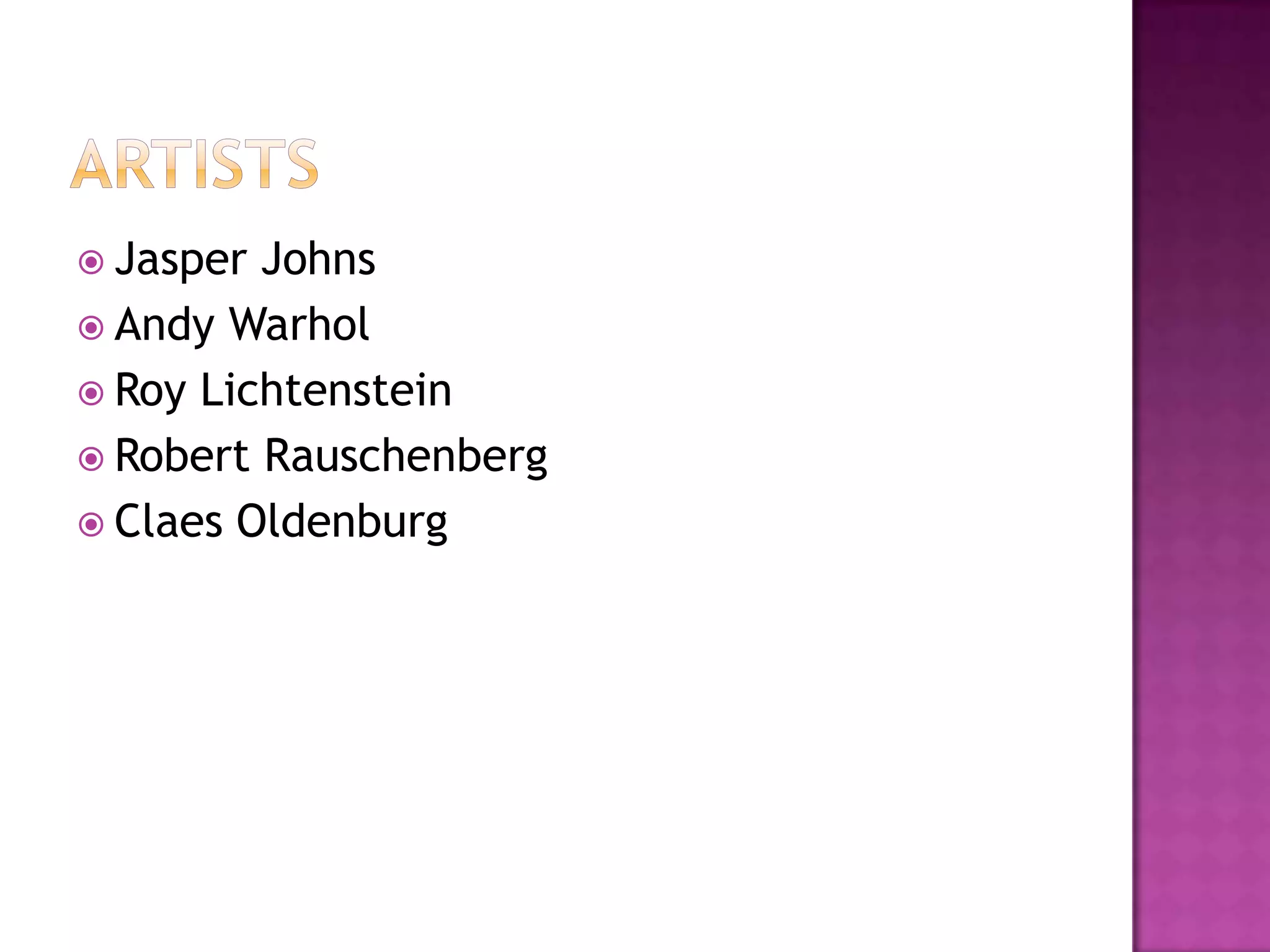
 “Three Flags”
 Educated at the University of South Carolina
and Parsons the New School for Design
 Work with flags, targets, numbers, and maps
 Sculptural ideas into painting
 Every day objects: paint brushes,
beer cans, and light bulbs
 Collages
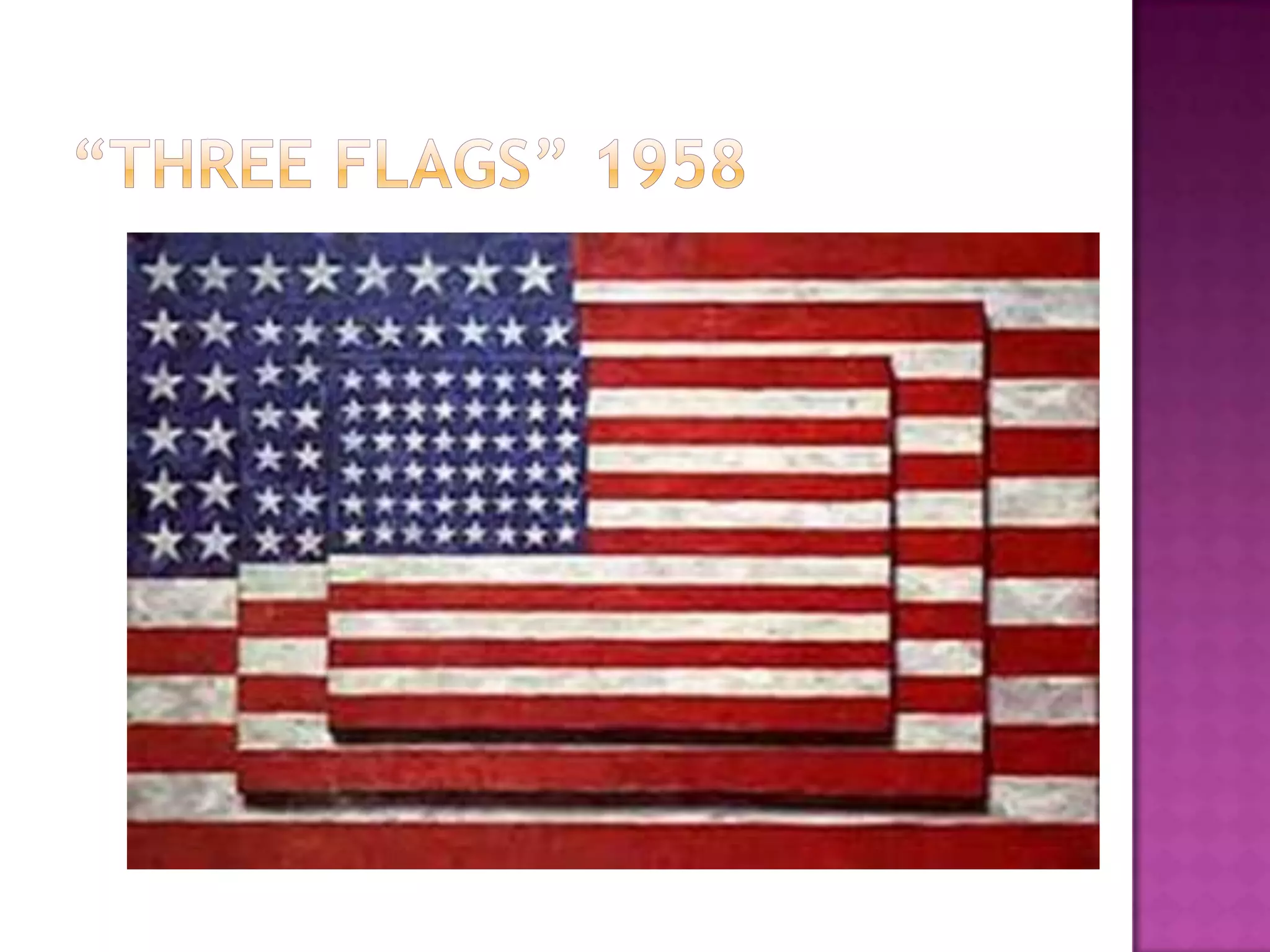
 Born August 16, 1928 in
Pittsburgh
 Died February 22, 1987
 Used silk screening
 Uses a specially prepared section of silk as a
stencil, allowing one silk-screen to create
similar patterns multiple times
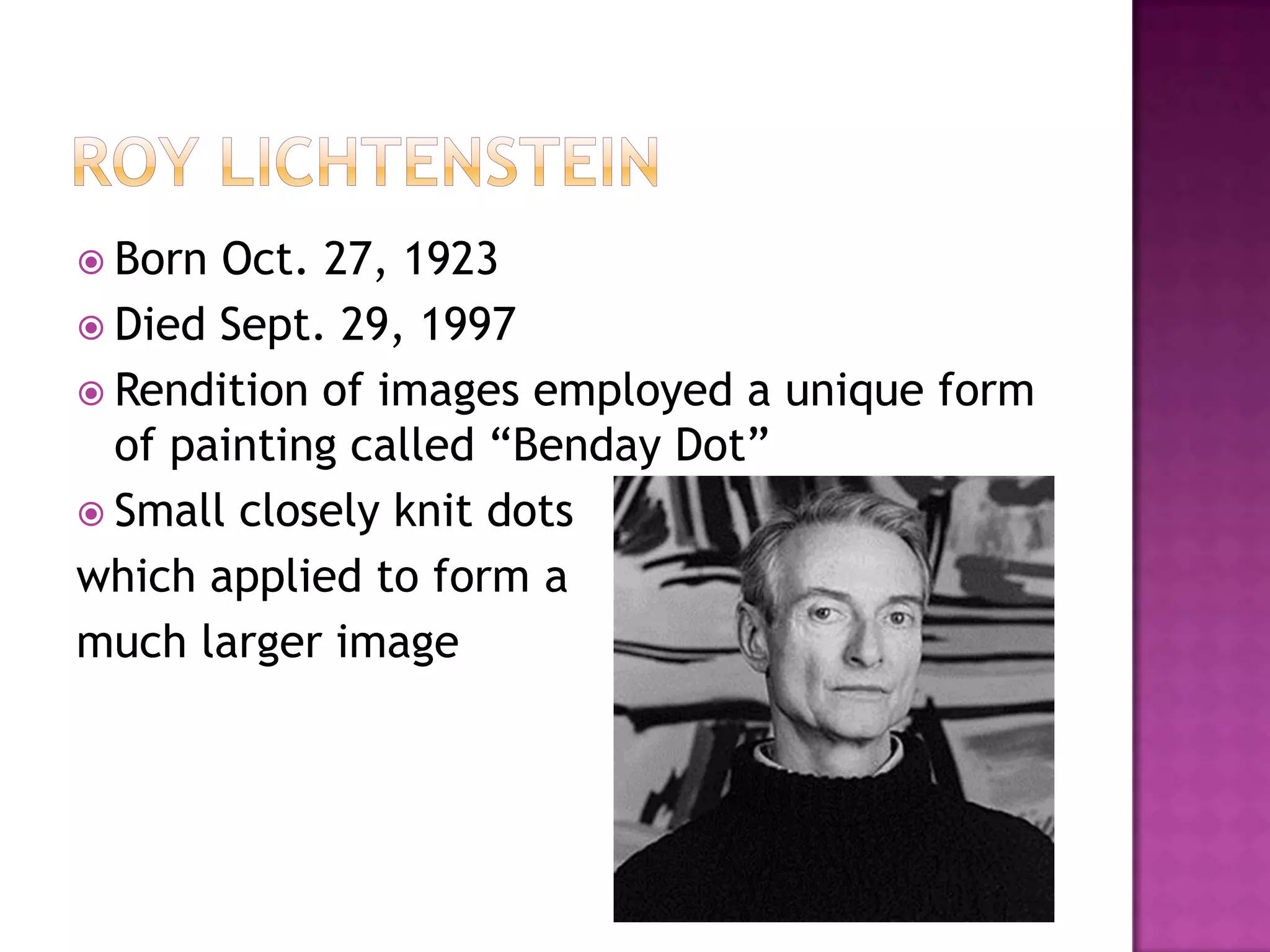
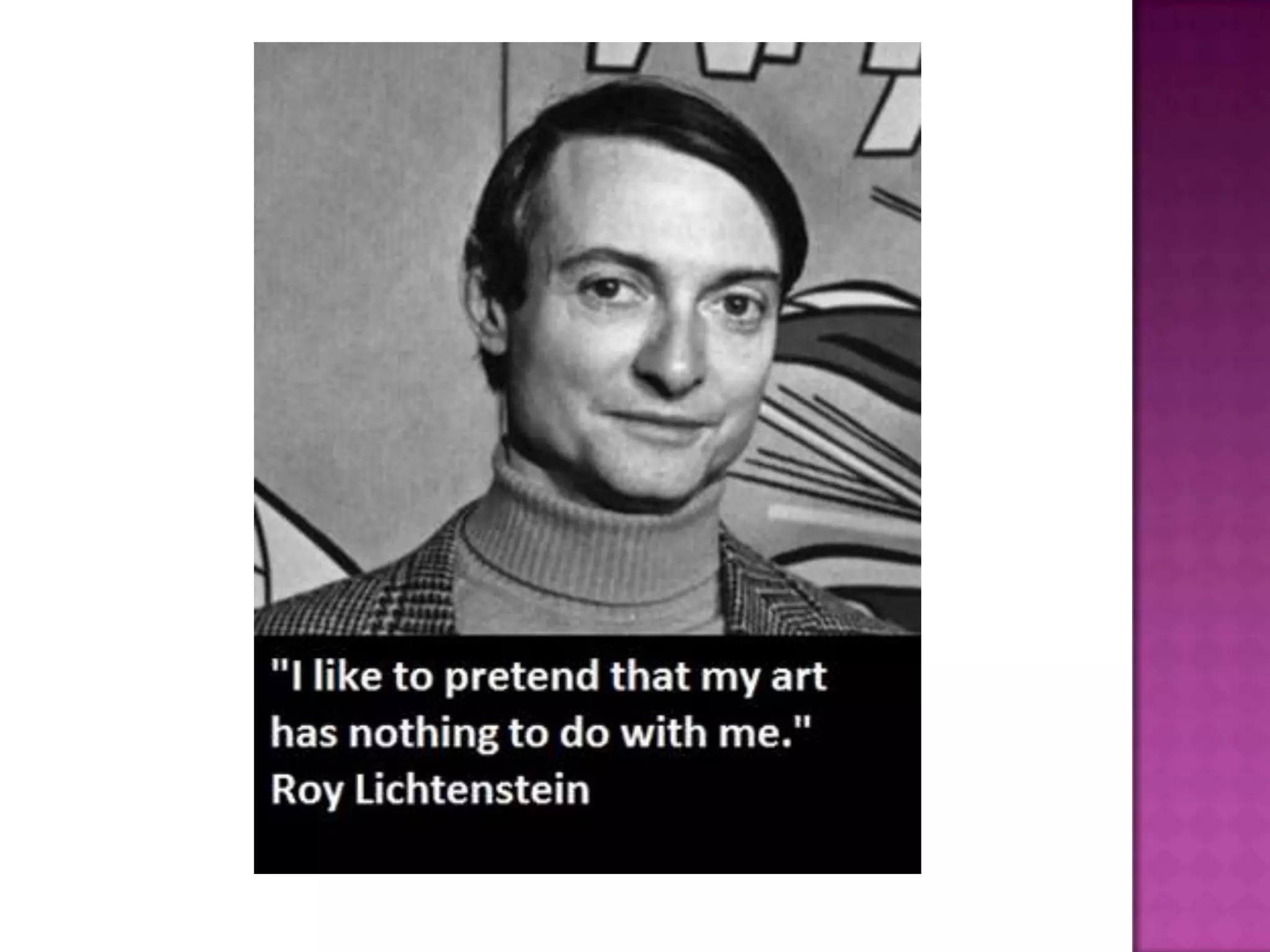
 Born Oct. 27, 1923
 Died Sept. 29, 1997
 Rendition of images employed a unique form
of painting called “Benday Dot”
 Small closely knit dots
which applied to form a
much larger image
 Born October 22, 1925
 Died May 12, 2008
 Constant innovator and
improviser
 Moved from style to style
and medium to medium,
blurring the lines between
painting, sculpture, photography, printmaking,
and even performance and dance
 Sculptures were three-dimensional collages,
known as "combines"
 Born January 28, 1929
 Used images and objects from the every day
world, especially those that are small and
unnoticeable
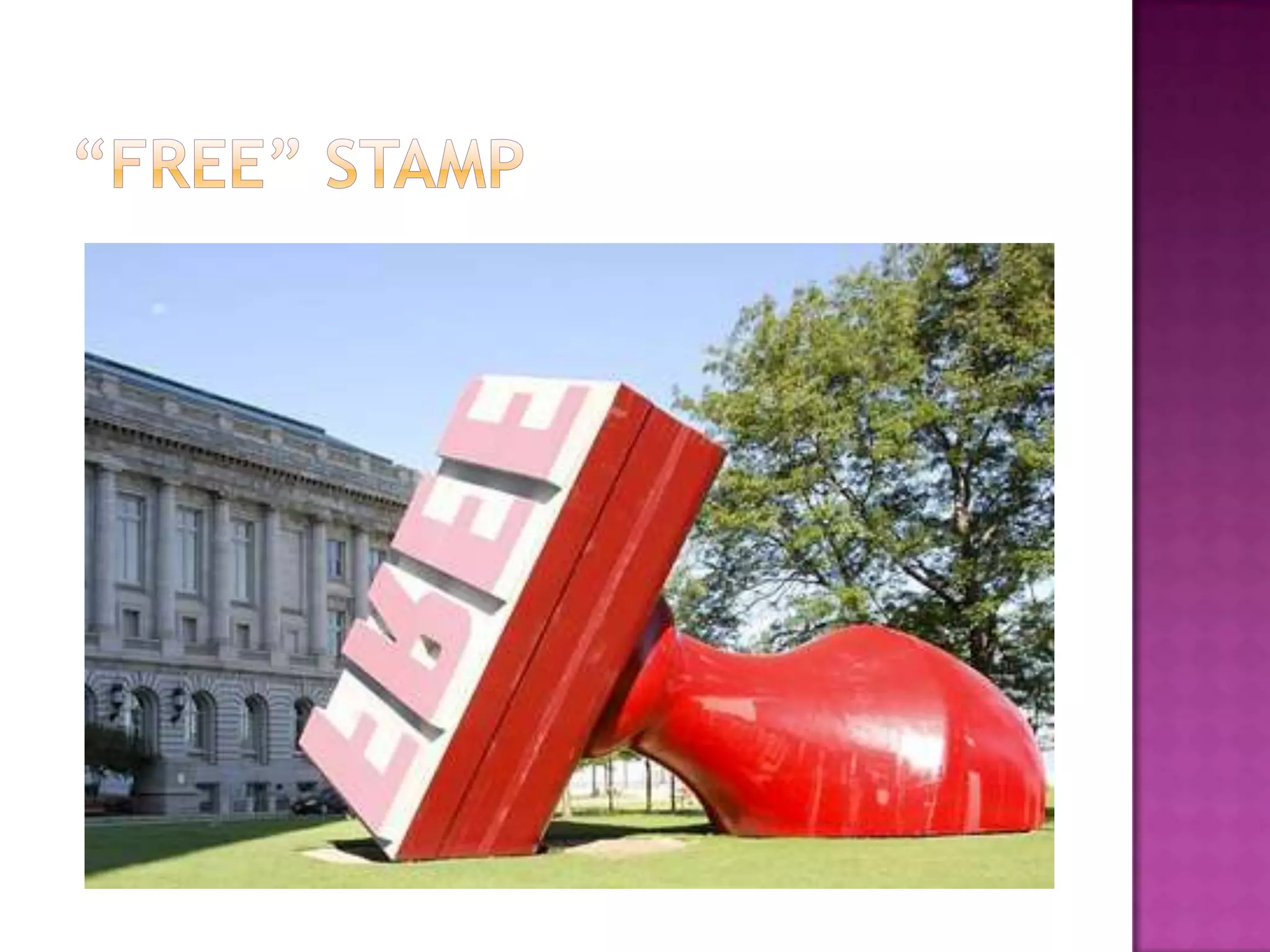
 Worked with large sculptures
 Performance pieces called “Happenings”
 Tasteless and cheap
 Imitation of valuable art
 Public was unsure at first
 Critics of mass media complain of the
hostility towards intellectuals and the lack of
respect of the art expressed
 Critique old pieces that were known for the
abstract nature that had already been
critiqued and analized
 Pop Art celebrated the United Generation of
Shopping
 Everyone could enjoy art
 Allowed people to feel a better connection
 Art about subjects people care about: sports,
celebrities, TV, etc.
 Blur boundaries between “high” art and
“low” culture
 Celebrate commonplace objects seeking to
elevate popular culture to the level of fine
art
 No hierarchy of culture
 Art may borrow from any source
 Art is a commodity like the subject itself
 Fell briefly in the 1970s and 1980s
 Lead to revival of Neo-Pop art: postmodern
movement in 1980s and 1990s
 Still provides subject matter that is easy for
viewers to identify and understand
 Continue to break down barrier of fine art
 Stress art as a commodity
 Neo-Pop movement
 Pop culture icons
 Michael Jackson
 Mass produced objects
like the hoover vacuum
 Push boundaries of high
art
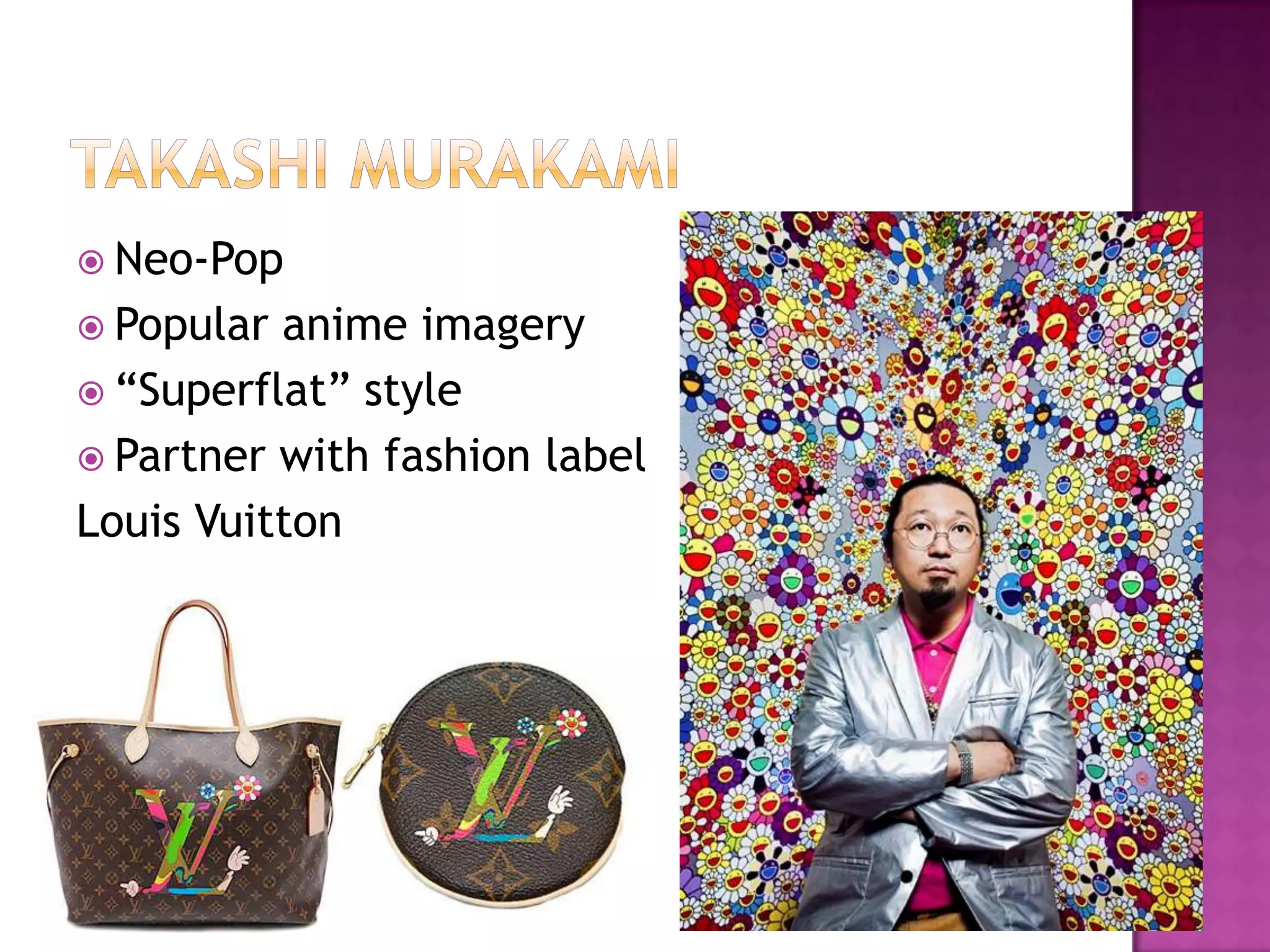
 Neo-Pop
 Popular anime imagery
 “Superflat” style
 Partner with fashion label
Louis Vuitton

Pop Art Powerpoint

  • 1.
  • 3.
     Rebel againstAbstract Expressionism  Involved in the personal/individual mind of people  Thought to be over-intense  Viewed as fine art
  • 4.
     Started atthe end of World War II  Originated in London, but started in United States with the election of John F. Kennedy  Rebel against past traditions  Bring back materialized aspect of art
  • 5.
     Form ofart that uses everyday objects as the subject matter for artistic composition.  Reflects the time  Expression of the people in a society that puts less emphasis on formal education and even wealth  Attempts to erase lines between high and low art
  • 6.
     Independent Groupof Artists and Intellectuals  critics, painters, architects, musicians, designers  Fascinated by the impact that American mass media had on British life  Talked about changing nature of the urban experience in postwar Europe  Embrace popular culture instead of separation with fine art
  • 7.
     Usually verybright colors  Flat imagery influenced by comic books and newspaper photographs  Images of celebrities or fictional characters in comic books, advertisements and fan magazines  In sculpture, an innovative use of media
  • 8.
     Jasper Johns Andy Warhol  Roy Lichtenstein  Robert Rauschenberg  Claes Oldenburg
  • 9.
     Born May15, 1930 in Augusta Georgia  “Three Flags”  Educated at the University of South Carolina and Parsons the New School for Design  Work with flags, targets, numbers, and maps  Sculptural ideas into painting  Every day objects: paint brushes, beer cans, and light bulbs  Collages
  • 12.
     Born August16, 1928 in Pittsburgh  Died February 22, 1987  Used silk screening  Uses a specially prepared section of silk as a stencil, allowing one silk-screen to create similar patterns multiple times
  • 15.
     Born Oct.27, 1923  Died Sept. 29, 1997  Rendition of images employed a unique form of painting called “Benday Dot”  Small closely knit dots which applied to form a much larger image
  • 18.
     Born October22, 1925  Died May 12, 2008  Constant innovator and improviser  Moved from style to style and medium to medium, blurring the lines between painting, sculpture, photography, printmaking, and even performance and dance  Sculptures were three-dimensional collages, known as "combines"
  • 21.
     Born January28, 1929  Used images and objects from the every day world, especially those that are small and unnoticeable  Worked with large sculptures  Performance pieces called “Happenings”
  • 24.
     Tasteless andcheap  Imitation of valuable art  Public was unsure at first  Critics of mass media complain of the hostility towards intellectuals and the lack of respect of the art expressed  Critique old pieces that were known for the abstract nature that had already been critiqued and analized
  • 25.
     Pop Artcelebrated the United Generation of Shopping  Everyone could enjoy art  Allowed people to feel a better connection  Art about subjects people care about: sports, celebrities, TV, etc.
  • 26.
     Blur boundariesbetween “high” art and “low” culture  Celebrate commonplace objects seeking to elevate popular culture to the level of fine art  No hierarchy of culture  Art may borrow from any source  Art is a commodity like the subject itself
  • 27.
     Fell brieflyin the 1970s and 1980s  Lead to revival of Neo-Pop art: postmodern movement in 1980s and 1990s  Still provides subject matter that is easy for viewers to identify and understand  Continue to break down barrier of fine art  Stress art as a commodity
  • 28.
     Neo-Pop movement Pop culture icons  Michael Jackson  Mass produced objects like the hoover vacuum  Push boundaries of high art
  • 30.
     Neo-Pop  Popularanime imagery  “Superflat” style  Partner with fashion label Louis Vuitton

Editor's Notes