B2B Invoice Collection
6Essential Steps
For Timely
Considering the dramatic impact accounts
receivable can have on your bottom line, B2B
invoice collection is not a task to be
taken lightly.
Accounts receivable is likely one of
your most important assets &
should be treated as such; with a
specific and methodical process to
ensure that nothing falls through
the cracks…
…So here are 6 steps every collector must do to ensure
positive customer relationships.
healthy cash flow.
successful B2B invoice collection.
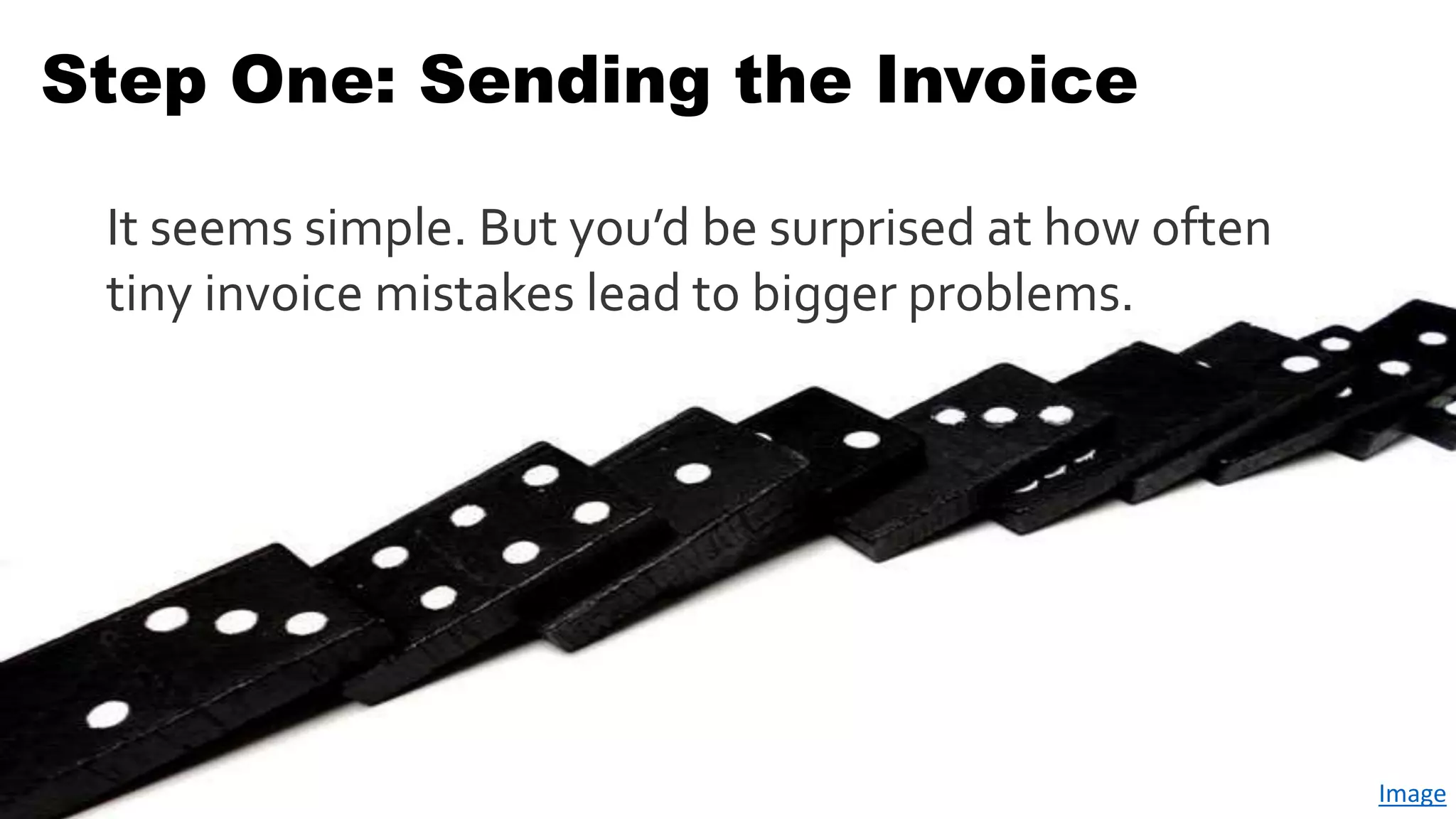
Step One: Sending the Invoice
It seems simple. But you’d be surprised at how often
tiny invoice mistakes lead to bigger problems.
Image
Be
prompt.
The sooner the customer has
the invoice, the sooner they
can process it.
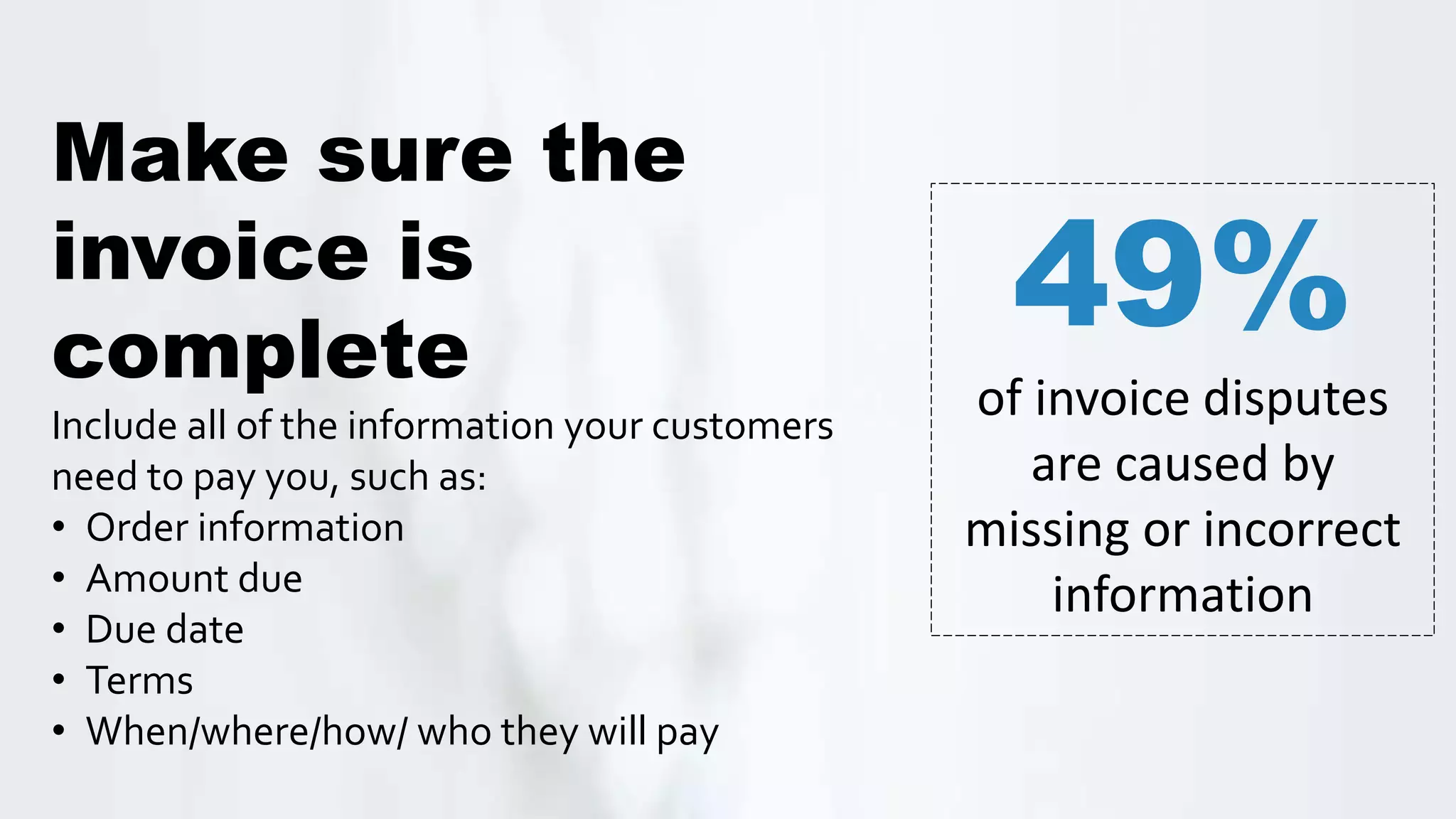
Make sure the
invoice is
complete
Include all of the information your customers
need to pay you, such as:
• Order information
• Amount due
• Due date
• Terms
• When/where/how/ who they will pay
49%
of invoice disputes
are caused by
missing or incorrect
information
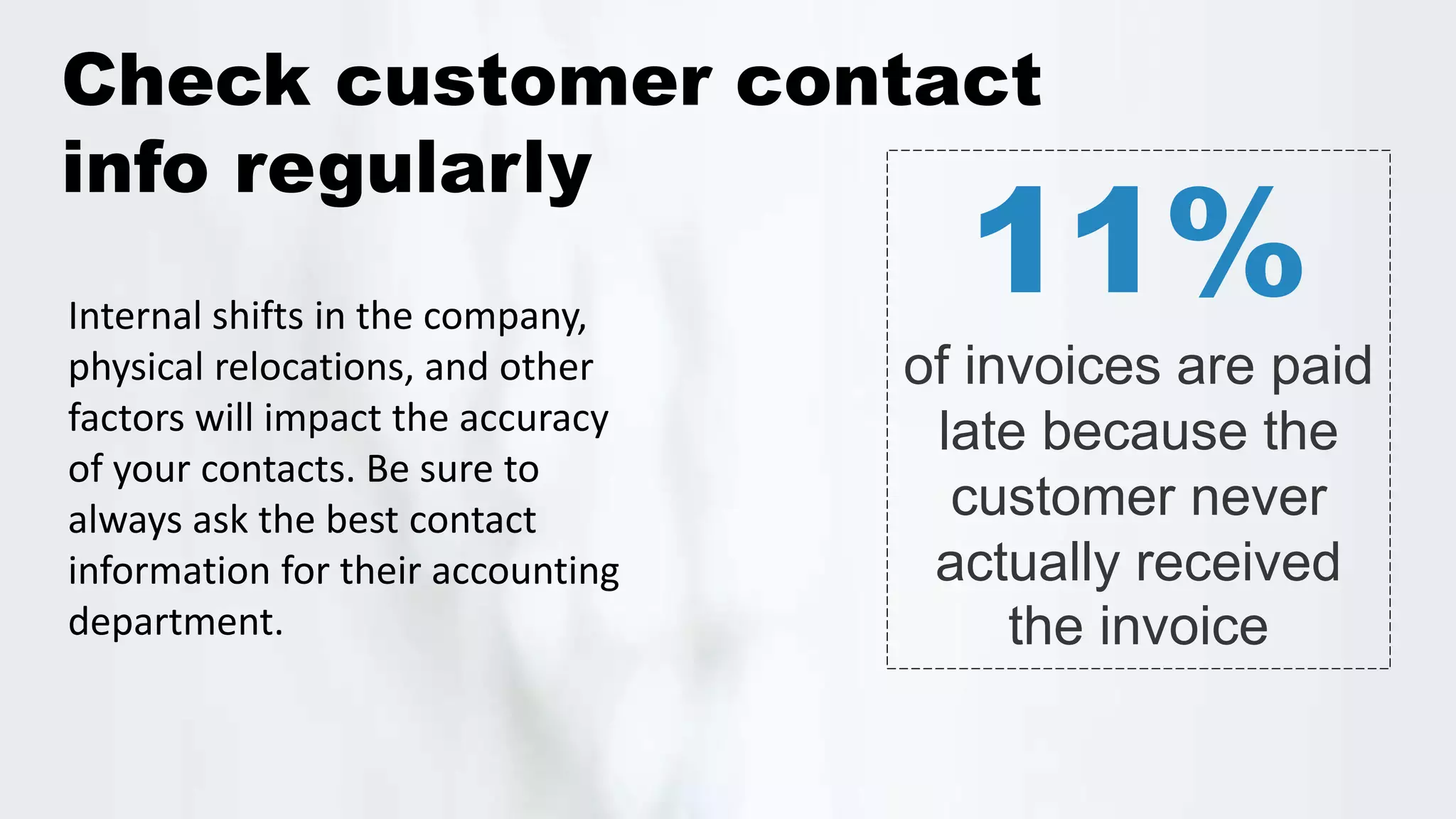
11%
of invoices are paid
late because the
customer never
actually received
the invoice
Check customer contact
info regularly
Internal shifts in the company,
physical relocations, and other
factors will impact the accuracy
of your contacts. Be sure to
always ask the best contact
information for their accounting
department.
Learn More About
Avoiding Invoice
In This Resource:
Click to Download
Dispute Management
Strategies for Business
Credit Professionals
Link not working? Type this link into your browser http://anytimecollect.com/Pages/Resources.aspx
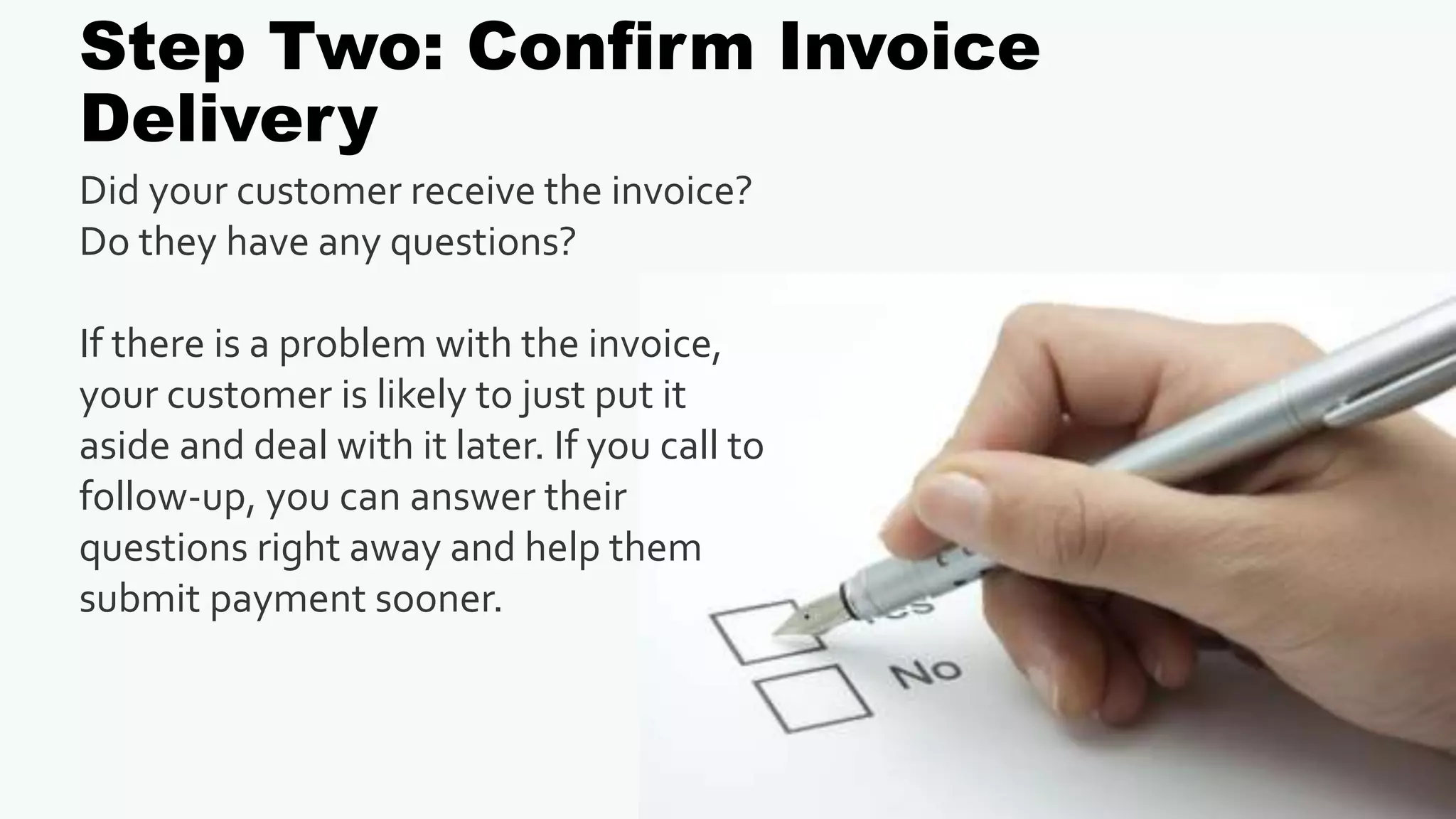
Step Two: Confirm Invoice
Delivery
Did your customer receive the invoice?
Do they have any questions?
If there is a problem with the invoice,
your customer is likely to just put it
aside and deal with it later. If you call to
follow-up, you can answer their
questions right away and help them
submit payment sooner.
Many customers may need a reminder or
two before they get around to sending
payment. A majority of your customers
want and mean to pay the invoice, but
they forget, are having cash flow
problems, lost the invoice, etc.
A friendly call, letter, or email may be all
they need. Be sure to remind them
a before the due date.
Step Three: Keep in
Touch
Remember: There are
many different types of
communications, and timing is
everything.
This resource has everything you need
to know, suggestions, communication
templates, and call scripts to help you
do make the most out of each and every
customer communication.
Click to Download
Link not working? Type this link into your browser http://anytimecollect.com/Pages/Resources.aspx
Step Four: Ask About Late
Payment
If your customer has still not submitted payment after the due date, something may be
wrong. If it is a new customer or one who is usually a problem, you may want to
escalate this invoice. If it’s a customer who has been around for a long time or is
generally quick to pay, there may be an unusual circumstance you can help them with.
Either way, in this stage you should get in contact with them. Remain friendly and
professional, find out why they still have not paid you, and figure out how you can fix
this problem together.
Step Five: Apply Pressure
If you find that your invoice was received, the information was
correct, there are no atypical circumstances, the product or
service was provided, and your customer is still not paying, it’s
time to get a little more forceful with your collection efforts.
Be firm, but don’t cross the line
Step Six: Escalate the Account
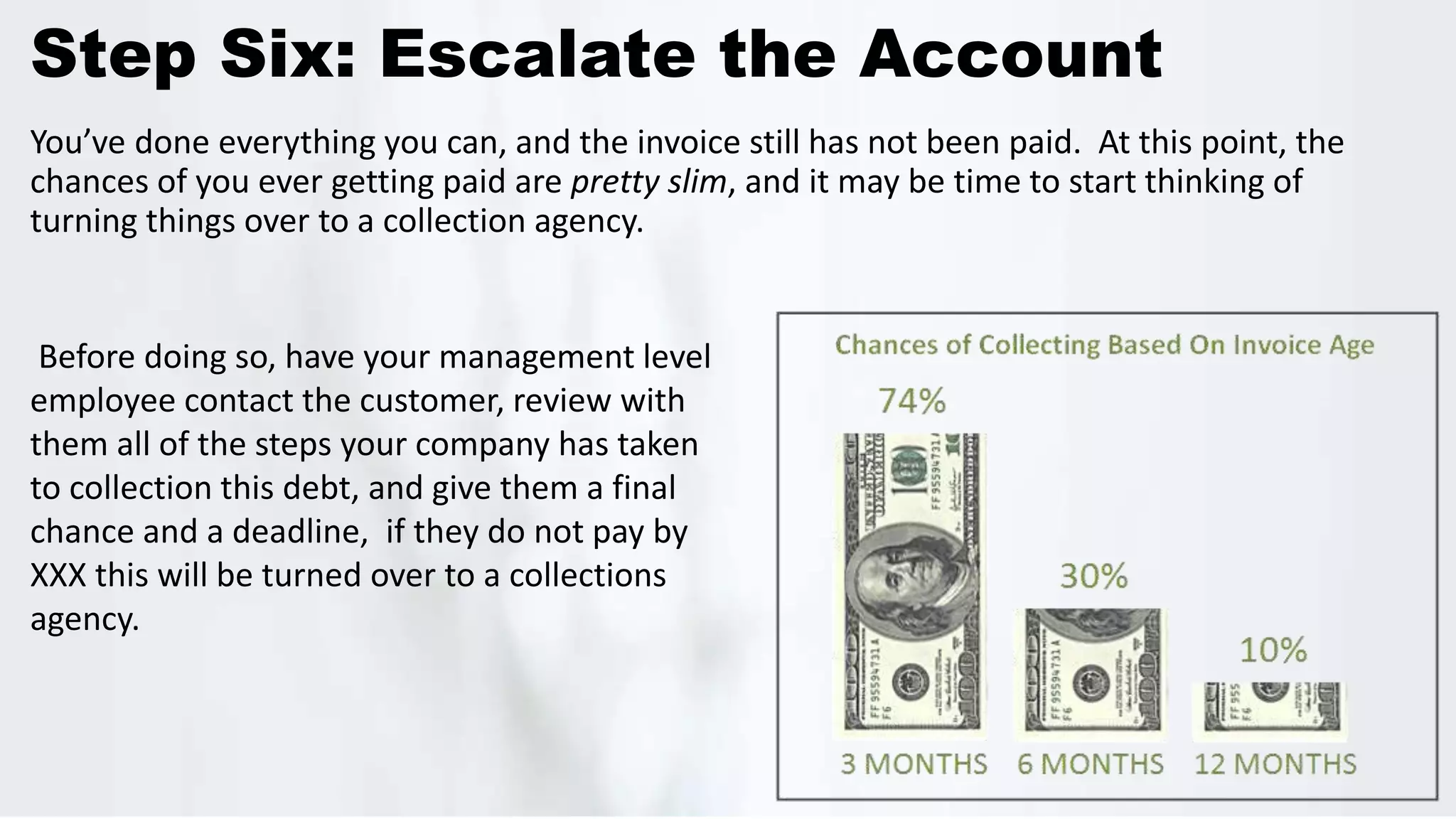
You’ve done everything you can, and the invoice still has not been paid. At this point, the
chances of you ever getting paid are pretty slim, and it may be time to start thinking of
turning things over to a collection agency.
Before doing so, have your management level
employee contact the customer, review with
them all of the steps your company has taken
to collection this debt, and give them a final
chance and a deadline, if they do not pay by
XXX this will be turned over to a collections
agency.
To be effective in B2B invoice
collection, you need to take
each and every one of
these steps…
…for each and every one of your invoices!
…and that is where
can get overwhelming.
When you have a large number of orders and
invoices, it’s hard to find the time to take
all of the above steps while also managing invoice
disputes and other critical tasks.
Here’s the good news…
There is a
better way
to get paid
faster
by
automating
important & time
consuming tasks
Accounts receivable automation
allows you to put B2B invoice collection on auto-pilot and
eliminate the more time consuming steps in this process such as:
• Prioritizing collector tasks
• sending reminder letters
• tracking aging
• running reports
• scheduling calls
• updating account information
• more
so you can focus on more valuable activities.
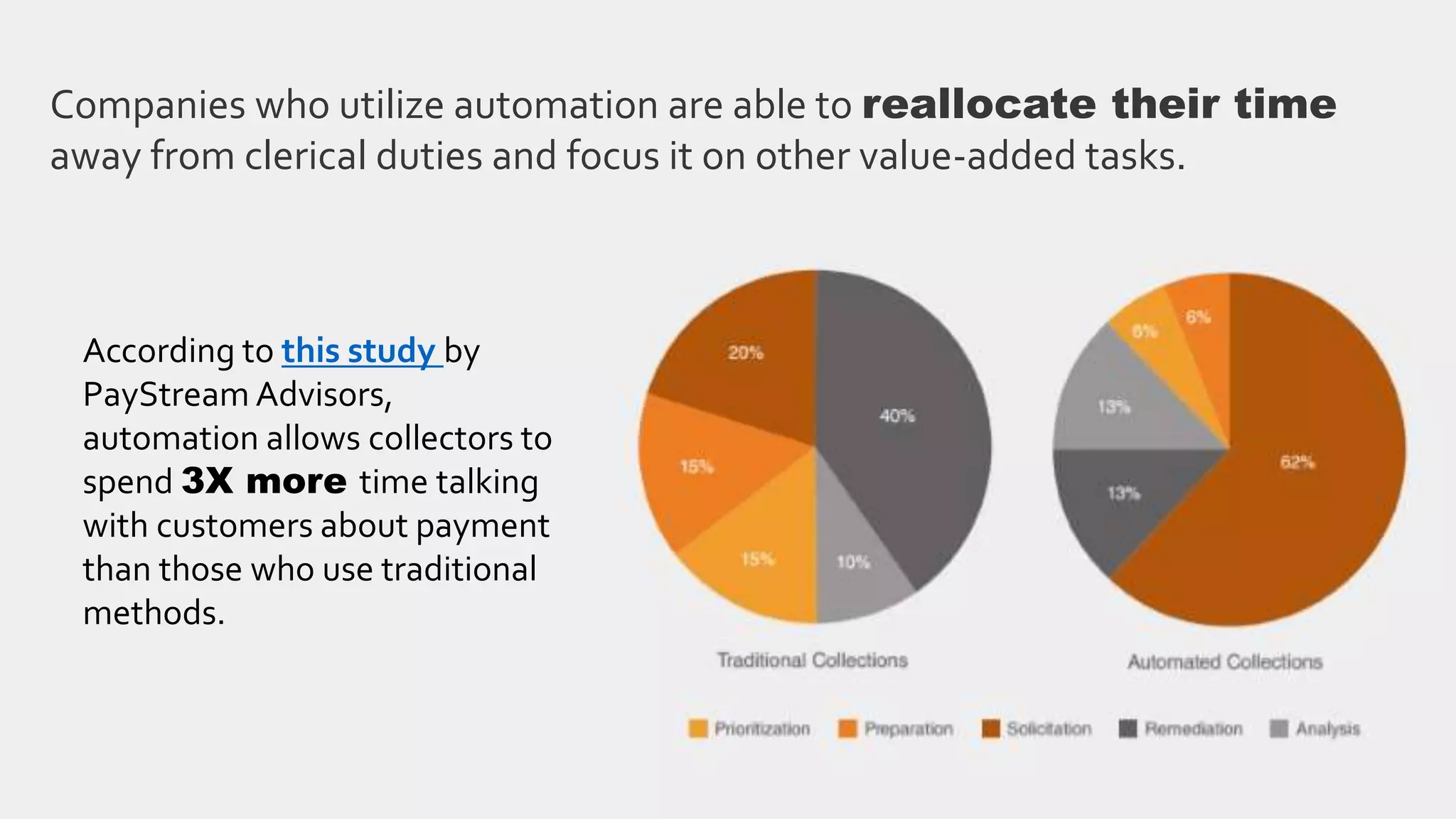
Companies who utilize automation are able to reallocate their time
away from clerical duties and focus it on other value-added tasks.
According to this study by
PayStream Advisors,
automation allows collectors to
spend 3X more time talking
with customers about payment
than those who use traditional
methods.
Which Leads To…
•10% to 20% reductions in days sales outstanding (DSO)
•25% reductions in past due receivables
•15% to 25% reductions in bad debt reserves
•ROI in as little as 2 months
So, what’s stopping you
from getting paid
on time?
image
Visitourresourcecentertolearn
moreB2Binvoicecollectionbest
practices,accesshelpfulwhite
papers,andwatcheducational
webinars.
Click here to get started

B2B Accounts Receivable Best Practices

  • 1.
  • 2.
    Considering the dramaticimpact accounts receivable can have on your bottom line, B2B invoice collection is not a task to be taken lightly.
  • 3.
    Accounts receivable islikely one of your most important assets & should be treated as such; with a specific and methodical process to ensure that nothing falls through the cracks…
  • 4.
    …So here are6 steps every collector must do to ensure positive customer relationships. healthy cash flow. successful B2B invoice collection.
  • 5.
    Step One: Sendingthe Invoice It seems simple. But you’d be surprised at how often tiny invoice mistakes lead to bigger problems. Image
  • 6.
    Be prompt. The sooner thecustomer has the invoice, the sooner they can process it.
  • 7.
    Make sure the invoiceis complete Include all of the information your customers need to pay you, such as: • Order information • Amount due • Due date • Terms • When/where/how/ who they will pay 49% of invoice disputes are caused by missing or incorrect information
  • 8.
    11% of invoices arepaid late because the customer never actually received the invoice Check customer contact info regularly Internal shifts in the company, physical relocations, and other factors will impact the accuracy of your contacts. Be sure to always ask the best contact information for their accounting department.
  • 9.
    Learn More About AvoidingInvoice In This Resource: Click to Download Dispute Management Strategies for Business Credit Professionals Link not working? Type this link into your browser http://anytimecollect.com/Pages/Resources.aspx
  • 10.
    Step Two: ConfirmInvoice Delivery Did your customer receive the invoice? Do they have any questions? If there is a problem with the invoice, your customer is likely to just put it aside and deal with it later. If you call to follow-up, you can answer their questions right away and help them submit payment sooner.
  • 11.
    Many customers mayneed a reminder or two before they get around to sending payment. A majority of your customers want and mean to pay the invoice, but they forget, are having cash flow problems, lost the invoice, etc. A friendly call, letter, or email may be all they need. Be sure to remind them a before the due date. Step Three: Keep in Touch
  • 12.
    Remember: There are manydifferent types of communications, and timing is everything. This resource has everything you need to know, suggestions, communication templates, and call scripts to help you do make the most out of each and every customer communication. Click to Download Link not working? Type this link into your browser http://anytimecollect.com/Pages/Resources.aspx
  • 13.
    Step Four: AskAbout Late Payment If your customer has still not submitted payment after the due date, something may be wrong. If it is a new customer or one who is usually a problem, you may want to escalate this invoice. If it’s a customer who has been around for a long time or is generally quick to pay, there may be an unusual circumstance you can help them with. Either way, in this stage you should get in contact with them. Remain friendly and professional, find out why they still have not paid you, and figure out how you can fix this problem together.
  • 14.
    Step Five: ApplyPressure If you find that your invoice was received, the information was correct, there are no atypical circumstances, the product or service was provided, and your customer is still not paying, it’s time to get a little more forceful with your collection efforts. Be firm, but don’t cross the line
  • 15.
    Step Six: Escalatethe Account You’ve done everything you can, and the invoice still has not been paid. At this point, the chances of you ever getting paid are pretty slim, and it may be time to start thinking of turning things over to a collection agency. Before doing so, have your management level employee contact the customer, review with them all of the steps your company has taken to collection this debt, and give them a final chance and a deadline, if they do not pay by XXX this will be turned over to a collections agency.
  • 16.
    To be effectivein B2B invoice collection, you need to take each and every one of these steps…
  • 17.
    …for each andevery one of your invoices!
  • 18.
    …and that iswhere can get overwhelming.
  • 19.
    When you havea large number of orders and invoices, it’s hard to find the time to take all of the above steps while also managing invoice disputes and other critical tasks.
  • 20.
  • 21.
    There is a betterway to get paid faster
  • 22.
  • 23.
    Accounts receivable automation allowsyou to put B2B invoice collection on auto-pilot and eliminate the more time consuming steps in this process such as: • Prioritizing collector tasks • sending reminder letters • tracking aging • running reports • scheduling calls • updating account information • more so you can focus on more valuable activities.
  • 24.
    Companies who utilizeautomation are able to reallocate their time away from clerical duties and focus it on other value-added tasks. According to this study by PayStream Advisors, automation allows collectors to spend 3X more time talking with customers about payment than those who use traditional methods.
  • 25.
  • 26.
    •10% to 20%reductions in days sales outstanding (DSO) •25% reductions in past due receivables •15% to 25% reductions in bad debt reserves •ROI in as little as 2 months
  • 27.
    So, what’s stoppingyou from getting paid on time?
  • 28.