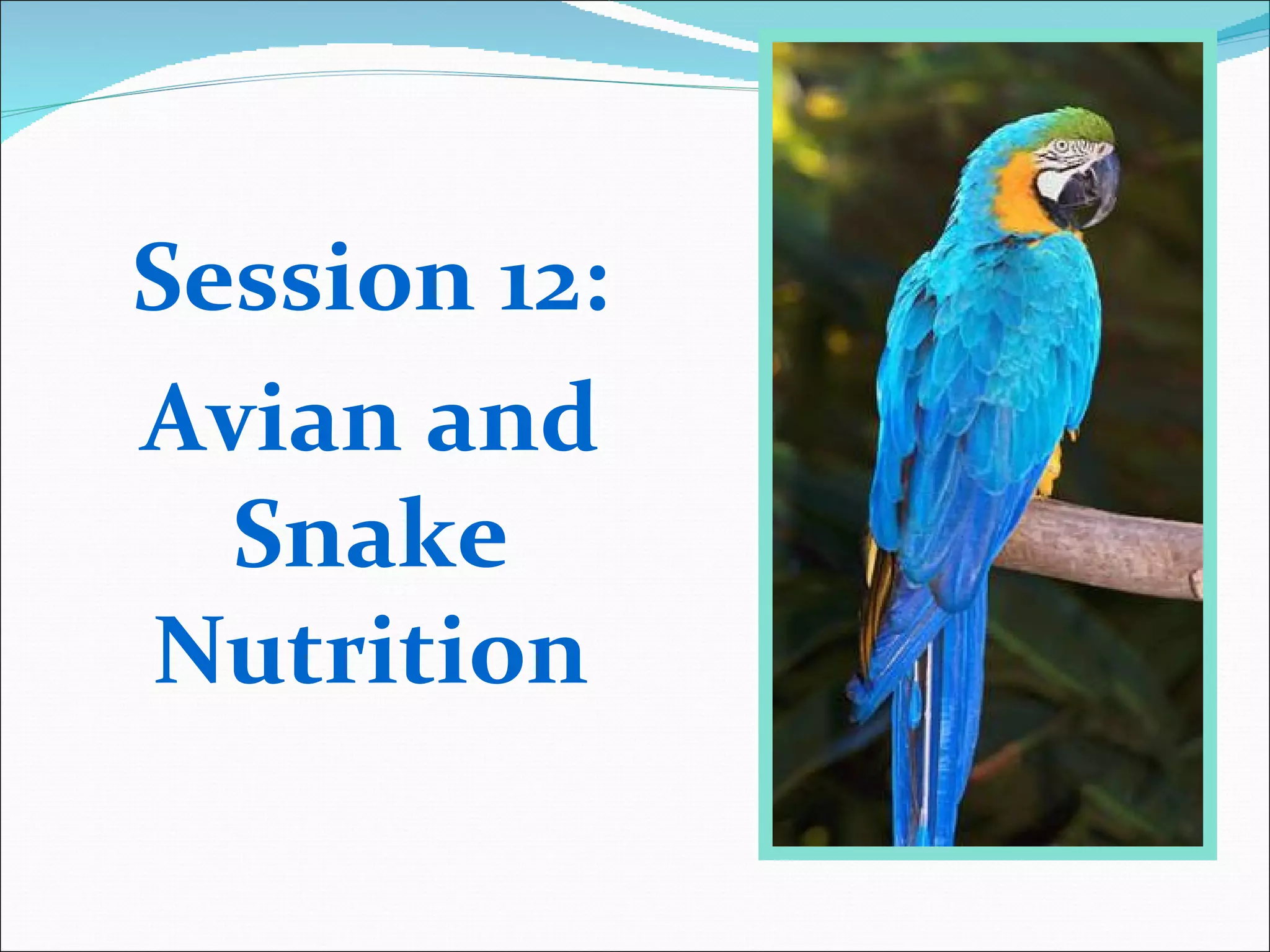
Session 12: Avian and Snake Nutrition
Feeding Pet Birds
Types of Birds Psittacine Breeds Passerine Breeds Natural seed eaters Seasonal migratory birds Parakeets Budgies Cockatoo Macaw Parrots Lovebirds Canaries Wrens Swallows Warblers Blackbirds Crows
Digestive Physiology of Birds Differences in beak shape and size reflect adaptations to dietary sources of food
Digestive Physiology of Birds Stomach divided into distinct sections to compensate for lack of teeth and smaller amounts of saliva Crop  – used for wetting food and temporary storage Mouth Crop Gizzard Intestine Ceca Cloaca Cloacal aperture Esophagus Proventriculus
Digestive Physiology of Birds Proventriculus  (aka “true stomach”) – where gastric acids and enzymes begin chemical digestion Gizzard  (aka “ventriculus”) – strong muscular organ used to grind feed into smaller particles Mouth Crop Proventriculus Gizzard Intestine Ceca Cloaca Cloacal aperture Esophagus
Digestive Physiology of Birds Intestine & Ceca  – sites of nutrient absorption.  Cecum is very small (or non-existent in some) so high fiber diets are out! Cloaca  – where urinary and digestive tract reunite.  Urinary and fecal matter are mixed & excreted together Mouth Crop Proventriculus Gizzard Intestine Ceca Cloaca Cloacal aperture Esophagus
Digestive Transit Time Definition:  Time from the ingestion of food to the time when the undigested food is excreted. Birds must have a constant supply of food.  Some birds can be in a state of starvation within three days! Digestive Transit Times by Species Dairy Cattle:  24-72 hours Humans: 18-24 hours Dogs and Cats:  12-18 hours Caged Birds:  <12 hours Budgies & Finches:  3-6 hours
Of Special Note in Avian Digestion Faster metabolism Must have “animal” vitamin D 3 , cholcalciferol Require Proline and Glysine Need increased amounts of sulfur amino acids Extremely low urine volume; concentrated urine Most do not utilize fiber
Avian Feeding Management Birds tend to pick out certain seeds in mixes; therefore don’t eat balanced diet  Should leave entire amount of food there until bird has eaten it all Grass seeds (corn, oats, barley, etc) are too low in calcium;  Sunflower, safflower seeds are too high in fat.  Best to feed a complete commercial feeding mix or pellets
Essential Nutrients & Ingredients in Avian Diets Grit:   made from ground minerals and sand; key in helping bird grind up foodstuffs; stays in the gizzard Who needs grit? Birds that ingest whole seeds – helps with shells Birds that remove seeds don’t really need grit How to feed grit:     1/8 to ½ teaspoon every 2 years.  Over ingestion of grit causes intestinal impaction
Essential Nutrients & Ingredients in Avian Diets Vitamin A: Promotes skin and mucous membrane health Feed high Vit A foods:  carrot tops, broccoli, sweet potatoes Vitamin D (Cholcalciferol) Important in bone development Feed high calcium foods – almonds, cereals, cheese, yogurt, oyster shells
What Budgies Eat Prone to renal disease if fed 100% pelleted diet long term Feed percentage of pellets, millet, sprouted seeds Safe “human” foods:  cooked pasta, brown rice, legumes, veggies, fruit, bread Source:  Oklahoma State  University
What Cockatiels Eat Pellets Cereal & grain sources: Cheerios, Chex, Total Dry or cooked pasta, corn, oatmeal Popcorn, crackers Meaty, dark green, orange & yellow veggies High Vit A content:  beets, broccoli, carrots.  NO lettuce, green peppers, zucchini, spinach! Protein sources: legumes, tofu, small pieces of cooked lean meat
What Macaws Eat (Blue & Gold) ½ cup pellets with ½ cup fresh fruits and veggies (wash well!) Seeds can be offered as treats (sunflower) Protein sources:  cooked sweet potato, yogurt Fresh water at all times
What Parrots Eat Commercial pellets for 60-80% of diet;  Seeds less than 12% of diet Table food: Mostly leafy green veggies, tomato, beets, peas, carrots Unsweetened cereal; bread Small amounts of protein:  cooked eggs, boiled chicken, well done chicken bones Limit seeds; leave shells on for parrot’s activity
What Canaries Eat “ Black and White” seed mix:  70% canary seed & 30% seeds from the rape seed plant;  can use canary pellets Very delicate, will dehydrate in short time; fresh water always! Mineral grit and cuttlebone should be added Sunflower seeds as a treat.  Soak them overnight to help bird break them down Source:  University of Maryland
Reptiles
Nutrition of Boas and Pythons General Nutrition Snakes consume whole prey, which makes a balanced diet easy Balanced Diet Pet snakes usually fed “pinkies” In the wild, snakes eat mammals birds, other reptiles, fish, worms amphibians and bugs
Nutrition of Boas and Pythons Graduate from pinkies to mice to rats to some rabbits Try not to feed the snake food that is bigger than its midsection Don’t handle snake after it’s eaten – it may regurgitate Careful when snake is shedding – it can be aggressive
Nutrition of Boas and Pythons Never feed live prey – can result in bite wounds Teaching a snake to eat dead rodents: 1. Jiggle it by the tail and a hungry snake will eat 2.  Don’t use your fingers to dangle the prey – snakebites hurt
Nutrition of Boas and Pythons Feeding Frequency: Juveniles :  feed appropriately sized prey every 6-7 days Adults :  Feed every 7-14 days Keep log of eating and defecation  to monitor snake’s needs and potential illnesses
Nutrition of Boas and Pythons Ball Pythons Shy feeders who do best with a hide box for shelter If reluctant to eat, try feeding at night since they’re nocturnal Imported Ball Pythons may not recognize classic white mouse as prey, so use brown mouse, gerbil or hamster
Nutrition of Boas and Pythons Water Fresh water available at all times Provide a bowl or tub for them to submerge themselves in for soaking Temperature is important 80-95°F degrees for ball pythons

Avian & Snake Nutrition

  • 1.
    Session 12: Avianand Snake Nutrition
  • 2.
  • 3.
    Types of BirdsPsittacine Breeds Passerine Breeds Natural seed eaters Seasonal migratory birds Parakeets Budgies Cockatoo Macaw Parrots Lovebirds Canaries Wrens Swallows Warblers Blackbirds Crows
  • 4.
    Digestive Physiology ofBirds Differences in beak shape and size reflect adaptations to dietary sources of food
  • 5.
    Digestive Physiology ofBirds Stomach divided into distinct sections to compensate for lack of teeth and smaller amounts of saliva Crop – used for wetting food and temporary storage Mouth Crop Gizzard Intestine Ceca Cloaca Cloacal aperture Esophagus Proventriculus
  • 6.
    Digestive Physiology ofBirds Proventriculus (aka “true stomach”) – where gastric acids and enzymes begin chemical digestion Gizzard (aka “ventriculus”) – strong muscular organ used to grind feed into smaller particles Mouth Crop Proventriculus Gizzard Intestine Ceca Cloaca Cloacal aperture Esophagus
  • 7.
    Digestive Physiology ofBirds Intestine & Ceca – sites of nutrient absorption. Cecum is very small (or non-existent in some) so high fiber diets are out! Cloaca – where urinary and digestive tract reunite. Urinary and fecal matter are mixed & excreted together Mouth Crop Proventriculus Gizzard Intestine Ceca Cloaca Cloacal aperture Esophagus
  • 8.
    Digestive Transit TimeDefinition: Time from the ingestion of food to the time when the undigested food is excreted. Birds must have a constant supply of food. Some birds can be in a state of starvation within three days! Digestive Transit Times by Species Dairy Cattle: 24-72 hours Humans: 18-24 hours Dogs and Cats: 12-18 hours Caged Birds: <12 hours Budgies & Finches: 3-6 hours
  • 9.
    Of Special Notein Avian Digestion Faster metabolism Must have “animal” vitamin D 3 , cholcalciferol Require Proline and Glysine Need increased amounts of sulfur amino acids Extremely low urine volume; concentrated urine Most do not utilize fiber
  • 10.
    Avian Feeding ManagementBirds tend to pick out certain seeds in mixes; therefore don’t eat balanced diet Should leave entire amount of food there until bird has eaten it all Grass seeds (corn, oats, barley, etc) are too low in calcium; Sunflower, safflower seeds are too high in fat. Best to feed a complete commercial feeding mix or pellets
  • 11.
    Essential Nutrients &Ingredients in Avian Diets Grit: made from ground minerals and sand; key in helping bird grind up foodstuffs; stays in the gizzard Who needs grit? Birds that ingest whole seeds – helps with shells Birds that remove seeds don’t really need grit How to feed grit: 1/8 to ½ teaspoon every 2 years. Over ingestion of grit causes intestinal impaction
  • 12.
    Essential Nutrients &Ingredients in Avian Diets Vitamin A: Promotes skin and mucous membrane health Feed high Vit A foods: carrot tops, broccoli, sweet potatoes Vitamin D (Cholcalciferol) Important in bone development Feed high calcium foods – almonds, cereals, cheese, yogurt, oyster shells
  • 13.
    What Budgies EatProne to renal disease if fed 100% pelleted diet long term Feed percentage of pellets, millet, sprouted seeds Safe “human” foods: cooked pasta, brown rice, legumes, veggies, fruit, bread Source: Oklahoma State University
  • 14.
    What Cockatiels EatPellets Cereal & grain sources: Cheerios, Chex, Total Dry or cooked pasta, corn, oatmeal Popcorn, crackers Meaty, dark green, orange & yellow veggies High Vit A content: beets, broccoli, carrots. NO lettuce, green peppers, zucchini, spinach! Protein sources: legumes, tofu, small pieces of cooked lean meat
  • 15.
    What Macaws Eat(Blue & Gold) ½ cup pellets with ½ cup fresh fruits and veggies (wash well!) Seeds can be offered as treats (sunflower) Protein sources: cooked sweet potato, yogurt Fresh water at all times
  • 16.
    What Parrots EatCommercial pellets for 60-80% of diet; Seeds less than 12% of diet Table food: Mostly leafy green veggies, tomato, beets, peas, carrots Unsweetened cereal; bread Small amounts of protein: cooked eggs, boiled chicken, well done chicken bones Limit seeds; leave shells on for parrot’s activity
  • 17.
    What Canaries Eat“ Black and White” seed mix: 70% canary seed & 30% seeds from the rape seed plant; can use canary pellets Very delicate, will dehydrate in short time; fresh water always! Mineral grit and cuttlebone should be added Sunflower seeds as a treat. Soak them overnight to help bird break them down Source: University of Maryland
  • 18.
  • 19.
    Nutrition of Boasand Pythons General Nutrition Snakes consume whole prey, which makes a balanced diet easy Balanced Diet Pet snakes usually fed “pinkies” In the wild, snakes eat mammals birds, other reptiles, fish, worms amphibians and bugs
  • 20.
    Nutrition of Boasand Pythons Graduate from pinkies to mice to rats to some rabbits Try not to feed the snake food that is bigger than its midsection Don’t handle snake after it’s eaten – it may regurgitate Careful when snake is shedding – it can be aggressive
  • 21.
    Nutrition of Boasand Pythons Never feed live prey – can result in bite wounds Teaching a snake to eat dead rodents: 1. Jiggle it by the tail and a hungry snake will eat 2. Don’t use your fingers to dangle the prey – snakebites hurt
  • 22.
    Nutrition of Boasand Pythons Feeding Frequency: Juveniles : feed appropriately sized prey every 6-7 days Adults : Feed every 7-14 days Keep log of eating and defecation to monitor snake’s needs and potential illnesses
  • 23.
    Nutrition of Boasand Pythons Ball Pythons Shy feeders who do best with a hide box for shelter If reluctant to eat, try feeding at night since they’re nocturnal Imported Ball Pythons may not recognize classic white mouse as prey, so use brown mouse, gerbil or hamster
  • 24.
    Nutrition of Boasand Pythons Water Fresh water available at all times Provide a bowl or tub for them to submerge themselves in for soaking Temperature is important 80-95°F degrees for ball pythons