CAD/CAM
TOPIC:AUTOMATION
BY
J KUMAR CHANDRA
Assistant professor,
Department of ME,
NNRG HYD
WHAT IS AUTOMATION?
 Automation is technology concerned with the
application of complex mechanical,
electrical, electronic , hydraulic, pneumatic
or computer based system in the operation
and control of production
Need of Automation
 Increased Productivity
 High Cost of Labour
 Labour Shortage
 Trend of labour towards the service sector
 Safety
 Improved Product Quality
 Reduced Manufacturing Lean Time
 High Cost of not Automating
Machines Used in Automation
• Numerically Controlled Machine
• Machining Centers
• Robots
• Automated Quality Control Inspection
• Automated Identification System
• Automated Process Controls
Types of Automation
• Continuous process
• Mass production
• Batch production
• Job production industries
• Continuous flow process industries
Continuous dedicated production of large
amounts of bulk product. Examples include
continuous chemical plants and oil refineries
• Continuous process industries
Sugar industry, chemical industry etc.
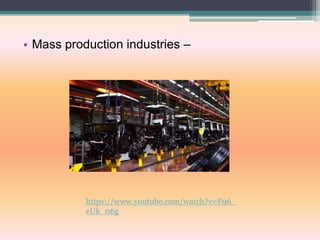
• Mass production industries –
Automobiles, Consumer goods etc
Dedicated production of large quantities of one
product (with perhaps limited model variations).
Examples include automobiles, appliances, and
engine blocks.
• Mass production industries –
https://www.youtube.com/watch?v=F96_
eUk_06g
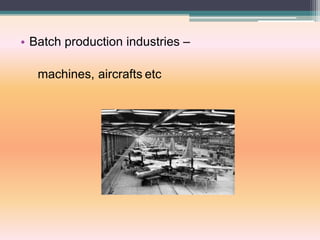
• Batch production industries –
machines, aircrafts etc
Production of medium lot sizes of the same
product or component. The lots may be
produced once or repeated periodically.
Examples include books, clothing, and certain
industrial machinery
• Batch production industries –
machines, aircrafts etc
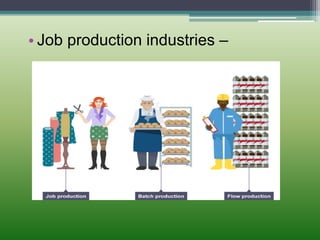
• Job production industries –
Prototypes, heat exchangers , chemical
reactors etc
Production of low quantities, often one of a
kind, of specialized products. The products are
often customized and technologically complex.
Examples include prototypes, aircraft, machine
tools, and other equipment.
• Job production industries –
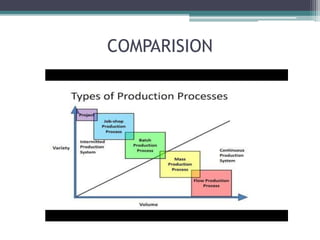
COMPARISION
• Automation is focused on reducing unit
production time and to some extent time
associated with planning and setting up for
each batch of production.
• CAD/CAM is focused on reducing time for
designing the product and all other activities
which are accomplished once for each product
and time associated with planning and setting
up for each batch of production
Advantages
• Increased Productivity
• Reduced Overall Production time
• Less floor Space Required
• Increased overall profits of the
manufacturing concern
• Human fatigue is greatly minimized
Disadvantages
• Technology Limits
• Unpredictable Development cost
• Initial cost are Relatively High

automation in cad cam

  • 1.
    CAD/CAM TOPIC:AUTOMATION BY J KUMAR CHANDRA Assistantprofessor, Department of ME, NNRG HYD
  • 2.
    WHAT IS AUTOMATION? Automation is technology concerned with the application of complex mechanical, electrical, electronic , hydraulic, pneumatic or computer based system in the operation and control of production
  • 3.
    Need of Automation Increased Productivity  High Cost of Labour  Labour Shortage  Trend of labour towards the service sector  Safety  Improved Product Quality  Reduced Manufacturing Lean Time  High Cost of not Automating
  • 4.
    Machines Used inAutomation • Numerically Controlled Machine • Machining Centers • Robots • Automated Quality Control Inspection • Automated Identification System • Automated Process Controls
  • 5.
    Types of Automation •Continuous process • Mass production • Batch production • Job production industries
  • 6.
    • Continuous flowprocess industries Continuous dedicated production of large amounts of bulk product. Examples include continuous chemical plants and oil refineries
  • 7.
    • Continuous processindustries Sugar industry, chemical industry etc.
  • 8.
    • Mass productionindustries – Automobiles, Consumer goods etc Dedicated production of large quantities of one product (with perhaps limited model variations). Examples include automobiles, appliances, and engine blocks.
  • 9.
    • Mass productionindustries – https://www.youtube.com/watch?v=F96_ eUk_06g
  • 10.
    • Batch productionindustries – machines, aircrafts etc Production of medium lot sizes of the same product or component. The lots may be produced once or repeated periodically. Examples include books, clothing, and certain industrial machinery
  • 11.
    • Batch productionindustries – machines, aircrafts etc
  • 12.
    • Job productionindustries – Prototypes, heat exchangers , chemical reactors etc Production of low quantities, often one of a kind, of specialized products. The products are often customized and technologically complex. Examples include prototypes, aircraft, machine tools, and other equipment.
  • 13.
    • Job productionindustries –
  • 14.
  • 15.
    • Automation isfocused on reducing unit production time and to some extent time associated with planning and setting up for each batch of production. • CAD/CAM is focused on reducing time for designing the product and all other activities which are accomplished once for each product and time associated with planning and setting up for each batch of production
  • 16.
    Advantages • Increased Productivity •Reduced Overall Production time • Less floor Space Required • Increased overall profits of the manufacturing concern • Human fatigue is greatly minimized
  • 17.
    Disadvantages • Technology Limits •Unpredictable Development cost • Initial cost are Relatively High