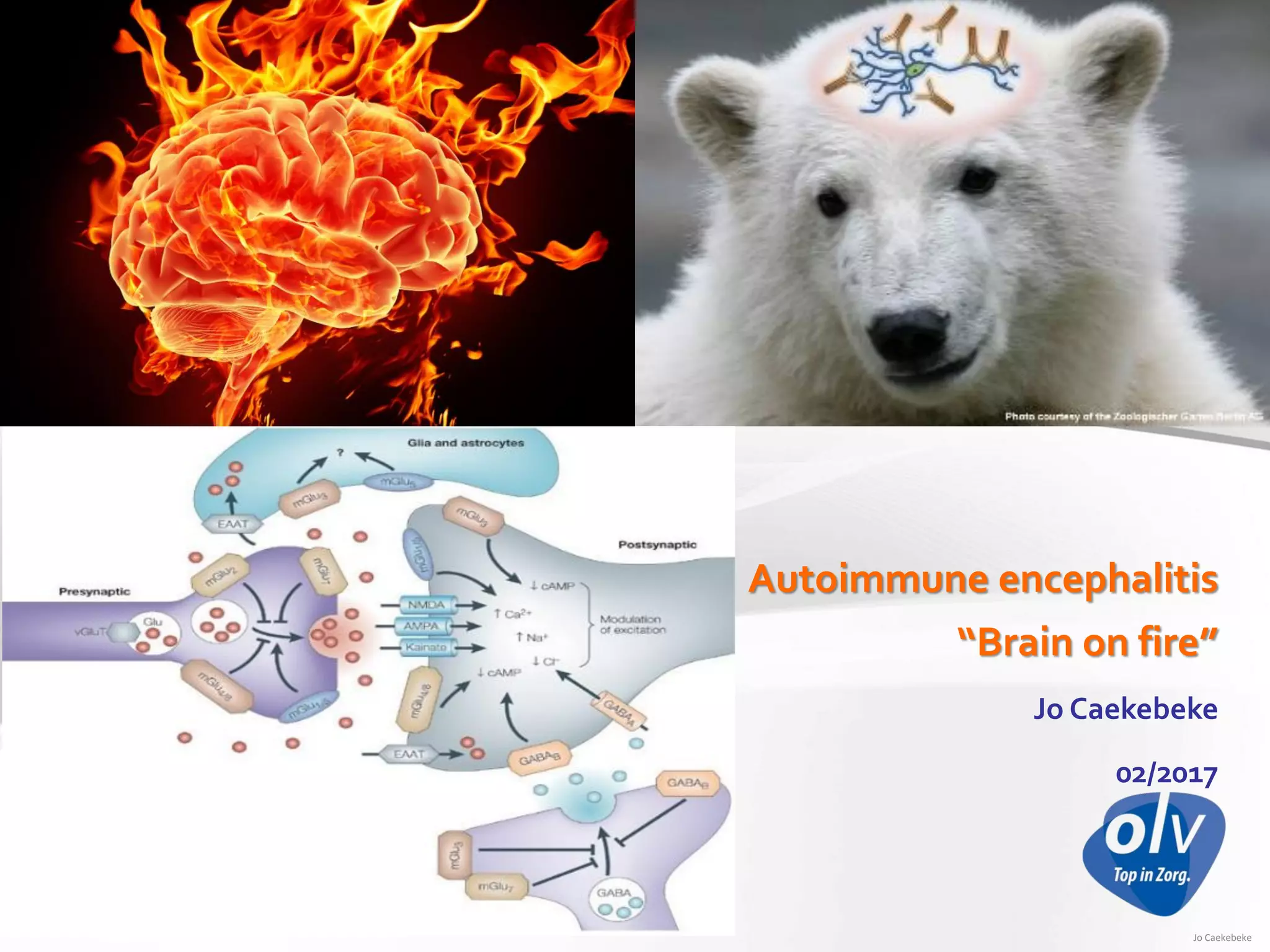
Autoimmune encephalitis
“Brain on fire”
Jo Caekebeke
02/2017
Jo Caekebeke
Autoimmune encephalopathy
Jo Caekebeke
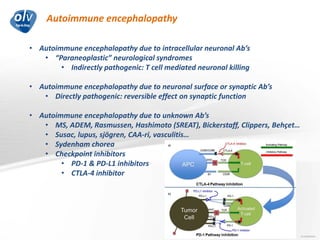
• Autoimmune encephalopathy due to intracellular neuronal Ab’s
• “Paraneoplastic” neurological syndromes
• Indirectly pathogenic: T cell mediated neuronal killing
• Autoimmune encephalopathy due to neuronal surface or synaptic Ab’s
• Directly pathogenic: reversible effect on synaptic function
• Autoimmune encephalopathy due to unknown Ab’s
• MS, ADEM, Rasmussen, Hashimoto (SREAT), Bickerstaff, Clippers, Behçet…
• Susac, lupus, sjögren, CAA-ri, vasculitis…
• Sydenham chorea
• Checkpoint inhibitors
• PD-1 & PD-L1 inhibitors
• CTLA-4 inhibitor
Autoimmune encephalopathy
Jo Caekebeke
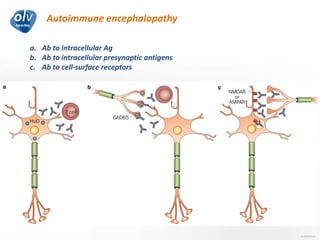
a. Ab to intracellular Ag
b. Ab to intracellular presynaptic antigens
c. Ab to cell-surface receptors
Autoimmune encephalopathy
Jo Caekebeke
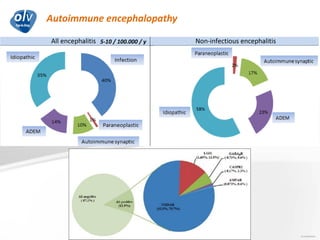
5-10 / 100.000 / y
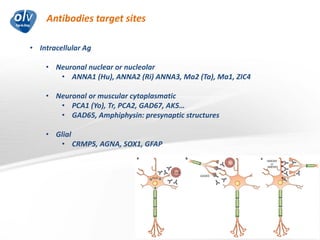
Antibodies target sites
Jo Caekebeke
• Intracellular Ag
• Neuronal nuclear or nucleolar
• ANNA1 (Hu), ANNA2 (Ri) ANNA3, Ma2 (Ta), Ma1, ZIC4
• Neuronal or muscular cytoplasmatic
• PCA1 (Yo), Tr, PCA2, GAD67, AK5…
• GAD65, Amphiphysin: presynaptic structures
• Glial
• CRMP5, AGNA, SOX1, GFAP
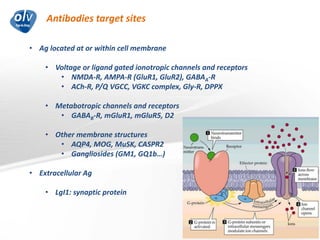
Antibodies target sites
Jo Caekebeke
• Ag located at or within cell membrane
• Voltage or ligand gated ionotropic channels and receptors
• NMDA-R, AMPA-R (GluR1, GluR2), GABAA-R
• ACh-R, P/Q VGCC, VGKC complex, Gly-R, DPPX
• Metabotropic channels and receptors
• GABAB-R, mGluR1, mGluR5, D2
• Other membrane structures
• AQP4, MOG, MuSK, CASPR2
• Gangliosides (GM1, GQ1b…)
• Extracellular Ag
• LgI1: synaptic protein
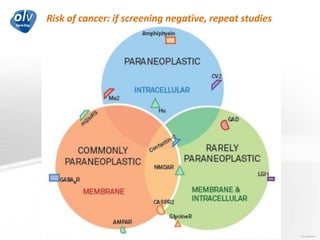
Risk of cancer: if screening negative, repeat studies
Jo Caekebeke
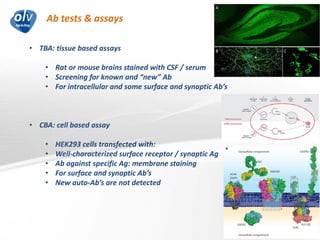
Ab tests & assays
Jo Caekebeke
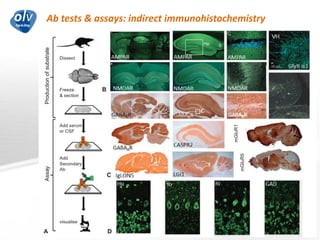
• TBA: tissue based assays
• Rat or mouse brains stained with CSF / serum
• Screening for known and “new” Ab
• For intracellular and some surface and synaptic Ab’s
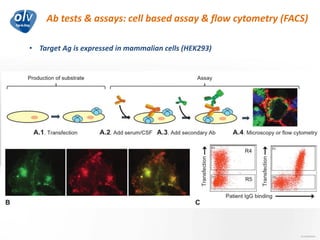
• CBA: cell based assay
• HEK293 cells transfected with:
• Well-characterized surface receptor / synaptic Ag
• Ab against specific Ag: membrane staining
• For surface and synaptic Ab’s
• New auto-Ab’s are not detected
Ab tests & assays: indirect immunohistochemistry
Jo Caekebeke
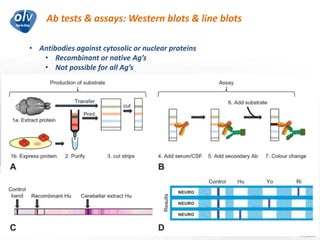
Ab tests & assays: Western blots & line blots
Jo Caekebeke
• Antibodies against cytosolic or nuclear proteins
• Recombinant or native Ag’s
• Not possible for all Ag’s
Ab tests & assays: cell based assay & flow cytometry (FACS)
Jo Caekebeke
• Target Ag is expressed in mammalian cells (HEK293)
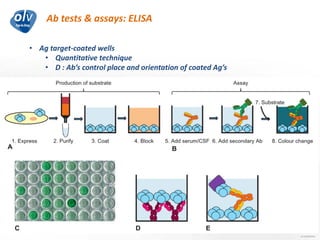
Ab tests & assays: ELISA
Jo Caekebeke
• Ag target-coated wells
• Quantitative technique
• D : Ab’s control place and orientation of coated Ag’s
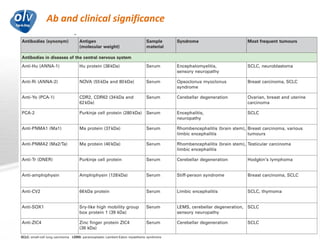
Ab and clinical significance
Jo Caekebeke
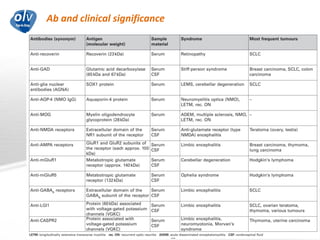
Ab and clinical significance
Jo Caekebeke
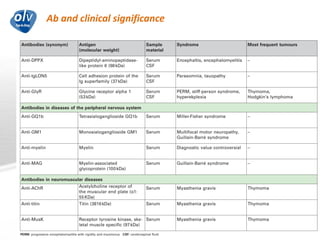
Ab and clinical significance
Jo Caekebeke
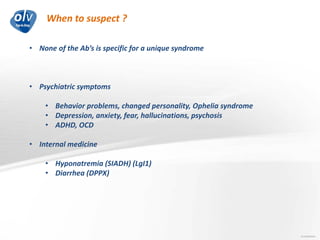
When to suspect ?
Jo Caekebeke
• None of the Ab’s is specific for a unique syndrome
• Psychiatric symptoms
• Behavior problems, changed personality, Ophelia syndrome
• Depression, anxiety, fear, hallucinations, psychosis
• ADHD, OCD
• Internal medicine
• Hyponatremia (SIADH) (LgI1)
• Diarrhea (DPPX)
When to suspect ?
Jo Caekebeke
• Neurological features
• Memory loss or amnesia
• Dystonia, tics, chorea, myokymia, oculogyric crisis, myoclonus-
opsoclonus, rigidity, catatonia, parkinsonism
• Epilepsy: generalized, partial, myoclonic, faciobrachial dystonic
seizures, hiccups
• Aphasia, mutism
• Ataxia, nystagmus
• Insomnia, drowsiness, lethargy, sleep inversion
• Decreased consciousness, stupor, coma
• Autonomic features: tachy bradycardia, hypoventilation, respiratory
failure
When to suspect ?
Jo Caekebeke
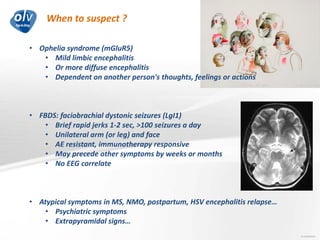
• Ophelia syndrome (mGluR5)
• Mild limbic encephalitis
• Or more diffuse encephalitis
• Dependent on another person's thoughts, feelings or actions
• FBDS: faciobrachial dystonic seizures (LgI1)
• Brief rapid jerks 1-2 sec, >100 seizures a day
• Unilateral arm (or leg) and face
• AE resistant, immunotherapy responsive
• May precede other symptoms by weeks or months
• No EEG correlate
• Atypical symptoms in MS, NMO, postpartum, HSV encephalitis relapse…
• Psychiatric symptoms
• Extrapyramidal signs…
When to suspect ?
Jo Caekebeke
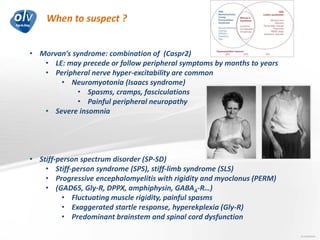
• Morvan‘s syndrome: combination of (Caspr2)
• LE: may precede or follow peripheral symptoms by months to years
• Peripheral nerve hyper-excitability are common
• Neuromyotonia (Isaacs syndrome)
• Spasms, cramps, fasciculations
• Painful peripheral neuropathy
• Severe insomnia
• Stiff-person spectrum disorder (SP-SD)
• Stiff-person syndrome (SPS), stiff-limb syndrome (SLS)
• Progressive encephalomyelitis with rigidity and myoclonus (PERM)
• (GAD65, Gly-R, DPPX, amphiphysin, GABAA-R…)
• Fluctuating muscle rigidity, painful spasms
• Exaggerated startle response, hyperekplexia (Gly-R)
• Predominant brainstem and spinal cord dysfunction
Possible autoimmune encephalitis, “Ab still unknown”
Jo Caekebeke
• If all 2 criteria have been met:
1. Rapid progressive (< 3m):
• Working memory deficit
• Altered mental status
• Psychiatric symptoms
2. At least 1 of following criteria
• New focal CNS finding
• Seizures and no previously known seizure disorder
• CSF pleocytosis
• MRI suggestive of autoimmune encephalitis
• Out of scope:
• Autoimmune cerebellopathy
• PERM, SPS
Probable autoimmune encephalitis, “Ab negative”
Jo Caekebeke
• If all 3 criteria have been met:
1. Rapid progressive (< 3m):
• Working memory deficit
• Altered mental status
• Psychiatric symptoms
2. Exclusion of well defined syndromes
• ADEM, Bickerstaff…
3. At least 2 of following criteria
• MRI suggestive of autoimmune encephalitis
• CSF pleocytosis, CSF specific OCB or elevated IgG index
• Brain biopsy showing inflammation and excluding tumors…
• Many patients with clinical LE have CSF reacting with neurons without
characterized Ab’s
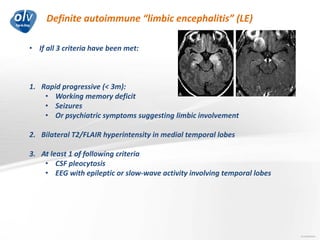
Definite autoimmune “limbic encephalitis” (LE)
Jo Caekebeke
• If all 3 criteria have been met:
1. Rapid progressive (< 3m):
• Working memory deficit
• Seizures
• Or psychiatric symptoms suggesting limbic involvement
2. Bilateral T2/FLAIR hyperintensity in medial temporal lobes
3. At least 1 of following criteria
• CSF pleocytosis
• EEG with epileptic or slow-wave activity involving temporal lobes
Probable & definite “NMDA encephalitis”
Jo Caekebeke
• Probable: if all 2 criteria have been met:
1. Rapid progressive (< 3m) of at least 4/6 major symptom groups or 3/6
symptom groups and teratoma:
1. Abnormal (psychiatric) behavior or cognitive dysfunction
2. Speech dysfunction, mutism, echolalia
3. Seizures
4. Movement disorders, dyskinesia, rigidity/abnormal postures
5. Decreased level of consciousness
6. Autonomic dysfunction or central hypoventilation
2. At least 1 of following criteria
• Abnormal EEG: focal or diffuse slow/disorganized activity, epileptic
activity or extreme delta brush
• CSF pleocytosis or specific OCB
• Definite: at least 1/6 major symptom groups and NMDA-R Ab’s
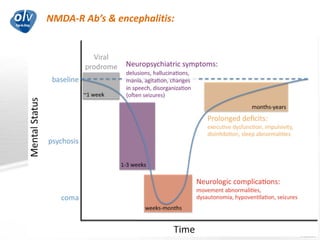
NMDA-R Ab’s & encephalitis:
Jo Caekebeke
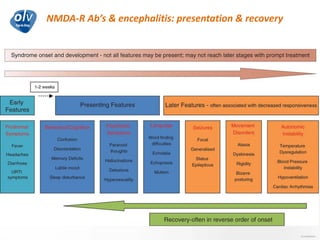
NMDA-R Ab’s & encephalitis: presentation & recovery
Jo Caekebeke
NMDA-R Ab’s & encephalitis
Jo Caekebeke
• Median age 21 y, (2-40 y), female 80%, incidence 0.33/105/y
• May recover completely (75%) or partially:
• Memory deficits, executive dysfunction…
• Relapse risk: 12% over 2 years
• Tend to be milder
• New seizures: should raise concern for relapse
• Often treated with neuroleptics
• Evolution may be mistaken for neuroleptic malignant syndrome
• May be sensitive to strong dopamine antagonists
• In 10-50% : ovarian teratoma >> testicular tumor, neuroblastoma,
Hodgkin lymphoma…
• Outcome and risk of teratoma related to CSF titer
Special cases of NMDA encephalitis
Jo Caekebeke
• Post herpes encephalitis
• As a “pseudo” relapse or persistent disorder (in 20%)
• During mycoplasma infection
• Following Guillain Barré syndrome and NMO spectrum
• In a MS patient on fingolimod
• Overlapping syndromes can occur
• May mimic neuroleptic malignant syndrome
• In postpartum psychosis
• Extrapyramidal symptoms following low-dose haloperidol
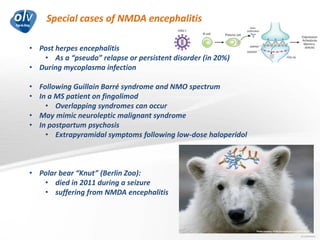
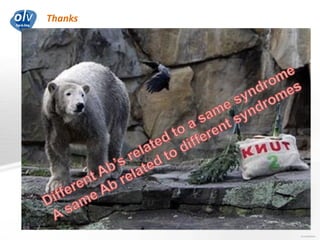
• Polar bear “Knut” (Berlin Zoo):
• died in 2011 during a seizure
• suffering from NMDA encephalitis
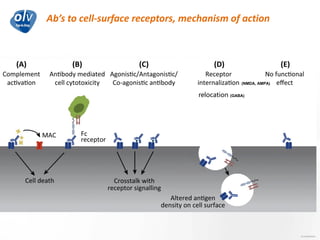
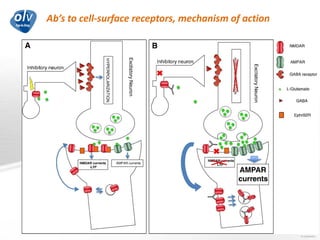
Ab’s to cell-surface receptors, mechanism of action
Jo Caekebeke
(NMDA, AMPA)
relocation (GABA)
Ab’s to cell-surface receptors, mechanism of action
Jo Caekebeke
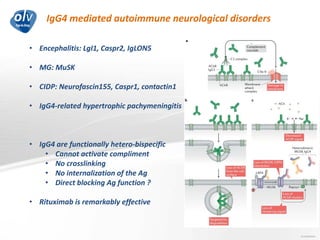
IgG4 mediated autoimmune neurological disorders
Jo Caekebeke
• Encephalitis: LgI1, Caspr2, IgLON5
• MG: MuSK
• CIDP: Neurofascin155, Caspr1, contactin1
• IgG4-related hypertrophic pachymeningitis
• IgG4 are functionally hetero-bispecific
• Cannot activate compliment
• No crosslinking
• No internalization of the Ag
• Direct blocking Ag function ?
• Rituximab is remarkably effective
VGKC complex Ab’s
Jo Caekebeke
• Pathogenic Ag’s: LgI1 and Caspr2 are related but not part of VGKC
• LgI1 and Caspr2 Ab’s are still detected by VGKC test
• In 50% low serum VGKC Ab level without evidence of LgI1 or Caspr2 Ab’s
• No evidence of autoimmune encephalitis?
• But 10% with low titer have tumors
• Linked to CJD ???
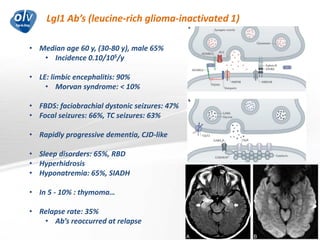
LgI1 Ab’s (leucine-rich glioma-inactivated 1)
Jo Caekebeke
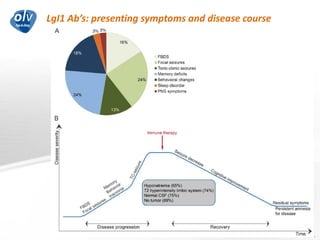
• Median age 60 y, (30-80 y), male 65%
• Incidence 0.10/105/y
• LE: limbic encephalitis: 90%
• Morvan syndrome: < 10%
• FBDS: faciobrachial dystonic seizures: 47%
• Focal seizures: 66%, TC seizures: 63%
• Rapidly progressive dementia, CJD-like
• Sleep disorders: 65%, RBD
• Hyperhidrosis
• Hyponatremia: 65%, SIADH
• In 5 - 10% : thymoma…
• Relapse rate: 35%
• Ab’s reoccurred at relapse
LgI1 Ab’s: presenting symptoms and disease course
Jo Caekebeke
Caspr2 Ab’s & encephalitis
Jo Caekebeke
• Median age 66 y, (45-80 y), male 85%
• Slower progressive, to disease nadir : median 4 months
• LE: may precede or follow peripheral symptoms by months to years
• Cerebellar dysfunction
• Morvan syndrome: combination of
• Cognitive symptoms or seizures (LE)
• Peripheral nerve hyper-excitability
• Myokymia, cramps, fasciculations
• Neuromyotonia (Isaacs syndrome)
• Dysautonomia and insomnia
• Painful peripheral neuropathy
• Weight loss
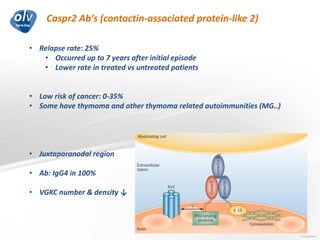
Caspr2 Ab’s (contactin-associated protein-like 2)
Jo Caekebeke
• Relapse rate: 25%
• Occurred up to 7 years after initial episode
• Lower rate in treated vs untreated patients
• Low risk of cancer: 0-35%
• Some have thymoma and other thymoma related autoimmunities (MG..)
• Juxtaparanodal region
• Ab: IgG4 in 100%
• VGKC number & density ↓
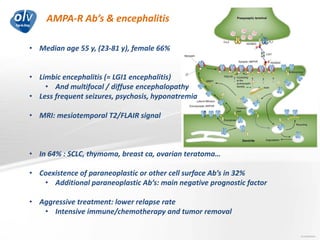
AMPA-R Ab’s & encephalitis
Jo Caekebeke
• Median age 55 y, (23-81 y), female 66%
• Limbic encephalitis (≈ LGI1 encephalitis)
• And multifocal / diffuse encephalopathy
• Less frequent seizures, psychosis, hyponatremia
• MRI: mesiotemporal T2/FLAIR signal
• In 64% : SCLC, thymoma, breast ca, ovarian teratoma…
• Coexistence of paraneoplastic or other cell surface Ab’s in 32%
• Additional paraneoplastic Ab’s: main negative prognostic factor
• Aggressive treatment: lower relapse rate
• Intensive immune/chemotherapy and tumor removal
GABAB-R Ab’s & encephalitis
Jo Caekebeke
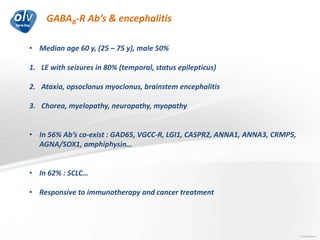
• Median age 60 y, (25 – 75 y), male 50%
1. LE with seizures in 80% (temporal, status epilepticus)
2. Ataxia, opsoclonus myoclonus, brainstem encephalitis
3. Chorea, myelopathy, neuropathy, myopathy
• In 56% Ab’s co-exist : GAD65, VGCC-R, LGI1, CASPR2, ANNA1, ANNA3, CRMP5,
AGNA/SOX1, amphiphysin…
• In 62% : SCLC…
• Responsive to immunotherapy and cancer treatment
GABAA-R Ab’s & encephalitis
Jo Caekebeke
• 50% in children
• Rapid, severe encephalopathy with refractory seizures, status epilepticus
• Similar to anti GABAB-R encephalitis and SPS
• MRI : multifocal cortical / subcortical T2/FLAIR signals
• In 70% Ab’s co-exist : NMDA-R, Ach-R, GABAB-R, GAD65, LGI1, CASPR2…
• In 40% : thymoma, Hodgkin lymphoma
• In 80% partial or complete responsive to immunotherapy and antiepileptic drugs
Gly-R (glycine) and gephyrin Ab’s & encephalitis
Jo Caekebeke
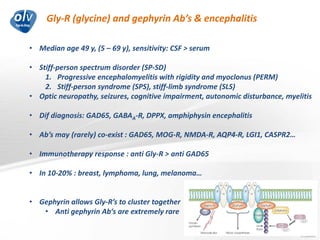
• Median age 49 y, (5 – 69 y), sensitivity: CSF > serum
• Stiff-person spectrum disorder (SP-SD)
1. Progressive encephalomyelitis with rigidity and myoclonus (PERM)
2. Stiff-person syndrome (SPS), stiff-limb syndrome (SLS)
• Optic neuropathy, seizures, cognitive impairment, autonomic disturbance, myelitis
• Dif diagnosis: GAD65, GABAA-R, DPPX, amphiphysin encephalitis
• Ab’s may (rarely) co-exist : GAD65, MOG-R, NMDA-R, AQP4-R, LGI1, CASPR2…
• Immunotherapy response : anti Gly-R > anti GAD65
• In 10-20% : breast, lymphoma, lung, melanoma…
• Gephyrin allows Gly-R’s to cluster together
• Anti gephyrin Ab‘s are extremely rare
GAD65 (glutamate decarboxylase) Ab’s & encephalitis
Jo Caekebeke
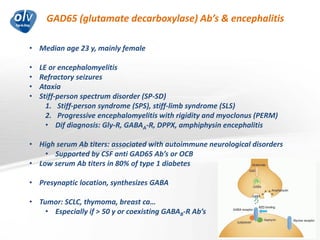
• Median age 23 y, mainly female
• LE or encephalomyelitis
• Refractory seizures
• Ataxia
• Stiff-person spectrum disorder (SP-SD)
1. Stiff-person syndrome (SPS), stiff-limb syndrome (SLS)
2. Progressive encephalomyelitis with rigidity and myoclonus (PERM)
• Dif diagnosis: Gly-R, GABAA-R, DPPX, amphiphysin encephalitis
• High serum Ab titers: associated with autoimmune neurological disorders
• Supported by CSF anti GAD65 Ab’s or OCB
• Low serum Ab titers in 80% of type 1 diabetes
• Presynaptic location, synthesizes GABA
• Tumor: SCLC, thymoma, breast ca…
• Especially if > 50 y or coexisting GABAB-R Ab’s
mGlu-R1, mGlu-R5 Ab’s & encephalitis
Jo Caekebeke
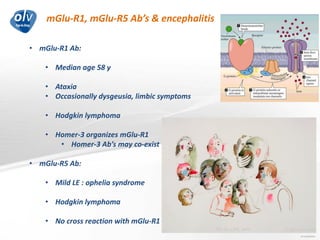
• mGlu-R1 Ab:
• Median age 58 y
• Ataxia
• Occasionally dysgeusia, limbic symptoms
• Hodgkin lymphoma
• Homer-3 organizes mGlu-R1
• Homer-3 Ab’s may co-exist
• mGlu-R5 Ab:
• Mild LE : ophelia syndrome
• Hodgkin lymphoma
• No cross reaction with mGlu-R1
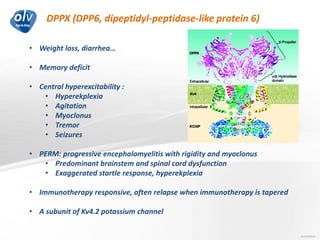
DPPX (DPP6, dipeptidyl-peptidase-like protein 6)
Jo Caekebeke
• Weight loss, diarrhea…
• Memory deficit
• Central hyperexcitability :
• Hyperekplexia
• Agitation
• Myoclonus
• Tremor
• Seizures
• PERM: progressive encephalomyelitis with rigidity and myoclonus
• Predominant brainstem and spinal cord dysfunction
• Exaggerated startle response, hyperekplexia
• Immunotherapy responsive, often relapse when immunotherapy is tapered
• A subunit of Kv4.2 potassium channel
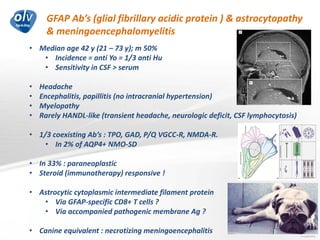
GFAP Ab’s (glial fibrillary acidic protein ) & astrocytopathy
& meningoencephalomyelitis
Jo Caekebeke
• Median age 42 y (21 – 73 y); m 50%
• Incidence = anti Yo = 1/3 anti Hu
• Sensitivity in CSF > serum
• Headache
• Encephalitis, papillitis (no intracranial hypertension)
• Myelopathy
• Rarely HANDL-like (transient headache, neurologic deficit, CSF lymphocytosis)
• 1/3 coexisting Ab’s : TPO, GAD, P/Q VGCC-R, NMDA-R.
• In 2% of AQP4+ NMO-SD
• In 33% : paraneoplastic
• Steroid (immunotherapy) responsive !
• Astrocytic cytoplasmic intermediate filament protein
• Via GFAP-specific CD8+ T cells ?
• Via accompanied pathogenic membrane Ag ?
• Canine equivalent : necrotizing meningoencephalitis
IgLON5 Ab’s & tauopathy
Jo Caekebeke
• Median age 53 y, (48 – 77 y)
• Chronic and slow progressive disease (years)
• Non-REM & REM parasomnias, sleep apnea, stridor
• Very abnormal at the beginning and close to normal by the end of the night
• Gait instability, chorea and brainstem symptoms, (parkinsonism)
• Ab’s against IgLON5: neuronal cell-adhesion molecule (function unknown)
• All have HLA-DRB1*1001 and HLA-DQB1*0501 haplotype
• MRI : normal
• No response to immunotherapy ?
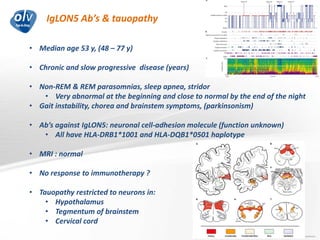
• Tauopathy restricted to neurons in:
• Hypothalamus
• Tegmentum of brainstem
• Cervical cord
AK5 Ab’s (adenylate kinase 5) & encephalitis
Jo Caekebeke
• Median age > 50 y
• Limbic encephalitis
• Subacute anterograde amnesia
• No seizures
• Sometimes prodromal asthenia or mood disturbances
• Some patients with prosopagnosia, anxiety, abnormal behavior
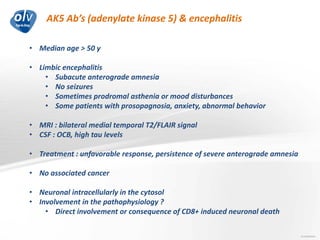
• MRI : bilateral medial temporal T2/FLAIR signal
• CSF : OCB, high tau levels
• Treatment : unfavorable response, persistence of severe anterograde amnesia
• No associated cancer
• Neuronal intracellularly in the cytosol
• Involvement in the pathophysiology ?
• Direct involvement or consequence of CD8+ induced neuronal death
Hashimoto encephalitis, SREAT
Jo Caekebeke
• Steroid-responsive encephalopathy associated with autoimmune thyroiditis
• Anti α-enolase 1 Ab (ENO1) ?
• On cell surface and in cytoplasm in variety of tissues: brain, thyroid…
• Associated with anti thyroglobulin (TG), thyroid peroxidase (TPO) Ab’s
• Thyroid Ab’s could be associated with (or co-occurrence):
• NMDA-R, LgI1, Caspr2, GABAB-R, GABAA-R, GAD65 Ab’s
• Broad screening when considering Hashimoto or GAD65 encephalitis
• Diagnostic criteria: if all 6 criteria have been met:
1. Encephalopathy with seizures, myoclonus, hallucinations or stroke-like
episodes
2. Subclinical or mild thyroid disease, usually hypothyroidism
3. Normal MRI or non-specific findings
4. Serum TPO, TG Ab’s, no cutoff value
5. Absence of neuronal Ab’s in serum and CSF
6. Reasonable exclusion of alternative causes
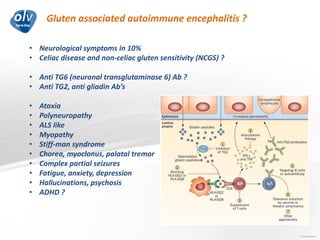
Gluten associated autoimmune encephalitis ?
Jo Caekebeke
• Neurological symptoms in 10%
• Celiac disease and non-celiac gluten sensitivity (NCGS) ?
• Anti TG6 (neuronal transglutaminase 6) Ab ?
• Anti TG2, anti gliadin Ab’s
• Ataxia
• Polyneuropathy
• ALS like
• Myopathy
• Stiff-man syndrome
• Chorea, myoclonus, palatal tremor
• Complex partial seizures
• Fatigue, anxiety, depression
• Hallucinations, psychosis
• ADHD ?
Ab in serum and/or CSF
Jo Caekebeke
• Intracellular (paraneoplastic) Ab’s
• Always prevalent in serum
• Cell surface Ab’s
• All patients should have serum and CSF tested
• CSF preferred: NMDA, AMPA, GABAB, Gly, GFAP
• Serum preferred: LgI1, Caspr2, GABAA
• NMDA-R Ab’s
• Always present in CSF; negative in serum in 14%
• Changes in CSF titers correlate roughly to disease status
• CSF important in HSV-induced NMDA encephalitis
• GAD65 Ab’s
• If neurological symptoms: high CSF titer
• Low CSF and serum titer may not be specific for neurological disease
• Provide little information in patients with type 1 diabetes
• IV IG treatment does not affect CSF interpretation
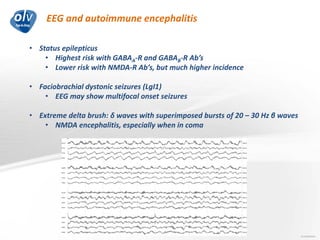
EEG and autoimmune encephalitis
Jo Caekebeke
• Status epilepticus
• Highest risk with GABAA-R and GABAB-R Ab’s
• Lower risk with NMDA-R Ab’s, but much higher incidence
• Faciobrachial dystonic seizures (LgI1)
• EEG may show multifocal onset seizures
• Extreme delta brush: δ waves with superimposed bursts of 20 – 30 Hz β waves
• NMDA encephalitis, especially when in coma
MRI
Jo Caekebeke
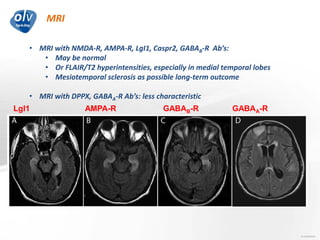
• MRI with NMDA-R, AMPA-R, LgI1, Caspr2, GABAB-R Ab’s:
• May be normal
• Or FLAIR/T2 hyperintensities, especially in medial temporal lobes
• Mesiotemporal sclerosis as possible long-term outcome
• MRI with DPPX, GABAA-R Ab’s: less characteristic
LgI1 AMPA-R GABAB-R GABAA-R
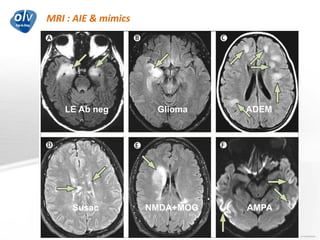
MRI : AIE & mimics
Jo Caekebeke
LE Ab neg Glioma ADEM
Susac NMDA+MOG AMPA
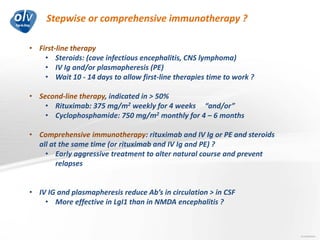
Stepwise or comprehensive immunotherapy ?
Jo Caekebeke
• First-line therapy
• Steroids: (cave infectious encephalitis, CNS lymphoma)
• IV Ig and/or plasmapheresis (PE)
• Wait 10 - 14 days to allow first-line therapies time to work ?
• Second-line therapy, indicated in > 50%
• Rituximab: 375 mg/m2 weekly for 4 weeks “and/or”
• Cyclophosphamide: 750 mg/m2 monthly for 4 – 6 months
• Comprehensive immunotherapy: rituximab and IV Ig or PE and steroids
all at the same time (or rituximab and IV Ig and PE) ?
• Early aggressive treatment to alter natural course and prevent
relapses
• IV IG and plasmapheresis reduce Ab’s in circulation > in CSF
• More effective in LgI1 than in NMDA encephalitis ?
Thanks
Jo Caekebeke

Autoimmune encephalitis - Dr. J. Caekebeke

  • 1.
    Autoimmune encephalitis “Brain onfire” Jo Caekebeke 02/2017 Jo Caekebeke
  • 2.
    Autoimmune encephalopathy Jo Caekebeke •Autoimmune encephalopathy due to intracellular neuronal Ab’s • “Paraneoplastic” neurological syndromes • Indirectly pathogenic: T cell mediated neuronal killing • Autoimmune encephalopathy due to neuronal surface or synaptic Ab’s • Directly pathogenic: reversible effect on synaptic function • Autoimmune encephalopathy due to unknown Ab’s • MS, ADEM, Rasmussen, Hashimoto (SREAT), Bickerstaff, Clippers, Behçet… • Susac, lupus, sjögren, CAA-ri, vasculitis… • Sydenham chorea • Checkpoint inhibitors • PD-1 & PD-L1 inhibitors • CTLA-4 inhibitor
  • 3.
    Autoimmune encephalopathy Jo Caekebeke a.Ab to intracellular Ag b. Ab to intracellular presynaptic antigens c. Ab to cell-surface receptors
  • 4.
  • 5.
    Antibodies target sites JoCaekebeke • Intracellular Ag • Neuronal nuclear or nucleolar • ANNA1 (Hu), ANNA2 (Ri) ANNA3, Ma2 (Ta), Ma1, ZIC4 • Neuronal or muscular cytoplasmatic • PCA1 (Yo), Tr, PCA2, GAD67, AK5… • GAD65, Amphiphysin: presynaptic structures • Glial • CRMP5, AGNA, SOX1, GFAP
  • 6.
    Antibodies target sites JoCaekebeke • Ag located at or within cell membrane • Voltage or ligand gated ionotropic channels and receptors • NMDA-R, AMPA-R (GluR1, GluR2), GABAA-R • ACh-R, P/Q VGCC, VGKC complex, Gly-R, DPPX • Metabotropic channels and receptors • GABAB-R, mGluR1, mGluR5, D2 • Other membrane structures • AQP4, MOG, MuSK, CASPR2 • Gangliosides (GM1, GQ1b…) • Extracellular Ag • LgI1: synaptic protein
  • 7.
    Risk of cancer:if screening negative, repeat studies Jo Caekebeke
  • 8.
    Ab tests &assays Jo Caekebeke • TBA: tissue based assays • Rat or mouse brains stained with CSF / serum • Screening for known and “new” Ab • For intracellular and some surface and synaptic Ab’s • CBA: cell based assay • HEK293 cells transfected with: • Well-characterized surface receptor / synaptic Ag • Ab against specific Ag: membrane staining • For surface and synaptic Ab’s • New auto-Ab’s are not detected
  • 9.
    Ab tests &assays: indirect immunohistochemistry Jo Caekebeke
  • 10.
    Ab tests &assays: Western blots & line blots Jo Caekebeke • Antibodies against cytosolic or nuclear proteins • Recombinant or native Ag’s • Not possible for all Ag’s
  • 11.
    Ab tests &assays: cell based assay & flow cytometry (FACS) Jo Caekebeke • Target Ag is expressed in mammalian cells (HEK293)
  • 12.
    Ab tests &assays: ELISA Jo Caekebeke • Ag target-coated wells • Quantitative technique • D : Ab’s control place and orientation of coated Ag’s
  • 13.
    Ab and clinicalsignificance Jo Caekebeke
  • 14.
    Ab and clinicalsignificance Jo Caekebeke
  • 15.
    Ab and clinicalsignificance Jo Caekebeke
  • 16.
    When to suspect? Jo Caekebeke • None of the Ab’s is specific for a unique syndrome • Psychiatric symptoms • Behavior problems, changed personality, Ophelia syndrome • Depression, anxiety, fear, hallucinations, psychosis • ADHD, OCD • Internal medicine • Hyponatremia (SIADH) (LgI1) • Diarrhea (DPPX)
  • 17.
    When to suspect? Jo Caekebeke • Neurological features • Memory loss or amnesia • Dystonia, tics, chorea, myokymia, oculogyric crisis, myoclonus- opsoclonus, rigidity, catatonia, parkinsonism • Epilepsy: generalized, partial, myoclonic, faciobrachial dystonic seizures, hiccups • Aphasia, mutism • Ataxia, nystagmus • Insomnia, drowsiness, lethargy, sleep inversion • Decreased consciousness, stupor, coma • Autonomic features: tachy bradycardia, hypoventilation, respiratory failure
  • 18.
    When to suspect? Jo Caekebeke • Ophelia syndrome (mGluR5) • Mild limbic encephalitis • Or more diffuse encephalitis • Dependent on another person's thoughts, feelings or actions • FBDS: faciobrachial dystonic seizures (LgI1) • Brief rapid jerks 1-2 sec, >100 seizures a day • Unilateral arm (or leg) and face • AE resistant, immunotherapy responsive • May precede other symptoms by weeks or months • No EEG correlate • Atypical symptoms in MS, NMO, postpartum, HSV encephalitis relapse… • Psychiatric symptoms • Extrapyramidal signs…
  • 19.
    When to suspect? Jo Caekebeke • Morvan‘s syndrome: combination of (Caspr2) • LE: may precede or follow peripheral symptoms by months to years • Peripheral nerve hyper-excitability are common • Neuromyotonia (Isaacs syndrome) • Spasms, cramps, fasciculations • Painful peripheral neuropathy • Severe insomnia • Stiff-person spectrum disorder (SP-SD) • Stiff-person syndrome (SPS), stiff-limb syndrome (SLS) • Progressive encephalomyelitis with rigidity and myoclonus (PERM) • (GAD65, Gly-R, DPPX, amphiphysin, GABAA-R…) • Fluctuating muscle rigidity, painful spasms • Exaggerated startle response, hyperekplexia (Gly-R) • Predominant brainstem and spinal cord dysfunction
  • 20.
    Possible autoimmune encephalitis,“Ab still unknown” Jo Caekebeke • If all 2 criteria have been met: 1. Rapid progressive (< 3m): • Working memory deficit • Altered mental status • Psychiatric symptoms 2. At least 1 of following criteria • New focal CNS finding • Seizures and no previously known seizure disorder • CSF pleocytosis • MRI suggestive of autoimmune encephalitis • Out of scope: • Autoimmune cerebellopathy • PERM, SPS
  • 21.
    Probable autoimmune encephalitis,“Ab negative” Jo Caekebeke • If all 3 criteria have been met: 1. Rapid progressive (< 3m): • Working memory deficit • Altered mental status • Psychiatric symptoms 2. Exclusion of well defined syndromes • ADEM, Bickerstaff… 3. At least 2 of following criteria • MRI suggestive of autoimmune encephalitis • CSF pleocytosis, CSF specific OCB or elevated IgG index • Brain biopsy showing inflammation and excluding tumors… • Many patients with clinical LE have CSF reacting with neurons without characterized Ab’s
  • 22.
    Definite autoimmune “limbicencephalitis” (LE) Jo Caekebeke • If all 3 criteria have been met: 1. Rapid progressive (< 3m): • Working memory deficit • Seizures • Or psychiatric symptoms suggesting limbic involvement 2. Bilateral T2/FLAIR hyperintensity in medial temporal lobes 3. At least 1 of following criteria • CSF pleocytosis • EEG with epileptic or slow-wave activity involving temporal lobes
  • 23.
    Probable & definite“NMDA encephalitis” Jo Caekebeke • Probable: if all 2 criteria have been met: 1. Rapid progressive (< 3m) of at least 4/6 major symptom groups or 3/6 symptom groups and teratoma: 1. Abnormal (psychiatric) behavior or cognitive dysfunction 2. Speech dysfunction, mutism, echolalia 3. Seizures 4. Movement disorders, dyskinesia, rigidity/abnormal postures 5. Decreased level of consciousness 6. Autonomic dysfunction or central hypoventilation 2. At least 1 of following criteria • Abnormal EEG: focal or diffuse slow/disorganized activity, epileptic activity or extreme delta brush • CSF pleocytosis or specific OCB • Definite: at least 1/6 major symptom groups and NMDA-R Ab’s
  • 24.
    NMDA-R Ab’s &encephalitis: Jo Caekebeke
  • 25.
    NMDA-R Ab’s &encephalitis: presentation & recovery Jo Caekebeke
  • 26.
    NMDA-R Ab’s &encephalitis Jo Caekebeke • Median age 21 y, (2-40 y), female 80%, incidence 0.33/105/y • May recover completely (75%) or partially: • Memory deficits, executive dysfunction… • Relapse risk: 12% over 2 years • Tend to be milder • New seizures: should raise concern for relapse • Often treated with neuroleptics • Evolution may be mistaken for neuroleptic malignant syndrome • May be sensitive to strong dopamine antagonists • In 10-50% : ovarian teratoma >> testicular tumor, neuroblastoma, Hodgkin lymphoma… • Outcome and risk of teratoma related to CSF titer
  • 27.
    Special cases ofNMDA encephalitis Jo Caekebeke • Post herpes encephalitis • As a “pseudo” relapse or persistent disorder (in 20%) • During mycoplasma infection • Following Guillain Barré syndrome and NMO spectrum • In a MS patient on fingolimod • Overlapping syndromes can occur • May mimic neuroleptic malignant syndrome • In postpartum psychosis • Extrapyramidal symptoms following low-dose haloperidol • Polar bear “Knut” (Berlin Zoo): • died in 2011 during a seizure • suffering from NMDA encephalitis
  • 28.
    Ab’s to cell-surfacereceptors, mechanism of action Jo Caekebeke (NMDA, AMPA) relocation (GABA)
  • 29.
    Ab’s to cell-surfacereceptors, mechanism of action Jo Caekebeke
  • 30.
    IgG4 mediated autoimmuneneurological disorders Jo Caekebeke • Encephalitis: LgI1, Caspr2, IgLON5 • MG: MuSK • CIDP: Neurofascin155, Caspr1, contactin1 • IgG4-related hypertrophic pachymeningitis • IgG4 are functionally hetero-bispecific • Cannot activate compliment • No crosslinking • No internalization of the Ag • Direct blocking Ag function ? • Rituximab is remarkably effective
  • 31.
    VGKC complex Ab’s JoCaekebeke • Pathogenic Ag’s: LgI1 and Caspr2 are related but not part of VGKC • LgI1 and Caspr2 Ab’s are still detected by VGKC test • In 50% low serum VGKC Ab level without evidence of LgI1 or Caspr2 Ab’s • No evidence of autoimmune encephalitis? • But 10% with low titer have tumors • Linked to CJD ???
  • 32.
    LgI1 Ab’s (leucine-richglioma-inactivated 1) Jo Caekebeke • Median age 60 y, (30-80 y), male 65% • Incidence 0.10/105/y • LE: limbic encephalitis: 90% • Morvan syndrome: < 10% • FBDS: faciobrachial dystonic seizures: 47% • Focal seizures: 66%, TC seizures: 63% • Rapidly progressive dementia, CJD-like • Sleep disorders: 65%, RBD • Hyperhidrosis • Hyponatremia: 65%, SIADH • In 5 - 10% : thymoma… • Relapse rate: 35% • Ab’s reoccurred at relapse
  • 33.
    LgI1 Ab’s: presentingsymptoms and disease course Jo Caekebeke
  • 34.
    Caspr2 Ab’s &encephalitis Jo Caekebeke • Median age 66 y, (45-80 y), male 85% • Slower progressive, to disease nadir : median 4 months • LE: may precede or follow peripheral symptoms by months to years • Cerebellar dysfunction • Morvan syndrome: combination of • Cognitive symptoms or seizures (LE) • Peripheral nerve hyper-excitability • Myokymia, cramps, fasciculations • Neuromyotonia (Isaacs syndrome) • Dysautonomia and insomnia • Painful peripheral neuropathy • Weight loss
  • 35.
    Caspr2 Ab’s (contactin-associatedprotein-like 2) Jo Caekebeke • Relapse rate: 25% • Occurred up to 7 years after initial episode • Lower rate in treated vs untreated patients • Low risk of cancer: 0-35% • Some have thymoma and other thymoma related autoimmunities (MG..) • Juxtaparanodal region • Ab: IgG4 in 100% • VGKC number & density ↓
  • 36.
    AMPA-R Ab’s &encephalitis Jo Caekebeke • Median age 55 y, (23-81 y), female 66% • Limbic encephalitis (≈ LGI1 encephalitis) • And multifocal / diffuse encephalopathy • Less frequent seizures, psychosis, hyponatremia • MRI: mesiotemporal T2/FLAIR signal • In 64% : SCLC, thymoma, breast ca, ovarian teratoma… • Coexistence of paraneoplastic or other cell surface Ab’s in 32% • Additional paraneoplastic Ab’s: main negative prognostic factor • Aggressive treatment: lower relapse rate • Intensive immune/chemotherapy and tumor removal
  • 37.
    GABAB-R Ab’s &encephalitis Jo Caekebeke • Median age 60 y, (25 – 75 y), male 50% 1. LE with seizures in 80% (temporal, status epilepticus) 2. Ataxia, opsoclonus myoclonus, brainstem encephalitis 3. Chorea, myelopathy, neuropathy, myopathy • In 56% Ab’s co-exist : GAD65, VGCC-R, LGI1, CASPR2, ANNA1, ANNA3, CRMP5, AGNA/SOX1, amphiphysin… • In 62% : SCLC… • Responsive to immunotherapy and cancer treatment
  • 38.
    GABAA-R Ab’s &encephalitis Jo Caekebeke • 50% in children • Rapid, severe encephalopathy with refractory seizures, status epilepticus • Similar to anti GABAB-R encephalitis and SPS • MRI : multifocal cortical / subcortical T2/FLAIR signals • In 70% Ab’s co-exist : NMDA-R, Ach-R, GABAB-R, GAD65, LGI1, CASPR2… • In 40% : thymoma, Hodgkin lymphoma • In 80% partial or complete responsive to immunotherapy and antiepileptic drugs
  • 39.
    Gly-R (glycine) andgephyrin Ab’s & encephalitis Jo Caekebeke • Median age 49 y, (5 – 69 y), sensitivity: CSF > serum • Stiff-person spectrum disorder (SP-SD) 1. Progressive encephalomyelitis with rigidity and myoclonus (PERM) 2. Stiff-person syndrome (SPS), stiff-limb syndrome (SLS) • Optic neuropathy, seizures, cognitive impairment, autonomic disturbance, myelitis • Dif diagnosis: GAD65, GABAA-R, DPPX, amphiphysin encephalitis • Ab’s may (rarely) co-exist : GAD65, MOG-R, NMDA-R, AQP4-R, LGI1, CASPR2… • Immunotherapy response : anti Gly-R > anti GAD65 • In 10-20% : breast, lymphoma, lung, melanoma… • Gephyrin allows Gly-R’s to cluster together • Anti gephyrin Ab‘s are extremely rare
  • 40.
    GAD65 (glutamate decarboxylase)Ab’s & encephalitis Jo Caekebeke • Median age 23 y, mainly female • LE or encephalomyelitis • Refractory seizures • Ataxia • Stiff-person spectrum disorder (SP-SD) 1. Stiff-person syndrome (SPS), stiff-limb syndrome (SLS) 2. Progressive encephalomyelitis with rigidity and myoclonus (PERM) • Dif diagnosis: Gly-R, GABAA-R, DPPX, amphiphysin encephalitis • High serum Ab titers: associated with autoimmune neurological disorders • Supported by CSF anti GAD65 Ab’s or OCB • Low serum Ab titers in 80% of type 1 diabetes • Presynaptic location, synthesizes GABA • Tumor: SCLC, thymoma, breast ca… • Especially if > 50 y or coexisting GABAB-R Ab’s
  • 41.
    mGlu-R1, mGlu-R5 Ab’s& encephalitis Jo Caekebeke • mGlu-R1 Ab: • Median age 58 y • Ataxia • Occasionally dysgeusia, limbic symptoms • Hodgkin lymphoma • Homer-3 organizes mGlu-R1 • Homer-3 Ab’s may co-exist • mGlu-R5 Ab: • Mild LE : ophelia syndrome • Hodgkin lymphoma • No cross reaction with mGlu-R1
  • 42.
    DPPX (DPP6, dipeptidyl-peptidase-likeprotein 6) Jo Caekebeke • Weight loss, diarrhea… • Memory deficit • Central hyperexcitability : • Hyperekplexia • Agitation • Myoclonus • Tremor • Seizures • PERM: progressive encephalomyelitis with rigidity and myoclonus • Predominant brainstem and spinal cord dysfunction • Exaggerated startle response, hyperekplexia • Immunotherapy responsive, often relapse when immunotherapy is tapered • A subunit of Kv4.2 potassium channel
  • 43.
    GFAP Ab’s (glialfibrillary acidic protein ) & astrocytopathy & meningoencephalomyelitis Jo Caekebeke • Median age 42 y (21 – 73 y); m 50% • Incidence = anti Yo = 1/3 anti Hu • Sensitivity in CSF > serum • Headache • Encephalitis, papillitis (no intracranial hypertension) • Myelopathy • Rarely HANDL-like (transient headache, neurologic deficit, CSF lymphocytosis) • 1/3 coexisting Ab’s : TPO, GAD, P/Q VGCC-R, NMDA-R. • In 2% of AQP4+ NMO-SD • In 33% : paraneoplastic • Steroid (immunotherapy) responsive ! • Astrocytic cytoplasmic intermediate filament protein • Via GFAP-specific CD8+ T cells ? • Via accompanied pathogenic membrane Ag ? • Canine equivalent : necrotizing meningoencephalitis
  • 44.
    IgLON5 Ab’s &tauopathy Jo Caekebeke • Median age 53 y, (48 – 77 y) • Chronic and slow progressive disease (years) • Non-REM & REM parasomnias, sleep apnea, stridor • Very abnormal at the beginning and close to normal by the end of the night • Gait instability, chorea and brainstem symptoms, (parkinsonism) • Ab’s against IgLON5: neuronal cell-adhesion molecule (function unknown) • All have HLA-DRB1*1001 and HLA-DQB1*0501 haplotype • MRI : normal • No response to immunotherapy ? • Tauopathy restricted to neurons in: • Hypothalamus • Tegmentum of brainstem • Cervical cord
  • 45.
    AK5 Ab’s (adenylatekinase 5) & encephalitis Jo Caekebeke • Median age > 50 y • Limbic encephalitis • Subacute anterograde amnesia • No seizures • Sometimes prodromal asthenia or mood disturbances • Some patients with prosopagnosia, anxiety, abnormal behavior • MRI : bilateral medial temporal T2/FLAIR signal • CSF : OCB, high tau levels • Treatment : unfavorable response, persistence of severe anterograde amnesia • No associated cancer • Neuronal intracellularly in the cytosol • Involvement in the pathophysiology ? • Direct involvement or consequence of CD8+ induced neuronal death
  • 46.
    Hashimoto encephalitis, SREAT JoCaekebeke • Steroid-responsive encephalopathy associated with autoimmune thyroiditis • Anti α-enolase 1 Ab (ENO1) ? • On cell surface and in cytoplasm in variety of tissues: brain, thyroid… • Associated with anti thyroglobulin (TG), thyroid peroxidase (TPO) Ab’s • Thyroid Ab’s could be associated with (or co-occurrence): • NMDA-R, LgI1, Caspr2, GABAB-R, GABAA-R, GAD65 Ab’s • Broad screening when considering Hashimoto or GAD65 encephalitis • Diagnostic criteria: if all 6 criteria have been met: 1. Encephalopathy with seizures, myoclonus, hallucinations or stroke-like episodes 2. Subclinical or mild thyroid disease, usually hypothyroidism 3. Normal MRI or non-specific findings 4. Serum TPO, TG Ab’s, no cutoff value 5. Absence of neuronal Ab’s in serum and CSF 6. Reasonable exclusion of alternative causes
  • 47.
    Gluten associated autoimmuneencephalitis ? Jo Caekebeke • Neurological symptoms in 10% • Celiac disease and non-celiac gluten sensitivity (NCGS) ? • Anti TG6 (neuronal transglutaminase 6) Ab ? • Anti TG2, anti gliadin Ab’s • Ataxia • Polyneuropathy • ALS like • Myopathy • Stiff-man syndrome • Chorea, myoclonus, palatal tremor • Complex partial seizures • Fatigue, anxiety, depression • Hallucinations, psychosis • ADHD ?
  • 48.
    Ab in serumand/or CSF Jo Caekebeke • Intracellular (paraneoplastic) Ab’s • Always prevalent in serum • Cell surface Ab’s • All patients should have serum and CSF tested • CSF preferred: NMDA, AMPA, GABAB, Gly, GFAP • Serum preferred: LgI1, Caspr2, GABAA • NMDA-R Ab’s • Always present in CSF; negative in serum in 14% • Changes in CSF titers correlate roughly to disease status • CSF important in HSV-induced NMDA encephalitis • GAD65 Ab’s • If neurological symptoms: high CSF titer • Low CSF and serum titer may not be specific for neurological disease • Provide little information in patients with type 1 diabetes • IV IG treatment does not affect CSF interpretation
  • 49.
    EEG and autoimmuneencephalitis Jo Caekebeke • Status epilepticus • Highest risk with GABAA-R and GABAB-R Ab’s • Lower risk with NMDA-R Ab’s, but much higher incidence • Faciobrachial dystonic seizures (LgI1) • EEG may show multifocal onset seizures • Extreme delta brush: δ waves with superimposed bursts of 20 – 30 Hz β waves • NMDA encephalitis, especially when in coma
  • 50.
    MRI Jo Caekebeke • MRIwith NMDA-R, AMPA-R, LgI1, Caspr2, GABAB-R Ab’s: • May be normal • Or FLAIR/T2 hyperintensities, especially in medial temporal lobes • Mesiotemporal sclerosis as possible long-term outcome • MRI with DPPX, GABAA-R Ab’s: less characteristic LgI1 AMPA-R GABAB-R GABAA-R
  • 51.
    MRI : AIE& mimics Jo Caekebeke LE Ab neg Glioma ADEM Susac NMDA+MOG AMPA
  • 52.
    Stepwise or comprehensiveimmunotherapy ? Jo Caekebeke • First-line therapy • Steroids: (cave infectious encephalitis, CNS lymphoma) • IV Ig and/or plasmapheresis (PE) • Wait 10 - 14 days to allow first-line therapies time to work ? • Second-line therapy, indicated in > 50% • Rituximab: 375 mg/m2 weekly for 4 weeks “and/or” • Cyclophosphamide: 750 mg/m2 monthly for 4 – 6 months • Comprehensive immunotherapy: rituximab and IV Ig or PE and steroids all at the same time (or rituximab and IV Ig and PE) ? • Early aggressive treatment to alter natural course and prevent relapses • IV IG and plasmapheresis reduce Ab’s in circulation > in CSF • More effective in LgI1 than in NMDA encephalitis ?
  • 53.