AUTOIMMUNE ENCEPHALITIS
DR. HARSH M. PATEL
D.M. NEUROLOGY S.R.
INTRODUCTION
• Autoimmune encephalitis- group of neuro-psychiatric disorders
• Reversibility with immunotherapy.
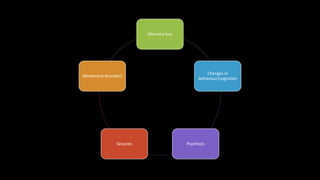
Memory loss
Changes in
behaviour/cognition
Psychosis
Seizures
Movement disorders
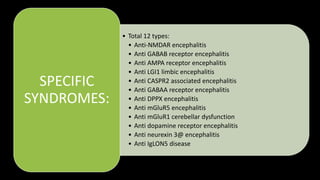
• Total 12 types:
• Anti-NMDAR encephalitis
• Anti GABAB receptor encephalitis
• Anti AMPA receptor encephalitis
• Anti LGI1 limbic encephalitis
• Anti CASPR2 associated encephalitis
• Anti GABAA receptor encephalitis
• Anti DPPX encephalitis
• Anti mGluR5 encephalitis
• Anti mGluR1 cerebellar dysfunction
• Anti dopamine receptor encephalitis
• Anti neurexin 3@ encephalitis
• Anti IgLON5 disease
SPECIFIC
SYNDROMES:
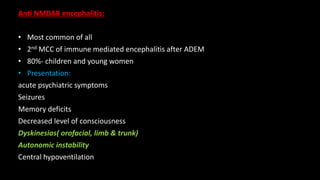
Anti NMDAR encephalitis:
• Most common of all
• 2nd MCC of immune mediated encephalitis after ADEM
• 80%- children and young women
• Presentation:
acute psychiatric symptoms
Seizures
Memory deficits
Decreased level of consciousness
Dyskinesias( orofacial, limb & trunk)
Autonomic instability
Central hypoventilation
• Viral prodrome
• Atypical-cerebellar ataxia/hemiparesis
• Approx. 40% of female >18 yrs– ovarian teratoma(u/l or b/l) compared to 9% in < 14
yrs.
• Other tumours- mediastinal teratoma, hodgkins, SCLC, neuroblastoma, breast cancer,
germ cell tumour of testis
LABS:
- CSF: Usually lymphocytic pleocytosis
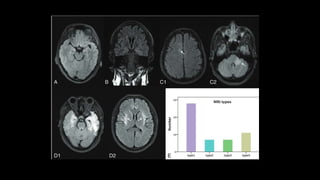
- MRI: T2 and FLAIR hyperintensity with transient contrast enhancement of cerebral
cortex, overlying meninges, basal ganglia or brainstem
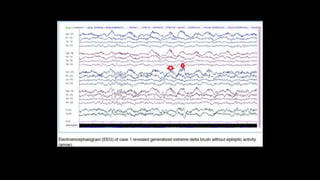
- EEG- focal or generalized slowing. 30%-- extreme delta brush pattern
- Confirmation– NMDAR ab. In CSF and serum
Anti GABAB receptor encephalitis:
• Usually >60 yrs and M:F
• > 50 %- tumours
• Presentation
Memory loss
Confusion Typical of LIMBIC ENCEPHALITIS
Seizures[TLE]
Rarely: ataxia or opsoclonus-myoclonus syn.
LABS:
Brain MRI: 2/3 pts. Showing u/l or b/l medial temporal lobe hyperintensity over FLAIR/T2
signal- consistent with Limbic encephalitis
CSF: lymphocytic pleocytosis
Confirmation: GABAB R antibodies
(others:- TPO, ANA, GAD65)
Anti- AMPA receptor encephalitis:
• Middle aged women
• Presentation:
As limbic encephalitis (>50%)
Others: diffuse encephalopathy
• >60%- tumours:- (lung, breast or thymus)
LABS:
CSF- lymphocytic pleocytosis
MRI brain- medial temporal lobes shows hyperintense signal
Confirmation: antibodies to GluA1/2 subunits of the AMPAR
others- GAD, TPO, ANA
Anti- LGI 1 limbic encephalitis:
• older M>F
• Memory loss, confusion and temporal lobe seizures
• >60 %- hyponatremia and less often REM sleep disorders
• 30-40%- faciobrachial dystonic seizures( brief tonic- myoclonic like)
• Few- Morvans syndrome
• Mimic CJD
• Usually not cancer associated( few– thymoma)
LABS:
MRI brain- as limbic encephalitis
CSF- usually normal. May show OGBs
Confirmation:- Anti LGI1 antibodies
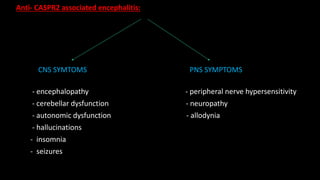
Anti- CASPR2 associated encephalitis:
- encephalopathy - peripheral nerve hypersensitivity
- cerebellar dysfunction - neuropathy
- autonomic dysfunction - allodynia
- hallucinations
- insomnia
- seizures
CNS SYMTOMS PNS SYMPTOMS
• This combo is called morvan’s syndrome.
• Usually not cancer associated.(few- thymoma)
LABS:
• Confirmation: anti-CASPR2 ab.
Anti- GABAA receptor encephalitis:
• Age- around 40 usually
• Presentation:
Progressive severe encephalopathy- 90% develops refractory seizures mostly refractory
SE.
Others features include: cognitive decline, altered behaviour, decreased consciousness
and movement disorders.
LABS:
- CSF- lymphocytic pleocytosis
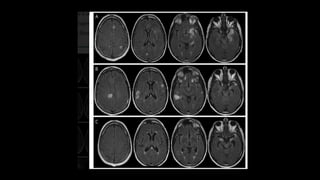
- MRI: In contrast to other autoimmune encephalitis having normal MRI or limbic
involvement, it shows T2/FLAIR Extensive multifocal cortical- subcortical involvement
without contrast enhancement.
- 1/3- tumours
- Confirmation: anti GABAA rec. ab.. Others: GAD, TPO.
Anti- DPPX encephalitis:
• Presentation :
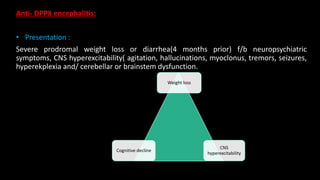
Severe prodromal weight loss or diarrhea(4 months prior) f/b neuropsychiatric
symptoms, CNS hyperexcitability( agitation, hallucinations, myoclonus, tremors, seizures,
hyperekplexia and/ cerebellar or brainstem dysfunction.
Weight loss
Cognitive decline
CNS
hyperexcitability
- Some develop syndrome resembling PERM( progressive Encephalomyelitis with rigidity
and myoclonus)
LABS:
- CSF- pleocytosis or OGBs
- MRI- nonspecific
- Confirmation: anti- DPPX ab.
Anti- GluR5 encephalitis:
• Presentation: like limbic encephalitis
• A/w tumours most commonly Hodgkins.
• Csf- pleocytosis
• MRI- FLAIR abnormalities in limbic/ extralimbic areas.
• Confirmation: anti mGluR5 antibodies
Anti- mGluR1 cerebellar dysfunction:
- Cerebellar ataxia
- Confimation- anti mGluR1 ab.
Anti- dopamine receptor encephalitis:
-Mostly children with basal ganglia encephalitis, syndenhams chorea and tourette
syndrome
- confirmation: anti dopamine 2 receptor ab.( most also have anti NMDAR ab)
Anti- neurexin 3 @ encephalitis:
-prodromal fever, headache or gastrointestinal symptoms f/b confusion, seizures and
decreased level of consciousness
-confirmation: anti- neurexin 3 @ ab. ( some may have anti NMDAR ab)
Anti IgLON5 disease:
• sleep disorder
• Starting before or concurrently with the onset of bulbar symptoms, gait abnormalities,
chorea, oculomotor problems and less commonly cognitive decline.
• Sleep disorder includes REM and non REM sleep disturbances characterized by
abnormal movements and behaviours that predominate in early hours of sleep.
• MRI, Eeg and CSF normal
• Confirmation: anti IgLON5 ab.
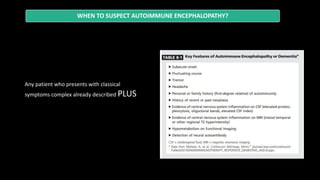
WHEN TO SUSPECT AUTOIMMUNE ENCEPHALOPATHY?
Any patient who presents with classical
symptoms complex already described PLUS
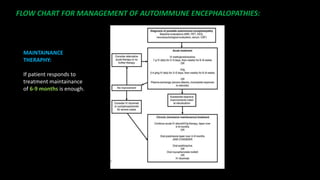
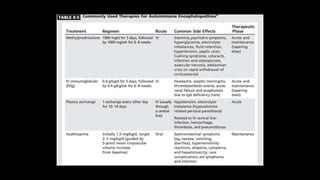
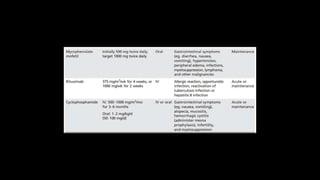
FLOW CHART FOR MANAGEMENT OF AUTOIMMUNE ENCEPHALOPATHIES:
MAINTAINANCE
THERAPHY:
If patient responds to
treatment maintainance
of 6-9 months is enough.
TAKE HOME MESSAGE
• All encephalitis are not infectious
• Autoimmune encephalitis is not uncommon
so think of it as they are potentially reversible.
• Early diagnosis and treatment are
essential for better outcomes.
AUTOIMMUNE ENCEPHALITIS

AUTOIMMUNE ENCEPHALITIS

  • 1.
    AUTOIMMUNE ENCEPHALITIS DR. HARSHM. PATEL D.M. NEUROLOGY S.R.
  • 2.
    INTRODUCTION • Autoimmune encephalitis-group of neuro-psychiatric disorders • Reversibility with immunotherapy.
  • 3.
  • 4.
    • Total 12types: • Anti-NMDAR encephalitis • Anti GABAB receptor encephalitis • Anti AMPA receptor encephalitis • Anti LGI1 limbic encephalitis • Anti CASPR2 associated encephalitis • Anti GABAA receptor encephalitis • Anti DPPX encephalitis • Anti mGluR5 encephalitis • Anti mGluR1 cerebellar dysfunction • Anti dopamine receptor encephalitis • Anti neurexin 3@ encephalitis • Anti IgLON5 disease SPECIFIC SYNDROMES:
  • 5.
    Anti NMDAR encephalitis: •Most common of all • 2nd MCC of immune mediated encephalitis after ADEM • 80%- children and young women • Presentation: acute psychiatric symptoms Seizures Memory deficits Decreased level of consciousness Dyskinesias( orofacial, limb & trunk) Autonomic instability Central hypoventilation
  • 6.
    • Viral prodrome •Atypical-cerebellar ataxia/hemiparesis • Approx. 40% of female >18 yrs– ovarian teratoma(u/l or b/l) compared to 9% in < 14 yrs. • Other tumours- mediastinal teratoma, hodgkins, SCLC, neuroblastoma, breast cancer, germ cell tumour of testis LABS: - CSF: Usually lymphocytic pleocytosis - MRI: T2 and FLAIR hyperintensity with transient contrast enhancement of cerebral cortex, overlying meninges, basal ganglia or brainstem - EEG- focal or generalized slowing. 30%-- extreme delta brush pattern - Confirmation– NMDAR ab. In CSF and serum
  • 9.
    Anti GABAB receptorencephalitis: • Usually >60 yrs and M:F • > 50 %- tumours • Presentation Memory loss Confusion Typical of LIMBIC ENCEPHALITIS Seizures[TLE] Rarely: ataxia or opsoclonus-myoclonus syn.
  • 10.
    LABS: Brain MRI: 2/3pts. Showing u/l or b/l medial temporal lobe hyperintensity over FLAIR/T2 signal- consistent with Limbic encephalitis CSF: lymphocytic pleocytosis Confirmation: GABAB R antibodies (others:- TPO, ANA, GAD65)
  • 11.
    Anti- AMPA receptorencephalitis: • Middle aged women • Presentation: As limbic encephalitis (>50%) Others: diffuse encephalopathy • >60%- tumours:- (lung, breast or thymus) LABS: CSF- lymphocytic pleocytosis MRI brain- medial temporal lobes shows hyperintense signal Confirmation: antibodies to GluA1/2 subunits of the AMPAR others- GAD, TPO, ANA
  • 12.
    Anti- LGI 1limbic encephalitis: • older M>F • Memory loss, confusion and temporal lobe seizures • >60 %- hyponatremia and less often REM sleep disorders • 30-40%- faciobrachial dystonic seizures( brief tonic- myoclonic like) • Few- Morvans syndrome • Mimic CJD • Usually not cancer associated( few– thymoma) LABS: MRI brain- as limbic encephalitis CSF- usually normal. May show OGBs Confirmation:- Anti LGI1 antibodies
  • 13.
    Anti- CASPR2 associatedencephalitis: - encephalopathy - peripheral nerve hypersensitivity - cerebellar dysfunction - neuropathy - autonomic dysfunction - allodynia - hallucinations - insomnia - seizures CNS SYMTOMS PNS SYMPTOMS
  • 14.
    • This combois called morvan’s syndrome. • Usually not cancer associated.(few- thymoma) LABS: • Confirmation: anti-CASPR2 ab.
  • 15.
    Anti- GABAA receptorencephalitis: • Age- around 40 usually • Presentation: Progressive severe encephalopathy- 90% develops refractory seizures mostly refractory SE. Others features include: cognitive decline, altered behaviour, decreased consciousness and movement disorders. LABS: - CSF- lymphocytic pleocytosis - MRI: In contrast to other autoimmune encephalitis having normal MRI or limbic involvement, it shows T2/FLAIR Extensive multifocal cortical- subcortical involvement without contrast enhancement. - 1/3- tumours - Confirmation: anti GABAA rec. ab.. Others: GAD, TPO.
  • 17.
    Anti- DPPX encephalitis: •Presentation : Severe prodromal weight loss or diarrhea(4 months prior) f/b neuropsychiatric symptoms, CNS hyperexcitability( agitation, hallucinations, myoclonus, tremors, seizures, hyperekplexia and/ cerebellar or brainstem dysfunction. Weight loss Cognitive decline CNS hyperexcitability
  • 18.
    - Some developsyndrome resembling PERM( progressive Encephalomyelitis with rigidity and myoclonus) LABS: - CSF- pleocytosis or OGBs - MRI- nonspecific - Confirmation: anti- DPPX ab.
  • 19.
    Anti- GluR5 encephalitis: •Presentation: like limbic encephalitis • A/w tumours most commonly Hodgkins. • Csf- pleocytosis • MRI- FLAIR abnormalities in limbic/ extralimbic areas. • Confirmation: anti mGluR5 antibodies
  • 20.
    Anti- mGluR1 cerebellardysfunction: - Cerebellar ataxia - Confimation- anti mGluR1 ab.
  • 21.
    Anti- dopamine receptorencephalitis: -Mostly children with basal ganglia encephalitis, syndenhams chorea and tourette syndrome - confirmation: anti dopamine 2 receptor ab.( most also have anti NMDAR ab)
  • 22.
    Anti- neurexin 3@ encephalitis: -prodromal fever, headache or gastrointestinal symptoms f/b confusion, seizures and decreased level of consciousness -confirmation: anti- neurexin 3 @ ab. ( some may have anti NMDAR ab)
  • 23.
    Anti IgLON5 disease: •sleep disorder • Starting before or concurrently with the onset of bulbar symptoms, gait abnormalities, chorea, oculomotor problems and less commonly cognitive decline. • Sleep disorder includes REM and non REM sleep disturbances characterized by abnormal movements and behaviours that predominate in early hours of sleep. • MRI, Eeg and CSF normal • Confirmation: anti IgLON5 ab.
  • 24.
    WHEN TO SUSPECTAUTOIMMUNE ENCEPHALOPATHY? Any patient who presents with classical symptoms complex already described PLUS
  • 25.
    FLOW CHART FORMANAGEMENT OF AUTOIMMUNE ENCEPHALOPATHIES: MAINTAINANCE THERAPHY: If patient responds to treatment maintainance of 6-9 months is enough.
  • 28.
    TAKE HOME MESSAGE •All encephalitis are not infectious • Autoimmune encephalitis is not uncommon so think of it as they are potentially reversible. • Early diagnosis and treatment are essential for better outcomes.