AUTOIMMUNE
ENCEPHALITIS
INTRODUCTION
• Encephalitis is an inflammatory condition of brain with many etiologies
• Autoimmune encephalitis: Group of clinical syndromes with an autoimmune pathogenic basis,
associated with antibodies against neuronal cell surface proteins and synaptic receptors involved in
synaptic transmission, plasticity or neuronal excitability
• The syndromes vary according to associated antibody
• Most of these disorders are severe and potentially fatal, but frequently respond to immunotherapy with
good outcomes
●When to suspect?
● Acute onset of cns symptoms
● Psychosis
● Choreo athetoid movements
● Acute onset seizures which are reccurent
● Catatonia ,delirium
● Any sleep disturbances
● Autonomic disturbances
● Cognitive slowing
● Relapse after treatment for viral encephalitis
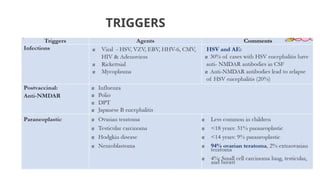
TRIGGERS
PATHOGENESIS
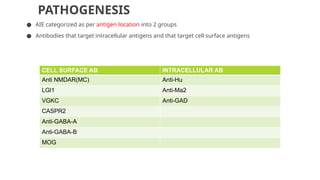
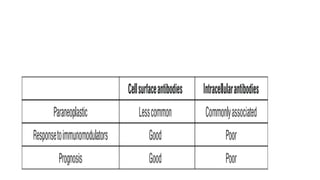
● AIE categorized as per antigen location into 2 groups
● Antibodies that target intracellular antigens and that target cell surface antigens
CELL SURFACE AB INTRACELLULAR AB
Anti NMDAR(MC) Anti-Hu
LGl1 Anti-Ma2
VGKC Anti-GAD
CASPR2
Anti-GABA-A
Anti-GABA-B
MOG
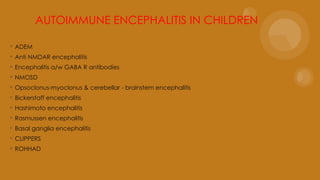
◦ ADEM
◦ Anti NMDAR encephalitis
◦ Encephalitis a/w GABA R antibodies
◦ NMOSD
◦ Opsoclonus-myoclonus & cerebellar - brainstem encephalitis
◦ Bickerstaff encephalitis
◦ Hashimoto encephalitis
◦ Rasmussen encephalitis
◦ Basal ganglia encephalitis
◦ CLIPPERS
◦ ROHHAD
AUTOIMMUNE ENCEPHALITIS IN CHILDREN
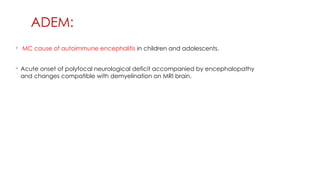
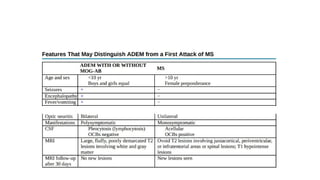
ADEM:
◦ MC cause of autoimmune encephalitis in children and adolescents.
◦ Acute onset of polyfocal neurological deficit accompanied by encephalopathy
and changes compatible with demyelination on MRI brain.
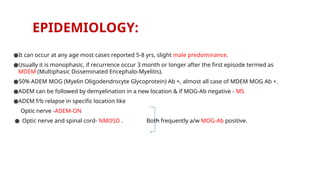
EPIDEMIOLOGY:
●It can occur at any age most cases reported 5-8 yrs, slight male predominance.
●Usually it is monophasic, if recurrence occur 3 month or longer after the first episode termed as
MDEM (Multiphasic Disseminated Encephalo-Myelitis).
●50% ADEM MOG (Myelin Oligodendrocyte Glycoprotein) Ab +, almost all case of MDEM MOG Ab +.
●ADEM can be followed by demyelination in a new location & if MOG-Ab negative - MS
●ADEM f/b relapse in specific location like
Optic nerve -ADEM-ON
● Optic nerve and spinal cord- NMOSD . Both frequently a/w MOG-Ab positive.
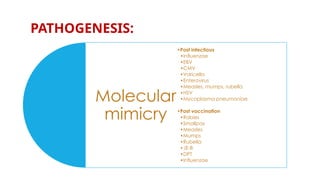
PATHOGENESIS:
Molecular
mimicry
•Post infectious
•Influenzae
•EBV
•CMV
•Varicella
•Enterovirus
•Measles, mumps, rubella
•HSV
•Mycoplasma pneumoniae
•Post vaccination
•Rabies
•Smallpox
•Measles
•Mumps
•Rubella
•JE-B
•DPT
•Influenzae
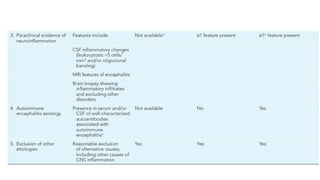
Diagnostic criteria for ADEM
● A firstpolyfocal clinical CNS event with presumed inflammatory
demyelinating cause.
● Encephalopathy (unexplained by fever ,systemic illness or post
ictal symptoms)
● Brain MRI consistent with demylination during the acute (less
than 3 months ) phase
● No new clinical or MRI findings 3 months or more after the
clinical onset
CLINICAL MANIFESTATION:
●Initial symptoms include- lethargy ,fever ,headache ,vomiting ,meningeal sign and seizure.
●Encephalopathy:
1. Is hallmark
2. Ranging from change in behaviour , persistent irritability to coma.
●Focal neurological deficit:
1. Difficult to ascertain in obtunded or very young child ,
2. Common neurological signs- visual loss, ataxia, motor and sensory deficit, bowel bladder dysfunction
if spinal cord demyelination occurs.
●It is usually rapidly progressive over days may need ICU admission particularly when
1. Brain stem dysfunction
2. Raised ICT.
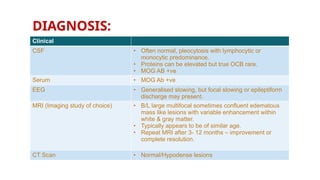
DIAGNOSIS:
Clinical
CSF • Often normal, pleocytosis with lymphocytic or
monocytic predominance.
• Proteins can be elevated but true OCB rare.
• MOG AB +ve
Serum • MOG Ab +ve
EEG • Generalised slowing, but focal slowing or epileptiform
discharge may present.
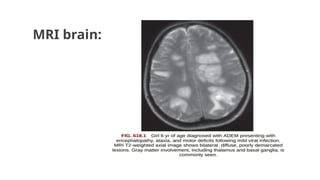
MRI (Imaging study of choice) • B/L large multifocal sometimes confluent edematous
mass like lesions with variable enhancement within
white & gray matter.
• Typically appears to be of similar age.
• Repeat MRI after 3- 12 months – improvement or
complete resolution.
CT Scan • Normal/Hypodense lesions
MRI brain:
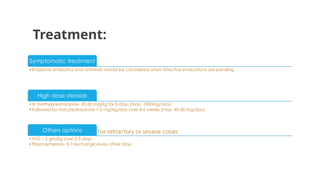
Treatment:
Symptomatic treatment
•Empirical antibiotics and antivirals should be considered when infective evaluations are pending
High dose steroids
•IV methylprednisolone- 20-30 mg/kg for 5 days (max. 1000mg/day)
•Followed by oral prednisolone 1-2 mg/kg/day over 4-6 weeks (max. 40-60 mg/day)
For refractory or severe cases
Others options
•IVIG – 2 gm/kg over 2-5 days
•Plasmapheresis- 5-7 exchange every other days
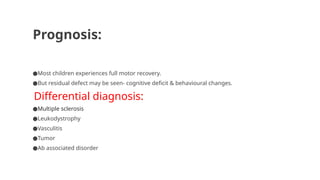
Prognosis:
●Most children experiences full motor recovery.
●But residual defect may be seen- cognitive deficit & behavioural changes.
Differential diagnosis:
●Multiple sclerosis
●Leukodystrophy
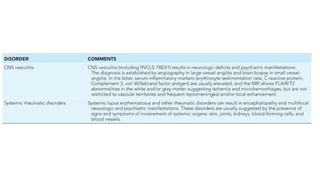
●Vasculitis
●Tumor
●Ab associated disorder
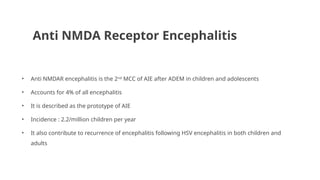
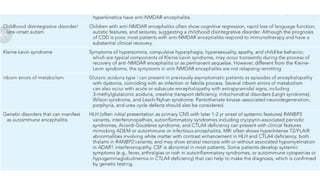
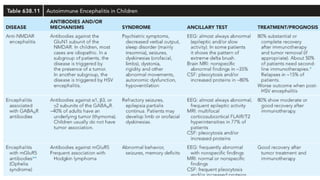
Anti NMDA Receptor Encephalitis
• Anti NMDAR encephalitis is the 2nd
MCC of AIE after ADEM in children and adolescents
• Accounts for 4% of all encephalitis
• It is described as the prototype of AIE
• Incidence : 2.2/million children per year
• It also contribute to recurrence of encephalitis following HSV encephalitis in both children and
adults
● Anti-NMDAR encephalitis was 1st
described in 2007 as a paraneoplastic syndrome in adult females in
association with ovarian teratomas
● Since then it has been described in men, women and children of all age groups with and without
teratomas
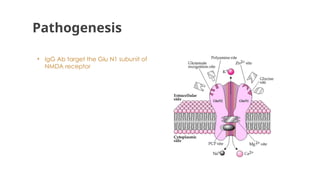
● Pathogenic IgG1 antibodies bind to GluN1 subunits of NMDA receptor leading to their
internalization- leads to inhibition of glutaminergic excitation to inhibitory neurons and in turn
intense excitotoxicity
Pathogenesis
• IgG Ab target the Glu N1 subunit of
NMDA receptor
TRIGGERS
● The mechanisms that trigger the production of the antibodies are unknown in most cases
● PARANEOPLASTIC SYNDROMES:
• Results when tumor antigens are shared by neuronal cell antigens, leading to antibody mediated
immunological destruction of neuronal tissue
• Ovarian teratoma, testicular carcinoma, Hodgkin disease, neuroblastoma
● POST VACCINE:
• Influenza, Polio, DPT, Japanese B encephalitis
● INFECTIONS:
• Mycoplasma pneumoniae, herpes simplex virus (HSV), human herpesvirus 6, enterovirus, COVID-19, and
influenza virus
• With the exception of HSV1, a pathogenic link with most of these infections has not been established
● 50% of patients with HSV encephalitis develop antibodies against the GluN1 subunit of the
NMDAR and other neuronal cell surface proteins and receptors
● Half the patients develop new or relapsing neurologic symptoms 2-12 weeks after completing
treatment for HSV encephalitis
● In children younger than 4 years, It usually manifests with choreoathetosis and dyskinesias:
choreoathetosis post-HSV encephalitis
● A similar complication has been reported in patients with Japanese encephalitis
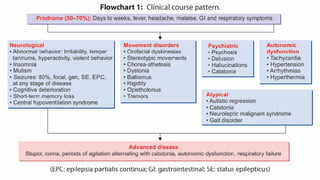
Clinical features
● Anti NMDA-R encephalitis has been described in all ages, but more common in children and young
adults
● More common in females; but among <12 yrs, boys are more affected
● The resulting syndrome is highly predictable and usually evolves in stages
● Polysymptomatic syndrome with encephalopathy, movement disorders, psychiatric manifestations and
autonomic dysfunction
● C/F include a PRODROME(50%) lasting weeks to months:
● Fever
● Headache
● Malaise
● GI and respiratory symptoms
● Prominent psychiatric manifestations: In teenagers and young adults
● Rapidly progressive anxiety
● Agitation
● Delusions, Hallucinations
● Bizarre behavior, Labile affect, Mood disturbances (mania)
● Catatonic features
● Memory deficit
● Language disintegration
● Aggression
● Insomnia or other sleep disturbances
● NEUROLOGICAL Manifestations
● Decreased level of consciousness
● Insomnia
● Mutism
● Seizures
● Cognitive deterioration
● Short term memory loss
● Central hypoventilation syndrome
● MOVEMENT DISORDERS
● Orofacial dyskinesias with lip-smacking, tongue protrusion
● Stereotypic movements
● Choreo-athetosis
● Dystonia
● Ballismus
● Rigidity
● Opisthotonus
● Tremors
● AUTONOMIC DYSFUNCTION
● Tachycardia/bradycardia
● Fluctuations in BP
● Arrhythmias
● Hyperthermia
● Sialorrhea
● Toddlers and infants: More frequently present with seizures and movement disorders
● Psychiatric-behavioral features may be missed
● Behavior changes include irritability, new-onset temper tantrums, agitation, aggression, reduced
speech, mutism, and autistic like regression.
● Some develop cerebellar ataxia and hemiparesis
● Autonomic dysfunction is usually milder and less severe in children
● ADVANCED DISEASE: Stupor, coma, periods of agitation alternating with catatonia as well as autonomic
dysfunction, respiratory failure
● Three clinical phenotypes: Classic form
Psychiatric form(good outcomes)
Catatonia predominant form(poor outcome)
DIAGNOSIS
Features supportive of AI etiology include:
● Evidence of CNS inflammation(CSF pleocytosis, elevated IgG index or oligoclonal bands,
elevated CSF neopterin)
● MRI abnormalities
● Response to immunosuppressive treatment
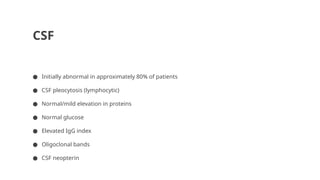
CSF
● Initially abnormal in approximately 80% of patients
● CSF pleocytosis (lymphocytic)
● Normal/mild elevation in proteins
● Normal glucose
● Elevated IgG index
● Oligoclonal bands
● CSF neopterin
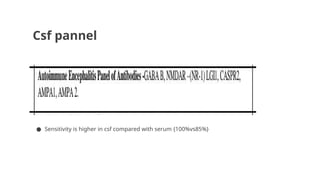
Csf pannel
● Sensitivity is higher in csf compared with serum {100%vs85%}
MRI BRAIN
● U/L or B/L T2/FLAIR hyperintensities involving mesial temporal lobe, hippocampal, cerebellar and
cerebral cortex
● Hyperintensities may be seen throughout brain
● Meningeal enhancement may be seen rarely
● Cortical enhancement in absence of restricted diffusion
● PET scan can highlight involvement of mesial temporal lobes
● Normal in 50-60%
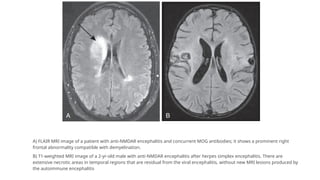
A) FLAIR MRI image of a patient with anti-NMDAR encephalitis and concurrent MOG antibodies; it shows a prominent right
frontal abnormality compatible with demyelination.
B) T1-weighted MRI image of a 2-yr-old male with anti-NMDAR encephalitis after herpes simplex encephalitis. There are
extensive necrotic areas in temporal regions that are residual from the viral encephalitis, without new MRI lesions produced by
the autoimmune encephalitis
EEG
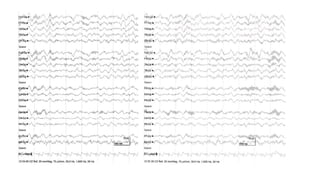
● EEG is abnormal in virtually all patients
● Focal or diffuse slowing in delta and theta ranges as well as epileptiform discharges
● 30% anti-NMDAR encephalitis exhibit extreme delta brushs characterized by beta–delta complexes
● Continuous combination of delta activity with superimposed fast activity usually in beta region
Antibody testing
● Testing both serum and CSF is preferred
● Anti-NMDAR CSF testing is more sensitive (100% vs 85%)
● Levels of antibodies in CSF appear to correlate better with outcome
● In protracted disease, delayed diagnosis and after IVIG/PE antibodies may be present only in CSF
● MRI abdomen and pelvis OR Abdominal & Scrotal ultrasound can be done to screen for
tumors
● In cases of negative initial screening, follow-up MRI abdomen and pelvis should be
repeated every six months for at least four years
TREATMENT
● Primary immunomodulation include steroids, IVIG or plasma exchange
● Tumor removal if applicable
● Followed by maintenance therapy- oral steroid taper, monthly pulse steroids or pulse IVIG therapy
● Azathioprine and MMF are used in maintenance therapy as steroid sparing agents
● Duration of maintenance therapy ranges from 6 to 12 months
● 2nd
line therapy in case of non response to 1st
line agents: Rituximab, Cyclophosphamide
● 3rd
line agents – Bortezumab, Tocilizumab
First line
● Corticosteroids are cornerstone of treatment
● Methylprednisolone 30mg/kg/day(max 1g/day) for 3-5 days f/b oral steroids (prednisolone 1-
2mg/kg/day) and taper over 6-12 months
● IVIG (2g/kg over 5 days) or Plasma Exchange(5-7 exchanges of 50ml/kg every alternate day)
● Only 50 % responds to first line treatment
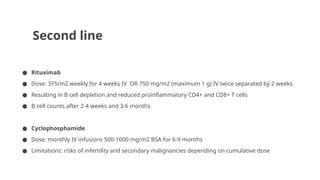
Second line
● Rituximab
● Dose: 375/m2 weekly for 4 weeks IV OR 750 mg/m2 (maximum 1 g) IV twice separated by 2 weeks
● Resulting in B cell depletion and reduced proinflammatory CD4+ and CD8+ T cells
● B cell counts after 2-4 weeks and 3-6 months
● Cyclophosphamide
● Dose: monthly IV infusions 500-1000 mg/m2 BSA for 6-9 months
● Limitations: risks of infertility and secondary malignancies depending on cumulative dose
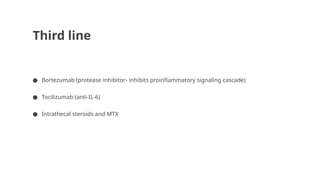
Third line
● Bortezumab (protease inhibitor- inhibits proinflammatory signaling cascade)
● Tocilizumab (anti-IL-6)
● Intrathecal steroids and MTX
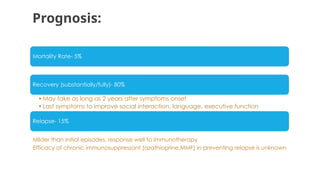
Prognosis:
Mortality Rate- 5%
Recovery (substantially/fully)- 80%
•May take as long as 2 years after symptoms onset
•Last symptoms to improve social interaction, language, executive function
Relapse- 15%
Milder than initial episodes, response well to immunotherapy
Efficacy of chronic immunosuppressant (azathioprine,MMF) in preventing relapse is unknown
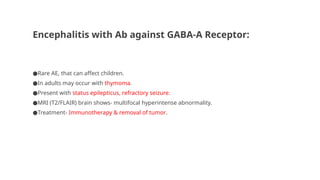
Encephalitis with Ab against GABA-A Receptor:
●Rare AE, that can affect children.
●In adults may occur with thymoma.
●Present with status epilepticus, refractory seizure.
●MRI (T2/FLAIR) brain shows- multifocal hyperintense abnormality.
●Treatment- Immunotherapy & removal of tumor.
Ophelia Syndrome
●Occur in a/w Hodgkin lymphoma.
●Predominantly affect young adults, teenager & children.
●Some develops Ab against mGluR5 receptor involved in learning & memory.
●Management:
1. Removal of tumor
2. Immunotherapy
Hashimoto Encephalopathy:
●Steroid responsive encephalopathy with autoimmuno-thyroiditis.
●Detection of TPO Ab in patients with acute/subacute encephalitis.
●Detection of TPO Ab is a marker of autoimmunity rather than a disease specific
marker.
●So testing of more relevant Ab like NMDAR Ab should be done.
● Stroke-like symptoms
● Tremor, myoclonus
● Transient aphasia
● Sleep and behaviour abnormalities
● Hallucinations, seizures and ataxia.
⮚ EEG is usually abnormal
⮚ MRI brain- normal
⮚ CSF shows pleocytosis with elevated protein
● TPO antibodies should be viewed as a marker of autoimmunity rather than a
neurologic disease-specific or pathogenic antibody.
⮚ Relevant antibody-associated disorders, such as GABA(B), LGI1, or
NMDA receptor antibodies
⮚ In some instances, plasma exchange or intravenous
immunoglobulin has been equally effective as steroids.
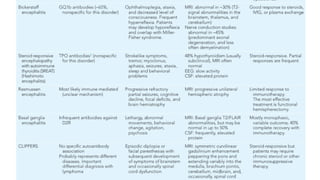
Bickerstaff Encephalitis:
●Rapid progression (<4wks) of
1. B/L external ophthalmoplegia
2. Ataxia
3. Decreased level of consciousness
●Mostly affect adults, but children of 3 yrs old have been identified.
●Serum GQ1b IgG Ab found in 66% cases.
●May develop hyporeflexia and overlap with MFS.
●MRI T2 signal abnormality (30%)- Brainstem, thalamus & cerebellum.
●Good response to immunotherapy.
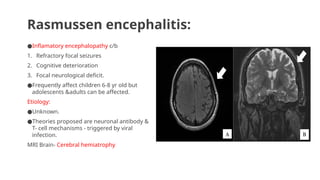
Rasmussen encephalitis:
●Inflamatory encephalopathy c/b
1. Refractory focal seizures
2. Cognitive deterioration
3. Focal neurological deficit.
●Frequently affect children 6-8 yr old but
adolescents &adults can be affected.
Etiology:
●Unknown.
●Theories proposed are neuronal antibody &
T- cell mechanisms - triggered by viral
infection.
MRI Brain- Cerebral hemiatrophy
Management of Rasmussen encephalitis:
1. High dose steroid, IVIG or plasma exchange.
2. Rituximab & intraventricular Gamma interferon effective in isolated cases.
3. Tacrolimus- better outcome of neurological function & slower progression of
cerebral atrophy but no effect on seizure control.
4. Adalimumab( monoclonal antibody against TNF-alpha) shows seizure control
&preservation of cognitive function in 50% cases.
5. Most effective treatment for controlling seizure is functional hemispherectomy
i.e. surgical disconnection of affected hemisphere.
Autoimmune limbic encephalitis:
●Inflamatory process of the limbic system including medial temporal lobe, amygdala, cingulate gyrus.
●Most commonly found in adults.
●Some patients there is underlying tumor i.e. leukemia, ganglioneuroblastoma, neuroblastoma, small cell
carcinoma of ovary.
●Autoantibodies are-
1. VGKCs /LGI1(Leucine rich glioma inactivated 1)
2. Caspr2 antibodies
Clinical features are-
● Severe short term memory loss
● Hyponatremia
● Seizures-myoclonic-like movements (faciobrachial dystonic seizures)
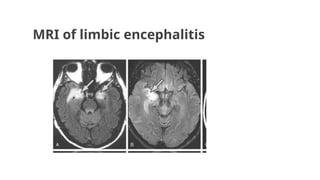
MRI of limbic encephalitis
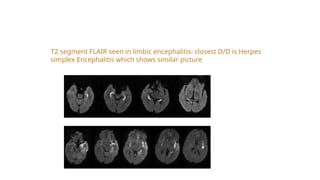
T2 segment FLAIR seen in limbic encephalitis- closest D/D is Herpes
simplex Encephalitis which shows similar picture
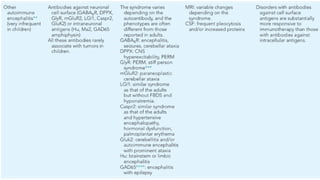
◼Other types can occur with antibodies against intracellular
antigens (eg, Hu, GAD65, Ma2) or against cell surface or
synaptic proteins.
◼Involves T cell immune mediated reactions
◼Responds well to immunotherapy unlike the conventional
form
Opsoclonus-myoclonus and other type of
brainstem-cerebellar encephalitis:
●In children- 50% have underlying NEUROBLASTOMA.
●In teenagers and young adults underlying TERATOMA usually in ovaries.
●Initially present with- irritability, ataxia, falling, myoclonus, tremor and drooling.
●Later- hypotonia, Opsoclonus c/b rapid, chaotic, multidirectional eye movement without saccadic
interval.
●Immunotherapy improves abnormal eye movement but residual behavioral, language, cognitive
problems persists.
●Delay in treatment appears to be a/w poor outcome , therefore in case of neuroblastoma removal of the
tumor should not delay the start of immunotherapy.
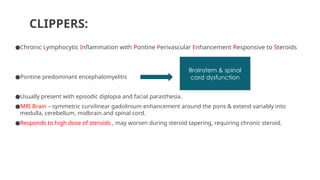
CLIPPERS:
●Chronic Lymphocytic Inflammation with Pontine Perivascular Enhancement Responsive to Steroids
●Pontine predominant encephalomyelitis
●Usually present with episodic diplopia and facial parasthesia.
●MRI Brain – symmetric curvilinear gadolinium enhancement around the pons & extend variably into
medulla, cerebellum, midbrain and spinal cord.
●Responds to high dose of steroids , may worsen during steroid tapering, requiring chronic steroid.
Brainstem & spinal
cord dysfunction
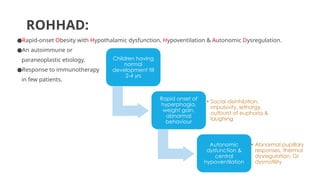
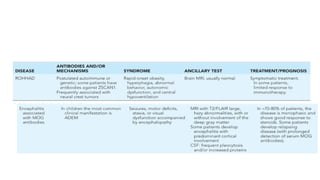
ROHHAD:
●Rapid-onset Obesity with Hypothalamic dysfunction, Hypoventilation & Autonomic Dysregulation.
●An autoimmune or
paraneoplastic etiology.
●Response to immunotherapy
in few patients.
Children having
normal
development till
2-4 yrs
Rapid onset of
hyperphagia,
weight gain,
abnormal
behaviour
• Social disinhibition,
impulsivity, lethargy,
outburst of euphoria &
laughing
Autonomic
dysfunction &
central
hypoventilation
• Abnormal pupillary
responses, thermal
dysregulation, GI
dysmotility
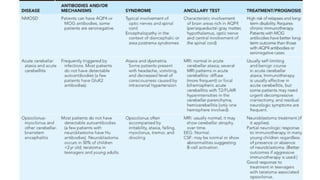
NMOSD [NEUROMYELITIS OPTICA SPECTRUM DISORDER ]
●Typical involvement of optic nerve & spinal cord.
●Encephalopathy in the form of diencephalic or area postrema syndromes.
●Can have AQP4 or MOG Ab. Some are seronegative.
●Involvement of brain areas rich in AQP4 (periaqueductal gray matter,
hypothalamus, optic nerve and central involvement of the spinal cord).
●High risk of relapses and long term disability.
●Requires chronic immunotherapy.
●Patients with MOG Ab have better outcome than those with AQP4 Ab or
seronegative cases.
THANK YOU

Autoimmune encephalitis symposium-1.pptx

  • 1.
  • 2.
    INTRODUCTION • Encephalitis isan inflammatory condition of brain with many etiologies • Autoimmune encephalitis: Group of clinical syndromes with an autoimmune pathogenic basis, associated with antibodies against neuronal cell surface proteins and synaptic receptors involved in synaptic transmission, plasticity or neuronal excitability • The syndromes vary according to associated antibody • Most of these disorders are severe and potentially fatal, but frequently respond to immunotherapy with good outcomes
  • 3.
  • 4.
    ● Acute onsetof cns symptoms ● Psychosis ● Choreo athetoid movements ● Acute onset seizures which are reccurent ● Catatonia ,delirium ● Any sleep disturbances ● Autonomic disturbances ● Cognitive slowing ● Relapse after treatment for viral encephalitis
  • 5.
  • 6.
    PATHOGENESIS ● AIE categorizedas per antigen location into 2 groups ● Antibodies that target intracellular antigens and that target cell surface antigens CELL SURFACE AB INTRACELLULAR AB Anti NMDAR(MC) Anti-Hu LGl1 Anti-Ma2 VGKC Anti-GAD CASPR2 Anti-GABA-A Anti-GABA-B MOG
  • 8.
    ◦ ADEM ◦ AntiNMDAR encephalitis ◦ Encephalitis a/w GABA R antibodies ◦ NMOSD ◦ Opsoclonus-myoclonus & cerebellar - brainstem encephalitis ◦ Bickerstaff encephalitis ◦ Hashimoto encephalitis ◦ Rasmussen encephalitis ◦ Basal ganglia encephalitis ◦ CLIPPERS ◦ ROHHAD AUTOIMMUNE ENCEPHALITIS IN CHILDREN
  • 11.
    ADEM: ◦ MC causeof autoimmune encephalitis in children and adolescents. ◦ Acute onset of polyfocal neurological deficit accompanied by encephalopathy and changes compatible with demyelination on MRI brain.
  • 12.
    EPIDEMIOLOGY: ●It can occurat any age most cases reported 5-8 yrs, slight male predominance. ●Usually it is monophasic, if recurrence occur 3 month or longer after the first episode termed as MDEM (Multiphasic Disseminated Encephalo-Myelitis). ●50% ADEM MOG (Myelin Oligodendrocyte Glycoprotein) Ab +, almost all case of MDEM MOG Ab +. ●ADEM can be followed by demyelination in a new location & if MOG-Ab negative - MS ●ADEM f/b relapse in specific location like Optic nerve -ADEM-ON ● Optic nerve and spinal cord- NMOSD . Both frequently a/w MOG-Ab positive.
  • 13.
    PATHOGENESIS: Molecular mimicry •Post infectious •Influenzae •EBV •CMV •Varicella •Enterovirus •Measles, mumps,rubella •HSV •Mycoplasma pneumoniae •Post vaccination •Rabies •Smallpox •Measles •Mumps •Rubella •JE-B •DPT •Influenzae
  • 14.
    Diagnostic criteria forADEM ● A firstpolyfocal clinical CNS event with presumed inflammatory demyelinating cause. ● Encephalopathy (unexplained by fever ,systemic illness or post ictal symptoms) ● Brain MRI consistent with demylination during the acute (less than 3 months ) phase ● No new clinical or MRI findings 3 months or more after the clinical onset
  • 15.
    CLINICAL MANIFESTATION: ●Initial symptomsinclude- lethargy ,fever ,headache ,vomiting ,meningeal sign and seizure. ●Encephalopathy: 1. Is hallmark 2. Ranging from change in behaviour , persistent irritability to coma. ●Focal neurological deficit: 1. Difficult to ascertain in obtunded or very young child , 2. Common neurological signs- visual loss, ataxia, motor and sensory deficit, bowel bladder dysfunction if spinal cord demyelination occurs. ●It is usually rapidly progressive over days may need ICU admission particularly when 1. Brain stem dysfunction 2. Raised ICT.
  • 16.
    DIAGNOSIS: Clinical CSF • Oftennormal, pleocytosis with lymphocytic or monocytic predominance. • Proteins can be elevated but true OCB rare. • MOG AB +ve Serum • MOG Ab +ve EEG • Generalised slowing, but focal slowing or epileptiform discharge may present. MRI (Imaging study of choice) • B/L large multifocal sometimes confluent edematous mass like lesions with variable enhancement within white & gray matter. • Typically appears to be of similar age. • Repeat MRI after 3- 12 months – improvement or complete resolution. CT Scan • Normal/Hypodense lesions
  • 17.
  • 18.
    Treatment: Symptomatic treatment •Empirical antibioticsand antivirals should be considered when infective evaluations are pending High dose steroids •IV methylprednisolone- 20-30 mg/kg for 5 days (max. 1000mg/day) •Followed by oral prednisolone 1-2 mg/kg/day over 4-6 weeks (max. 40-60 mg/day) For refractory or severe cases Others options •IVIG – 2 gm/kg over 2-5 days •Plasmapheresis- 5-7 exchange every other days
  • 19.
    Prognosis: ●Most children experiencesfull motor recovery. ●But residual defect may be seen- cognitive deficit & behavioural changes. Differential diagnosis: ●Multiple sclerosis ●Leukodystrophy ●Vasculitis ●Tumor ●Ab associated disorder
  • 21.
    Anti NMDA ReceptorEncephalitis • Anti NMDAR encephalitis is the 2nd MCC of AIE after ADEM in children and adolescents • Accounts for 4% of all encephalitis • It is described as the prototype of AIE • Incidence : 2.2/million children per year • It also contribute to recurrence of encephalitis following HSV encephalitis in both children and adults
  • 22.
    ● Anti-NMDAR encephalitiswas 1st described in 2007 as a paraneoplastic syndrome in adult females in association with ovarian teratomas ● Since then it has been described in men, women and children of all age groups with and without teratomas ● Pathogenic IgG1 antibodies bind to GluN1 subunits of NMDA receptor leading to their internalization- leads to inhibition of glutaminergic excitation to inhibitory neurons and in turn intense excitotoxicity
  • 23.
    Pathogenesis • IgG Abtarget the Glu N1 subunit of NMDA receptor
  • 24.
    TRIGGERS ● The mechanismsthat trigger the production of the antibodies are unknown in most cases ● PARANEOPLASTIC SYNDROMES: • Results when tumor antigens are shared by neuronal cell antigens, leading to antibody mediated immunological destruction of neuronal tissue • Ovarian teratoma, testicular carcinoma, Hodgkin disease, neuroblastoma
  • 25.
    ● POST VACCINE: •Influenza, Polio, DPT, Japanese B encephalitis ● INFECTIONS: • Mycoplasma pneumoniae, herpes simplex virus (HSV), human herpesvirus 6, enterovirus, COVID-19, and influenza virus • With the exception of HSV1, a pathogenic link with most of these infections has not been established
  • 26.
    ● 50% ofpatients with HSV encephalitis develop antibodies against the GluN1 subunit of the NMDAR and other neuronal cell surface proteins and receptors ● Half the patients develop new or relapsing neurologic symptoms 2-12 weeks after completing treatment for HSV encephalitis ● In children younger than 4 years, It usually manifests with choreoathetosis and dyskinesias: choreoathetosis post-HSV encephalitis ● A similar complication has been reported in patients with Japanese encephalitis
  • 27.
    Clinical features ● AntiNMDA-R encephalitis has been described in all ages, but more common in children and young adults ● More common in females; but among <12 yrs, boys are more affected ● The resulting syndrome is highly predictable and usually evolves in stages ● Polysymptomatic syndrome with encephalopathy, movement disorders, psychiatric manifestations and autonomic dysfunction
  • 28.
    ● C/F includea PRODROME(50%) lasting weeks to months: ● Fever ● Headache ● Malaise ● GI and respiratory symptoms
  • 29.
    ● Prominent psychiatricmanifestations: In teenagers and young adults ● Rapidly progressive anxiety ● Agitation ● Delusions, Hallucinations ● Bizarre behavior, Labile affect, Mood disturbances (mania) ● Catatonic features ● Memory deficit ● Language disintegration ● Aggression ● Insomnia or other sleep disturbances
  • 30.
    ● NEUROLOGICAL Manifestations ●Decreased level of consciousness ● Insomnia ● Mutism ● Seizures ● Cognitive deterioration ● Short term memory loss ● Central hypoventilation syndrome
  • 31.
    ● MOVEMENT DISORDERS ●Orofacial dyskinesias with lip-smacking, tongue protrusion ● Stereotypic movements ● Choreo-athetosis ● Dystonia ● Ballismus ● Rigidity ● Opisthotonus ● Tremors
  • 32.
    ● AUTONOMIC DYSFUNCTION ●Tachycardia/bradycardia ● Fluctuations in BP ● Arrhythmias ● Hyperthermia ● Sialorrhea
  • 33.
    ● Toddlers andinfants: More frequently present with seizures and movement disorders ● Psychiatric-behavioral features may be missed ● Behavior changes include irritability, new-onset temper tantrums, agitation, aggression, reduced speech, mutism, and autistic like regression. ● Some develop cerebellar ataxia and hemiparesis ● Autonomic dysfunction is usually milder and less severe in children
  • 34.
    ● ADVANCED DISEASE:Stupor, coma, periods of agitation alternating with catatonia as well as autonomic dysfunction, respiratory failure ● Three clinical phenotypes: Classic form Psychiatric form(good outcomes) Catatonia predominant form(poor outcome)
  • 36.
    DIAGNOSIS Features supportive ofAI etiology include: ● Evidence of CNS inflammation(CSF pleocytosis, elevated IgG index or oligoclonal bands, elevated CSF neopterin) ● MRI abnormalities ● Response to immunosuppressive treatment
  • 40.
    CSF ● Initially abnormalin approximately 80% of patients ● CSF pleocytosis (lymphocytic) ● Normal/mild elevation in proteins ● Normal glucose ● Elevated IgG index ● Oligoclonal bands ● CSF neopterin
  • 41.
    Csf pannel ● Sensitivityis higher in csf compared with serum {100%vs85%}
  • 42.
    MRI BRAIN ● U/Lor B/L T2/FLAIR hyperintensities involving mesial temporal lobe, hippocampal, cerebellar and cerebral cortex ● Hyperintensities may be seen throughout brain ● Meningeal enhancement may be seen rarely ● Cortical enhancement in absence of restricted diffusion ● PET scan can highlight involvement of mesial temporal lobes ● Normal in 50-60%
  • 43.
    A) FLAIR MRIimage of a patient with anti-NMDAR encephalitis and concurrent MOG antibodies; it shows a prominent right frontal abnormality compatible with demyelination. B) T1-weighted MRI image of a 2-yr-old male with anti-NMDAR encephalitis after herpes simplex encephalitis. There are extensive necrotic areas in temporal regions that are residual from the viral encephalitis, without new MRI lesions produced by the autoimmune encephalitis
  • 44.
    EEG ● EEG isabnormal in virtually all patients ● Focal or diffuse slowing in delta and theta ranges as well as epileptiform discharges ● 30% anti-NMDAR encephalitis exhibit extreme delta brushs characterized by beta–delta complexes ● Continuous combination of delta activity with superimposed fast activity usually in beta region
  • 46.
    Antibody testing ● Testingboth serum and CSF is preferred ● Anti-NMDAR CSF testing is more sensitive (100% vs 85%) ● Levels of antibodies in CSF appear to correlate better with outcome ● In protracted disease, delayed diagnosis and after IVIG/PE antibodies may be present only in CSF
  • 47.
    ● MRI abdomenand pelvis OR Abdominal & Scrotal ultrasound can be done to screen for tumors ● In cases of negative initial screening, follow-up MRI abdomen and pelvis should be repeated every six months for at least four years
  • 48.
    TREATMENT ● Primary immunomodulationinclude steroids, IVIG or plasma exchange ● Tumor removal if applicable ● Followed by maintenance therapy- oral steroid taper, monthly pulse steroids or pulse IVIG therapy ● Azathioprine and MMF are used in maintenance therapy as steroid sparing agents ● Duration of maintenance therapy ranges from 6 to 12 months ● 2nd line therapy in case of non response to 1st line agents: Rituximab, Cyclophosphamide ● 3rd line agents – Bortezumab, Tocilizumab
  • 49.
    First line ● Corticosteroidsare cornerstone of treatment ● Methylprednisolone 30mg/kg/day(max 1g/day) for 3-5 days f/b oral steroids (prednisolone 1- 2mg/kg/day) and taper over 6-12 months ● IVIG (2g/kg over 5 days) or Plasma Exchange(5-7 exchanges of 50ml/kg every alternate day) ● Only 50 % responds to first line treatment
  • 50.
    Second line ● Rituximab ●Dose: 375/m2 weekly for 4 weeks IV OR 750 mg/m2 (maximum 1 g) IV twice separated by 2 weeks ● Resulting in B cell depletion and reduced proinflammatory CD4+ and CD8+ T cells ● B cell counts after 2-4 weeks and 3-6 months ● Cyclophosphamide ● Dose: monthly IV infusions 500-1000 mg/m2 BSA for 6-9 months ● Limitations: risks of infertility and secondary malignancies depending on cumulative dose
  • 51.
    Third line ● Bortezumab(protease inhibitor- inhibits proinflammatory signaling cascade) ● Tocilizumab (anti-IL-6) ● Intrathecal steroids and MTX
  • 52.
    Prognosis: Mortality Rate- 5% Recovery(substantially/fully)- 80% •May take as long as 2 years after symptoms onset •Last symptoms to improve social interaction, language, executive function Relapse- 15% Milder than initial episodes, response well to immunotherapy Efficacy of chronic immunosuppressant (azathioprine,MMF) in preventing relapse is unknown
  • 53.
    Encephalitis with Abagainst GABA-A Receptor: ●Rare AE, that can affect children. ●In adults may occur with thymoma. ●Present with status epilepticus, refractory seizure. ●MRI (T2/FLAIR) brain shows- multifocal hyperintense abnormality. ●Treatment- Immunotherapy & removal of tumor.
  • 54.
    Ophelia Syndrome ●Occur ina/w Hodgkin lymphoma. ●Predominantly affect young adults, teenager & children. ●Some develops Ab against mGluR5 receptor involved in learning & memory. ●Management: 1. Removal of tumor 2. Immunotherapy
  • 55.
    Hashimoto Encephalopathy: ●Steroid responsiveencephalopathy with autoimmuno-thyroiditis. ●Detection of TPO Ab in patients with acute/subacute encephalitis. ●Detection of TPO Ab is a marker of autoimmunity rather than a disease specific marker. ●So testing of more relevant Ab like NMDAR Ab should be done.
  • 56.
    ● Stroke-like symptoms ●Tremor, myoclonus ● Transient aphasia ● Sleep and behaviour abnormalities ● Hallucinations, seizures and ataxia. ⮚ EEG is usually abnormal ⮚ MRI brain- normal ⮚ CSF shows pleocytosis with elevated protein ● TPO antibodies should be viewed as a marker of autoimmunity rather than a neurologic disease-specific or pathogenic antibody.
  • 57.
    ⮚ Relevant antibody-associateddisorders, such as GABA(B), LGI1, or NMDA receptor antibodies ⮚ In some instances, plasma exchange or intravenous immunoglobulin has been equally effective as steroids.
  • 58.
    Bickerstaff Encephalitis: ●Rapid progression(<4wks) of 1. B/L external ophthalmoplegia 2. Ataxia 3. Decreased level of consciousness ●Mostly affect adults, but children of 3 yrs old have been identified. ●Serum GQ1b IgG Ab found in 66% cases. ●May develop hyporeflexia and overlap with MFS. ●MRI T2 signal abnormality (30%)- Brainstem, thalamus & cerebellum. ●Good response to immunotherapy.
  • 59.
    Rasmussen encephalitis: ●Inflamatory encephalopathyc/b 1. Refractory focal seizures 2. Cognitive deterioration 3. Focal neurological deficit. ●Frequently affect children 6-8 yr old but adolescents &adults can be affected. Etiology: ●Unknown. ●Theories proposed are neuronal antibody & T- cell mechanisms - triggered by viral infection. MRI Brain- Cerebral hemiatrophy
  • 60.
    Management of Rasmussenencephalitis: 1. High dose steroid, IVIG or plasma exchange. 2. Rituximab & intraventricular Gamma interferon effective in isolated cases. 3. Tacrolimus- better outcome of neurological function & slower progression of cerebral atrophy but no effect on seizure control. 4. Adalimumab( monoclonal antibody against TNF-alpha) shows seizure control &preservation of cognitive function in 50% cases. 5. Most effective treatment for controlling seizure is functional hemispherectomy i.e. surgical disconnection of affected hemisphere.
  • 61.
    Autoimmune limbic encephalitis: ●Inflamatoryprocess of the limbic system including medial temporal lobe, amygdala, cingulate gyrus. ●Most commonly found in adults. ●Some patients there is underlying tumor i.e. leukemia, ganglioneuroblastoma, neuroblastoma, small cell carcinoma of ovary. ●Autoantibodies are- 1. VGKCs /LGI1(Leucine rich glioma inactivated 1) 2. Caspr2 antibodies Clinical features are- ● Severe short term memory loss ● Hyponatremia ● Seizures-myoclonic-like movements (faciobrachial dystonic seizures)
  • 62.
    MRI of limbicencephalitis
  • 63.
    T2 segment FLAIRseen in limbic encephalitis- closest D/D is Herpes simplex Encephalitis which shows similar picture
  • 64.
    ◼Other types canoccur with antibodies against intracellular antigens (eg, Hu, GAD65, Ma2) or against cell surface or synaptic proteins. ◼Involves T cell immune mediated reactions ◼Responds well to immunotherapy unlike the conventional form
  • 65.
    Opsoclonus-myoclonus and othertype of brainstem-cerebellar encephalitis: ●In children- 50% have underlying NEUROBLASTOMA. ●In teenagers and young adults underlying TERATOMA usually in ovaries. ●Initially present with- irritability, ataxia, falling, myoclonus, tremor and drooling. ●Later- hypotonia, Opsoclonus c/b rapid, chaotic, multidirectional eye movement without saccadic interval. ●Immunotherapy improves abnormal eye movement but residual behavioral, language, cognitive problems persists. ●Delay in treatment appears to be a/w poor outcome , therefore in case of neuroblastoma removal of the tumor should not delay the start of immunotherapy.
  • 66.
    CLIPPERS: ●Chronic Lymphocytic Inflammationwith Pontine Perivascular Enhancement Responsive to Steroids ●Pontine predominant encephalomyelitis ●Usually present with episodic diplopia and facial parasthesia. ●MRI Brain – symmetric curvilinear gadolinium enhancement around the pons & extend variably into medulla, cerebellum, midbrain and spinal cord. ●Responds to high dose of steroids , may worsen during steroid tapering, requiring chronic steroid. Brainstem & spinal cord dysfunction
  • 67.
    ROHHAD: ●Rapid-onset Obesity withHypothalamic dysfunction, Hypoventilation & Autonomic Dysregulation. ●An autoimmune or paraneoplastic etiology. ●Response to immunotherapy in few patients. Children having normal development till 2-4 yrs Rapid onset of hyperphagia, weight gain, abnormal behaviour • Social disinhibition, impulsivity, lethargy, outburst of euphoria & laughing Autonomic dysfunction & central hypoventilation • Abnormal pupillary responses, thermal dysregulation, GI dysmotility
  • 68.
    NMOSD [NEUROMYELITIS OPTICASPECTRUM DISORDER ] ●Typical involvement of optic nerve & spinal cord. ●Encephalopathy in the form of diencephalic or area postrema syndromes. ●Can have AQP4 or MOG Ab. Some are seronegative. ●Involvement of brain areas rich in AQP4 (periaqueductal gray matter, hypothalamus, optic nerve and central involvement of the spinal cord). ●High risk of relapses and long term disability. ●Requires chronic immunotherapy. ●Patients with MOG Ab have better outcome than those with AQP4 Ab or seronegative cases.
  • 74.