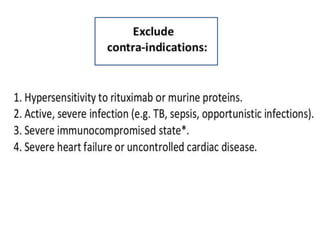
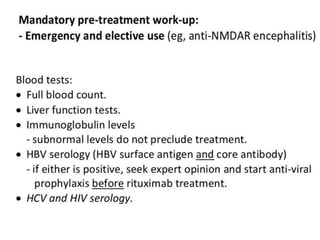
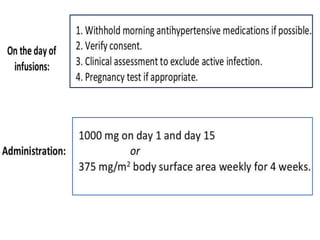
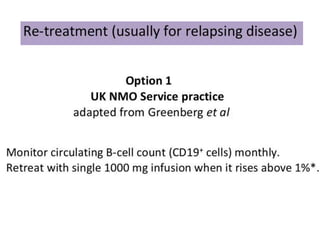

PRESENTER- DR PIYUSH
MODERATOR- DR DINESH KHANDELWAL SIR
Practical Neurology, BMJ journal In feb’2019,
Points Of Discussion
1. B-cell function and role in neurological
disease
2. B-cell-depleting monoclonal antibodies
3. Indications and evidence for rituximab in
neurology
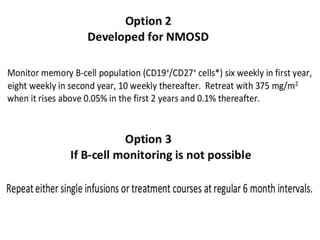
4. Dosing and monitoring of rituximab
5. Risks and adverse events of rituximab
B-cell Function And Role In
Neurological Disease
• B-cells secrete antibodies, present antigen and
regulate the immune response by producing
proinflammatory and anti-inflammatory
cytokines.
• Only 2.5% of the total B-cell population is within
the peripheral circulation, made up
predominantly of naïve mature B-cells and
memory B-cells; the rest are in bone marrow and
lymphoid tissue.
• Antibodies may be of any immunoglobulin class (G,M, A, D or E) or
subclass (eg, IgG1–4)
• Examples of disorders in which auto-antibodies are almost certainly
pathogenic include :
1. Myasthenia gravis with acetylcholine receptor (AChR) antibodies
(usually IgG1 or IgG3) or muscle-specific tyrosine kinase (MuSK)
antibodies (IgG4),
2. Neuromyelitis optica spectrum disorders (NMOSD) with antibodies
against the aquaporin-4 water channel (mainly IgG1),
3. Autoimmune encephalitis with antibodies to the N-methyl-D-
aspartate receptor (NMDAR) (mainly IgG1) or leucine-rich glioma
inactivated-1 (LGI1) (mainly IgG4).
4. B-cells also play a crucial role in Multiple sclerosis (MS)
pathogenesis, evidenced by cerebrospinal fluid oligoclonal IgG
bands,
B-cell surface markers
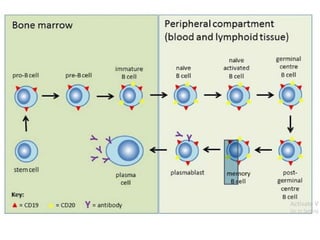
• CD19 and CD20 are B-cell transmembrane
proteins.
• They can be used as targets for drugs and as
surface markers (in flow cytometry to quantify B-
cell populations and assess treatment response).
• Memory B–cells are long-lived B-cells, capable of
rapid differentiation into high-affinity plasma cells
following repeated antigen exposure. They can be
important target in the treatment of auto-
immune neurological disease.
B-cell-depleting monoclonal
antibodies
• Monoclonal antibodies are immunoglobulins
produced by a single clone of hybridoma cells
(antigen-specific plasma cells fused with
myeloma cells).
• Available B-cell-depleting monoclonal antibodies
have Fab domains targeted to CD20 or CD19, and
so selectively deplete the circulating B-cell
population, with the exception of mature
antibody-secreting plasma cells.
RITUXIMAB
• First anti-CD20 monoclonal antibody to be
approved (1997) for treating B-cell Lymphomas.
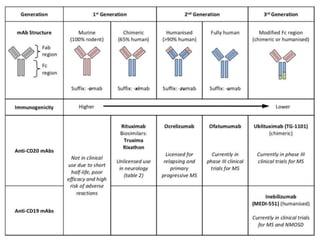
• First-generation, chimeric monoclonal antibody
made by fusing a murine (rodent) Fab domain
with a human Fc domain.
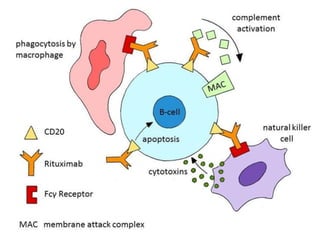
• Ninety per cent of circulating B-cells are killed
within 3 days of the first infusion of rituximab.
INDICATION
1. Refractory Myasthenia Gravis
2. NMO-SD
3. Autoimmune encephalitis
4. Relapsing Remitting Multiple sclerosis
5. Immune-mediated Peripheral neuropathies
6. Primary angitis of the CNS
7. Stiff-person syndrome
INDICATION
1. Refractory Myasthenia Gravis
2. NMO-SD
3. Autoimmune encephalitis
4. Relapsing Remitting Multiple sclerosis
5. Immune-mediated Peripheral neuropathies
6. Primary angitis of the CNS
7. Stiff-person syndrome
Refractory Myasthenia Gravis
• Myasthenia gravis is an immune-mediated disorder of
the neuro-muscular junction (NMJ) at post-synaptic
level characterized by easy fatigability and diurnal
variation in skeletal muscle weakness.
• Definition of Refractory MG:
Unchanged or worsening after starting corticosteroids
and at least 2 other immunosuppressant agents, used
in adequate doses for an adequate duration.
• Immune pathogenesis of MG suggests an important
role of autoreactive B cells which would be an
appropriate target for therapy.
• International consensus guidelines (2016)
advise that ‘rituximab should be considered as
an early therapeutic option in patients with
MuSK-associated myasthenia gravis who have
an unsatisfactory response to initial
immunotherapy.’
• A formal consensus could not be reached for
AChR-associated myasthenia gravis.
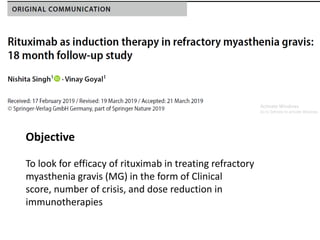
Objective
To look for efficacy of rituximab in treating refractory
myasthenia gravis (MG) in the form of Clinical
score, number of crisis, and dose reduction in
immunotherapies
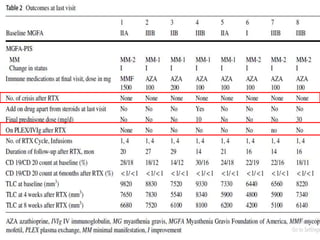
• Eight refractory MG patients (six AchR positive
and two Musk-positive) were identified on oral
corticosteroids and azathioprine.
• After four cycles of rituximab, all patients showed
a dose reduction of whom seven were completely
tapered off prednisone and there was a 53.8%
dose reduction in azathioprine.
• None of the patients had infusion associated
reactions or cytopenia post-RTX infusion.
• MuSK-antibody–positive status, less severe
disease, and younger age at time of treatment
were the best predictors of response to
treatment.
• Pharmacokinetic data suggested that repeat
dosing should be considered 4–6 months after
an induction regimen in patients with either
incomplete response or a relapse.
Neuromyelitis Optica
Spectrum Disorders(NMOSD)
• NMOSDs are autoimmune astrocytopathies
characterized by optic neuritis and transverse
myelitis and, in most patients, by IgG autoantibodies
binding to astrocytic aquaporin 4 (AQP4), the
predominant water channel of the central nervous
System.
• No immunosuppressive therapy in NMOSD is yet validated
by a high-quality randomised controlled trial.
• Rituximab use is supported by numerous, predominantly
retrospective, case series amounting to over 400 patients
and showing consistent reductions in annualised relapse
rate.
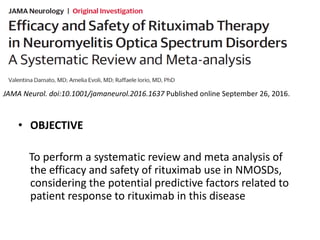
JAMA Neurol. doi:10.1001/jamaneurol.2016.1637 Published online September 26, 2016.
• OBJECTIVE
To perform a systematic review and meta analysis of
the efficacy and safety of rituximab use in NMOSDs,
considering the potential predictive factors related to
patient response to rituximab in this disease
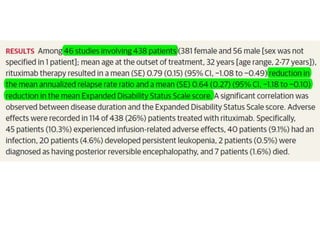
• In this systematic review and meta-analysis,
Rituximab therapy significantly reduced the
annualized relapse rate ratio and neurological
disability in patients with NMOSDs.
• However, the safety profile suggests caution in
prescribing Rituximab as a first-line therapy.
• A recent meta-analysis calculated a mean reduction
in relapse rate of 79%.
• As such, rituximab currently has the best evidence
of any immunotherapy used in NMOSD, but due to
its relatively high cost, it remains second-line
therapy.
• It is available for patients who have relapsed despite
adequate treatment with azathioprine or
mycophenolate mofetil combined with low-dose
prednisolone
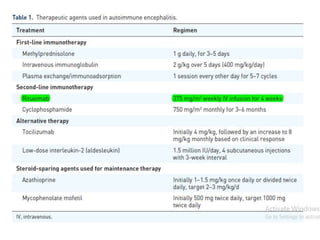
Autoimmune Encephalitis
• Antibody-mediated encephalitis constitute a group of
inflammatory brain diseases that are characterized by
prominent neuropsychiatric symptoms and are
associated with antibodies against neuronal cell-
surface proteins, ion channels, or receptors.
• As most autoimmune encephalitis is monophasic, the
role of rituximab is usually as a second-line acute
therapy (single course) to maximise neurological
recovery, rather than as a long-term maintenance
treatment (as with MS/NMOSD).
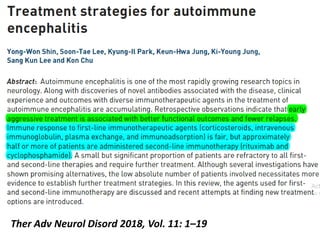
Ther Adv Neurol Disord 2018, Vol. 11: 1–19
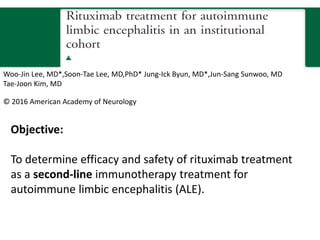
Woo-Jin Lee, MD*,Soon-Tae Lee, MD,PhD* Jung-Ick Byun, MD*,Jun-Sang Sunwoo, MD
Tae-Joon Kim, MD
© 2016 American Academy of Neurology
Objective:
To determine efficacy and safety of rituximab treatment
as a second-line immunotherapy treatment for
autoimmune limbic encephalitis (ALE).
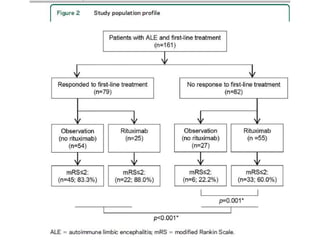
• This study recruited 80 patients with ALE who were treated
with rituximab as a second-line immunotherapy and 81
patients without rituximab as a control.
• When all 161 patients were grouped according to the presence
of at least partial response to first-line immunotherapy,
favorable outcomes occurred more frequently in the
responders to the first-line immunotherapy compared to the
non-responders (84.8% vs 47.6%; p , 0.001).
• However, among the 82 non-responders, rituximab treatment
resulted in more favorable outcomes compared to the patients
without rituximab treatment.
Conclusion
• Rituximab is effective and safe as a second-
line immunotherapy for ALE, regardless of
autoantibody status.
• Additional monthly rituximab therapy might
potentiate the efficacy of rituximab.
Anti-NMDAR Encephalitis
• There are some additional evidence specifically for anti-
NMDAR encephalitis, the most common subtype of
autoimmune encephalitis.
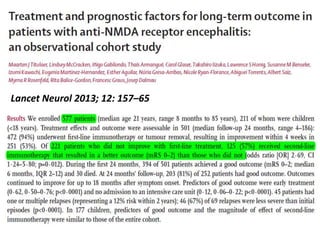
• A large prospective cohort study (n=577) found that 78% of
patients who failed first-line and received second-line
immunotherapy (rituximab ) had a good outcome at 24
months, compared with 55% of patients who failed first-line
and did not receive second-line therapy.
Lancet Neurol 2013; 12: 157–65
• First-line immunotherapy was often insuffi-
cient to control the disease; in this group of
patients, the addition of second-line
immunotherapy was associated with a better
outcome compared with those who did not
receive second-line immunotherapy
Relapsing Remitting Multiple
Sclerosis
• Used as Maintenance therapy for relapse
prevention.
• Rarely used in UK as there are several licensed
disease modifying therapies.
• Although this is relatively low-quality evidence,
there is a clear indication that rituximab is an
effective treatment for MS, which would be
expected in light of the recent positive
randomised controlled trials for ocrelizumab.
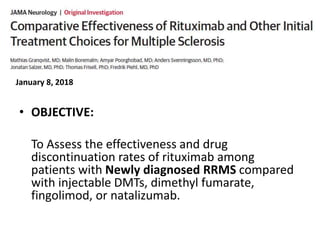
• OBJECTIVE:
To Assess the effectiveness and drug
discontinuation rates of rituximab among
patients with Newly diagnosed RRMS compared
with injectable DMTs, dimethyl fumarate,
fingolimod, or natalizumab.
January 8, 2018
RESULTS
• Among 494 patients, 215 received an injectable DMT (43.5%); 86
(17.4%), dimethyl fumarate; 17 (3.4%), fingolimod; 50 (10.1%),
natalizumab; 120 (24.3%), rituximab; and 6 (1.2%), other DMT.
• The annual discontinuation rate for rituximab, injectable DMTs,
dimethyl fumarate, fingolimod, and natalizumab were 0.03, 0.53,
0.32, 0.38, and 0.29, respectively.
• Continued disease activity was the main reason for discontinuation
of injectable DMTs, dimethyl fumarate, and fingolimod; positive
John Cunningham virus serology results were the main reason for
discontinuation of natalizumab.
• Rate of clinical relapses and/or neuroradiologic disease activity
were significantly lower for rituximab compared with injectable
DMTs and dimethyl fumarate
CONCLUSION
• Rituximab was superior to all other DMT in
terms of drug discontinuation and displayed
better clinical efficacy compared with
injectable DMTs and dimethyl fumarate with
borderline significance compared with
natalizumab and fingolimod.
• The county where rituximab constituted the
main initial treatment choice displayed better
outcomes in most measured variables.
Immune-mediated Peripheral
Neuropathies
1. An uncommon subset of patients with CIDP with
antibodies to paranodal proteins may benefit
(anti-neurofascin 155/CNTN1). These cases
account for less than 10% of all patients with
CIDP.
2. Two small randomised controlled trials in anti-
MAG neuropathy showed marginal benefits
Primary Angiitis Of The Central Nervous
System
• Primary angiitis of the central nervous system is a rare
form of vasculitis (inflammation of blood vessels) affecting
the blood vessels that nourish the brain, spinal cord and
peripheral nerves.
• High-dose corticosteroids with or without
cyclophosphamide form the mainstay of treatment for this
rare condition.
• Favourable outcomes with rituximab are reported in two
small case series(Total Pt-10)
• Consider if there is inadequate response to corticosteroids
and cyclophosphamide.
ANCA-associated vasculitis
• ANCA-associated vasculitis occasionally presents
with mononeuritis multiplex.
• Two randomised controlled trials have shown
non-inferiority to cyclophosphamide for
remission induction.
• It may be more effective than cyclophosphamide
for relapsing disease.
Stiff-person Syndrome
• A rare neurologic disorder of unclear cause
characterized by progressive rigidity and stiffness.
Patients with SPS generally have high amounts of high
glutamic acid decarboxylase antibody titers.
(Anti- GAD)
• Case reports suggest a possible benefit but a single
small randomised controlled trial was negative.
• May consider if there is inadequate response to first-
line therapy.
Dosing and monitoring of
Rituximab
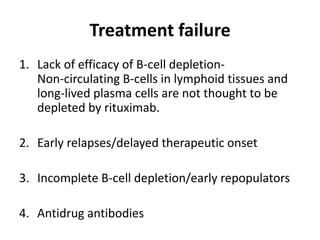
Treatment failure
1. Lack of efficacy of B-cell depletion-
Non-circulating B-cells in lymphoid tissues and
long-lived plasma cells are not thought to be
depleted by rituximab.
2. Early relapses/delayed therapeutic onset
3. Incomplete B-cell depletion/early repopulators
4. Antidrug antibodies
Risks and adverse events
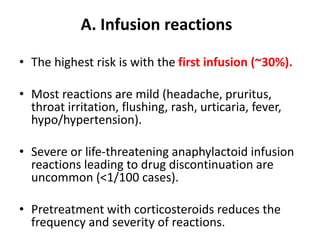
A. Infusion reactions
• The highest risk is with the first infusion (~30%).
• Most reactions are mild (headache, pruritus,
throat irritation, flushing, rash, urticaria, fever,
hypo/hypertension).
• Severe or life-threatening anaphylactoid infusion
reactions leading to drug discontinuation are
uncommon (<1/100 cases).
• Pretreatment with corticosteroids reduces the
frequency and severity of reactions.
B. Mucocutaneous reactions:
C. Adverse cardiac events:
D. Infections:
Do not give rituximab to patients with active
infection
E. Secondary Antibody deficiency:
Patients with low IgG are at risk of infection,
particularly recurrent bacterial sinopulmonary
infections, but risk does not correlate directly with
IgG level.
F. Neutropenia:
May occur after first or subsequent infusions.
The highest risk is 3–6 months after infusion.
G. Progressive multifocal leucoencephalopathy:
Risk is estimated at 1 in 30 000 cases
H. Posterior Reversible Encephalopathy
Syndrome
Pregnancy and breast feeding
• In 153 exposed pregnancies, rates of miscarriage
and congenital malformation were similar to
expected rates in the general population.
• Avoid in pregnancy unless potential benefit to the
mother outweighs risk of B-cell depletion in the
fetus.
• Manufacturers advise that women should avoid
Pregnancy during and for 12 months after
treatment, same as for breast feeding.
Rituximab In Neurologic Disorders

Rituximab In Neurologic Disorders

  • 1.
    PRESENTER- DR PIYUSH MODERATOR-DR DINESH KHANDELWAL SIR Practical Neurology, BMJ journal In feb’2019,
  • 2.
    Points Of Discussion 1.B-cell function and role in neurological disease 2. B-cell-depleting monoclonal antibodies 3. Indications and evidence for rituximab in neurology 4. Dosing and monitoring of rituximab 5. Risks and adverse events of rituximab
  • 3.
    B-cell Function AndRole In Neurological Disease • B-cells secrete antibodies, present antigen and regulate the immune response by producing proinflammatory and anti-inflammatory cytokines. • Only 2.5% of the total B-cell population is within the peripheral circulation, made up predominantly of naïve mature B-cells and memory B-cells; the rest are in bone marrow and lymphoid tissue.
  • 4.
    • Antibodies maybe of any immunoglobulin class (G,M, A, D or E) or subclass (eg, IgG1–4) • Examples of disorders in which auto-antibodies are almost certainly pathogenic include : 1. Myasthenia gravis with acetylcholine receptor (AChR) antibodies (usually IgG1 or IgG3) or muscle-specific tyrosine kinase (MuSK) antibodies (IgG4), 2. Neuromyelitis optica spectrum disorders (NMOSD) with antibodies against the aquaporin-4 water channel (mainly IgG1), 3. Autoimmune encephalitis with antibodies to the N-methyl-D- aspartate receptor (NMDAR) (mainly IgG1) or leucine-rich glioma inactivated-1 (LGI1) (mainly IgG4). 4. B-cells also play a crucial role in Multiple sclerosis (MS) pathogenesis, evidenced by cerebrospinal fluid oligoclonal IgG bands,
  • 5.
    B-cell surface markers •CD19 and CD20 are B-cell transmembrane proteins. • They can be used as targets for drugs and as surface markers (in flow cytometry to quantify B- cell populations and assess treatment response). • Memory B–cells are long-lived B-cells, capable of rapid differentiation into high-affinity plasma cells following repeated antigen exposure. They can be important target in the treatment of auto- immune neurological disease.
  • 7.
    B-cell-depleting monoclonal antibodies • Monoclonalantibodies are immunoglobulins produced by a single clone of hybridoma cells (antigen-specific plasma cells fused with myeloma cells). • Available B-cell-depleting monoclonal antibodies have Fab domains targeted to CD20 or CD19, and so selectively deplete the circulating B-cell population, with the exception of mature antibody-secreting plasma cells.
  • 8.
    RITUXIMAB • First anti-CD20monoclonal antibody to be approved (1997) for treating B-cell Lymphomas. • First-generation, chimeric monoclonal antibody made by fusing a murine (rodent) Fab domain with a human Fc domain. • Ninety per cent of circulating B-cells are killed within 3 days of the first infusion of rituximab.
  • 11.
    INDICATION 1. Refractory MyastheniaGravis 2. NMO-SD 3. Autoimmune encephalitis 4. Relapsing Remitting Multiple sclerosis 5. Immune-mediated Peripheral neuropathies 6. Primary angitis of the CNS 7. Stiff-person syndrome
  • 12.
    INDICATION 1. Refractory MyastheniaGravis 2. NMO-SD 3. Autoimmune encephalitis 4. Relapsing Remitting Multiple sclerosis 5. Immune-mediated Peripheral neuropathies 6. Primary angitis of the CNS 7. Stiff-person syndrome
  • 13.
    Refractory Myasthenia Gravis •Myasthenia gravis is an immune-mediated disorder of the neuro-muscular junction (NMJ) at post-synaptic level characterized by easy fatigability and diurnal variation in skeletal muscle weakness. • Definition of Refractory MG: Unchanged or worsening after starting corticosteroids and at least 2 other immunosuppressant agents, used in adequate doses for an adequate duration. • Immune pathogenesis of MG suggests an important role of autoreactive B cells which would be an appropriate target for therapy.
  • 14.
    • International consensusguidelines (2016) advise that ‘rituximab should be considered as an early therapeutic option in patients with MuSK-associated myasthenia gravis who have an unsatisfactory response to initial immunotherapy.’ • A formal consensus could not be reached for AChR-associated myasthenia gravis.
  • 15.
    Objective To look forefficacy of rituximab in treating refractory myasthenia gravis (MG) in the form of Clinical score, number of crisis, and dose reduction in immunotherapies
  • 16.
    • Eight refractoryMG patients (six AchR positive and two Musk-positive) were identified on oral corticosteroids and azathioprine. • After four cycles of rituximab, all patients showed a dose reduction of whom seven were completely tapered off prednisone and there was a 53.8% dose reduction in azathioprine. • None of the patients had infusion associated reactions or cytopenia post-RTX infusion.
  • 18.
    • MuSK-antibody–positive status,less severe disease, and younger age at time of treatment were the best predictors of response to treatment. • Pharmacokinetic data suggested that repeat dosing should be considered 4–6 months after an induction regimen in patients with either incomplete response or a relapse.
  • 19.
    Neuromyelitis Optica Spectrum Disorders(NMOSD) •NMOSDs are autoimmune astrocytopathies characterized by optic neuritis and transverse myelitis and, in most patients, by IgG autoantibodies binding to astrocytic aquaporin 4 (AQP4), the predominant water channel of the central nervous System.
  • 20.
    • No immunosuppressivetherapy in NMOSD is yet validated by a high-quality randomised controlled trial. • Rituximab use is supported by numerous, predominantly retrospective, case series amounting to over 400 patients and showing consistent reductions in annualised relapse rate.
  • 21.
    JAMA Neurol. doi:10.1001/jamaneurol.2016.1637Published online September 26, 2016. • OBJECTIVE To perform a systematic review and meta analysis of the efficacy and safety of rituximab use in NMOSDs, considering the potential predictive factors related to patient response to rituximab in this disease
  • 23.
    • In thissystematic review and meta-analysis, Rituximab therapy significantly reduced the annualized relapse rate ratio and neurological disability in patients with NMOSDs. • However, the safety profile suggests caution in prescribing Rituximab as a first-line therapy.
  • 24.
    • A recentmeta-analysis calculated a mean reduction in relapse rate of 79%. • As such, rituximab currently has the best evidence of any immunotherapy used in NMOSD, but due to its relatively high cost, it remains second-line therapy. • It is available for patients who have relapsed despite adequate treatment with azathioprine or mycophenolate mofetil combined with low-dose prednisolone
  • 25.
    Autoimmune Encephalitis • Antibody-mediatedencephalitis constitute a group of inflammatory brain diseases that are characterized by prominent neuropsychiatric symptoms and are associated with antibodies against neuronal cell- surface proteins, ion channels, or receptors. • As most autoimmune encephalitis is monophasic, the role of rituximab is usually as a second-line acute therapy (single course) to maximise neurological recovery, rather than as a long-term maintenance treatment (as with MS/NMOSD).
  • 26.
    Ther Adv NeurolDisord 2018, Vol. 11: 1–19
  • 28.
    Woo-Jin Lee, MD*,Soon-TaeLee, MD,PhD* Jung-Ick Byun, MD*,Jun-Sang Sunwoo, MD Tae-Joon Kim, MD © 2016 American Academy of Neurology Objective: To determine efficacy and safety of rituximab treatment as a second-line immunotherapy treatment for autoimmune limbic encephalitis (ALE).
  • 29.
    • This studyrecruited 80 patients with ALE who were treated with rituximab as a second-line immunotherapy and 81 patients without rituximab as a control. • When all 161 patients were grouped according to the presence of at least partial response to first-line immunotherapy, favorable outcomes occurred more frequently in the responders to the first-line immunotherapy compared to the non-responders (84.8% vs 47.6%; p , 0.001). • However, among the 82 non-responders, rituximab treatment resulted in more favorable outcomes compared to the patients without rituximab treatment.
  • 31.
    Conclusion • Rituximab iseffective and safe as a second- line immunotherapy for ALE, regardless of autoantibody status. • Additional monthly rituximab therapy might potentiate the efficacy of rituximab.
  • 32.
    Anti-NMDAR Encephalitis • Thereare some additional evidence specifically for anti- NMDAR encephalitis, the most common subtype of autoimmune encephalitis. • A large prospective cohort study (n=577) found that 78% of patients who failed first-line and received second-line immunotherapy (rituximab ) had a good outcome at 24 months, compared with 55% of patients who failed first-line and did not receive second-line therapy.
  • 33.
    Lancet Neurol 2013;12: 157–65
  • 34.
    • First-line immunotherapywas often insuffi- cient to control the disease; in this group of patients, the addition of second-line immunotherapy was associated with a better outcome compared with those who did not receive second-line immunotherapy
  • 35.
    Relapsing Remitting Multiple Sclerosis •Used as Maintenance therapy for relapse prevention. • Rarely used in UK as there are several licensed disease modifying therapies. • Although this is relatively low-quality evidence, there is a clear indication that rituximab is an effective treatment for MS, which would be expected in light of the recent positive randomised controlled trials for ocrelizumab.
  • 36.
    • OBJECTIVE: To Assessthe effectiveness and drug discontinuation rates of rituximab among patients with Newly diagnosed RRMS compared with injectable DMTs, dimethyl fumarate, fingolimod, or natalizumab. January 8, 2018
  • 37.
    RESULTS • Among 494patients, 215 received an injectable DMT (43.5%); 86 (17.4%), dimethyl fumarate; 17 (3.4%), fingolimod; 50 (10.1%), natalizumab; 120 (24.3%), rituximab; and 6 (1.2%), other DMT. • The annual discontinuation rate for rituximab, injectable DMTs, dimethyl fumarate, fingolimod, and natalizumab were 0.03, 0.53, 0.32, 0.38, and 0.29, respectively. • Continued disease activity was the main reason for discontinuation of injectable DMTs, dimethyl fumarate, and fingolimod; positive John Cunningham virus serology results were the main reason for discontinuation of natalizumab. • Rate of clinical relapses and/or neuroradiologic disease activity were significantly lower for rituximab compared with injectable DMTs and dimethyl fumarate
  • 38.
    CONCLUSION • Rituximab wassuperior to all other DMT in terms of drug discontinuation and displayed better clinical efficacy compared with injectable DMTs and dimethyl fumarate with borderline significance compared with natalizumab and fingolimod. • The county where rituximab constituted the main initial treatment choice displayed better outcomes in most measured variables.
  • 39.
    Immune-mediated Peripheral Neuropathies 1. Anuncommon subset of patients with CIDP with antibodies to paranodal proteins may benefit (anti-neurofascin 155/CNTN1). These cases account for less than 10% of all patients with CIDP. 2. Two small randomised controlled trials in anti- MAG neuropathy showed marginal benefits
  • 40.
    Primary Angiitis OfThe Central Nervous System • Primary angiitis of the central nervous system is a rare form of vasculitis (inflammation of blood vessels) affecting the blood vessels that nourish the brain, spinal cord and peripheral nerves. • High-dose corticosteroids with or without cyclophosphamide form the mainstay of treatment for this rare condition. • Favourable outcomes with rituximab are reported in two small case series(Total Pt-10) • Consider if there is inadequate response to corticosteroids and cyclophosphamide.
  • 41.
    ANCA-associated vasculitis • ANCA-associatedvasculitis occasionally presents with mononeuritis multiplex. • Two randomised controlled trials have shown non-inferiority to cyclophosphamide for remission induction. • It may be more effective than cyclophosphamide for relapsing disease.
  • 42.
    Stiff-person Syndrome • Arare neurologic disorder of unclear cause characterized by progressive rigidity and stiffness. Patients with SPS generally have high amounts of high glutamic acid decarboxylase antibody titers. (Anti- GAD) • Case reports suggest a possible benefit but a single small randomised controlled trial was negative. • May consider if there is inadequate response to first- line therapy.
  • 43.
  • 49.
    Treatment failure 1. Lackof efficacy of B-cell depletion- Non-circulating B-cells in lymphoid tissues and long-lived plasma cells are not thought to be depleted by rituximab. 2. Early relapses/delayed therapeutic onset 3. Incomplete B-cell depletion/early repopulators 4. Antidrug antibodies
  • 50.
  • 51.
    A. Infusion reactions •The highest risk is with the first infusion (~30%). • Most reactions are mild (headache, pruritus, throat irritation, flushing, rash, urticaria, fever, hypo/hypertension). • Severe or life-threatening anaphylactoid infusion reactions leading to drug discontinuation are uncommon (<1/100 cases). • Pretreatment with corticosteroids reduces the frequency and severity of reactions.
  • 52.
    B. Mucocutaneous reactions: C.Adverse cardiac events: D. Infections: Do not give rituximab to patients with active infection E. Secondary Antibody deficiency: Patients with low IgG are at risk of infection, particularly recurrent bacterial sinopulmonary infections, but risk does not correlate directly with IgG level.
  • 53.
    F. Neutropenia: May occurafter first or subsequent infusions. The highest risk is 3–6 months after infusion. G. Progressive multifocal leucoencephalopathy: Risk is estimated at 1 in 30 000 cases H. Posterior Reversible Encephalopathy Syndrome
  • 54.
    Pregnancy and breastfeeding • In 153 exposed pregnancies, rates of miscarriage and congenital malformation were similar to expected rates in the general population. • Avoid in pregnancy unless potential benefit to the mother outweighs risk of B-cell depletion in the fetus. • Manufacturers advise that women should avoid Pregnancy during and for 12 months after treatment, same as for breast feeding.

Editor's Notes

  • #2 This article was published in BMJ journal under Practical Neurology In february 2019.
  • #3 This article covers both the practical aspects of prescribing rituximab and some of the basic principles of B-cell depletion with monoclonal antibodies, which are relevant to neurologists.
  • #7 Stages of B-cell development and expression of B-cell surface markers. Pluripotent haematopoietic stem cells develop into naïve mature B cells in the bone marrow. They then migrate to secondary lymphoid organs (spleen and lymph nodes), where they are activated by antigens in circulating lymph and mature into memory B-cells or plasmablasts. Memory B-cells either circulate in the bloodstream or remain in germinal centres, while plasmablasts mature to antibody-secreting plasma cells that reside in the bone marrow or lymphoid tissue.
  • #10 Compared with first-generation monoclonal antibodies, second-generation monoclonal antibodies have improved Fab domains, often humanised or fully human, which improve B-cell killing and tolerability like Ocrelizumab (humanised). fragment antigen binding (Fab)
  • #11 They bind via their two identical fragment antigen binding (Fab) domains to a single epitope and activate the immune system via their fragment crystallisable (Fc) domain. Cells expressing that epitope are killed,therefore allowing highly targeted immunotherapy fora variety of neoplastic and autoimmune diseases
  • #12 Definition of refractory MG: Unchanged or worse after corticosteroids and at least 2 other immunosuppressant agents, used in adequate doses for an adequate duration, with persistent symptoms or side effects that limit functioning, as defined by patient and physician.
  • #13 Definition of refractory MG: Unchanged or worse after corticosteroids and at least 2 other immunosuppressant agents, used in adequate doses for an adequate duration, with persistent symptoms or side effects that limit functioning, as defined by patient and physician.
  • #16 RTX was given at a standard dose of 375 mg/m2. Each cycle was defined as one infusion per week for 4 consecutive weeks. Hemogram and liver function tests were checked, prior to every infusion. CD19/20 values were recorded if available. Repeat cycle was planned at 6 month interval if required
  • #19 PIS-m, post-intervention scale-modified;
  • #33 National Health Service England
  • #43 A rare neurologic disorder of unclear cause characterized by progressive rigidity and stiffness. Patients with SPS generally have high amounts of high glutamic acid decarboxylase antibody titers