Austin Moore’s Prosthesis Technique Vinod Naneria Girish Yeotikar Arjun Wadhwani Choithram Hospital & Research Centre, Indore, India
The philosophy  Proximal fixation of the implant is crucial in the success of the surgery. A tight fixation gives mechanical stability, and allow the grafts in the fenestration to consolidate, making it a self-locking device. This prevents over-loading of calcar – no subsidence, no loosening, no failure.
Painful AMP An AMP fails on the table. Almost always the success of the surgery can be predicted on the table. Be prepared for change to plan “B” or “C”. Be prepared for peri-operative calcar split.
Painful AMP- two primary reasons Inadequate Proximal Fixation Loose Prosthesis Calcar absorption Subsidence of the prosthesis Loss of varus alignment in the canal Acetabular cartilage erosion
Inadequate Proximal Fixation Not under our control Elderly Osteoporotic Wide canal Under our control Faulty operative technique Over reaming by improper Rasp Improper selection of Implant
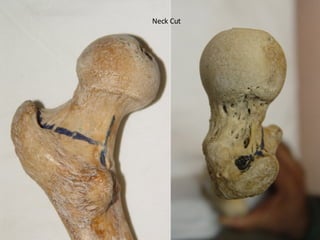
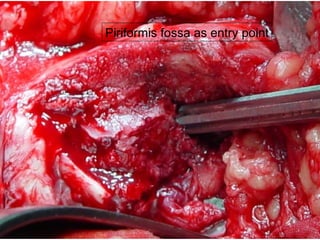
Proximal Fixation Tips & Tricks Pre-operative assessment of the Canal. Proper neck cut. Avoid comminuting Calcar Femoris. Save at least 1cm of neck at Calcar Insert canal finder from Piriformis Fossa In wider canal, avoid use of rasp.
Proximal Fixation Tips & Tricks Select proper Implant which will fill the proximal femur without increasing comminution.  Use a artery forcep in the prosthesis proximal hole ( originally for extraction), for rotation control during insertion.
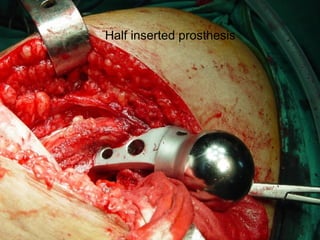
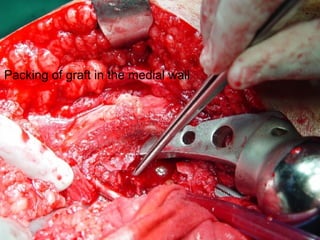
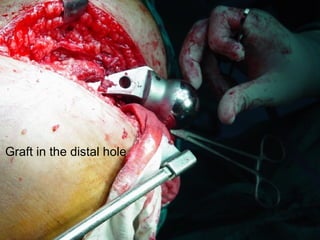
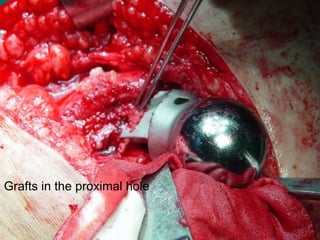
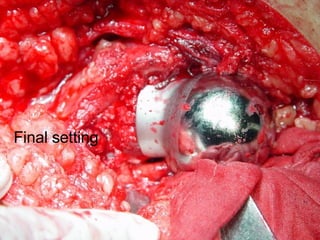
Proximal Fixation Tips & Tricks Impaction grafting: The most important area is the medial side near calcar. Graft should be inserted when nearly half of the prosthesis has gone inside. Fill the fenestrations of the prosthesis with bone grafts, as the prosthesis advances in to the canal. The color of the implant should not over-hang on the calcar. If done properly, it should rest on the neck and will compress the grafts.
 
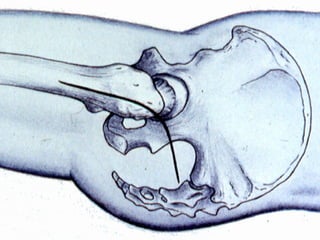
Posterio-lateral incision in lateral decubitous position
 
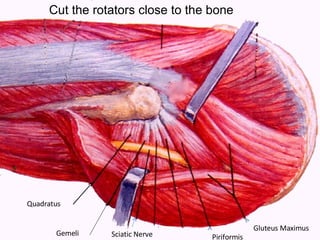
Quadratus Gemeli Piriformis Sciatic Nerve Gluteus Maximus Cut the rotators close to the bone
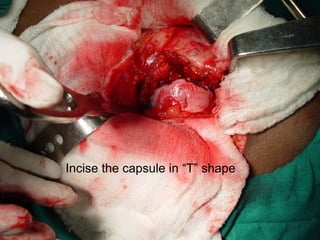
Incise the capsule in “T” shape
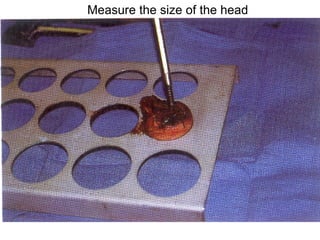
Measure the size of the head
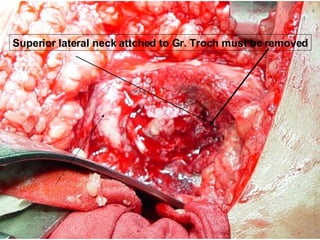
Superior lateral neck attched to Gr. Troch must be removed
Neck Cut
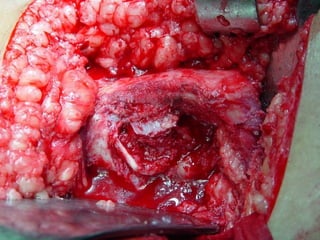
Piriformis fossa as entry point
 
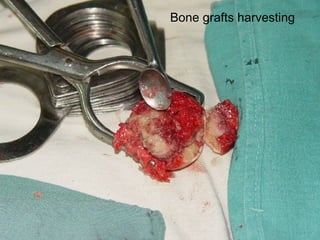
Bone grafts harvesting
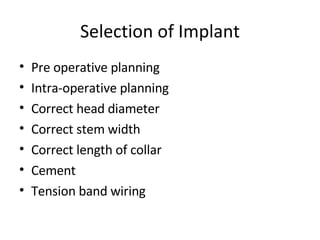
Selection of Implant Pre operative planning Intra-operative planning Correct head diameter Correct stem width Correct length of collar Cement Tension band wiring
Variables - Implant Head size Stem size Collar width Offset Neck – shaft angle Stem width  Number & size of stem holes
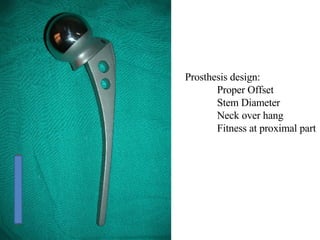
Prosthesis design: Proper Offset Stem Diameter Neck over hang Fitness at proximal part
Half inserted prosthesis
Packing of graft in the medial wall
 
Graft in the distal hole
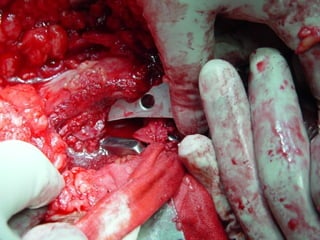
Grafts in the proximal hole
Final setting
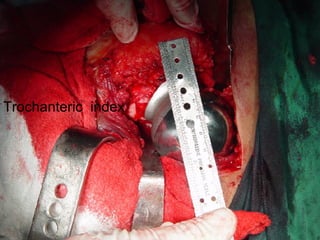
Trochanteric  index
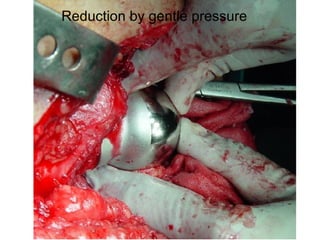
Reduction by gentle pressure
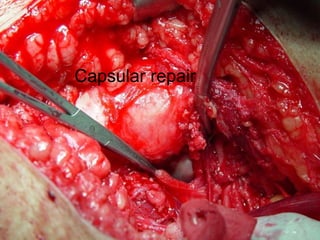
Capsular repair
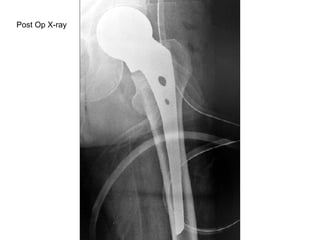
Post Op X-ray
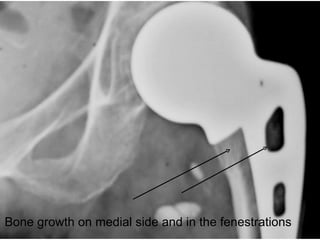
Bone growth on medial side and in the fenestrations
AMP - summary Pre operative planning key to ensuring success is careful planning It’s all in the mind If you work on the surgery before hands on mind in brief you can have both hand free and brain free surgery
AMP - Summary Femoral head size Neck preparation according to AMP Entry point  Reaming Pack the bone grafts in fenestrations. Impaction bone grafting
AMP - Summary Post operative Regimen antibiotic – 24 hrs Abduction pillow Bed side sitting – 24 – 48 hrs Walking with support – 3 rd  – 5 th  day Weight bearing as tolerated
Failure & Success - Amp? Most AMP fails on the table  Subsidence and Loosening depends on proximal fixation achieved on table Once the proximal locking holes filled with bone – the prosthesis is stable & long lasting. Hypertrophy of medial side, lateral wall hypertrophy, & new bone at the tip ensures long term success.

Austin Moore’S Prosthesis Surgical Technique

  • 1.
    Austin Moore’s ProsthesisTechnique Vinod Naneria Girish Yeotikar Arjun Wadhwani Choithram Hospital & Research Centre, Indore, India
  • 2.
    The philosophy Proximal fixation of the implant is crucial in the success of the surgery. A tight fixation gives mechanical stability, and allow the grafts in the fenestration to consolidate, making it a self-locking device. This prevents over-loading of calcar – no subsidence, no loosening, no failure.
  • 3.
    Painful AMP AnAMP fails on the table. Almost always the success of the surgery can be predicted on the table. Be prepared for change to plan “B” or “C”. Be prepared for peri-operative calcar split.
  • 4.
    Painful AMP- twoprimary reasons Inadequate Proximal Fixation Loose Prosthesis Calcar absorption Subsidence of the prosthesis Loss of varus alignment in the canal Acetabular cartilage erosion
  • 5.
    Inadequate Proximal FixationNot under our control Elderly Osteoporotic Wide canal Under our control Faulty operative technique Over reaming by improper Rasp Improper selection of Implant
  • 6.
    Proximal Fixation Tips& Tricks Pre-operative assessment of the Canal. Proper neck cut. Avoid comminuting Calcar Femoris. Save at least 1cm of neck at Calcar Insert canal finder from Piriformis Fossa In wider canal, avoid use of rasp.
  • 7.
    Proximal Fixation Tips& Tricks Select proper Implant which will fill the proximal femur without increasing comminution. Use a artery forcep in the prosthesis proximal hole ( originally for extraction), for rotation control during insertion.
  • 8.
    Proximal Fixation Tips& Tricks Impaction grafting: The most important area is the medial side near calcar. Graft should be inserted when nearly half of the prosthesis has gone inside. Fill the fenestrations of the prosthesis with bone grafts, as the prosthesis advances in to the canal. The color of the implant should not over-hang on the calcar. If done properly, it should rest on the neck and will compress the grafts.
  • 9.
  • 10.
    Posterio-lateral incision inlateral decubitous position
  • 11.
  • 12.
    Quadratus Gemeli PiriformisSciatic Nerve Gluteus Maximus Cut the rotators close to the bone
  • 13.
    Incise the capsulein “T” shape
  • 14.
    Measure the sizeof the head
  • 15.
    Superior lateral neckattched to Gr. Troch must be removed
  • 16.
  • 17.
  • 18.
  • 19.
  • 20.
    Selection of ImplantPre operative planning Intra-operative planning Correct head diameter Correct stem width Correct length of collar Cement Tension band wiring
  • 21.
    Variables - ImplantHead size Stem size Collar width Offset Neck – shaft angle Stem width Number & size of stem holes
  • 22.
    Prosthesis design: ProperOffset Stem Diameter Neck over hang Fitness at proximal part
  • 23.
  • 24.
    Packing of graftin the medial wall
  • 25.
  • 26.
    Graft in thedistal hole
  • 27.
    Grafts in theproximal hole
  • 28.
  • 29.
  • 30.
  • 31.
  • 32.
  • 33.
    Bone growth onmedial side and in the fenestrations
  • 34.
    AMP - summaryPre operative planning key to ensuring success is careful planning It’s all in the mind If you work on the surgery before hands on mind in brief you can have both hand free and brain free surgery
  • 35.
    AMP - SummaryFemoral head size Neck preparation according to AMP Entry point Reaming Pack the bone grafts in fenestrations. Impaction bone grafting
  • 36.
    AMP - SummaryPost operative Regimen antibiotic – 24 hrs Abduction pillow Bed side sitting – 24 – 48 hrs Walking with support – 3 rd – 5 th day Weight bearing as tolerated
  • 37.
    Failure & Success- Amp? Most AMP fails on the table Subsidence and Loosening depends on proximal fixation achieved on table Once the proximal locking holes filled with bone – the prosthesis is stable & long lasting. Hypertrophy of medial side, lateral wall hypertrophy, & new bone at the tip ensures long term success.