Human BehaviorHuman Behavior
Presented By:Presented By:
Maqsood Nazir BhattiMaqsood Nazir Bhatti
Rabel seedaralRabel seedaral
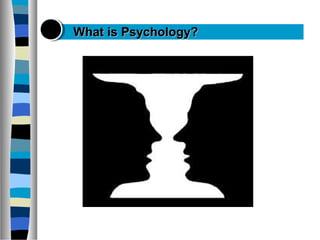
What is Psychology?What is Psychology?
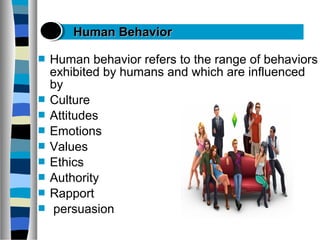
 Human behavior refers to the range of behaviors
exhibited by humans and which are influenced
by
 Culture
 Attitudes
 Emotions
 Values
 Ethics
 Authority
 Rapport
 persuasion
Human BehaviorHuman Behavior
Why do you studyWhy do you study
HUMAN BEHAVIOR at BBA level?HUMAN BEHAVIOR at BBA level?
HUMAN BEHAVIOR at BBA levelHUMAN BEHAVIOR at BBA level
 By means of this you would know how to
behave with the humans
 Be a friend of them
 You’ll learn how to mingle with the
people around you
 Helps you learn about people etc.
HUMAN BEHAVIOR at BBA levelHUMAN BEHAVIOR at BBA level
 To understand how to live and sustain
the human life
 To know how to deal with people or
beings that are not home to earth or act
in a weird way
 To be more faithful in mankind
 To understand how some among us can
destroy things so as to create it.
Mind knowledge, skillsMind knowledge, skills
 Psychology is the scientific study of mind and behavior.
The word “ psychology comes from the Greek words‖
“psyche, meaning‖ life, and “ logos, meaning‖ explanation.
 Human behavior refers to the array of every physical
action and observable emotion associated with
individuals, as well as the human race as a whole. While
specific traits of one's personality and temperament may
be more consistent, other behaviors will change as one
moves from birth through adulthood.
Human behavior is concerned with psychologyHuman behavior is concerned with psychology
Psychology.
Psychology is an academic and applied
discipline that involves the scientific study of
mental functions and behaviors.
Human behavior
Human behavior refers to the range of
behaviors exhibited by humans and which are
influenced by culture, attitudes, emotions,
values, ethics, authority, rapport, hypnosis,
persuasion, coercion and genetics.
What is difference between psychology and humanWhat is difference between psychology and human
behavior?behavior?
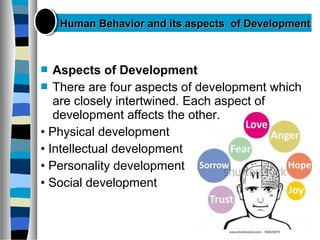
 Aspects of Development
 There are four aspects of development which
are closely intertwined. Each aspect of
development affects the other.
• Physical development
• Intellectual development
• Personality development
• Social development
Human Behavior and its aspects of DevelopmentHuman Behavior and its aspects of Development
Physical developmentPhysical development
Intellectual developmentIntellectual development
Personality developmentPersonality development
Social developmentSocial development
 BiopsychologyBiopsychology
– Specializes in the
biological bases of
behavior
– Experimental psychology
• Methodological study of
sensing, perceiving,
learning and thinking
– Cognitive psychology
• Emphasis on higher
mental processes
The Subfields of Psychology: Psychology’sThe Subfields of Psychology: Psychology’s
Family TreeFamily Tree
 Understanding change and individual differences
– Developmental psychology
• Changes in behavior over the life span (womb to tomb)
– Personality psychology
• Examines consistencies in people’s behavior over time and
traits that differentiate us from one another
The Subfields of PsychologyThe Subfields of Psychology
 Physical and mental health
– Health psychology
• Explores relationship between psychological factors and
physical ailments or disease
– Clinical psychology
• Investigates diagnosis and treatment of psychological
disorders
The Subfields of PsychologyThe Subfields of Psychology
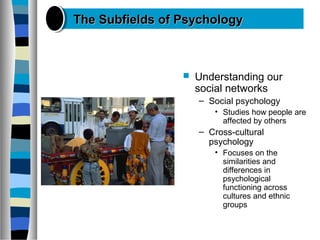
 Understanding our
social networks
– Social psychology
• Studies how people are
affected by others
– Cross-cultural
psychology
• Focuses on the
similarities and
differences in
psychological
functioning across
cultures and ethnic
groups
The Subfields of PsychologyThe Subfields of Psychology
 New frontiers
– Clinical neuropsychology
• Focuses on
relationships between
biological factors and
psychological disorders
– Evolutionary psychology
• Examines influence of
our genetic heritage and
our behavior
The Subfields of PsychologyThe Subfields of Psychology
 Sensation The activation of the sense organs by a source of
physical energy.
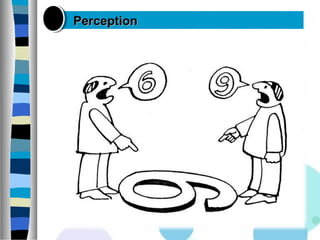
 Perception The sorting out, interpretation, analysis, and integration
of stimuli by the sense organs and brain.
 Stimulus Energy that produces a response in a sense organ.
 Psychophysics The study of the relationship between the physical
aspects of stimuli and our psychological experience of them.
Sensation and perceptionSensation and perception
TasteTaste
GustationGustation
 Gustation: Sense of taste
 Taste Buds: Taste-
receptor cells
 Four Taste Sensations:
sweet, salty, sour, bitter
 Most sensitive to bitter,
least sensitive to sweet
 Umami: Possible fifth
taste sensation; brothy
taste
PerceptionPerception
General Properties of Sensory SystemsGeneral Properties of Sensory Systems
 Sensation: Process of detecting physical energies with
sensory organs
 Perception: Mental process of organizing sensations into
meaningful patterns
 Data Reduction System: Any system that selects, analyzes,
and condenses information
 Sensory Coding: Converting important features of the world
into neural messages understood by the brain
Gestalt Principles of OrganizationGestalt Principles of Organization
 This states how we organize bits and pieces of information
into meaningful wholes.
 Nearness: Stimuli that are near each other tend to be
grouped together
 Similarity: Stimuli that are similar in size, shape, color, or
form tend to be grouped together
 Closure: Tendency to complete a figure so that it has a
consistent overall form
Visual PerceptionVisual Perception
 Process used to organize sensory impressions
caused by the light that strikes our eyes
 Sensation is a automatic process
 Perception is an active process
– Involves experience, expectations and motivations
 Visual perception of motion is based on change
of position relative to other objects
 Illusions of movement
– Stroboscopic motion (class discussion, how do we
know that a train moves?)
Perception of MotionPerception of Motion
FIGURE 4.41 The apparent motion of objects viewed during travel depends on their
distance from the observer. Apparent motion can also be influenced by an
observer’s point of fixation. At middle distances, objects closer than the point of
fixation appear to move backward; those beyond the point of fixation appear to
move forward. Objects at great distances, such as the sun or moon, always appear
to move forward.
Figure 4.41Figure 4.41
Human behavior ppt by maqsood

Human behavior ppt by maqsood

  • 1.
    Human BehaviorHuman Behavior PresentedBy:Presented By: Maqsood Nazir BhattiMaqsood Nazir Bhatti Rabel seedaralRabel seedaral
  • 3.
  • 4.
     Human behaviorrefers to the range of behaviors exhibited by humans and which are influenced by  Culture  Attitudes  Emotions  Values  Ethics  Authority  Rapport  persuasion Human BehaviorHuman Behavior
  • 5.
    Why do youstudyWhy do you study HUMAN BEHAVIOR at BBA level?HUMAN BEHAVIOR at BBA level?
  • 6.
    HUMAN BEHAVIOR atBBA levelHUMAN BEHAVIOR at BBA level  By means of this you would know how to behave with the humans  Be a friend of them  You’ll learn how to mingle with the people around you  Helps you learn about people etc.
  • 7.
    HUMAN BEHAVIOR atBBA levelHUMAN BEHAVIOR at BBA level  To understand how to live and sustain the human life  To know how to deal with people or beings that are not home to earth or act in a weird way  To be more faithful in mankind  To understand how some among us can destroy things so as to create it.
  • 8.
    Mind knowledge, skillsMindknowledge, skills
  • 9.
     Psychology isthe scientific study of mind and behavior. The word “ psychology comes from the Greek words‖ “psyche, meaning‖ life, and “ logos, meaning‖ explanation.  Human behavior refers to the array of every physical action and observable emotion associated with individuals, as well as the human race as a whole. While specific traits of one's personality and temperament may be more consistent, other behaviors will change as one moves from birth through adulthood. Human behavior is concerned with psychologyHuman behavior is concerned with psychology
  • 10.
    Psychology. Psychology is anacademic and applied discipline that involves the scientific study of mental functions and behaviors. Human behavior Human behavior refers to the range of behaviors exhibited by humans and which are influenced by culture, attitudes, emotions, values, ethics, authority, rapport, hypnosis, persuasion, coercion and genetics. What is difference between psychology and humanWhat is difference between psychology and human behavior?behavior?
  • 11.
     Aspects ofDevelopment  There are four aspects of development which are closely intertwined. Each aspect of development affects the other. • Physical development • Intellectual development • Personality development • Social development Human Behavior and its aspects of DevelopmentHuman Behavior and its aspects of Development
  • 12.
  • 13.
  • 14.
  • 15.
  • 16.
     BiopsychologyBiopsychology – Specializesin the biological bases of behavior – Experimental psychology • Methodological study of sensing, perceiving, learning and thinking – Cognitive psychology • Emphasis on higher mental processes The Subfields of Psychology: Psychology’sThe Subfields of Psychology: Psychology’s Family TreeFamily Tree
  • 17.
     Understanding changeand individual differences – Developmental psychology • Changes in behavior over the life span (womb to tomb) – Personality psychology • Examines consistencies in people’s behavior over time and traits that differentiate us from one another The Subfields of PsychologyThe Subfields of Psychology
  • 18.
     Physical andmental health – Health psychology • Explores relationship between psychological factors and physical ailments or disease – Clinical psychology • Investigates diagnosis and treatment of psychological disorders The Subfields of PsychologyThe Subfields of Psychology
  • 19.
     Understanding our socialnetworks – Social psychology • Studies how people are affected by others – Cross-cultural psychology • Focuses on the similarities and differences in psychological functioning across cultures and ethnic groups The Subfields of PsychologyThe Subfields of Psychology
  • 20.
     New frontiers –Clinical neuropsychology • Focuses on relationships between biological factors and psychological disorders – Evolutionary psychology • Examines influence of our genetic heritage and our behavior The Subfields of PsychologyThe Subfields of Psychology
  • 21.
     Sensation Theactivation of the sense organs by a source of physical energy.  Perception The sorting out, interpretation, analysis, and integration of stimuli by the sense organs and brain.  Stimulus Energy that produces a response in a sense organ.  Psychophysics The study of the relationship between the physical aspects of stimuli and our psychological experience of them. Sensation and perceptionSensation and perception
  • 22.
  • 23.
    GustationGustation  Gustation: Senseof taste  Taste Buds: Taste- receptor cells  Four Taste Sensations: sweet, salty, sour, bitter  Most sensitive to bitter, least sensitive to sweet  Umami: Possible fifth taste sensation; brothy taste
  • 24.
  • 25.
    General Properties ofSensory SystemsGeneral Properties of Sensory Systems  Sensation: Process of detecting physical energies with sensory organs  Perception: Mental process of organizing sensations into meaningful patterns  Data Reduction System: Any system that selects, analyzes, and condenses information  Sensory Coding: Converting important features of the world into neural messages understood by the brain
  • 26.
    Gestalt Principles ofOrganizationGestalt Principles of Organization  This states how we organize bits and pieces of information into meaningful wholes.  Nearness: Stimuli that are near each other tend to be grouped together  Similarity: Stimuli that are similar in size, shape, color, or form tend to be grouped together  Closure: Tendency to complete a figure so that it has a consistent overall form
  • 27.
    Visual PerceptionVisual Perception Process used to organize sensory impressions caused by the light that strikes our eyes  Sensation is a automatic process  Perception is an active process – Involves experience, expectations and motivations
  • 28.
     Visual perceptionof motion is based on change of position relative to other objects  Illusions of movement – Stroboscopic motion (class discussion, how do we know that a train moves?) Perception of MotionPerception of Motion
  • 29.
    FIGURE 4.41 Theapparent motion of objects viewed during travel depends on their distance from the observer. Apparent motion can also be influenced by an observer’s point of fixation. At middle distances, objects closer than the point of fixation appear to move backward; those beyond the point of fixation appear to move forward. Objects at great distances, such as the sun or moon, always appear to move forward. Figure 4.41Figure 4.41