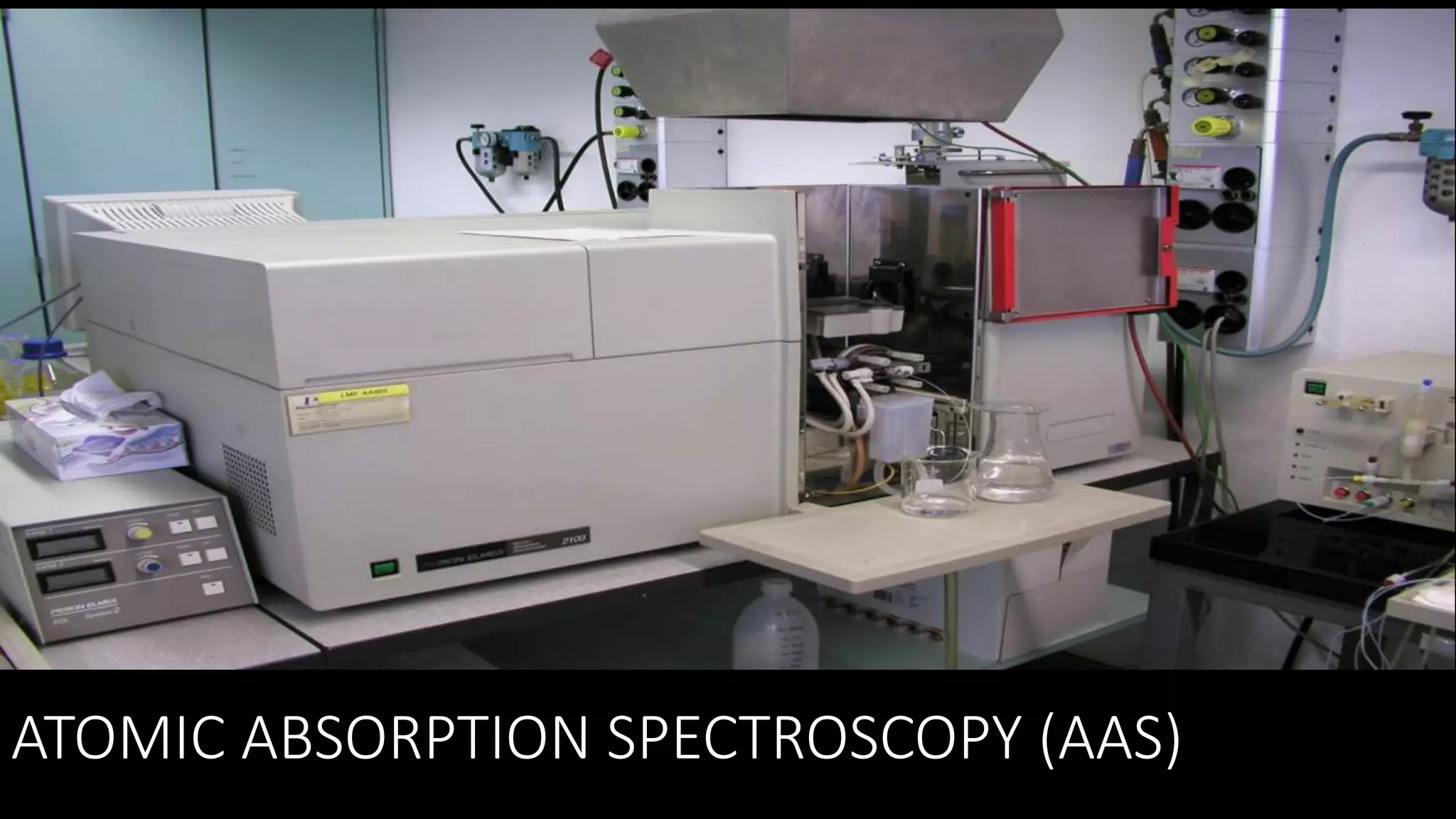
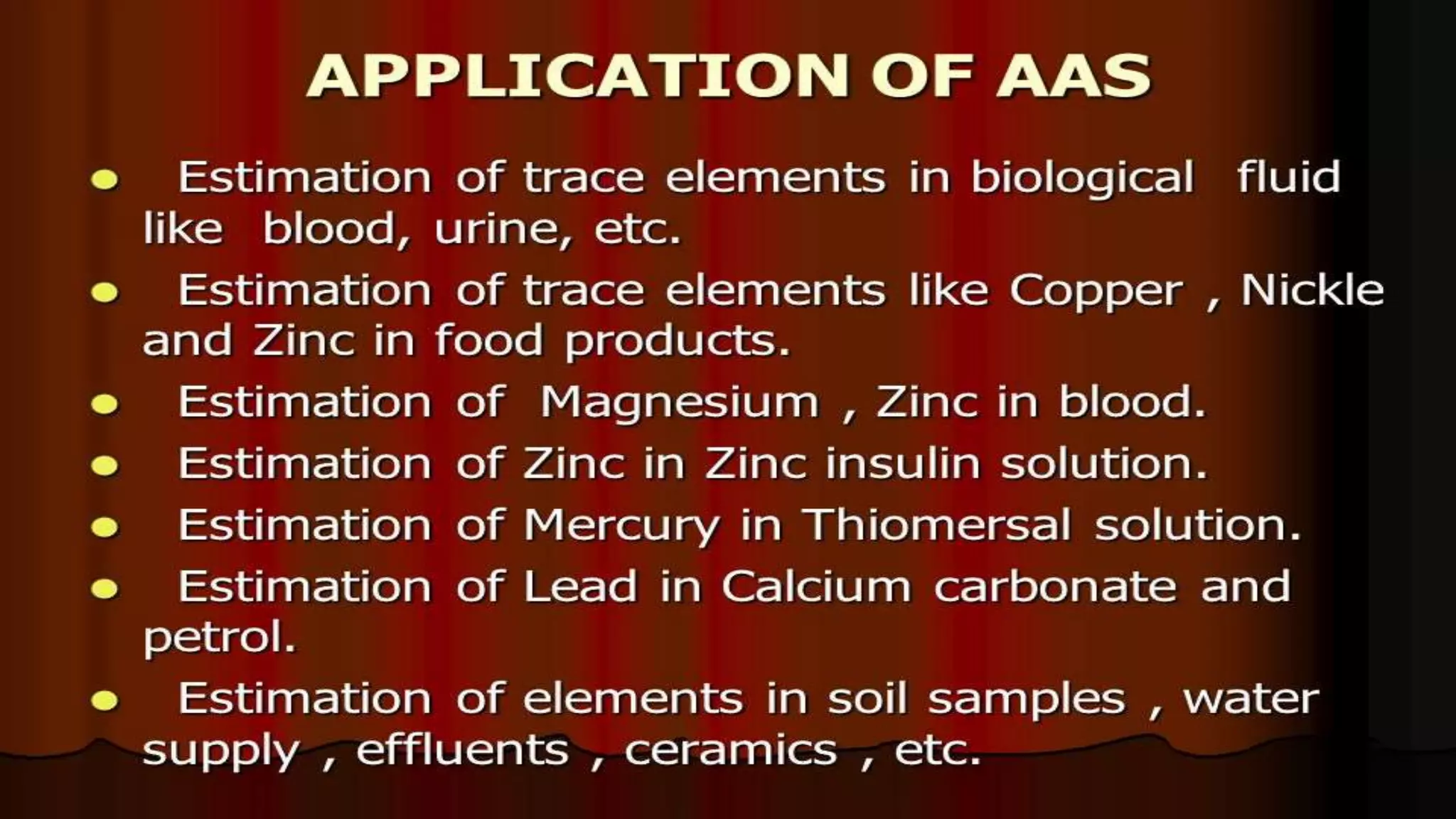
Atomic absorption spectroscopy is a technique that uses the absorption of light to determine the concentration of chemical elements in a sample. It works by atomizing the sample using a flame or graphite tube, then measuring the absorption of element-specific radiation as it passes through the sample. The amount of absorption is used to calculate the concentration based on the Beer-Lambert law. Common instrumentation includes a radiation source, monochromator, and detector.