Atmospheric VariablesAtmospheric Variables
08/22/1308/22/13
Air TemperatureAir Temperature
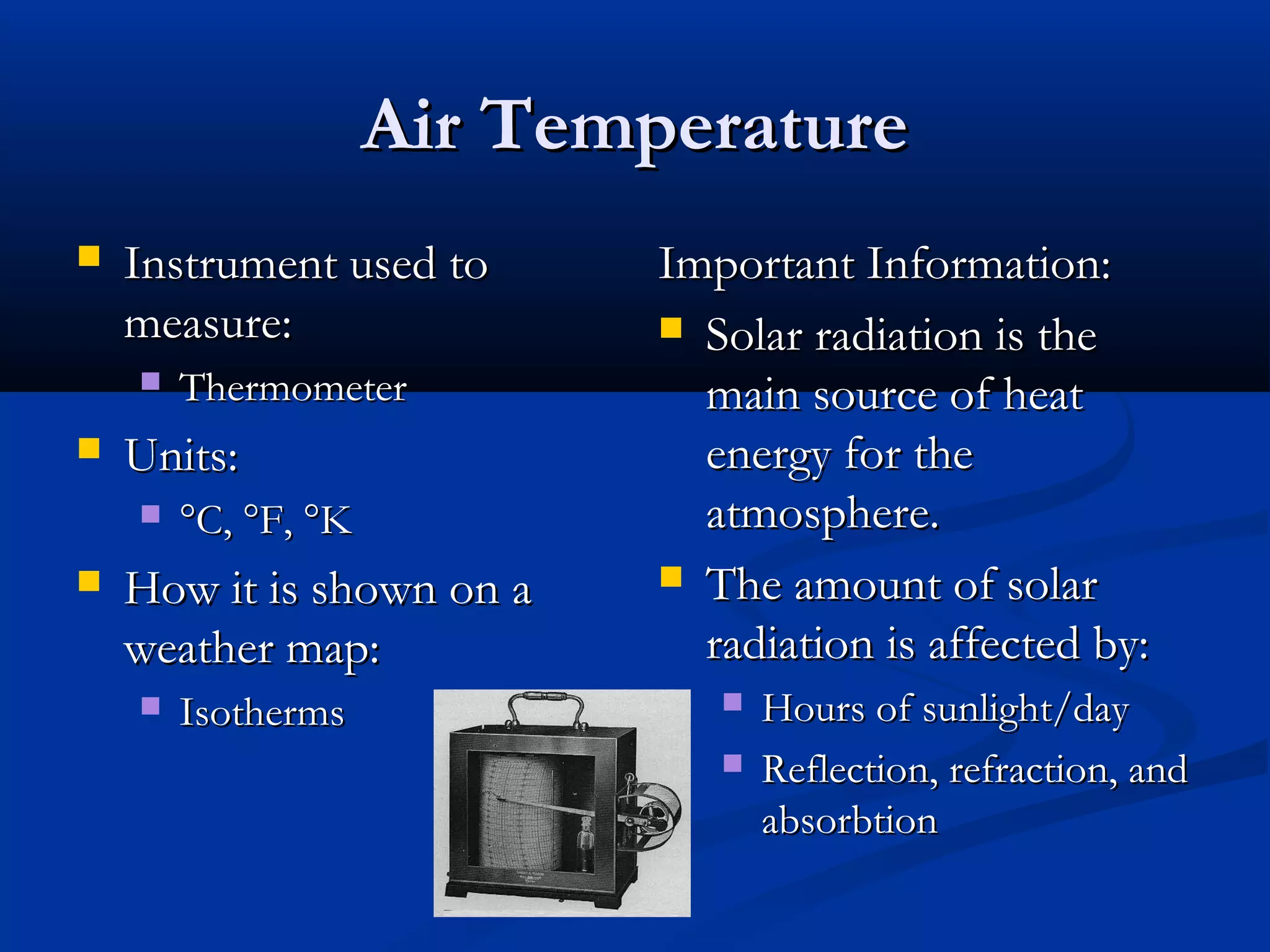
 Instrument used toInstrument used to
measure:measure:
 ThermometerThermometer
 Units:Units:
 °C, °F, °K°C, °F, °K
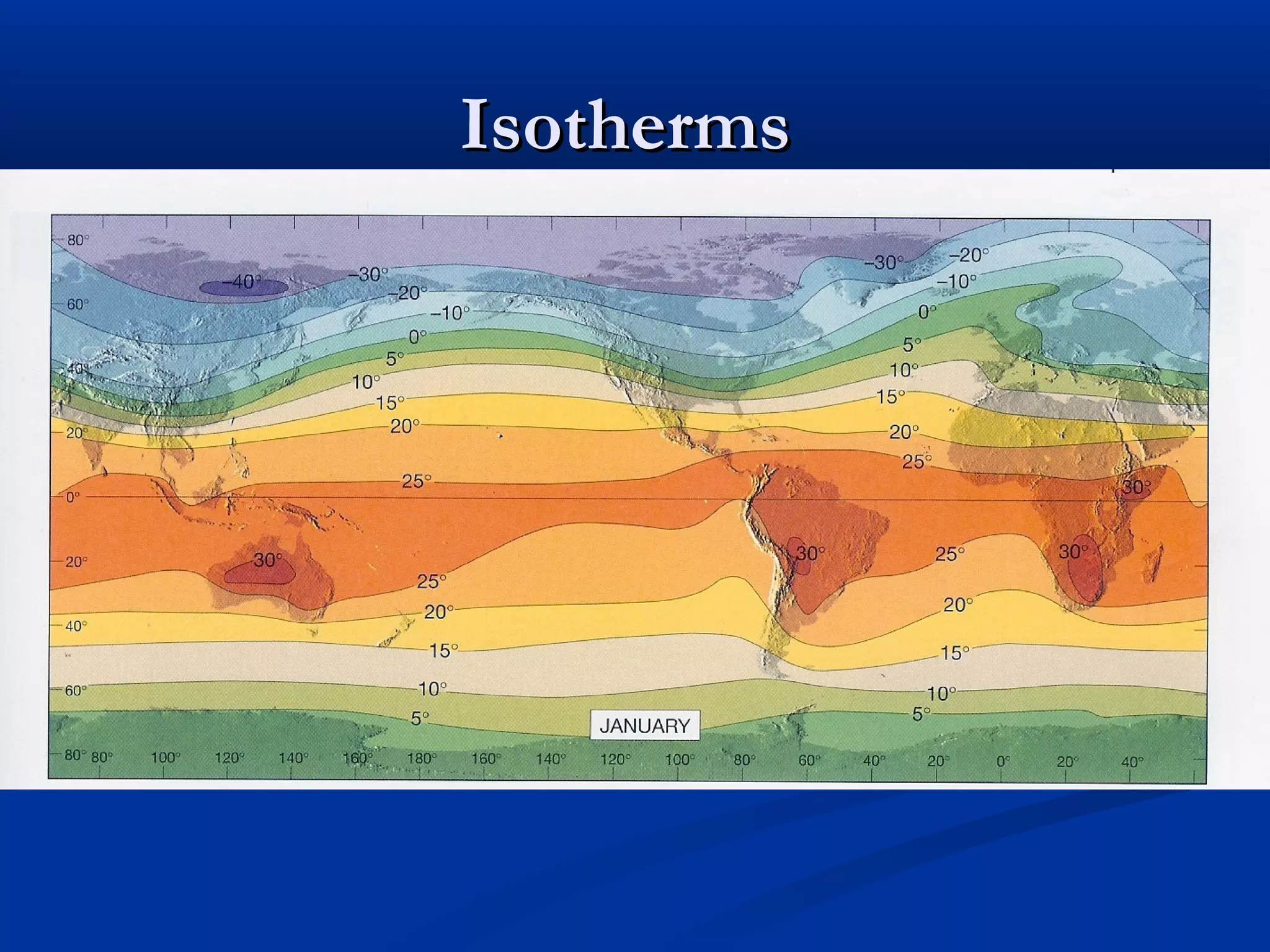
 How it is shown on aHow it is shown on a
weather map:weather map:
 IsothermsIsotherms
Important Information:Important Information:
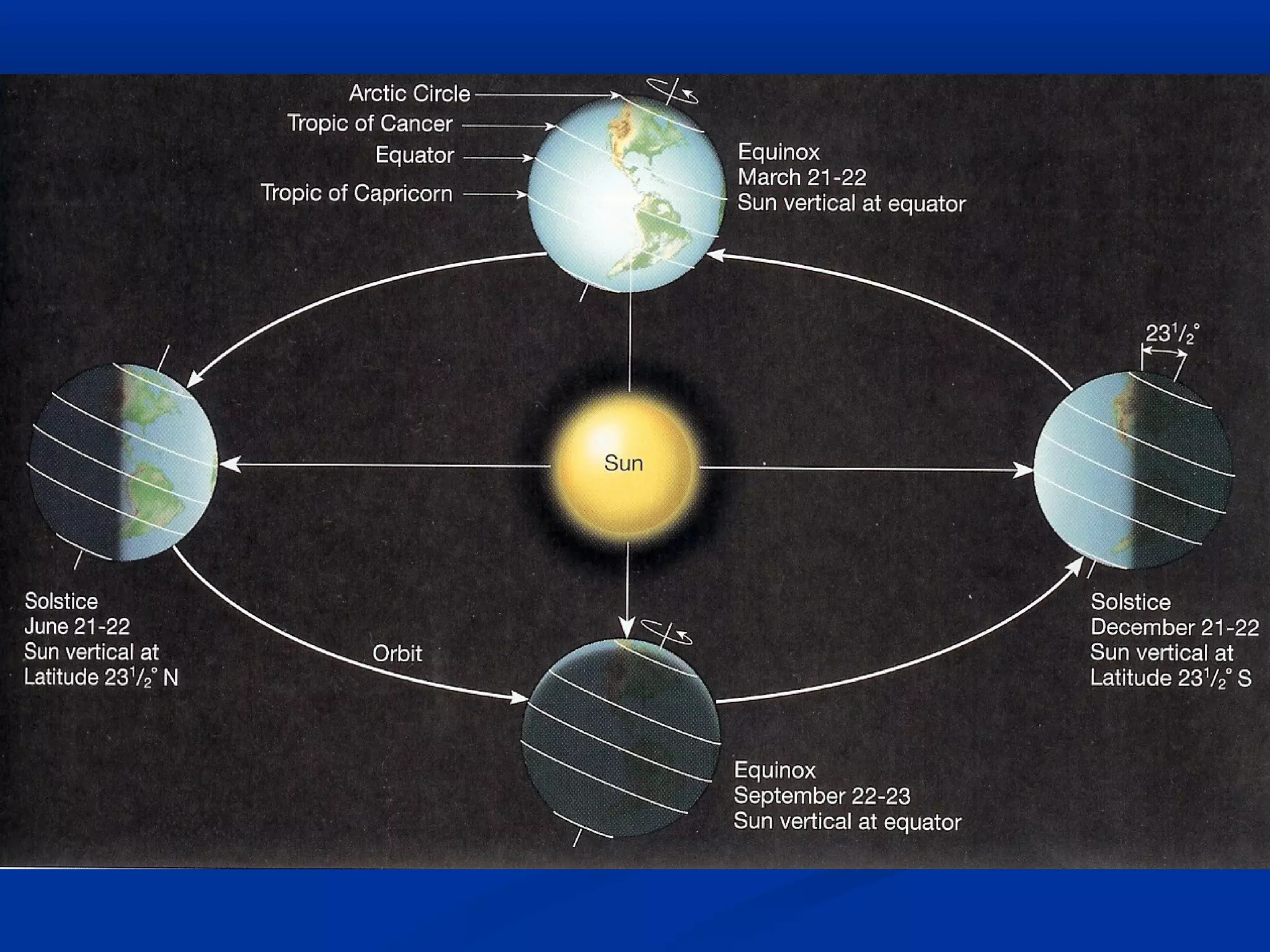
 Solar radiation is theSolar radiation is the
main source of heatmain source of heat
energy for theenergy for the
atmosphere.atmosphere.
 The amount of solarThe amount of solar
radiation is affected by:radiation is affected by:
 Hours of sunlight/dayHours of sunlight/day
 Reflection, refraction, andReflection, refraction, and
absorbtionabsorbtion
IsothermsIsotherms
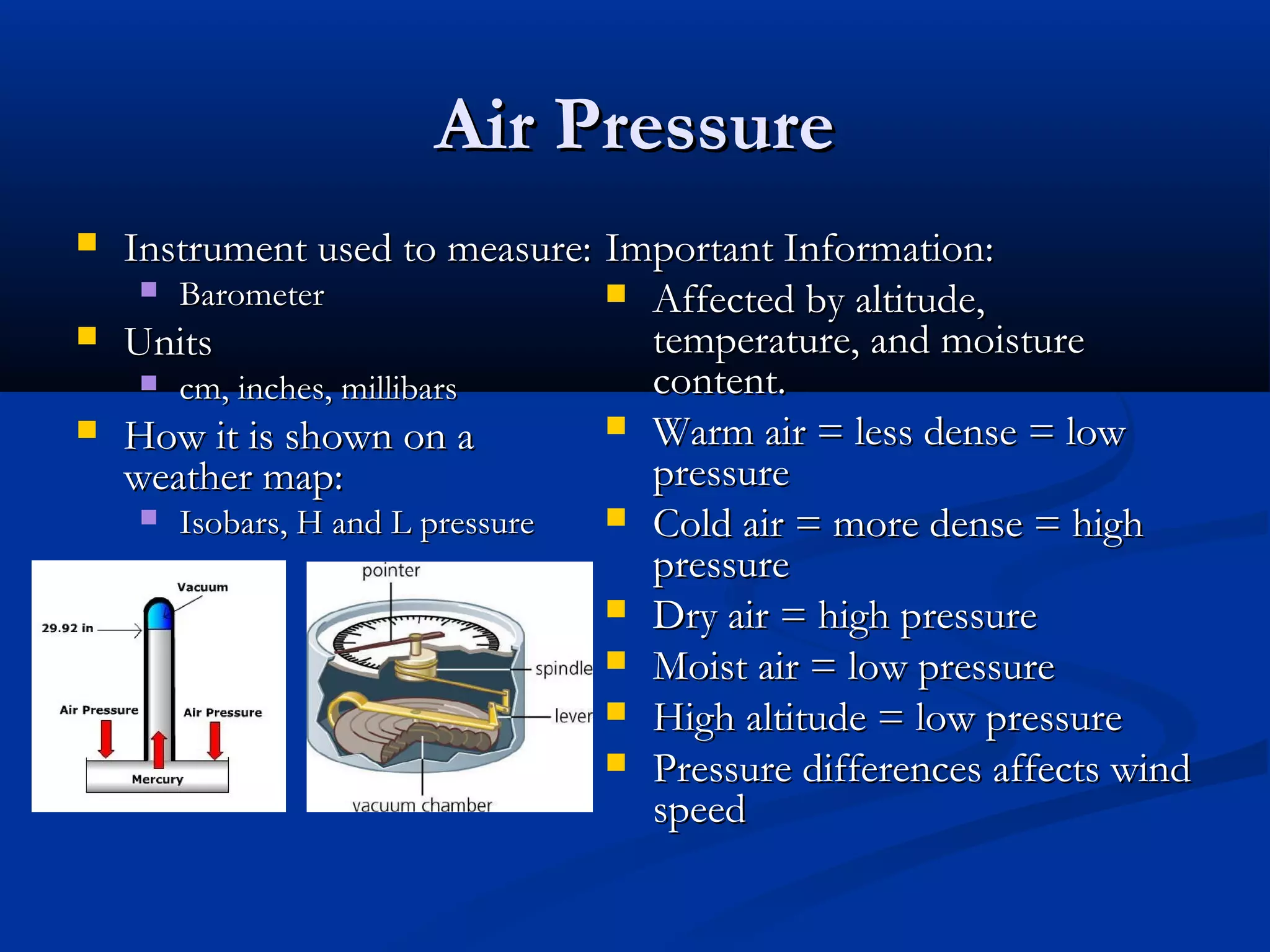
Air PressureAir Pressure
 Instrument used to measure:Instrument used to measure:
 BarometerBarometer
 UnitsUnits
 cm, inches, millibarscm, inches, millibars
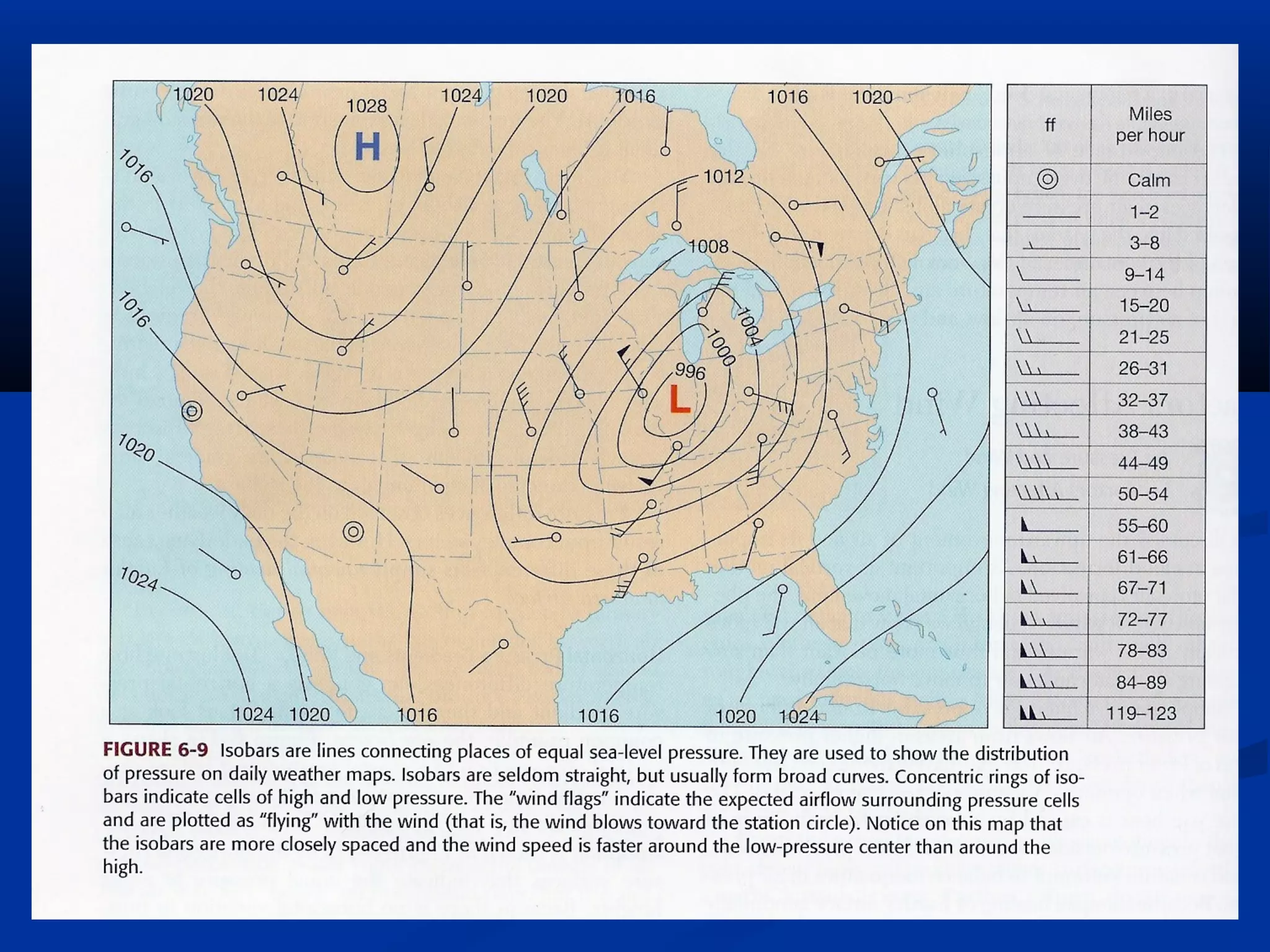
 How it is shown on aHow it is shown on a
weather map:weather map:
 Isobars, H and L pressureIsobars, H and L pressure
Important Information:Important Information:
 Affected by altitude,Affected by altitude,
temperature, and moisturetemperature, and moisture
content.content.
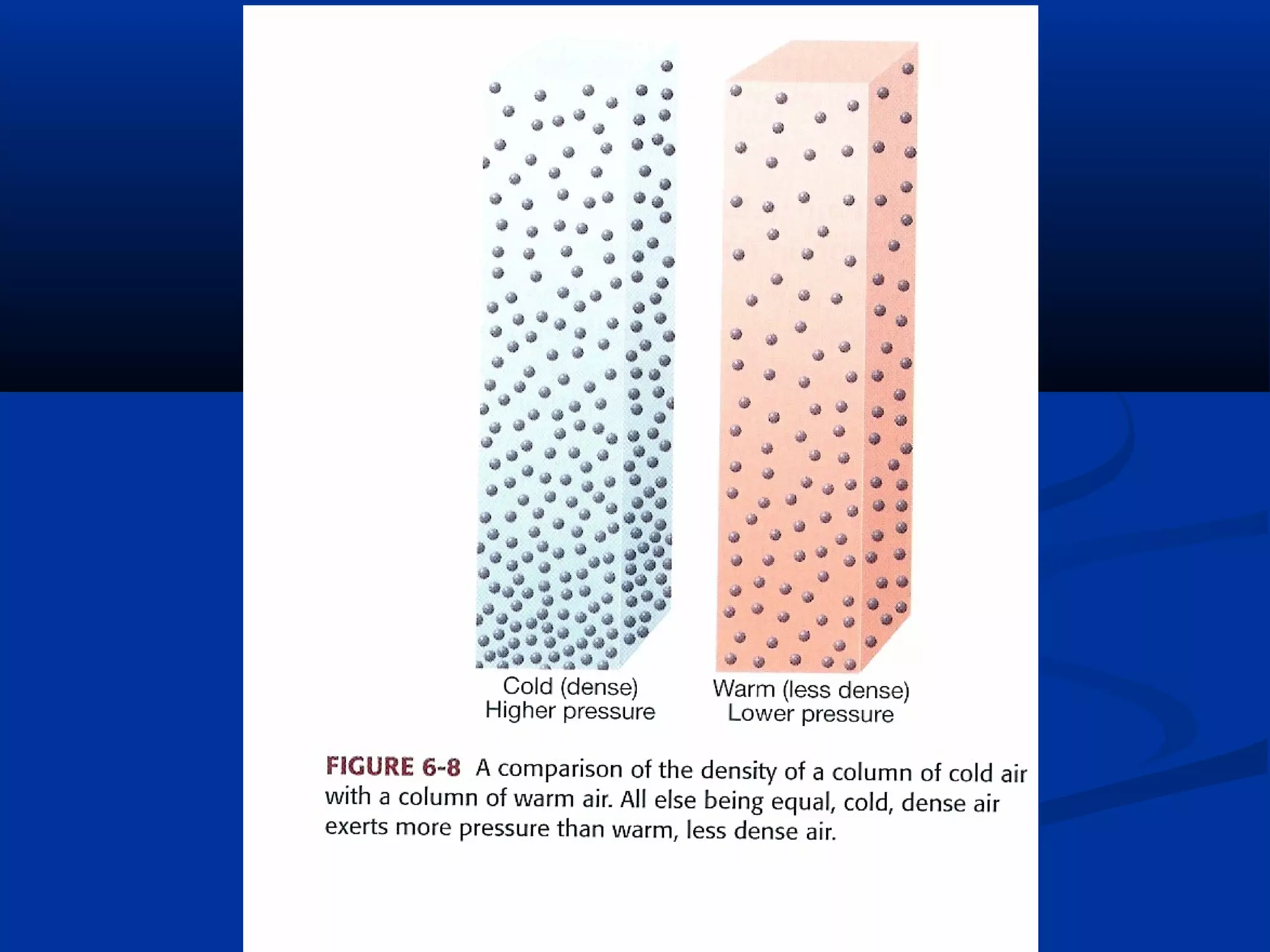
 Warm air = less dense = lowWarm air = less dense = low
pressurepressure
 Cold air = more dense = highCold air = more dense = high
pressurepressure
 Dry air = high pressureDry air = high pressure
 Moist air = low pressureMoist air = low pressure
 High altitude = low pressureHigh altitude = low pressure
 Pressure differences affects windPressure differences affects wind
speedspeed
Moisture in the AirMoisture in the Air
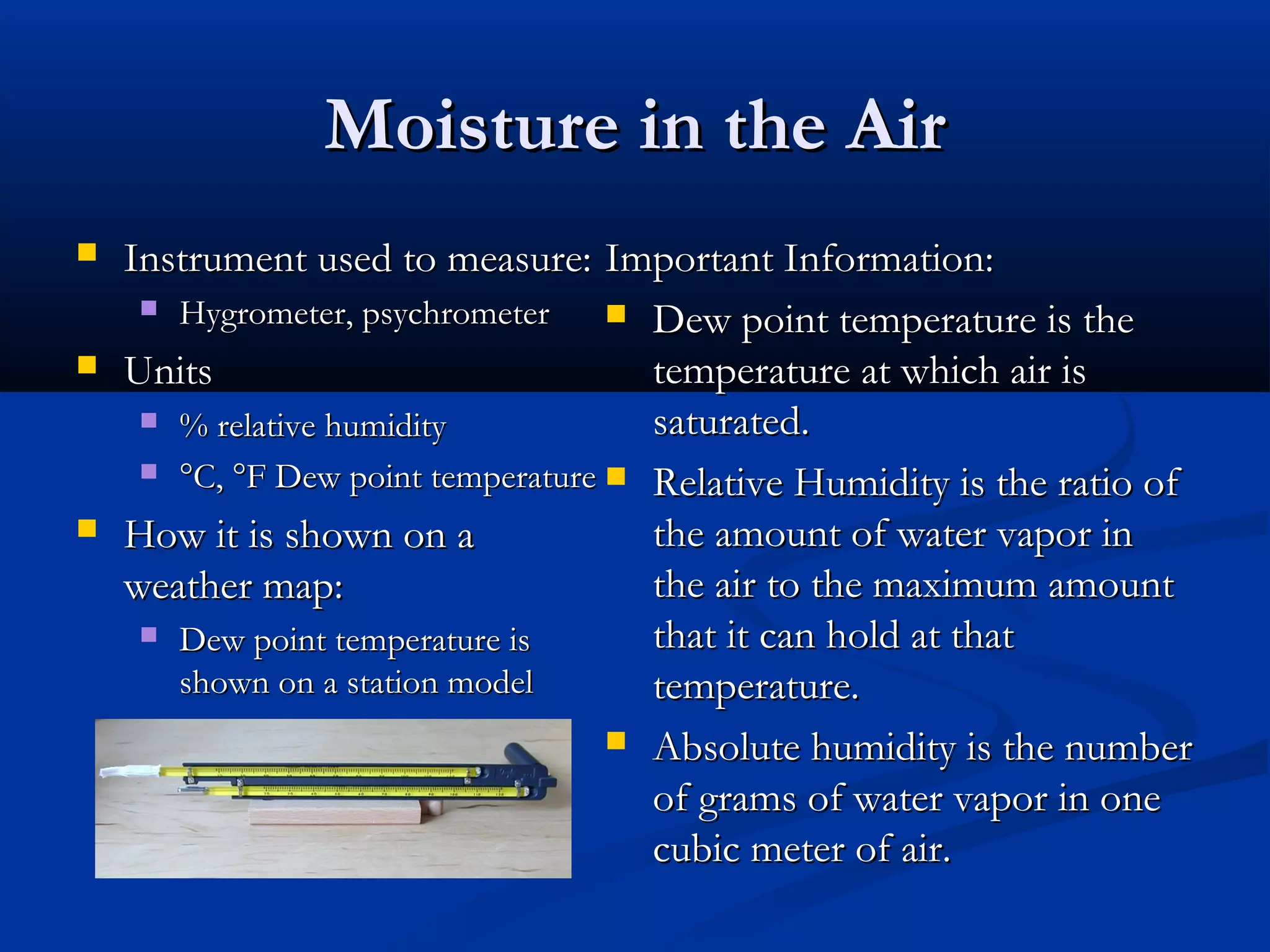
 Instrument used to measure:Instrument used to measure:
 Hygrometer, psychrometerHygrometer, psychrometer
 UnitsUnits
 % relative humidity% relative humidity
 °C, °F Dew point temperature°C, °F Dew point temperature
 How it is shown on aHow it is shown on a
weather map:weather map:
 Dew point temperature isDew point temperature is
shown on a station modelshown on a station model
Important Information:Important Information:
 Dew point temperature is theDew point temperature is the
temperature at which air istemperature at which air is
saturated.saturated.
 Relative Humidity is the ratio ofRelative Humidity is the ratio of
the amount of water vapor inthe amount of water vapor in
the air to the maximum amountthe air to the maximum amount
that it can hold at thatthat it can hold at that
temperature.temperature.
 Absolute humidity is the numberAbsolute humidity is the number
of grams of water vapor in oneof grams of water vapor in one
cubic meter of air.cubic meter of air.
Air MovementAir Movement
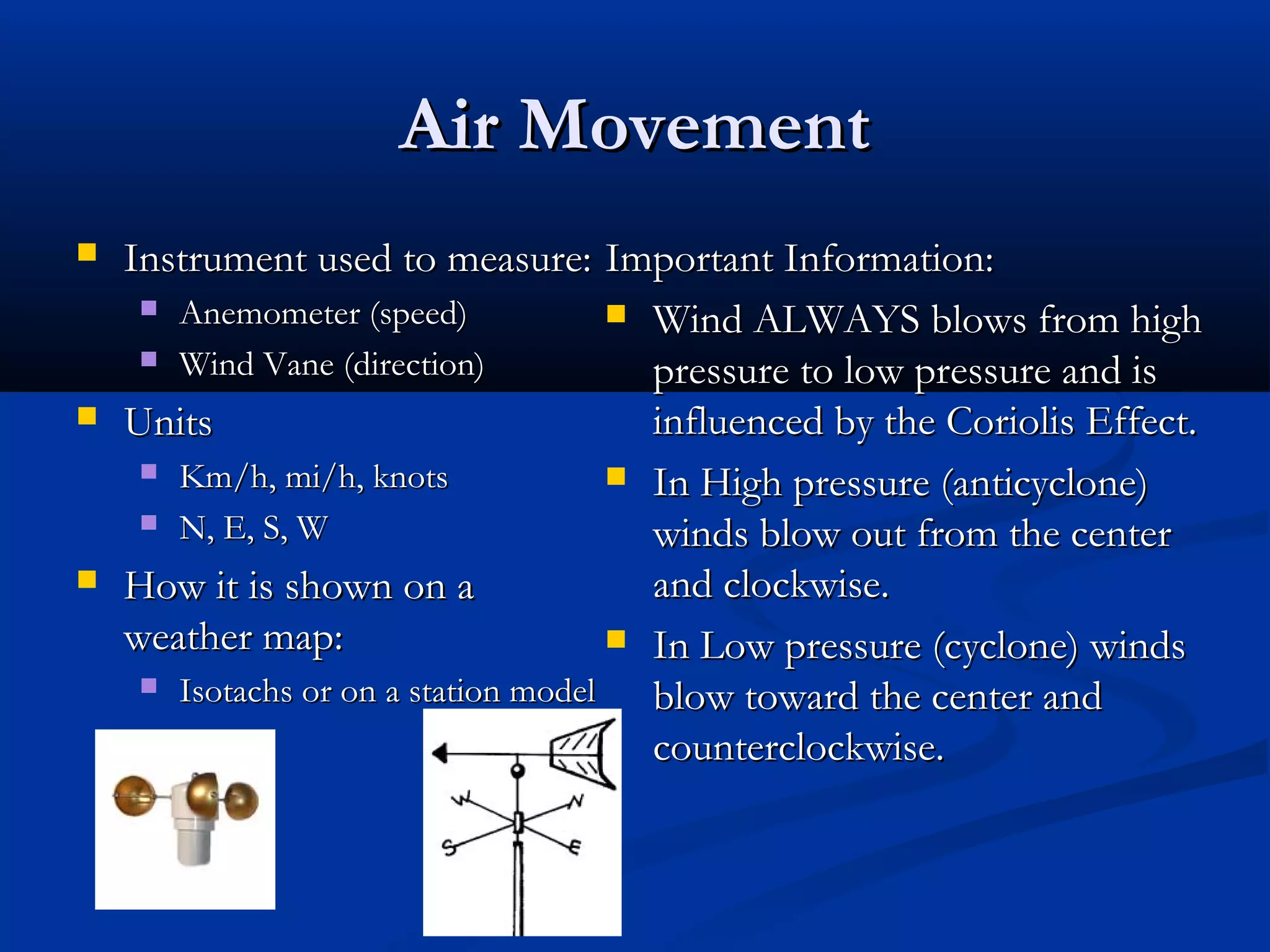
 Instrument used to measure:Instrument used to measure:
 Anemometer (speed)Anemometer (speed)
 Wind Vane (direction)Wind Vane (direction)
 UnitsUnits
 Km/h, mi/h, knotsKm/h, mi/h, knots
 N, E, S, WN, E, S, W
 How it is shown on aHow it is shown on a
weather map:weather map:
 Isotachs or on a station modelIsotachs or on a station model
Important Information:Important Information:
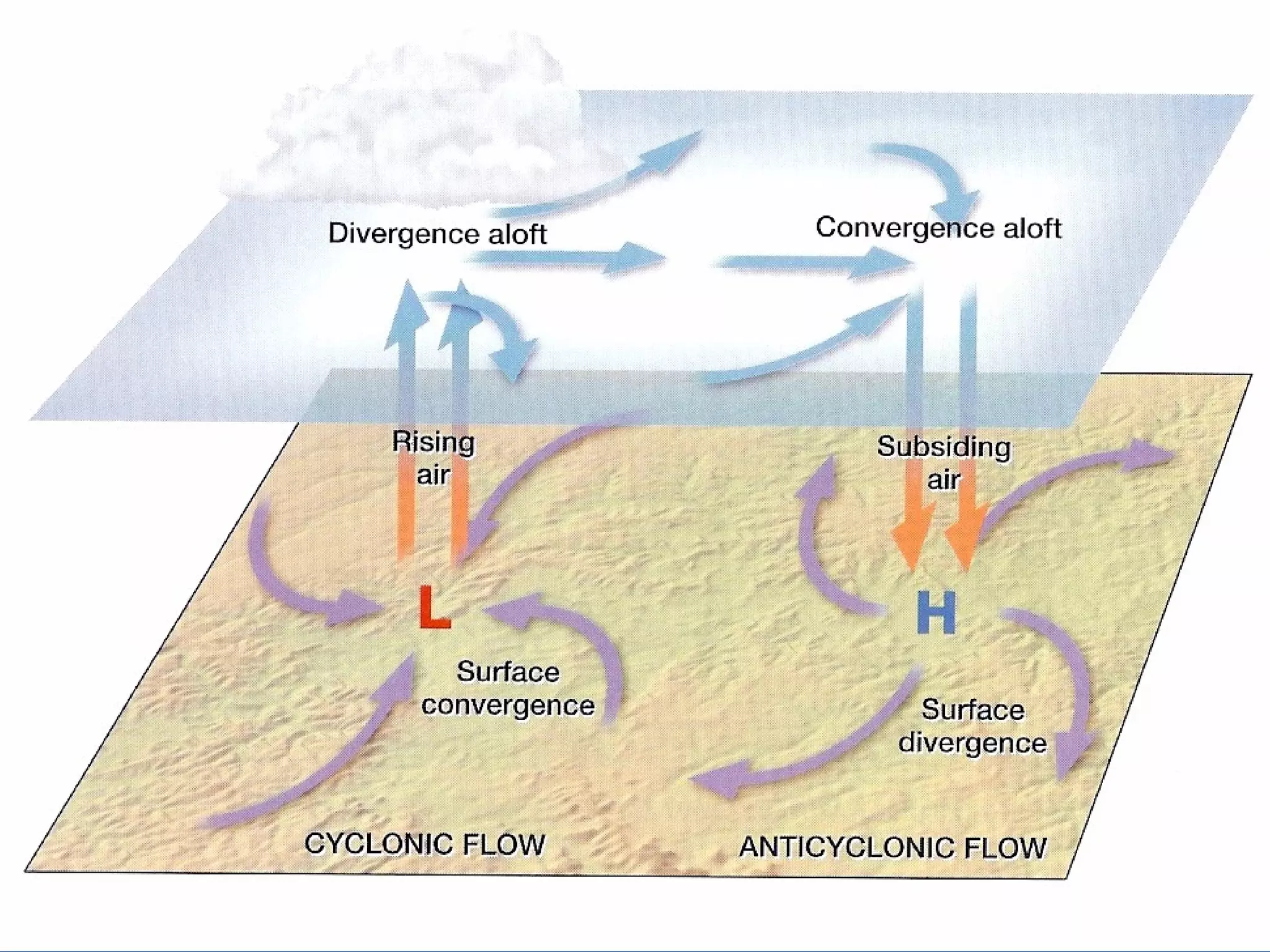
 Wind ALWAYS blows from highWind ALWAYS blows from high
pressure to low pressure and ispressure to low pressure and is
influenced by the Coriolis Effect.influenced by the Coriolis Effect.
 In High pressure (anticyclone)In High pressure (anticyclone)
winds blow out from the centerwinds blow out from the center
and clockwise.and clockwise.
 In Low pressure (cyclone) windsIn Low pressure (cyclone) winds
blow toward the center andblow toward the center and
counterclockwise.counterclockwise.
Air TransparencyAir Transparency
 How it is shown on aHow it is shown on a
weather map:weather map:
 a station modela station model
 Visibility:Visibility:
 Horizontal distance theHorizontal distance the
eye can see (mi)eye can see (mi)
 Cloud Cover:Cloud Cover:
 Fraction/percentage ofFraction/percentage of
the sky that is obscuredthe sky that is obscured
(covered) by clouds(covered) by clouds
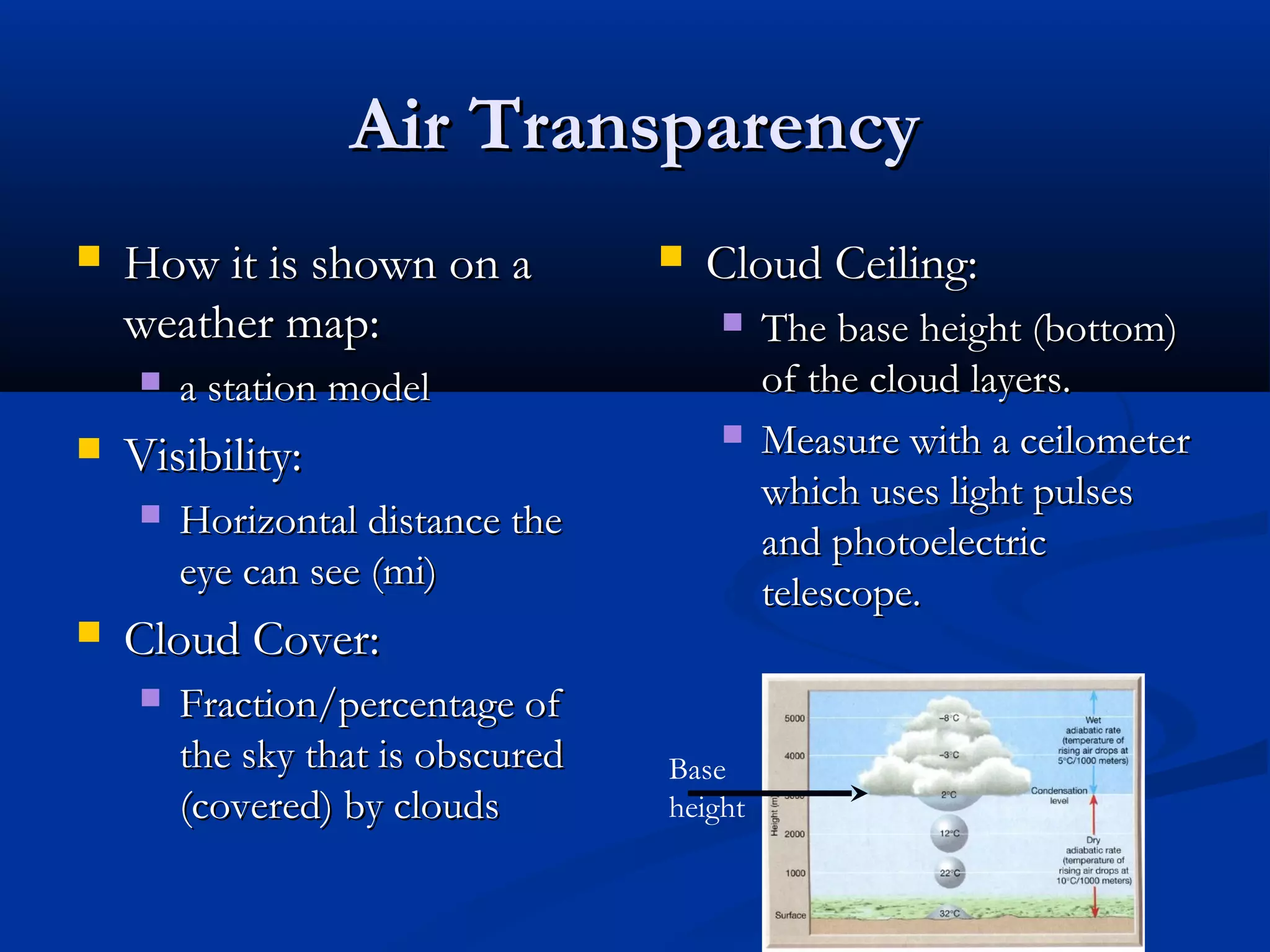
 Cloud Ceiling:Cloud Ceiling:
 The base height (bottom)The base height (bottom)
of the cloud layers.of the cloud layers.
 Measure with a ceilometerMeasure with a ceilometer
which uses light pulseswhich uses light pulses
and photoelectricand photoelectric
telescope.telescope.
Base
height

Atmospheric variables

  • 1.
  • 2.
    Air TemperatureAir Temperature Instrument used toInstrument used to measure:measure:  ThermometerThermometer  Units:Units:  °C, °F, °K°C, °F, °K  How it is shown on aHow it is shown on a weather map:weather map:  IsothermsIsotherms Important Information:Important Information:  Solar radiation is theSolar radiation is the main source of heatmain source of heat energy for theenergy for the atmosphere.atmosphere.  The amount of solarThe amount of solar radiation is affected by:radiation is affected by:  Hours of sunlight/dayHours of sunlight/day  Reflection, refraction, andReflection, refraction, and absorbtionabsorbtion
  • 4.
  • 5.
    Air PressureAir Pressure Instrument used to measure:Instrument used to measure:  BarometerBarometer  UnitsUnits  cm, inches, millibarscm, inches, millibars  How it is shown on aHow it is shown on a weather map:weather map:  Isobars, H and L pressureIsobars, H and L pressure Important Information:Important Information:  Affected by altitude,Affected by altitude, temperature, and moisturetemperature, and moisture content.content.  Warm air = less dense = lowWarm air = less dense = low pressurepressure  Cold air = more dense = highCold air = more dense = high pressurepressure  Dry air = high pressureDry air = high pressure  Moist air = low pressureMoist air = low pressure  High altitude = low pressureHigh altitude = low pressure  Pressure differences affects windPressure differences affects wind speedspeed
  • 9.
    Moisture in theAirMoisture in the Air  Instrument used to measure:Instrument used to measure:  Hygrometer, psychrometerHygrometer, psychrometer  UnitsUnits  % relative humidity% relative humidity  °C, °F Dew point temperature°C, °F Dew point temperature  How it is shown on aHow it is shown on a weather map:weather map:  Dew point temperature isDew point temperature is shown on a station modelshown on a station model Important Information:Important Information:  Dew point temperature is theDew point temperature is the temperature at which air istemperature at which air is saturated.saturated.  Relative Humidity is the ratio ofRelative Humidity is the ratio of the amount of water vapor inthe amount of water vapor in the air to the maximum amountthe air to the maximum amount that it can hold at thatthat it can hold at that temperature.temperature.  Absolute humidity is the numberAbsolute humidity is the number of grams of water vapor in oneof grams of water vapor in one cubic meter of air.cubic meter of air.
  • 10.
    Air MovementAir Movement Instrument used to measure:Instrument used to measure:  Anemometer (speed)Anemometer (speed)  Wind Vane (direction)Wind Vane (direction)  UnitsUnits  Km/h, mi/h, knotsKm/h, mi/h, knots  N, E, S, WN, E, S, W  How it is shown on aHow it is shown on a weather map:weather map:  Isotachs or on a station modelIsotachs or on a station model Important Information:Important Information:  Wind ALWAYS blows from highWind ALWAYS blows from high pressure to low pressure and ispressure to low pressure and is influenced by the Coriolis Effect.influenced by the Coriolis Effect.  In High pressure (anticyclone)In High pressure (anticyclone) winds blow out from the centerwinds blow out from the center and clockwise.and clockwise.  In Low pressure (cyclone) windsIn Low pressure (cyclone) winds blow toward the center andblow toward the center and counterclockwise.counterclockwise.
  • 11.
    Air TransparencyAir Transparency How it is shown on aHow it is shown on a weather map:weather map:  a station modela station model  Visibility:Visibility:  Horizontal distance theHorizontal distance the eye can see (mi)eye can see (mi)  Cloud Cover:Cloud Cover:  Fraction/percentage ofFraction/percentage of the sky that is obscuredthe sky that is obscured (covered) by clouds(covered) by clouds  Cloud Ceiling:Cloud Ceiling:  The base height (bottom)The base height (bottom) of the cloud layers.of the cloud layers.  Measure with a ceilometerMeasure with a ceilometer which uses light pulseswhich uses light pulses and photoelectricand photoelectric telescope.telescope. Base height