Pathogenesis Of
Asthama
Syed Dawood Shah
Mirpur Universty Of Science & Tevhnology Azaad
Kashmir Pakistan
Introduction
• A chronic inflammatory disorder
of the airways in which many
cells and cellular elements play
a role.
• The chronic inflammation is
associated with airway
hyperresponsiveness that leads
to recurrent episodes of
wheezing,breathlessness,chest
tightness and
coughing,particularly at night or
in the early morning.
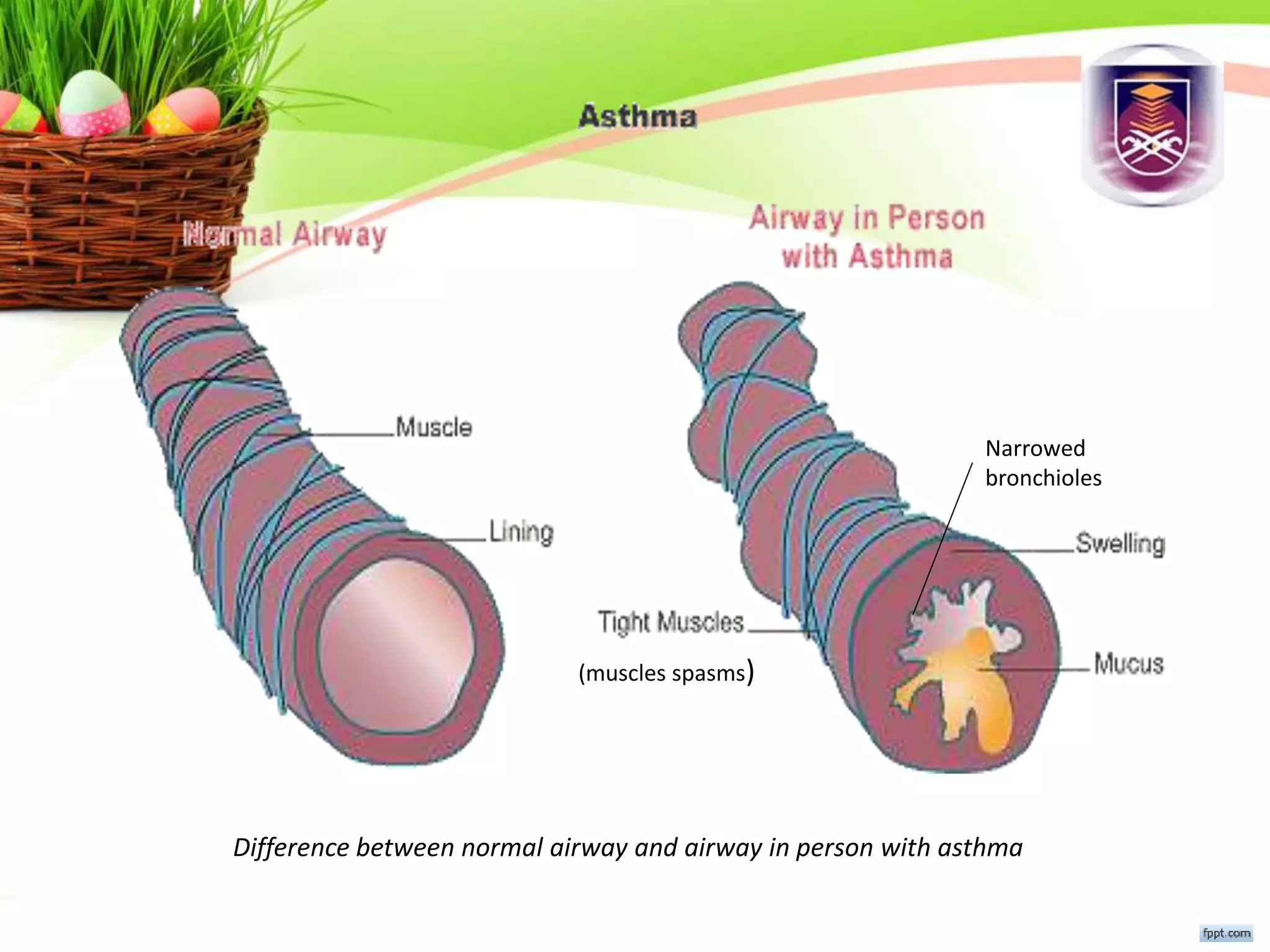
Difference between normal airway and airway in person with asthma
Narrowed
bronchioles
(muscles spasms)
Types of asthma
1. Allergic asthma (extrinsic)
2. Non-allergic asthma (intrinsic)
3. Cough variant asthma
4. Occupational asthma
5. Exercise induced asthma
6. Medication induced asthma
7. Nocturnal asthma
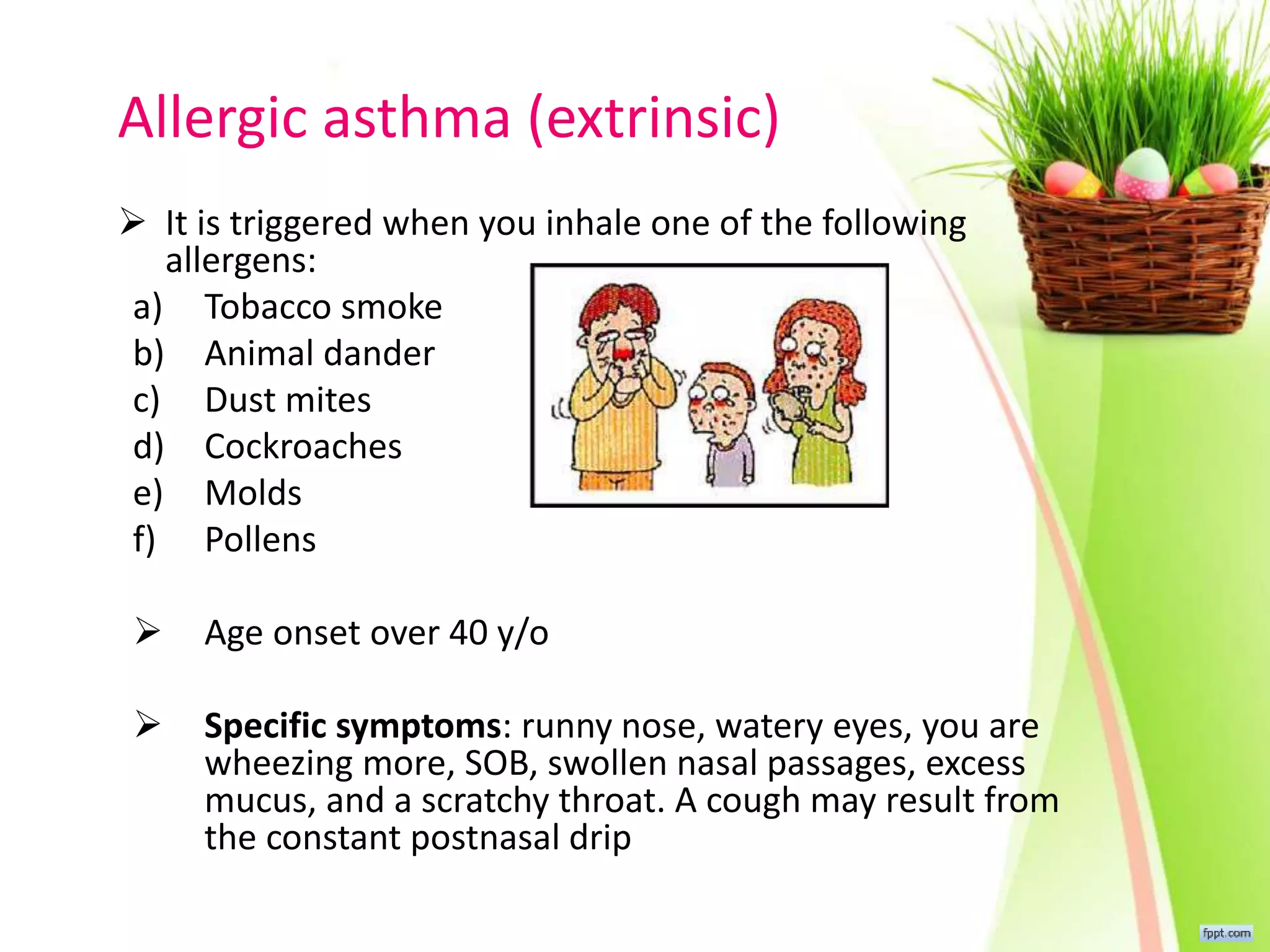
Allergic asthma (extrinsic)
 It is triggered when you inhale one of the following
allergens:
a) Tobacco smoke
b) Animal dander
c) Dust mites
d) Cockroaches
e) Molds
f) Pollens
 Age onset over 40 y/o
 Specific symptoms: runny nose, watery eyes, you are
wheezing more, SOB, swollen nasal passages, excess
mucus, and a scratchy throat. A cough may result from
the constant postnasal drip
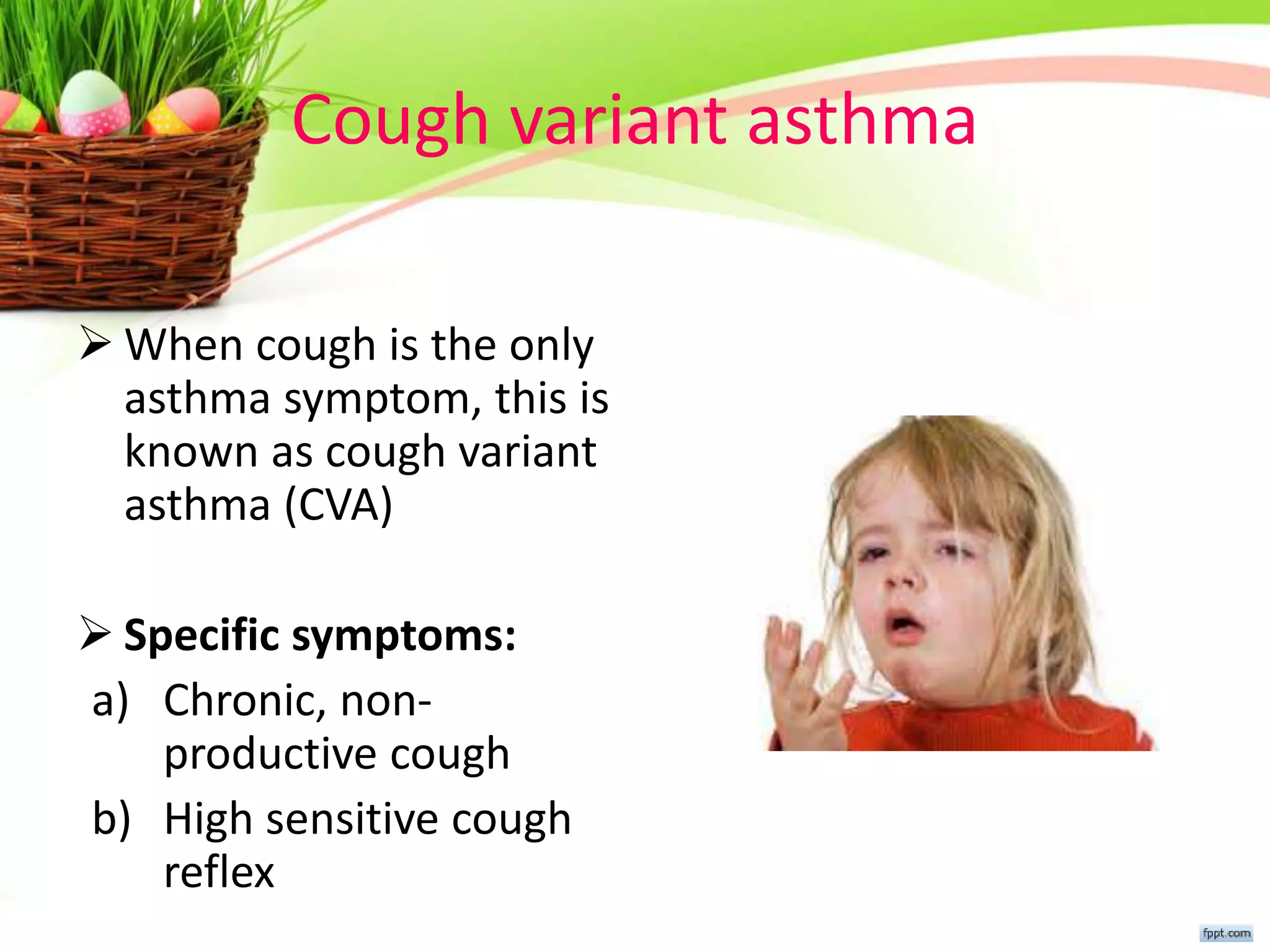
Cough variant asthma
 When cough is the only
asthma symptom, this is
known as cough variant
asthma (CVA)
 Specific symptoms:
a) Chronic, non-
productive cough
b) High sensitive cough
reflex
Occupational asthma
 A common respiratory condition that results from
exposures in the workplace
 Examples of the occupations and the potential
irritants include:
a) Dental hygienists: latex
b) Bakers: flour
c) Roofers, insulators and painters: isocyanates
(toluene)
d) Welders and metal workers: metals: metals (nickel,
platinum and chromic acid)
e) Plastic manufacturers: glues and resins
f) Farmers and veterinarians: animal
proteins
a) Carpenters: wood dust
Occupational asthma
 Specific symptoms:
 Airway irritation, obstruction, and
inflammation.
 Worsening after arriving at work and
improvement on weekends or during
extended periods away from work.
 Treatment :
a) Engineering controls (such as improved
ventilation) to reduce or eliminate the
substance
b) Use respiratory protective equipment
DIAGNOSIS & TESTS
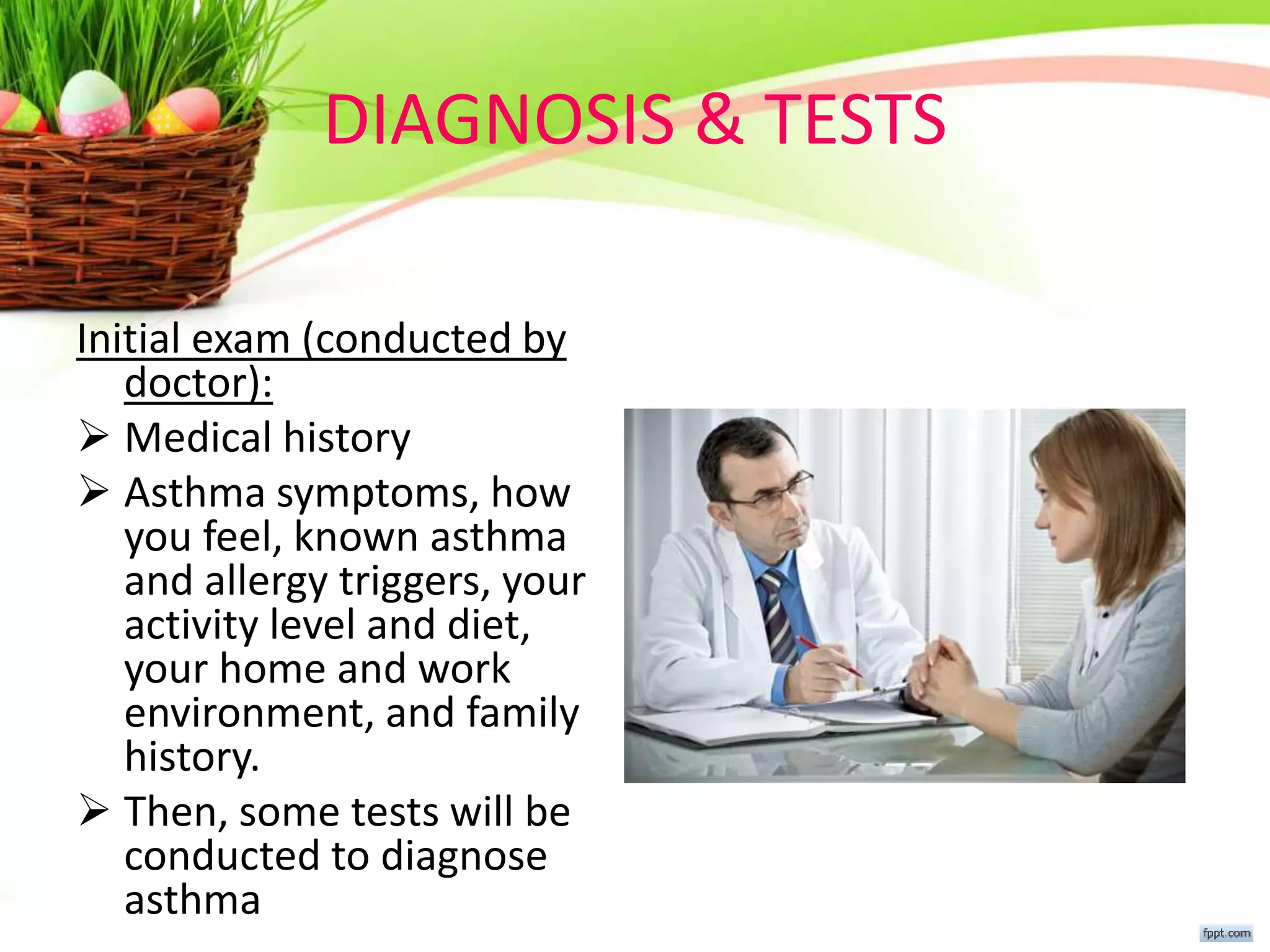
Initial exam (conducted by
doctor):
 Medical history
 Asthma symptoms, how
you feel, known asthma
and allergy triggers, your
activity level and diet,
your home and work
environment, and family
history.
 Then, some tests will be
conducted to diagnose
asthma
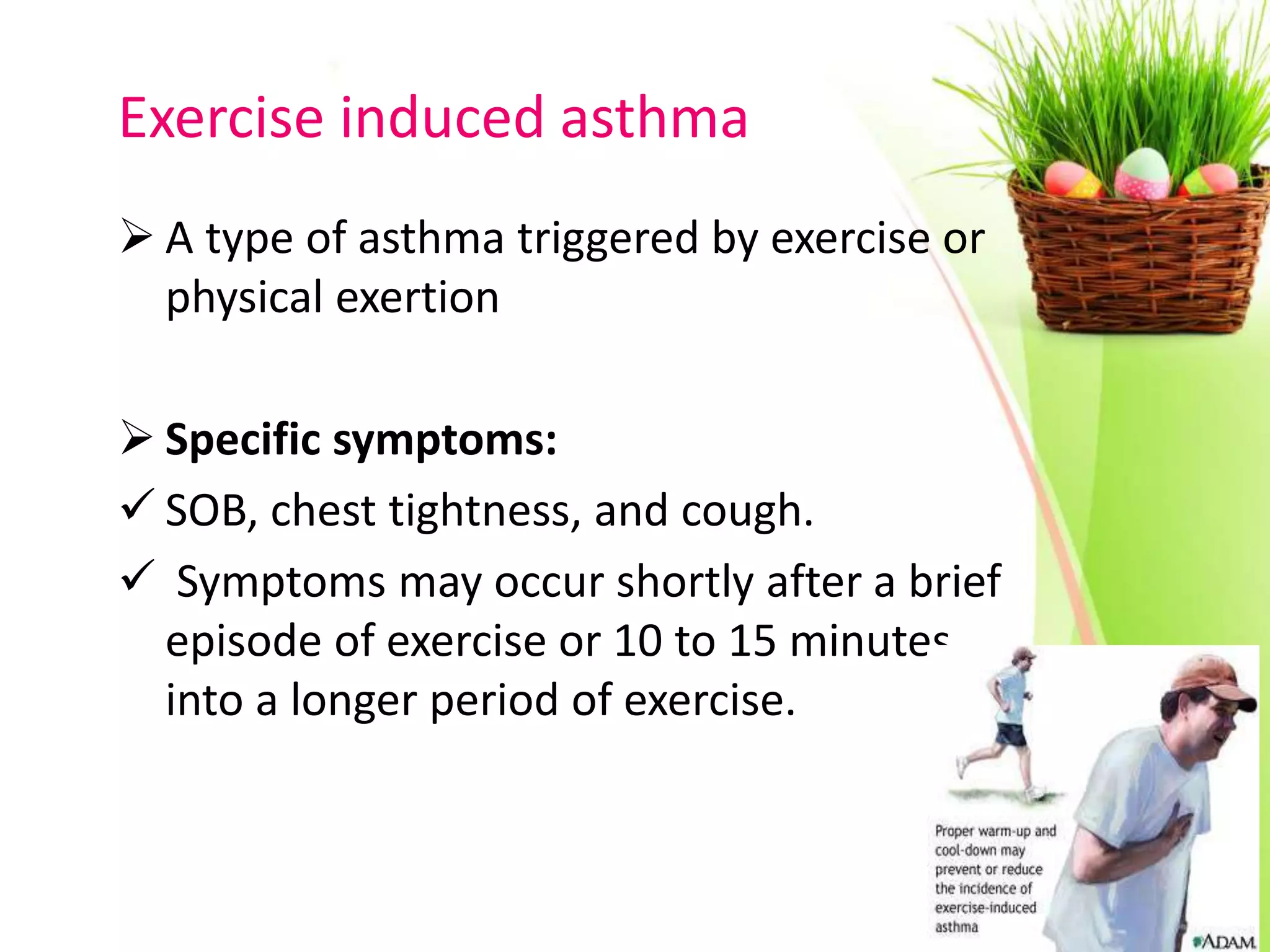
Exercise induced asthma
 A type of asthma triggered by exercise or
physical exertion
 Specific symptoms:
 SOB, chest tightness, and cough.
 Symptoms may occur shortly after a brief
episode of exercise or 10 to 15 minutes
into a longer period of exercise.
Medication induced asthma
 The asthma getting worse because of
medication you take for another health
condition.
 Causes:
a) Anti- inflammatories for aches and pain:
Motrin, Advil
b) Heart disease drugs :inderal, coreg (beta-
blockers)
c) Glaucoma drugs: beta-blockers eyes drop
d) Hypertension and congestive heart failure
drugs: angotensive converting enzyme
inhibitors (ACE)
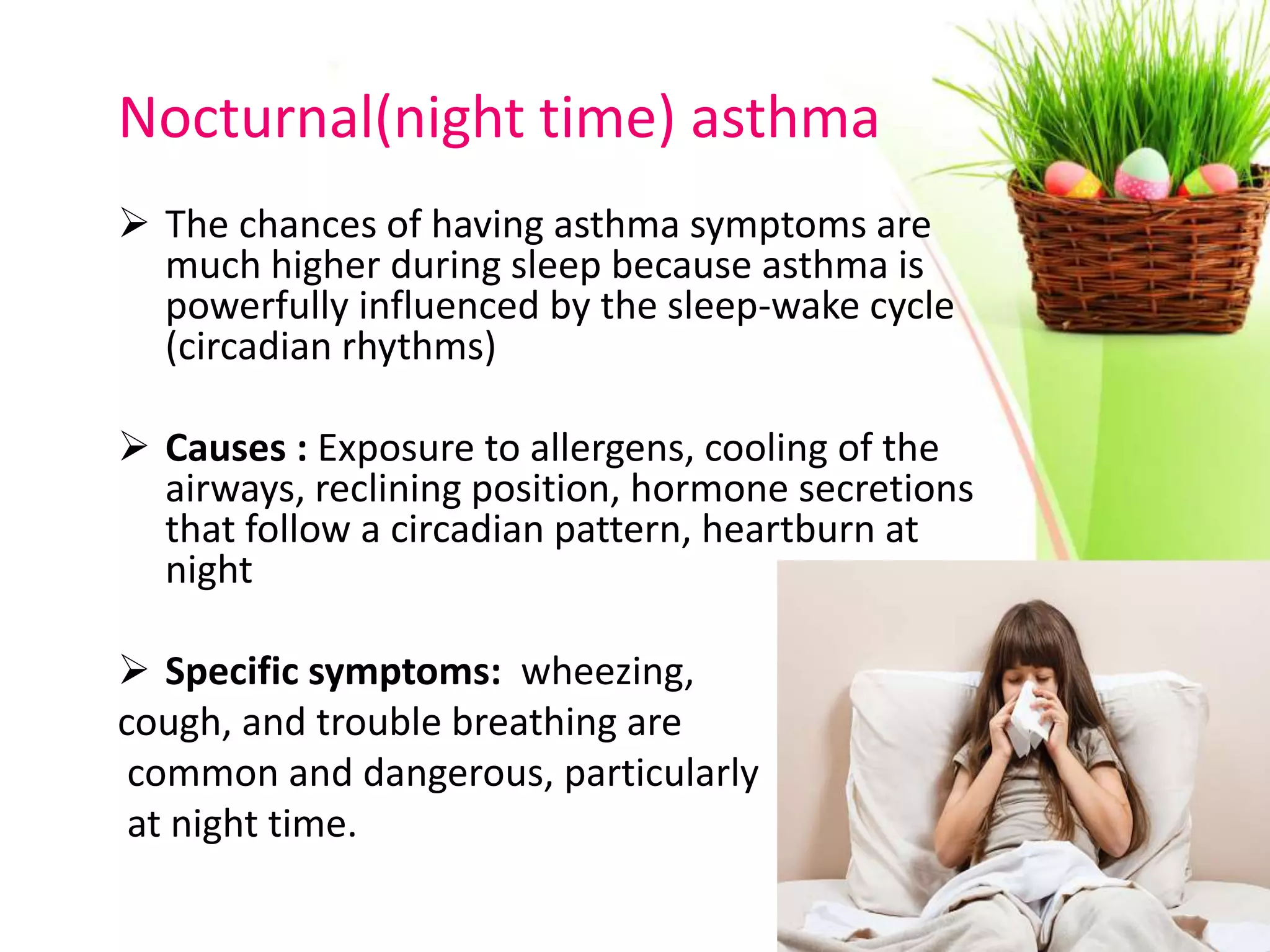
Nocturnal(night time) asthma
 The chances of having asthma symptoms are
much higher during sleep because asthma is
powerfully influenced by the sleep-wake cycle
(circadian rhythms)
 Causes : Exposure to allergens, cooling of the
airways, reclining position, hormone secretions
that follow a circadian pattern, heartburn at
night
 Specific symptoms: wheezing,
cough, and trouble breathing are
common and dangerous, particularly
at night time.
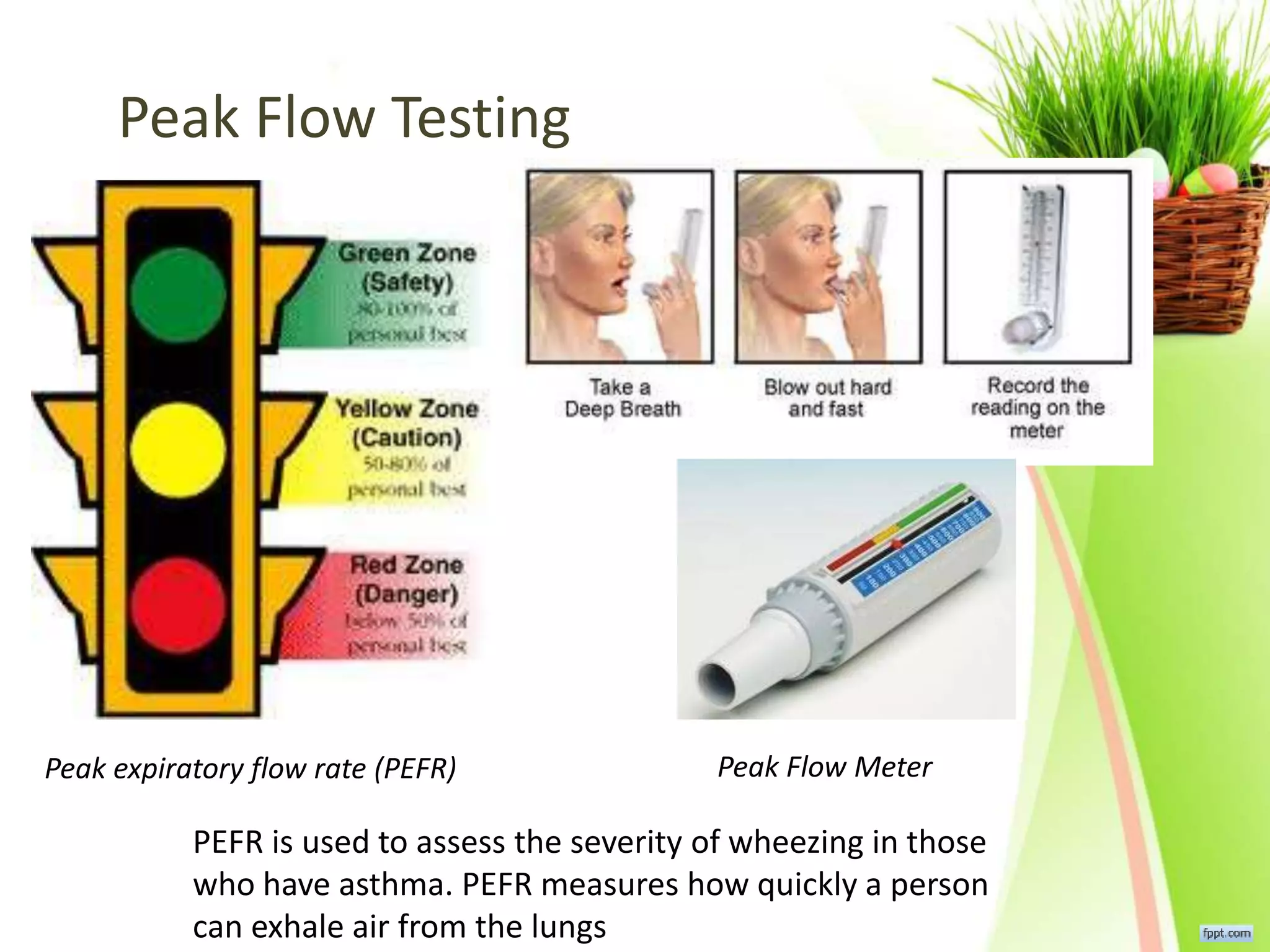
Peak Flow Testing
Peak Flow Meter
PEFR is used to assess the severity of wheezing in those
who have asthma. PEFR measures how quickly a person
can exhale air from the lungs
Peak expiratory flow rate (PEFR)
Spirometry (Lung function test)
 It measures how much air you can exhale.
 FEV1(force expiratory volume) > 80% = normal
 Confirms the presence of airway obstruction and
measure the degree of lung function impairment.
 Monitor your response to asthma medications
Allergy-skin Test
 A drop of liquid containing the allergen in placed
on your skin (generally forearms is used).
 A small lance with a pinpoint is poked through
the liquid into the top layer of skin (prick test).
 If you are allergic to the allergen, after about 2
minutes the skin begins to form a reaction (red,
slightly swollen, and itchy: it makes a hive).
 The size of the hive is measured and recorded.
 The larger the hive, the more likely it is that you
are allergic to the allergen tested.
Allergy-skin test
SIGNS AND SYMPTOMS
Common symptoms of asthma
1. Coughing, especially at night
2. Wheezing
3. Shortness of breath
4. Chest tightness, pain, or pressure
SIGNS AND SYMPTOMS
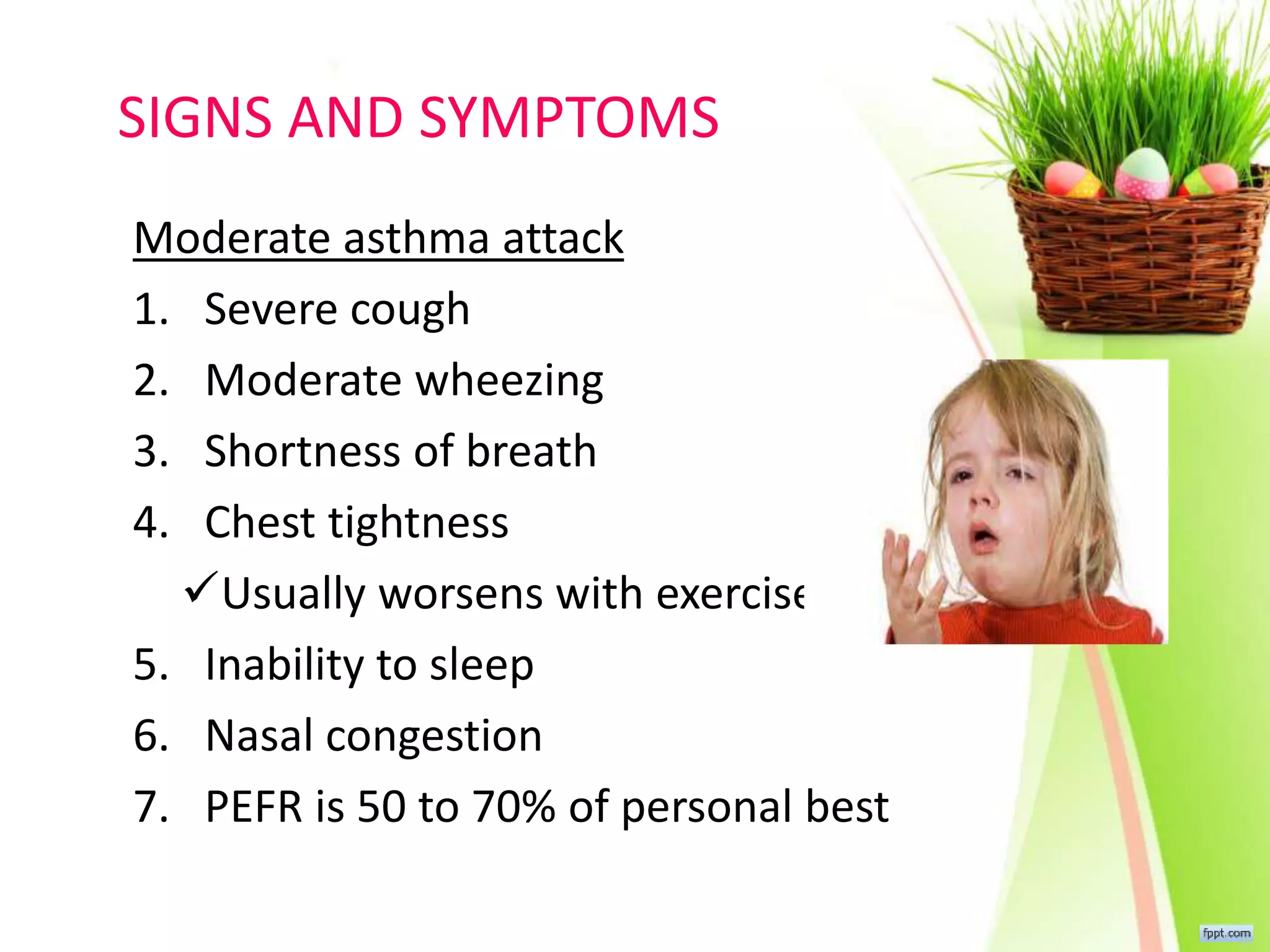
Moderate asthma attack
1. Severe cough
2. Moderate wheezing
3. Shortness of breath
4. Chest tightness
Usually worsens with exercise
5. Inability to sleep
6. Nasal congestion
7. PEFR is 50 to 70% of personal best
SIGNS AND SYMPTOMS
Severe asthma attack
1. Severe wheezing
2. Severe difficulty breathing
3. Inability to speak in complete sentences
Sentences are interrupted by breathing
4. Chest pain
Sharp, chest pain when
taking a breath, coughing
5. PEFR is <50% of personal
best
6. Rapid pulse
7. Rapid breathing rate
Refrences
Books:
Colledge, J.R. Walker, B.R. & Ralston S.H.
(2010). Obstructive pulmonary disease-
Asthma. Davidson’s Principles and
Practice of Medicine (21st ed.). (pp. 662-
670). Churchill Livingstone: Elsevier
Limited.
Tortora, G.J. & Derrickson B. (2011). The
Respiratory System – Asthma. Principles
of Anatomy and Physiology (13th ed.). (p.
959). John Wiley & Sons (Asia) Pte Ltd.
Asthma

Asthma

  • 1.
    Pathogenesis Of Asthama Syed DawoodShah Mirpur Universty Of Science & Tevhnology Azaad Kashmir Pakistan
  • 2.
    Introduction • A chronicinflammatory disorder of the airways in which many cells and cellular elements play a role. • The chronic inflammation is associated with airway hyperresponsiveness that leads to recurrent episodes of wheezing,breathlessness,chest tightness and coughing,particularly at night or in the early morning.
  • 3.
    Difference between normalairway and airway in person with asthma Narrowed bronchioles (muscles spasms)
  • 4.
    Types of asthma 1.Allergic asthma (extrinsic) 2. Non-allergic asthma (intrinsic) 3. Cough variant asthma 4. Occupational asthma 5. Exercise induced asthma 6. Medication induced asthma 7. Nocturnal asthma
  • 5.
    Allergic asthma (extrinsic) It is triggered when you inhale one of the following allergens: a) Tobacco smoke b) Animal dander c) Dust mites d) Cockroaches e) Molds f) Pollens  Age onset over 40 y/o  Specific symptoms: runny nose, watery eyes, you are wheezing more, SOB, swollen nasal passages, excess mucus, and a scratchy throat. A cough may result from the constant postnasal drip
  • 6.
    Cough variant asthma When cough is the only asthma symptom, this is known as cough variant asthma (CVA)  Specific symptoms: a) Chronic, non- productive cough b) High sensitive cough reflex
  • 7.
    Occupational asthma  Acommon respiratory condition that results from exposures in the workplace  Examples of the occupations and the potential irritants include: a) Dental hygienists: latex b) Bakers: flour c) Roofers, insulators and painters: isocyanates (toluene) d) Welders and metal workers: metals: metals (nickel, platinum and chromic acid) e) Plastic manufacturers: glues and resins f) Farmers and veterinarians: animal proteins a) Carpenters: wood dust
  • 8.
    Occupational asthma  Specificsymptoms:  Airway irritation, obstruction, and inflammation.  Worsening after arriving at work and improvement on weekends or during extended periods away from work.  Treatment : a) Engineering controls (such as improved ventilation) to reduce or eliminate the substance b) Use respiratory protective equipment
  • 9.
    DIAGNOSIS & TESTS Initialexam (conducted by doctor):  Medical history  Asthma symptoms, how you feel, known asthma and allergy triggers, your activity level and diet, your home and work environment, and family history.  Then, some tests will be conducted to diagnose asthma
  • 10.
    Exercise induced asthma A type of asthma triggered by exercise or physical exertion  Specific symptoms:  SOB, chest tightness, and cough.  Symptoms may occur shortly after a brief episode of exercise or 10 to 15 minutes into a longer period of exercise.
  • 11.
    Medication induced asthma The asthma getting worse because of medication you take for another health condition.  Causes: a) Anti- inflammatories for aches and pain: Motrin, Advil b) Heart disease drugs :inderal, coreg (beta- blockers) c) Glaucoma drugs: beta-blockers eyes drop d) Hypertension and congestive heart failure drugs: angotensive converting enzyme inhibitors (ACE)
  • 12.
    Nocturnal(night time) asthma The chances of having asthma symptoms are much higher during sleep because asthma is powerfully influenced by the sleep-wake cycle (circadian rhythms)  Causes : Exposure to allergens, cooling of the airways, reclining position, hormone secretions that follow a circadian pattern, heartburn at night  Specific symptoms: wheezing, cough, and trouble breathing are common and dangerous, particularly at night time.
  • 13.
    Peak Flow Testing PeakFlow Meter PEFR is used to assess the severity of wheezing in those who have asthma. PEFR measures how quickly a person can exhale air from the lungs Peak expiratory flow rate (PEFR)
  • 14.
    Spirometry (Lung functiontest)  It measures how much air you can exhale.  FEV1(force expiratory volume) > 80% = normal  Confirms the presence of airway obstruction and measure the degree of lung function impairment.  Monitor your response to asthma medications
  • 15.
    Allergy-skin Test  Adrop of liquid containing the allergen in placed on your skin (generally forearms is used).  A small lance with a pinpoint is poked through the liquid into the top layer of skin (prick test).  If you are allergic to the allergen, after about 2 minutes the skin begins to form a reaction (red, slightly swollen, and itchy: it makes a hive).  The size of the hive is measured and recorded.  The larger the hive, the more likely it is that you are allergic to the allergen tested.
  • 16.
  • 18.
    SIGNS AND SYMPTOMS Commonsymptoms of asthma 1. Coughing, especially at night 2. Wheezing 3. Shortness of breath 4. Chest tightness, pain, or pressure
  • 19.
    SIGNS AND SYMPTOMS Moderateasthma attack 1. Severe cough 2. Moderate wheezing 3. Shortness of breath 4. Chest tightness Usually worsens with exercise 5. Inability to sleep 6. Nasal congestion 7. PEFR is 50 to 70% of personal best
  • 20.
    SIGNS AND SYMPTOMS Severeasthma attack 1. Severe wheezing 2. Severe difficulty breathing 3. Inability to speak in complete sentences Sentences are interrupted by breathing 4. Chest pain Sharp, chest pain when taking a breath, coughing 5. PEFR is <50% of personal best 6. Rapid pulse 7. Rapid breathing rate
  • 21.
    Refrences Books: Colledge, J.R. Walker,B.R. & Ralston S.H. (2010). Obstructive pulmonary disease- Asthma. Davidson’s Principles and Practice of Medicine (21st ed.). (pp. 662- 670). Churchill Livingstone: Elsevier Limited. Tortora, G.J. & Derrickson B. (2011). The Respiratory System – Asthma. Principles of Anatomy and Physiology (13th ed.). (p. 959). John Wiley & Sons (Asia) Pte Ltd.